
Solar Panels Tipperary 2026: From the Golden Vale to Your Rooftop — Costs, Grants & the Farming County Going Solar
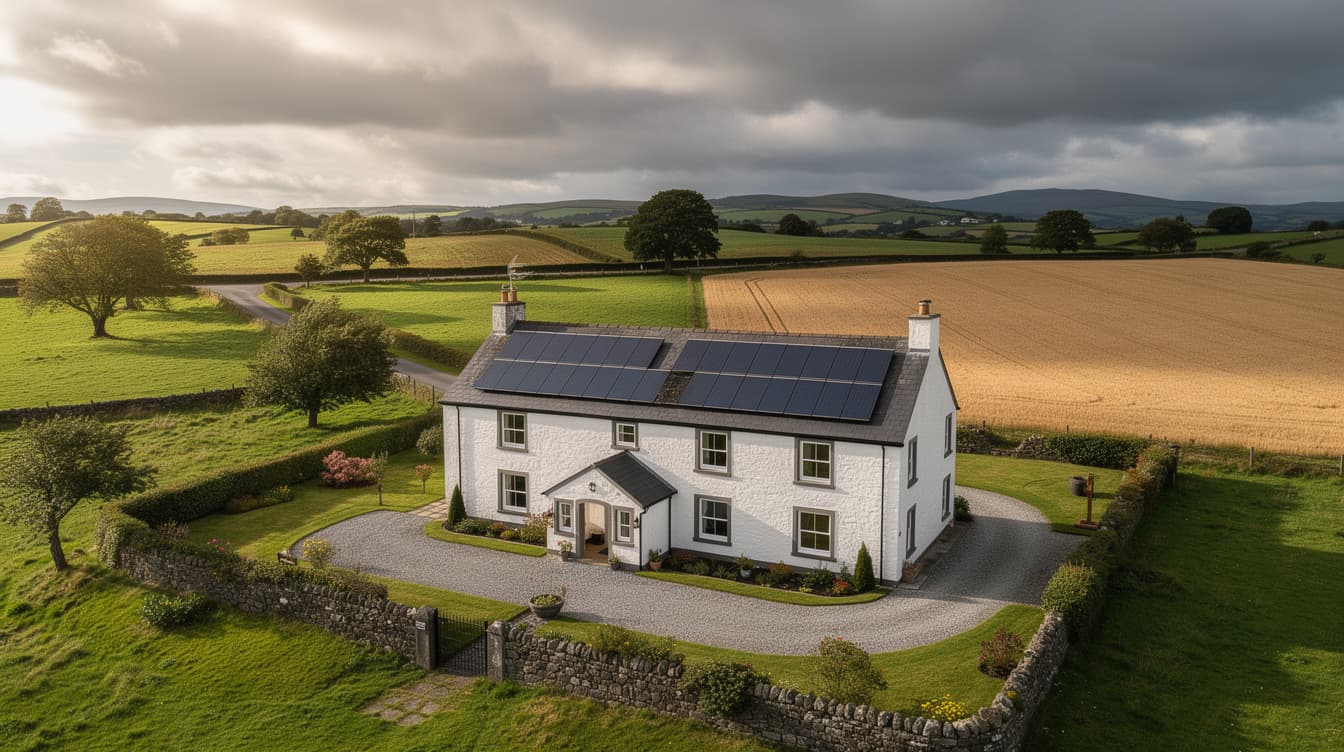
County Tipperary is Ireland's largest inland county, home to the Golden Vale — some of the richest farmland in Europe. And now, that same spirit of working the land is being turned skyward. In 2025, 1,161 Tipperary homes received SEAI solar panel grants, and the county is home to two of Ireland's largest planned solar farms. Whether you live in a farmhouse outside Cashel, a semi-detached in Clonmel, or a new build in Nenagh, solar panels make serious financial sense in 2026.
This guide breaks down everything Tipperary homeowners need to know: real costs by system size, county-specific solar output data, the SEAI grant process, and which installers are doing the best work across the county right now.
Get Tipperary Solar Quotes in 24 Hours
Compare prices from SEAI-registered installers serving County Tipperary — free, no obligation.
Tipperary Solar at a Glance
Before we dive into detail, here's the snapshot for County Tipperary in 2026:
| Metric | Tipperary | National Average |
|---|---|---|
| Sunshine hours/year | 1,315 | 1,100–1,400 |
| Solar yield (kWh/kWp) | 884 | 850–965 |
| County sunshine ranking | #14 of 26 | — |
| 4 kWp system annual output | 3,536 kWh | 3,400–3,860 kWh |
| SEAI grants issued (2025) | 1,161 homes | — |
| Avg household electricity use | 4,200 kWh/year | 4,200 kWh/year |
| Solar coverage of household use | 84% | 80–92% |
Tipperary ranks #14 nationally for sunshine — solidly mid-table. But ranking doesn't tell the full story. An 884 kWh/kWp yield still means a standard 4 kWp system covers 84% of a typical household's electricity. And Tipperary's housing stock — dominated by large detached farmhouses and bungalows with generous roof space — means most homes can fit bigger systems that close the gap entirely.
Why Tipperary Homes Are Built for Solar
Tipperary has a distinct housing profile that actually gives it an advantage over more urban counties when it comes to solar:
- Large detached homes dominate — 62% of Tipperary's housing stock is detached houses and bungalows, compared to just 43% nationally. More roof space means bigger systems and faster payback.
- Farming properties — farm outbuildings and sheds offer additional mounting options. A south-facing shed roof can host panels for the house, with separate TAMS III grant funding available for farm energy use.
- Low shading — Tipperary's open countryside means fewer trees and buildings casting shadows on rooftops. Shading is the number one solar killer, and rural Tipperary largely avoids it.
- Higher-than-average electricity use — farms with milking parlours, grain dryers, electric fencing, and workshops consume 8,000–15,000 kWh/year. Solar panels offset the most expensive grid units first, meaning bigger savings per panel.
- Oil-to-heat-pump transition — many Tipperary homes are switching from oil to heat pumps, which increases electricity consumption. Pairing a heat pump with solar is the single best way to keep running costs down.
What Solar Panels Cost in Tipperary in 2026
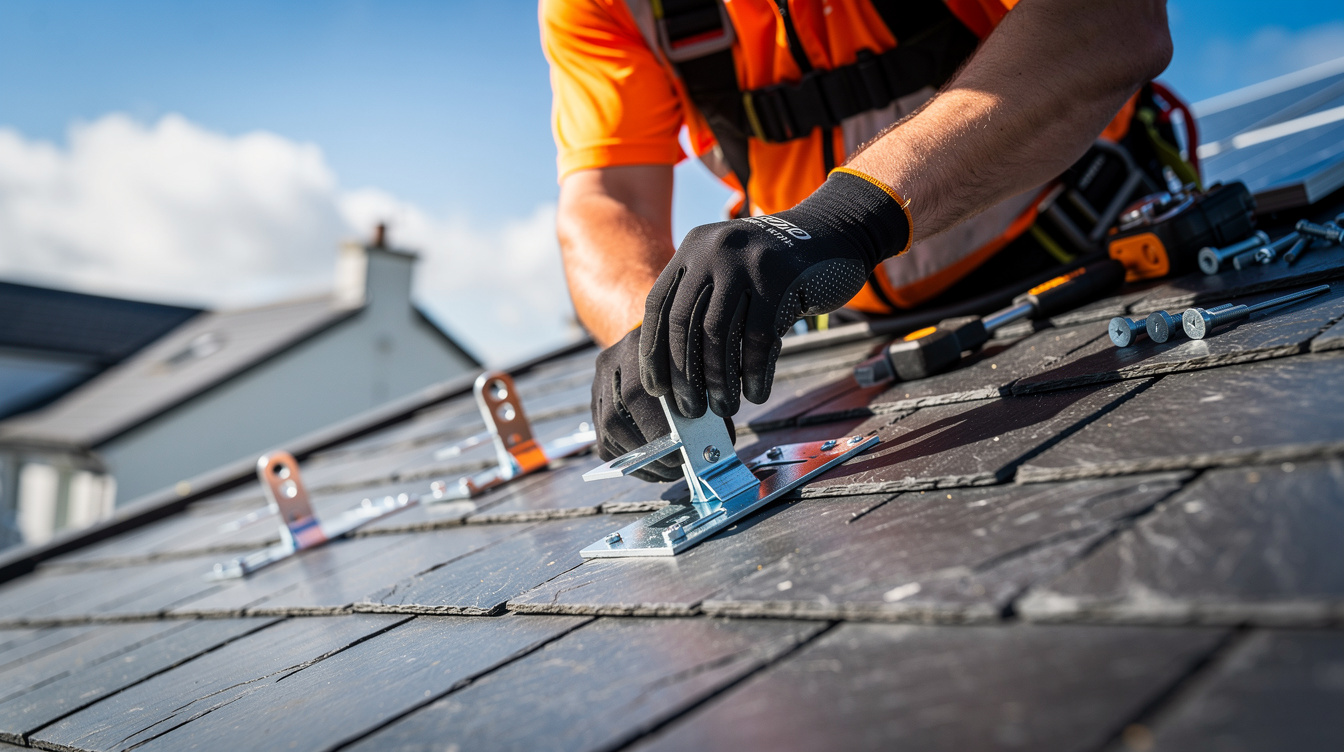
Tipperary installers price competitively — you're far enough from Dublin to avoid the premium, but close enough that a large pool of Munster-based companies serve the area. Here's what you'll pay in May 2026:
| System Size | Panels | Cost (0% VAT) | After €1,800 SEAI Grant | Annual Output |
|---|---|---|---|---|
| 2.6 kWp | 6 | €5,400 | €3,600 | 2,298 kWh |
| 3.5 kWp | 8 | €6,300 | €4,500 | 3,094 kWh |
| 4.4 kWp | 10 | €8,650 | €6,850 | 3,890 kWh |
| 5.5 kWp | 12–13 | €9,800 | €8,000 | 4,862 kWh |
| 6.6 kWp | 15 | €11,200 | €9,400 | 5,834 kWh |
Battery add-on: Adding a 5 kWh battery storage system costs €2,500–€4,000 extra. For Tipperary homes with high self-consumption (farmers, home workers, families), a battery typically adds €200–€350 per year in extra savings by storing daytime solar for evening use. See our battery comparison guide for the latest prices.
Important: All residential solar installations in Ireland carry 0% VAT since May 2023, saving you roughly €1,000 compared to the old 13.5% rate. This is already reflected in the prices above.
What Would Solar Cost for Your Tipperary Home?
Enter your details and get a personalised estimate in minutes.
The SEAI Solar Grant: How It Works in 2026
The SEAI (Sustainable Energy Authority of Ireland) solar PV grant remains at €1,800 maximum in 2026. Here's the breakdown:
| System Capacity | Grant per kWp | Total Grant |
|---|---|---|
| First 2 kWp | €700/kWp | €1,400 |
| 2–4 kWp | €200/kWp | €400 |
| Maximum total | — | €1,800 |
Eligibility requirements:
- Your home must have been built and occupied before 1 January 2021
- You must be the homeowner (private landlords also qualify)
- Your MPRN must not have received a previous SEAI solar PV grant
- All work must be done by an SEAI-registered installer
- You need a BER assessment before and after installation
- Apply and receive approval before any work begins
- Complete installation within 8 months of grant offer
The process typically takes 4–8 weeks from application to panels on your roof. Read our full SEAI grant guide for a step-by-step walkthrough.
For Tipperary Farmers: TAMS III Solar Grants
If you're farming in Tipperary, you have access to a second grant stream that most homeowners don't know about. The TAMS III (Targeted Agricultural Modernisation Scheme) Solar Capital Investment Scheme covers solar panels installed for agricultural use:
- Grant rate: 40% of eligible costs (60% for young trained farmers)
- Maximum investment ceiling: €90,000 for solar PV
- Eligible uses: milking parlours, grain dryers, dairy cooling, water heating, workshop power
- Key rule: panels must primarily serve the farm enterprise, not the dwelling house
Many Tipperary farming families install two separate systems: one for the house (SEAI grant) and one for farm buildings (TAMS III). This can mean €1,800 + 40–60% of the farm system — a substantial combined saving. Read our full guide to solar panels for Irish farms.
Solar Savings: What a Tipperary Household Actually Saves
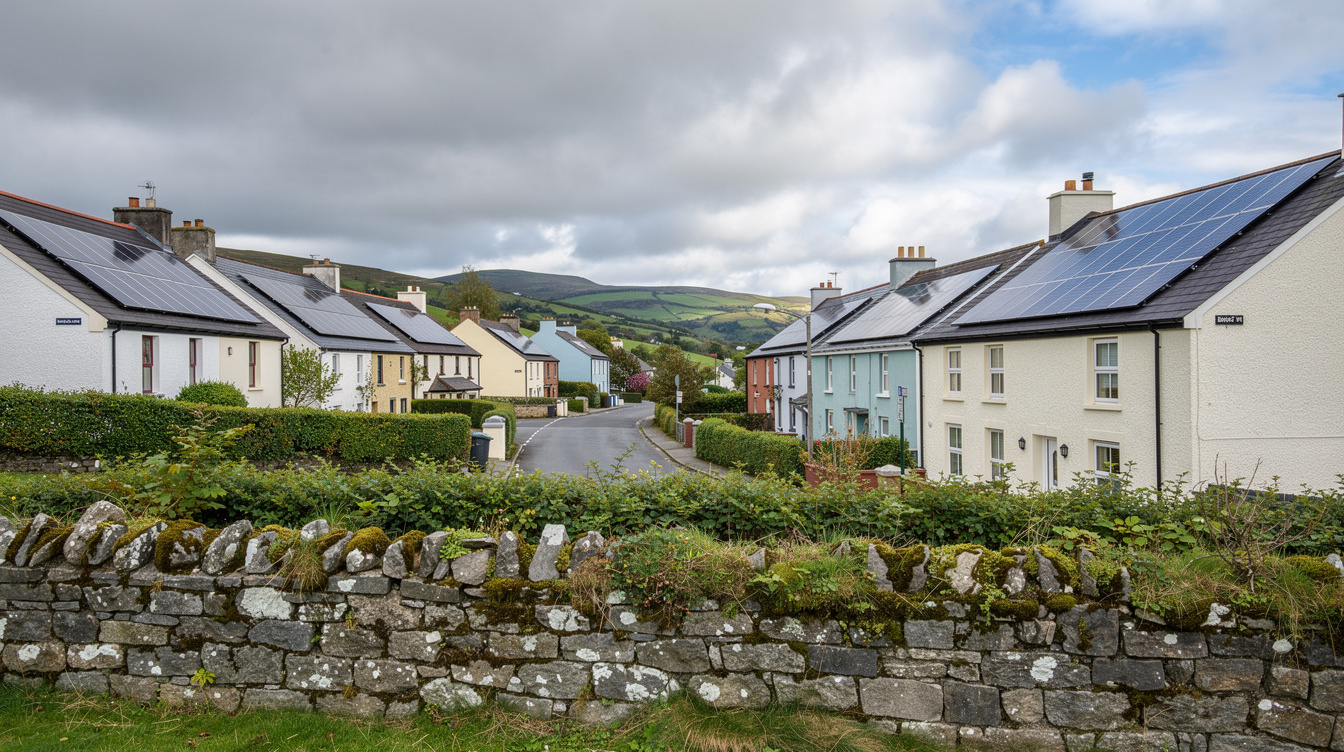
The savings depend on your system size, electricity usage, and how much solar you use directly versus exporting. Here's a realistic breakdown for a 4.4 kWp system in Tipperary:
| Savings Source | Annual Value | Assumption |
|---|---|---|
| Self-consumed electricity | €680–€850 | 2,200–2,800 kWh at €0.30/kWh |
| Export payments (CEG) | €120–€230 | 800–1,200 kWh at €0.15–€0.24/kWh |
| Standing charge reduction | €50–€100 | Lower tariff bracket in some plans |
| Total annual savings | €850–€1,180 | — |
At these savings rates, a €6,850 net-cost system pays for itself in 6–8 years. With 25+ year panel warranties, that's 17–19 years of essentially free electricity after payback. Learn more about the Clean Export Guarantee and export rates.
Tip for Tipperary homes: Self-consumption is king. Every kWh you use directly saves you €0.30+ (your import rate), while exporting earns just €0.15–€0.24. Run your dishwasher, washing machine, and immersion during the day to maximise savings. A monitoring app helps you track this in real time.
Installers Serving Tipperary in 2026
Tipperary is well-served by installers, with over 320 SEAI-registered solar PV companies covering the county. Here are some of the established names serving different parts of Tipperary:
| Company | Areas Covered | Notable |
|---|---|---|
| OHK Energy | Clonmel, Thurles, Nenagh | Local Tipperary presence |
| PV Generation | Clonmel, Nenagh, Thurles, Roscrea | Residential & commercial |
| Switch2Solar | All Tipperary | Wide coverage across county |
| Eco Solar Energy | South Tipperary | SEAI registered since 2016 |
| Q4 Energy | Tipperary, Limerick, Cork | Munster-wide installer |
| Irish Wind & Solar | Clonmel, Cashel, Nenagh | Residential & commercial |
How to choose: Always get at least 3 quotes. Check that your installer is on the SEAI registered installer list, ask for references from Tipperary installations, and confirm they handle the SEAI grant paperwork. Our installer selection guide covers the 10 key questions to ask.
Compare Tipperary Solar Installers
Get 3 quotes from SEAI-registered installers — we'll match you with companies serving your area.
Town-by-Town: Solar in Clonmel, Thurles, Nenagh & More
Tipperary's towns each have their own solar characteristics:
Clonmel (pop. ~18,000) — the county's largest town, sitting in the Suir Valley. South-facing slopes on the northern side of town get excellent solar exposure. Dense housing near the centre means some shading issues, but estates on the outskirts (Heywood Road, Glenconnor) have ideal conditions. Clonmel also has the largest concentration of local installers.
Thurles (pop. ~8,000) — flat terrain means minimal shading from topography. The newer housing estates around the Liberty Square area and Thurles bypass have modern roofs well-suited to solar. Being centrally located, Thurles homes are served by installers from both Limerick and Kilkenny directions.
Nenagh (pop. ~9,000) — North Tipperary's main town, close to Lough Derg. The lake effect means slightly more cloud cover than South Tipperary, but the difference is marginal (<3% on annual yield). Nenagh's growing suburbs and proximity to Limerick-based installers keeps pricing competitive.
Cashel, Cahir & Tipperary Town — these smaller towns (pop. 4,000–5,000 each) in the heart of the Golden Vale are surrounded by prime agricultural land. Homes here tend to be older, detached properties with large roof areas — perfect for bigger 5–6 kWp systems. Installer travel charges may be slightly higher for remote rural properties, but this is usually €100–€200 at most.
Carrick-on-Suir & Roscrea — border-town locations mean you benefit from installers in neighbouring counties too. Carrick-on-Suir draws from Waterford installers, while Roscrea is served by companies from both Laois and North Tipperary.
Tipperary's Solar Farm Boom
County Tipperary isn't just going solar at household level — it's becoming a hub for utility-scale solar too:
- Coolmore Stud Solar Farm — the world-famous Fethard horse stud is developing a solar farm capable of powering 25,000 homes, with an estimated 42,000 tonnes of CO&sub2; savings annually
- Springmount Solar Farm — located 7 km west of Clonmel, this project will generate enough clean energy for up to 12,000 homes
These projects signal Tipperary's suitability for solar. If industrial-scale developers are choosing the county, the conditions are clearly right for residential panels too. The county's flat-to-gently-rolling terrain, relatively low rainfall compared to the west coast, and strong grid infrastructure all contribute.
Step-by-Step: Getting Solar on Your Tipperary Home
- Get quotes — request 3 quotes from SEAI-registered installers serving Tipperary
- Choose your installer — compare system size, panel brand, inverter type, warranty, and total price. Our guide helps you compare like-for-like
- Apply for the SEAI grant — your installer usually handles this. You'll need your MPRN, BER cert, and proof of home ownership
- Receive grant approval — typically 2–4 weeks from application
- Installation day — a standard residential system takes 1–2 days to install. Scaffolding goes up in the morning; panels, wiring, and inverter are fitted; ESB meter notification is submitted
- Post-installation BER — your installer arranges a new BER assessment (your rating will improve)
- Grant payment — SEAI pays the grant directly to your installer, who deducts it from your final bill
- Register for export payments — contact your electricity supplier to activate the Clean Export Guarantee and start earning from surplus generation
The total timeline from first quote to generating electricity is typically 4–8 weeks. Summer 2026 is the busiest installation period, so getting quotes early gives you the best chance of preferred scheduling.
Frequently Asked Questions
Do I need planning permission for solar panels in Tipperary?
No, for most residential installations. Solar panels are exempt development in Ireland provided they don't extend more than 15 cm above the roof surface and don't face a public road on a protected structure. The vast majority of Tipperary homes qualify for the exemption.
How does Tipperary compare to sunnier counties like Wexford?
Tipperary's solar yield (884 kWh/kWp) is about 8% lower than Wexford's (965 kWh/kWp). In practice, this means a 4 kWp system produces about 320 fewer kWh per year — roughly €100 less in savings. Given the 25-year lifespan, this difference is marginal and doesn't significantly affect payback periods.
Can I get both the SEAI grant and TAMS III?
Yes, but for separate systems. SEAI covers panels for your dwelling house, and TAMS III covers panels for farm use. You cannot claim both grants on the same panels. Many farming families install a house system and a separate farm system to maximise grant funding.
What happens during power cuts?
Standard grid-tied solar systems shut down during power cuts for safety reasons. If you want backup power, you'll need a battery system with backup capability. The Tesla Powerwall and GivEnergy systems both offer this feature. Read our full guide to solar and power cuts.
Is my Tipperary home eligible for the SEAI grant?
If your home was built and occupied before 1 January 2021, you own it, and you haven't previously received an SEAI solar PV grant at that MPRN — yes. There's no means test. Check our full SEAI grant eligibility guide.
Other County Guides
Considering solar in a neighbouring county? Check our other guides:
Related Articles
Solar Panels Meath 2026: The Commuter County Going Solar — Costs, Grants & What 1,972 Homes Already Know
Solar panels in Meath 2026: 1,972 homes got SEAI grants in 2025. Costs from €4,000 after grant, 885 kWh/kWp yield. Navan, Ashbourne, Trim pricing & tips.
Solar Panels Wexford 2026: Ireland's Sunniest County for Solar — Costs, Output & Installers
Solar panels in Wexford 2026: Ireland's #1 sunniest county with 965 kWh/kWp yield. Costs from €2,700 after grant. Real data, pricing & installer guide.
Solar Panels Waterford 2026: Ireland's #2 Sunniest County for Solar — Costs, Output & Installers
Solar panels in Waterford 2026: costs from €2,700 after grant, 949 kWh/kWp yield, Ireland's #2 sunniest county. Real output data, pricing and installer tips.