
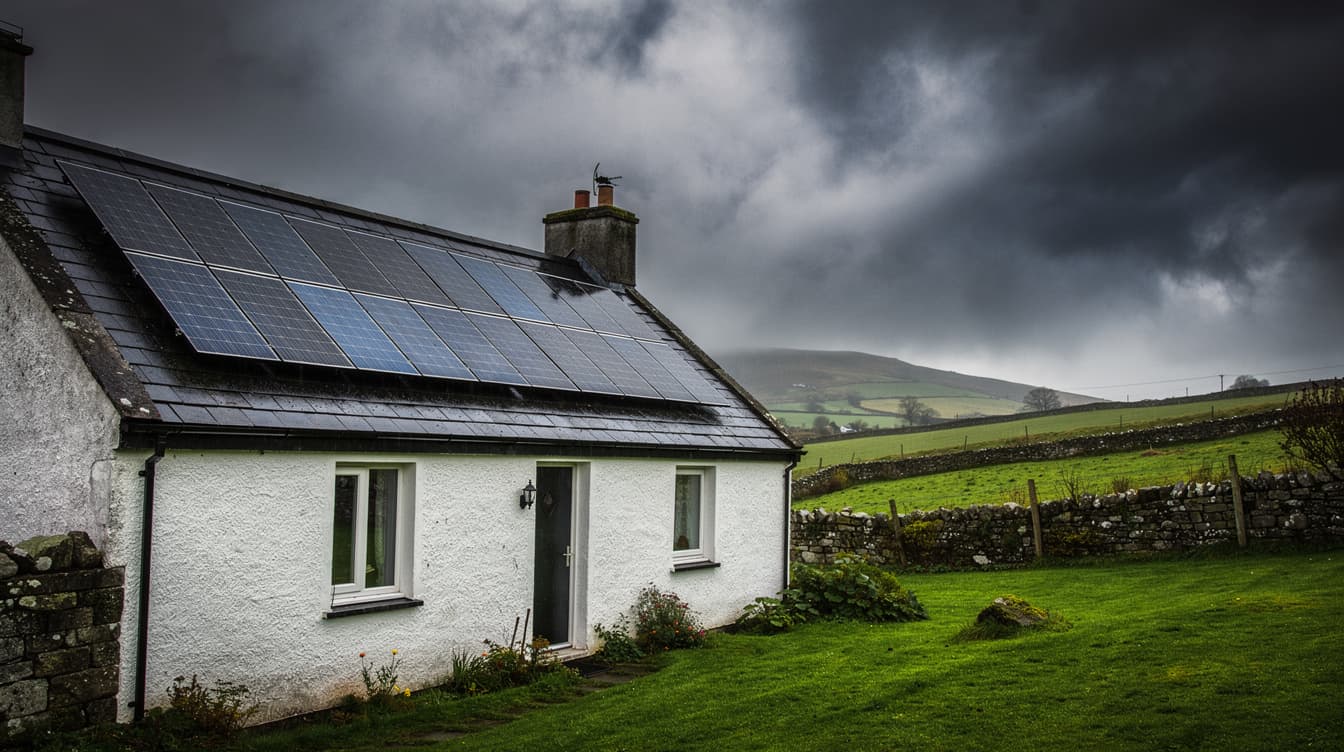
Solar Panels and Power Cuts in Ireland: Will Your System Keep the Lights On?
Storm Éowyn left 715,000 Irish homes without power in January 2025 — some for over 8 days. Many solar panel owners were shocked to discover their panels couldn’t power a single light bulb during the blackout. The reason? Standard grid-tied solar systems are designed to shut down during power cuts. But with the right setup — a battery, a hybrid inverter, and a changeover switch — your solar panels can keep your home running when the grid goes dark. Here’s exactly what you need, what it costs, and how to set it up in Ireland.
If you already have solar panels, or you’re planning an installation, power cut resilience should be high on your list. Ireland’s storms are getting more intense, and rural homes in particular face extended outages. The good news: adding backup capability to a solar system is straightforward and increasingly affordable in 2026.
Why Do Solar Panels Stop Working During a Power Cut?
This catches most people off guard. You’ve got panels on your roof generating electricity, yet when the grid goes down, everything switches off. It feels wrong — but it’s a deliberate safety feature.
The reason is called anti-islanding protection. ESB Networks requires every grid-connected solar system in Ireland to automatically disconnect when the grid fails. Without this, your panels would push electricity back into power lines that ESB crews are working on, creating a serious electrocution risk.
So your inverter detects the grid failure and shuts everything down — including your panels. No grid signal = no power, even on a sunny afternoon with panels generating at full capacity.
This applies to every standard grid-tied solar installation in Ireland. It doesn’t matter what brand of panels or inverter you have. Without additional equipment, your solar system is useless during a blackout.
What You Need to Use Solar During a Power Cut
To keep your home powered when the grid fails, you need three things working together:
1. A solar battery — This stores surplus electricity your panels generate during the day. During a power cut, the battery supplies stored energy to your home. Without a battery, there’s nowhere to store electricity when the grid disconnects.
2. A hybrid inverter — This is the brains of the system. A hybrid inverter manages power flow between your panels, battery, home circuits, and the grid. During a power cut, it isolates your home from the grid and switches to battery power. Standard string inverters can’t do this.
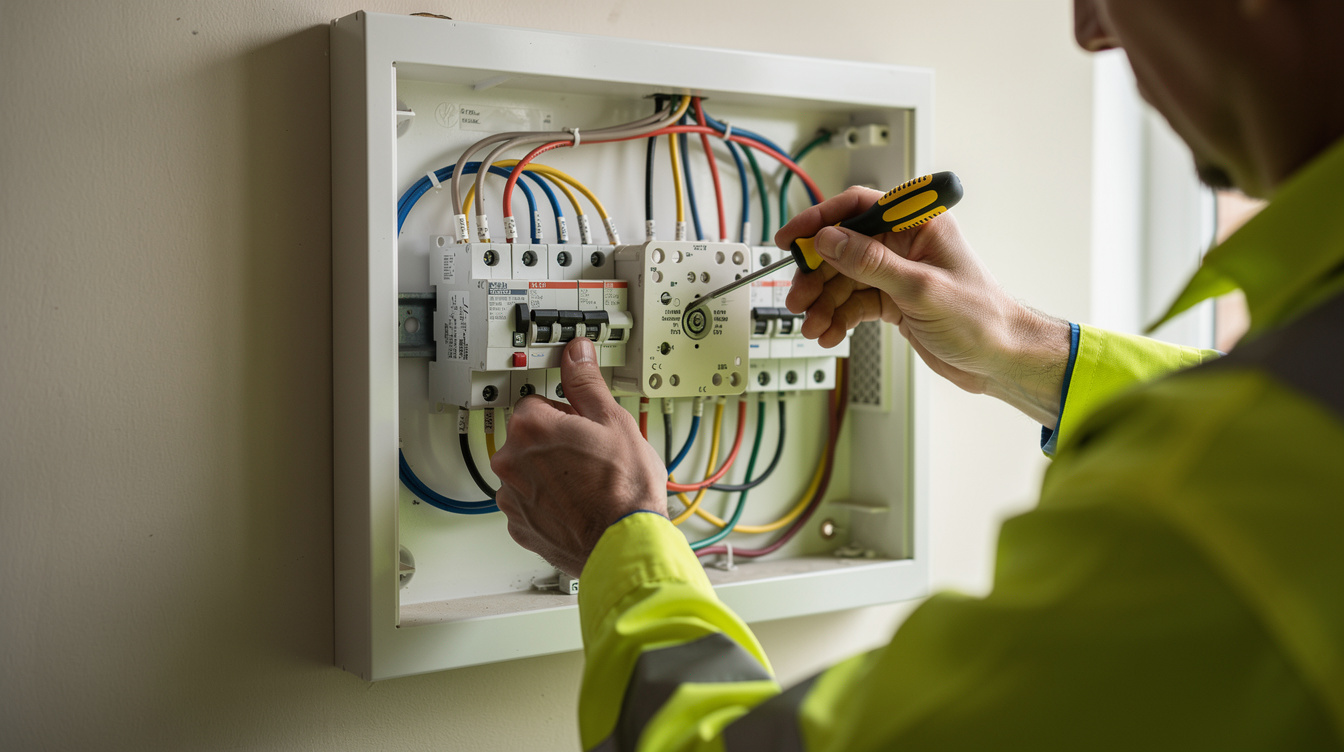
3. A changeover switch (EPS box) — The changeover switch physically disconnects your home from the grid, creating a safe “island” where your battery and panels can power your circuits without any risk of backfeeding. This is the piece most installers skip unless you specifically ask for it.
Important: Tell Your Installer You Want Backup
Many Irish solar installers don’t include changeover switches as standard. If you want power during outages, you must specifically request backup capability before installation. Retrofitting later is possible but more expensive.
How It Works: Step by Step
Here’s what happens when the grid goes down if your system is properly set up:
- Grid fails — Your hybrid inverter detects the loss of grid signal within milliseconds
- Changeover switch activates — Your home is physically disconnected from the grid (automatic or manual, depending on your setup)
- Battery takes over — The inverter switches to battery power, supplying your essential circuits
- Panels keep charging — During daylight, your solar panels continue generating and topping up the battery, extending your backup time significantly
- Grid returns — The system detects the grid is back, reconnects, and resumes normal operation
With a Tesla Powerwall, this switchover happens in milliseconds — you won’t even notice the lights flicker. With GivEnergy and Huawei systems using an EPS box, there’s typically a 10–20 second delay.
Want Solar With Backup Power?
Get a free quote from SEAI-registered installers who can set up your system with full power cut protection.
Battery Sizing: How Long Will Your Backup Last?
This is the question everyone asks — and the answer depends on how much you use and how big your battery is.
The average Irish home uses 10–12 kWh per day. But during a power cut, you’re probably not running the tumble dryer and dishwasher simultaneously. A typical “essential loads” setup — lights, fridge, phone charging, broadband router, a few sockets — might draw 3–5 kWh per day.
| Battery Size | Essential Loads Only | Normal Usage | With Solar Top-Up (Summer) |
|---|---|---|---|
| 5 kWh | 12–24 hours | 8–12 hours | 2–3 days |
| 10 kWh | 2–3 days | 18–24 hours | 4–7 days |
| 13.5 kWh | 3–4 days | 24–36 hours | 5–10 days |
| 20 kWh+ | 5–7 days | 2–3 days | Potentially indefinite |
The key insight: during daylight hours, your panels keep topping up the battery. In summer, a 5 kW solar system might generate 20–25 kWh per day — more than enough to run essential loads and recharge the battery. In winter (when storms are more likely), you might get 3–5 kWh, so a larger battery gives you more resilience.
For most Irish homes, 10–13.5 kWh is the sweet spot for meaningful power cut protection.
Which Batteries Offer Backup in Ireland?
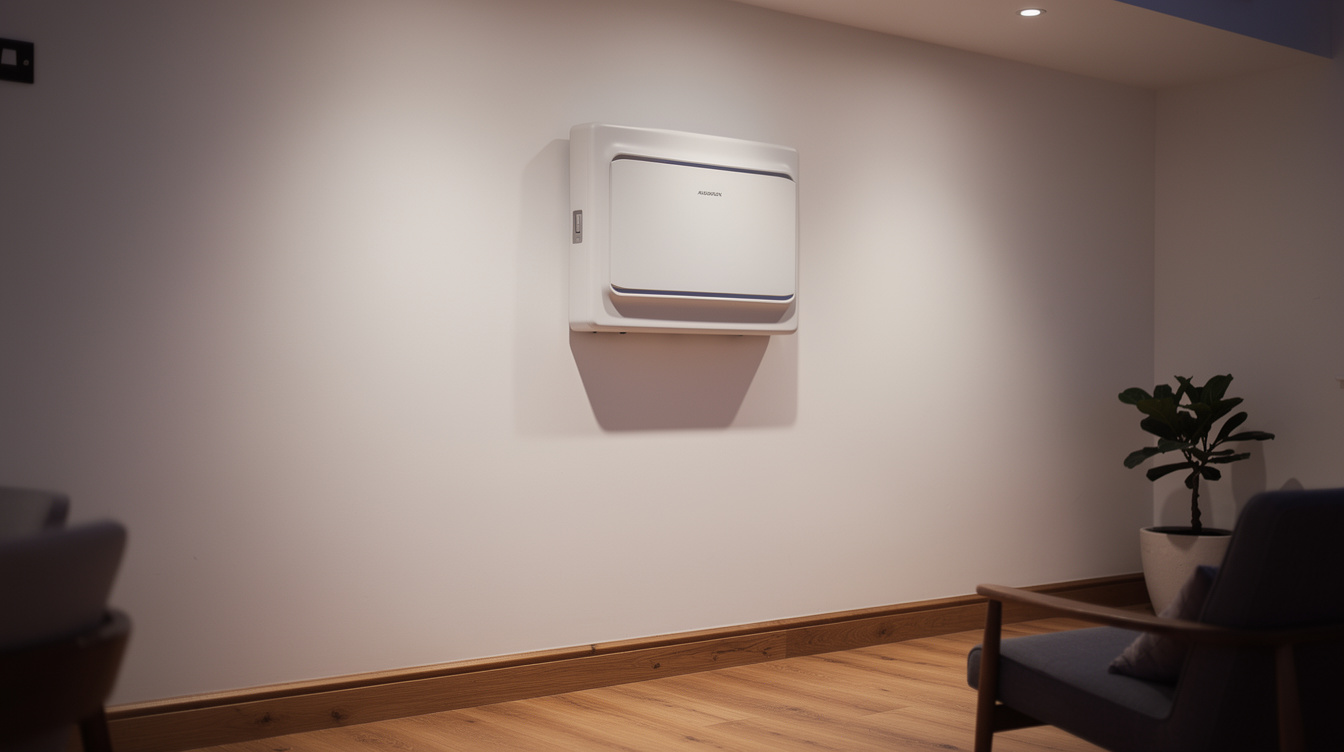
Not all batteries are equal when it comes to backup capability. Here’s how the main brands available in Ireland compare:
| Battery | Backup Type | Switchover Time | Extra Cost for Backup | Installed Price (with backup) |
|---|---|---|---|---|
| Tesla Powerwall 3 | Whole-home, automatic | Milliseconds | Included | €12,000–€15,000 |
| GivEnergy (EPS) | Essential circuits | 10–20 seconds | €500–€1,000 | €5,500–€8,500 |
| Huawei LUNA2000 | Essential circuits | 10–20 seconds | €500–€800 | €4,000–€8,500 |
| SolarEdge Home Battery | Essential circuits | Seconds | €500–€700 | €6,000–€9,000 |
Tesla Powerwall 3 is the clear winner for backup — it provides seamless whole-home backup as standard, with a switchover so fast you won’t notice the lights flicker. The downside is the price: at €12,000–€15,000 installed, it’s the most expensive option.
GivEnergy and Huawei offer excellent value for money. Their EPS (Emergency Power Supply) function backs up selected essential circuits — typically lights, fridge, sockets, and broadband. You choose which circuits to protect during installation. The 10–20 second switchover means a brief interruption, but for most households this is perfectly acceptable.
What Can You Actually Run During a Power Cut?
This depends on whether you have whole-home backup (Tesla Powerwall) or essential circuit backup (GivEnergy/Huawei EPS).
Essential circuit backup (most common):
- All lights throughout the house
- Fridge and freezer
- Broadband router and Wi-Fi
- Phone and laptop charging
- TV and entertainment
- Alarm system
- A few plug sockets for essentials
What you probably can’t run on essential circuits:
- Electric cooker/oven (3–10 kW draw — will drain your battery fast)
- Immersion heater (3 kW)
- Tumble dryer (2.5–3 kW)
- Electric shower (8–10 kW — far exceeds most inverter output)
A good rule of thumb: you can comfortably run everything except high-draw heating and cooking appliances. Most families find this perfectly liveable during an outage.
Ready to Go Solar?
Get your free personalised quote from SEAI-registered installers.
How Much Does Backup Capability Cost?
If you’re installing a brand new solar + battery system, adding backup capability typically costs €500–€1,000 extra on top of the battery system price. This covers the EPS module and changeover switch wiring.
If you already have solar panels with a battery and want to add backup, expect to pay €800–€1,500 for a retrofit, depending on your existing equipment and how many circuits you want to protect.
| Scenario | Typical Cost | What You Get |
|---|---|---|
| New install: 5 kW solar + 10 kWh battery + backup | €10,000–€14,000 | Full system with power cut resilience |
| Add battery + backup to existing solar | €4,500–€8,500 | Battery + EPS module + changeover switch |
| Add backup to existing solar + battery | €800–€1,500 | EPS module + changeover switch retrofit |
| Tesla Powerwall 3 (backup included) | €12,000–€15,000 | Whole-home seamless backup as standard |
Remember: the SEAI grant of €1,800 applies to your solar panel installation, which helps offset the overall system cost. However, the grant doesn’t specifically cover battery or backup equipment — it’s applied to the solar PV element.
The Storm Éowyn Wake-Up Call
Storm Éowyn in January 2025 was a turning point for Irish attitudes to energy resilience. At its peak, 715,000 homes and businesses lost power — the largest storm-related outage in Irish history. Many rural areas endured 8+ days without electricity.
What made it worse: thousands of homeowners with solar panels watched helplessly as their €8,000–€12,000 systems sat idle on the roof. Their panels were generating electricity, but without backup capability, none of it could reach their homes.
Since Storm Éowyn, Safe Electric (Ireland’s electrical safety regulator) has been reviewing the requirements for changeover switches, potentially making it simpler and cheaper to add backup capability. The message from the industry is clear: if you’re installing solar in 2026, factor in backup from day one.
Common Myths About Solar and Power Cuts
Myth: “ESB won’t let me have a backup switch.”
False. ESB Networks has no objection to properly installed changeover switches. The key requirement is that your system cannot backfeed into the grid during an outage. A correctly wired changeover switch ensures this. Any SEAI-registered installer can set it up.
Myth: “I need to go fully off-grid for backup power.”
False. You stay connected to the grid for normal use. The backup system only activates when the grid fails, and reconnects automatically when power returns. You get the best of both worlds.
Myth: “My solar panels alone can power my house during a cut.”
Not directly. Solar output fluctuates throughout the day and drops to zero at night. You need a battery to store and smooth out that power. The battery is essential — panels alone aren’t enough.
Myth: “A portable generator is cheaper than a battery.”
In upfront cost, perhaps (€500–€1,500 for a decent generator). But a generator runs on petrol or diesel, is noisy, produces fumes, and doesn’t save you a cent on your electricity bill the other 360 days a year. A solar battery saves you €400–€800 annually on electricity and provides backup power — it pays for itself over time.
Should You Add Backup to Your System?
Here’s a practical framework for deciding:
Backup is strongly recommended if:
- You live in a rural area with a history of extended outages
- You have medical equipment that needs continuous power
- You work from home and can’t afford to lose broadband/power
- You have a well pump (no mains water during power cuts)
- You’re installing a new system anyway — the marginal cost is low
Backup is less critical if:
- You’re in an urban area with reliable grid supply
- Your outages are typically resolved within 1–2 hours
- You already have a gas cooker and gas heating (so only lights and appliances are affected)
For most people installing solar in 2026, spending the extra €500–€1,000 for backup capability is an easy decision. It’s cheap insurance against an increasingly common problem.
Protect Your Home From Power Cuts
Get a free quote for a solar + battery system with full backup capability from trusted Irish installers.
How to Get Solar Backup Installed
- Choose an SEAI-registered installer — This is essential for grant eligibility. Check the SEAI registered installer list.
- Specifically request backup/EPS capability — Don’t assume it’s included. Ask: “Will this system power my essential circuits during a grid outage?”
- Decide which circuits to protect — Your installer will help you choose. Typically: lights, fridge/freezer, sockets, broadband, alarm.
- Consider battery size carefully — For meaningful backup, aim for 10 kWh minimum. See our battery comparison guide for detailed options.
- Get 3 quotes — Prices vary significantly. Use our free quote tool to compare offers from verified installers.
The entire installation typically takes 1–2 days. Adding backup capability doesn’t add significant time — it’s mostly wiring work on your distribution board.
The Bottom Line
Solar panels alone won’t keep your lights on during a power cut. But add a battery with backup capability, and your home becomes one of the most resilient on the street. For an extra €500–€1,000 on top of a battery system, you get peace of mind that’s hard to put a price on — especially if you lived through Storm Éowyn.
If you’re planning a solar installation in 2026, the advice is simple: include backup from day one. It’s cheap to add during installation, expensive to retrofit later, and increasingly essential as Irish weather intensifies.
For more on choosing the right battery, see our Best Solar Batteries Ireland 2026 guide. To understand the full costs of a solar system, check our Solar Panel Costs Ireland 2026 breakdown.
Related Articles
Solar Panel Demand in Ireland Has Surged 96% in 2026 — Here’s Why (And Why You Should Act Now)
SEAI solar applications up 96%, Iran war pushing electricity prices higher. Why Irish homeowners are going solar in record numbers and how to act now.
Solar Panel Grants for Landlords in Ireland 2026: SEAI Grant, Tax Relief & BER Rules
Landlords can claim the SEAI solar grant plus up to €10,000 tax relief per rental property. Full 2026 guide to eligibility, BER rules, and ROI.
Best Electricity Tariff for Solar Panel Owners in Ireland 2026: Every Supplier Compared
Compare every Irish electricity supplier's import and export rates for solar homes. SSE, Energia, Pinergy, Electric Ireland and more ranked for April 2026.