
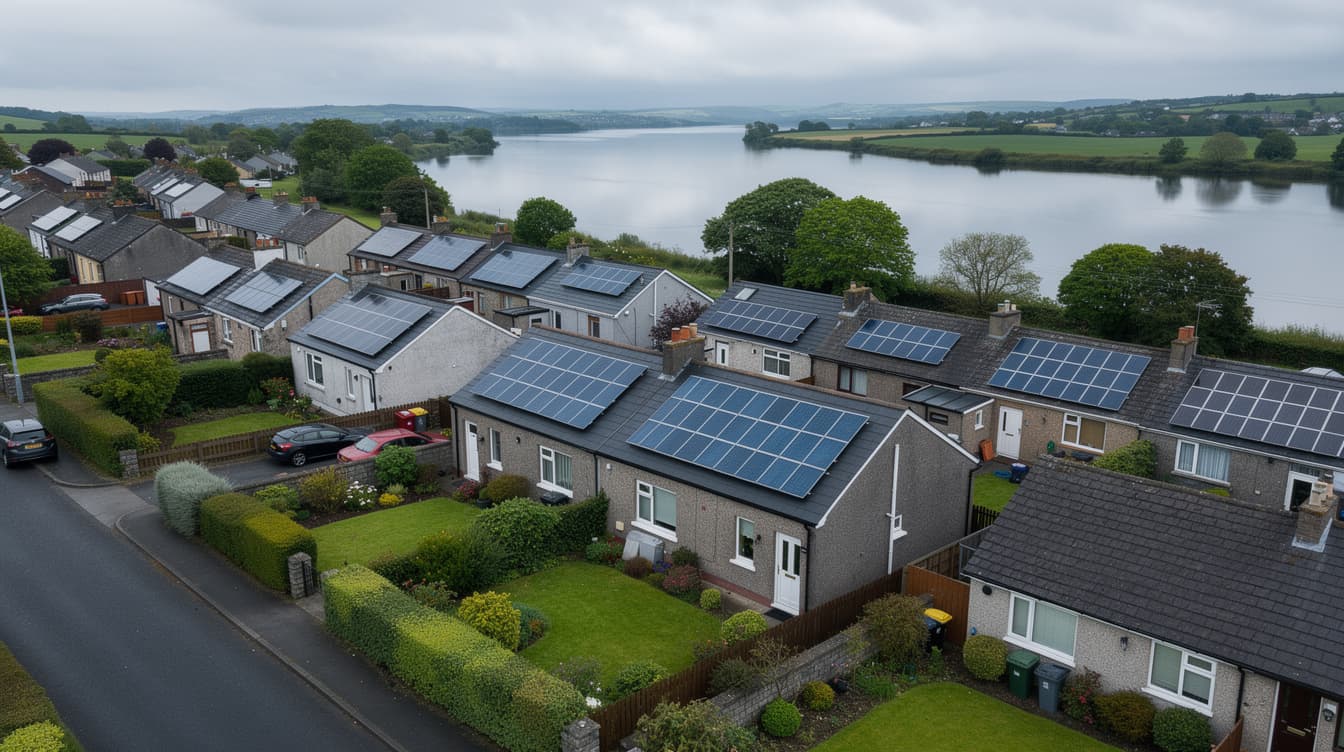
Solar Panels Limerick 2026: Costs, Installers, Output & Savings for the Mid-West
Limerick might not be the first county that springs to mind when you think about solar energy in Ireland — but it should be. Sitting on the Shannon Estuary with 1,302 hours of annual sunshine, Limerick gets more sun than the national average and benefits from the same southern-latitude advantage that makes Cork and Waterford strong solar performers. With over 85,000 homes in the county, rising electricity prices, and the SEAI grant still at €1,800 for 2026, there has never been a better time for Limerick homeowners to go solar.
This guide covers everything specific to Limerick: real costs after the grant, expected output by system size, how to find a trustworthy installer, planning rules, and the financial payback you can realistically expect. No fluff, just the numbers that matter.
Why Limerick Is a Strong County for Solar
Limerick sits in Ireland’s mid-west, on roughly the same latitude as Cork city, and benefits from Ireland’s “southern belt” of higher solar irradiance. Here’s how it compares:
| Location | Annual Sunshine (hours) | Typical Output (kWh/kWp) |
|---|---|---|
| Limerick | 1,302 | 900–950 |
| Cork | 1,417 | 920–980 |
| Dublin | 1,367 | 880–940 |
| Galway | 1,252 | 850–900 |
| Donegal | 1,150 | 800–860 |
With 1,302 sunshine hours and a typical output of 900–950 kWh per kWp installed, a standard 5 kW system in Limerick will generate roughly 4,500–4,750 kWh per year — enough to cover 60–80% of a typical household’s annual electricity consumption.
Limerick also has practical advantages. The county has a good mix of detached, semi-detached, and terraced housing stock. Many estates built in the 1990s and 2000s around Castletroy, Raheen, and Dooradoyle have south or south-west facing roofs with minimal shading — ideal for solar.
Solar Panel Costs in Limerick (2026)
Solar panel pricing in Limerick is competitive with — and often slightly below — Dublin rates, thanks to lower overheads and a healthy number of local installers. Here are the typical costs you can expect in 2026:
| System Size | Panels | Cost Before Grant | SEAI Grant | Net Cost |
|---|---|---|---|---|
| 2 kW | 4–5 | €3,500–€4,500 | €1,400 | €2,100–€3,100 |
| 3.5 kW | 7–8 | €5,000–€6,500 | €1,700 | €3,300–€4,800 |
| 5 kW | 10–12 | €6,500–€8,500 | €1,800 | €4,700–€6,700 |
| 6.5 kW | 13–15 | €8,000–€10,500 | €1,800 | €6,200–€8,700 |
Key notes on Limerick pricing:
- All prices include 0% VAT (the residential solar VAT exemption continues through 2026)
- The SEAI grant pays €700 per kWp up to 2 kWp, then €200 per additional kWp up to 4 kWp, capped at €1,800
- Battery storage adds €2,500–€5,000 depending on capacity (5–10 kWh)
- Scaffolding costs in Limerick are typically €300–€600, included in most quotes
For a detailed national breakdown, see our solar panel costs Ireland 2026 guide.
How Much Will You Save?
The savings depend on your system size, how much electricity you use during the day, and whether you have a battery or export tariff. Here’s what a typical Limerick household can expect with a 5 kW system:
| Savings Component | Annual Value |
|---|---|
| Self-consumption savings (60% of output at €0.30/kWh) | €810–€855 |
| Export payments (40% at €0.15–€0.24/kWh CEG) | €270–€456 |
| Total annual benefit | €1,080–€1,311 |
At these rates, a 5 kW system in Limerick pays for itself in 4–6 years after the SEAI grant. With panels warrantied for 25–30 years, that leaves two decades of near-free electricity.
Want to maximise savings? Read our guide to the best electricity tariff for solar panel owners and our Clean Export Guarantee explainer to understand export payments.
Ready to Go Solar in Limerick?
Get your free personalised quote from SEAI-registered installers covering Limerick city and county.
The SEAI Grant: How It Works in 2026
The SEAI solar electricity grant is available to all homeowners in Ireland whose home was built and occupied before 2021. Here’s the quick breakdown:
- Grant amount: Up to €1,800 (confirmed unchanged for 2026 despite planned reductions)
- Structure: €700 per kWp for the first 2 kWp, plus €200 per kWp from 2–4 kWp
- VAT: 0% on residential solar supply and installation (saving you an additional 13.5% you’d otherwise pay)
- BER requirement: A BER assessment must be carried out after installation
- Installer requirement: Must use an SEAI-registered installer (see below)
Important: The Government plans to reduce the grant by up to €300 per year, with the scheme ending by 2029. Locking in the full €1,800 now is worth considering — next year the grant could be €1,500 or less.
Finding a Solar Installer in Limerick
Limerick is well served by both local and national solar installers. The key rule: your installer must be SEAI-registered to qualify for the grant. Here’s how to find a good one:
- Check the SEAI register: Visit SEAI’s Solar PV Company list and filter by County Limerick
- Get at least 3 quotes: Prices vary by €1,000–€3,000 for the same system size. Always compare
- Check reviews and completed installs: Ask each installer for references in your area
- Verify what’s included: Scaffolding, commissioning, BER assessment, and grid connection paperwork should all be in the quote
Some SEAI-registered installers active in Limerick include Budget Solar, Mitros Solar, Wizer Energy, and Treacy Solar, among others. For a full list and comparison tips, see our guide on how to choose a solar installer in Ireland.
You can also browse our solar installer directory to find companies covering your area.
Limerick-Specific Planning and Roof Considerations
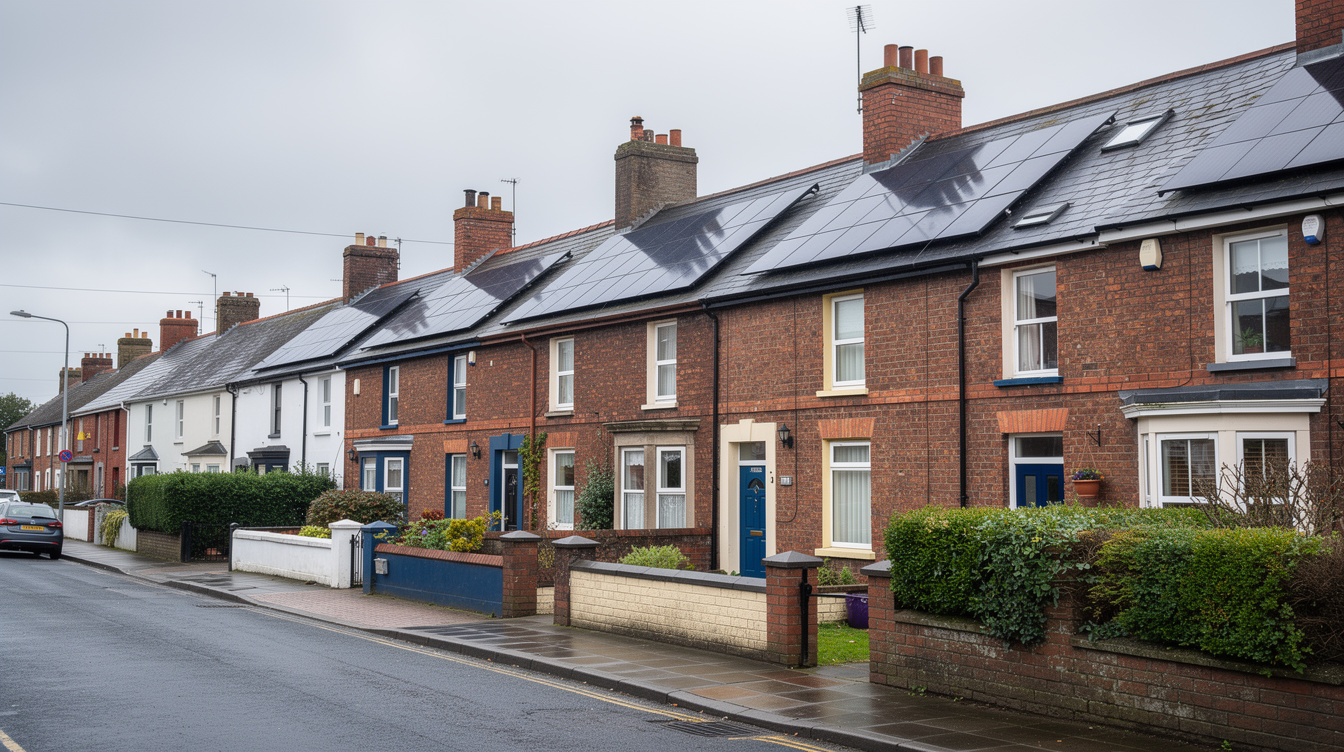
The good news: most residential solar installations in Limerick don’t need planning permission. Under Ireland’s exempt development rules, you can install solar panels on your roof without planning permission provided:
- Panels don’t project more than 15 cm above the roof surface
- Panels are at least 50 cm from any roof edge
- Total panel area doesn’t exceed 12 m² (or 50 m² for panels on the ground within your curtilage)
- Your home isn’t a protected structure or in an Architectural Conservation Area (ACA)
Limerick-specific note: Parts of Limerick city centre, particularly the Georgian areas around the Crescent and O’Connell Street, fall within ACAs. If your home is in one of these areas, you’ll need planning permission from Limerick City and County Council. Your installer should flag this during the site survey.
For more detail, see our guide to planning permission exemptions for solar panels.
Roof Types Common in Limerick
Limerick’s housing stock includes everything from Georgian terraces in the city to 1970s bungalows in the suburbs and modern estates in Castletroy and Mungret. Here’s what each means for solar:
| Roof Type | Common In | Solar Suitability |
|---|---|---|
| Pitched slate/concrete tile (30–40°) | Most estates, bungalows | Excellent — ideal angle, standard mounting |
| Flat roof | Extensions, some apartments | Good — tilt frames needed (+€200–€400) |
| Terraced (limited south face) | City centre, older estates | Moderate — may limit to 2–3 kW system |
| Bungalow (large roof area) | Rural Limerick, suburbs | Excellent — room for 5–10 kW systems |
Live in a bungalow? Our bungalow solar guide covers why bungalows are ideal for solar. Got a flat roof extension? See our flat roof solar guide.
What System Size Is Right for Your Limerick Home?
The right system size depends on your electricity usage, roof space, and budget. Here’s a quick guide based on typical Limerick households:
| Home Type | Annual Usage | Recommended System | Net Cost (after grant) |
|---|---|---|---|
| 2-bed apartment/terrace | 3,000–3,500 kWh | 2–3 kW | €2,100–€3,800 |
| 3-bed semi-detached | 4,200–5,000 kWh | 3.5–5 kW | €3,300–€6,700 |
| 4-bed detached | 5,500–7,000 kWh | 5–6.5 kW | €4,700–€8,700 |
| Large home / heat pump | 7,000–10,000 kWh | 6.5–10 kW | €6,200–€12,000 |
If you have a heat pump or plan to charge an electric car at home, go larger. The extra panels pay for themselves faster because you’re consuming more of the solar electricity directly rather than exporting it at a lower rate.
Use our free solar panel calculator to get a personalised estimate based on your roof and usage.
Not Sure What Size You Need?
Our SEAI-registered installers will survey your roof and recommend the right system for your home — free of charge.
Solar Output by Month in Limerick
One of the most common questions from Limerick homeowners is “will solar panels actually work here?” The answer is a clear yes. Here’s the monthly output profile for a typical 5 kW south-facing system in Limerick:
| Month | Output (kWh) | % of Annual Total |
|---|---|---|
| January | 120 | 2.6% |
| February | 190 | 4.1% |
| March | 360 | 7.8% |
| April | 490 | 10.6% |
| May | 580 | 12.5% |
| June | 570 | 12.3% |
| July | 540 | 11.7% |
| August | 480 | 10.4% |
| September | 370 | 8.0% |
| October | 240 | 5.2% |
| November | 140 | 3.0% |
| December | 90 | 1.9% |
| Total | ~4,630 | 100% |
May and June are the peak months, but even in winter (November–February), you’ll generate enough to cover daytime standby loads and reduce your grid import. For more on winter performance, see our guide on average solar panel output in Ireland.
Should You Add a Battery?
A battery lets you store excess solar electricity generated during the day and use it in the evening when you’re home. In Limerick, this is particularly useful because:
- Higher self-consumption: Without a battery, a typical home uses 30–40% of solar output directly. With a battery, this jumps to 60–80%
- Evening usage shift: Most Limerick households use the bulk of their electricity from 5pm–10pm — exactly when solar generation drops
- Export rates are lower than import rates: You get €0.15–€0.24/kWh for exports vs paying €0.28–€0.35/kWh for imports. Storing and using solar electricity yourself saves more
Typical battery costs in 2026:
- 5 kWh battery: €2,500–€3,500 (e.g., Huawei LUNA 2000)
- 10 kWh battery: €4,000–€5,500 (e.g., GivEnergy All-in-One)
- 13.5 kWh Tesla Powerwall: €8,500–€10,000 installed
For most Limerick homes, a 5–10 kWh battery paired with a 5 kW solar system offers the best return. Read our full comparison in best solar batteries Ireland 2026.
Selling Electricity Back to the Grid
Under the Clean Export Guarantee (CEG), all electricity suppliers in Ireland must offer a payment for solar electricity you export. Current rates in 2026 range from €0.15 to €0.24 per kWh, depending on your supplier.
For a 5 kW system in Limerick without a battery, you’ll export roughly 40% of your output — that’s about 1,850 kWh, worth €277–€444 per year depending on your tariff. You’ll need a smart meter to receive export payments — ESB Networks is rolling these out across Limerick, and you can request one for free if yours hasn’t been upgraded yet.
Get Limerick Solar Quotes Today
Compare prices from multiple SEAI-registered installers. Takes 30 seconds.
Frequently Asked Questions
Do solar panels work well in Limerick’s climate?
Yes. Solar panels work on daylight, not direct sunshine. Limerick gets 1,302 hours of sunshine annually and has a typical output of 900–950 kWh per kWp — well above what’s needed for a strong return on investment. Even on overcast days, panels generate 10–25% of their rated capacity.
How long does installation take?
A typical residential installation in Limerick takes 1–2 days on the roof, plus 1–2 weeks for grid connection paperwork and ESB meter changeover. From signing the contract, most Limerick installers complete within 4–8 weeks. See our installation timeline guide for the full breakdown.
Will solar panels increase my home’s value?
Research suggests solar panels can add 2–4% to an Irish home’s value, particularly by improving the BER rating. In Limerick, where the median house price is around €285,000, that’s a potential €5,700–€11,400 uplift. Read more in our guide on solar panels and home value.
Can I get solar panels if I rent in Limerick?
If you’re a renter, ask your landlord to consider installing panels — they can claim the SEAI grant and tax relief on rental properties. Alternatively, plug-in solar panels are an option for balconies and gardens that don’t require landlord permission or planning.
Do I need planning permission?
Not in most cases. Rooftop solar panels are exempt development in Ireland. The main exceptions are protected structures and homes in Architectural Conservation Areas (parts of Limerick city centre). Check with Limerick City and County Council if you’re unsure.
Related Articles
10 kW Solar Panel System Ireland 2026: Costs, Output, Panels & Is It Worth Going Big?
10 kW solar system Ireland 2026: costs from €10,200 after grant, 9,250 kWh output, 22-24 panels needed. Who needs 10 kW and when 5 kW is enough.
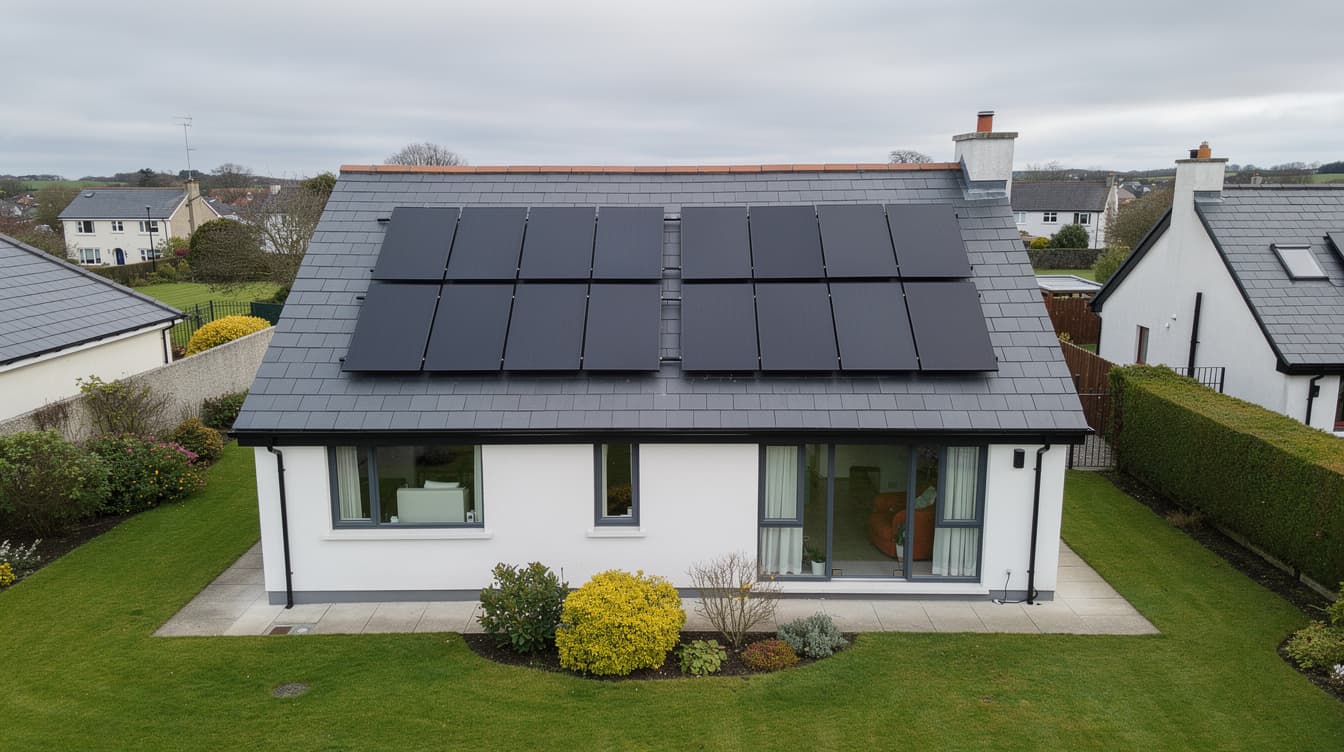
5 kW Solar Panel System Ireland 2026: Costs, Output, Panels Needed & Is It the Right Size?
5 kW solar system Ireland 2026: costs from €5,700 after grant, 11-12 panels, 4,500 kWh output. Full breakdown of savings, payback and battery options.
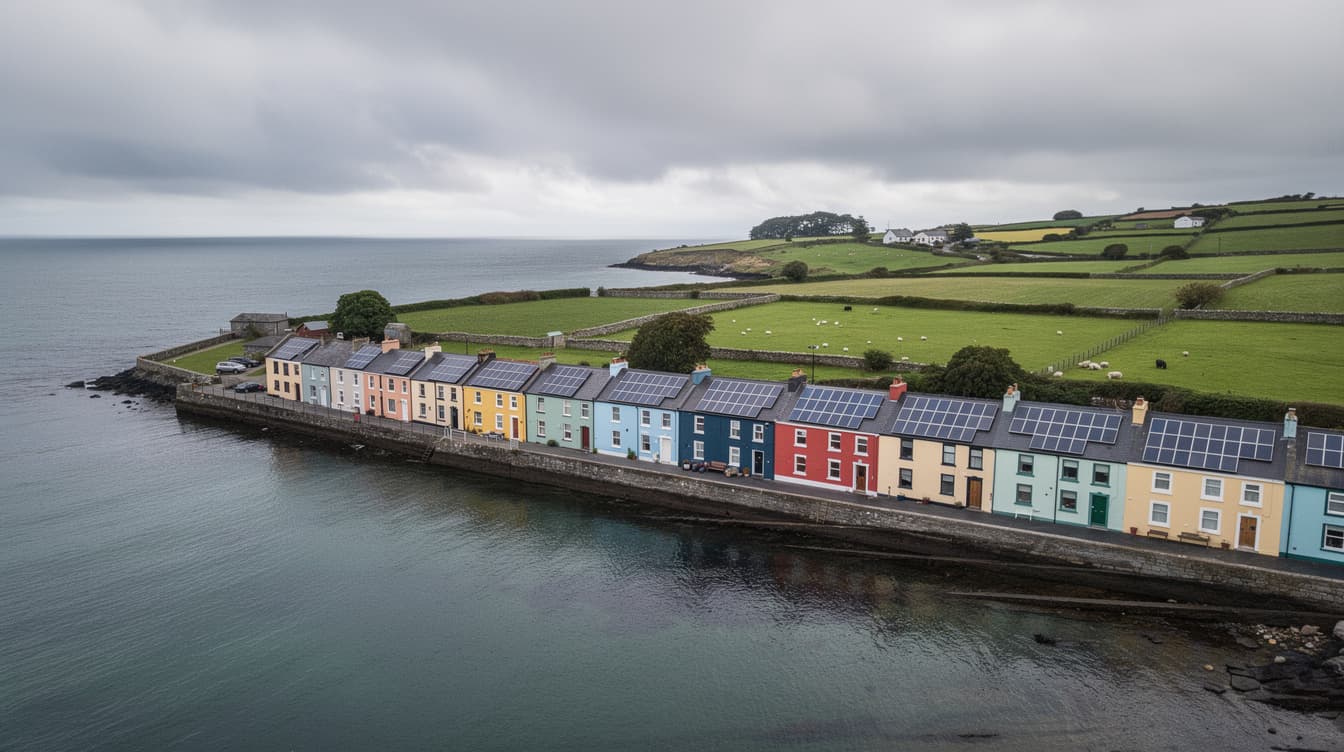
Solar Panels Galway 2026: Costs, Installers, Output & the West Coast Solar Myth
Solar panels in Galway 2026: costs from €2,700 after grant, 886 kWh/kWp output, wind and salt air tips, installer guide. County-specific data.