
Solar Panels on a Flat Roof in Ireland 2026: Mounting, Costs & Planning Rules
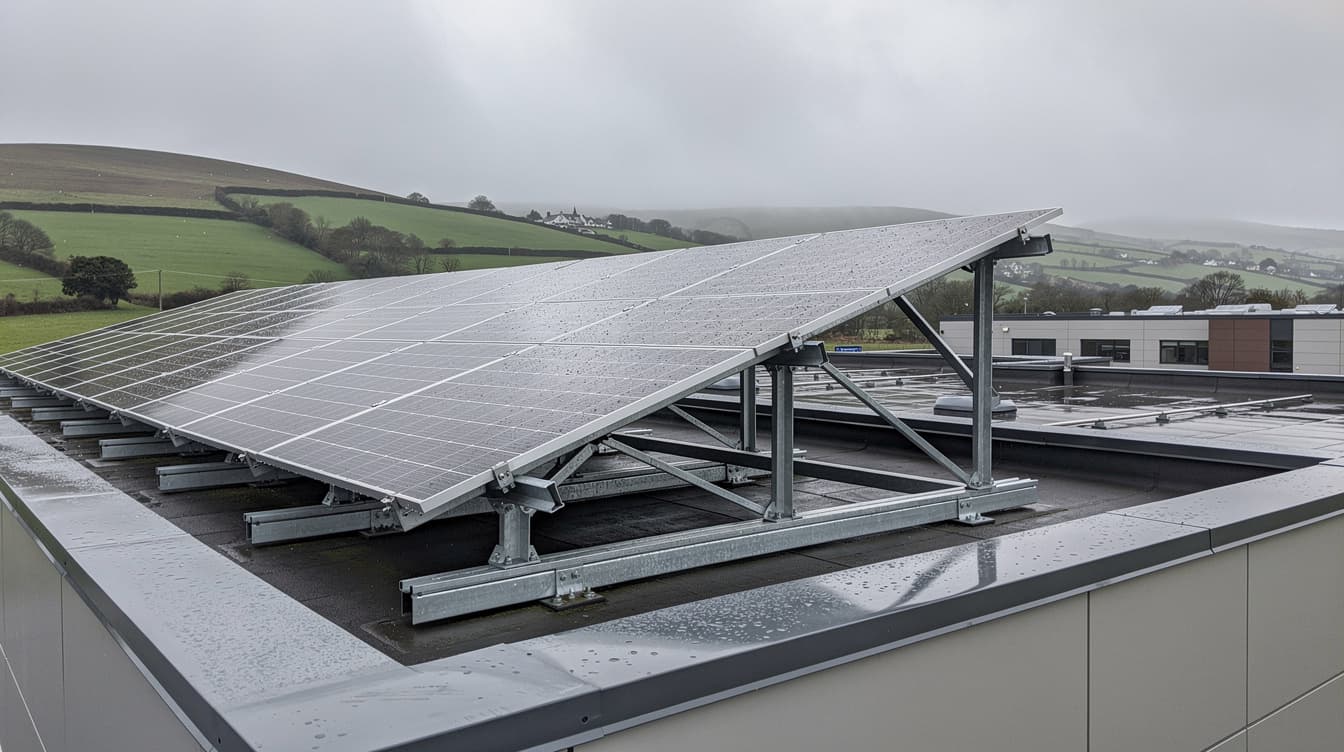
Got a flat roof? You are not out of luck. Solar panels work brilliantly on flat roofs in Ireland — and in some ways, a flat roof is actually easier to work with than a pitched one. The panels are mounted on angled tilt frames that point them towards the sun, and the installation does not require drilling into your roof membrane. This guide covers everything: mounting methods, costs, planning rules, and whether your flat roof can take the weight.
Flat Roof? No Problem
Get free quotes from installers experienced with flat roof systems in your area.
Flat Roof vs Pitched Roof: How Does It Compare?
The first thing flat-roof homeowners want to know: will I get less electricity? Here is the honest comparison:
| Factor | Pitched Roof (30–40°) | Flat Roof (with tilt frames) |
|---|---|---|
| Annual output | ~950 kWh per kWp | ~900–950 kWh per kWp (at 15–30° tilt) |
| Panel orientation | Fixed by roof direction | You choose — can face due south |
| Installation cost (4.4 kWp) | €6,500–€8,500 | €7,000–€9,500 (€500–€1,000 extra) |
| Roof penetrations | Yes — brackets bolted through tiles | Usually none — ballasted systems sit on top |
| Maintenance access | Requires scaffolding or ladders | Walk-on access — much easier |
| Visual impact | Visible from street level | Often hidden behind parapet walls |
| SEAI grant | Up to €1,800 | Up to €1,800 (same grant) |
The key advantage: on a flat roof, you get to choose the orientation. If your pitched roof faces east or west, you lose 15–20% of potential output. A flat roof lets you point every panel due south at the optimal angle — so a flat roof system can sometimes outperform a poorly-oriented pitched roof.
Three Mounting Methods for Flat Roofs
Not all flat roof installations are the same. The method your installer recommends depends on your roof type, structural capacity, and wind exposure.
1. Ballasted Systems (Most Common)
The panels sit on angled metal frames, held in place by concrete ballast blocks — no drilling into your roof membrane at all. This is the most popular method in Ireland because it preserves your roof warranty and waterproofing.
- How it works: Metal tilt frames hold panels at 10–15°. Concrete blocks (typically 20–40 kg per panel) weigh the system down.
- Pros: No roof penetrations, preserves waterproofing, relatively quick to install, can be removed if roof needs repair.
- Cons: Heavy — a 10-panel system adds 200–400 kg to your roof. Needs structural assessment.
- Best for: Concrete flat roofs, commercial buildings, extensions with flat roofs.
2. Mechanically Fixed Systems
Tilt frames are bolted directly to the roof structure through the membrane. This is lighter but requires careful waterproofing at each fixing point.
- Pros: Lighter than ballasted systems, more wind-resistant.
- Cons: Penetrates the roof membrane — risk of leaks if not sealed correctly. Voids some roof warranties.
- Best for: Lightweight roof structures that cannot take ballast weight, or very exposed sites with high wind loads.
3. Hybrid Systems
A combination of mechanical fixing and ballast. A few anchor points secure the frame to the roof, with ballast reducing the number of penetrations needed.
- Pros: Less weight than full ballast, fewer penetrations than full mechanical fixing.
- Cons: Still requires some roof penetrations.
- Best for: Sites with moderate wind exposure and limited structural capacity.
What Angle Should Flat Roof Panels Be Tilted?
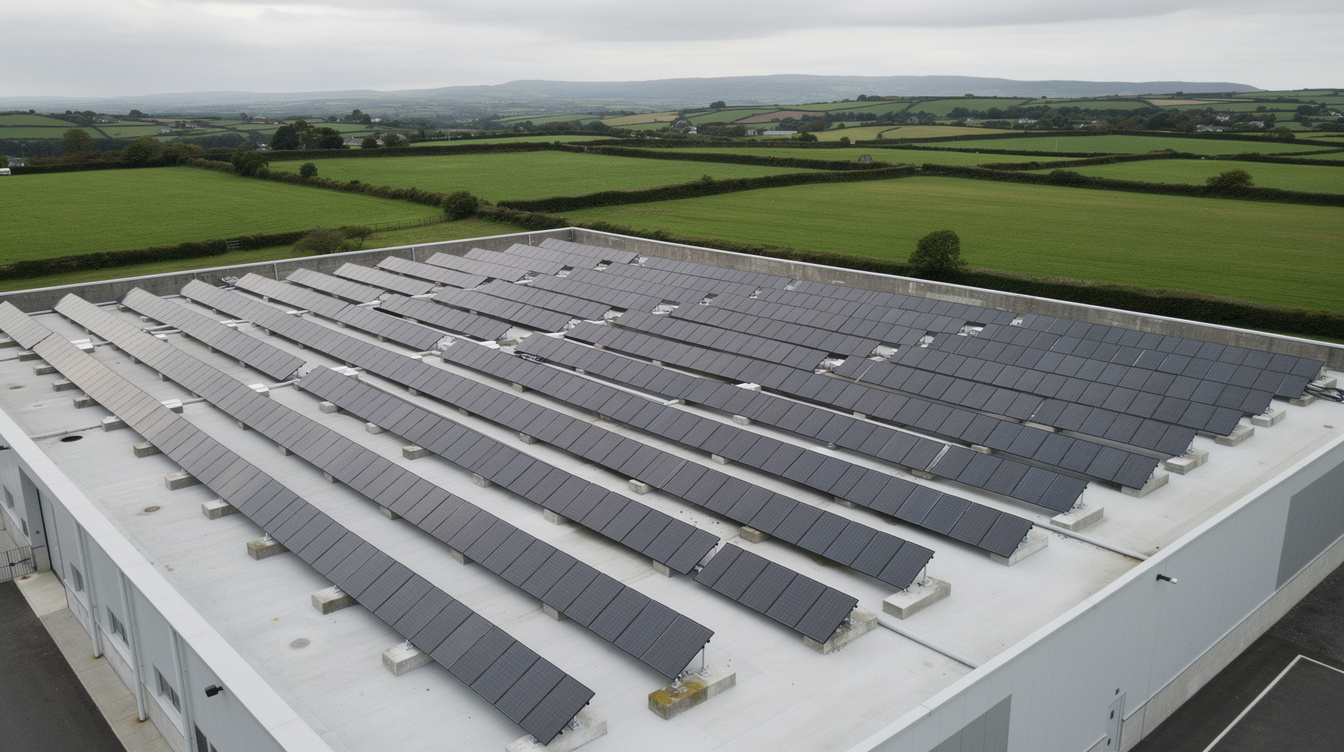
On a pitched roof, the roof angle is what it is. On a flat roof, you choose. In Ireland, the optimal tilt angle for maximum annual output is 30–35° from horizontal, facing due south. But most flat roof installations use a lower angle of 10–15°. Here is why:
| Tilt Angle | Output vs Optimal | Spacing Needed | Ballast Required | Panels That Fit (50m² roof) |
|---|---|---|---|---|
| 10° | 93–95% | Minimal | Low | 18–20 |
| 15° | 95–97% | Moderate | Moderate | 14–16 |
| 30° | 100% | Large (shading gaps) | High | 8–10 |
At 10–15°, you lose only 3–7% of maximum output but fit nearly twice as many panels. For most Irish homes with limited flat roof space, the lower tilt wins because total energy production is higher — more panels at slightly lower efficiency beats fewer panels at optimal efficiency.
Another bonus of a low tilt: rainwater runs off more evenly, keeping panels cleaner. Ireland has enough rain to provide natural panel cleaning — but flat panels can pool water and accumulate dirt. A 10–15° tilt solves this.
Can Your Flat Roof Take the Weight?
This is the most important question for any flat roof installation, and you need a definitive answer before signing a contract.
The numbers:
- A solar panel weighs approximately 20–22 kg
- A tilt frame adds 5–8 kg per panel
- Concrete ballast adds 20–40 kg per panel
- Total per panel: 45–70 kg (depending on system type)
- A 10-panel system: 450–700 kg total
Spread across 25–30 m², this works out to roughly 15–25 kg/m² — well within the capacity of most concrete flat roofs (designed for 150+ kg/m²). However, some flat roofs — particularly older timber-framed flat roofs on extensions — may not have enough capacity.
Always Get a Structural Assessment
Any reputable installer will either check your roof structure themselves or recommend a structural engineer. This typically costs €200–€400 for a standalone assessment, but many installers include it in their quote. If an installer says "it will be fine" without checking, that is a red flag.
Planning Permission for Flat Roof Solar Panels
Good news: most flat roof solar installations in Ireland are exempt development and do not need planning permission. But there are specific rules for flat roofs that differ from pitched roofs:
- Height limit: Panels must not project more than 50 cm above the flat roof surface (compared to 15 cm for pitched roofs). At a 10–15° tilt, standard panels easily stay within this limit.
- Parapet setback: There must be a gap of at least 200 mm between any panel and the parapet wall around the edge of the roof.
- No area limit: Since 2023, there is no limit on the roof area you can cover with solar panels on a house — the old 12 m² / 50% rule has been abolished.
- Conservation areas: If your home is in an Architectural Conservation Area or is a Protected Structure, you may still need planning permission.
- Solar Safeguarding Zones: In 43 designated zones near airports and helipads, restrictions on rooftop area may still apply due to glint and glare concerns.
For most homeowners, a flat roof installation at 10–15° tilt will comfortably meet all exemption requirements.
Flat Roof Solar Panel Costs in Ireland (2026)
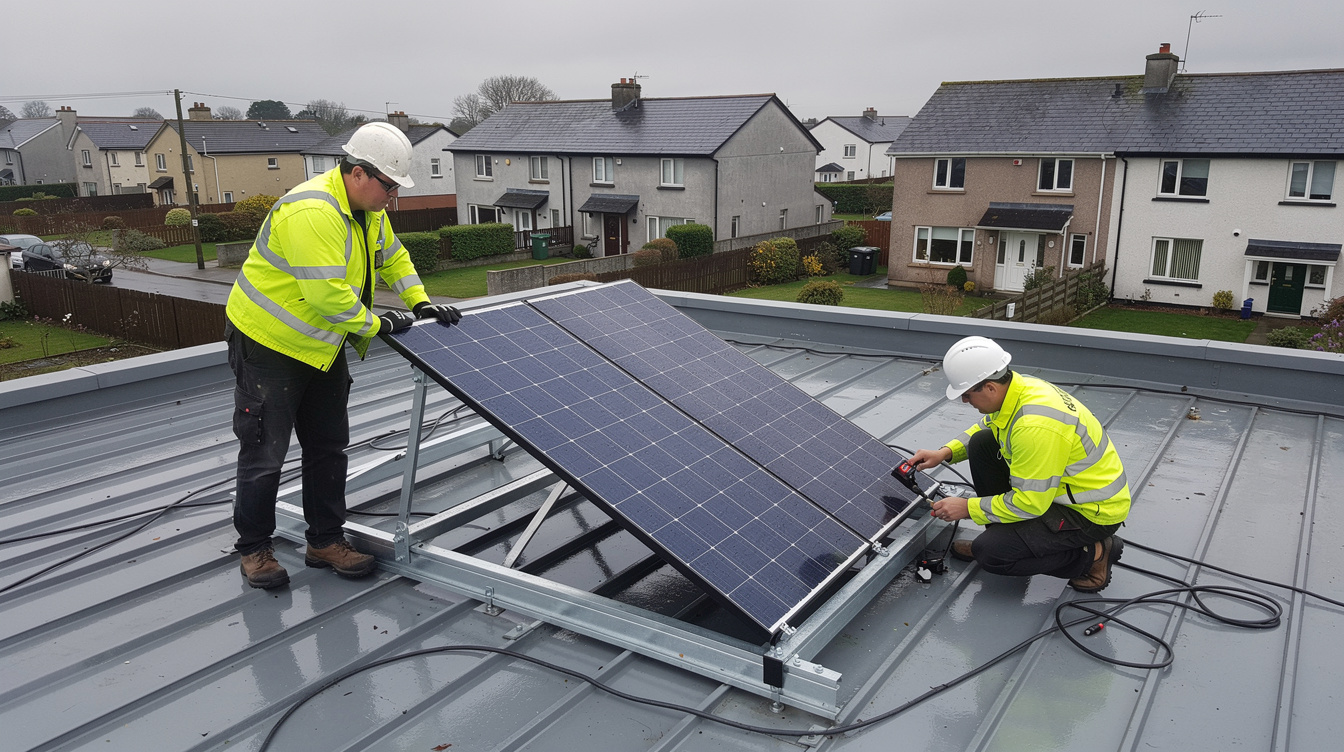
Flat roof systems cost slightly more than pitched roof installations due to the tilt frames and ballast. Here is what to expect in 2026:
| System Size | Pitched Roof Cost | Flat Roof Cost | After SEAI Grant | Annual Savings |
|---|---|---|---|---|
| 2.2 kWp (5 panels) | €4,000–€5,000 | €4,500–€5,500 | €3,100–€4,100 | €500–€700 |
| 3.3 kWp (8 panels) | €5,500–€7,000 | €6,000–€7,500 | €4,400–€5,900 | €700–€1,000 |
| 4.4 kWp (10 panels) | €6,500–€8,500 | €7,000–€9,500 | €5,200–€7,700 | €900–€1,300 |
| 6.6 kWp (15 panels) | €8,500–€11,000 | €9,000–€12,000 | €7,200–€10,200 | €1,200–€1,800 |
The €500–€1,000 premium for flat roof mounting is modest compared to the total system cost. The SEAI grant of up to €1,800 applies equally to flat and pitched roof installations. And because flat roof installations sit at 0% VAT (same as pitched), there is no tax difference either.
Where Flat Roofs Are Common in Irish Homes
You might not think of your home as having a flat roof, but many Irish houses have flat roof sections that are ideal for solar:
- Rear extensions — The most common flat roof in Irish housing. Kitchen and dining room extensions built in the 1980s–2000s frequently have flat or very low-pitch roofs.
- Garages — Attached and detached garages often have flat roofs. A garage roof can hold 4–6 panels.
- Dormer roofs — The flat top section of a dormer bungalow. Very common in rural Ireland.
- Modern builds — Contemporary Irish homes increasingly feature flat roof sections as a design element.
- Commercial premises — If you run a business from home, or have a commercial building, flat roofs are ideal for larger arrays.
You can also combine a flat roof installation with panels on a pitched roof section. Many installers will design a split system that uses both roof areas to maximise your total capacity.
Not Sure If Your Roof Works?
Tell us about your roof and get expert advice from local SEAI-registered installers.
Waterproofing: Will Solar Panels Damage My Flat Roof?
This is the number one concern for flat roof owners, and it is a valid one. Flat roofs are more vulnerable to leaks than pitched roofs because water does not drain as quickly. Here is how a good installation protects your roof:
- Ballasted systems do not penetrate the roof membrane at all. The frames and ballast sit on rubber pads that protect the membrane surface.
- Weight distribution mats spread the load evenly, preventing point-loading that could damage the membrane.
- A 200 mm gap from parapet walls ensures drainage channels remain clear.
- Panel rows are spaced to allow maintenance access and water runoff between rows.
Important: If your flat roof membrane is near the end of its life (most last 20–25 years), replace it before installing solar panels. It is far cheaper to re-felt or re-membrane a roof without panels on it. Your installer should inspect the membrane condition and advise you.
Wind Loading on Flat Roofs
Ireland is a windy country, and flat roof solar installations face different wind challenges than pitched roof systems:
- Uplift risk: Wind can get under tilted panels and create lift. This is why ballast or mechanical fixing is essential — panels are never simply placed on a flat roof.
- Edge effects: Wind speeds are higher at roof edges and corners. Most designs use extra ballast or additional fixings in these zones.
- Low profile helps: The 10–15° tilt used on most flat roofs presents a much lower wind profile than the 30°+ angle of a pitched roof installation.
- Parapet walls provide shelter: Many flat roofs have parapet walls that act as windbreaks, significantly reducing uplift forces.
A qualified installer will perform a wind load calculation specific to your site, considering your location, roof height, surrounding terrain, and local wind data. Sites on the Atlantic coast or at elevation will need more ballast than sheltered suburban locations.
Pros and Cons Summary
| Advantages | Disadvantages |
|---|---|
| Choose optimal orientation (due south) | €500–€1,000 extra for tilt frames/ballast |
| No roof penetrations (ballasted systems) | Need structural assessment for weight |
| Easy maintenance access (walk-on) | Panels may be visible to neighbours (if no parapet) |
| Often hidden from street view | Flat roof membrane should be in good condition first |
| Same SEAI grant as pitched roof | Slightly fewer panels fit at higher tilt angles |
| Can be removed for roof repairs | Needs wind load calculation for exposed sites |
Questions to Ask Your Installer About Flat Roof Systems
When getting quotes for a flat roof installation, ask these specific questions:
- What mounting method do you recommend — ballasted, mechanical, or hybrid? And why for my specific roof?
- Will you do a structural assessment or should I arrange one independently?
- What tilt angle will you use, and why? There should be a clear reason for the angle chosen.
- How will you protect my roof membrane? Ask about rubber pads, weight distribution mats, and edge clearances.
- What is the total weight including ballast? Get the number in kg and kg/m².
- What happens if my roof needs repair in 10 years? Can the system be easily removed and reinstalled?
- Does the system meet the 50 cm height limit for exempt development?
- What warranty do you provide on the mounting system and waterproofing?
For a full checklist, see our guide to choosing a solar installer.
Ready to Get Started?
Get free quotes from SEAI-registered installers experienced with flat roof solar systems.
A flat roof should never be a reason not to go solar. The technology is mature, the cost premium is modest, and in many cases the ability to choose your panel orientation gives you better results than a poorly-oriented pitched roof. With the SEAI grant covering up to €1,800 and payback periods of 4–7 years, a flat roof solar installation in Ireland is a smart investment in 2026.
Related Articles
How Much Do Solar Panels Cost for a 3-Bed House in Ireland? (2026 Prices)
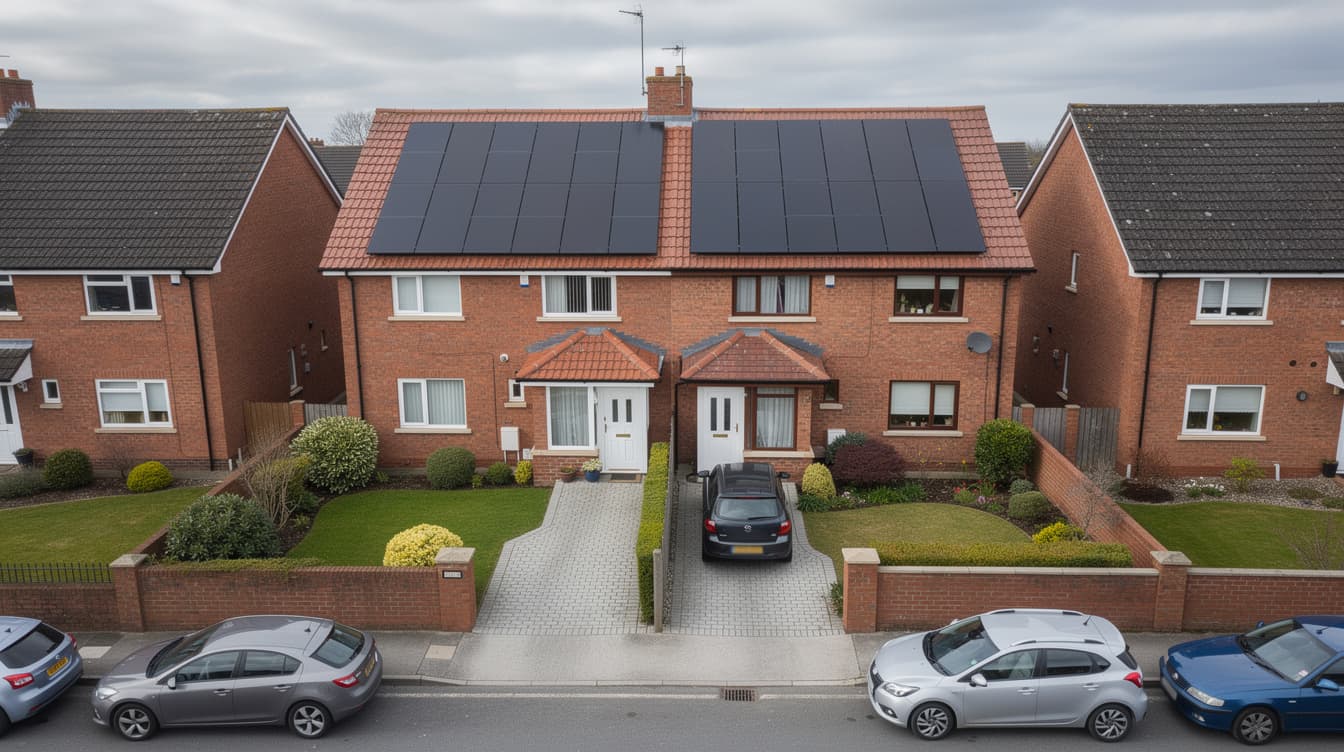
A 4.4 kWp solar system on a 3-bed semi costs €4,700–€6,700 after SEAI grant and saves €900–€1,450/year. Full 2026 cost breakdown with monthly savings.
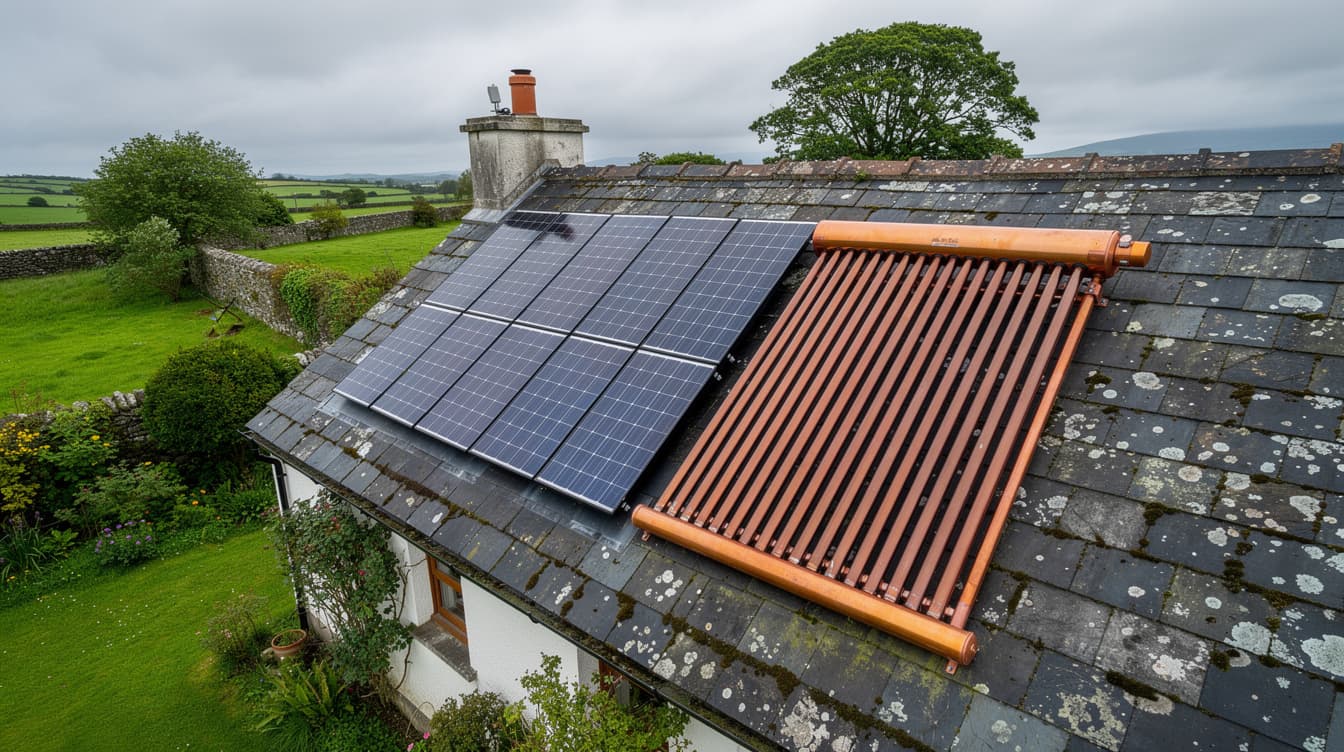
Solar PV vs Solar Thermal Panels Ireland 2026: Costs, Grants & Which Is Better for Your Home
Solar PV vs solar thermal in Ireland compared: costs, SEAI grants, savings, maintenance and which technology is best for Irish homes in 2026.
How to Choose a Solar Panel Installer in Ireland 2026: 10 Questions, 7 Red Flags & What Good Looks Like
10 questions to ask every solar installer, 7 red flags to avoid, and how to compare quotes. A practical guide for Irish homeowners in 2026.