
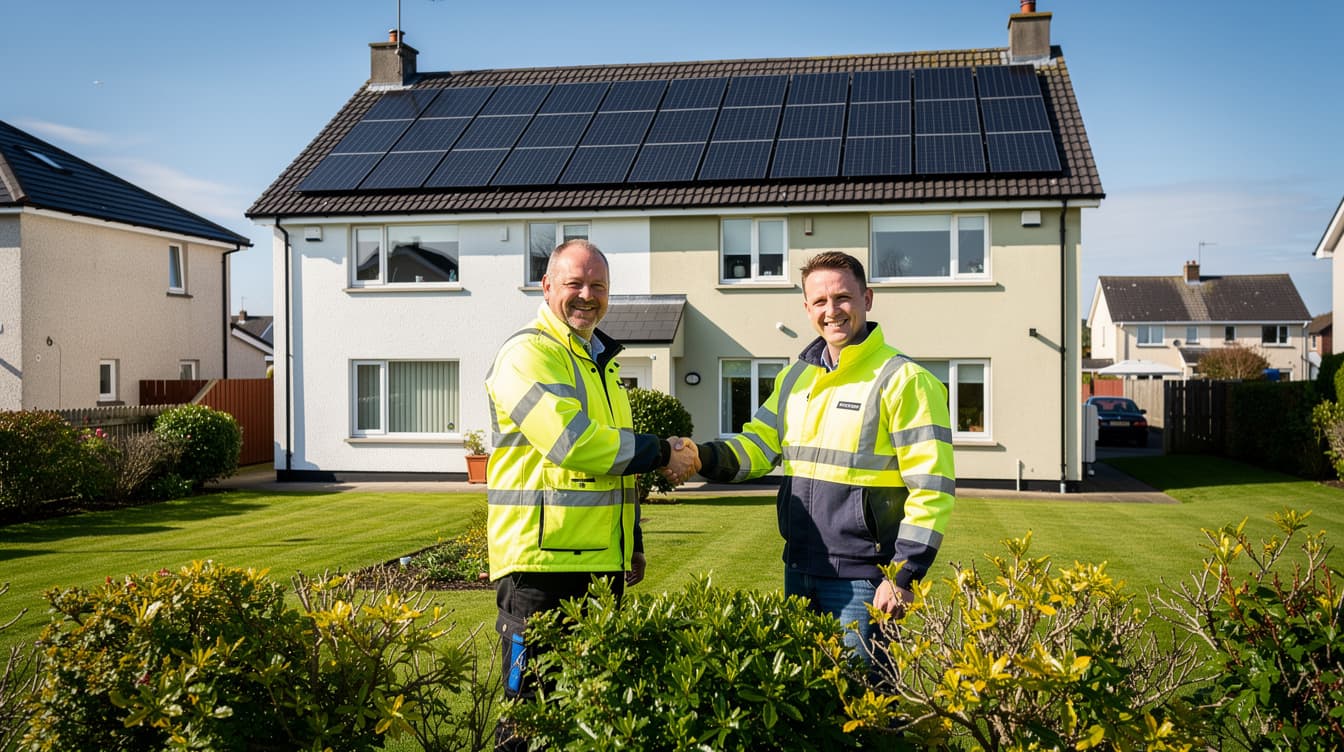
How to Choose a Solar Panel Installer in Ireland 2026: 10 Questions, 7 Red Flags & What Good Looks Like
With SEAI solar applications up 65% in 2026 and installer calendars booked months out, new solar companies are popping up every week. Most are legitimate. Some are not. And even among the good ones, there are big differences in quality, price, and aftercare. This guide gives you a practical framework for choosing the right solar installer — the questions to ask, the red flags to watch for, and the things that separate a €7,000 installation you will be happy with for 25 years from one you will regret within 12 months.
Want Quotes from Vetted Installers?
We only work with SEAI-registered companies. Get 3 free quotes matched to your area.
The Non-Negotiable: SEAI Registration
This is the single most important check. If your installer is not on the SEAI’s registered list, you cannot claim the €1,800 grant. Full stop. But SEAI registration also tells you several things beyond grant eligibility:
- The company has at least one installer with QQI Level 6 solar PV qualifications (modules 6N306 and 6N307)
- They are a Registered Electrical Contractor (REC) with Safe Electric Ireland
- They carry valid public liability insurance and employer’s liability insurance
- They have committed to installing to SEAI’s Domestic Technical Standards and Specification (DTSS)
- They are subject to SEAI quality audits on completed installations
You can search the register at seai.ie/find-a-contractor. Filter by “Solar PV” and your county. If a company claims to be registered but does not appear on the list, ask them to show you their registration number and verify it directly with SEAI.
How to Read a Solar Quote (And What a Good One Looks Like)
A professional solar quote should be detailed enough that you could hand it to a second installer and they could tell you exactly what you are getting. Here is what every quote should include:
| Quote Item | What to Look For | Red Flag |
|---|---|---|
| System size | Stated in kWp (e.g. 4.4 kWp, 5.28 kWp) | Only says “10 panels” without kWp rating |
| Panel brand & model | Named brand with wattage (e.g. Jinko Tiger Neo 440W) | “Premium Tier 1 panels” with no brand named |
| Inverter brand & model | Named (e.g. SolarEdge SE5K, Huawei SUN2000) | No inverter specified or “included” |
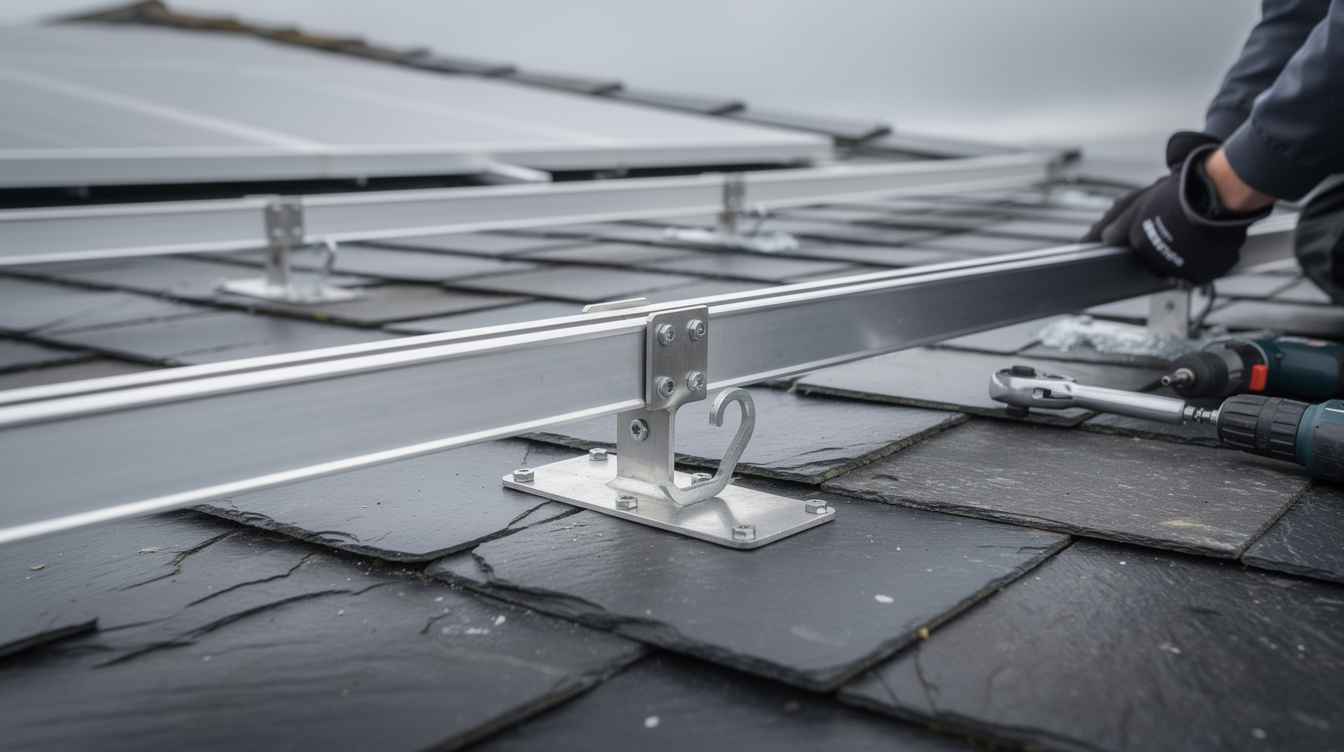
| Mounting system | Named system with warranty info | Not mentioned at all |
| Scaffolding | Included in price or stated as separate cost | Not mentioned (often €300–€600 extra) |
| BER assessment | Included or quoted separately (€150–€200) | Not mentioned at all |
| Bird proofing | Included or offered as add-on | Never mentioned (you will want this) |
| SEAI grant handling | “We handle the full SEAI application” | “You apply for the grant yourself” |
| NC6 form & ESB registration | Included in service | Not mentioned |
| Warranty details | Panel warranty (25 yr), inverter (10–12 yr), workmanship (5–10 yr) | Just “25 year warranty” with no breakdown |
| Total price (before & after grant) | Both figures clearly shown at 0% VAT | Only the after-grant price shown |
Price benchmarks for 2026: Expect to pay roughly €1,750 per kWp before the SEAI grant. A 10-panel system (4.4 kWp) should cost €7,300–€9,300 before the grant. If a quote is more than 20% above or below this range, ask why. Much cheaper could mean corner-cutting. Much more expensive could mean you are paying for a brand name rather than better hardware.
10 Questions to Ask Every Installer
These are not trick questions. A good installer will answer all of them confidently and without hesitation. How they respond tells you as much as what they say.
1. How many residential installations have you completed in the past 12 months?
You want at least 50. A company doing fewer may be new to solar or it may be a sideline business. More experienced installers spot potential problems during the survey — things like weak rafters, undersized fuse boards, or shading issues — before they become expensive surprises on installation day.
2. Can I see references or reviews from recent customers in my area?
Google reviews are a starting point, but ask for contact details of 2–3 recent customers who are happy for you to ring them. A confident installer will provide these without hesitation. If they refuse, that is a red flag.
3. What panels and inverter do you recommend for my house, and why?
The best answer is specific: “We recommend Jinko Tiger Neo 440W panels because they perform well in low light, paired with a SolarEdge inverter because your roof has partial shading from the chimney.” The worst answer is vague: “We use top-tier panels.”
4. Will you do a site survey before quoting?
A reputable installer will always inspect your roof, attic, and fuse board before giving a final quote. Companies that quote over the phone based on Google Maps alone are taking shortcuts. A site survey should check:
- Roof orientation, pitch, and condition
- Rafter spacing and strength
- Shading from trees, chimneys, and neighbouring buildings
- Fuse board capacity (and whether it needs upgrading)
- Cable route from roof to fuse board
5. Is my fuse board up to standard, or will it need upgrading?
Many Irish homes, particularly those built before 2000, have older fuse boards that need upgrading to meet current regulations before solar can be connected. This costs €400–€800. A good installer checks this at survey stage and includes it in the quote. A bad one surprises you on installation day.
6. Do you handle the SEAI grant application and NC6 form?
Most established installers handle both as part of their service. If they do not, you will need to manage the paperwork yourself, which adds weeks to the timeline and increases the risk of errors that delay your grant approval.
7. What happens if something goes wrong after installation?
Ask about their aftercare process. Who do you call? What is the response time? Do they have their own maintenance team, or do they subcontract? A workmanship warranty is only as good as the company behind it — if they cease trading, you are on your own.
8. What is the realistic annual generation for my system?
In Ireland, a well-positioned 1 kWp system generates roughly 900–1,100 kWh per year. For a 4.4 kWp system, expect 3,800–4,800 kWh annually. If an installer promises significantly more, they are either overstating or your roof is exceptionally well positioned. Ask them to show you the generation estimate and how they calculated it.
9. Do you install bird proofing?
Bird proofing (mesh around the panel edges) costs €200–€400 at installation but far more to retrofit later. Pigeons and jackdaws love nesting under panels, and their droppings cause real damage. Get it done upfront.
10. What is your current lead time for installation?
In April 2026, reputable installers are typically booking 3–6 months out. If someone says they can install next week, either they are very new, or they had a cancellation. Neither is necessarily bad, but ask why.
Ready to Compare Installers?
Get 3 quotes from SEAI-registered installers and compare side by side.
7 Red Flags That Should Make You Walk Away
Not every bad experience is a scam. Sometimes it is just incompetence. But these warning signs should make you seriously reconsider:
1. Door-to-Door Sales with “Today Only” Pricing
Legitimate solar companies do not knock on your door and pressure you to sign before they leave. If someone offers you a “special deal that expires today,” close the door. A real installer will give you a quote in writing and let you take your time.
2. No Site Survey
Any installer who gives you a binding quote without visiting your property is guessing. Your roof might have hidden issues, your fuse board might need work, or your attic might not have a safe cable route. Without a survey, you are buying blind.
3. Refusing to Name Brands
“We use premium Tier 1 panels” is not an answer. If they will not tell you the exact panel and inverter brand and model before you sign, they are likely using whatever is cheapest on the day. You have a right to know exactly what goes on your roof.
4. Asking for Full Payment Upfront
A reasonable payment structure is 10–30% deposit to secure your installation slot, with the balance due on completion. Any company asking for 50% or more upfront is a risk — if they go under before installing, your money goes with them. In January 2025, The Irish Times reported a couple who lost €10,000 to a fake solar invoice scam.
5. Unrealistic Savings Claims
“Solar will eliminate your electricity bill” is almost never true for an Irish home. A well-sized system with good self-consumption typically reduces your bill by 40–70%. If an installer promises more, ask them to show you the assumptions behind their numbers — your usage, self-consumption rate, export income, and tariff.
6. Not SEAI Registered
This bears repeating: no SEAI registration means no €1,800 grant. It also means no oversight, no quality audits, and no accountability. Even if their price looks cheaper, you lose €1,800 immediately.
7. No Written Warranty Documentation
A verbal promise of “25 years” means nothing. You need separate written warranties for:
- Panel product warranty: 25 years (manufacturer)
- Panel performance warranty: 25–30 years, guaranteeing at least 80–87% output (manufacturer)
- Inverter warranty: 10–12 years (manufacturer), extendable to 20–25 years for €200–€400
- Workmanship warranty: 5–10 years (installer)
National vs Regional Installers: Pros and Cons
Ireland has a mix of large national solar companies and smaller regional operations. Both can be excellent choices, but for different reasons:
| Factor | National Companies | Regional Installers |
|---|---|---|
| Wait times | Longer (4–6 months typical) | Often shorter (2–4 months) |
| Price | Often higher due to overheads | Competitive, sometimes lower |
| After-sales support | Dedicated teams, structured process | More personal, often the owner |
| Track record | Hundreds to thousands of installs | Dozens to hundreds |
| Business continuity | More likely to exist in 10 years | Higher risk if owner retires or pivots |
| Flexibility | Rigid process, less negotiation | More willing to accommodate requests |
There is no universally “right” choice. A regional installer with 5 years of experience, strong local reviews, and SEAI registration is often a better bet than a national company that subcontracts everything. The key is checking the specifics, not the brand.
Your Quote Comparison Checklist
When you have 3 quotes in hand, use this checklist to compare them fairly. The cheapest total price is not always the best value:
- Are you comparing the same system size? A €6,500 quote for 3.5 kWp is not cheaper than a €7,500 quote for 4.4 kWp. Work out the cost per kWp.
- Are all costs included? Add scaffolding, BER assessment, and bird proofing to any quote that excludes them. A quote that looks €500 cheaper may actually be the same once extras are included.
- What are the panel and inverter brands? If one installer is using significantly cheaper equipment, their lower price reflects that.
- What is the workmanship warranty? 10 years beats 5 years — especially if the company has been trading for a while.
- Do they handle SEAI paperwork and NC6? If not, factor in your own time and the risk of errors.
- What is the payment schedule? A large upfront payment is a risk. Prefer deposit-plus-balance-on-completion.
- What is the estimated annual generation? Compare this figure across quotes — a significant difference suggests one installer is more realistic than the others.
What to Expect After Installation
A good installer does not disappear after the last panel is bolted on. Here is what should happen next:
- Same-day NC6 submission to ESB Networks for grid registration
- Monitoring system setup so you can track generation on your phone
- Completion certificate and all warranty documentation
- SEAI completion submission to trigger your grant payment
- Updated BER certificate (arranged by the installer or independently)
- Guidance on choosing an export tariff to start earning from your surplus electricity
If your installer does not mention any of these, ask about them before you sign. The NC6 form in particular can add months to your timeline if it is not submitted promptly — and you cannot earn Clean Export Guarantee payments until it is processed.
Ready to Go Solar?
Get your free personalised quote from SEAI-registered installers.
Frequently Asked Questions
How many quotes should I get?
At least three. This gives you a good sense of the market price in your area and helps you spot outliers — whether suspiciously cheap or unreasonably expensive. Getting more than five starts to waste everyone’s time, including yours.
Can I use a non-SEAI installer and still get the grant?
No. The €1,800 SEAI grant requires your installer to be on the SEAI registered list. There are no exceptions.
Should I choose the cheapest quote?
Not necessarily. The cheapest quote may exclude scaffolding, BER assessment, or bird proofing. It may use cheaper equipment. Or it may come from a company that is new and pricing aggressively to win business. Compare quotes on a cost-per-kWp basis with all extras included.
What if my installer goes out of business?
Your panel and inverter warranties are with the manufacturers, not the installer, so those survive. But the workmanship warranty dies with the company. This is why choosing an established company with a track record matters. For extra protection, ask if they offer insurance-backed guarantees.
How do I check if an installer is genuinely SEAI registered?
Search the SEAI contractor register online at seai.ie. Filter by “Solar PV” and your county. If the company does not appear, they are not registered — regardless of what they claim.
Is it worth paying extra for a battery at installation?
With dynamic tariffs launching in June 2026, a battery is increasingly worthwhile. It costs less to install a battery at the same time as solar panels than to retrofit one later. But it also adds €3,000–€6,000 to the cost. Run the numbers for your specific usage before deciding.
Related Articles
Solar Panel Waiting Times Ireland 2026: How Long From Quote to Installation (And How to Beat the Queue)
Solar installer wait times have doubled in Ireland. Here are the current timelines for every step from quote to installation, and 7 ways to speed things up.
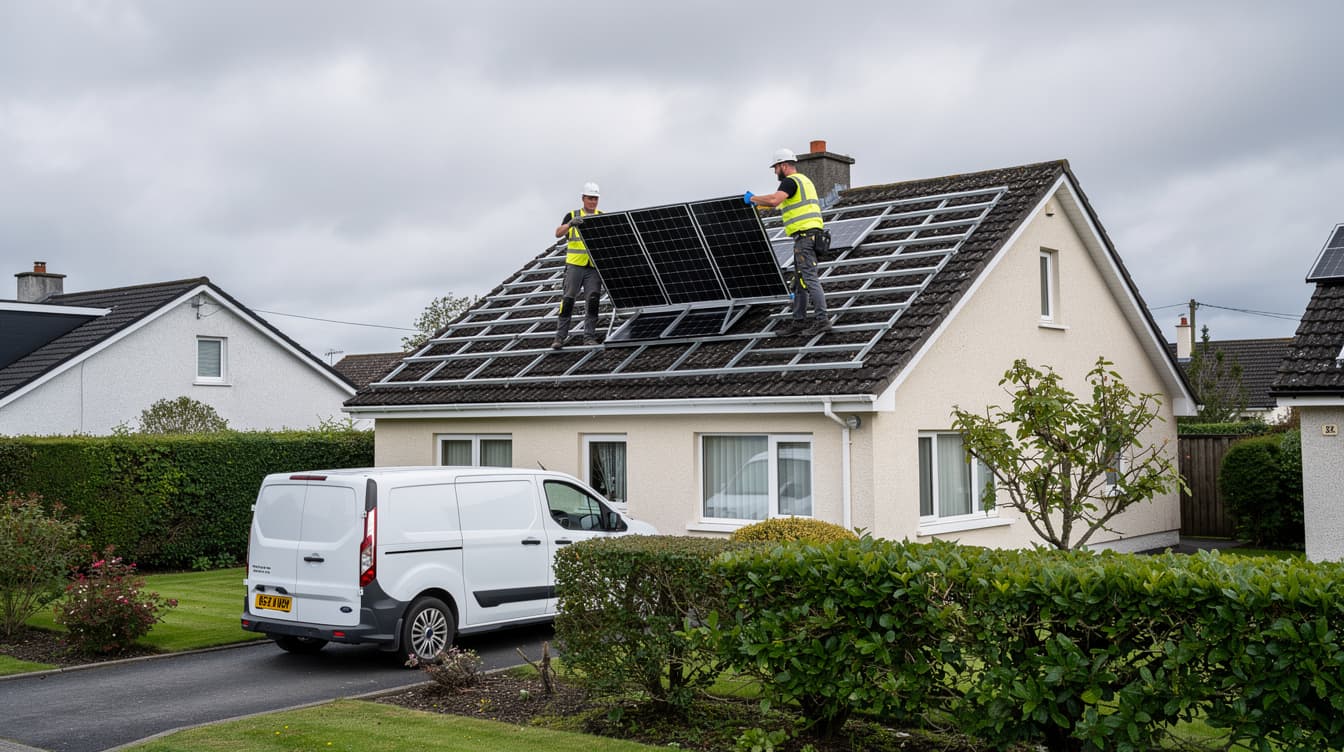
How Long Does It Take to Install Solar Panels in Ireland? The Full 2026 Timeline
Solar panel installation in Ireland takes 1-2 days on the roof, but 4-8 weeks end-to-end. Here's every step from quotes to SEAI grant, with exact timelines.
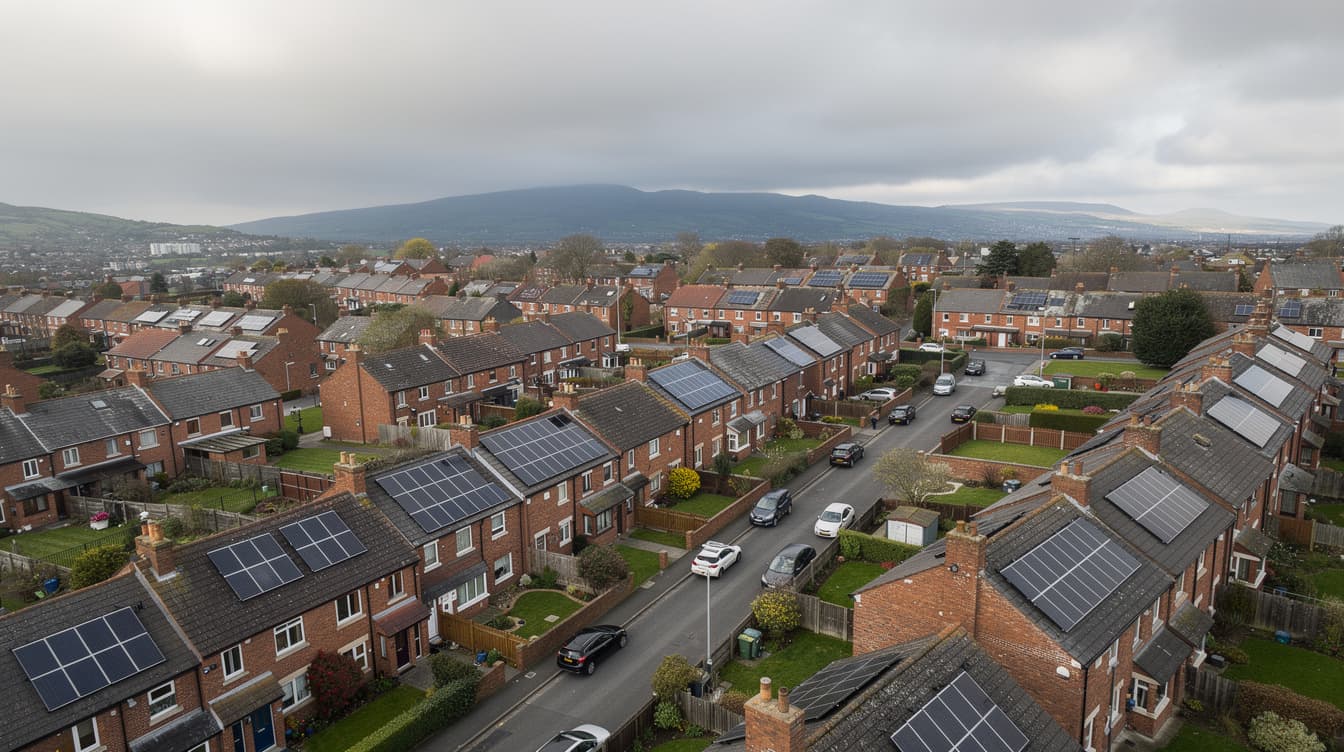
Solar Panels Dublin 2026: Complete Installation Guide, Costs & Installers
Solar panels in Dublin 2026: real installation costs, yield figures, planning exemptions and how to choose from 100+ SEAI-registered Dublin installers.