
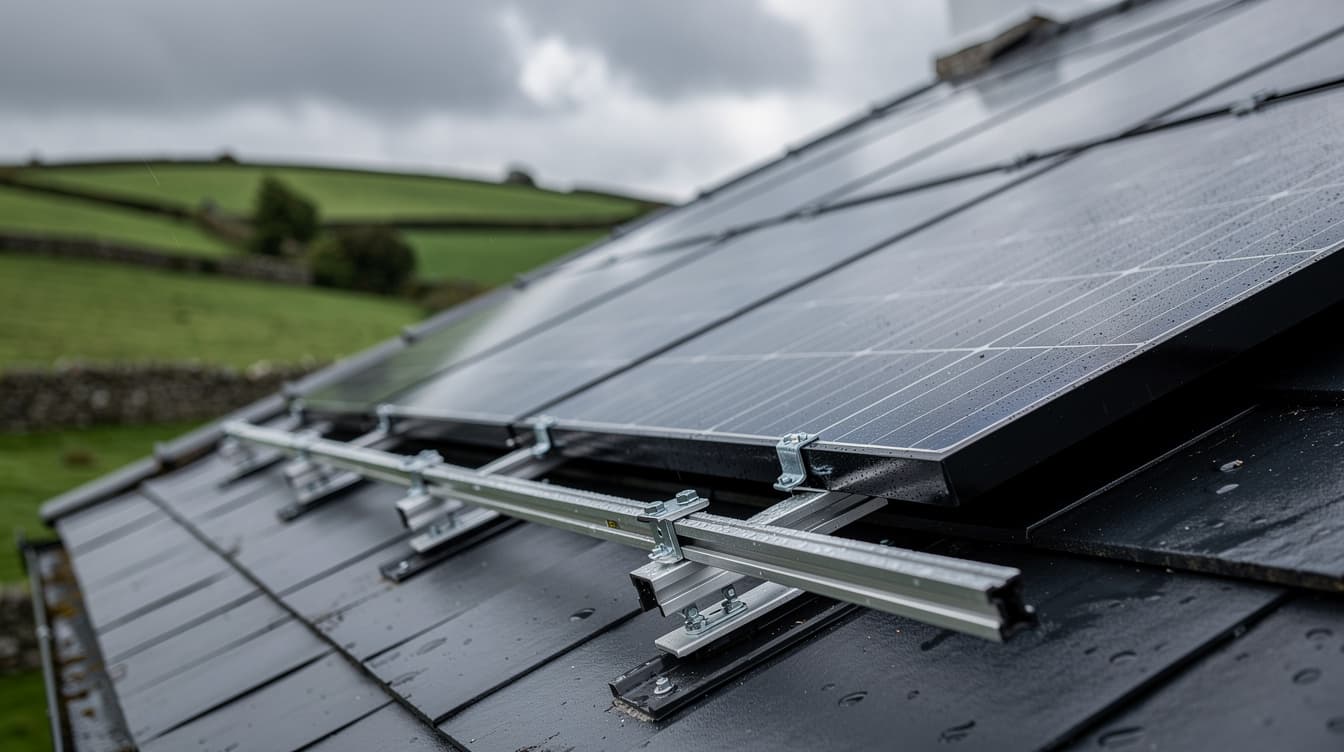
Solar Panel Warranty Guide Ireland 2026: What's Covered, What's Not & How to Claim
You have spent €5,000–€10,000 on a solar panel system. It should last 25–30 years. But what happens if something goes wrong in year 3, year 10, or year 18? Your warranty is the difference between a free repair and a €1,500 bill. This guide explains every warranty that covers your Irish solar installation — what is actually protected, for how long, and exactly how to make a claim if something fails.
Getting Quotes? Ask About Warranties
SEAI-registered installers should explain every warranty in writing before you sign.
Your Solar System Has Three Separate Warranties
Most homeowners think they have "a warranty" on their solar panels. In reality, a typical Irish solar installation is covered by three distinct warranties from three different parties:
| Warranty Type | Who Provides It | Typical Duration | What It Covers |
|---|---|---|---|
| Panel product warranty | Panel manufacturer (Jinko, JA Solar, Trina, etc.) | 25 years | Manufacturing defects, materials failure, delamination |
| Panel performance warranty | Panel manufacturer | 25–30 years | Guaranteed minimum output (typically 80–87% at end of term) |
| Inverter warranty | Inverter manufacturer (Huawei, SolarEdge, Enphase) | 10–25 years | Component failure, firmware defects |
| Installer workmanship warranty | Your installation company | 2–10 years | Roof leaks, wiring faults, mounting failures |
If you also have a battery storage system, that adds a fourth warranty from the battery manufacturer (typically 10–12 years).
Panel Product Warranty: What Actually Breaks?
The product warranty covers manufacturing defects — things that were wrong with the panel when it left the factory, even if they only become apparent years later. Common issues include:
- Delamination — the protective layers separate, allowing moisture in. You will see bubbling or browning on the panel surface.
- Junction box failure — the electrical connection point on the back of the panel fails. This kills output from the entire panel.
- Micro-cracking — tiny cracks in the silicon cells that worsen over time, reducing output gradually. Only visible with specialised testing.
- Bypass diode failure — causes hotspots that can permanently damage cells.
What is NOT covered: physical damage from storms, falling objects, or incorrect installation (that falls under the installer warranty). If a pigeon pecks through your cables, that is not a panel defect — see our bird proofing guide.
Panel Performance Warranty: The Guarantee That Actually Matters
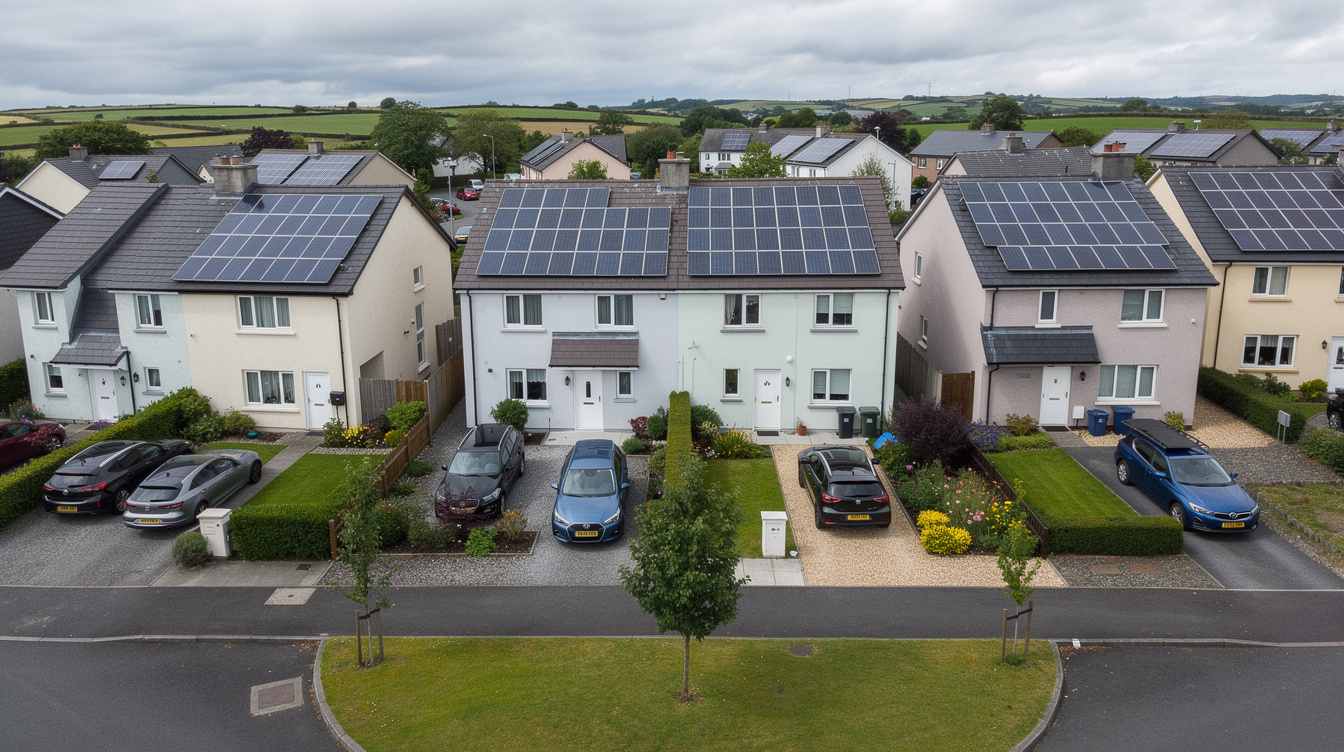
This is the warranty most homeowners overlook, and it is arguably the most important. A performance warranty guarantees that your panels will still produce a minimum percentage of their rated output after a certain number of years.
Here is how the major brands compare for panels commonly installed in Ireland in 2026:
| Brand & Model | Product Warranty | Performance Warranty | Guaranteed Output at End | Annual Degradation |
|---|---|---|---|---|
| Jinko Tiger Neo (440W) | 25 years | 30 years | 87.4% | 0.4% |
| JA Solar DeepBlue 4.0 (440W) | 25 years | 25 years | 86.0% | 0.45% |
| Trina Vertex S+ (445W) | 25 years | 25 years | 86.8% | 0.4% |
| LONGi Hi-MO 7 (440W) | 25 years | 25 years | 87.0% | 0.4% |
| Maxeon 7 (430W) | 40 years | 40 years | 88.3% | 0.25% |
In practice: Modern N-type TOPCon panels (what most Irish installers now use) degrade at only 0.3–0.5% per year. After 25 years, a 4.4 kWp system rated at 4,400W will likely still produce around 3,700–3,900W — more than enough to remain financially worthwhile.
The performance warranty matters because it gives you legal recourse if your panels degrade faster than expected. If your 440W panel is only producing 300W after 15 years and the warranty guarantees 87% (383W), the manufacturer must replace or compensate you.
Inverter Warranty: The Component Most Likely to Fail
Your inverter is the hardest-working component in your system. It converts DC electricity from the panels to AC electricity for your home, and it runs every daylight hour. Inverters fail more often than panels — most inverters need replacing once during a 25-year panel lifespan.
| Inverter Brand | Standard Warranty | Extended Warranty | Replacement Cost (if out of warranty) |
|---|---|---|---|
| Huawei SUN2000 | 10 years | Up to 20 years | €1,000–€1,500 |
| SolarEdge | 12 years | Up to 25 years | €1,200–€1,800 |
| Enphase IQ8 | 25 years | N/A (already 25 years) | €150–€250 per unit |
| Fronius Primo | 10 years | Up to 20 years | €1,100–€1,600 |
Key consideration: If you are choosing a hybrid inverter now (recommended in 2026 — it lets you add a battery later without paying for a second inverter), check whether the warranty covers battery integration even if you add the battery years later. Most do, but confirm in writing.
Extended warranties are worth it. A Huawei 10-to-20-year extension typically costs €150–€300 and must be purchased within 24 months of installation. Given that an out-of-warranty replacement runs €1,000–€1,500, the maths is straightforward.
Battery Warranty: Cycles, Capacity, and What 70% Means
If you have battery storage, your battery warranty works differently from your panel warranty. It has two limits — the battery is covered until whichever comes first:
- Time limit — typically 10–12 years
- Cycle limit — typically 6,000–10,000 full charge/discharge cycles
At one cycle per day (typical for an Irish home), 6,000 cycles equals roughly 16 years — so the time limit usually expires first.
| Battery | Capacity | Warranty Period | Guaranteed Capacity at End | Cycle Limit |
|---|---|---|---|---|
| Tesla Powerwall 3 | 13.5 kWh | 10 years | 70% | Unlimited |
| Huawei LUNA 2000 (5–15 kWh) | 5–15 kWh | 10 years | 70% | 6,000 |
| GivEnergy All-in-One | 5–13.5 kWh | 12 years | 70% | 6,000 |
| Sonnen Eco | 5.5–22 kWh | 10 years | 70% | 10,000 |
The "70% guaranteed capacity" means that if your 10 kWh battery is only holding 5 kWh after 8 years, the manufacturer must replace or repair it. If it holds 7.5 kWh (75%), it is degraded but still within warranty terms.
Installer Workmanship Warranty: The One That Protects Your Roof
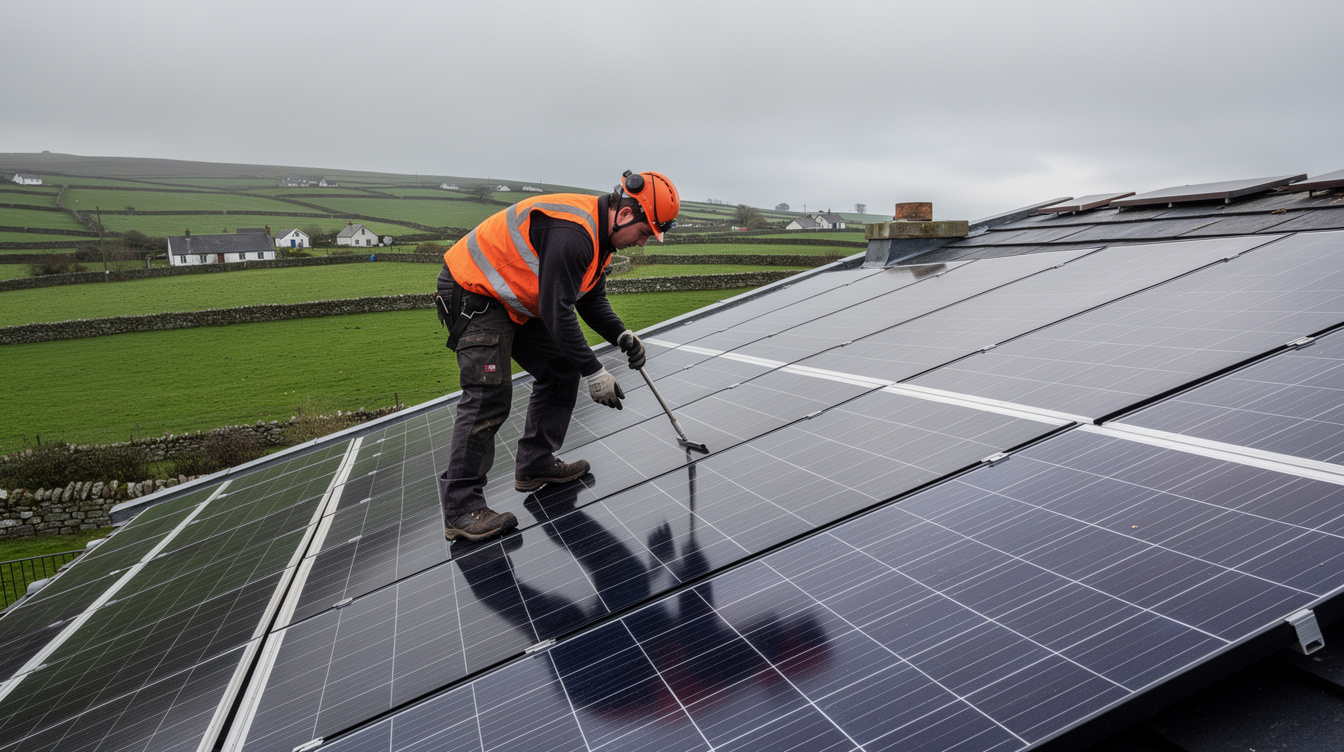
This warranty covers the installation itself — the mounting system, wiring, roof penetrations, and general workmanship. It comes from your installer, not the equipment manufacturer.
What it typically covers:
- Roof leaks caused by mounting bracket installation
- Wiring faults or connection issues
- Mounting system failures (panels coming loose)
- Electrical safety issues from installation errors
What to watch for:
- Duration varies wildly — some installers offer 2 years, good ones offer 5–10 years
- Always get it in writing before you sign the contract
- Check if your installer is SEAI-registered — this is required for the SEAI grant and gives you additional consumer protections
- Ask whether the warranty is insurance-backed (rare in Ireland but worth asking)
Red Flag: Very Short Workmanship Warranty
If an installer offers less than 5 years workmanship warranty, ask why. Most SEAI-registered installers who are confident in their work offer at least 5 years. A 1–2 year warranty suggests either inexperience or a company that may not plan to be around long enough to honour it.
What Can Void Your Solar Panel Warranty?
Your warranty is not unconditional. Here are the most common ways Irish homeowners accidentally void their coverage:
- DIY modifications or repairs — Touching the wiring, adding panels yourself, or having an unqualified electrician work on the system. Always use a registered solar installer for any modifications.
- Failing to maintain the system — While solar panels need minimal maintenance, some warranties require you to keep the panels reasonably clean and ensure no sustained shading from overgrown trees. See our maintenance checklist.
- Physical damage you caused — Walking on panels, pressure washing them, or installing TV aerials through the array.
- Using non-approved components — Some inverter manufacturers void the warranty if third-party optimisers or accessories are used.
- Not registering the product — Some brands (especially for extended warranties) require online registration within a certain period. Jinko and Trina both require product registration for warranty claims.
Protect Your Investment
Quality installers explain warranties upfront. Get quotes from SEAI-registered professionals.
How to Make a Warranty Claim in Ireland
When something goes wrong, here is the step-by-step process:
Step 1: Identify the Problem
Check your monitoring app (Huawei FusionSolar, SolarEdge, Enphase, etc.). Is one panel underperforming? Is the inverter showing an error code? Is there a physical issue like a leak? This determines which warranty applies.
Step 2: Contact Your Installer First
Your installer is your first point of contact for ALL warranty issues — even manufacturer defects. They will diagnose the problem and handle the claim with the manufacturer on your behalf. This is standard practice in Ireland.
Step 3: Document Everything
- Photograph the issue (damage, error codes, monitoring data)
- Note the date you first noticed the problem
- Keep all correspondence in writing (email, not phone calls)
- Save your original invoice — you will need it for any warranty claim
Step 4: If Your Installer Has Closed Down
This is more common than you would think — the Irish solar industry has seen rapid growth and some companies have not survived. If your installer is gone:
- Equipment warranties still apply — contact the manufacturer directly (Jinko, JA Solar, Huawei, etc.). They will connect you with a local authorised service partner.
- Workmanship warranty is lost — unfortunately, if the installer is dissolved, their workmanship warranty goes with them (unless it was insurance-backed).
- EU Consumer Rights Directive — you have a statutory 2-year guarantee on all goods purchased in the EU, separate from any manufacturer warranty.
- Contact the CCPC — the Competition and Consumer Protection Commission can advise on your rights.
Your EU Consumer Rights (Beyond Warranties)
Living in Ireland gives you strong EU consumer protections that sit alongside your manufacturer warranties:
- 2-year statutory guarantee on all goods (Consumer Rights Directive 2019/771). If your panels or inverter develop a defect within 2 years of purchase, the seller must repair or replace at no cost.
- Reversed burden of proof — in the first year, any defect is presumed to have existed at the time of delivery. The manufacturer must prove otherwise.
- Sale of Goods and Supply of Services Act — your system must be of merchantable quality, fit for purpose, and as described.
These rights cannot be taken away by any warranty document. Even if a warranty says "excluded", your statutory EU rights still apply.
Pre-Purchase Warranty Checklist
Before you sign with any installer, confirm these in writing:
| Question | Good Answer | Red Flag |
|---|---|---|
| Panel product warranty length? | 25 years | Less than 15 years |
| Panel performance guarantee? | 25–30 years, 85%+ at end | No performance guarantee, or below 80% |
| Inverter warranty? | 10+ years standard, extension available | 5 years or less |
| Workmanship warranty? | 5–10 years | Less than 3 years |
| Is the installer SEAI-registered? | Yes, with registration number provided | Not registered or reluctant to share number |
| Will they register the product warranty for you? | Yes, included in service | Left to homeowner with no guidance |
For a comprehensive list of what to ask, see our guide to choosing a solar installer and our 10 questions to ask before installing.
Ready to Go Solar With Confidence?
Get quotes from SEAI-registered installers who offer strong warranties and stand behind their work.
Documents You Must Keep for 25 Years
Put these in a folder (physical or digital) and do not lose them:
- Original invoice — showing system components, serial numbers, and date of purchase
- Warranty certificates — for panels, inverter, and battery (if applicable)
- Installer contract — including their workmanship warranty terms
- SEAI grant confirmation — proves the system was installed by a registered installer
- Product registration confirmations — from Jinko, Trina, Huawei, etc.
- Commissioning certificate — your installer should provide this showing the system was tested and working correctly on installation day
- ESB Networks notification — NC6 form confirming your connection for exporting electricity
A 2026 solar installation is one of the best investments an Irish homeowner can make — with payback periods as short as 4–6 years and equipment that lasts 25–30 years. Understanding your warranties ensures you are protected for the full lifetime of that investment. Choose Tier 1 panels, a reputable inverter, and an SEAI-registered installer with a strong workmanship warranty — and keep your paperwork safe.
Related Articles
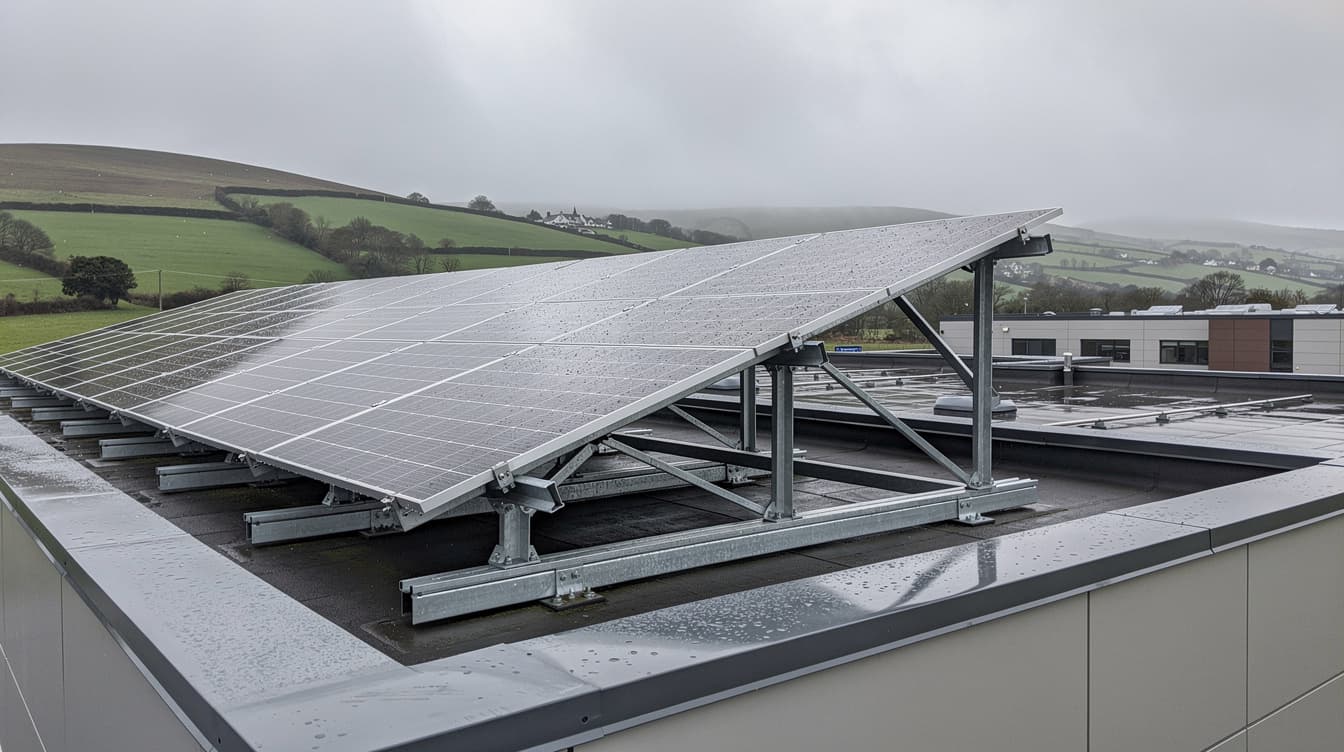
Solar Panels on a Flat Roof in Ireland 2026: Mounting, Costs & Planning Rules
Flat roof solar costs €500-€1,000 extra for tilt frames. Ballasted systems need no drilling. Full guide to mounting, planning permission and structural checks.
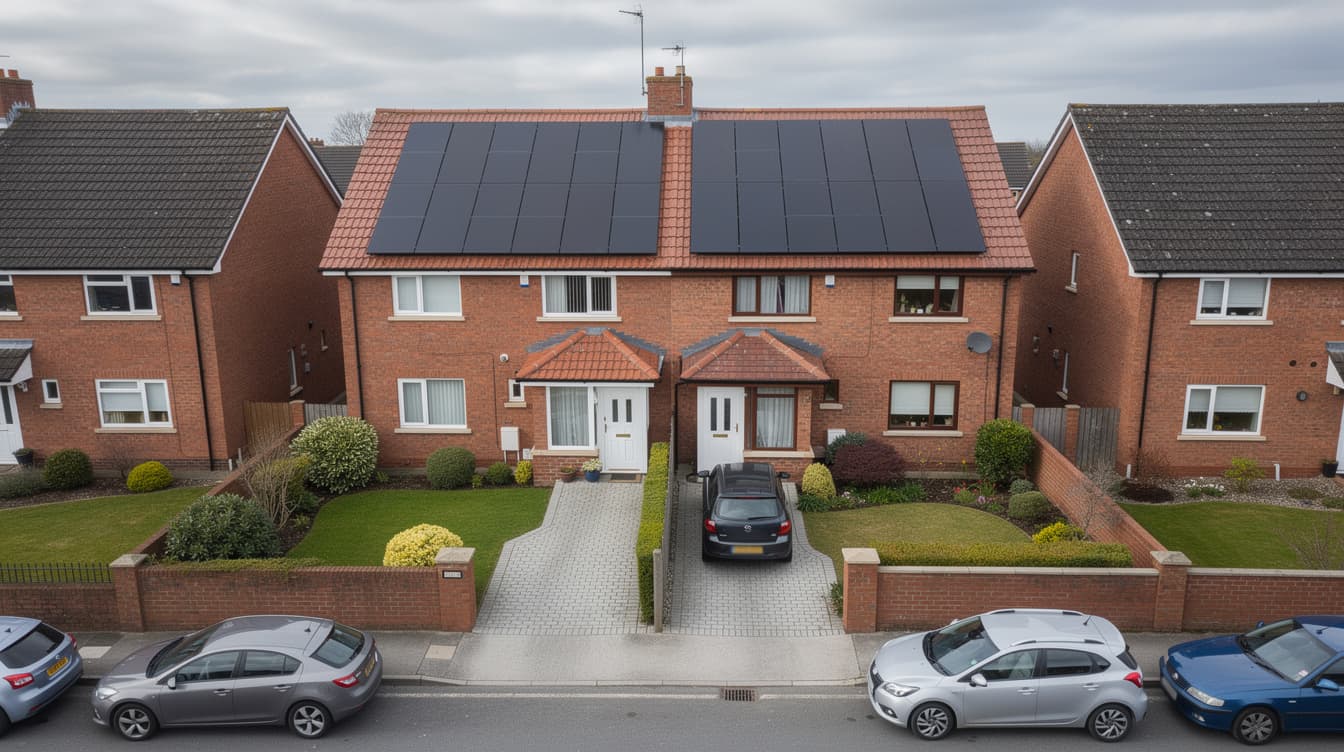
How Much Do Solar Panels Cost for a 3-Bed House in Ireland? (2026 Prices)
A 4.4 kWp solar system on a 3-bed semi costs €4,700–€6,700 after SEAI grant and saves €900–€1,450/year. Full 2026 cost breakdown with monthly savings.
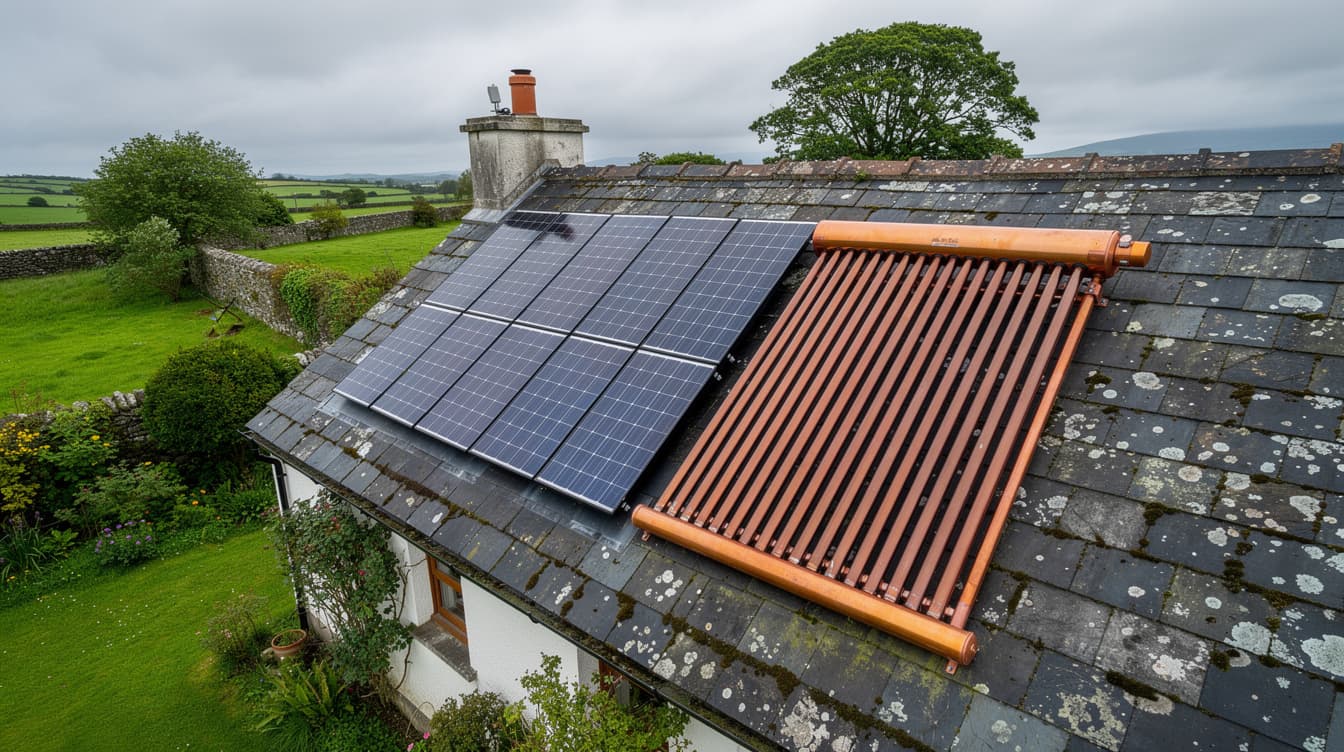
Solar PV vs Solar Thermal Panels Ireland 2026: Costs, Grants & Which Is Better for Your Home
Solar PV vs solar thermal in Ireland compared: costs, SEAI grants, savings, maintenance and which technology is best for Irish homes in 2026.