
Solar Panels and Smart Meters Ireland 2026: How to Maximise Export Payments and Savings
You have solar panels on your roof. You are generating free electricity. But unless you have a smart meter, you could be losing hundreds of euros per year in export payments you are entitled to. Over 2 million smart meters have been installed across Ireland — and if yours is not one of them, you are almost certainly leaving money on the table.
This is not just about meters. Smart meters unlock time-of-use tariffs that let solar homeowners buy cheap night-rate electricity at 6c/kWh and sell surplus power back to the grid at up to 32c/kWh. That spread is the single biggest money-saving lever most solar owners never pull. Here is exactly how it works, what you need to set up, and which suppliers pay you the most in 2026.
Don't Have Solar Yet?
Get free quotes from SEAI-registered installers and find out how much you could save.
What Is a Smart Meter and Why Does It Matter for Solar?
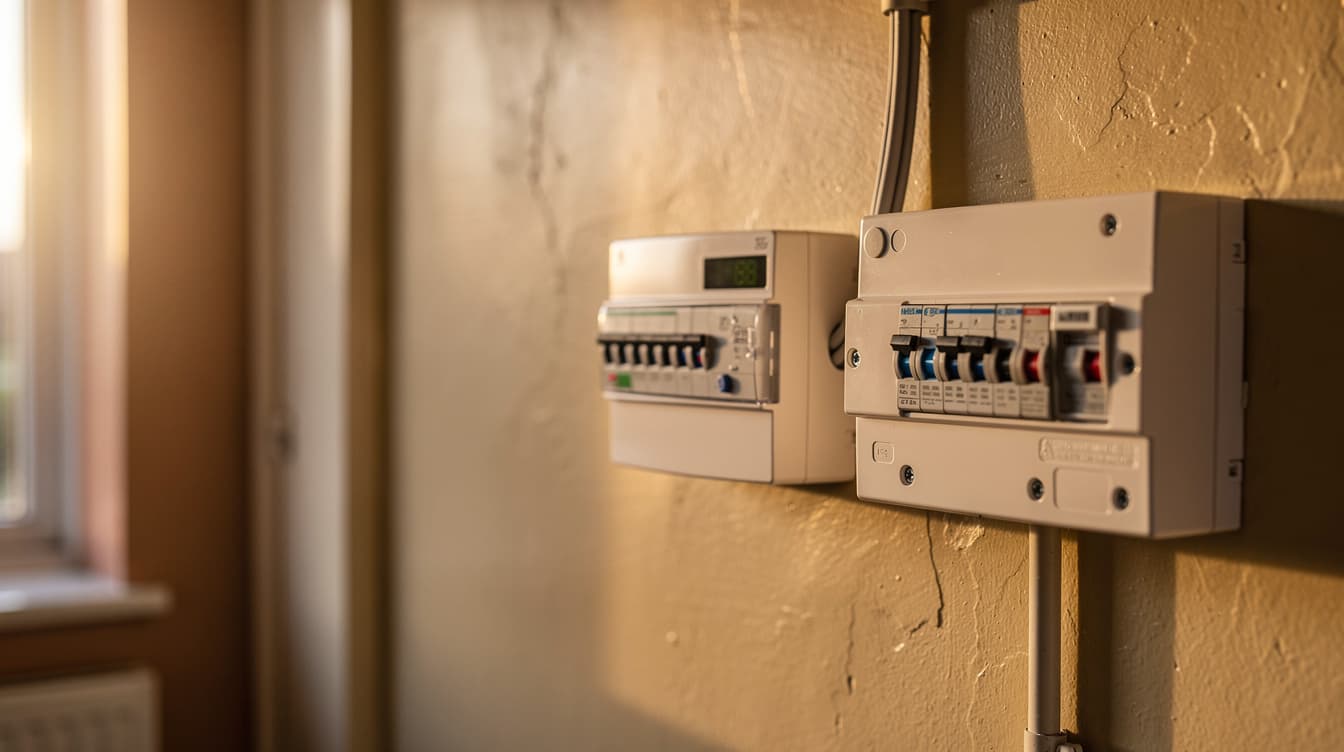
A smart meter is a digital electricity meter that records how much power you import and export in 30-minute intervals. The old analogue meters — the ones with spinning discs — can only measure what you use. They cannot measure what you send back to the grid. That is a problem if you have solar panels.
Without a smart meter, your exported electricity is invisible. Your supplier cannot pay you for it because they have no record it happened. With a smart meter, every kilowatt-hour you export is logged and paid for under the Clean Export Guarantee (CEG).
Here is what a smart meter enables for solar homeowners:
- Export payments — get paid 18.5c to 32c per kWh for surplus electricity you send to the grid
- Time-of-use tariffs — access cheaper night rates (as low as 6c/kWh) to charge batteries or run appliances
- Accurate billing — no more estimated bills; pay only for what you actually use
- Usage insights — see exactly when you generate, use, and export electricity
- Microgeneration registration — required by CRU to participate in the Microgeneration Support Scheme
Bottom line: a smart meter is not optional for solar homeowners who want to earn export payments. It is a requirement.
Ireland's Smart Meter Rollout: Where We Stand in 2026
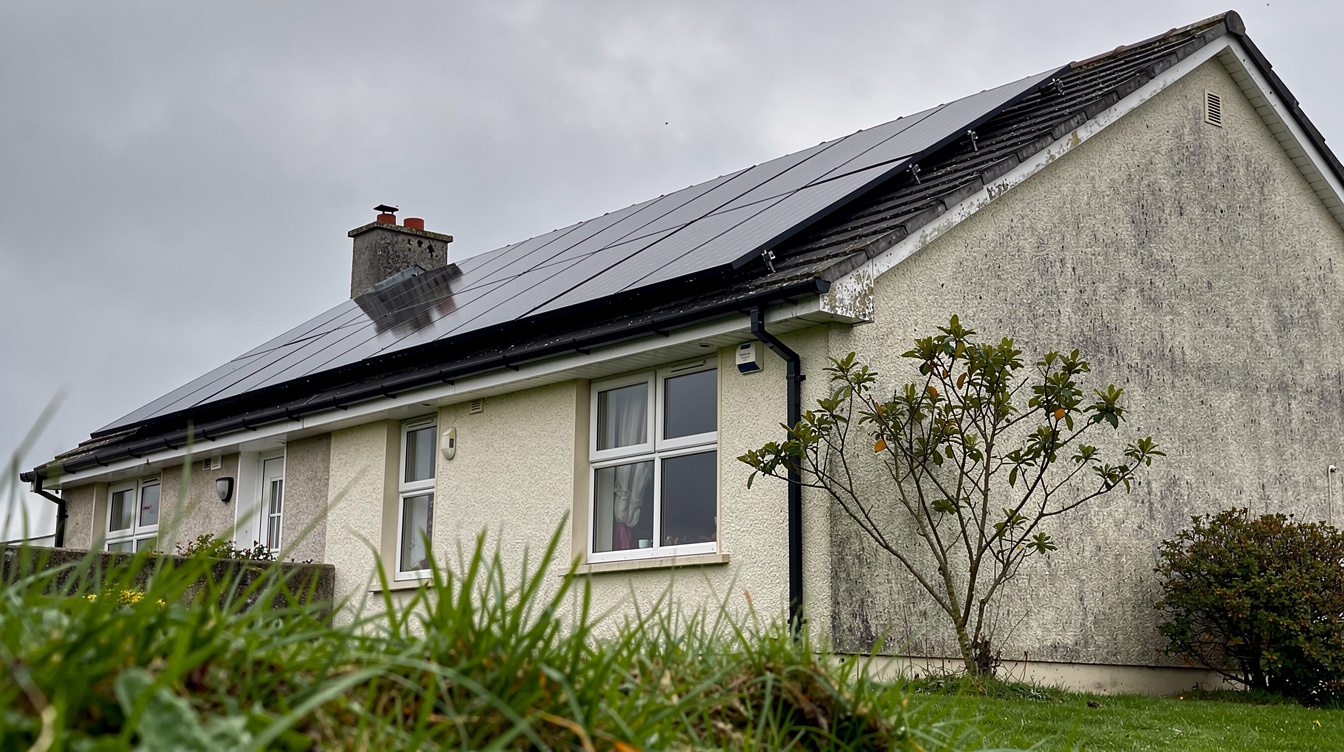
ESB Networks has now installed over 2 million smart meters across Ireland, covering roughly 60% of all homes. The rollout is ongoing and free of charge — you do not pay for a smart meter installation.
If you do not have one yet, you can request a smart meter from ESB Networks directly. However, if you install solar panels, the process is faster: your installer submits an NC6 form to ESB Networks, and a smart meter is typically installed within four months.
| Smart Meter Fact | Detail |
|---|---|
| Total installed (Ireland) | 2 million+ (as of 2026) |
| Cost to homeowner | Free (ESB Networks covers it) |
| Wait time after NC6 form | Up to 4 months |
| Required for export payments | Yes — mandatory under CRU rules |
| Data recording interval | Every 30 minutes |
How to Get Paid for Your Exported Solar Electricity
Once your smart meter is active and your system is registered via the NC6 form, you can start earning export payments under the Clean Export Guarantee. Here is how the money flows:
- Your panels generate electricity during daylight hours
- You use what you need — this is called self-consumption and saves you the full import rate (typically 39–48c/kWh)
- Surplus goes to the grid — your smart meter records every exported kWh
- Your supplier pays you — typically quarterly, as a credit on your bill
The first €400 per year in export income is tax-free under current Revenue rules. A typical 4 kWp system exports about 1,500 kWh per year, earning €278–€480 depending on your supplier.
Export Rates by Supplier (April 2026)
Not all suppliers pay the same. The gap between the lowest and highest export rate is over 70%, which can mean a €200+ difference in annual earnings. Here is the full comparison:
| Supplier | Export Rate | Est. Annual Earnings (4 kWp) | Notes |
|---|---|---|---|
| SSE Airtricity (Activ8) | 32c/kWh (Yr 1), 27c (Yr 2) | €480 | Must install via SSE partner |
| Pinergy | 25c/kWh | €375 | No lock-in, pay-as-you-go |
| SSE Airtricity (standard) | 24c/kWh | €360 | Standard rate, any customer |
| Community Power | 20c/kWh | €300 | Community-owned co-op |
| Electric Ireland | 19.5c/kWh | €293 | Largest supplier, quarterly credit |
| Energia | 18.5c/kWh | €278 | Competitive import rates |
| Bord Gáis Energy | 18.5c/kWh | €278 | Quarterly credit |
Important: the highest export rate does not always mean the best overall deal. Your import rate and standing charge matter more, because most solar homes still draw more from the grid than they export. Read our full supplier comparison guide for the complete picture.
Ready to Start Earning from Your Roof?
Get matched with SEAI-registered installers in your area. Free, no-obligation quotes.
Time-of-Use Tariffs: The Smart Meter Superpower
A smart meter does not just measure your export — it opens the door to time-of-use (ToU) tariffs. These tariffs charge different prices depending on when you use electricity:
| Time Period | Typical Rate | Smart Solar Strategy |
|---|---|---|
| Night (11pm–8am) | 6–15c/kWh | Charge battery, run dishwasher/washing machine, heat water |
| Day (8am–5pm) | 20–30c/kWh | Solar covers most demand — minimal grid import |
| Peak (5pm–7pm) | 37–48c/kWh | Use stored battery power — avoid grid imports entirely |
| Evening (7pm–11pm) | 25–35c/kWh | Continue on battery or shift usage to night rate |
The strategy is simple: use solar during the day, charge your battery at cheap night rates, and avoid peak-rate imports entirely. A solar + battery system on a time-of-use tariff can save an additional €290–€510 per year compared to a flat-rate tariff, even on cloudy days.
Who Should Switch to a Time-of-Use Tariff?
Time-of-use tariffs work best if you can genuinely shift your electricity usage. They suit you if:
- You have a solar battery that charges overnight and discharges at peak
- You can run appliances (washing machine, dryer, dishwasher) at night
- You have an electric vehicle that charges overnight
- You work from home and use most electricity during solar generation hours
If your household uses most electricity in the evening and cannot shift it, a flat-rate tariff may still be better. Check the numbers for your specific usage pattern before switching.
The Solar + Battery + Smart Meter Combo: Real Savings
Here is what the numbers actually look like for a typical 4-bedroom Irish home with a 5 kWp solar system, 5 kWh battery, and a smart meter on a time-of-use tariff:
| Saving Source | Annual Value |
|---|---|
| Self-consumption (using your own solar) | €900–€1,300 |
| Export payments (CEG) | €278–€480 |
| ToU tariff arbitrage (night charge, peak discharge) | €290–€510 |
| Total annual saving | €1,468–€2,290 |
Without a smart meter, you lose the bottom two rows entirely — that is €568–€990 per year in missed income and savings. Over 10 years, that compounds to €5,680–€9,900.
Step-by-Step: How to Set Up Your Smart Meter for Solar
Whether you already have solar or are planning an installation, here is exactly how to get your smart meter set up and earning:
If You Are Installing Solar Now
- Choose an SEAI-registered installer — they handle the NC6 form for you
- Your installer submits the NC6 form to ESB Networks after installation
- ESB Networks schedules a smart meter installation (within 4 months of valid NC6)
- Contact your electricity supplier to register for export payments
- Switch to a time-of-use tariff once the smart meter is active (optional but recommended)
If You Already Have Solar but No Smart Meter
- Check your meter — if it has a digital display with multiple screens, it may already be a smart meter
- Contact ESB Networks to request a smart meter upgrade (free)
- Ensure your NC6 form was submitted — ask your original installer for confirmation
- Register with your supplier for export payments once the meter is live
If You Already Have a Smart Meter but No Solar
You are ahead of the game. When you install solar, your installer will submit the NC6 form and your existing smart meter will be reconfigured to record exports. You can typically start earning within weeks of installation completion.
Common Questions About Smart Meters and Solar
Will a smart meter slow down my solar export?
No. A smart meter is a measurement device only. It records data — it does not control the flow of electricity. Your solar system will export exactly the same amount of power regardless of your meter type.
Can I see my real-time solar generation on my smart meter?
Not directly on the meter display. However, most solar inverters come with their own monitoring app (SolarEdge, Huawei FusionSolar, GivEnergy) that shows real-time generation. Your smart meter data is available through your supplier’s portal or the ESB Networks app, though this is updated daily rather than in real time.
Do I need a smart meter before installing solar?
No. You can install solar without a smart meter. However, you will not receive export payments until one is installed. Most installers recommend processing the NC6 form immediately after installation so the meter upgrade happens as soon as possible.
What happens to my export if my smart meter loses connection?
Smart meters store data locally and transmit it to ESB Networks via a secure wireless connection. If connection is temporarily lost, the meter continues recording and uploads the data once reconnected. You will not lose any export payments.
Is there any downside to a smart meter?
No financial downside. Some homeowners have privacy concerns about granular usage data, but you can opt out of sharing detailed data while still receiving export payments. The CRU has strict data protection rules in place.
Ready to Go Solar?
Get your free personalised quote from SEAI-registered installers.
What to Do Next
If you have solar panels but no smart meter, you are leaving money on the table every single day. Here is your action plan:
- Check your meter type — look for a digital display. If it is still an old spinning-disc meter, you need an upgrade.
- Confirm your NC6 registration — call your original installer or check with ESB Networks.
- Contact ESB Networks if you need a smart meter — the upgrade is free.
- Compare suppliers for the best export rate — see our full tariff comparison.
- Consider a time-of-use tariff to maximise your savings, especially if you have a battery.
If you do not have solar yet, the good news is that most SEAI-registered installers handle the entire process — from panel installation to NC6 submission to smart meter coordination. Get a free quote to find out what your system would cost and how much you could save.
Related Articles
Solar Panel Demand in Ireland Has Surged 96% in 2026 — Here’s Why (And Why You Should Act Now)
SEAI solar applications up 96%, Iran war pushing electricity prices higher. Why Irish homeowners are going solar in record numbers and how to act now.
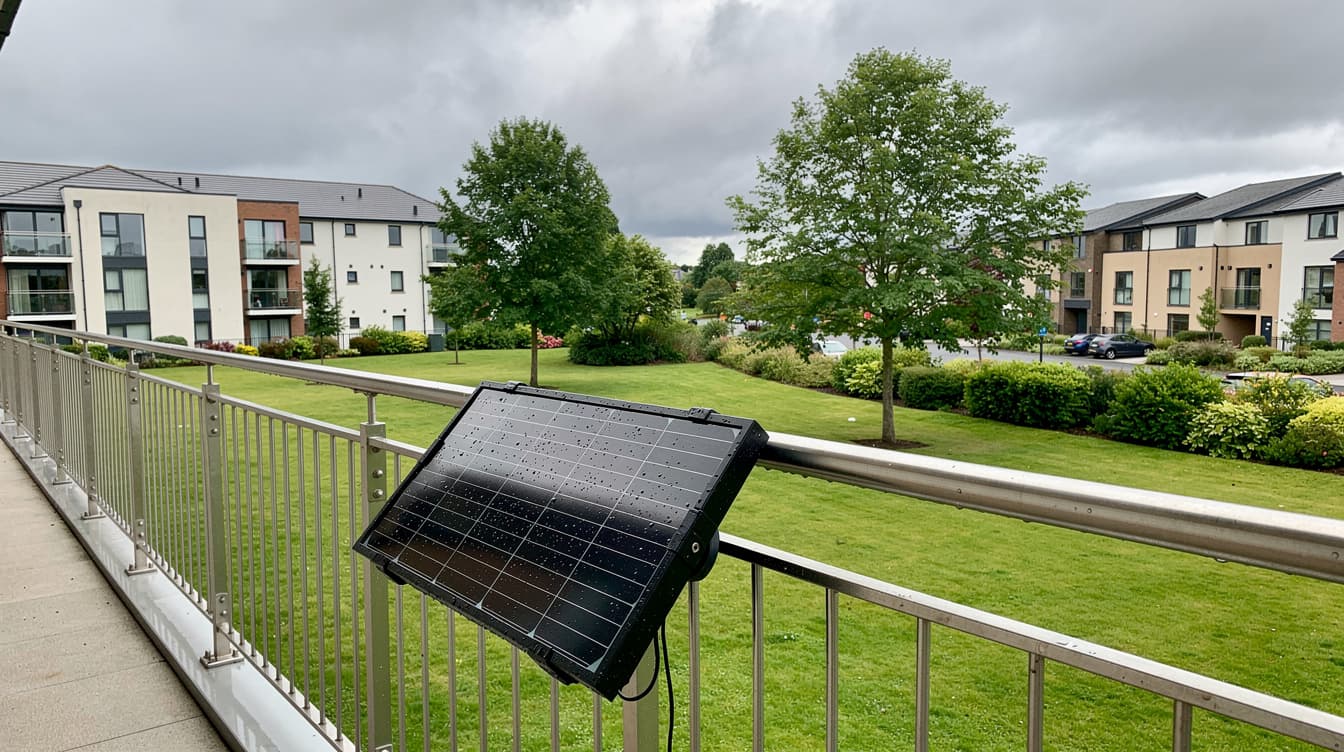
Ireland Set to Legalise Plug-In Solar Panels: What It Means for Renters and Apartment Dwellers (2026)
Energy Minister is 'very open' to legalising plug-in solar in Ireland. What it means for renters, costs, timeline, and how Germany and the UK led the way.
Free Solar Panels for Pensioners in Ireland 2026: Grants, Schemes & How to Apply
Free solar panels for pensioners in Ireland 2026. SEAI grants, Warmer Homes Scheme, community schemes and step-by-step application guides.