
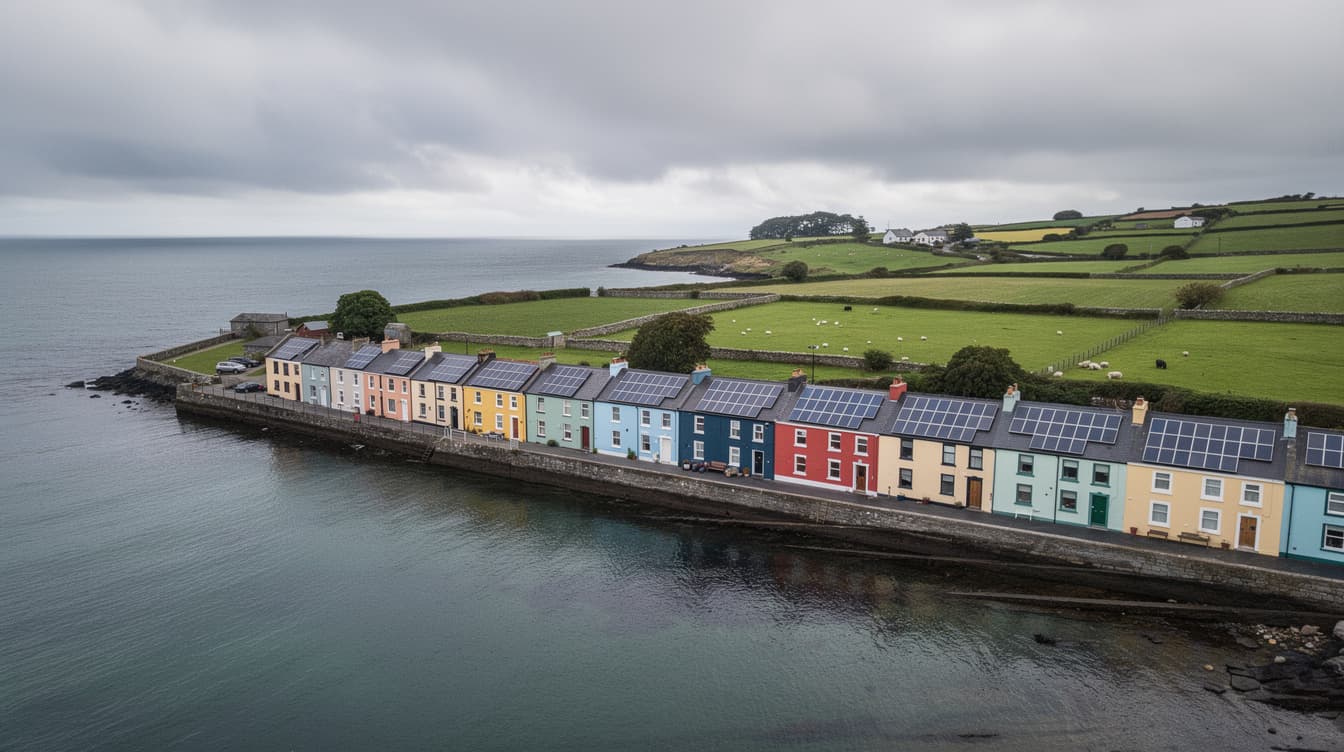
Solar Panels Galway 2026: Costs, Installers, Output & the West Coast Solar Myth
Galway homeowners have a decision to make in 2026 — and most are leaving money on the table. Despite sitting in the sunniest band on Ireland's west coast, Galway has one of the lowest solar adoption rates of any major county. Just 3.2% of Galway homes had solar panels at the end of 2025, compared to 5.1% in Cork and 4.8% in Dublin. The reasons are mostly myth: "the west is too cloudy," "it rains too much," "the grant won't cover enough." None of these hold up to the data.
This guide breaks down exactly what solar costs in Galway in 2026, what output you can realistically expect from your roof, how the SEAI grant works, and which installers are worth your time. Whether you're in a Salthill apartment, a 3-bed semi in Knocknacarra, or a farmhouse outside Ballinasloe, the numbers work — and they work better than most Galway homeowners realise.
Get Galway Solar Quotes in 24 Hours
Compare prices from SEAI-registered Galway installers — free, no obligation.
Galway's Solar Numbers: Better Than You Think
Let's deal with the elephant in the room first. Yes, Galway gets more rain than Dublin. But rain and solar output are not the same thing. Solar panels respond to light, not direct sunshine, and Galway's long summer days and coastal clarity give it more usable solar hours than its reputation suggests.
- 1,114 sunshine hours per year — fewer than Cork (1,417) or Wexford (1,600+), but well within the range where solar pays back comfortably.
- 886 kWh/kWp annual yield — a 4 kWp system in Galway produces roughly 3,544 kWh per year, enough to cover 55–70% of a typical household's electricity.
- 2.5 peak sun hours per day (annual average), rising to 4.5–5.0 PSH in May–July when your panels will produce 2–3 times their winter output.
- Long summer days — Galway's latitude means 17+ hours of daylight in June. Panels generate from roughly 5:30am to 9:30pm, even under cloud cover.
In practical terms, Galway sits about 10–15% behind Cork for annual output, but also tends to have lower installer pricing due to less competition for slots. The net payback period is often identical.
What Solar Panels Cost in Galway (May 2026)
Galway pricing is competitive. You're not paying the Dublin premium, and west-coast installers often have shorter waiting lists than their Leinster counterparts. Here's what Galway homeowners are actually paying after the €1,800 SEAI grant:
| House Type | Typical System | Before Grant | After €1,800 Grant | Est. Annual Output |
|---|---|---|---|---|
| 2-bed terrace (city) | 6–8 panels / 2.5–3.3 kWp | €4,500–€6,000 | €2,700–€4,200 | 2,200–2,900 kWh |
| 3-bed semi (Knocknacarra, Oranmore) | 10–12 panels / 4.1–5.0 kWp | €5,800–€7,800 | €4,000–€6,000 | 3,600–4,400 kWh |
| 4-bed detached | 14–18 panels / 5.7–7.4 kWp | €8,000–€10,500 | €6,200–€8,700 | 5,000–6,500 kWh |
| Bungalow (rural Galway) | 12–16 panels / 5.0–6.6 kWp | €6,800–€9,200 | €5,000–€7,400 | 4,400–5,800 kWh |
| Farmhouse + battery | 16–20 panels / 6.6–8.2 kWp + 5–10 kWh | €12,500–€17,000 | €10,700–€15,200 | 5,800–7,200 kWh |
Battery add-ons: A 5 kWh battery (Huawei LUNA 2000) adds €3,500–€4,500. A 10 kWh unit (GivEnergy All-in-One or Tesla Powerwall 3) runs €6,000–€9,000. Batteries make more sense in Galway than sunnier counties because the west's variable weather means more surplus generation that would otherwise be exported at low rates.
The SEAI Grant: €1,800 Off Your Installation
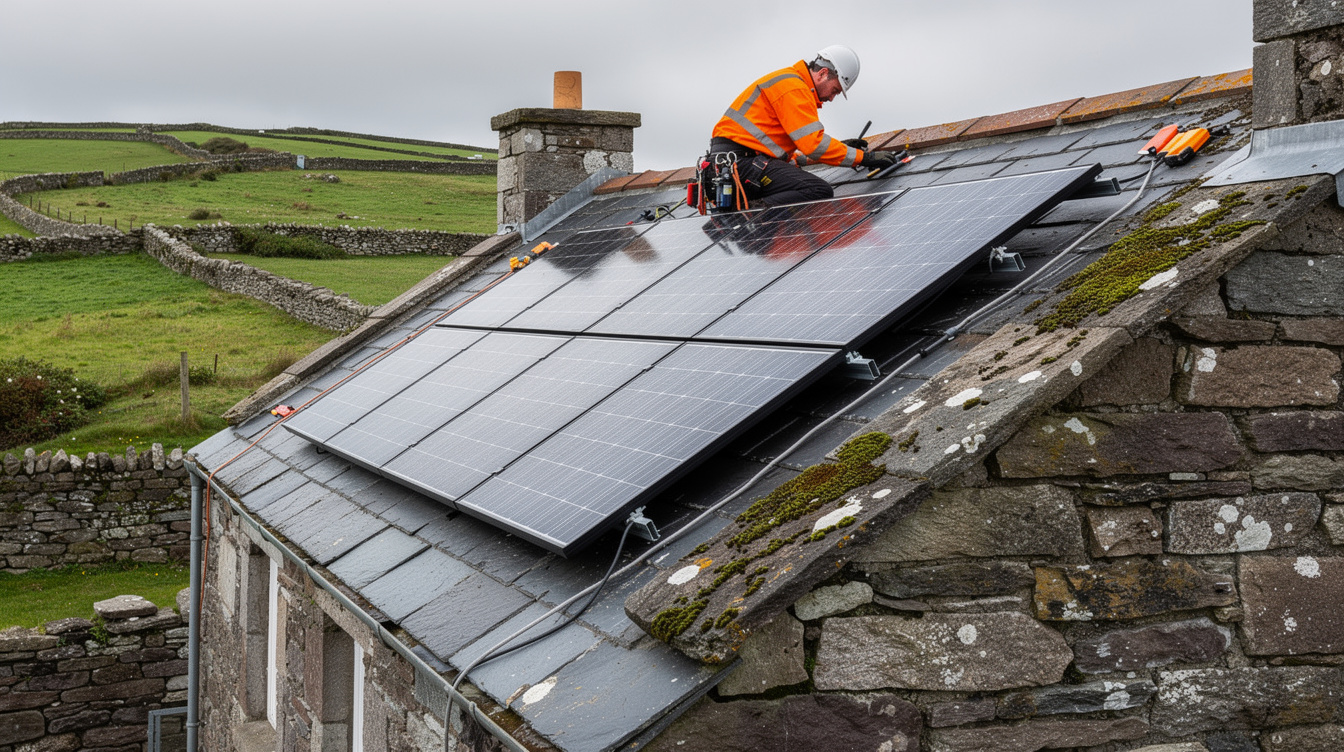
The SEAI solar PV grant remains at €1,800 for 2026 — unchanged from 2025, despite earlier rumours it would be cut. Here's how it breaks down:
| System Size | Grant Rate | Grant Amount |
|---|---|---|
| First 2 kWp | €700 per kWp | €1,400 |
| Next 2 kWp (2–4 kWp) | €200 per kWp | €400 |
| Maximum (4+ kWp) | — | €1,800 |
Key eligibility rules:
- Your home must have been built and occupied before 2021
- You must use an SEAI-registered installer (check their register before signing anything)
- You need written SEAI approval before work begins — installing first and applying later will void your grant
- 0% VAT on residential solar continues in 2026, saving you an additional €600–€1,200 on top of the grant
How Much Will You Actually Save Each Year?
Your savings depend on three things: system size, how much electricity you use during daylight hours (self-consumption), and whether you export surplus to the grid. Here's what a typical Galway household looks like:
| Scenario | System | Self-Use Savings | Export Income | Total Annual Saving |
|---|---|---|---|---|
| Couple, both at work | 3.3 kWp | €480 | €180 | €660 |
| Family, 1 parent home | 4.1 kWp | €720 | €140 | €860 |
| WFH household | 5.0 kWp | €950 | €120 | €1,070 |
| Farm with battery | 8.2 kWp + 10 kWh | €1,600 | €90 | €1,690 |
These figures assume electricity at 38c/kWh (the current mid-market rate) and Clean Export Guarantee rates of 18–24c/kWh depending on your supplier. The first €400 of export income is tax-free under the micro-generation scheme.
Find Out What You'd Save
Use our free calculator to estimate your solar savings based on your Galway location and usage.
Galway-Specific Challenges (And How to Handle Them)
Galway does present some unique considerations that your installer should address:
Wind Loading
Galway is one of Ireland's windiest counties. Panels must be rated for wind loads up to 130 km/h, and mounting systems need to comply with IS EN 1991-1-4 (the Eurocode for wind actions). Any competent installer will specify wind-rated fixings, but it's worth asking — especially for exposed coastal sites in Connemara or the Aran Islands. Flush-mounted panels (parallel to the roof) handle wind better than tilted frames.
Salt Air Corrosion
If you're within 5 km of the coast (which covers most of Galway city and a huge chunk of the county), insist on marine-grade aluminium frames and stainless steel fixings. The price difference is negligible (€100–€200 more per system), but corrosion from salt spray will degrade cheaper fixings within 5–8 years.
Planning in Protected Areas
Galway's Architectural Conservation Areas (ACAs) — including parts of the Latin Quarter, Eyre Square surroundings, and some Connemara villages — may require planning permission for roof-mounted panels. Standard planning exemptions allow up to 12m² of panels on most residential roofs without permission, but ACAs and protected structures are exceptions. Check with Galway City Council or Galway County Council before committing.
Grid Connection Wait Times
ESB Networks processes grid connections for solar in 4–8 weeks in Galway as of early 2026. This is faster than Dublin (6–12 weeks) because there's less congestion on the western grid. Your installer should handle the NC6 application for you.
How to Choose an Installer in Galway
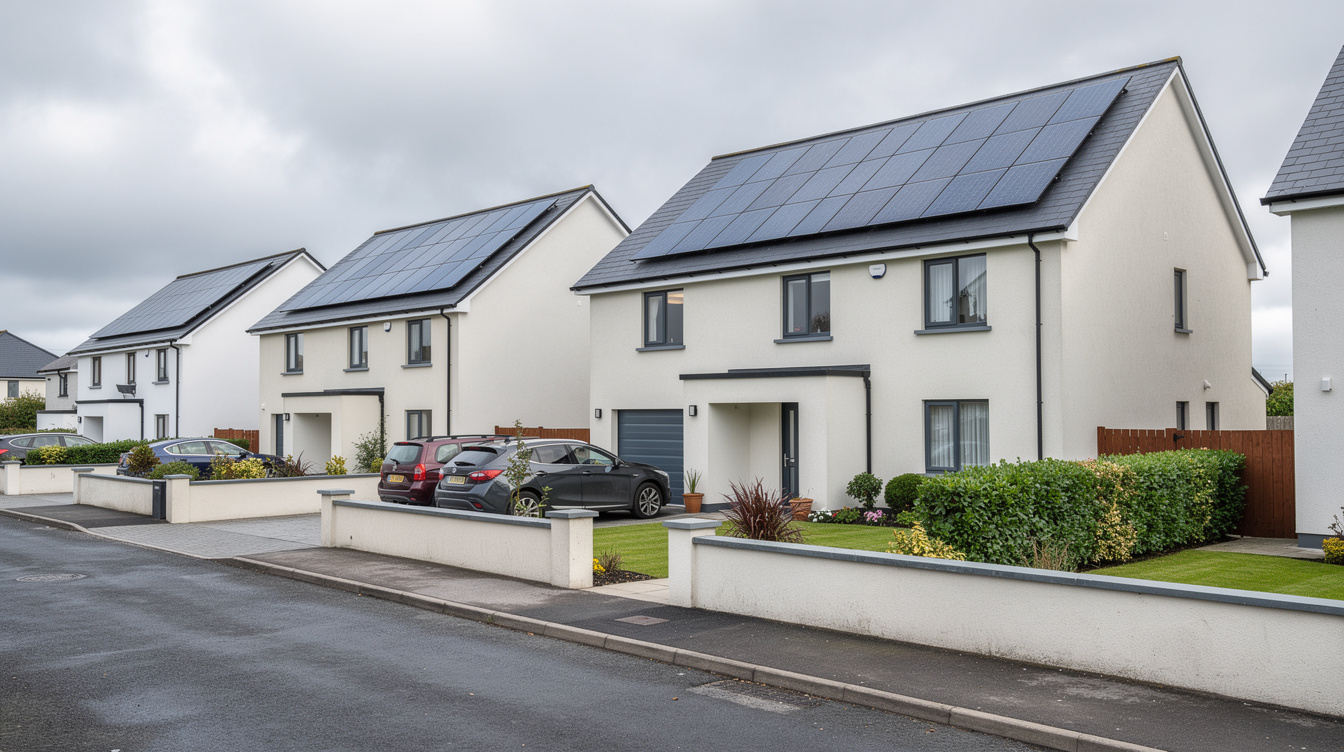
There are dozens of SEAI-registered solar installers serving County Galway. The county's position means you'll see quotes from Connacht-based companies as well as national firms travelling from Dublin or Limerick. Here's how to navigate it:
- Get at least 3 quotes — prices vary by 30–40% between installers for the same system. Don't accept the first offer.
- Verify SEAI registration — only registered installers can do grant-eligible work. Check the SEAI register directly.
- Ask about wind-rated fixings — if the installer doesn't mention wind loading for a Galway install, that's a red flag.
- Check panel brands — look for Tier 1 manufacturers: Canadian Solar, Trina, JA Solar, Longi, or Jinko. Avoid unbranded panels.
- Confirm inverter choice — Huawei, SolarEdge, Enphase, and Fronius are the main players in Ireland. Make sure the inverter is sized to match your panel array.
- Ask for local references — a Galway-based installer should be able to show you completed installations within the county.
For a deeper dive into what separates good installers from bad ones, read our complete installer selection guide.
Galway Solar Output: Month by Month
This is what a typical 4.1 kWp system (10 panels) produces each month in County Galway, based on PVGIS data for the region:
| Month | Output (kWh) | % of Annual Total |
|---|---|---|
| January | 105 | 3% |
| February | 155 | 4% |
| March | 275 | 8% |
| April | 370 | 10% |
| May | 435 | 12% |
| June | 450 | 13% |
| July | 420 | 12% |
| August | 380 | 11% |
| September | 290 | 8% |
| October | 195 | 6% |
| November | 115 | 3% |
| December | 85 | 2% |
| Annual Total | 3,275 | ~92% of Cork equivalent |
The key takeaway: 75% of your annual solar generation happens between March and September. If you're thinking about installing, getting it done before summer maximises your first-year return. Current waiting times in Galway are 3–6 weeks from quote acceptance to installation — shorter than the national average.
Solar Panels and Galway's Rental Market
Galway has one of Ireland's tightest rental markets, with over 20,000 rented homes in the county. If you're a landlord, solar panels can boost your BER rating by 1–2 grades, which is increasingly important as minimum BER requirements tighten. The SEAI grant applies to rental properties too, provided the home was built before 2021.
If you're a renter, you can't install rooftop panels, but plug-in solar panels and balcony solar kits are an option. Ireland is expected to formalise regulations for plug-in solar in 2026, which will make these even more accessible for Galway's apartment dwellers — particularly in the city's growing number of Build-to-Rent developments.
Payback Period: When Do You Break Even?
The payback period for solar in Galway depends on your system cost, grant, and how much of the generated electricity you use yourself rather than export:
| System | Net Cost (After Grant) | Annual Saving | Payback |
|---|---|---|---|
| 3.3 kWp (panels only) | €3,200 | €660 | 4.8 years |
| 4.1 kWp (panels only) | €4,400 | €860 | 5.1 years |
| 5.0 kWp (panels only) | €5,200 | €1,070 | 4.9 years |
| 5.0 kWp + 5 kWh battery | €9,000 | €1,250 | 7.2 years |
With panels lasting 25–30 years and warranties typically covering 25 years of output, you're looking at 20+ years of pure profit after payback. At current electricity prices, that's €15,000–€25,000 in lifetime savings for a typical Galway home.
Ready to Go Solar in Galway?
Get your free personalised quote from SEAI-registered installers.
East Galway vs West Galway: Does Location Matter?
Within the county, there's a noticeable difference in solar conditions:
- East Galway (Ballinasloe, Loughrea, Portumna) — slightly drier, more sheltered, and gets about 5–8% more sunshine than the coast. Roof orientations tend to be more varied on older rural homes.
- Galway City & suburbs (Knocknacarra, Salthill, Renmore, Oranmore) — good mix of housing estates with south-facing roofs. Wind loading is moderate, salt air is a consideration for coastal areas.
- West Galway & Connemara (Clifden, Roundstone, Carraroe) — more exposed to Atlantic weather, fewer sunshine hours, but longer summer days. Wind-rated fixings and marine-grade hardware are essential. Output is typically 8–12% lower than east Galway.
The bottom line: even in the most exposed parts of Connemara, solar panels still pay for themselves within 6–7 years. The difference between east and west is a matter of months on payback, not years.
Galway Solar and Heat Pumps: The Smart Combo
Galway has one of the highest heat pump adoption rates in Ireland, driven by new-build requirements and the county's reliance on oil and solid-fuel heating in older rural homes. Pairing solar panels with a heat pump is increasingly common and makes strong financial sense:
- A heat pump runs on electricity — solar panels offset that cost directly
- Running your heat pump during peak solar hours (10am–3pm) maximises self-consumption
- Combined SEAI grants: €1,800 (solar) + €3,500 (heat pump) = €5,300 in grant support
- A well-insulated Galway home with solar + heat pump can reduce energy bills by 60–75%
Frequently Asked Questions
Do solar panels work in Galway's rainy weather?
Yes. Solar panels generate electricity from light, not direct sunshine. Even on overcast days, panels produce 15–25% of their rated output. Galway's rain actually helps by keeping panels clean — you'll rarely need to clean your panels manually, unlike drier areas where bird droppings and dust build up.
Do I need planning permission in Galway?
Most residential solar installations in Galway are exempt development and don't need planning permission. Exceptions include listed buildings, homes in Architectural Conservation Areas, and systems exceeding 12m² or protruding more than 15cm from the roof surface. When in doubt, check with Galway City or County Council.
How long does installation take?
A typical residential install takes 1–2 days on site. The full timeline from quote to generating electricity is usually 4–8 weeks in Galway, including the SEAI approval process and ESB grid connection. Read our full installation timeline guide for details.
Can I sell electricity back to the grid in Galway?
Yes. Under Ireland's Clean Export Guarantee, all electricity suppliers must offer a payment for exported solar electricity. Rates range from 18–24c/kWh depending on your supplier, and the first €400 of annual export income is tax-free. You'll need a smart meter installed (ESB Networks is rolling these out across Galway).
What about the Aran Islands?
Solar works well on the Aran Islands, and several homes on Inis Mór, Inis Meáin, and Inis Oírr already have panels installed. The main considerations are salt air (marine-grade fixings are essential), wind loading, and logistics — installation costs may be slightly higher due to transport. The SEAI grant still applies.
Related Articles
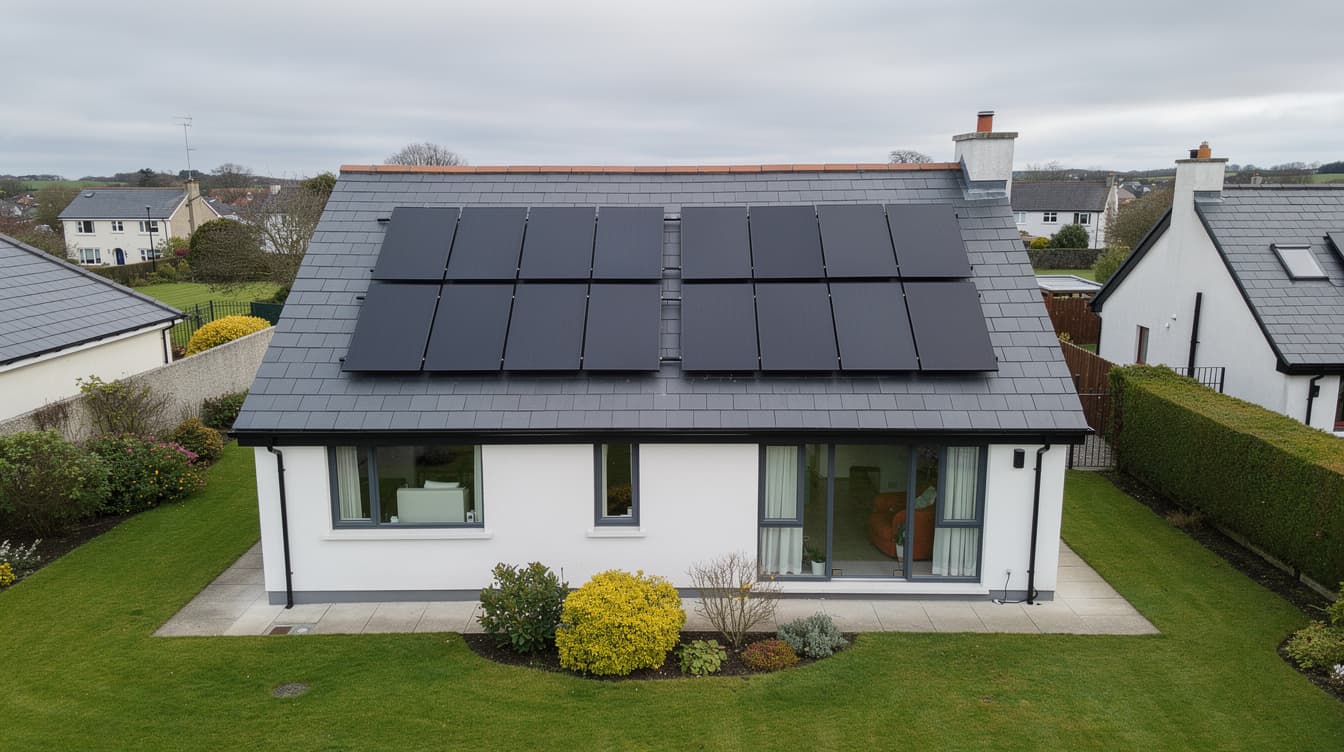
5 kW Solar Panel System Ireland 2026: Costs, Output, Panels Needed & Is It the Right Size?
5 kW solar system Ireland 2026: costs from €5,700 after grant, 11-12 panels, 4,500 kWh output. Full breakdown of savings, payback and battery options.
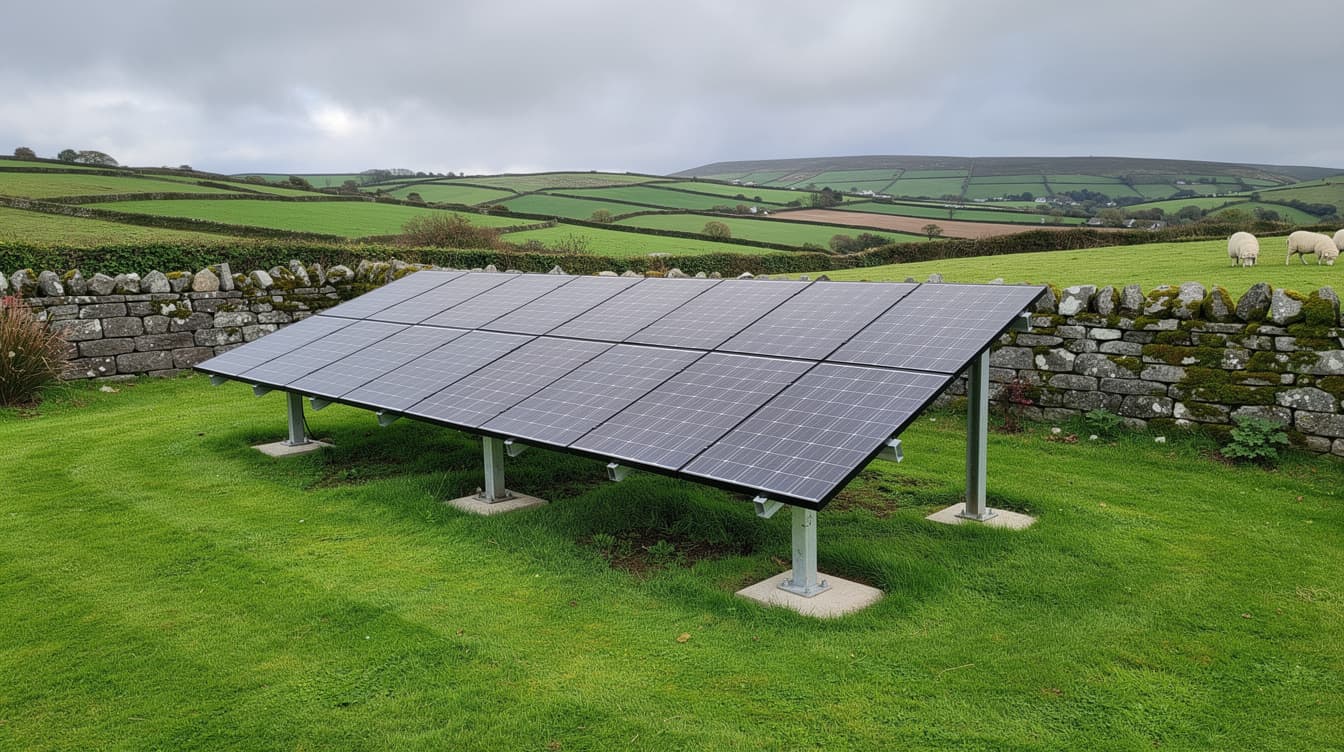
Ground-Mounted Solar Panels Ireland 2026: Costs, Planning Rules, Pros & Cons vs Rooftop
Ground-mounted solar panels in Ireland 2026: costs from €6,500, planning rules (25m² exemption), pros vs rooftop, foundations and SEAI grant eligibility.
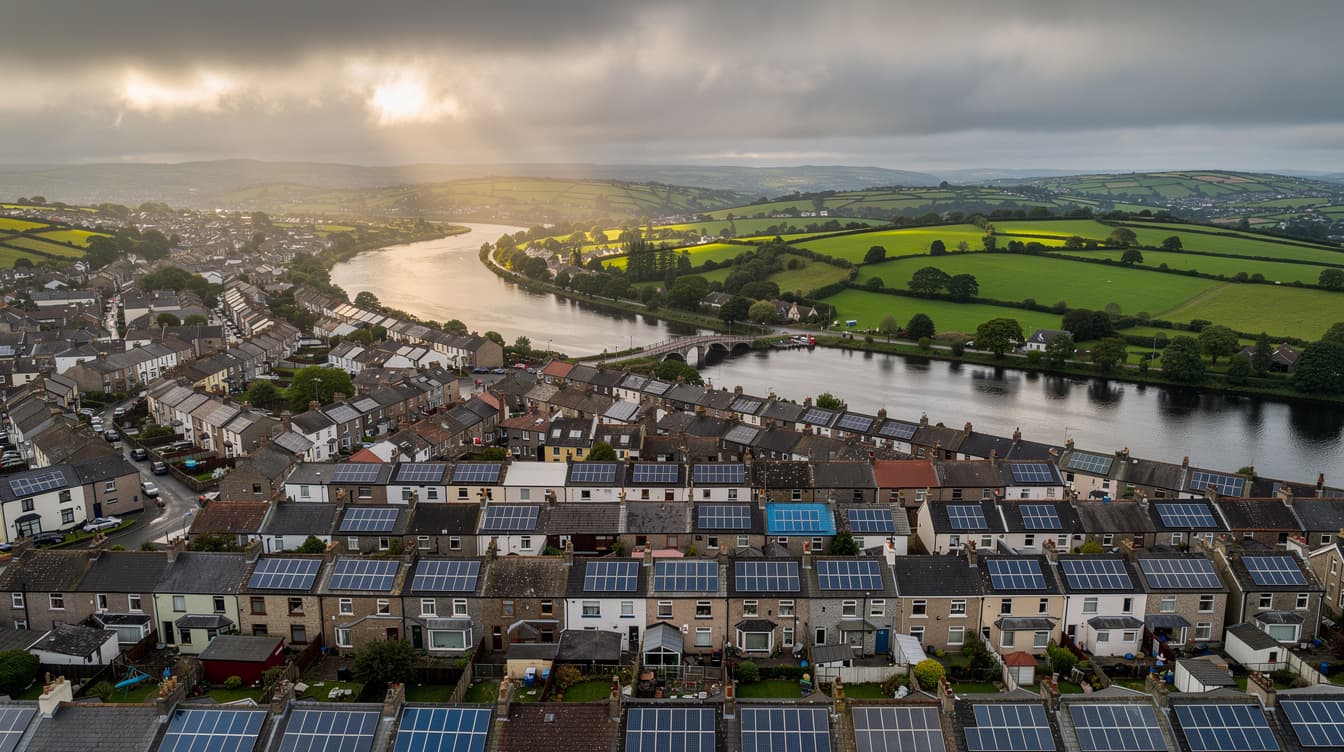
Solar Panels Cork 2026: Costs, Installers, Output & Why Cork Is Ireland's Solar Sweet Spot
Solar panels in Cork 2026: real costs from €3,000 after grant, 1,417 sunshine hours, 300+ installers compared. Cork-specific output, planning and savings data.