
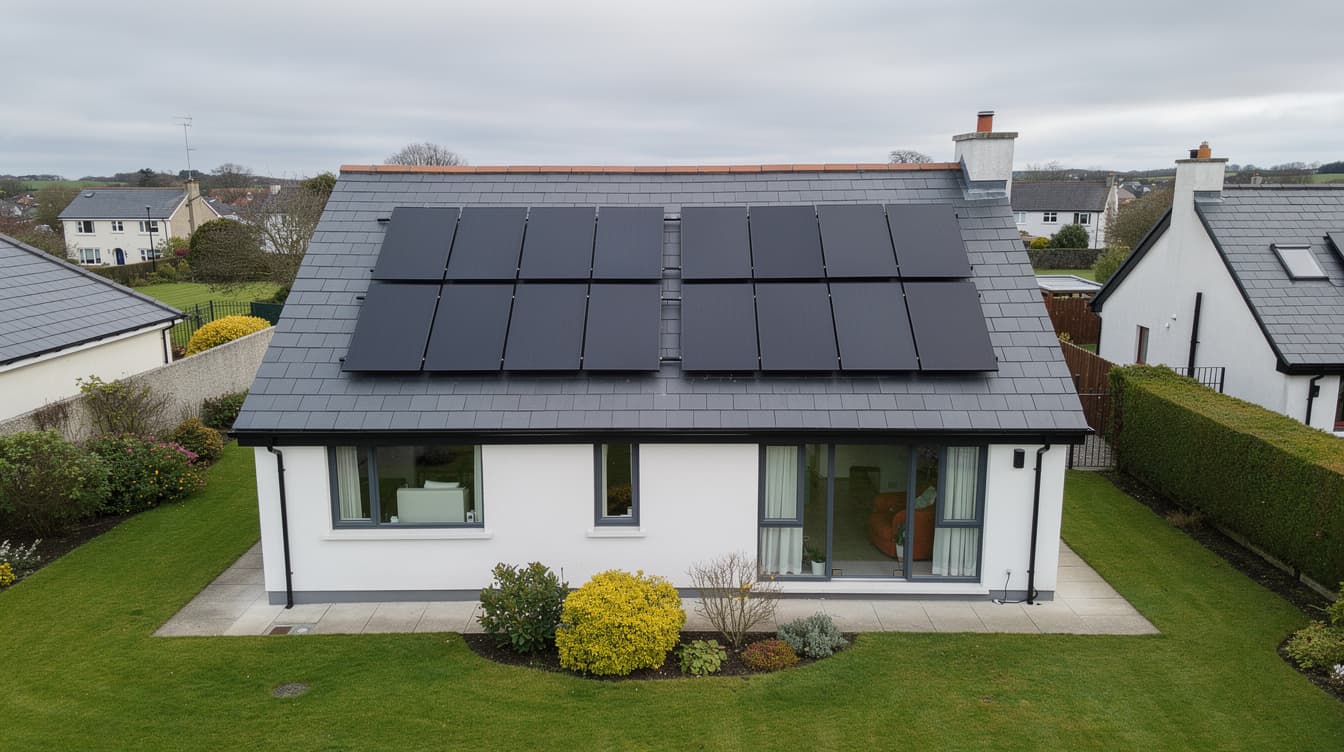
5 kW Solar Panel System Ireland 2026: Costs, Output, Panels Needed & Is It the Right Size?
A 5 kW solar panel system is the sweet spot for most Irish homes. It's large enough to cover 80–100% of an average household's electricity, small enough to fit on almost any standard roof, and it hits the SEAI grant ceiling so you get the maximum €1,800 back. If you've been researching solar and aren't sure whether to go bigger or smaller, 5 kW is almost certainly the right answer — and this guide will show you exactly why.
We'll cover what a 5 kW system actually includes, what it costs in Ireland in 2026, how many panels you need, what output to expect across the seasons, and how to maximise your savings whether you're at home during the day or out at work.
Get 5 kW Solar Quotes
Compare prices from SEAI-registered installers near you — free, no obligation.
What's Actually in a 5 kW Solar System?
When an installer quotes you for a "5 kW system," here's what that includes:
- 11–12 solar panels — using 2026's standard 430–460 W panels. Higher-wattage panels mean fewer panels for the same output.
- A hybrid or string inverter — typically 5 kW rated. Huawei SUN2000-5KTL, SolarEdge SE5000H, or Fronius Primo Gen24 5.0 are the most common in Ireland.
- Mounting system — roof hooks, rails, and clamps rated for Irish wind loads.
- DC and AC cabling — from panels to inverter to your consumer unit (fuse board).
- Generation meter — to track what your system produces.
- ESB grid connection — NC6 application for the export meter (your installer handles this).
A battery is not included at the standard 5 kW price point — that's an optional add-on we'll cover below.
How Much Does a 5 kW System Cost in 2026?
Here's the real pricing picture for a 5 kWp system in Ireland as of May 2026:
| Cost Element | Amount |
|---|---|
| System price (panels + inverter + install) | €7,500–€9,500 |
| VAT (0% for residential) | €0 |
| SEAI grant | –€1,800 |
| Your net cost | €5,700–€7,700 |
The range depends on panel brand (Tier 1 panels like Canadian Solar or Trina cost more than budget brands), inverter choice, and your location. Dublin installations tend to sit at the top of this range; rural areas and the west coast are often €500–€1,000 cheaper.
What about with a battery?
| Configuration | Gross Cost | After Grant |
|---|---|---|
| 5 kW panels only | €7,500–€9,500 | €5,700–€7,700 |
| 5 kW + 5 kWh battery | €11,000–€13,500 | €9,200–€11,700 |
| 5 kW + 10 kWh battery | €14,000–€17,000 | €12,200–€15,200 |
Read our battery comparison guide if you're considering adding storage.
How Many Panels Do You Need for 5 kW?
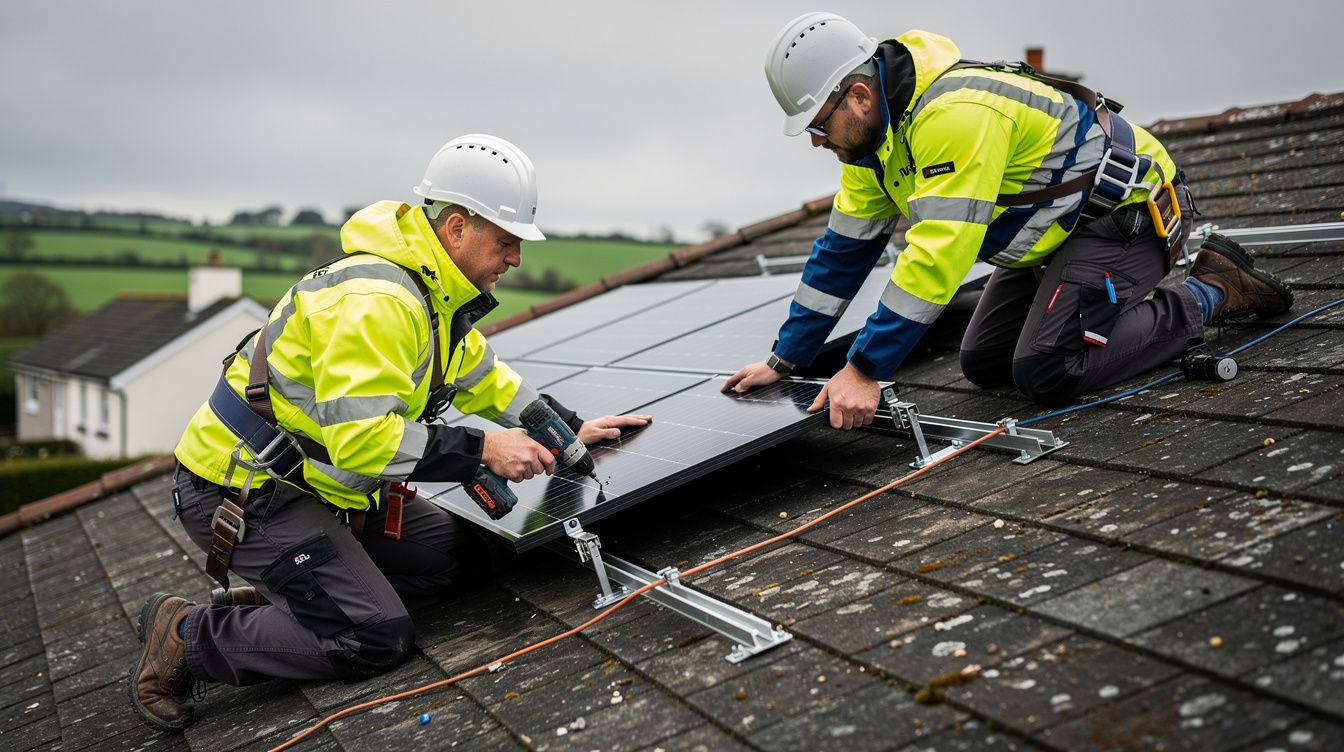
This depends on the wattage of each panel. In 2026, most installers use 430–460 W panels:
| Panel Wattage | Panels Needed | Actual System Size | Roof Area Needed |
|---|---|---|---|
| 430 W | 12 panels | 5.16 kWp | ~21 m² |
| 450 W | 11 panels | 4.95 kWp | ~19 m² |
| 460 W | 11 panels | 5.06 kWp | ~19 m² |
A standard panel is roughly 1.7m × 1.1m (1.87 m²). You'll need about 19–21 m² of unshaded south-facing roof space. That fits comfortably on most 3-bed semis and detached houses. If your roof faces east-west, you can split panels across both sides — you'll need a couple more panels to compensate for the 10–15% output reduction, but it's still very viable. Read our east/west roof guide for details.
What Output to Expect from a 5 kW System in Ireland
A 5 kWp system generates approximately 4,300–4,700 kWh per year in Ireland, depending on your location and roof orientation. Here's how that breaks down by region:
| Location | Annual Output (5 kWp) | kWh per kWp |
|---|---|---|
| Southeast (Wexford, Waterford) | 4,700–5,000 kWh | 940–1,000 |
| Cork, Kerry | 4,500–4,800 kWh | 900–960 |
| Dublin, Leinster | 4,300–4,600 kWh | 860–920 |
| Galway, West | 4,100–4,400 kWh | 820–880 |
| Donegal, Northwest | 3,900–4,200 kWh | 780–840 |
For context, the average Irish household uses about 4,200 kWh per year. A 5 kW system in most of Ireland produces as much — or more — than you consume. The catch is that production and consumption don't always align (you generate most when you're least likely to use it), which is where self-consumption strategy and batteries come in.
5 kW vs 3 kW vs 7 kW: How Does It Compare?
Should you go smaller to save money, or bigger to generate more? Here's the comparison:
| System | Panels | Net Cost | Annual Output | Annual Saving | Payback |
|---|---|---|---|---|---|
| 3 kW | 7 | €3,000–€4,200 | 2,700 kWh | €600–€700 | 5–6 years |
| 5 kW | 11–12 | €5,700–€7,700 | 4,500 kWh | €1,000–€1,200 | 5–7 years |
| 7 kW | 16 | €7,500–€9,500 | 6,300 kWh | €1,200–€1,500 | 6–7 years |
Why 5 kW wins for most homes:
- It's the minimum size to get the full €1,800 SEAI grant (which caps at 4 kWp). Going bigger doesn't increase the grant.
- It covers 100% of average household consumption on an annual basis.
- The per-kWp cost is lowest at 5 kW — you get the best economies of scale without oversizing.
- It fits on most Irish roofs without needing east-west splits or complex mounting.
Go 3 kW if you have a small roof, low consumption, or a tight budget. Go 7 kW+ if you have an EV to charge, a heat pump, or high daytime usage. For a deeper comparison of all sizes, read our system size comparison guide.
Not Sure What Size You Need?
Our calculator estimates the ideal system size based on your home and usage.
How to Maximise Savings from a 5 kW System
The biggest factor in your return isn't system size — it's self-consumption. Every kWh you use directly from your panels saves you 38c (the price you'd pay your supplier). Every kWh you export earns just 18–24c. So the goal is to use as much as possible during daylight hours.
7 Practical Tips
- Run appliances during the day — programme your washing machine, dishwasher, and tumble dryer to run between 10am and 3pm.
- Heat your water midday — use a solar diverter (e.g. iBoost, Eddi) to send surplus electricity to your immersion heater. This alone can save €200–€350/year.
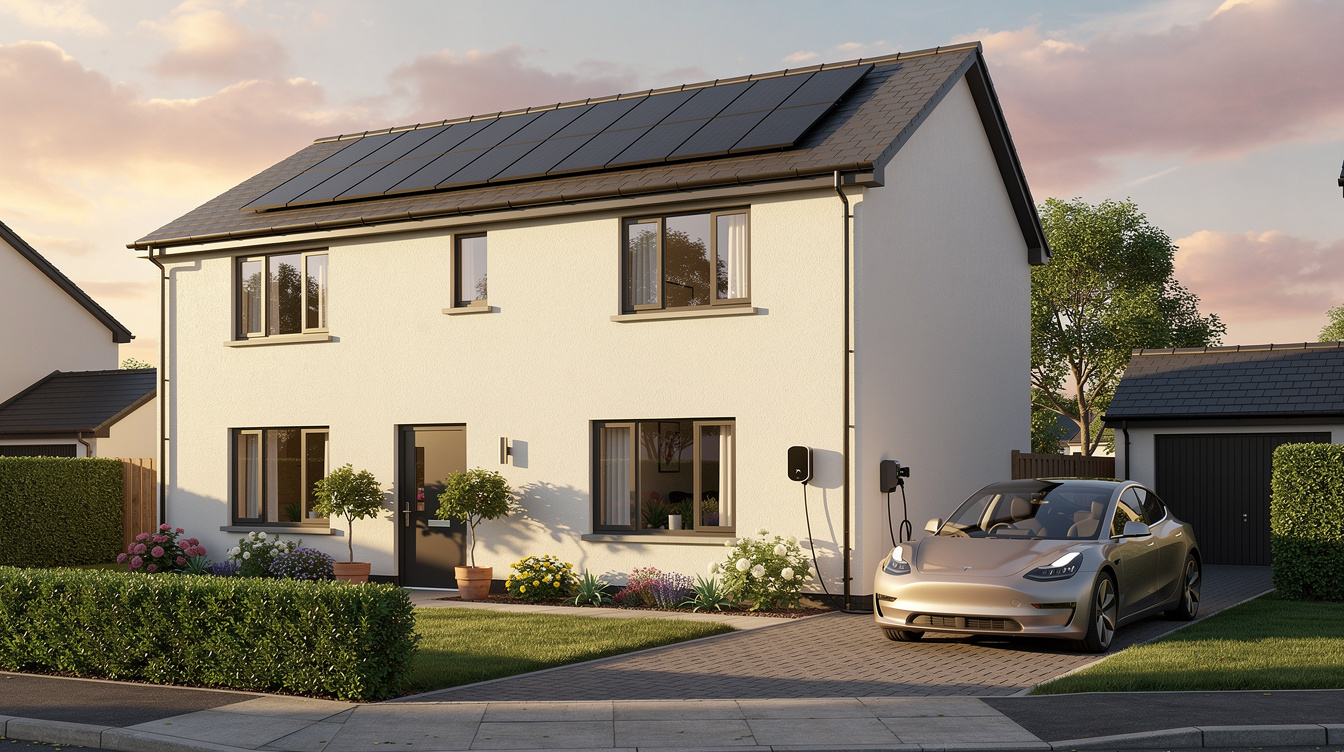
- Charge your EV at lunchtime — if you work from home or your car is parked during the day, schedule charging for peak solar hours.
- Get a smart meter — required for export payments. ESB Networks installs them free of charge.
- Choose the right tariff — some suppliers offer better export rates or time-of-use tariffs that reward solar owners. See our tariff comparison.
- Monitor your system — use your inverter's app (Huawei FusionSolar, SolarEdge Monitoring, etc.) to spot underperformance early. Read our monitoring guide.
- Consider a battery later — you don't need one on day one. Install panels first, see your export patterns for 6–12 months, then decide if a battery makes financial sense for your usage.
The SEAI Grant for a 5 kW System
The SEAI solar PV grant structure hasn't changed for 2026:
- First 2 kWp: €700/kWp = €1,400
- Next 2 kWp: €200/kWp = €400
- Total grant for 4+ kWp: €1,800 (this is the maximum)
Since a 5 kW system exceeds the 4 kWp cap, you automatically get the full €1,800. There's no financial benefit to declaring a smaller system size — you get the same grant whether you install 4 kWp or 10 kWp.
Eligibility reminder: Your home must have been built and occupied before 2021. You must use an SEAI-registered installer and get written approval before installation begins. The grant is paid directly to your installer, so you only pay the net amount.
What Roof Do You Need?
A 5 kW system needs about 19–21 m² of roof. Here's how that maps to common Irish house types:
| House Type | South-Facing Roof | 5 kW Fit? |
|---|---|---|
| 2-bed terrace | 12–16 m² | Tight — may need east-west split or 3.3 kW instead |
| 3-bed semi-detached | 18–24 m² | Yes — ideal fit |
| 3-bed detached | 22–30 m² | Yes — room for expansion later |
| 4-bed detached | 28–40 m² | Yes — could go 7 kW+ if needed |
| Bungalow | 25–40 m² | Yes — excellent for solar |
If your roof has dormers, chimneys, or velux windows that break up the available space, your installer will design around them. A site survey (usually free) will confirm exactly what fits. Read our roof space guide to check in advance.
Payback Period: When Do You Break Even?
For a 5 kW panels-only system at €6,700 net cost (mid-range), here's the payback math:
| Scenario | Self-Consumption | Annual Saving | Payback |
|---|---|---|---|
| Both at work (low daytime use) | 30% | €830 | 8.1 years |
| 1 person WFH | 50% | €1,080 | 6.2 years |
| Family with daytime presence | 60% | €1,200 | 5.6 years |
| WFH + EV + solar diverter | 75% | €1,400 | 4.8 years |
After payback, you're saving €1,000–€1,400 per year for another 20+ years (panels are warranted for 25 years). Lifetime savings: €20,000–€35,000 depending on future electricity prices.
Do You Need a Battery with 5 kW?
Not necessarily, and not right away. Here's when a battery makes sense:
- You export a lot — if your monitoring shows you're exporting 50%+ of your generation, a battery can capture that for evening use.
- You want backup power — some batteries (Tesla Powerwall, GivEnergy) provide backup during grid outages. Read our power cuts guide.
- You're on a time-of-use tariff — charge from solar during the day, use battery in the expensive evening period.
- You have an EV — store daytime solar to charge your car overnight.
When to skip the battery: If you're home during the day and already self-consuming 50%+ of your generation, the battery payback (10–12 years) is harder to justify. Install panels first, monitor for 6–12 months, then decide. See our detailed battery analysis.
Installation Timeline: Quote to Generating
Here's the typical timeline for a 5 kW installation in Ireland in 2026:
- Week 1–2: Get 3+ quotes and choose your installer
- Week 2–3: Site survey (free, 30–60 minutes)
- Week 3–4: Submit SEAI grant application (installer usually handles this)
- Week 4–6: SEAI approval (typically 2–3 weeks)
- Week 6–8: Installation day (1–2 days on site)
- Week 8–12: ESB grid connection and smart meter (4–6 weeks after install)
Total: 8–12 weeks from first quote to full operation. Current waiting times vary by region, but summer 2026 is busy — book early if you want to be generating by autumn.
Ready to Get a 5 kW System?
Get your free personalised quote from SEAI-registered installers.
Frequently Asked Questions
Is 5 kW too big for a 3-bed house?
No — 5 kW is the ideal size for a 3-bed house. A typical 3-bed uses 4,000–5,000 kWh/year, and a 5 kW system produces 4,300–4,700 kWh. You'll generate roughly what you use on an annual basis, with excess in summer and a shortfall in winter.
Can I add more panels later?
Yes, if your inverter supports it and your roof has space. Most 5 kW hybrid inverters can handle up to 6.5–7.5 kWp of panel input, so you can add 2–4 more panels later without replacing the inverter. Discuss future expansion with your installer at the design stage.
What happens on cloudy days?
A 5 kW system still generates 1–2 kWh per hour on overcast days (15–25% of rated output). That's enough to cover base loads like your fridge, router, and standby devices. On sunny days, you'll produce 3–4.5 kW at peak, more than most homes use at any one time.
Will a 5 kW system power my entire house?
On an annual basis, yes. On a moment-by-moment basis, no — you'll still draw from the grid on dark winter evenings and cloudy days. Solar supplements your grid supply; it doesn't replace it (unless you go fully off-grid with a large battery, which is rarely cost-effective in Ireland).
Do I need planning permission for a 5 kW system?
Usually not. Residential solar installations up to 12 m² (about 6–7 panels) are automatically exempt. Systems between 12–50 m² (which includes a 5 kW system at 19–21 m²) are exempt provided they don't extend above the ridge line, protrude more than 15 cm from the roof, or sit on a listed building. Read our planning exemptions guide for the full rules.
Related Articles
Solar Panels Galway 2026: Costs, Installers, Output & the West Coast Solar Myth
Solar panels in Galway 2026: costs from €2,700 after grant, 886 kWh/kWp output, wind and salt air tips, installer guide. County-specific data.
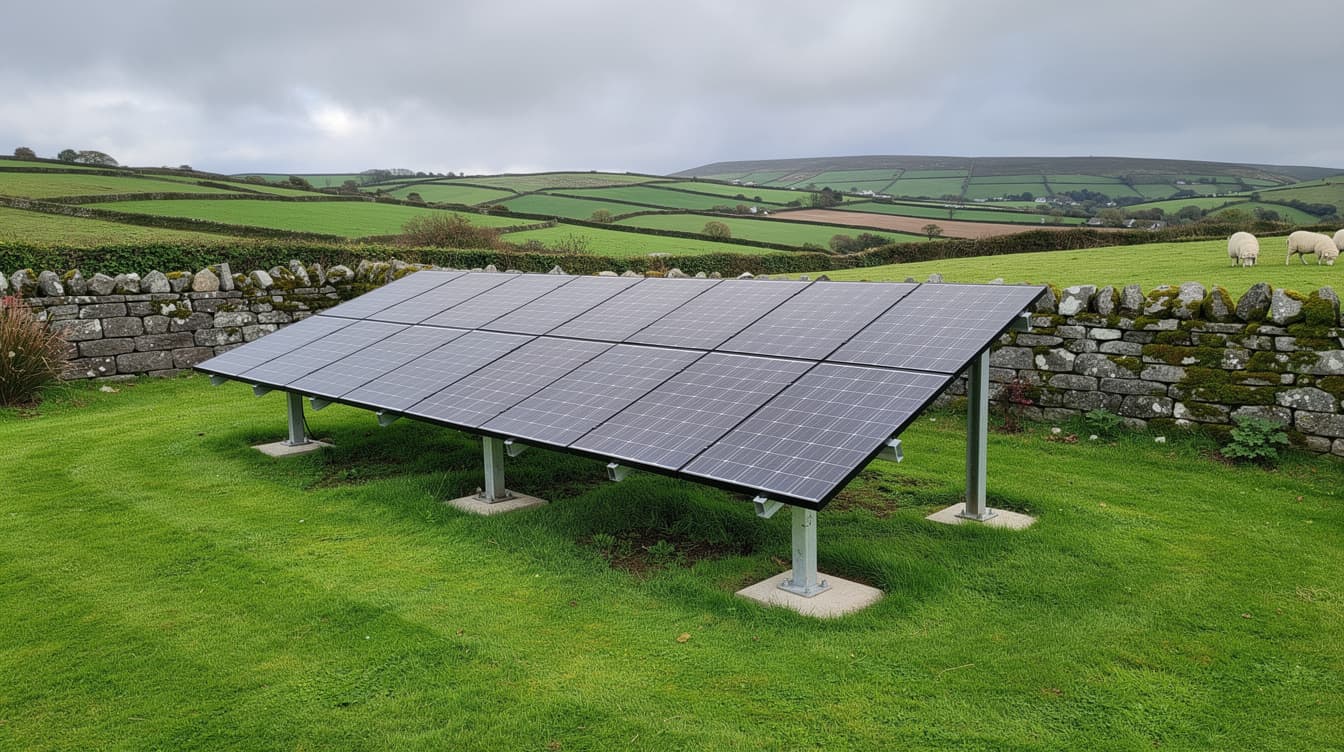
Ground-Mounted Solar Panels Ireland 2026: Costs, Planning Rules, Pros & Cons vs Rooftop
Ground-mounted solar panels in Ireland 2026: costs from €6,500, planning rules (25m² exemption), pros vs rooftop, foundations and SEAI grant eligibility.
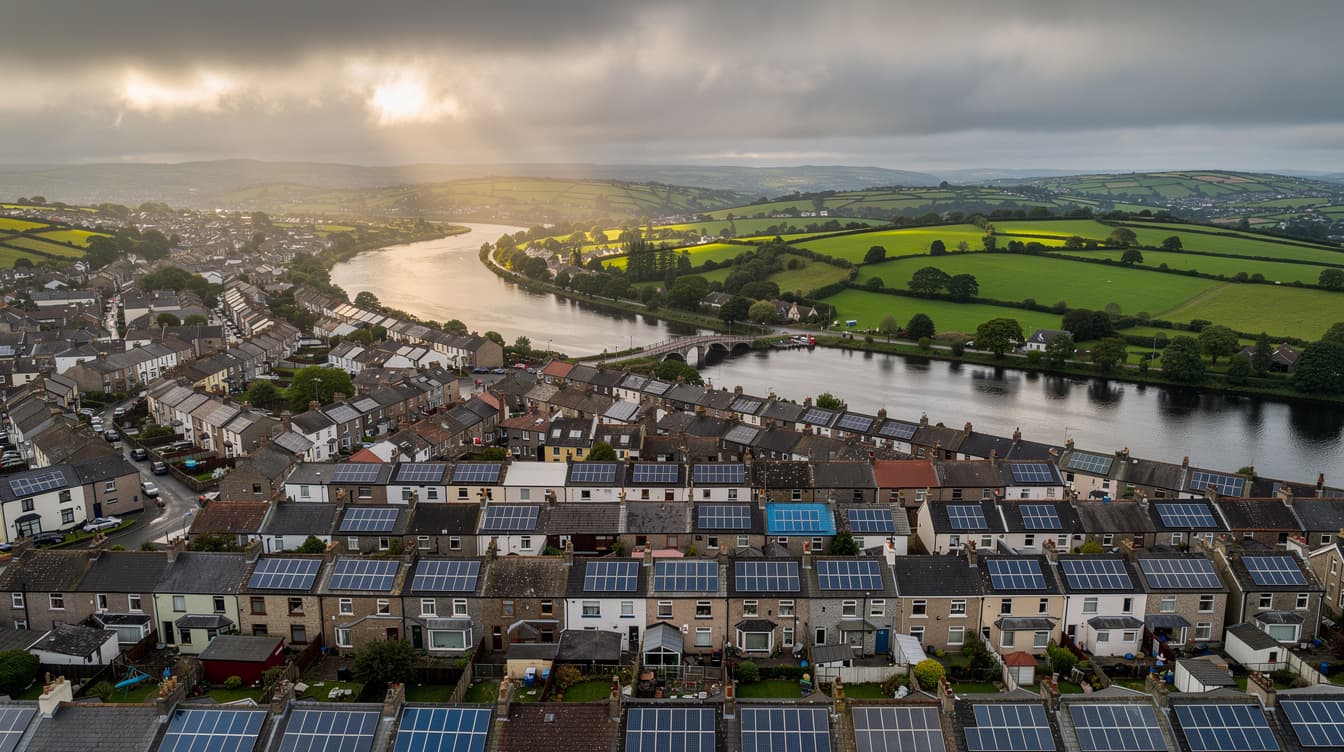
Solar Panels Cork 2026: Costs, Installers, Output & Why Cork Is Ireland's Solar Sweet Spot
Solar panels in Cork 2026: real costs from €3,000 after grant, 1,417 sunshine hours, 300+ installers compared. Cork-specific output, planning and savings data.