
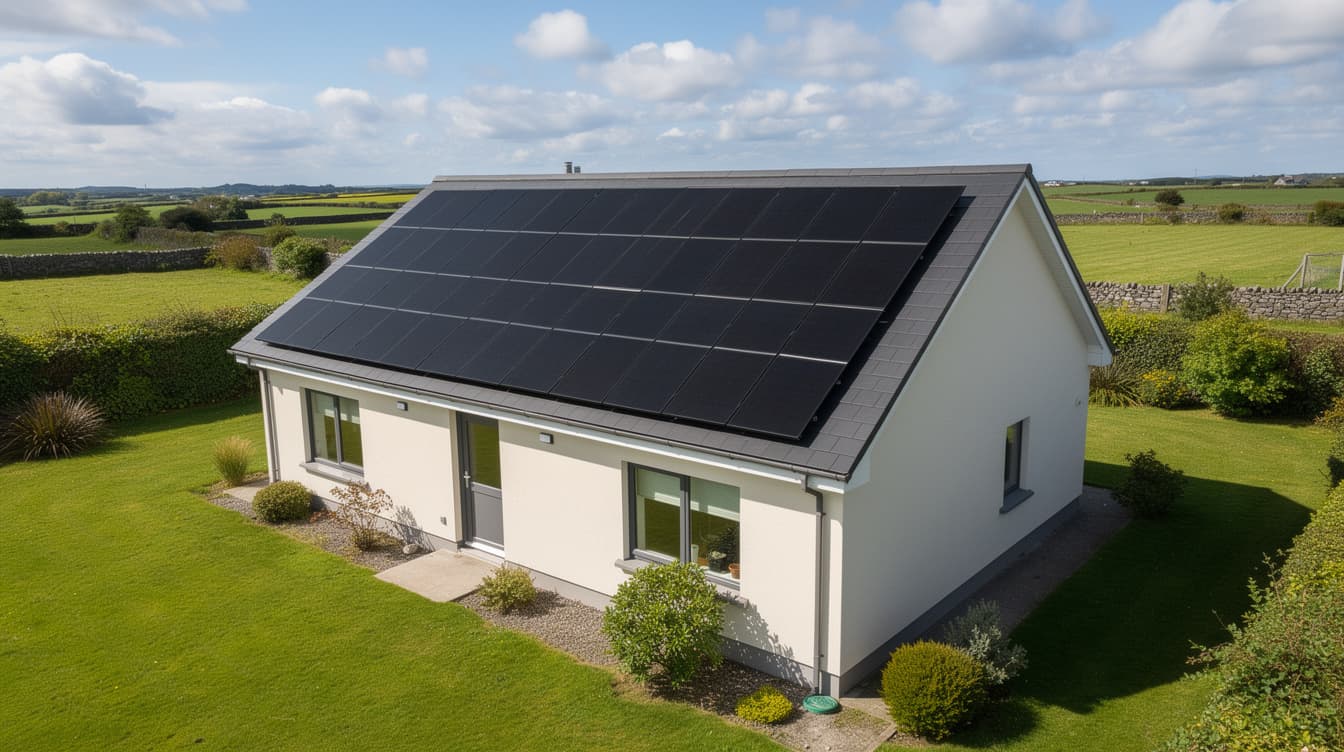
10 kW Solar Panel System Ireland 2026: Costs, Output, Panels & Is It Worth Going Big?
A 10 kW solar panel system is the largest residential setup most Irish homes will ever need — and for the right household, it’s the smartest investment on the market. If you have a large detached home, a heat pump, an electric vehicle, or a home business, a 10 kW system can generate 8,500–9,500 kWh of clean electricity per year. That’s more than double what the average Irish household uses, and enough to slash your annual electricity bill by €2,000+.
But a 10 kW system isn’t for everyone. It costs more upfront, needs a big roof (or garden space), and the SEAI grant caps at €1,800 regardless of system size. This guide breaks down exactly who should consider 10 kW, what it costs in 2026, how much it generates, and whether the economics actually stack up versus a smaller system.
Who Actually Needs a 10 kW System?
Most Irish homes do perfectly well with 3–5 kW. A 10 kW system makes sense when your electricity consumption is significantly above average. Here are the profiles that benefit most:
| Profile | Annual Usage | Why 10 kW Works |
|---|---|---|
| Large 4–5 bed detached home with heat pump | 8,000–12,000 kWh | Heat pump adds 3,000–5,000 kWh/yr to base consumption |
| Home + EV charging | 7,000–10,000 kWh | EV adds 2,500–4,000 kWh/yr depending on mileage |
| Working from home full-time | 6,000–8,000 kWh | High daytime usage maximises self-consumption |
| Farmhouse / large rural home | 8,000–15,000 kWh | Workshop, outbuildings, water pumps, grain dryers |
| Home business (B&B, salon, office) | 7,000–12,000 kWh | Business use means more daytime consumption |
If your annual electricity bill is under €1,500 and you don’t have a heat pump or EV, a 5–6.5 kW system is probably the better fit. The marginal return on the extra panels drops when you’re exporting most of the surplus at lower rates.
How Many Panels in a 10 kW System?
The number of panels depends on the wattage of each panel. In 2026, most Irish installers use panels rated between 420 W and 450 W:
| Panel Wattage | Panels Needed | Roof Space Required |
|---|---|---|
| 420 W | 24 panels | ~43 m² |
| 435 W | 23 panels | ~41 m² |
| 450 W | 22–23 panels | ~40 m² |
That’s a lot of roof. A typical semi-detached house in Ireland has roughly 20–25 m² of usable south-facing roof — not enough for 10 kW. You’ll typically need one of:
- A large detached house with 40+ m² of south/south-west facing roof
- An east-west split across both sides of the roof (slightly lower output per panel, but more total capacity)
- A ground-mounted array in your garden (adds €1,500–€3,000 for mounting frames)
- A combination of roof and ground-mount, or roof and solar carport
For more on roof suitability, see our guide on whether your roof has space for solar panels.
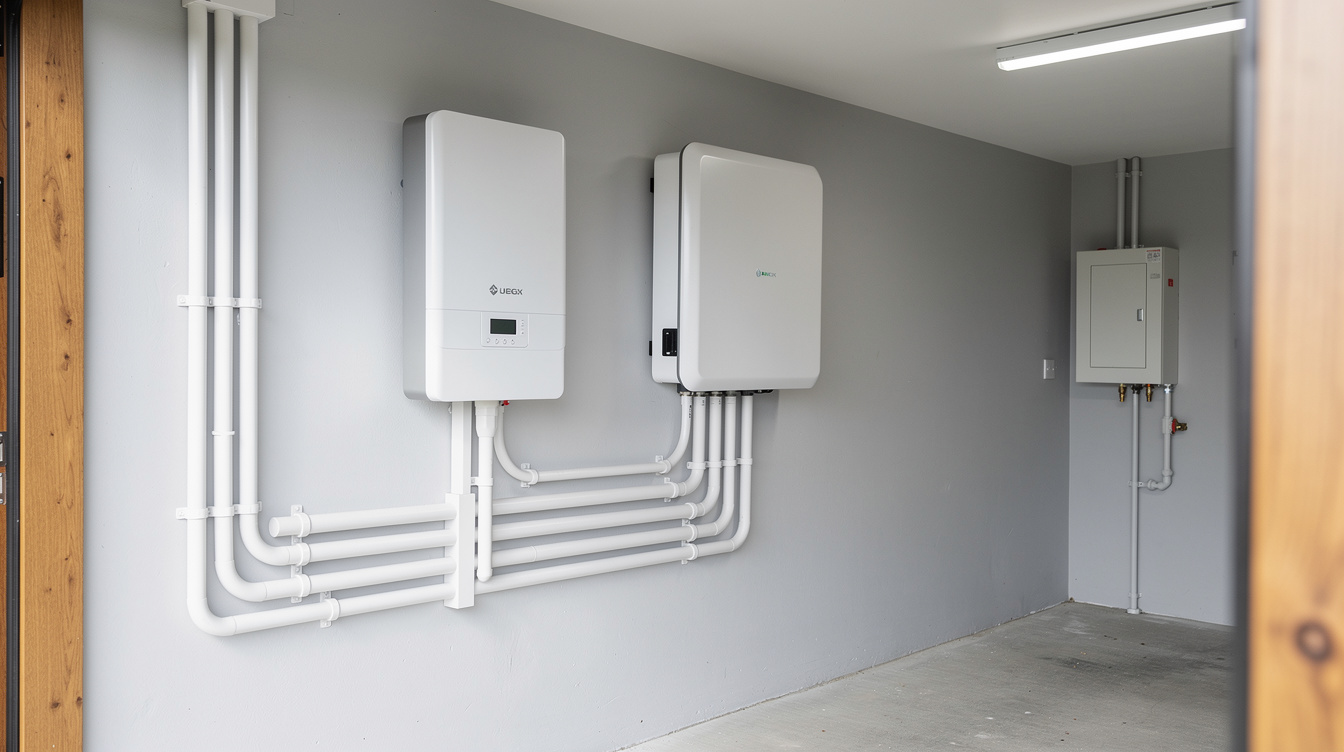
What Does a 10 kW System Cost in Ireland (2026)?
A 10 kW system is a significant investment. Here’s the realistic cost breakdown for 2026:
| Component | Cost Range |
|---|---|
| 10 kW solar panels + inverter + installation | €12,000–€16,000 |
| SEAI grant (max) | −€1,800 |
| Net cost (panels only) | €10,200–€14,200 |
| Optional: 10 kWh battery | +€4,000–€5,500 |
| Optional: ground-mount frame | +€1,500–€3,000 |
| Full system with battery | €14,200–€19,700 |
Price per kWp: At €12,000–€16,000 for 10 kWp, that’s €1,200–€1,600 per kWp — actually cheaper per kWp than smaller systems, which typically cost €1,500–€1,800/kWp. The economies of scale on labour and scaffolding work in your favour.
VAT: 0% on residential solar in 2026, saving you an additional €1,600–€2,100 compared to the standard 13.5% rate.
For a full national pricing comparison, see our solar panel costs Ireland 2026 guide.
Get Your 10 kW Quote
Compare prices from SEAI-registered installers experienced with larger residential systems.
How Much Electricity Will a 10 kW System Generate?
In Ireland, a well-positioned 10 kW system generates between 8,500 and 9,500 kWh per year, depending on your location, roof orientation, and shading. Here’s the monthly breakdown for a south-facing system:
| Month | Output (kWh) | Avg. Daily (kWh) |
|---|---|---|
| January | 230 | 7.4 |
| February | 380 | 13.6 |
| March | 710 | 22.9 |
| April | 970 | 32.3 |
| May | 1,150 | 37.1 |
| June | 1,130 | 37.7 |
| July | 1,080 | 34.8 |
| August | 950 | 30.6 |
| September | 730 | 24.3 |
| October | 470 | 15.2 |
| November | 270 | 9.0 |
| December | 180 | 5.8 |
| Total | ~9,250 | 25.3 avg |
In peak summer months, you’ll generate 35–38 kWh per day — far more than most homes use. This surplus either goes to your battery, charges your EV, heats your water via a power diverter, or gets exported to the grid for a payment.
For more on output expectations, see our guide on average solar panel output in Ireland.
The Financial Case: 10 kW vs 5 kW
The key question for most homeowners is: does doubling the system size double the savings? Not exactly — but the economics are still compelling for high-usage homes.
| Metric | 5 kW System | 10 kW System |
|---|---|---|
| Net cost (after €1,800 grant) | €4,700–€6,700 | €10,200–€14,200 |
| Annual generation | 4,250–4,750 kWh | 8,500–9,500 kWh |
| Self-consumption (no battery) | ~60% (2,550–2,850 kWh) | ~35–45% (3,000–4,300 kWh) |
| Annual savings + export | €1,050–€1,300 | €1,600–€2,200 |
| Payback period | 4–6 years | 5–7 years |
| 25-year net benefit | €20,000–€28,000 | €30,000–€45,000 |
The takeaway: A 10 kW system costs roughly double a 5 kW system, but the 25-year net benefit is 50–60% higher. The payback is 1–2 years longer because you export more at lower rates — but if you have a battery or high daytime usage, the gap narrows significantly.
Pro tip: Pair a 10 kW system with a 10 kWh battery and you can achieve 70–80% self-consumption, pushing annual savings above €2,500 and payback below 6 years even with the battery cost.
SEAI Grant and Planning Permission for 10 kW
The SEAI Grant
The SEAI solar electricity grant is capped at €1,800 for any system 4 kWp or above. Whether you install 5 kW or 10 kW, the grant is the same. This means:
- The grant covers a smaller percentage of a 10 kW system (∼12–15%) vs a 5 kW system (∼25–35%)
- Your home must have been built and occupied before 2021
- You must use an SEAI-registered installer
- A BER assessment is required after installation
For farms and businesses: The SEAI Non-Domestic Microgen Scheme offers up to €2,400 for small commercial systems, or the TAMS III scheme offers 60% grant aid for farm solar. If your property qualifies for a commercial grant, the economics of 10 kW improve significantly.
Planning Permission
Residential rooftop solar is exempt development in Ireland — but the exemption limits total panel area to 12 m². A 10 kW system requires approximately 40 m², well above this threshold.
However, in practice, this exemption is widely interpreted as applying to the 12 m² limit per roof plane, and the updated 2024 exemptions have relaxed these rules significantly. Most installers confirm that systems up to 50 m² (ground-mounted) and most rooftop systems now fall within exempt development. Your installer should confirm the current position for your specific property.
For ground-mounted systems, up to 50 m² is exempt — enough for a full 10 kW array.
Equipment: What Goes Into a 10 kW System
A 10 kW system is more complex than a 5 kW installation. Here’s what a typical setup includes:
Panels
22–24 panels, typically 420–450 W each. The best panels for Irish conditions in 2026 include models from Trina, JA Solar, Longi, and Canadian Solar. For 10 kW systems, all-black panels (like the Trina Vertex S+) offer a good balance of aesthetics and performance.
Inverter
You’ll need either:
- A single 10 kW string inverter (e.g., Huawei SUN2000-10KTL, SolarEdge SE10K) — most cost-effective
- Two 5 kW inverters — useful for east-west split roofs
- Microinverters (e.g., Enphase IQ8+) under each panel — best for shaded or complex roofs, but more expensive
For a detailed comparison, see our guide on solar inverters in Ireland.
Battery (Recommended)
For a 10 kW system, a 10–15 kWh battery is the sweet spot. See our solar battery comparison for 2026 options and pricing. Without a battery, you’ll export 55–65% of what you generate — that’s still profitable via the Clean Export Guarantee, but self-consumption is always worth more.
Ready to Size Your System?
Our installers will survey your roof, review your usage, and recommend 10 kW only if it’s the right fit.
Installation: What to Expect
A 10 kW installation is a bigger job than a standard 5 kW setup. Here’s the typical timeline:
- Site survey (Day 1) — Installer assesses roof structure, shading, electrical panel, and confirms the system design
- SEAI grant application (1–2 weeks) — Applied for by you or your installer before work begins
- Installation (2–3 days) — Scaffolding, mounting rails, panels, inverter, battery, and electrical work. A 10 kW system takes roughly 50% longer to install than a 5 kW system
- Commissioning and testing (Same day or day after) — System is switched on and tested
- ESB notification and meter (2–4 weeks) — NC6 form submitted, smart meter installed or upgraded if needed
- BER assessment (1–2 weeks) — Required for the SEAI grant
Total time from contract to generating: typically 6–10 weeks. For the full process, see our installation timeline guide.
10 kW System with a Heat Pump: The Power Combo
If you have — or plan to install — an air-source heat pump, a 10 kW solar system is the ideal partner. Here’s why:
- A heat pump for a 4-bed house uses 3,000–5,000 kWh per year for heating and hot water
- Much of this runs during the day (especially in shoulder seasons) when your panels are generating
- Combined, solar + heat pump can cut your total energy bill by 70–85%
- The BER improvement from both together can push your home from a C/D rating to an A2/A3
The SEAI also offers separate grants for heat pumps (€3,500), so you can claim both.
10 kW System with an Electric Vehicle
An EV charged from solar panels is essentially driving on free fuel. A 10 kW system generates enough surplus in summer to provide 15,000–20,000 km of annual driving if you charge at home during the day.
Smart EV chargers (like the Zappi) can be set to use only surplus solar electricity, so your car charges automatically when the sun shines without importing from the grid.
Frequently Asked Questions
Is a 10 kW system too big for my house?
For a typical 3-bed semi-detached house using 4,200 kWh/year without a heat pump or EV, yes — it’s likely oversized. You’d export most of the output. But for large homes, farmhouses, or homes with heat pumps/EVs using 7,000+ kWh/year, 10 kW is well-suited.
Can I install 10 kW on a semi-detached house?
Physically, probably not on the south-facing roof alone. You’d need to use both east and west-facing roof planes, which reduces per-panel output by about 15%. A semi-detached house typically maxes out at 5–6 kW on the roof.
What inverter size do I need for 10 kW?
A 10 kW inverter (or two 5 kW inverters). Most hybrid inverters (inverter + battery charger combined) come in 5–6 kW sizes, so for 10 kW panels you may need a dedicated string inverter plus a separate battery system, or two hybrid inverters.
Will ESB Networks allow a 10 kW connection?
Yes. Residential systems up to 17.68 kW (25 kVA) can be connected under the standard NC6 process. A 10 kW system is well within this limit. No special application or upgrades are required.
How much roof space do I need?
Approximately 40–43 m² of usable roof area, or a combination of roof and ground space. Each modern 420–450 W panel is roughly 1.8 m².
Find Out If 10 kW Is Right for You
Get a free site survey and personalised recommendation from experienced SEAI-registered installers.
Related Articles
5 kW Solar Panel System Ireland 2026: Costs, Output, Panels Needed & Is It the Right Size?
5 kW solar system Ireland 2026: costs from €5,700 after grant, 11-12 panels, 4,500 kWh output. Full breakdown of savings, payback and battery options.
Solar Panels Limerick 2026: Costs, Installers, Output & Savings for the Mid-West
Solar panels in Limerick 2026: real costs from €2,100 after grant, 1,302 sunshine hours, installer guide, monthly output data. Limerick-specific savings.
Solar Panels Galway 2026: Costs, Installers, Output & the West Coast Solar Myth
Solar panels in Galway 2026: costs from €2,700 after grant, 886 kWh/kWp output, wind and salt air tips, installer guide. County-specific data.