
Solar Panels for a Semi-Detached House in Ireland 2026: Costs, Roof Space & What to Expect
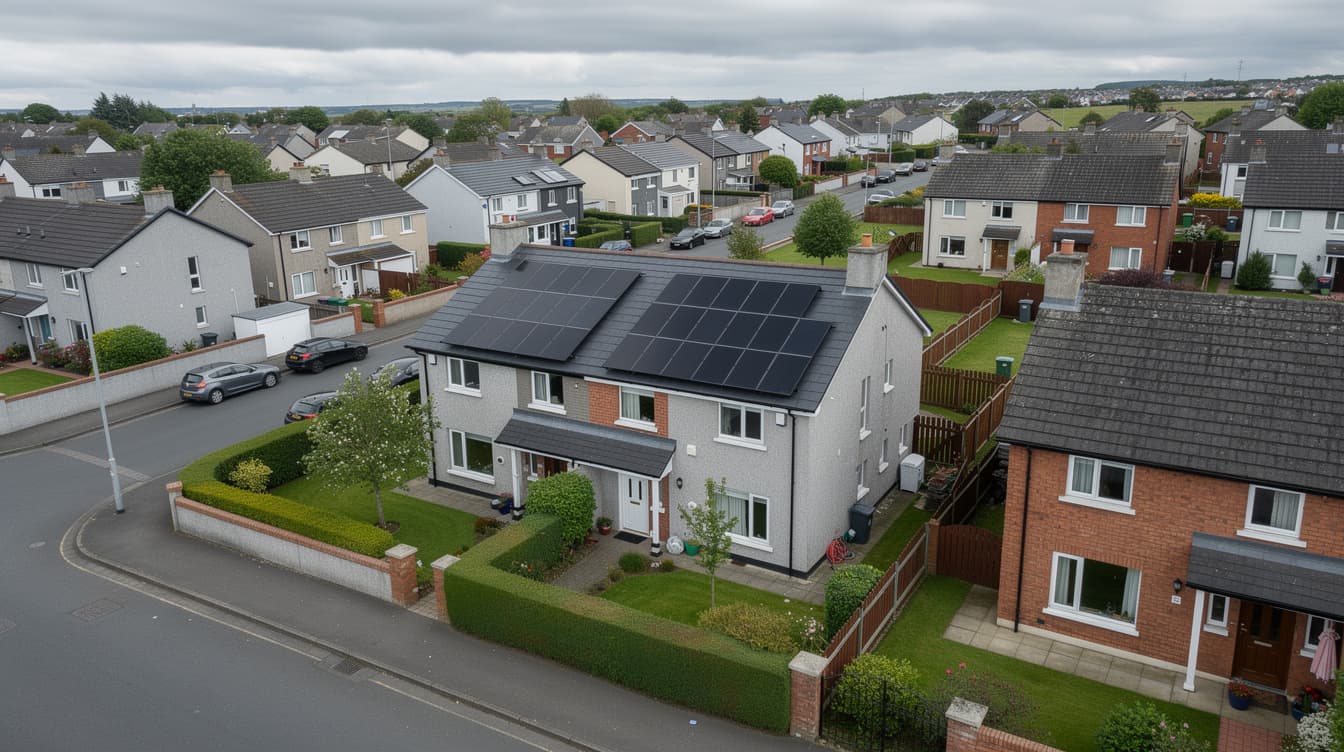
Semi-detached houses are the most common home type in Ireland — and they're also one of the best suited for solar panels. With 30–40 m² of usable rear roof space, a typical 3-bed semi can fit a 4–5 kW system that generates €900–€1,400 worth of electricity per year. After the €1,800 SEAI grant and 0% VAT, most homeowners pay €3,500–€5,500 out of pocket and see a full payback in 5–7 years.
But a semi-detached house has specific considerations that a detached home doesn't — shared walls, chimney placement, potential shading from the adjoining house, and the question of whether your neighbour's panels affect yours. This guide covers everything you need to know, with real 2026 pricing for Irish semis.
How Much Do Solar Panels Cost for a Semi-Detached House in Ireland?
Here are the real costs for a semi-detached house in Ireland in 2026, including the SEAI grant and 0% VAT:
| System Size | Panels | Cost (After SEAI Grant) | Annual Output | Annual Savings | Payback |
|---|---|---|---|---|---|
| 3 kW | 7–8 | €2,800–€3,500 | 2,700–3,150 kWh | €650–€850 | 4–5 years |
| 4 kW | 10 | €3,500–€4,500 | 3,600–4,200 kWh | €900–€1,100 | 4–5 years |
| 5 kW | 12–13 | €4,200–€5,500 | 4,500–5,250 kWh | €1,100–€1,400 | 4–5 years |
| 5 kW + 5 kWh Battery | 12–13 | €7,000–€9,000 | 4,500–5,250 kWh | €1,400–€1,800 | 5–7 years |
The sweet spot for most 3-bed semis is a 4 kW system (10 panels). It fits comfortably on one roof slope, covers 70–90% of a typical household's electricity needs, and offers the best balance of cost versus savings. The €1,800 SEAI grant applies to all systems up to 4 kWp (and a reduced rate above that).
Get an Exact Price for Your Semi-D
Free quotes from SEAI-registered installers — tailored to your roof and electricity usage.
Roof Space on a Semi-Detached House: What Can You Fit?
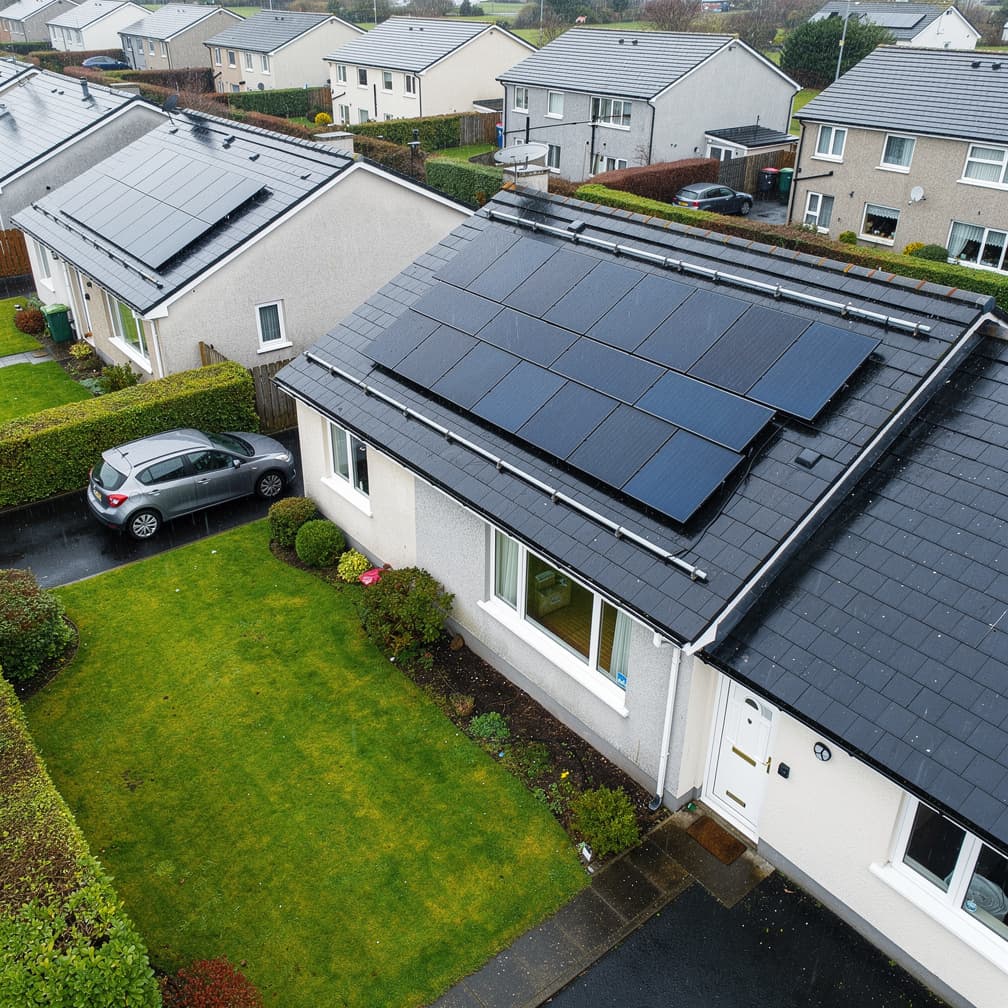
A standard Irish 3-bed semi typically has 30–40 m² of usable roof area on the rear slope. Each modern 400 W panel measures approximately 1.7 m², so you can fit:
- Rear slope only (south-facing): 10–14 panels (4–5.6 kW)
- Front slope only (north-facing): Not recommended — too little output to justify the cost
- East or west slope: 8–12 panels, producing about 80–85% of what south-facing panels would generate
The rear roof slope is almost always the best option. On most Irish housing estates, the rear faces south, south-east, or south-west — all of which work well for solar.
What Reduces Your Available Roof Space?
Several features common on semi-detached houses can eat into your available area:
- Chimney stacks — shared chimneys on the party wall are typical on older semis, taking up 1–2 panel positions and potentially casting shadows
- Dormer windows — if you've converted the attic, dormers significantly reduce usable roof area
- Roof windows (Velux) — panels must be placed around them, reducing contiguous space
- TV aerials and satellite dishes — easily relocated by the installer (usually €50–€100)
- Planning setback — panels must be at least 50 cm from the edge of the roof
Your installer will do a roof survey (either in-person or via satellite imagery) to calculate exactly how many panels fit. Don't guess — get a proper assessment.
Semi-D Specific Considerations
Does the Party Wall Cause Problems?
No. The shared wall between semi-detached houses has no impact on solar panel installation. Panels are mounted on the roof, not the walls, and the mounting rails don't need to cross the party wall boundary. Your installer will keep all fixings on your side of the roof.
Will My Neighbour's Chimney or Extension Shade My Panels?
This is the most important semi-D specific question. A chimney stack on the party wall, or a two-storey extension on the neighbouring property, can cast shadows across your roof — particularly in winter when the sun is low.
A good installer will assess shading using specialist software (such as SolarEdge Designer or PVsol) and position panels to avoid the worst-affected areas. If shading is significant, they may recommend power optimisers or microinverters, which allow each panel to operate independently — so one shaded panel doesn't drag down the others.
Do I Need My Neighbour's Permission?
No. Solar panels on your own roof are exempt development in Ireland, meaning you don't need planning permission or your neighbour's consent. The panels must not project more than 15 cm from the roof surface, and they must be at least 50 cm from any edge. There's no area limit — you can cover your entire roof if you want.
That said, it's good neighbourly practice to let them know. Many people are curious and may decide to get panels themselves once they see yours performing well.
Can Both Halves of a Semi Get Solar Panels?
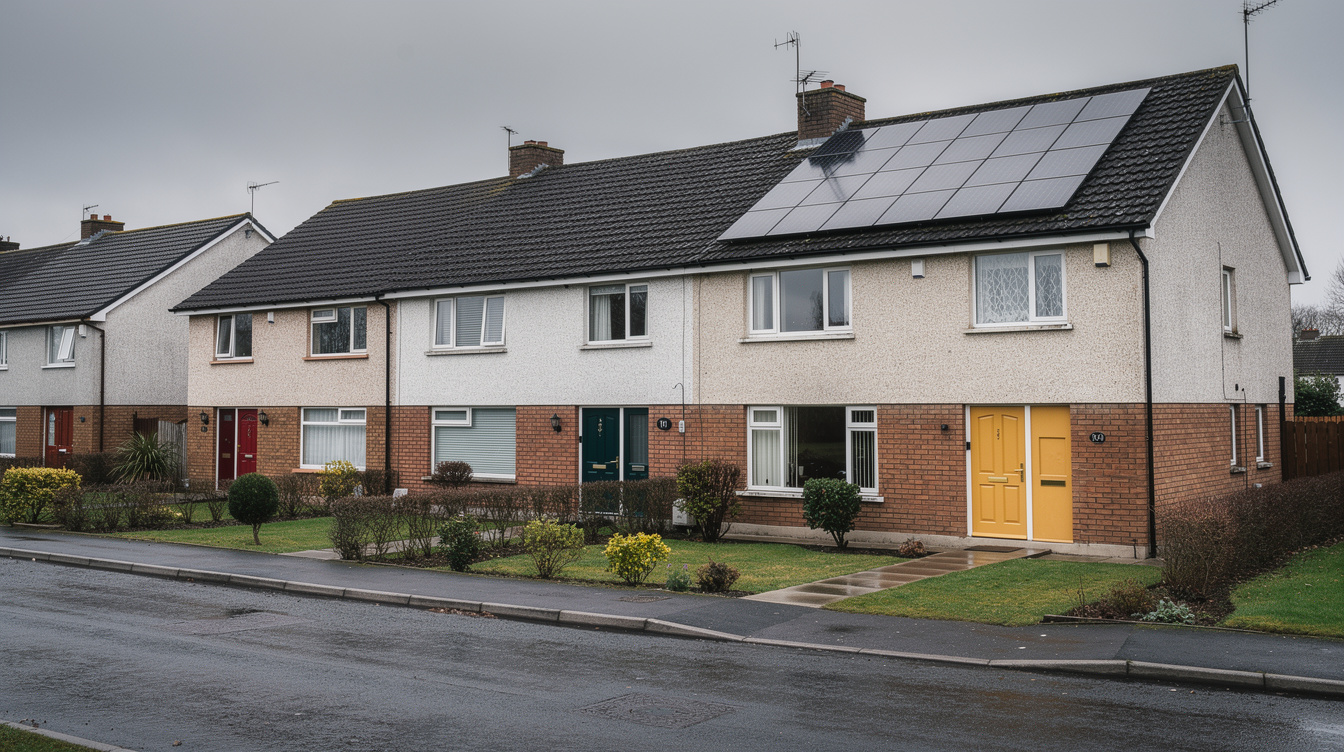
Absolutely. Each half is an independent installation with its own inverter and meter connection. There's no electrical interaction between the two systems. In fact, streets with multiple solar installations are becoming increasingly common across Irish housing estates.
What About Scaffolding Access?
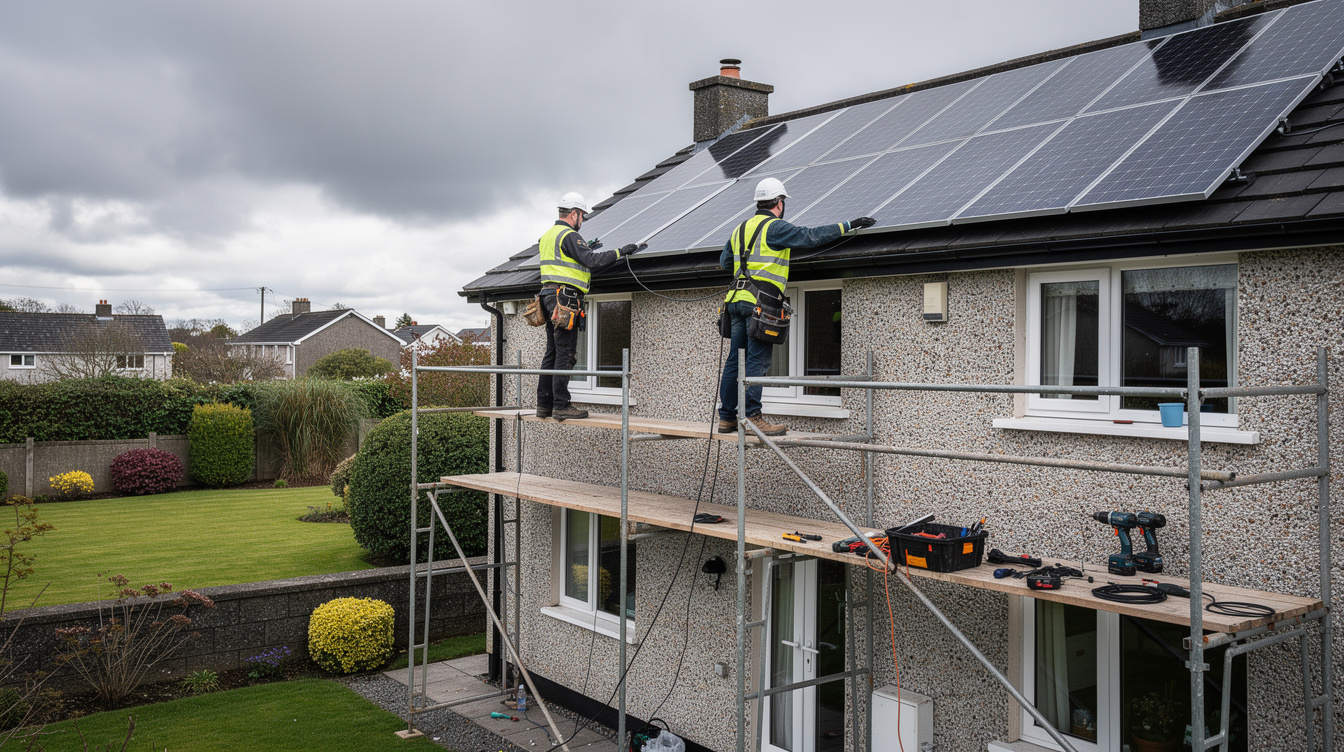
Most semi-D installations require scaffolding on the rear elevation. If access to the rear is through a side passage, the scaffolding crew will need enough width to carry scaffold poles through (typically 0.8 m minimum). If there's no side access, scaffolding may need to be erected over the house from the front, which can add €300–€600 to the cost.
Let your installer know about access constraints during the quoting stage — it affects both price and scheduling.
What System Size Is Right for Your Semi?
The right system size depends on your electricity consumption, not just your roof space. Here's a guide based on typical Irish semi-detached house profiles:
| Household Profile | Annual Usage | Recommended System | Battery? |
|---|---|---|---|
| Retired couple, home during day | 3,000–3,500 kWh | 3 kW (7–8 panels) | Optional |
| Working couple, out 9–5 | 3,500–4,500 kWh | 4 kW (10 panels) | Recommended |
| Family with children | 4,500–6,000 kWh | 5 kW (12–13 panels) | Recommended |
| Family with EV and heat pump | 6,000–9,000 kWh | 5–6 kW (12–15 panels) | Strongly recommended |
Our recommendation: For most semi-detached homeowners, a 4 kW system is the sweet spot. It maximises the SEAI grant value, fits comfortably on one roof slope, and covers the majority of daytime electricity needs. If you have an EV or heat pump (or plan to get one), go for 5 kW.
Use our solar panel calculator to get a personalised estimate based on your specific usage and roof orientation.
The Installation Process for a Semi-D
Here's what to expect from start to finish:
- Get quotes (Week 1) — Request 2–3 quotes from SEAI-registered installers. They'll assess your roof via satellite or an in-person visit. Use our installer guide to know what to look for.
- SEAI grant application (Week 2) — Your chosen installer applies for the €1,800 SEAI grant on your behalf. Approval takes 2–4 weeks.
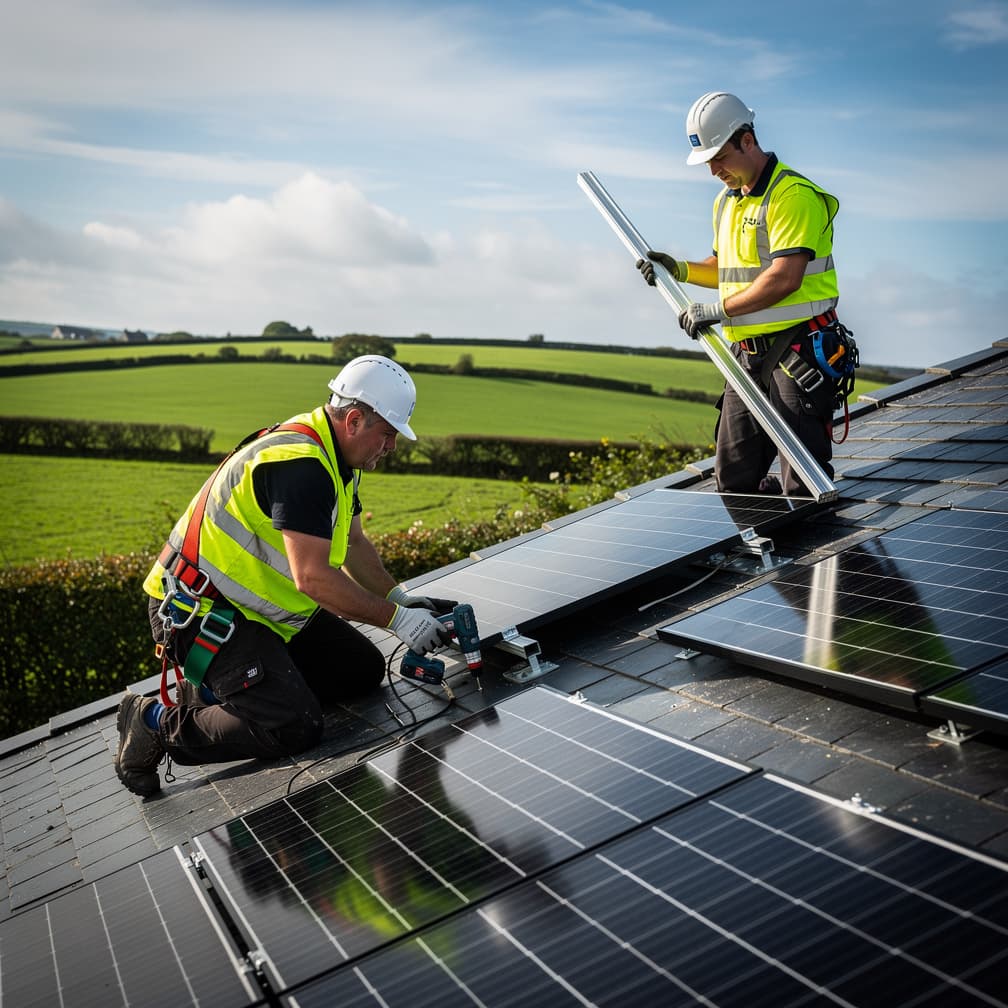
- Installation day (typically 1 day) — The crew arrives with scaffolding, mounts the rails, fits the panels, installs the inverter (usually in the garage or utility room), and connects to your consumer unit. Most semi-D installations are completed in a single day.
- Electrical sign-off — The installer provides a Declaration of Works and notifies ESB Networks of the connection.
- Smart meter registration — Contact your electricity supplier to register for export payments (18–24 cent/kWh for surplus electricity sent to the grid).
- BER assessment — A post-installation BER is required for the SEAI grant. Budget €250–€340. Your BER rating will typically improve by 1–2 grades.
Total time from first quote to generating electricity: 4–8 weeks. See our full installation timeline guide for current waiting times.
Ready to Go Solar?
Get your free personalised quote from SEAI-registered installers.
Will Solar Panels Increase My Semi-D's Value?
Yes. Research from multiple Irish estate agents and SEAI data shows that solar panels add €5,000–€15,000 to a property's value, primarily through the improved BER rating. A semi-D that jumps from a C3 to a B2 rating is significantly more attractive to buyers, especially with the EU's Energy Performance of Buildings Directive requiring higher standards.
For a typical semi-D where you've invested €4,000–€5,000 after grants, the property value increase alone can exceed your outlay — before counting the annual electricity savings. See our detailed analysis on how solar panels affect Irish home values.
Common Questions About Solar on a Semi-D
My semi has an attic conversion with a dormer — can I still get panels?
Yes, but the dormer reduces your usable roof area. Most dormers leave enough space for 6–8 panels on either side. If that's not enough, your installer may suggest a split array across two roof sections, using microinverters or optimisers to handle the different orientations.
My semi is north-facing — is solar worth it?
If your rear roof faces north, panels on it would produce only about 55–60% of what a south-facing installation would generate. In this case, consider an east-west split (panels on both side slopes) or front-facing panels if the front faces south. Your installer can model the output for different configurations.
Is my 1970s/80s semi-D roof strong enough for panels?
Almost certainly yes. Solar panels add approximately 12–15 kg per m² to the roof — roughly equivalent to a heavy snowfall. Irish roofs built since the 1960s are designed to handle this. For older properties, or if you have any concerns, a structural survey (€300–€500) can confirm suitability.
Can I add a battery later?
Yes, as long as you install a hybrid inverter from the start (most installers now do this as standard). A hybrid inverter supports both solar panels and a battery. Adding the battery later is straightforward — it's simply mounted on the wall beside the inverter and connected with a cable. See our battery comparison guide for options and pricing.
What if I'm renting out my semi?
Landlords are eligible for the SEAI grant and can also claim Section 97B tax relief on the cost. Solar panels improve the BER rating, which is increasingly important for rental properties under the EU's minimum energy standards. It's one of the best investments a landlord can make in an Irish rental property.
Do I need to tell my insurance company?
Yes. Most Irish home insurers cover solar panels under your existing policy, but you should notify them to ensure the panels are included in your sum insured. Some insurers increase the rebuild cost by €3,000–€5,000 to account for the panels. See our full guide on solar panels and home insurance.
Find Out What Solar Would Cost on Your Semi-D
Our SEAI-registered installers provide free, no-obligation quotes tailored to your roof and usage.
Related Articles
Solar Panel Costs Ireland 2026: Complete Price Breakdown by System Size
Solar panel costs in Ireland 2026: €3,100–€11,700 after SEAI grants. Full breakdown, brand comparison & ROI calculator. Get an accurate quote today.
Solar Panels Ireland 2026: The Complete Guide to Costs, Grants, Savings & Installation
Everything you need to know about solar panels in Ireland in 2026. Real costs, SEAI grants, payback periods, best installers, and how much you can save.
SEAI Solar Panel Grant 2026: How to Apply, Eligibility & Step-by-Step Guide
Get up to €1,800 with the SEAI solar panel grant in 2026. Landlords now eligible. See eligibility rules, application steps & mistakes to avoid.