
Solar Panels for a Bungalow in Ireland 2026: Costs, Roof Space & Why Bungalows Are Ideal
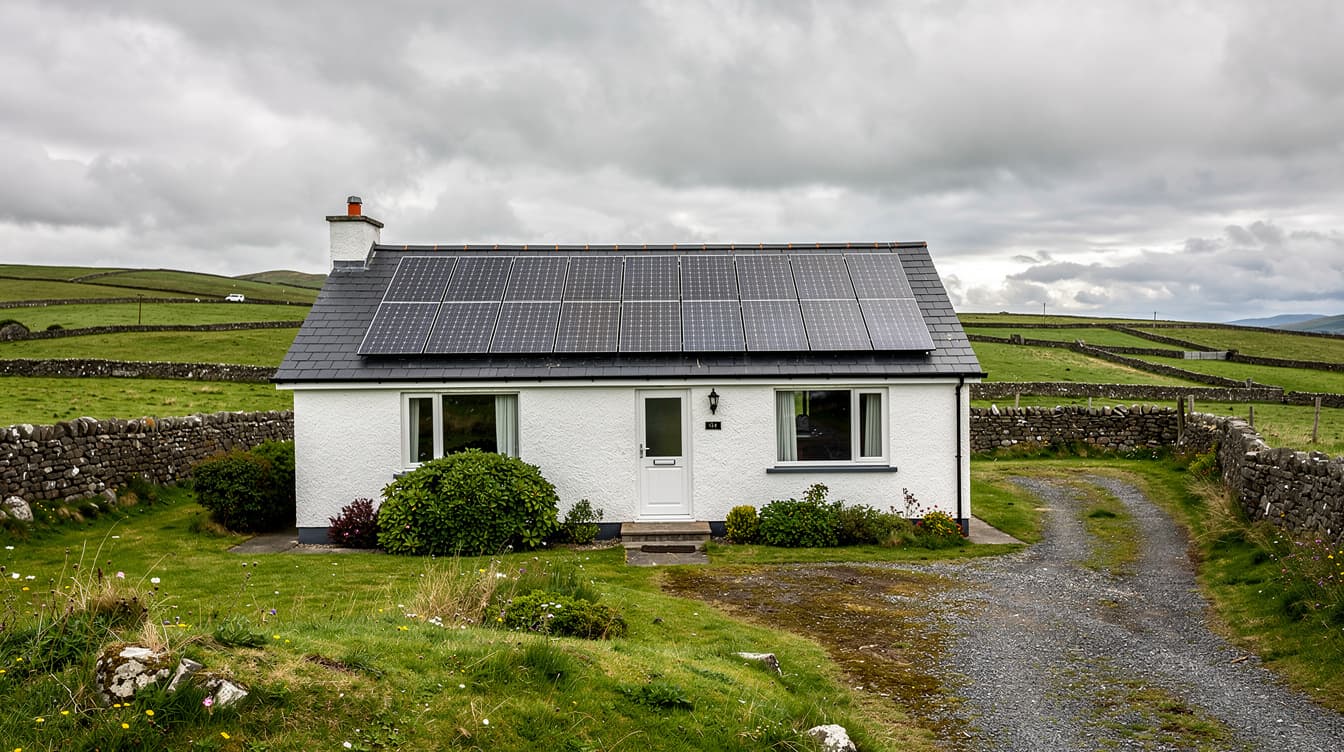
Ireland has more bungalows per capita than almost any country in Europe. If you live in one, you already have one of the best house types for solar — you just might not know it yet. Bungalows offer more usable roof space per square metre of floor area, easier installation access (no scaffolding on gable ends), and lower installation costs than two-storey homes.
This guide covers everything a bungalow owner in Ireland needs to know in 2026: how much roof space you actually have, what system size makes sense, exact costs after the SEAI grant, and real savings figures based on current electricity prices.
Why Bungalows Are Ideal for Solar Panels
Bungalows have several structural advantages that make them particularly well-suited for solar panel installations:
- More roof area relative to floor space — A 100 m² bungalow has roughly the same roof area as a 140 m² two-storey house because all the floor space sits under the roof, not stacked vertically
- Lower roof height — Installers can often work from ladders rather than full scaffolding, saving €300–€600 on installation
- Simpler roof geometry — Many bungalows have straightforward hip or gable roofs without the dormers, valleys, and extensions that complicate installation on two-storey homes
- Less shading from neighbouring properties — Bungalows are commonly found in rural and semi-rural areas with more space between houses
- Stronger roof structures — Older Irish bungalows, particularly those built before the 1990s, often have over-engineered roof timbers that easily handle the extra 15–20 kg per panel
The one downside? Some bungalows, particularly older ones, have lower roof pitches (15–25°) compared to the ideal 30–35° for Irish latitudes. This reduces output by about 3–5% — a small penalty that’s easily offset by the extra roof space available.
How Much Roof Space Does a Typical Irish Bungalow Have?
Here are the usable south-facing roof areas for common bungalow sizes, after accounting for the 50 cm edge clearance and 20 cm ridge clearance required under planning exemptions:
| Bungalow Type | Floor Area | Usable South Roof | Max Panels | Max System Size |
|---|---|---|---|---|
| 2-bed bungalow | 70–85 m² | 18–22 m² | 8–10 | 3.2–4.2 kWp |
| 3-bed bungalow | 90–120 m² | 24–32 m² | 10–14 | 4.2–5.9 kWp |
| 4-bed dormer bungalow | 130–170 m² | 20–28 m² | 8–12 | 3.4–5.0 kWp |
| Large detached bungalow | 150–200 m² | 35–50 m² | 14–22 | 5.9–9.2 kWp |
Note on dormer bungalows: If you have a dormer (bedrooms in the roof space), your usable roof area is typically less than a true bungalow because dormer windows, Velux skylights, and the steeper rear roof pitch eat into the available space. Check your actual measurements carefully — or better yet, get an installer to do a site survey.
Not Sure How Many Panels Your Bungalow Can Fit?
Get a free site survey from SEAI-registered installers who know Irish bungalow roofs inside out.
What System Size Do You Actually Need?
The right system size depends on your electricity consumption, not your roof space. Here’s a quick guide:
| Household Profile | Annual Usage | Recommended System | Panels Needed |
|---|---|---|---|
| Retired couple, oil heating | 3,000–3,500 kWh | 3.0–3.5 kWp | 7–8 |
| Average household | 4,200 kWh | 4.0–4.4 kWp | 10–11 |
| Family with EV or heat pump | 6,000–8,000 kWh | 5.0–6.6 kWp | 12–16 |
| Large family, all-electric | 8,000–12,000 kWh | 6.6–10 kWp | 16–24 |
A common scenario for bungalow owners: you’re a retired couple with a 3-bed bungalow, using about 3,200 kWh per year. You have plenty of roof space for 14+ panels but only need 7–8. In this case, installing a slightly larger system (say 4 kWp / 10 panels) makes sense — the extra cost is minimal, and you can export surplus electricity to the grid at 18–24c per kWh through the Clean Export Guarantee.
Solar Panel Costs for an Irish Bungalow in 2026
Here’s what you’ll actually pay in 2026, broken down by system size. All prices include installation, VAT (0% on residential solar since May 2023), and the SEAI grant deducted at source:
| System Size | Panels | Gross Cost | SEAI Grant | You Pay |
|---|---|---|---|---|
| 3.0 kWp | 7 | €4,800–€5,500 | €1,600 | €3,200–€3,900 |
| 4.0 kWp | 10 | €5,800–€6,800 | €1,800 | €4,000–€5,000 |
| 5.0 kWp | 12 | €7,000–€8,200 | €1,800 | €5,200–€6,400 |
| 6.6 kWp | 16 | €8,500–€10,500 | €1,800 | €6,700–€8,700 |
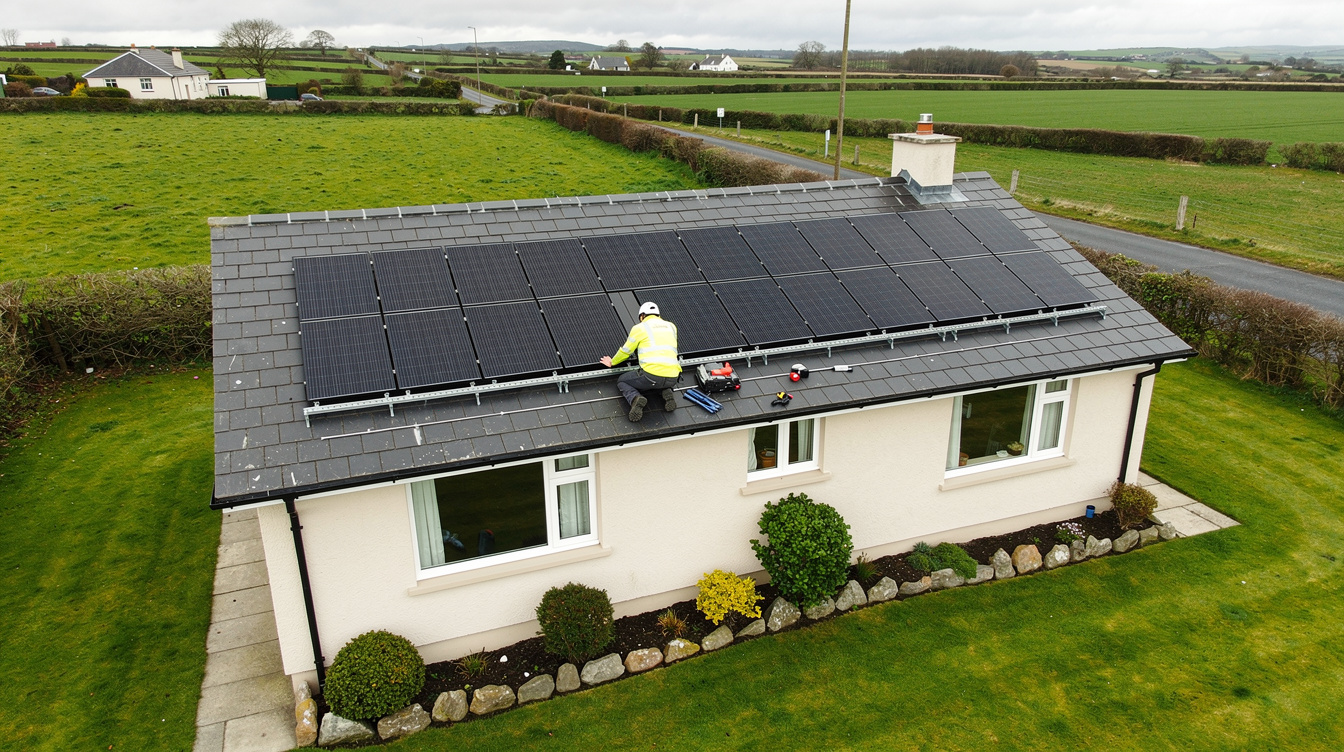
Why bungalows are often cheaper to install: Because the roof is lower and more accessible, many installers quote €200–€500 less for a bungalow than for the same system size on a two-storey house. You won’t always see this broken out in the quote — it’s baked into the installation cost — but it’s real. When comparing quotes, mention that you have a bungalow. Installers know it’s a quicker, safer job.
SEAI Grant Breakdown for 2026
The grant structure for 2026:
- €700 per kWp for the first 2 kWp
- €200 per kWp for each additional kWp up to 4 kWp
- Maximum grant: €1,800 (reached at 4 kWp)
Your home must have been built and occupied before 2021 to qualify. You must apply and receive written SEAI approval before any installation work begins. The installer deducts the grant from your bill, so you never pay the full amount. See our full SEAI grant guide for step-by-step application instructions.
Real Savings: What a Bungalow Owner Can Expect
With electricity prices at 35–42c per kWh in mid-2026 and export rates of 18–24c per kWh, here’s what a typical bungalow owner saves:
| Scenario | System | Annual Generation | Self-Use Savings | Export Income | Total Annual Saving |
|---|---|---|---|---|---|
| Retired couple, home during day | 3.5 kWp | 3,150 kWh | €660–€790 | €120–€170 | €780–€960 |
| Working couple, away 9–5 | 4.0 kWp | 3,600 kWh | €440–€530 | €290–€420 | €730–€950 |
| Family with EV + diverter | 5.5 kWp | 4,950 kWh | €900–€1,100 | €180–€260 | €1,080–€1,360 |
Key insight for bungalow owners who are home during the day: Retired homeowners — and there are a lot of them in Irish bungalows — typically self-consume 50–60% of their solar generation because they’re running the washing machine, kettle, and immersion during peak production hours. This is significantly better than the 30–35% self-consumption rate of a household where everyone is at work during the day. Higher self-consumption means faster payback.
Payback Period
- Retired couple (high self-consumption): 3.5–5 years
- Working couple: 5–7 years
- Family with EV/heat pump: 4.5–6 years
After payback, you’re generating free electricity for the remaining 20–25 years of the system’s life. That’s €15,000–€25,000+ in total lifetime savings, depending on how electricity prices move.
Ready to Go Solar?
Get your free personalised quote from SEAI-registered installers.
Bungalow-Specific Installation Considerations
Roof Type and Pitch
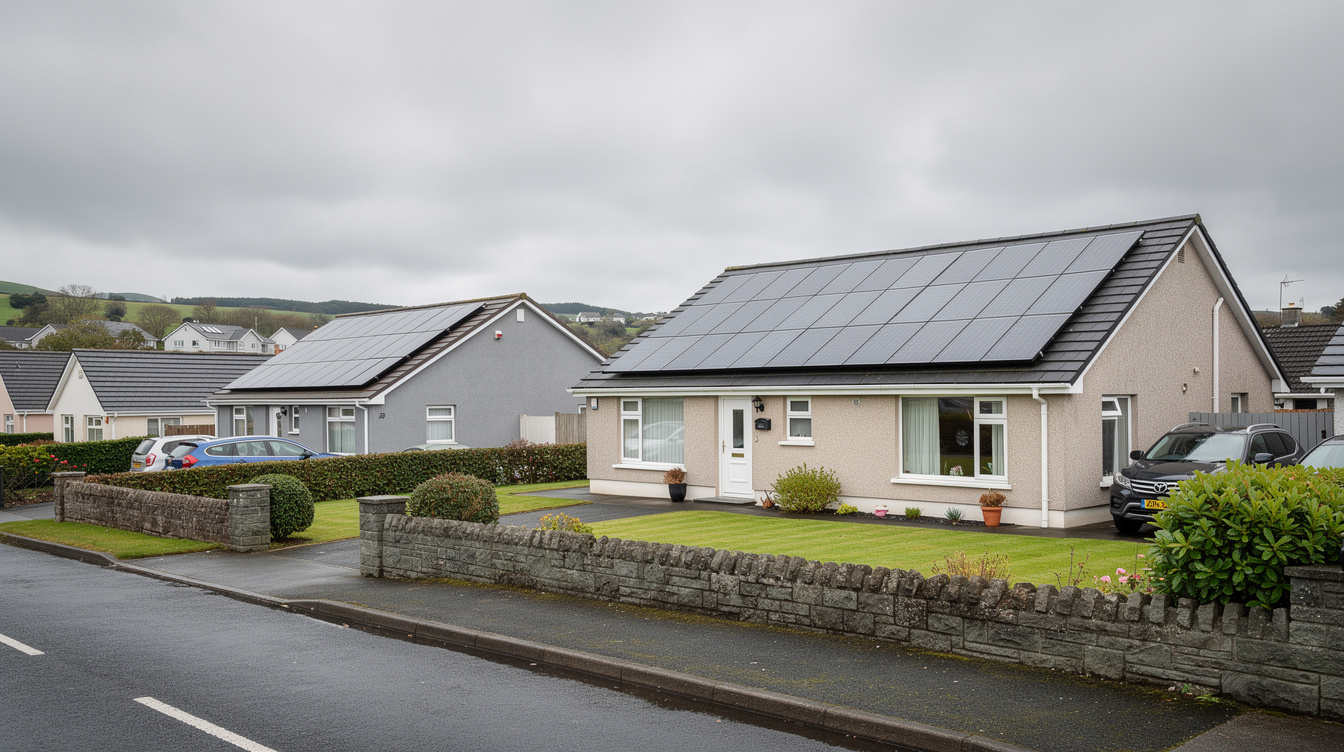
Irish bungalows come with several roof styles, each with different implications for solar:
- Gable roof (most common): Two rectangular roof slopes. You’ll typically use the south-facing slope. If your bungalow runs east–west, both slopes face east and west — this still works but produces about 15% less than south-facing. Consider putting panels on both slopes
- Hip roof: Four sloping sides. Less usable space per slope but more orientation flexibility. You can install on the south and east or south and west faces
- Half-hip (Dutch gable): Common on 1970s–1990s Irish bungalows. The small triangular gable above the hip reduces usable area slightly
- Flat or very low pitch: Some modern bungalows and extensions have near-flat roofs. These need tilted mounting frames (adding €300–€500 to the cost) but work well for solar
Planning Permission
Most bungalow solar installations are exempt development — no planning permission needed. The conditions:
- Panels must not project more than 15 cm above the roof surface
- 50 cm clearance from roof edges, 20 cm from the ridge
- Total area of panels must not exceed 12 m² or 50% of the total roof area (whichever is less) — though this limit was increased in 2023 and many county councils now allow more
- Not in an Architectural Conservation Area (ACA) or a protected structure
If your bungalow is a protected structure (some older traditional cottages are), you’ll need planning permission. Your installer will advise on this during the site survey.
Wiring and Inverter Location
Bungalows have a practical advantage here: the cable run from the roof panels to the inverter (usually in the attic, utility room, or garage) is shorter than in a two-storey house. Shorter cable runs mean less energy loss and a neater installation. Many bungalow installations can route all cabling through the attic space with no external trunking visible.
Should You Add a Battery?
A battery stores surplus solar electricity for use in the evening and at night. For bungalow owners, the question is whether the extra €3,500–€7,000 cost is justified.
A battery makes sense if:
- You’re out during the day and can’t self-consume solar production
- You have a larger system (5+ kWp) generating significant surplus
- You want backup power during outages (common in rural areas where bungalows are plentiful)
- Your electricity tariff has a big gap between peak and off-peak rates
A battery may not be worth it if:
- You’re home during the day and already self-consuming 50%+ of generation
- You have a smaller system (3–4 kWp) with limited surplus
- You’re primarily interested in the fastest possible payback
For a deeper analysis, see our guide on whether a battery is worth it in Ireland.
Step-by-Step: Getting Solar on Your Bungalow
- Check your electricity bill — Find your annual kWh usage. It’s on your bill or in your online account. This determines your ideal system size
- Get 3 quotes — Always compare at least 3 SEAI-registered installers. Use our free quote tool to get matched with local installers
- Site survey — The installer visits your bungalow to assess roof condition, orientation, shading, and electrical setup. This is usually free
- SEAI grant application — Your chosen installer submits the application on your behalf. You’ll receive written approval within 2–4 weeks
- Installation day — Most bungalow installations take just 1 day (vs 1–2 days for two-storey homes). The lower roof height makes everything faster
- ESB connection — If you’re exporting to the grid, ESB Networks needs to register your system. This can take 4–8 weeks
- Start saving — Your system generates electricity from day one, even before the export meter is set up
Common Questions from Bungalow Owners
My bungalow faces east–west. Is solar still worth it?
Yes. An east–west split system produces about 85% of what a south-facing system generates, but it spreads production more evenly across the day. Morning panels catch the sunrise, evening panels catch the sunset. Many installers now recommend this setup because it increases self-consumption — you generate power when you’re actually using it, not just at solar noon. Read our full guide on east and west-facing solar panels.
I have a thatched bungalow. Can I get solar?
Traditional thatched roofs cannot support standard solar panel mounting. However, you could install ground-mounted panels in your garden (if space allows) or consider a solar carport. Ground-mounted systems cost about 15–20% more than roof-mounted but are a good option when the roof isn’t suitable. Note: ground-mounted panels typically require planning permission.
Will solar panels affect my BER rating?
Yes — positively. A 4 kWp system typically improves your BER by 1–2 grades. For a bungalow rated C3, solar could push you to B3 or even B2. This adds to your property value — homes with a B rating or better sell for 3–5% more on average. See our BER rating guide for details.
How do I use my solar calculator for a bungalow?
Our solar panel calculator works for any house type. Enter your annual electricity usage, roof orientation, and county. The calculator accounts for Irish weather patterns and gives you a tailored estimate of costs, savings, and payback period.
Own a Bungalow? Get Your Solar Quote Today
Join thousands of Irish bungalow owners already saving with solar. Free quotes from vetted SEAI installers.
Related Articles
How Much Do Solar Panels Cost for a 3-Bed House in Ireland? (2026 Prices)
A 4.4 kWp solar system on a 3-bed semi costs €4,700–€6,700 after SEAI grant and saves €900–€1,450/year. Full 2026 cost breakdown with monthly savings.
Solar PV vs Solar Thermal Panels Ireland 2026: Costs, Grants & Which Is Better for Your Home
Solar PV vs solar thermal in Ireland compared: costs, SEAI grants, savings, maintenance and which technology is best for Irish homes in 2026.
Solar Panels on a Flat Roof in Ireland 2026: Mounting, Costs & Planning Rules
Flat roof solar costs €500-€1,000 extra for tilt frames. Ballasted systems need no drilling. Full guide to mounting, planning permission and structural checks.