
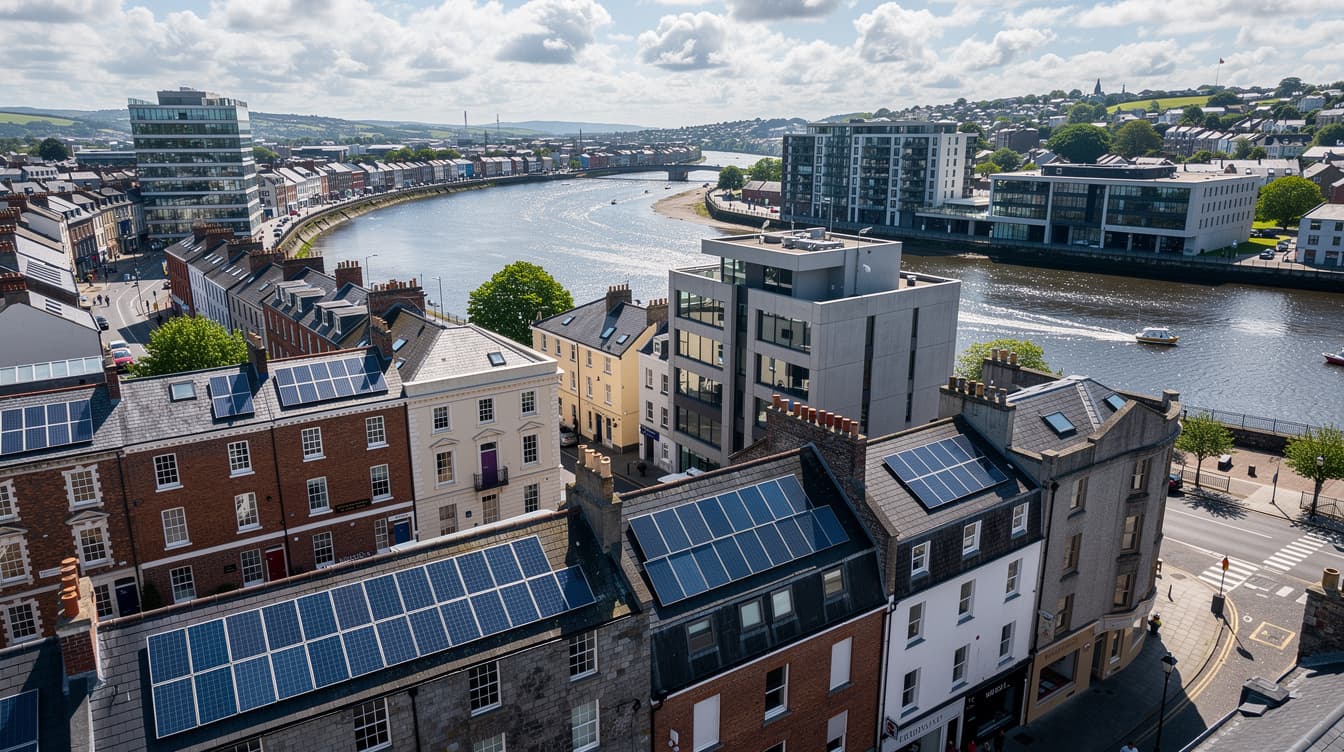
Solar Panels Waterford 2026: Ireland's #2 Sunniest County for Solar — Costs, Output & Installers
Waterford sits in the heart of Ireland's "Sunny Southeast" — and the data backs it up. With up to 1,465 sunshine hours per year and a solar yield of 949 kWh/kWp, Waterford ranks as the second-best county in Ireland for solar panels, beaten only by Wexford. For homeowners in Waterford city, Tramore, Dungarvan, Dunmore East, or the rural heartland, this means faster payback, higher output, and better value from every panel on your roof than almost anywhere else in the country.
This isn't a generic solar guide with Waterford's name swapped in. Below you'll find county-specific output figures, real 2026 pricing, how Waterford's geography creates a microclimate advantage, and practical advice on choosing between the growing number of local and regional installers competing for your business.
Get Waterford Solar Quotes in 24 Hours
Compare prices from SEAI-registered installers serving Waterford — free, no obligation.
Why Waterford Is Ireland's Solar Sweet Spot
Waterford's southeast position gives it a measurable advantage for solar PV. The Comeragh and Monavullagh mountains to the north shelter the county from Atlantic weather systems that reduce sunshine hours on the west coast, while the south-facing coastline maximises solar exposure. Here are the numbers:
| Metric | Waterford | National Average | Advantage |
|---|---|---|---|
| Sunshine hours/year | 1,350–1,465 | 1,100–1,250 | +15–20% |
| Solar yield (kWh/kWp) | 949 | 884 | +7% |
| Solar irradiance (kWh/m²/yr) | 1,050–1,100 | 950–1,000 | +8–10% |
| Peak sun hours/day (annual avg) | 2.9–3.1 | 2.5–2.8 | +10–15% |
| 4 kWp system annual output | 3,800–4,200 kWh | 3,400–3,800 kWh | +10–12% |
In practical terms, a 10-panel (4.1 kWp) system in Waterford generates roughly 3,800–4,200 kWh per year — enough to cover 70–90% of a typical household's electricity demand. That's 400–600 kWh more per year than the same system in Galway or Donegal.
What Solar Panels Cost in Waterford in 2026
Waterford benefits from competitive pricing. The county is served by installers based locally and in nearby Kilkenny, Wexford, and Cork, creating healthy competition. Here's what Waterford homeowners are paying in May 2026, after the €1,800 SEAI grant:
| House Type | Typical System | Before Grant | After €1,800 Grant | Annual Output |
|---|---|---|---|---|
| 2-bed terrace (city) | 6–8 panels / 2.5–3.3 kWp | €4,500–€5,800 | €2,700–€4,000 | 2,400–3,100 kWh |
| 3-bed semi-detached | 10–12 panels / 4.1–5.0 kWp | €5,800–€7,600 | €4,000–€5,800 | 3,800–4,700 kWh |
| 4-bed detached | 14–18 panels / 5.7–7.4 kWp | €8,000–€10,500 | €6,200–€8,700 | 5,400–7,000 kWh |
| Bungalow (rural) | 12–16 panels / 5.0–6.6 kWp | €6,600–€9,000 | €4,800–€7,200 | 4,700–6,200 kWh |
| Farmhouse + battery | 16–20 panels / 6.6–8.2 kWp + 5–10 kWh | €12,000–€17,000 | €10,200–€15,200 | 6,200–7,700 kWh |
Why Waterford pricing is lower: Installer travel costs are minimal (most are within 30–60 minutes), and the southeast has among the highest installer density outside Dublin. Waterford also avoids the premium that Dublin homeowners pay for parking, access restrictions, and traffic delays.
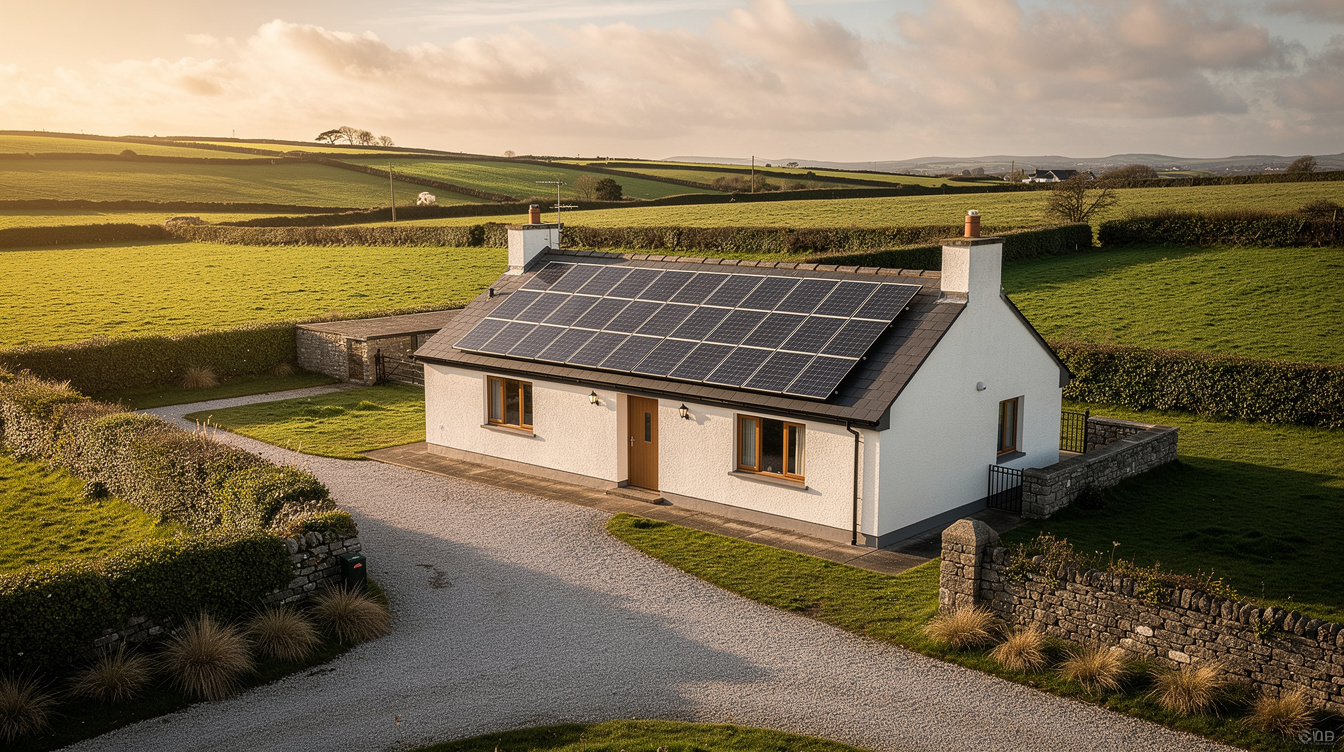
Real Savings: What Waterford Homeowners Can Expect
Waterford's higher output means better savings than the national average. Here's a realistic breakdown for a 3-bed semi with a 4.1 kWp system (10 panels), no battery:
| Income/Saving | Annual Value | How It Works |
|---|---|---|
| Electricity bill reduction | €750–€1,000 | Self-consuming 45–55% of generation at 24c/kWh |
| Export payments (CEG) | €200–€340 | Surplus sold at 18–25c/kWh depending on supplier |
| Total annual benefit | €950–€1,340 | Higher with load-shifting or a smart tariff |
With a net cost of €4,000–€5,800 (after grant), that's a payback period of 3.5–5.5 years — potentially the fastest in Ireland outside Wexford. After payback, you're generating €950–€1,340 per year for the next 20–25 years — that's €19,000–€33,500 over the system's lifetime.
Run your own numbers with our solar panel calculator.
The SEAI Grant: How Waterford Homeowners Apply
The SEAI solar PV grant is worth up to €1,800 in 2026:
- €700 per kWp for the first 2 kWp, then €200 per kWp up to 4 kWp. A system of 4 kWp or larger gets the maximum €1,800.
- Home must be built before 2021 and connected to the grid.
- No previous solar PV grant at this MPRN.
- 0% VAT on all residential solar installations since May 2023.
- €400/year tax-free on export income under the Clean Export Guarantee.
- Apply and get approval before any work begins. You have 8 months to complete.
Step-by-step for Waterford homeowners
- Get 3+ quotes from SEAI-registered installers — start here.
- Apply online at the SEAI portal with your MPRN, address, and chosen system details.
- Wait for approval (typically 2–4 weeks).
- Book your installer and schedule the work.
- Get your BER assessment done after installation — Waterford has good BER assessor availability, typically 1–2 weeks wait.
- Submit completion documents via the SEAI portal. Grant is paid within 4–8 weeks.
Ireland's Sunniest Solar Savings
Waterford homeowners get more output per panel than almost anywhere in Ireland. See what you'd save.
Month-by-Month Solar Output in Waterford
Waterford's southeast position creates an excellent generation profile — strong summers and better-than-average winters thanks to the sheltered coastal climate:
| Month | Output (4 kWp) | % of Annual |
|---|---|---|
| January | 100–130 kWh | 2.8% |
| February | 150–190 kWh | 4.2% |
| March | 270–320 kWh | 7.3% |
| April | 400–460 kWh | 10.6% |
| May | 480–550 kWh | 12.8% |
| June | 470–540 kWh | 12.5% |
| July | 440–510 kWh | 11.8% |
| August | 380–450 kWh | 10.3% |
| September | 290–340 kWh | 7.8% |
| October | 190–240 kWh | 5.3% |
| November | 110–140 kWh | 3.1% |
| December | 80–105 kWh | 2.3% |
Key takeaway: Waterford generates roughly 75% of annual output between March and September. But the shoulder months (March, September, October) outperform the national average by 10–15%, extending the high-generation season compared to northern and western counties.
Choosing a Solar Installer in Waterford
Waterford is well-served by both local and regional SEAI-registered installers. Here's how to make the right choice:
Get at least 3 quotes
Pricing in the southeast varies by €1,500–€3,000 for identical systems. We've seen 10-panel setups quoted at €5,600 by one installer and €8,200 by another — both SEAI-registered, both using Tier-1 panels. The only way to know you're getting a fair price is to compare.
Check what's included
Ask every installer: "Is this all-in, including scaffolding, ESB notification, electrical cert, and grant paperwork?" A €5,800 quote that excludes scaffolding (€400–€800) and the BER assessment isn't really €5,800.
Verify SEAI registration
Check the SEAI Solar PV Company Register. No registration = no grant. For a full checklist, see our guide on how to choose a solar installer.
Ask about panel brands
The best-value setups in the southeast in 2026 use Trina Vertex S+ or JA Solar DeepBlue 4.0 panels (435–445W) with a Huawei SUN2000 or SolarEdge inverter. Avoid quotes with unbranded panels or vague spec sheets. See our best solar panels Ireland 2026 rankings.
Planning Permission in Waterford
Most residential installations are exempt development — no planning permission needed. The key rules:
- Roof-mounted panels up to 25 m² (roughly 14–15 panels).
- Panels don't project more than 15 cm above the roof.
- No panel higher than the ridge line.
Waterford-specific considerations
Waterford Viking Triangle and city centre: Properties in the Viking Triangle conservation area and other Architectural Conservation Areas may need planning permission. If your home is a protected structure or within an ACA, contact Waterford City and County Council's planning department before proceeding.
Copper Coast UNESCO Global Geopark: The Geopark designation (Bunmahon to Tramore coastline) doesn't add planning restrictions for solar panels on residential properties, but properties within the Geopark that are also protected structures should check with the council.
Waterford vs the Rest of the Southeast
| Factor | Waterford | Wexford | Kilkenny |
|---|---|---|---|
| Sunshine hours/year | 1,350–1,465 | 1,400–1,500+ | 1,250–1,350 |
| Solar yield (kWh/kWp) | 949 | 955–970 | 910–930 |
| 4 kWp output | 3,800–4,200 kWh | 3,850–4,300 kWh | 3,600–4,000 kWh |
| Typical payback | 3.5–5.5 years | 3.5–5 years | 4–6 years |
| Installer availability | Good | Good | Moderate |
Waterford and Wexford are neck-and-neck as Ireland's best counties for solar. Waterford edges Wexford slightly on installer accessibility (closer to Cork's large installer pool) and pricing competition.
Five Tips to Maximise Your Solar Investment in Waterford
1. Go bigger than the minimum
With Waterford's high output, every extra panel punches above its weight. A 5 kWp system costs only €1,200–€1,800 more than a 4 kWp system but generates an extra 900–1,000 kWh per year — worth €200–€250 annually. The marginal payback on extra panels is often under 3 years.
2. Shift loads to daytime
Run washing machines, dishwashers, immersion heaters, and EV chargers during solar hours (roughly 7:30am–8:30pm in summer). Self-consumed electricity saves 24c/kWh; exported electricity earns 18–25c/kWh. Timers are your friend.
3. Consider a battery for evening use
A 5 kWh battery adds €3,500–€4,500 but lets you store surplus solar for evening cooking and lighting. In Waterford, where summer surplus is particularly high, a battery can shift your self-consumption from 45% to 70%+. See our best solar batteries Ireland comparison.
4. Pair with a heat pump
Waterford's mild climate makes it excellent heat pump territory. Running your heat pump during peak solar hours dramatically increases self-consumption and slashes your heating bills alongside electricity.
5. Pick the best export tariff
Export rates range from 15c to 25c/kWh in 2026. Pinergy offers 25c/kWh, while Electric Ireland and SSE Airtricity sit at 19.5c/kWh. With Waterford's higher-than-average export volumes, switching to a better export tariff could net you an extra €60–€180 per year. See our tariff comparison.
Ready to Go Solar in Waterford?
Get your free personalised quote from SEAI-registered installers serving Waterford city and county.
Frequently Asked Questions
Is Waterford really sunnier than the rest of Ireland?
Yes — significantly. Met Éireann data consistently shows the southeast coast (Waterford, Wexford, south Wicklow) receiving 15–20% more sunshine hours than the national average and 30–40% more than northwest counties like Donegal or Mayo. The Comeragh Mountains shield Waterford from many Atlantic weather systems, creating a drier, sunnier microclimate.
How long does installation take?
The physical installation takes 1–2 days. The full process from signing to switch-on is typically 4–6 weeks in Waterford — slightly faster than the national average due to good installer availability in the southeast.
Can I install solar on a Viking Triangle heritage property?
Properties in the Viking Triangle ACA or other conservation areas typically need planning permission. Panels on non-street-facing roof slopes are sometimes approved. Contact Waterford City and County Council's planning department before proceeding.
Do I need a smart meter?
For export payments under the Clean Export Guarantee, yes. ESB Networks is rolling out smart meters across Waterford. If you don't have one, request it through your electricity supplier. You can still benefit from solar (reduced bills) without a smart meter, but you won't receive export payments.
What about solar for farms in Waterford?
Waterford's strong agricultural sector makes solar a natural fit for farms. The TAMS III scheme provides grants for agricultural solar installations, and Waterford's high output means faster payback for energy-intensive farming operations like dairy, poultry, or grain drying.
Is it worth adding solar to a new build in Waterford?
Absolutely. New builds already require solar PV under updated building regulations, but many developers install the minimum. In Waterford's sunny climate, upgrading to a larger system at build stage is significantly cheaper than retrofitting later. See our new build solar guide.
Related Articles
Solar Panels Kerry 2026: Costs, Installers, Output & Why the Kingdom Is a Solar Sweet Spot
Solar panels in Kerry 2026: costs from €2,800 after grant, 1,268 sunshine hours, local installers compared. Kerry-specific output, planning and savings data.
10 kW Solar Panel System Ireland 2026: Costs, Output, Panels & Is It Worth Going Big?
10 kW solar system Ireland 2026: costs from €10,200 after grant, 9,250 kWh output, 22-24 panels needed. Who needs 10 kW and when 5 kW is enough.
Solar Panels Limerick 2026: Costs, Installers, Output & Savings for the Mid-West
Solar panels in Limerick 2026: real costs from €2,100 after grant, 1,302 sunshine hours, installer guide, monthly output data. Limerick-specific savings.