
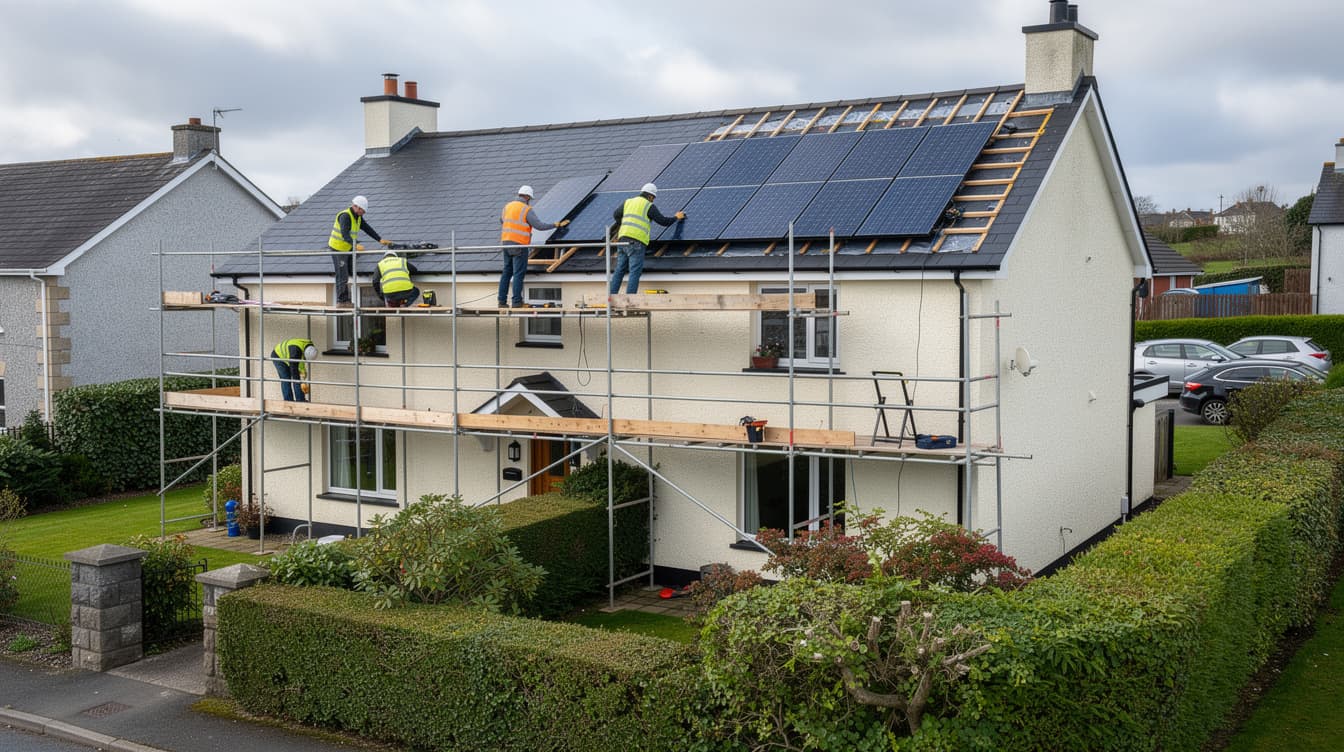
Solar Panels and Home Renovations Ireland 2026: When to Add Solar During a Retrofit (And Save Thousands)
Ireland is in the middle of a retrofit boom. SEAI home energy upgrade applications surged 96% in the first quarter of 2026 alone, with €558 million in government funding targeting 70,000 homes this year. If you’re planning a renovation — whether it’s insulation, new windows, a re-roof, or a full deep retrofit — the question isn’t whether to add solar panels, but when in the process to do it.
Get the timing right and you save money on scaffolding, combine your SEAI grants in a single application, and end up with a properly integrated system. Get it wrong and you might install panels you later have to remove for roof work, or miss out on thousands in combined grant savings.
This guide covers the smart way to add solar panels during an Irish home renovation in 2026 — the right sequence, the grants you can stack, and the mistakes to avoid.
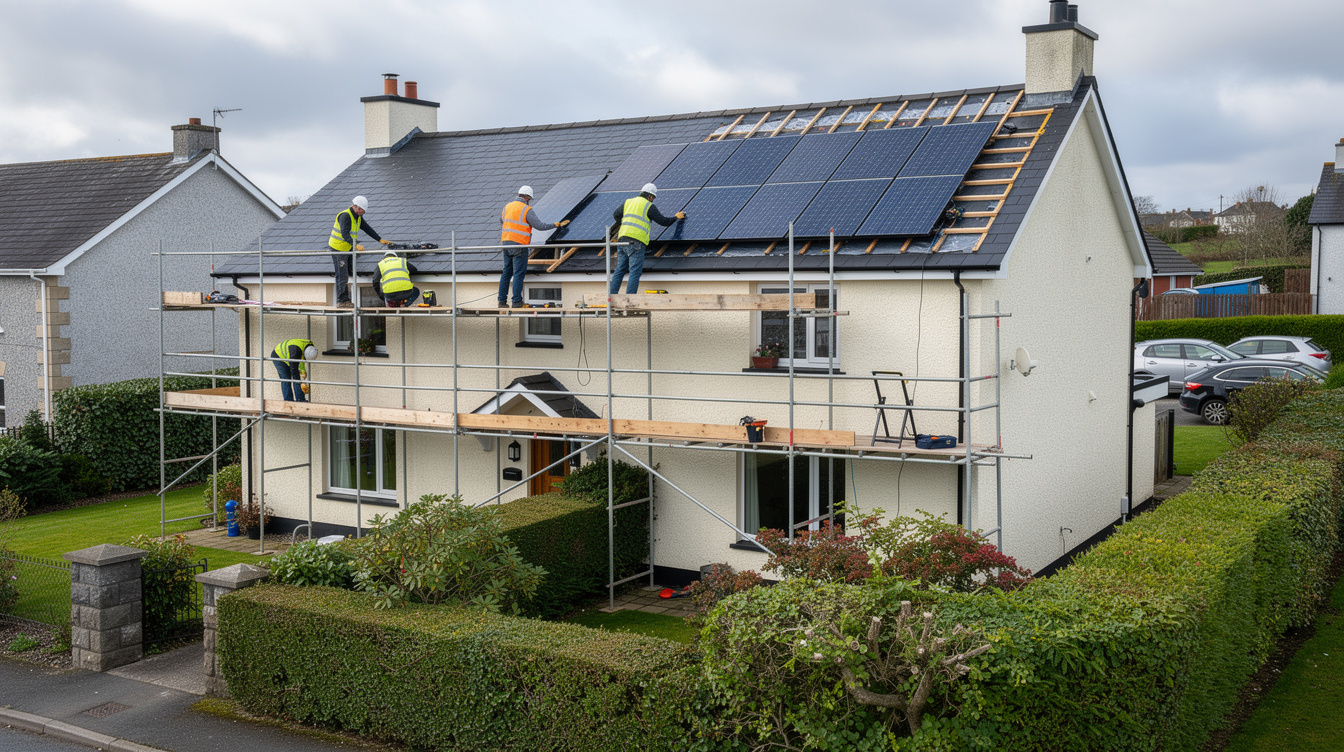
Planning a Renovation?
Get free solar quotes from SEAI-registered installers who coordinate with your renovation timeline.
Why Renovation Time Is the Best Time for Solar
Adding solar panels during a renovation rather than as a standalone project saves you money and hassle in several ways:
- Shared scaffolding: Scaffolding costs €800–€2,000 for a typical Irish house. If you’re already scaffolding for external insulation, roof work, or window replacement, your solar installer can piggyback on the same setup — saving €500–€1,200.
- One SEAI application: You can bundle solar PV, insulation, heat pump, windows, and heating controls into a single SEAI grant application. This saves weeks of processing time versus applying for each separately.
- Electrical upgrades included: Many renovations already involve upgrading the consumer unit (fuse board). Your electrician can install a solar-ready board upfront, avoiding a second visit later.
- Roof access: If your roofer is already up there replacing slates or felt, mounting brackets for solar panels can be fitted at the same time — properly waterproofed and integrated with new flashing.
- Better BER jump: Combining insulation + solar + heating upgrades in one project gives you the biggest possible BER improvement. A D-rated home can jump to B2 or better, which adds significant value to your property.
The Right Sequence: When to Add Solar in Your Renovation
The order of works matters. SEAI and retrofit professionals consistently recommend this sequence for the best results:
Step 1: Insulate First (Walls, Attic, Floor)
Insulation reduces your overall energy demand, which means a smaller (cheaper) solar system can cover a larger percentage of your needs. It also ensures your home retains the heat you generate from solar-powered systems.
| Insulation Type | SEAI Grant | Typical Cost | Impact on Solar Sizing |
|---|---|---|---|
| Attic insulation | €800 | €800–€1,500 | Reduces heating demand 15–20% |
| Cavity wall insulation | €700 | €700–€1,200 | Reduces heating demand 20–30% |
| External wall insulation | €3,000–€6,000 | €10,000–€25,000 | Major reduction; often enables smaller heat pump + solar combo |
| Internal dry-lining | €1,500–€2,500 | €5,000–€12,000 | Similar to external; reduces room sizes slightly |
Why this comes first: If you install solar before insulating, you might oversize your system (wasting money) or have to remove panels temporarily for external insulation work. Always insulate first.
Step 2: Windows and Doors (If Needed)
New windows further reduce heat loss and are best installed before solar panels, especially if scaffolding is being shared. The SEAI grants €4,000–€8,500 for window and door upgrades depending on house type.
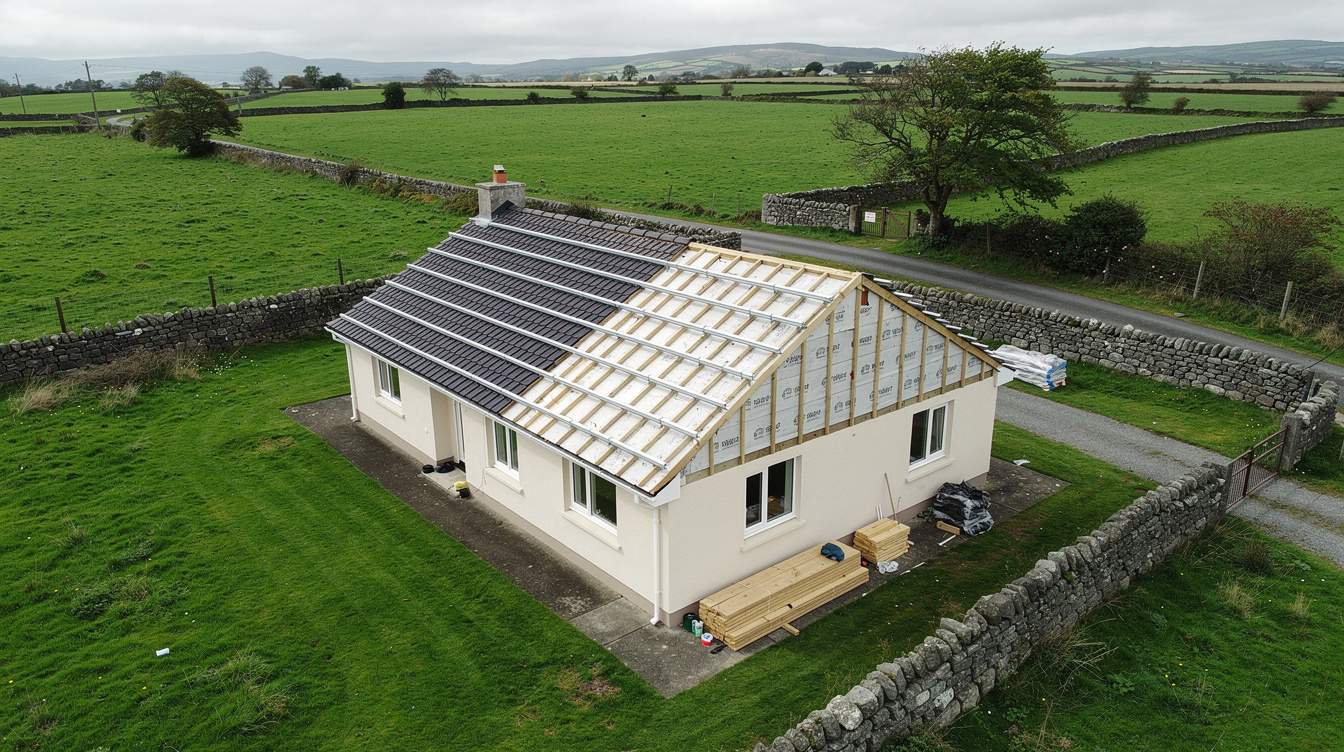
Step 3: Roof Work (If Needed)
This is critical. If your roof needs any of the following, do it before solar panels go on:
- Re-slating or re-tiling
- New roofing felt or membrane
- Fascia and soffit replacement
- Chimney repointing
- Structural repairs to rafters or purlins
Solar panels have a 25–30 year lifespan. Your roof needs to last at least as long. If your roof is more than 20 years old, get a roofer to assess it before committing to solar. The cost of removing panels, doing roof work, and reinstalling them is €1,500–€3,000 — money wasted if you could have done the roof first.
Step 4: Heating System Upgrade
If you’re switching from oil or gas to a heat pump, this should happen before or alongside solar installation. The heat pump determines your electricity demand, which determines the ideal solar system size.
The heat pump grant increased to up to €12,500 in February 2026 — a massive jump from the previous €6,500. This makes the solar + heat pump combination more attractive than ever.
Step 5: Solar Panels (Last)
Solar panels are the final piece of the puzzle. By this point, you know exactly how much electricity your insulated, upgraded home uses, and you can size your solar system accurately. Your SEAI-registered installer can design the system around your actual post-renovation consumption rather than guessing.
SEAI Grants You Can Stack in 2026
One of the biggest advantages of renovating is combining multiple SEAI grants in a single application. Here’s the full picture for 2026:
| Upgrade | SEAI Grant (2026) | Notes |
|---|---|---|
| Solar PV panels | Up to €1,800 | €700/kWp first 2 kWp, €200/kWp thereafter |
| Heat pump | Up to €12,500 | Increased Feb 2026; includes air-to-water and ground source |
| Attic insulation | €800 | Apartment: €400 |
| Cavity wall insulation | €700 | Apartment: €400 |
| External wall insulation | €3,000–€6,000 | Depends on house type (detached/semi/terrace) |
| Windows and doors | €4,000–€8,500 | New for 2026; depends on house type |
| Heating controls | €700 | Thermostat, TRVs, zone controls |
| Maximum combined grants | €25,000+ | Via individual grants or One Stop Shop pathway |
The solar grant is planned to decrease by up to €300 per year as panel costs fall, and is due to end entirely by 2029. If you’re renovating in the next 1–3 years, including solar now locks in the current €1,800 grant. For the full application process, see our SEAI solar grant guide.
Calculate Your Renovation Savings
See how much solar adds to your renovation savings with our free calculator.
Individual Grants vs One Stop Shop: Which Path?
SEAI offers two routes for home energy upgrades, and the choice affects how you include solar:
Individual Grants (Better Energy Homes)
- You pick and choose which upgrades to do
- You manage your own contractors
- Apply online via SEAI portal
- Solar PV grant: up to €1,800
- Best for: adding solar as a standalone measure or combining 2–3 upgrades
One Stop Shop (Full Retrofit)
- An SEAI-registered One Stop Shop company manages the entire project
- They handle design, contractors, BER assessment, and grant paperwork
- Higher grant rates for deeper retrofits (targeting B2 BER or better)
- Best for: comprehensive renovations involving 4+ measures
If you’re doing a deep retrofit (insulation + heat pump + solar + windows), the One Stop Shop route is usually better value despite slightly higher contractor costs, because the combined grant package is larger and the project management is handled for you.
Real-World Renovation + Solar Scenarios
Here are three common renovation scenarios Irish homeowners face, with costs and savings:
Scenario 1: The “Quick Win” — Attic Insulation + Solar
| Item | Cost | Grant | Net Cost |
|---|---|---|---|
| Attic insulation (300mm) | €1,200 | €800 | €400 |
| 4.4 kWp solar PV (10 panels) | €8,500 | €1,800 | €6,700 |
| Total | €9,700 | €2,600 | €7,100 |
Annual savings: €1,100–€1,400 (insulation saving on heating + solar saving on electricity). Payback: 5–6.5 years. BER improvement: typically D → C1/C2.
Scenario 2: The “Mid-Range Retrofit” — Insulation + Windows + Solar
| Item | Cost | Grant | Net Cost |
|---|---|---|---|
| External wall insulation | €15,000 | €4,500 | €10,500 |
| Windows and doors | €12,000 | €5,600 | €6,400 |
| Attic insulation | €1,200 | €800 | €400 |
| 5 kWp solar PV | €9,500 | €1,800 | €7,700 |
| Total | €37,700 | €12,700 | €25,000 |
Annual savings: €2,500–€3,500 on energy bills. Payback: 7–10 years. BER improvement: E/F → B2/B3. Shared scaffolding saves €800–€1,200.
Scenario 3: The “Deep Retrofit” — Everything Including Heat Pump
| Item | Cost | Grant | Net Cost |
|---|---|---|---|
| External wall insulation | €15,000 | €4,500 | €10,500 |
| Windows and doors | €12,000 | €5,600 | €6,400 |
| Attic insulation | €1,200 | €800 | €400 |
| Air-to-water heat pump | €14,000 | €12,500 | €1,500 |
| Heating controls | €800 | €700 | €100 |
| 6 kWp solar PV + battery | €15,000 | €1,800 | €13,200 |
| Total | €58,000 | €25,900 | €32,100 |
Annual savings: €3,500–€5,000. Payback: 6.5–9 years. BER improvement: E/F/G → A2/A3. This is the gold standard — the €12,500 heat pump grant (new for 2026) makes this dramatically more affordable than it was last year.
Five Mistakes to Avoid
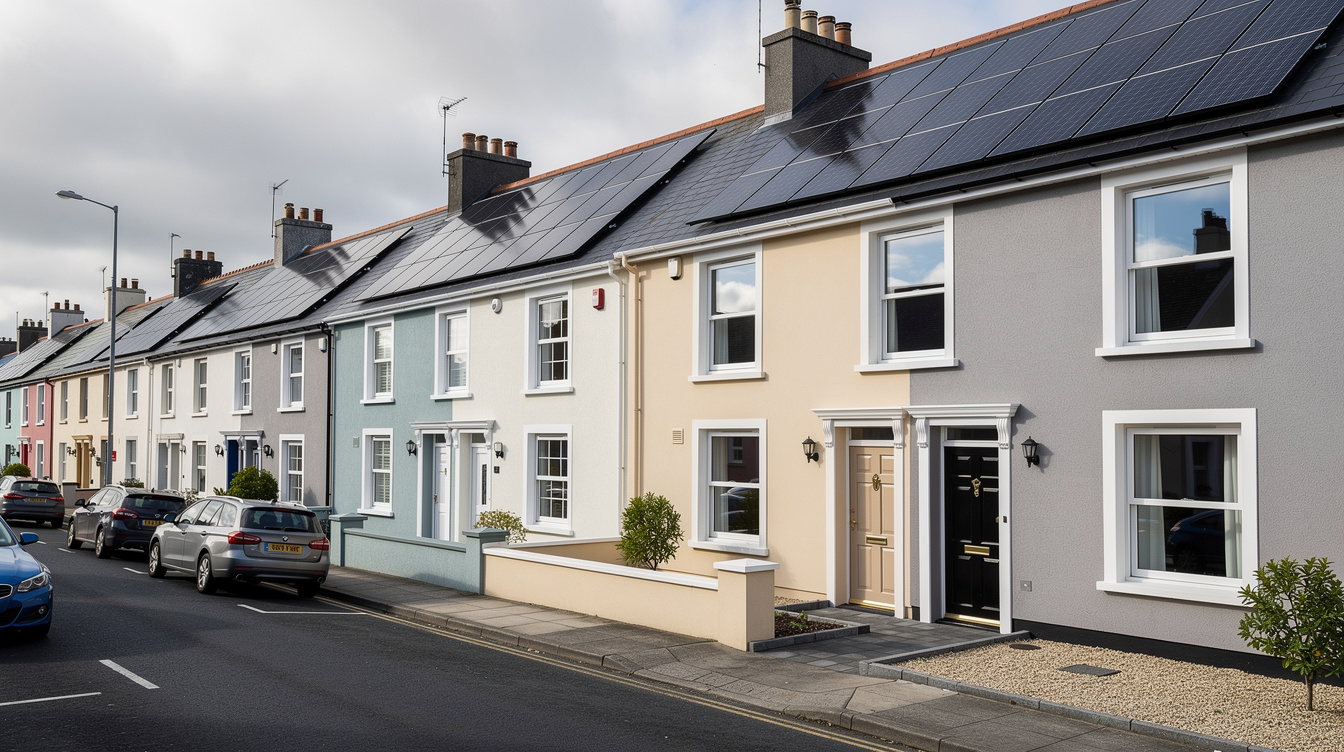
1. Installing Solar Before Roof Work
This is the most expensive mistake. If your roof needs work in the next 10 years, do it first. Removing and reinstalling solar panels costs €1,500–€3,000, and you risk voiding panel warranties if non-certified people handle them.
2. Oversizing Solar Before Insulating
A draughty E-rated house might use 10,000 kWh/year. After insulation, the same house uses 6,000 kWh. If you size your solar for 10,000 kWh consumption, you’ll end up exporting far more than you use — and export rates (18–20c/kWh) are less than half of what you pay for grid electricity (37–42c/kWh). Size your system for your post-renovation consumption.
3. Not Combining SEAI Applications
Each separate SEAI application takes 4–8 weeks to process. If you apply for insulation, then solar, then heat pump separately, you’re looking at 12–24 weeks of waiting. Combining them in one application saves time and ensures the BER assessor only needs to visit once.
4. Forgetting the BER Assessment
You need a post-works BER assessment to receive your SEAI grant payment. Some homeowners forget to book this, delaying their grant by months. Your installer or One Stop Shop should arrange this as part of the project — confirm upfront.
5. Missing the Grant Window
The solar PV grant is set to decrease by up to €300 per year. If you’re planning a renovation for 2027 or 2028, apply for the solar grant now and do the solar installation within the 8-month window, even if other renovation work is still ongoing. You can apply for solar and insulation grants at different times.
Financing Your Renovation + Solar
A full renovation with solar can cost €25,000–€60,000 before grants. Here are the financing options available in Ireland:
- SEAI grants: €12,000–€26,000 back, depending on scope (see table above)
- Green personal loans: AIB, BOI, and PTSB offer green loans at reduced rates (4.5–6.5% APR) for energy upgrades. Typical terms: €5,000–€75,000 over 5–10 years.
- Credit union green loans: Often the cheapest option (3.5–5.5% APR) with flexible terms
- SBCI retrofit loan scheme: Government-backed loans at preferential rates through participating lenders
- Home renovation tax relief: Landlords can claim Section 97A tax relief on retrofit costs for rental properties
For a detailed comparison, see our solar financing guide.
The BER Impact: What Solar Adds to Your Rating
Solar panels alone typically improve your BER by 1–2 grades. Combined with insulation and heating upgrades, the jump is dramatic:
| Starting BER | Solar Only | Solar + Insulation | Full Retrofit |
|---|---|---|---|
| G | F/E | D/C | B2/A3 |
| E | D/C | C/B3 | B1/A3 |
| D | C2/C1 | B3/B2 | A3/A2 |
| C | B3/B2 | B2/B1 | A2/A1 |
A better BER adds real value to your home. Research suggests Irish homes with a B rating sell for 5–10% more than equivalent D-rated homes. For a €350,000 house, that’s €17,500–€35,000 in added value. See our BER and solar guide for more detail.
Start Your Renovation With a Solar Quote
SEAI-registered installers can advise on the best time to add solar to your renovation plan.
Frequently Asked Questions
Should I insulate before or after installing solar panels?
Always insulate first. Insulation reduces your energy demand, which means you can install a smaller (cheaper) solar system that still covers most of your needs. If you’re doing external wall insulation, the scaffolding is already there for the solar installer.
Can I get the SEAI solar grant and insulation grant at the same time?
Yes. You can combine solar PV, insulation, heat pump, windows, and heating controls grants in a single application. This saves processing time and means the BER assessor only visits once.
Do I need to re-roof before adding solar panels?
If your roof is more than 20 years old or has any existing issues (leaks, damaged slates, sagging), get it assessed before committing to solar. Solar panels last 25–30 years — your roof needs to match that lifespan. Removing and reinstalling panels for roof work later costs €1,500–€3,000.
Is the SEAI solar grant going to decrease?
Yes. The government plans to reduce the solar PV grant by up to €300 per year as panel costs fall. The scheme is due to end by 2029. If you’re renovating soon, including solar now locks in the current €1,800 maximum.
What’s the total SEAI grant I can get for a full retrofit with solar?
For a deep retrofit of a detached house in 2026, you can receive over €25,000 in combined grants: up to €12,500 (heat pump) + €6,000 (external insulation) + €8,500 (windows) + €1,800 (solar) + €800 (attic insulation) + €700 (heating controls).
Should I use a One Stop Shop or manage contractors myself?
For 3+ upgrade measures, a One Stop Shop is usually worth it. They manage the entire project, handle SEAI paperwork, coordinate trades, and ensure quality. For 1–2 measures (e.g. just solar, or solar + attic insulation), applying for individual grants and hiring contractors directly is simpler and often cheaper.
Related Articles
Solar Panels Louth 2026: Ireland's Smallest County With Big Solar Potential — Costs, Grants & Installers
Solar panels in Louth 2026: costs from €6,500 after SEAI grant, 1,432 sunshine hours, 5-7 year payback. Drogheda, Dundalk & Ardee installer guide.
Solar Panels and Underfloor Heating Ireland 2026: The Complete System Guide (Costs, Grants & Running Costs)
Solar panels + underfloor heating Ireland 2026: full system costs from €10,100 after €14,900 in SEAI grants. Running costs, sizing & 5 mistakes to avoid.
Solar Panels for a Bungalow in Ireland 2026: Costs, Roof Space & Why Bungalows Are Ideal
Irish bungalows are ideal for solar. A 4 kWp system costs €4,000–5,000 after SEAI grant, saves €730–1,360/yr. Full cost breakdown for 2–4 bed bungalows.