
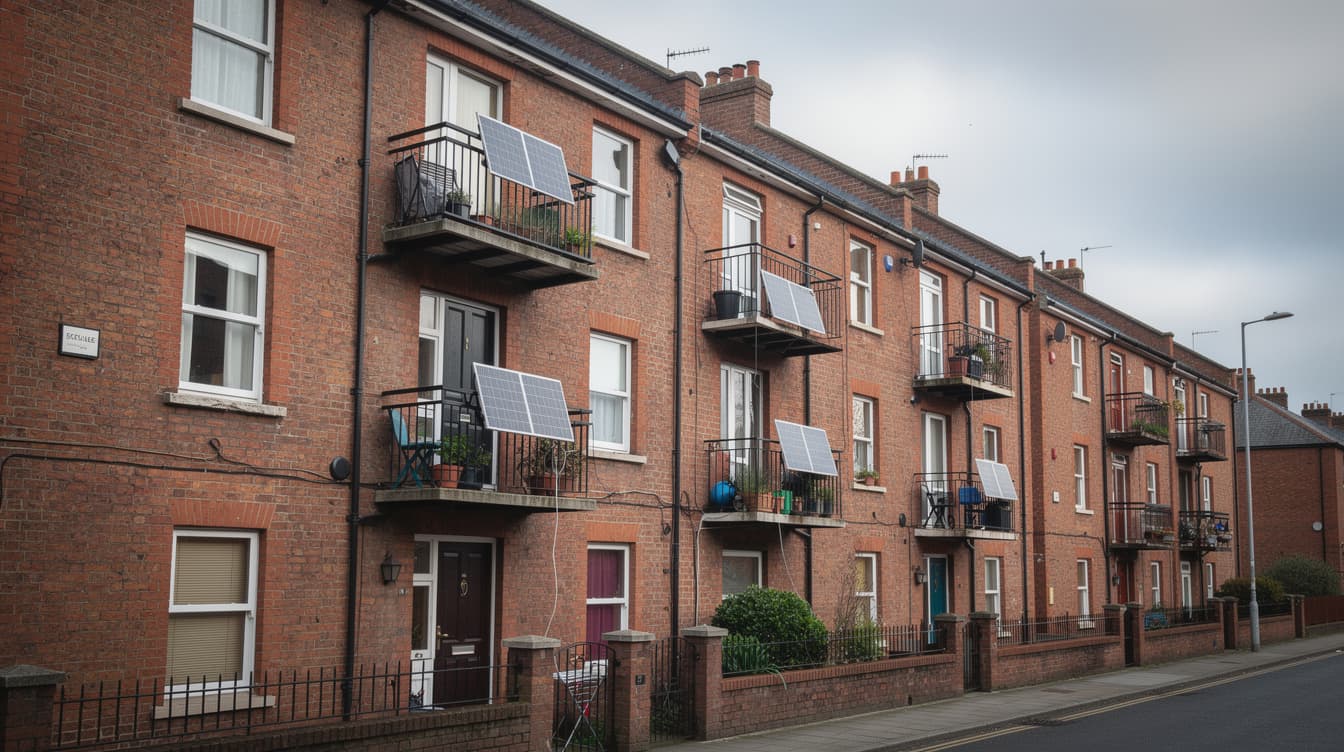
Solar Panels for Renters Ireland 2026 — What You Can (And Can't) Do
Ireland has about 350,000 private rented households and over 140,000 social rentals. Almost none of them have solar panels. The reason isn’t economics — rooftop solar pays for itself in 7–10 years — it’s ownership. The person paying the electricity bill (the tenant) is not the person who can authorise drilling into the roof (the landlord). That structural mismatch is the single biggest reason Irish renters lock in higher lifetime energy bills than homeowners.
This guide is for renters who want to do something about it in 2026. We’ll cover what’s actually legal versus what’s in a grey area, the wins you can lock in this week without ever speaking to your landlord, how to make the case to a landlord who isn’t interested, and the rental-specific tax and grant rules you should know.
Own the Property? Get a Solar Quote
Solar pays back faster than almost any other home upgrade. Get three free quotes from SEAI-registered installers in your area.
The honest bottom line for renters in Ireland today
Before we go into the detail, here’s the truth most retail guides won’t state plainly:
- You cannot legally install grid-connected rooftop solar in a property you don’t own. Even with your landlord’s permission, the SEAI €1,800 grant is reserved for the homeowner. The NC6 ESB connection form must be signed by the property owner.
- Plug-in “balcony solar” is in a legal grey area, not a clearly-legal one. Connecting any generator to an ESB-connected socket without an NC6 is technically non-compliant. The CRU has acknowledged the issue but hasn’t yet published the new rules expected later in 2026.
- The fastest electricity-bill win for renters has nothing to do with solar at all. Switching to a smart tariff with cheap night rates and shifting your washing machine, dishwasher and EV charging to 02:00–06:00 will save more € per month than a balcony solar kit ever could.
- Portable, fully off-grid solar is 100% legal in any rental. No permissions, no ESB paperwork. Useful for charging laptops, lights, phones, garden offices and small appliances.
If you take only one thing away: before you spend a euro on solar, change your tariff and shift your load. That’s the biggest single lever you control as a renter.
What you can do today without any landlord conversation
Five wins that are entirely yours to lock in:
1. Switch to a smart-meter tariff with cheap night rates
The cheapest hours of the day on Energia’s Smart Saver and Electric Ireland’s Smart Night Boost are typically 02:00–06:00 at around 9–14 cent per kWh, versus 35–42 cent at peak. That’s a 3–5x ratio. If you can move two big loads — tumble dryer + dishwasher, or a heat pump tank reheat, or an EV charge — into that window, you’ll save €15–€40/month. No equipment, no landlord, just a tariff change.
You need a smart meter for this, which 90%+ of Irish homes now have. If yours hasn’t been upgraded, ring ESB Networks on 1800 372 757 — it’s free and takes 30 minutes.
2. Buy a portable 100 W solar panel + power station
A 100 W foldable panel plus a 500–1000 Wh portable power station (EcoFlow, Bluetti, Jackery and similar) costs €350–€700 and slots into any apartment or rented house with zero modifications. Sit it on a sunny windowsill, balcony floor, or take it to the garden on a sunny day. It will run laptops, phones, a desk lamp, a router and small appliances indefinitely on a sunny day.
You won’t recoup the cost on electricity savings alone (typical saving: €30–€80/year). But it’s yours, it goes with you to your next rental, it doubles as outage backup, and there’s no paperwork. See our portable solar buying guide for kit comparisons.
3. Replace your three biggest energy hogs with efficient versions
You can take these with you when you move:
- Air fryer instead of full oven for most cooking — saves about 60% on the cooking portion of your bill.
- Heated airer / dehumidifier combo instead of tumble dryer. Tumble dryers cost €0.40–€0.80 per cycle; a heated airer is closer to €0.05–€0.10.
- LED bulbs everywhere. Landlord-supplied filament or halogen bulbs add up — replace them yourself at €1–€3 each, and take them with you when you leave.
4. Run an A+++ heat pump tumble dryer (if you own appliances)
If your rental is unfurnished and you provide the white goods, an A+++ heat-pump tumble dryer uses about a quarter the energy of a vented or condenser dryer. Payback in 2–4 years. Goes with you to your next rental.
5. Use a smart plug to automate off-peak charging
Pair a €15 smart plug with your tariff’s cheap window. Plug your phone, laptop, e-bike, electric toothbrush — anything that charges — into the smart plug and set it to only power on during cheap hours. Sounds tiny; adds up to €5–€15/month over a household.
Use Our Calculator to See Your Potential Savings
Estimate how much a household with your usage profile could save by switching tariff and adding solar.
The legal grey area: plug-in “balcony solar” in Irish rentals
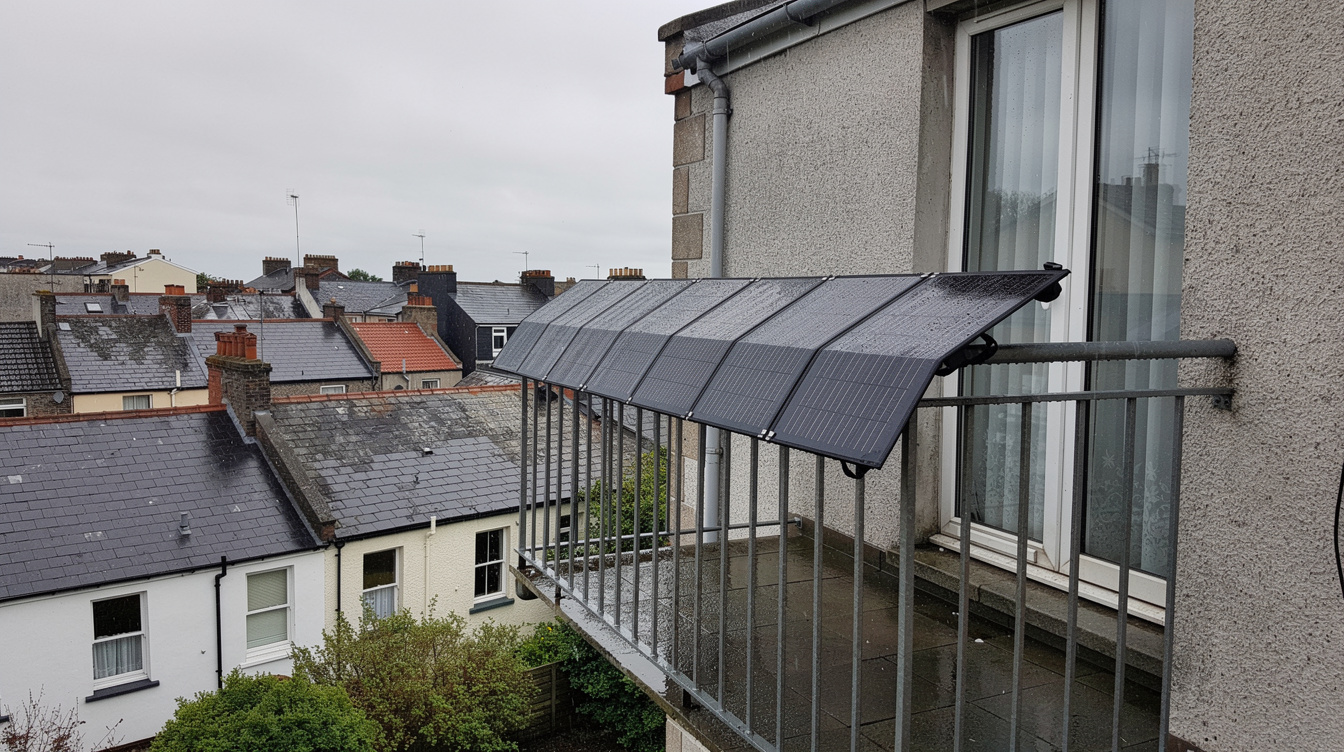
Across Germany, Spain and the Netherlands, plug-in 600–800 W solar kits that simply plug into a normal household socket are sold openly in supermarkets and DIY chains. In Ireland in 2026, they are not in that category yet. Here’s the position as it actually stands:
| Setup | Legal status (June 2026) |
|---|---|
| Fully off-grid: panel → power station / battery, never connects to the wall socket | Clearly legal. No ESB or RTB issues. No landlord permission required. |
| Plug-in micro-inverter kit (~300–800 W) plugged into a standard wall socket | Grey area. Connecting a generator to the network without an NC6 is technically non-compliant. Energy Minister Darragh O’Brien has said the government is “open” to legalising it (Dáil, April 2026). Expected later in 2026. |
| Wall-mounted balcony panel that drills into the building | Needs landlord permission. Also likely needs OMC permission in apartments. Treat it as a structural alteration. |
| Roof-mounted PV with full ESB connection | Owner only. The NC6, the SEAI grant and the CEG payments all flow through the property owner. |
For deeper detail on the plug-in situation see our complete plug-in solar guide and the breaking Lidl plug-in solar Ireland tracker.
Practical reading of the law: if you buy a plug-in kit today and use it discreetly on your balcony, the chance of enforcement is essentially zero — ESB Networks has no detection mechanism for 600 W of unauthorised generation. But it is technically non-compliant, your home insurance could refuse a related claim, and you take that risk on yourself. Wait for the legalisation, or stick to off-grid kits.
Talking to your landlord about rooftop solar
If you have a long-term lease and a landlord who actually engages with the property, asking them to install solar is more realistic than it sounds. Two angles work:
The BER / RPZ angle (use this with most landlords)
Since 2025, Ireland’s minimum BER for rental properties has been tightening. New tenancies now require at least a C rating in most cases, and landlords in Rent Pressure Zones (RPZs) can only raise the rent above the RPZ cap by demonstrating a substantial improvement to BER — solar PV plus insulation is the most common qualifying upgrade. For a landlord whose property is currently a D2 or E1 and whose rent is below market, this is a genuine financial lever.
Add to that:
- The SEAI €1,800 solar PV grant applies equally to rental properties owned by the landlord.
- The income tax treatment of solar on a rental is favourable — capital allowances over 8 years, with the panels treated as plant and machinery, not capital expenditure on the building.
- The Clean Export Guarantee (CEG) export income belongs to whoever signs up to it — usually the tenant, since the supplier contract is in their name. That makes it more attractive for the tenant than the landlord.
Our complete landlord guide walks through all of this in detail. Bookmark it and share it with your landlord when you raise the topic.
The bill-share angle (use this with engaged landlords)
Some renters propose a deal: the landlord pays the up-front installation cost (after grant) and the tenant agrees a small rent uplift over 5–7 years that roughly equals the electricity savings. The tenant ends up at the same total monthly outgoing, the landlord recovers their outlay, and the panels are in place when the lease ends.
This works best in long, stable tenancies (3+ years, no plans to move). It requires written agreement, and the rent uplift must be inside the local RPZ cap unless the BER jump qualifies for the upgrade exemption.
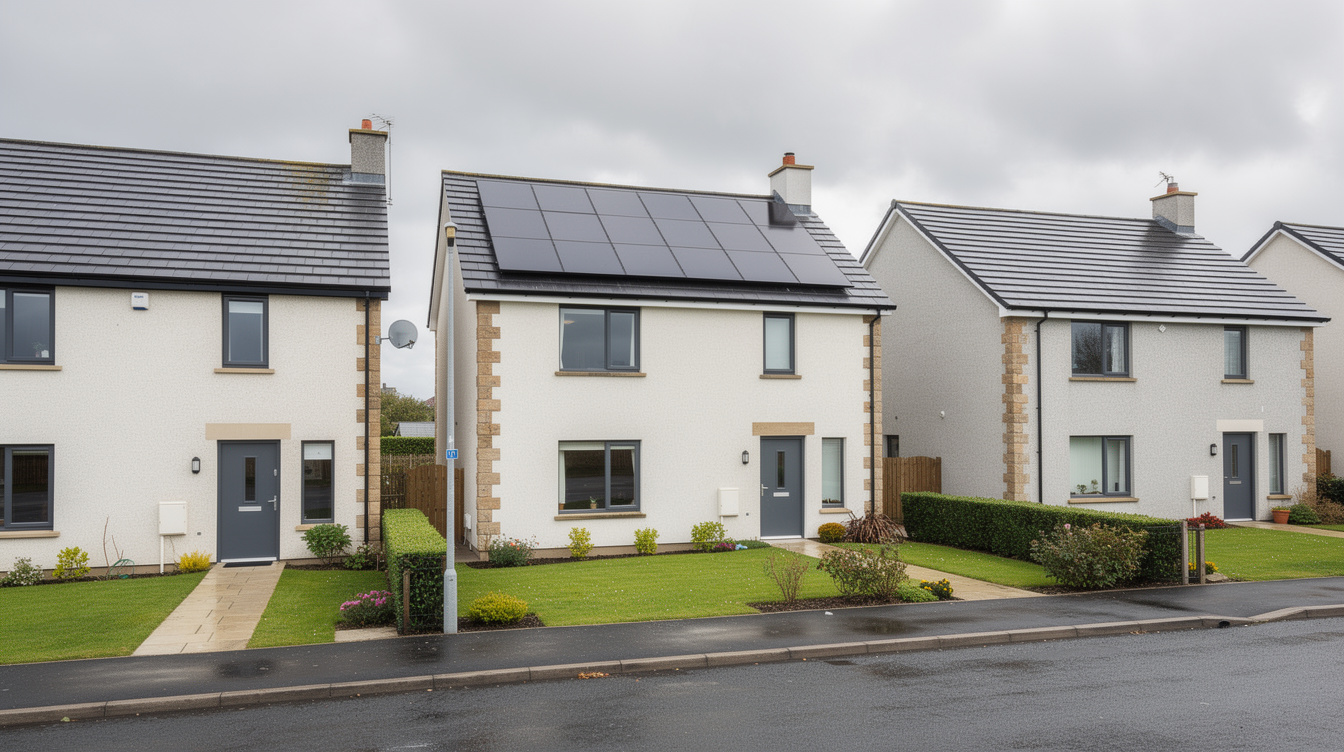
Special cases: students, HMOs, co-living
Student rentals
If you’re in student accommodation — whether university-managed or HMO digs — rooftop solar is essentially never going to happen during your tenancy. Stick to portable kits and tariff optimisation. The one win to ask about: does the building have a smart meter? If it does and bills are split, agitate for a switch to a smart-meter tariff. Many student houses are still on standard 24-hour pricing despite having smart meters — an easy collective win.
House in multiple occupation (HMO)
If you’re sharing a rented house with others on a single bill, the off-grid kit calculation gets better. A €500 portable kit serving 4 housemates costs €125 each. Pooled savings, pooled benefit.
Co-living and build-to-rent
Build-to-rent (BTR) operators — the institutional landlords behind much of Dublin’s new apartment stock — already have solar on around 60% of new schemes by 2026, mainly to meet the Climate Action Plan’s commercial-building solar mandate. Ask the building manager whether the existing PV array offsets common-area lighting or charges EV bays. If yes, you may already be benefiting indirectly through lower service charges.
What about social housing and Local Authority rentals?
Local Authority tenants in Ireland can’t install their own rooftop PV — the property is owned and managed by the council. However:
- Many councils are now running solar retrofit programmes funded by the Department of Housing’s Energy Efficiency Retrofit Programme. If your home has solar fitted under one of these programmes, the council typically retains ownership of the system and you, as the tenant, receive the electricity savings.
- The Approved Housing Body (AHB) sector — Túath, Respond, Cluid and others — has been faster to roll out solar than councils. If you’re an AHB tenant, ask whether your scheme is on the upgrade plan.
- Tenants in Local Authority and AHB housing can still install portable, off-grid solar exactly the same as private renters. No permission required.
The renter’s 12-month solar action plan
- Month 1 — Switch to a smart-meter tariff with cheap night rates. Time-shift your two biggest loads.
- Month 2 — Buy a portable 100–200 W solar + power station kit. Charge phones, laptops, lights for free during daylight.
- Month 3 — Audit your appliances. Replace tumble dryer with heated airer or A+++ heat-pump dryer. LED everything.
- Months 4–6 — Have the solar conversation with your landlord. Lead with the BER / RPZ angle and the €1,800 SEAI grant.
- Months 6–12 — If the landlord won’t engage, save toward your own home purchase or factor solar into your next rental search. Properties advertised with existing rooftop PV are now common, especially in Dublin and Cork commuter belts.
- Watch list — Track the CRU’s plug-in solar consultation outcome (expected late 2026). If plug-in 600–800 W kits are legalised, a balcony array becomes a one-day, fully-legal €400–€700 upgrade for any renter with a south-facing window.
FAQ
Can a landlord refuse to let me install plug-in solar on a balcony?
Yes, particularly if it involves any modification to the building (wall mounts, brackets) or affects the exterior aesthetic. Free-standing kits on the balcony floor are harder for a landlord to object to, but the underlying ESB-connection issue still applies.
Can I claim the SEAI grant as a renter?
No. The SEAI Solar PV grant is paid to the property owner. The landlord can claim it for a rental property.
If my landlord installs solar, who gets the CEG export income?
It depends on whose name the electricity contract is in. In Ireland, the tenant typically holds the supplier contract, so the tenant signs up for CEG and receives the export credit on their bill. The energy savings (lower import) also flow to the tenant.
Can I take a balcony solar kit with me when I move?
Yes. Portable and plug-in kits are fully portable. That’s the entire point of the form factor.
Does my home insurance cover plug-in solar?
Read the policy. Many Irish home insurance policies exclude unauthorised generators by default. Adding a kit may invalidate cover unless declared. Call your insurer before you buy.
What about a garden office or shed with solar?
If it’s electrically isolated from the house (run on its own batteries), no ESB or landlord permission needed. If it’s wired into the main consumer unit, you’re back in the NC6 / owner-only territory.
Related guides
- Lidl plug-in solar panels Ireland 2026 — legal status and prices
- Plug-in solar panels Ireland — full balcony & portable solar guide
- Solar panels for apartments Ireland 2026
- Solar panels for landlords Ireland 2026 — BER, RPZ and tax
- Best portable solar panels for Ireland
Own Your Home? Take Advantage
If you own or are about to buy — lock in solar now. The €1,800 SEAI grant plus 21% VAT relief makes 2026 the cheapest year on record.
Related Articles
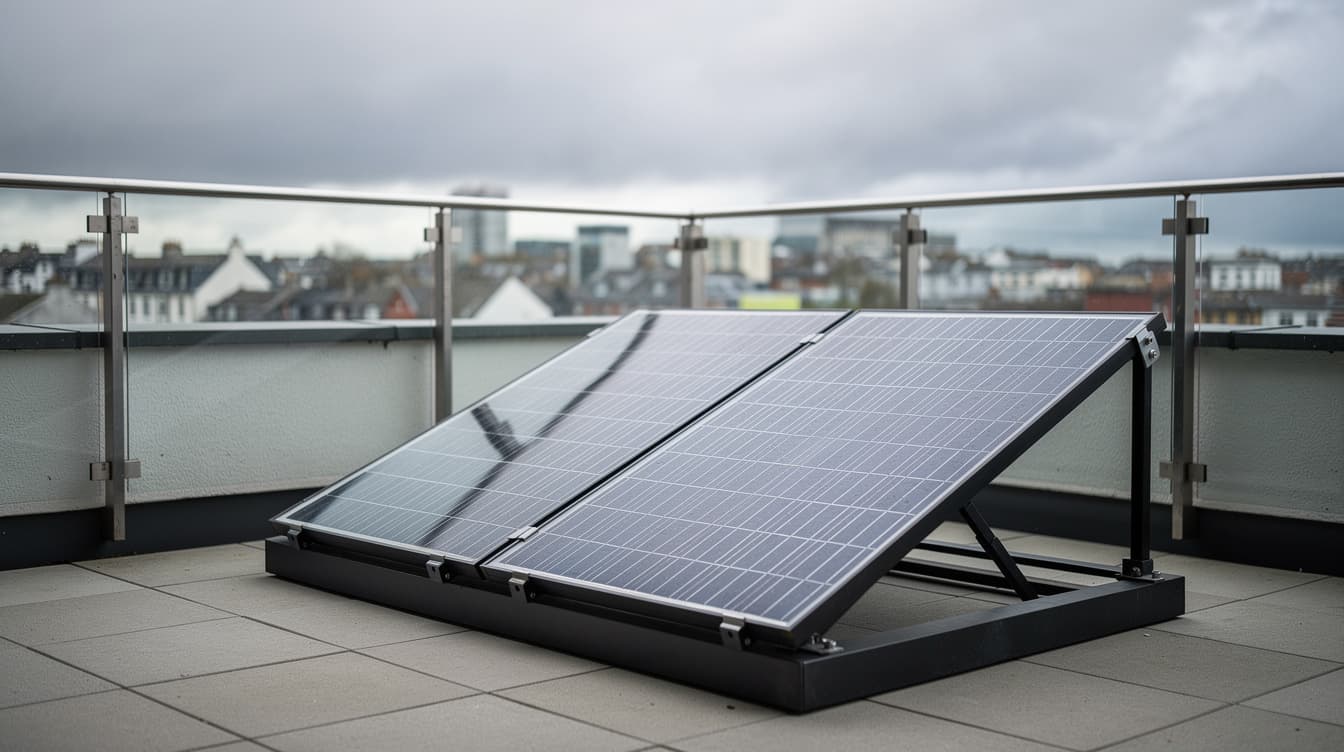
Balcony Solar Power Ireland 2026: What’s Legal, What Works & What It Costs
Full 2026 guide to balcony solar in Ireland: ESB Networks rules, EN 50549 inverters, best kits, real yield on Irish balconies, management-company reality and payback.
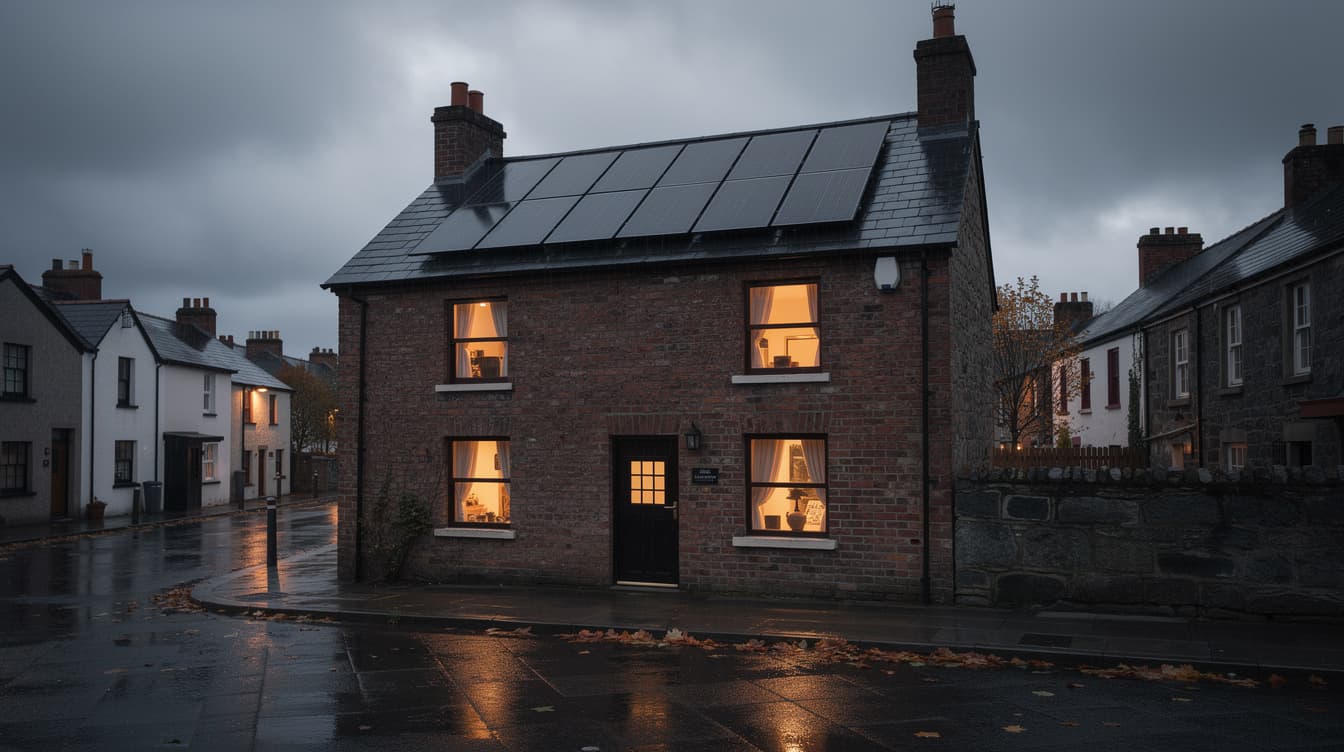
Solar Panels for Rental Properties Ireland 2026: The Landlord's Guide to Costs, Grants & BER Uplift
2026 landlord's guide to solar PV on Irish rentals: SEAI grant, Case V tax deductions, BER minimum standards, tenant notice, portfolio pricing and payback.
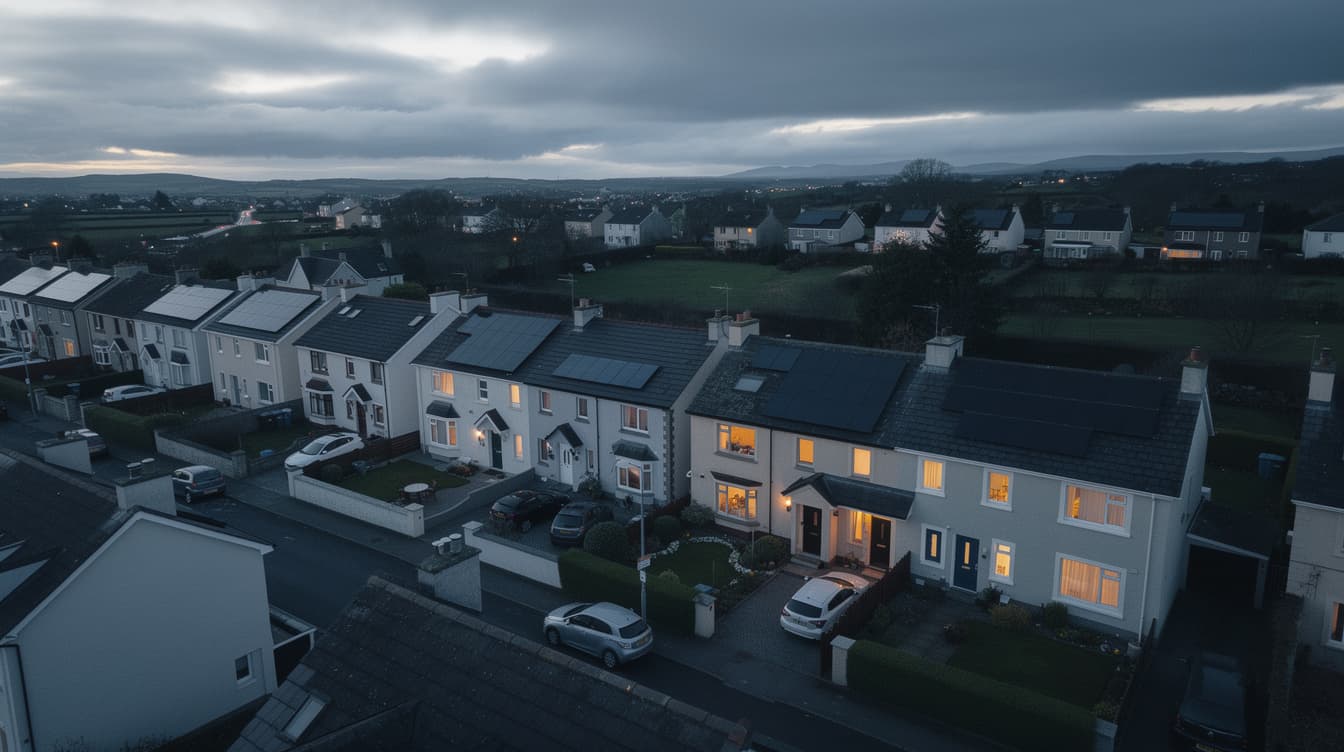
Time-of-Use Tariffs & Solar Panels Ireland 2026: Smart Plans, Dynamic Rates & Battery Arbitrage
Ireland's new dynamic tariffs launched June 2026. Which smart plan matches your solar+battery setup, real savings by household, EV nightsaver tricks & mistakes to avoid.