
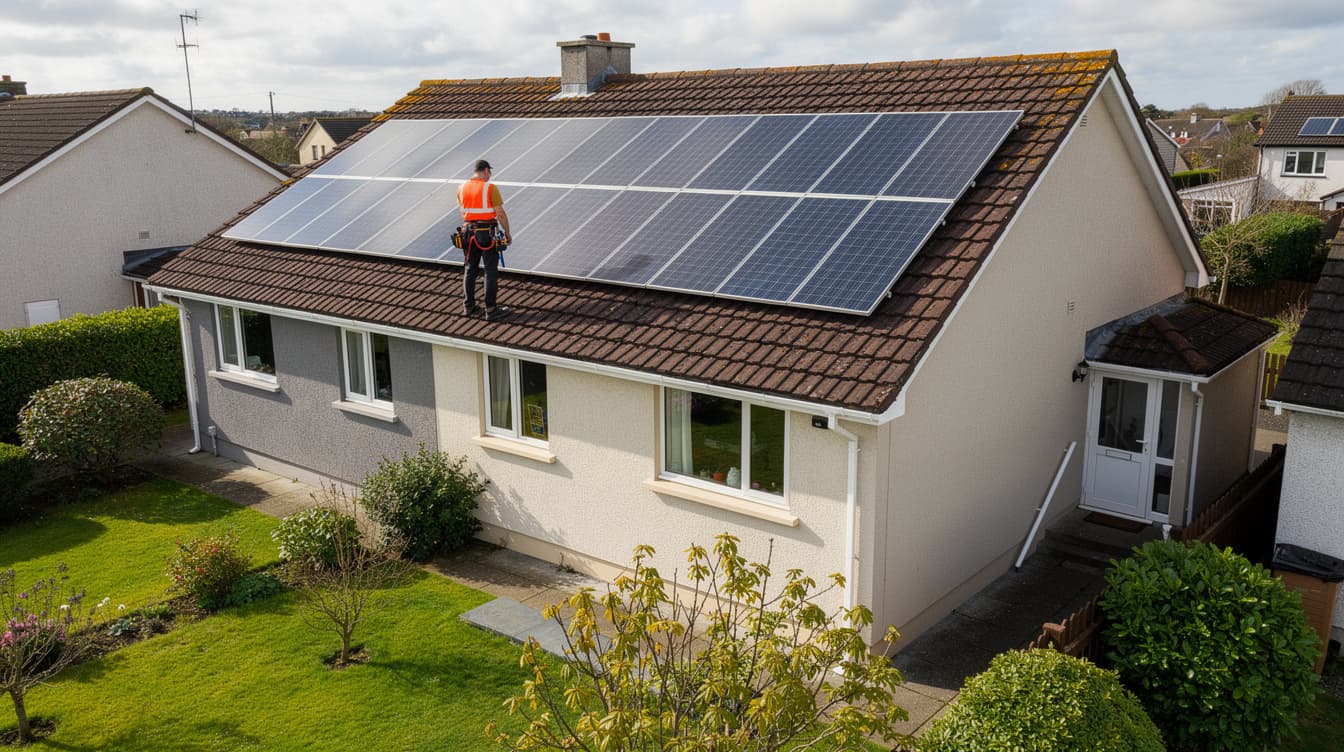
Find the Best Solar Installers Near You in Ireland 2026 — Vetting Guide
Ireland now has over 600 active solar installation companies, up from fewer than 100 in 2020. That sounds like good news for homeowners, but it’s also why finding the right installer has gotten harder, not easier. Almost anyone with a van can call themselves a “solar installer” — only a fraction are SEAI-registered, RECI-certified, and around to honour a 10-year workmanship warranty.
This guide is the playbook for finding the best solar installer near you in 2026 — whether you’re in Cork, Dublin, Galway, Limerick or a rural townland in Leitrim. We cover the official SEAI list, the questions that separate a serious quote from a dodgy one, the warning signs to walk away from, and the specific things to compare across three quotes.
Want Three Vetted Quotes Without the Search?
Tell us your eircode and we’ll match you to SEAI-registered installers active in your area.
Start with the only list that actually matters: the SEAI register
The Sustainable Energy Authority of Ireland (SEAI) maintains a public register of companies approved to install grant-eligible solar PV systems. If you want the €1,800 solar grant, you must use an installer on this list — there are no exceptions, no workarounds, no “we’ll apply for you afterwards.” The grant application is filed by the installer before any work starts.
You can search the register by county at seai.ie. As of June 2026 there are roughly 320 SEAI-registered solar PV companies nationally — a much smaller pool than the 600+ trading total.
A company being on the SEAI list means three things:
- Their lead electrician holds a Safe Electric Ireland (RECI) registration with a solar PV add-on
- They’ve completed SEAI’s installer training and quality assurance audit
- They’ve fitted at least three grant-eligible installs that passed inspection
It does not guarantee they’re a great company. SEAI registration is the floor, not the ceiling. There are excellent installers on that list and there are slow, sloppy installers on that list. The rest of this article is about telling them apart.
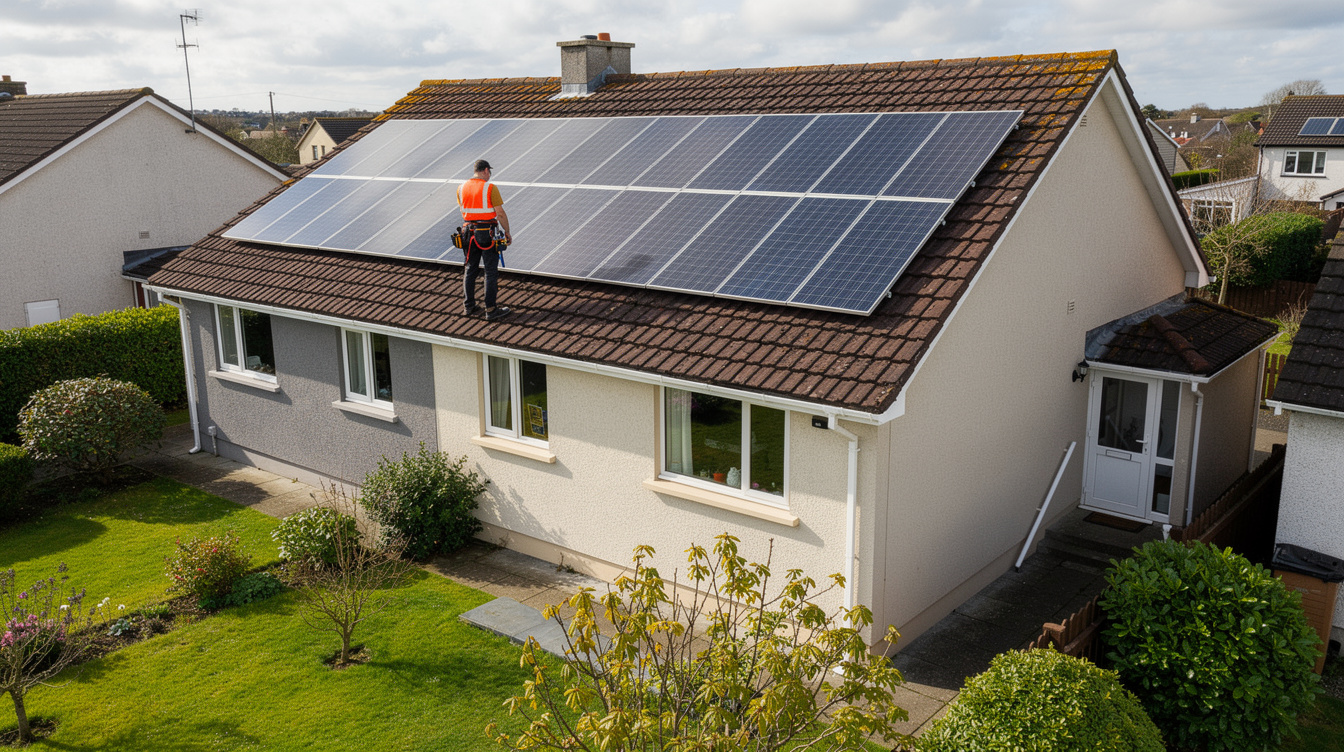
Get exactly three quotes — not one, not five
One quote is too few: you have no benchmark for price or design. Five quotes is too many: you’ll waste a Saturday on site visits and confuse yourself with conflicting recommendations on panel orientation and inverter brand. Three is the sweet spot.
Ireland’s solar pricing in mid-2026 is reasonably consistent but not uniform. A 4 kWp installation typically lands in this range before grant:
| System size | Typical Irish quote range (before grant) | After €1,800 SEAI grant |
|---|---|---|
| 3.0 kWp (~8 panels) | €6,500–€8,800 | €4,700–€7,000 |
| 4.0 kWp (~10 panels) | €8,200–€11,000 | €6,400–€9,200 |
| 5.0 kWp (~12 panels) | €9,800–€13,200 | €8,000–€11,400 |
| 6.0 kWp (~15 panels) | €11,500–€15,500 | €9,700–€13,700 |
If a quote comes in below the bottom of the range, ask hard questions about what’s being cut. If a quote comes in above the top of the range, ask what extras (battery, EV charger, diverter, premium inverter) are bundled.
The 12 questions every quote should answer
A genuine professional quote is two to four pages long, broken into a system schedule, a site survey summary, a price breakdown, and a warranty schedule. A “one-line quote on a beer mat” is a sign to walk away. Specifically you should be able to answer all of these from the quote document alone:
- What is the exact panel model and wattage? (e.g., “10 x JA Solar JAM54S30 440W”)
- What is the inverter make, model, and rating? (e.g., “Solis S6 4G 3.6kW single-phase”)
- Is it a hybrid (battery-ready) inverter or string-only?
- Where will the inverter be mounted? (utility room, attic, outside wall)
- What is the panel warranty? (Tier 1 should be 25 years performance, 12+ years product)
- What is the inverter warranty? (5 years standard, 10 years extended ideally)
- What is the installer’s own workmanship warranty? (5 years minimum; the best offer 10)
- Is scaffolding included? (Some installers quote it as an extra of €400–€800)
- Is roof certification included? (engineer sign-off if your roof is older than 25 years)
- Are bird/pest mesh and roof fall protection included?
- Who applies for the SEAI grant on your behalf? (it should be them, in writing)
- Who registers your microgenerator with ESB Networks (NC6 form)? (also them)
If a quote skips any of these, ask. If they can’t answer cleanly in one email reply, drop them.
Red flags — walk away if you see these
Solar is a sector where the bottom 20% of operators are genuinely problematic in Ireland. These are the signals that have come up repeatedly in Competition and Consumer Protection Commission complaints, BER assessor reports, and the SEAI quality audit:
Door-to-door cold callers. No SEAI-registered installer with a healthy pipeline cold-knocks. If someone shows up unannounced offering a “free solar survey” — especially with a clipboard and a sense of urgency — it’s almost certainly a high-pressure sales pitch, often white-labelled through an actual installer who will fit the cheapest spec possible.
“Free panels” or “government scheme for over-65s” or “solar for pensioners.” These pitches do not exist. The SEAI grant is €1,800. There is no “free solar” programme in Ireland in 2026. If you’re being told otherwise, it’s a sales tactic and the contract you sign will tie you to a finance product at a much higher all-in cost than a normal quote.
Pressure to sign on the day. “This price is only valid this week” or “we’ve got a cancellation slot tomorrow” are sales tactics, not solar tactics. A serious installer is typically booked 6–12 weeks out and is happy to give you a quote in writing with a 30-day validity.
Cash discounts. “If you pay cash we can knock €500 off” means no VAT receipt, no warranty paper trail, and no SEAI grant. Run.
Quotes that don’t list panel/inverter model numbers. “Premium German panels” is not a brand. Without the model, you can’t check Tier 1 status, warranty terms, or compare like-for-like across quotes.
No physical site visit before quoting. A drone shot from Google Earth is not a site survey. Roof pitch, tile condition, attic accessibility, consumer unit capacity and shading all need to be assessed in person before a meaningful quote can be issued.
Refusal to provide previous customer references. Any installer working in your county for more than a year has dozens of finished jobs. Ask for two phone numbers of customers within 20km and ring them.
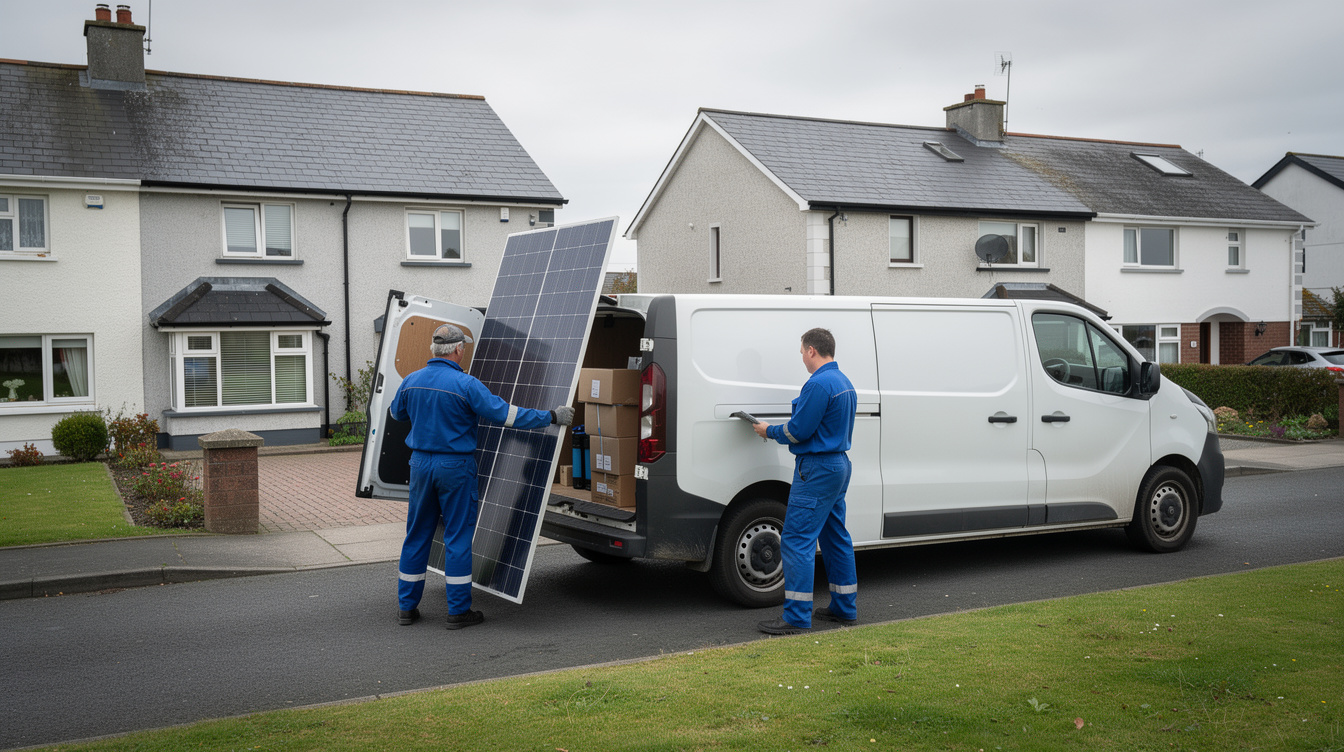
Local vs national installers: which is better?
This is the most common question we get. There’s no universal right answer — both have legitimate trade-offs:
| National installer | Local installer | |
|---|---|---|
| Pricing | Often 5–10% cheaper on hardware (bulk buying) | Usually higher upfront, but no premium |
| Lead time | 4–10 weeks (large installer backlog) | 2–6 weeks typically |
| Warranty service | Centralised, slower call-out | Faster if they’re still trading |
| Survival risk | Lower (more capital reserves) | Higher (small firm dependency) |
| Subcontracting | More common — ask who actually fits | Rare; usually owner on site |
The pragmatic answer: get one quote from a well-known national name, two from established local installers within 40km of your house. Compare the system spec line by line, not the headline price.
How to vet an installer in 15 minutes
Before you have a serious phone call with any quote provider, run these checks:
- SEAI register check — search the company name at seai.ie. Confirm they’re currently active.
- Safe Electric Ireland (RECI) check — their lead electrician’s name should be searchable at safeelectric.ie.
- Companies Registration Office (CRO) check — search at core.cro.ie. Filter for filing status (anything overdue is a flag) and incorporation date. Companies less than two years old aren’t automatically bad, but you want to know.
- Trustpilot / Google reviews — don’t weight 5-star reviews highly, but read every 1–3 star review. Look for patterns: missed appointments, warranty stonewalling, unfinished commissioning.
- VAT number on the quote — legitimate quotes carry an Irish VAT number (IE + 7–8 digits + letter). No VAT number means no formal company you can chase later.
Per-county directories — where we’ve listed installers
We maintain reviewed installer directories for each major Irish county. Each listing was verified against the SEAI register at the time of publication:
- Solar installers in Dublin — the densest market; 80+ active installers
- Solar installers in Cork — strong local installer base in city and county
- Solar installers in Galway — mix of locals and Dublin firms travelling west
- Solar installers in Limerick — growing solar adoption, good local pool
- All counties index
If your county isn’t listed, use our matching service below — we route by eircode to active installers in your region.
Match Me With Three Vetted Installers
Tell us your eircode and we’ll connect you to three SEAI-registered installers active in your county. No spam, no calls until you’ve approved.
Site survey: what a good one looks like
Once you’ve shortlisted two or three installers, each will visit for a site survey. A serious survey takes 45–75 minutes and covers all of the following:
- Roof measurement and pitch reading — with a digital inclinometer, not eyeballing
- Tile/slate condition assessment — tiles fitted before 1990 may need an engineer’s structural sign-off
- Shading analysis — nearby trees, chimneys, adjacent houses, dormer windows. Best installers use a Suneye or solar pathfinder; minimum acceptable is photos with shadow analysis at three times of day
- Attic inspection — truss condition, cable run feasibility, inverter placement options
- Consumer unit (fuse board) inspection — capacity for a new 16A breaker, RCD/RCBO setup, earth bonding
- ESB meter location and meter type — smart meter or mechanical, single-phase or three-phase
- Discussion of expected yield, monitoring, app, and the SEAI application timeline
An installer who arrives, walks around the house for ten minutes, refuses to go into the attic, and emails you a quote two hours later is showing you what their actual installation will look like.
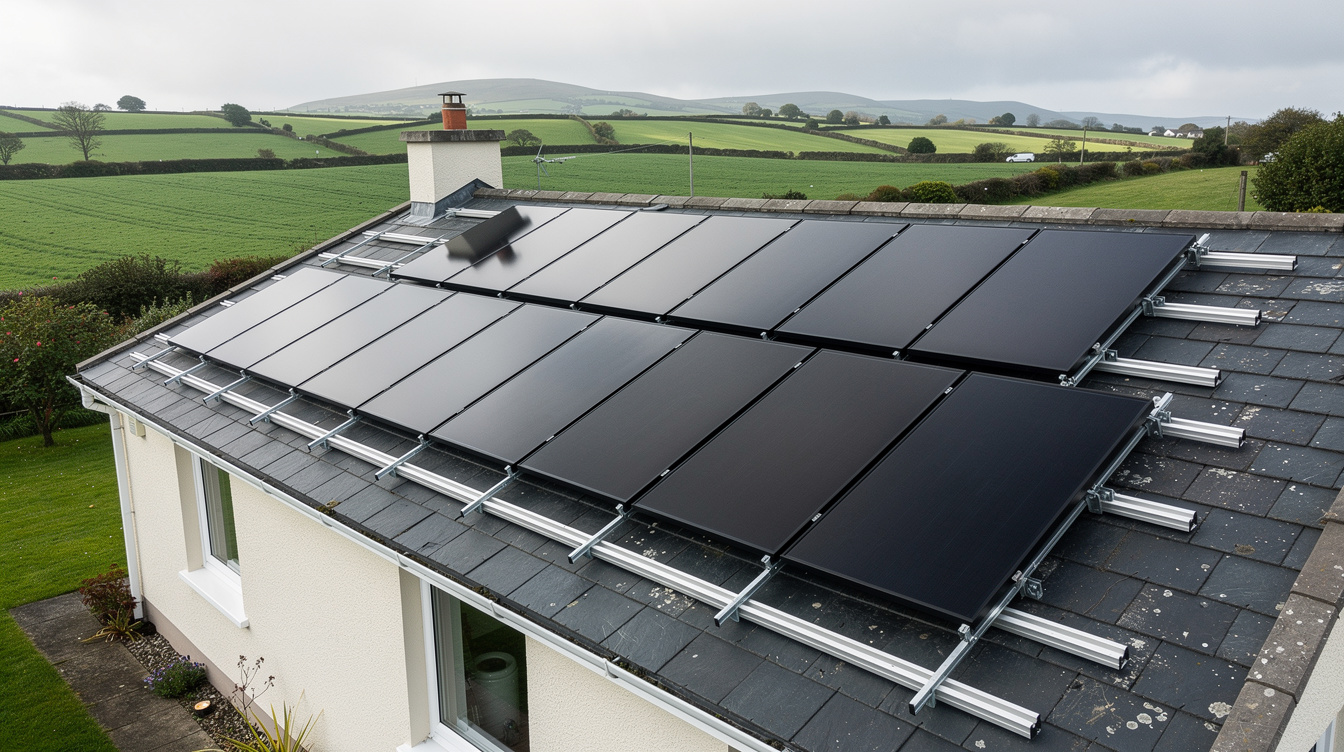
After you sign — what good looks like
From contract signing to system commissioning, expect a 4–12 week timeline. The phases:
- Week 0: Installer applies for SEAI grant approval on your behalf. You sign and return SEAI homeowner declaration.
- Week 1–3: SEAI approval issued (usually within 2 weeks). Installer orders panels and inverter.
- Week 4–10: Install day — scaffolding erected day before, panels and inverter fitted in a single day for residential. Commissioning and BER assessor walk-through.
- Week 10–12: ESB Networks NC6 form processed, microgenerator status confirmed. Grant funds released to installer (you pay net of grant).
You should receive: completion certificate, RECI cert for new circuit, SEAI grant approval and payment confirmation, panel and inverter warranty documents, app login and walk-through.
Frequently asked questions
Should I pick the cheapest quote? No. The middle quote is usually the right answer, provided all three are SEAI-registered. The cheapest is often using bottom-tier panels, no Tier 1 inverter, and skimping on scaffolding. The most expensive is usually a national operator with overhead built in.
Does the installer matter more than the panels? Yes. Tier 1 panel quality differences in 2026 are small; brand X vs brand Y produces 2–3% yield difference at best. Workmanship quality varies 30%+. A great installer with mid-tier panels will outperform a bad installer with premium panels every time.
What about Solar Together Ireland or group buy schemes? Group buy schemes (some run by local councils) can deliver competitive pricing but constrain installer choice. If you have time, getting your own three quotes will typically match or beat group-buy pricing while letting you pick the installer.
Does the installer have to be in my county? No, but a typical installer will travel up to ~60km. Beyond that you’ll pay travel time. For warranty call-outs, a 90-minute drive each way means a slower response. Local-ish wins on service.
Should I get a battery quoted at the same time? Yes, even if you don’t buy it. The battery line item tells you whether the installer specs hybrid inverters (a sign of competence) and lets you compare battery pricing later. You don’t have to commit on day one.
What if my chosen installer goes bust? Panel warranties are with the panel manufacturer (e.g. JA Solar) and travel with the product. Inverter warranties likewise. The thing you lose is workmanship warranty — which is why local installer survival risk matters. If your installer disappears, you can hire any RECI electrician to remedy a workmanship issue, but it’s out of pocket.
The bottom line
Finding the best solar installer near you in Ireland is fundamentally about three steps: only consider SEAI-registered companies, get exactly three written quotes that name panel and inverter model numbers, and run the 15-minute vet on each (SEAI register + RECI + CRO + reviews + VAT number). Do that and you’ll filter out the 20% of operators causing 80% of the problems.
Use our directory above to find named installers in your county, or use our matching service to skip the search entirely — we route to a panel of SEAI-registered installers we’ve worked with for years.
Get Matched to Vetted Solar Installers
SEAI-registered. Local to your eircode. Three free quotes. No cold calls.
Related Articles
Best Solar Setup Ireland 2026: Complete System Design Guide
The best solar setup for Ireland 2026 — panels, inverter, battery, diverter and installer — with 4 real-world configurations, prices and paybacks.
Solar Panels Longford 2026: Costs, Grants, Installers & Real Yields
Longford solar 2026: 4kWp costs €6,800–€8,200 pre-grant, 6–8 year payback, best installers, CEG rates and TAMS farm guide.
Solar Panels on a Shed, Garage or Outbuilding in Ireland 2026: Grants, Planning & Costs
Detached garages, sheds and outbuildings in Ireland 2026: which qualify for the €1,800 SEAI grant, planning exemption rules, real install costs and wiring options.