
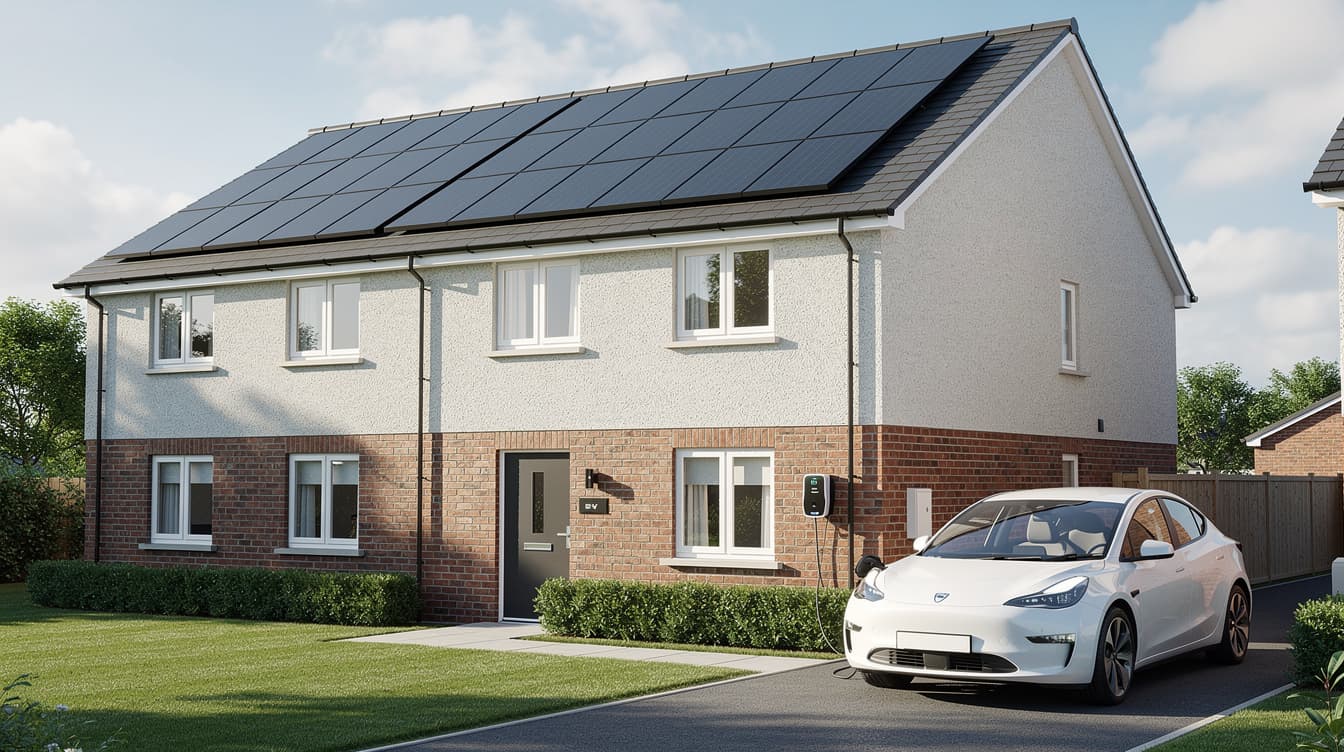
Solar Panels Louth 2026 — Costs, Grants & Installers
Louth is the smallest county in Ireland by area, but it has more domestic electricity meters per square kilometre than any other county outside Dublin. Pack 137,000 people into 826 km2 — spread across Drogheda, Dundalk and the Cooley Peninsula — and you get a solar market with its own economics. Installer travel times are short, multi-job days are easy, and quote spreads compress to within 4–6% on the same spec. That is the opposite of Donegal or Kerry, where a 12–15% same-spec spread is normal because every site visit eats a half-day of driving.
The other Louth-specific thing: 60% of working residents commute outside the county, and most of them go to Dublin on the M1. Drogheda to the IFSC is 52 km. Dundalk to Dublin is 91 km. The arithmetic of an EV charged off a solar+battery system — instead of a diesel commute — lands very hard in Louth, and that is the conversation almost every Louth solar quote ends up touching by the second site visit.
This guide covers 2026 Louth solar pricing, Drogheda vs Dundalk yields, Boyne Valley heritage planning (because Brú na Bóinne, Mellifont and Monasterboice all sit inside Louth), coastal salt-air spec for Cooley/Carlingford/Clogherhead, the cross-border Newry comparison, and five worked payback scenarios from a Drogheda terrace to a Cooley dairy farm.
Get a Louth Solar Quote
Three free quotes from SEAI-registered installers covering Drogheda, Dundalk, Ardee and the Cooley Peninsula.
Quick answer: Louth solar costs and payback in 2026
A typical 4 kWp domestic install in Louth costs €8,200–€9,400 gross, or €6,400–€7,600 net of the €1,800 SEAI Solar PV Grant. Yields run from 955–975 kWh per kWp in central Drogheda and the Boyne valley, down to 940–960 at Carlingford and Greenore where Mourne and Cooley peaks throw afternoon shadow on east-facing slopes. A 4 kWp Louth array generates 3,800–3,900 kWh a year. Combined import savings and CEG export income land at €860–€990 a year on a no-battery domestic install. Net payback: 6.7–8.5 years.
The Louth headline: pricing is the most competitive in the north-east because installer travel costs are low — a Drogheda-based crew can do two installs in one day. That means quotes from three local installers cluster within €400 of each other on the same 4 kWp spec, which is rare nationally. The catch: heritage planning around the Boyne valley is unusually strict, and coastal Cooley installs need salt-spec mounting that most Inland installers won’t spec by default.
Farms: tillage and mixed grazing make up about 60% of Louth’s 130,000 ha of agricultural land. East-coast yields, low travel costs and proximity to large tillage operations around Ardee mean a 15 kWp TAMS 3-funded farm install pays back in 2.8–3.4 years. Section 9 covers a worked Ardee tillage scenario.
Solar yields by area in Louth
Louth's yields are good. Not Wexford-good, but better than the national average, and very close to Dublin. The east coast benefits from longer summer days, lower cloud cover than the midlands, and a coastline that pushes back showers. The catch is the Cooley Peninsula and the Mourne shadow on Carlingford Lough — that ridge eats your morning sun on east-facing slopes.
| Area | Typical south-facing yield (kWh/kWp/yr) | Notes |
|---|---|---|
| Drogheda & Boyne valley | 955–975 | Best in county; open aspect, low elevation, east-coast sun. |
| Ardee & Louth village | 950–970 | Slightly drier than Drogheda; excellent farm-roof yields. |
| Dundalk town | 945–965 | Marginally more cloud cover, but still very strong. |
| Cooley Peninsula (south slopes) | 945–960 | South-facing slopes near Riverstown are fine; east of Greenore loses 30–45 min of morning sun. |
| Carlingford & Greenore | 940–960 | Mourne & Cooley shadow on east aspects. Salt-spec mounting essential. |
| Clogherhead & Termonfeckin | 950–970 | Coastal salt exposure; otherwise excellent yields. |
For context, those numbers put Louth ahead of every Connacht county except south Galway, level with Dublin, and 3–5% behind Wexford and the south-east. If an installer quotes you below 920 kWh/kWp on a south-facing Louth roof without obvious shading, ask why — they may be using an old PVGIS dataset.
Solar installation costs in Louth (2026)
Louth pricing benefits from the compact-county effect: short site-visit travel times mean local installers can quote tighter margins and still hit their daily revenue targets. Same-spec quotes from three Drogheda-area installers typically cluster within €400–€600 of each other — nationally, €800–€1,200 is more common.
| System size | Gross install | SEAI grant | Net cost | Suited to |
|---|---|---|---|---|
| 2.5 kWp (6 panels) | €6,200–€7,100 | €1,800 | €4,400–€5,300 | Drogheda terraced; 2–3 person low-use household. |
| 4.0 kWp (10 panels) | €8,200–€9,400 | €1,800 | €6,400–€7,600 | Most Dundalk/Drogheda 3-bed semis. The volume spec. |
| 4.0 kWp + 5 kWh battery | €11,800–€13,200 | €1,800 | €10,000–€11,400 | EV-charging households; M1 commuters. |
| 6.0 kWp + 10 kWh battery | €16,800–€18,800 | €1,800 | €15,000–€17,000 | Larger detached homes; heat pump + EV combo. |
| 15 kWp TAMS 3 (farm) | €22,000–€26,000 | 60% TAMS 3 | €8,800–€10,400 | Ardee tillage, Cooley dairy, mixed Louth farm yards. |
Add €600–€900 for salt-spec aluminium framing and stainless-steel fasteners on any install within 1 km of the coast at Clogherhead, Termonfeckin, Annagassan, Greenore or Carlingford. Inland Drogheda or Ardee installers will sometimes skip this and use standard galvanised hardware — you don’t see corrosion in year one, but you do see it in year four. Ask explicitly before signing.
Compare 3 Louth Quotes Free
SEAI-registered local installers. Salt-spec mounting available for Cooley/Carlingford. Same-day response.
The M1 commuter case: solar + EV in Louth
The single biggest economic argument for Louth solar in 2026 is the M1 commute. The numbers:
- Drogheda to Dublin city centre: 52 km each way, 104 km round-trip. About 60% of working-age Drogheda residents commute outside the county.
- Dundalk to Dublin: 91 km each way, 182 km round-trip. Lower share commuting to Dublin (closer to Belfast for some), but still ~25% of working Dundalk residents.
- Diesel cost (1.78/L, 6.0 L/100 km): €11.10 round-trip from Drogheda. €19.40 round-trip from Dundalk. Over 220 working days a year, that’s €2,440 from Drogheda and €4,270 from Dundalk.
- EV charged off home solar (4 kWp + 5 kWh battery): the Drogheda commute draws about 16 kWh per day. In summer, almost all of that lands free from the solar array. In winter, about 35% lands free from the array, and the rest is night-rate import at €0.13/kWh. Annual cost: €420–€580 from Drogheda, €780–€980 from Dundalk.
- Net annual saving over diesel: €1,900–€2,000 from Drogheda. €3,300–€3,500 from Dundalk.
That saving alone — before counting the import offset for the rest of the house — is enough to pay back a 4 kWp + 5 kWh + EV-ready solar install in 4.5–5.5 years for a Dundalk commuter household. The Drogheda case is slower (5.5–6.5 years) because the absolute fuel saving is smaller. Either way, the M1 EV scenario is the single most compelling solar pitch in Louth, and it’s the angle a good installer will lead with at the site visit.
If you don’t yet own an EV, ask your installer to fit a 32A type 2 charger socket at install time rather than as a retrofit. The marginal cost at install is €350–€500. A retrofit two years later runs €900–€1,200 because of the second visit and second cable run.
Planning & Boyne Valley heritage
The default rule across Ireland is solar PV is exempt development on a domestic roof up to 19 m2 at front, side or rear (16 m2 for an apartment), subject to a 0.5 m perimeter setback from the roof edge. That covers a 4–5 kWp array on most roofs without any planning involvement at all. It applies in Louth the same as anywhere else.
The Louth-specific complication: the Boyne Valley UNESCO World Heritage Site (covering Brú na Bóinne) and the surrounding Architectural Conservation Areas at Drogheda, Mellifont, Slane and Monasterboice impose stricter planning oversight on visible roof modifications. Inside the Boyne Valley buffer zone and inside Drogheda’s ACA, you should:
- Avoid front-of-house arrays visible from the public road if possible — rear-roof installs are typically waved through.
- Use all-black panels with hidden mounting hardware. Silver-frame panels on a slate roof in an ACA will draw a complaint.
- If your house is a protected structure (Louth County Council’s Record of Protected Structures lists ~340 in the county), you need planning permission for any solar install regardless of size. Budget €1,200–€1,800 in fees and a 8–12 week timeline.
- For agricultural buildings inside the Boyne valley buffer, an in-yard array on a barn roof is fine but a field-mounted array within view of the megalithic monuments at Newgrange/Knowth/Dowth will not get permission.
Outside the heritage zones, Louth planning is straightforward. North Louth (Cooley Peninsula, Carlingford, Ravensdale) has no equivalent ACA layer, and rural solar installs there are exempt under the standard rules. Coastal Greenore has occasional landscape sensitivity restrictions inside the Carlingford Lough designations, but only ground-mount field arrays are normally affected — rooftop installs are fine.
Cross-border Newry comparison
About 25% of Dundalk-area homeowners ask about getting quotes from Newry or south Armagh installers. The reasoning is intuitive: Newry is 22 km from Dundalk and Northern Ireland VAT and grant systems differ from the Republic. Here’s the 2026 reality:
| Factor | Republic (Louth) | Northern Ireland (Newry) |
|---|---|---|
| VAT on domestic install | 0% (under Finance Act 2023 zero-rate) | 0% (UK Spring Budget 2022 zero-rate) |
| Grant | €1,800 SEAI Solar PV Grant | No equivalent NI grant in 2026 |
| Export tariff (CEG / SEG) | Clean Export Guarantee, ~€0.18–0.21/kWh (varies by supplier) | Smart Export Guarantee, ~£0.08–0.16/kWh |
| Typical 4 kWp gross install price | €8,200–€9,400 | £6,500–£7,800 (≈ €7,600–€9,100 at 2026 rates) |
| Net cost to homeowner | €6,400–€7,600 (after SEAI) | €7,600–€9,100 (no grant) |
The Republic side wins on net cost almost every time because of the SEAI grant. The only situation where a Newry installer is genuinely competitive is if you have a UK personal connection or a holiday home registered in NI — otherwise an SEAI-registered Republic installer is the right call. A Newry-based installer also can’t register your install for the Republic-side CEG export tariff, which is worth €150–€250/year on a 4 kWp system.
TAMS 3 and Louth farms
Louth has ~130,000 ha of agricultural land split roughly 55% grassland, 35% tillage and 10% other. The tillage concentration around Ardee, Termonfeckin and the Boyne valley makes for ideal solar yard economics — tillage farms have long, flat-roofed sheds and predictable daytime electricity demand from grain dryers and storage ventilation.
TAMS 3 (Targeted Agricultural Modernisation Scheme, current 2023–2027 round) funds solar PV on farm buildings at 60% grant intensity up to a €90,000 reference cost for the Solar Capital Investment Scheme. For a typical 15 kWp Louth farm install:
- Gross cost: €22,000–€26,000 (includes 3-phase inverter and meter upgrade where needed)
- TAMS 3 grant: €13,200–€15,600 (60% of eligible cost)
- Net cost: €8,800–€10,400
- Annual generation: 14,200–14,700 kWh in central Louth
- Daytime self-consumption rate (tillage farm with dryer/storage): 70–85%
- Annual saving + CEG: €3,000–€3,400
- Payback: 2.8–3.4 years
That is among the fastest farm solar paybacks in the country, beaten only by Wexford and Carlow tillage operations of similar size. Cooley peninsula dairy yards do almost as well: the cluster of dairy at Riverstown, Grange and Ravensdale benefits from chilling and parlour-wash loads that line up well with daytime solar.
Choosing a Louth installer
The Louth installer base is split into three groups. Use the right group for the right job:
- Drogheda/Dundalk locals (12–15 active firms): Best for a standard inland install. Travel costs are minimal so quotes compress within 4–6% of each other. Strong on M1 commuter EV systems. Some are weak on salt-spec coastal hardware — check explicitly.
- Boyne & Meath-side installers: Several Drogheda firms cover Meath as well, useful if you’re in the Slane/Beauparc band where Meath and Louth overlap. Strong on Boyne-valley heritage installs and discreet rear-roof builds because they deal with the planning context daily.
- Cooley specialists: A small number of installers in Carlingford and Ravensdale do the bulk of north Louth coastal installs. They’ll spec marine-grade aluminium framing and stainless fixings as standard, which an inland Drogheda crew may not.
Three questions to ask any Louth installer before signing:
- “What corrosion spec do you use within 1 km of the coast?” The right answer mentions A4/316 stainless fasteners and marine-grade aluminium framing, not generic “corrosion resistant”. If you’re inland of the M1 between Drogheda and Dundalk, this isn’t critical — if you’re east of the M1 it is.
- “Are you registered with SEAI and what’s your installer ID?” Every grant-eligible installer must be on the SEAI registered list. Ask for the ID and verify it on seai.ie/grants/solar-electricity-grant/.
- “What inverter brand and warranty do you spec by default?” Look for a tier-1 inverter (Solis, Sungrow, Huawei, Fronius, GoodWe) with a 10–12 year warranty. Anything less is a red flag in 2026.
Five Louth payback scenarios
Scenario 1 — Retired Drogheda terraced house, oil heating
Two retirees in a 3-bed Drogheda terrace, off the Marsh Road. Annual electricity use 3,800 kWh. Oil heating, 1,800 L per year at €1.10/L = €1,980. South-facing rear roof, 22 m2 available. 3 kWp install plus a solar diverter to the existing oil cylinder.
- Gross cost: €7,400
- Net after €1,800 SEAI grant: €5,600
- Annual generation: 2,900 kWh
- Self-consumption (diverter active): 60%
- Electricity bill saving: €550/year
- Oil saved (via diverter): €320/year
- CEG export: €180/year
- Total saving: €1,050/year
- Payback: 5.3 years
Scenario 2 — M1 commuter family, Dundalk, EV
Family of four in a 4-bed Dundalk semi on the south side. Two cars: one diesel hatchback (kept), one new EV used for the M1 Dublin commute. 5,400 kWh existing house use + 3,600 kWh EV. South-east roof, 30 m2. 5 kWp + 5 kWh battery, EV charger.
- Gross cost: €13,800 (including charger)
- Net after €1,800 SEAI grant: €12,000
- Annual generation: 4,830 kWh
- Self-consumption (battery + EV night): 78%
- House bill saving: €640/year
- EV diesel-displaced saving: €3,300/year
- CEG export: €200/year
- Total saving: €4,140/year
- Payback: 2.9 years
Scenario 3 — Cooley coastal cottage, salt-spec install
Renovated stone cottage 400 m from the shore at Greenore. 2-bed, used as a primary residence. 3,200 kWh/year, air-to-water heat pump. Slate roof, 18 m2, south-west aspect. 3.5 kWp all-black, marine-grade mounting.
- Gross cost: €9,200 (includes €850 salt-spec premium and all-black aesthetic premium)
- Net after €1,800 SEAI grant: €7,400
- Annual generation: 3,360 kWh (slight Mourne shadow on early morning)
- Self-consumption (heat pump load lines up well): 72%
- Electricity saving: €730/year
- CEG export: €185/year
- Total saving: €915/year
- Payback: 8.1 years
Scenario 4 — Ardee tillage farm, 15 kWp TAMS 3
180-ha mixed tillage and beef operation outside Ardee. Two large flat-roofed sheds, the grain store has 60 kWh/day daytime load for drying in autumn and ventilation year-round. 15 kWp array on the south-facing grain store roof.
- Gross cost: €24,000
- TAMS 3 grant (60%): €14,400
- Net cost: €9,600
- Annual generation: 14,400 kWh
- Daytime self-consumption (with dryer): 78%
- Electricity saving: €2,910/year
- CEG export (22% sold): €390/year
- Total saving: €3,300/year
- Payback: 2.9 years
Scenario 5 — Boyne valley heritage rear-roof install
Edwardian terraced house in Drogheda’s Architectural Conservation Area off Fair Street. Original slate front, modern slate rear after a 2008 re-roof. Owner-occupied, 4,200 kWh/year. Rear roof 24 m2, south-facing. All-black 4 kWp, hidden mounting, planning permission obtained (front-facing array refused).
- Gross cost: €9,200 (heritage spec premium €500)
- Planning fees and architect drawings: €1,400
- Net after €1,800 SEAI grant: €8,800 total project cost
- Annual generation: 3,820 kWh
- Self-consumption: 50% (typical no-battery household)
- Electricity saving: €660/year
- CEG export: €330/year
- Total saving: €990/year
- Payback: 8.9 years
The heritage install’s longer payback is the planning & aesthetic-spec overhead. It’s still a sound install — over a 25-year panel life it generates €19,000 of net value — but if the planning process feels like too much, a rear-roof exempt-size install (under 19 m2, no planning) is often more practical and still gets you to a 7-year payback.
See What Your Louth Roof Could Earn
Free solar panel calculator — or get three quotes from local Louth installers.
Louth solar FAQ
Is Louth a good county for solar? Yes, very good. Yields are 940–975 kWh per kWp, in line with Dublin and only 3–5% behind Wexford. Pricing is among the tightest in the country because of the compact-county effect.
How much is the SEAI grant for solar PV in 2026? €1,800 for domestic systems, available to homeowners whose home was built and occupied before 1 January 2021 and who haven’t previously claimed a Solar PV Grant at the same MPRN. Always check the current scheme on seai.ie before signing a contract.
Do I need planning permission for solar panels in Louth? Almost never. The 19 m2 rooftop exemption covers most domestic installs. Exceptions: protected structures (planning required regardless of size), buildings inside the Drogheda or Mellifont ACAs with front-facing arrays, and any field-mounted array within view of the Boyne Valley World Heritage Site monuments.
Are panels okay on the Cooley Peninsula coast? Yes, but specify marine-grade aluminium framing and A4/316 stainless fasteners. Standard galvanised hardware doesn’t corrode in year one but does by year four within 1 km of the shore. Inland installers may default to standard hardware, ask before signing.
Is it worth getting an installer from Newry? Almost never. Republic-side installers can register your SEAI grant (€1,800) and CEG export tariff. NI installers can’t. Net cost is €1,200–€2,000 lower with a Republic installer.
Will a Drogheda installer drive to Carlingford? Yes — Louth is compact and one-day round trips are easy. Travel is included in the quote rather than billed separately. Cross-county Meath or Monaghan installers will sometimes add €200–€400 for travel to a Cooley address.
What about EV chargers — should I add one with the install? If you have an EV or expect one within 3 years, yes — fit it at install time. The marginal cost is €350–€500. Adding it as a retrofit later costs €900–€1,200 because of the second site visit. There’s also a separate SEAI EV home charger grant (€300, currently active).
Does north-facing or east-facing affect the grant? No. SEAI’s €1,800 grant is paid the same regardless of roof orientation. But yield drops 15–25% on a true east or west aspect compared with south, so payback is longer. See our east/west roof analysis for the orientation maths.
How do I get three Louth quotes? Use the form on our site — we cover Drogheda, Dundalk, Ardee, Carlingford, Clogherhead, Termonfeckin, Cooley, Greenore, Dunleer and the rural parishes in between. Submit a quote request and we’ll route it to three local installers.
Ready to Go Solar in Louth?
Three free quotes. SEAI-registered Louth installers. Salt-spec available for Cooley/Carlingford/Clogherhead.
Related Articles
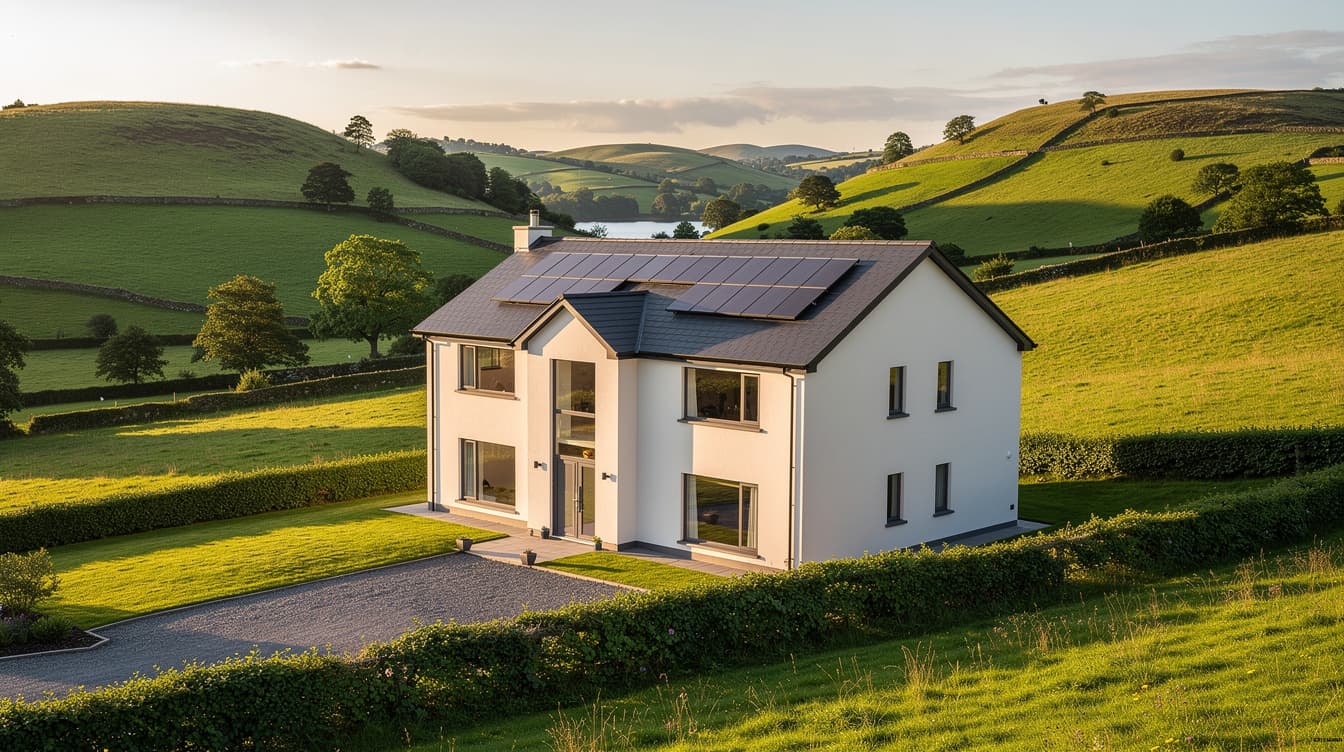
Solar Panels Cavan 2026 — Costs, Grants & Installers
Solar Panels Cavan 2026: drumlin east-west arrays, Virginia M3 commuter EV maths, Lough Sheelin lakeshore planning, Bailieborough dairy TAMS 3 payback.
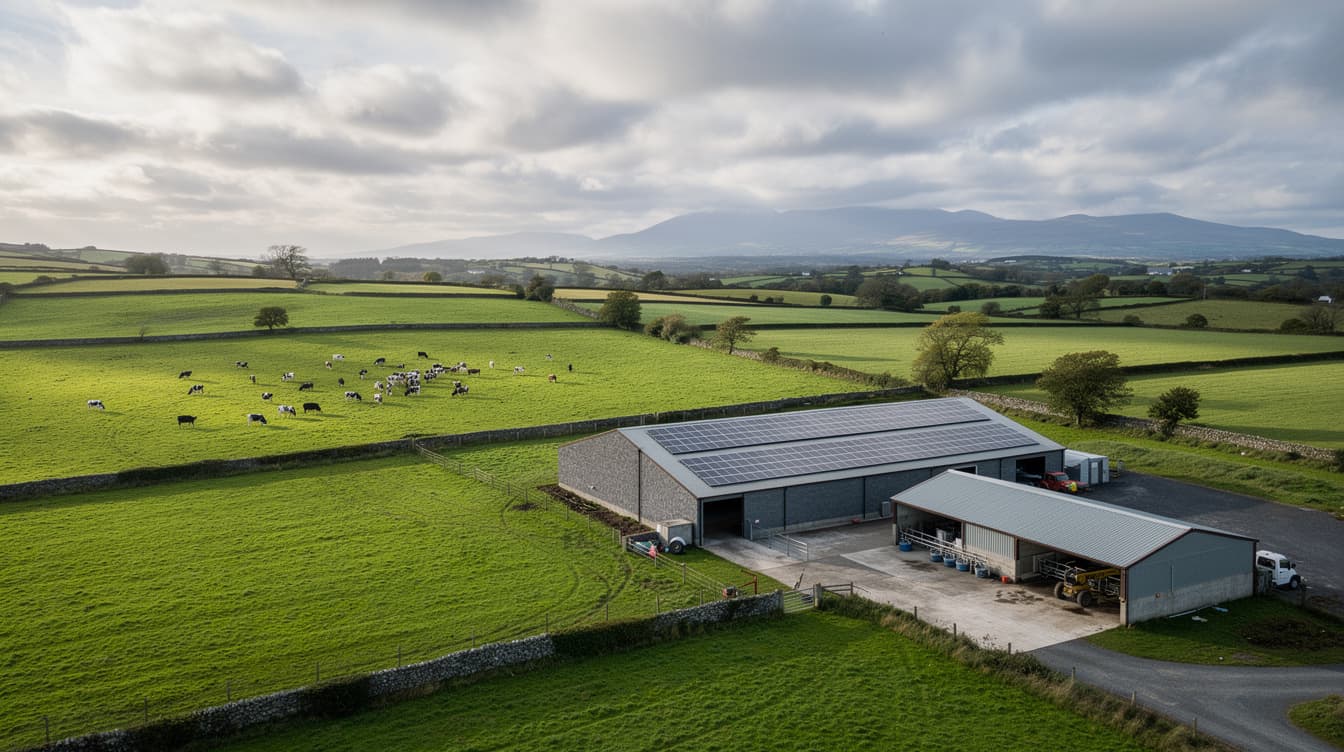
Solar Panels Donegal 2026 — Costs, Grants & Installers
Solar Panels Donegal 2026: pricing by area, Atlantic salt-spec mounting, Lifford basin TAMS 3 dairy maths, Wild Atlantic Way B&B economics, Strabane comparison.
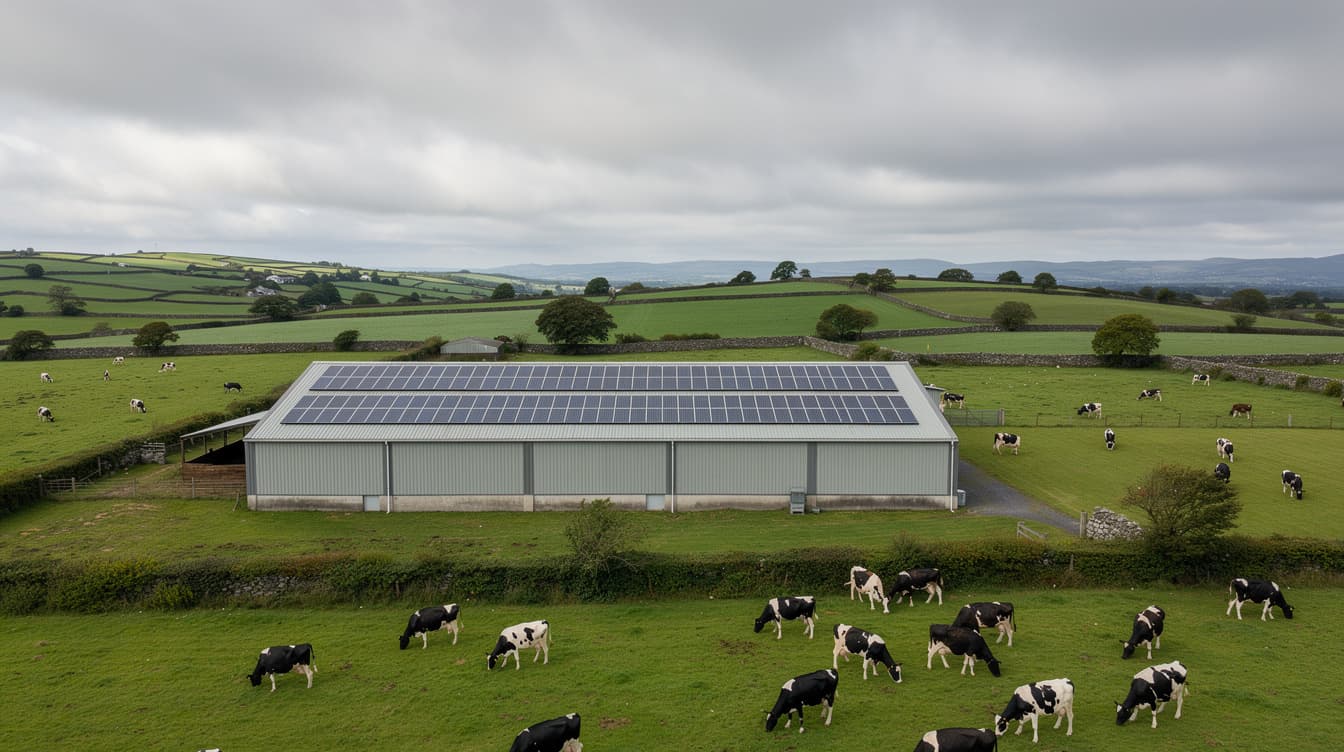
Solar Panels Tipperary 2026 — Costs, Grants & Installers
Solar Panels Tipperary 2026: pricing by micro-market, Tipp plain yields, Knockmealdown shadow, M7/M8 EV commuter maths, Golden Vale TAMS 3 dairy payback.