
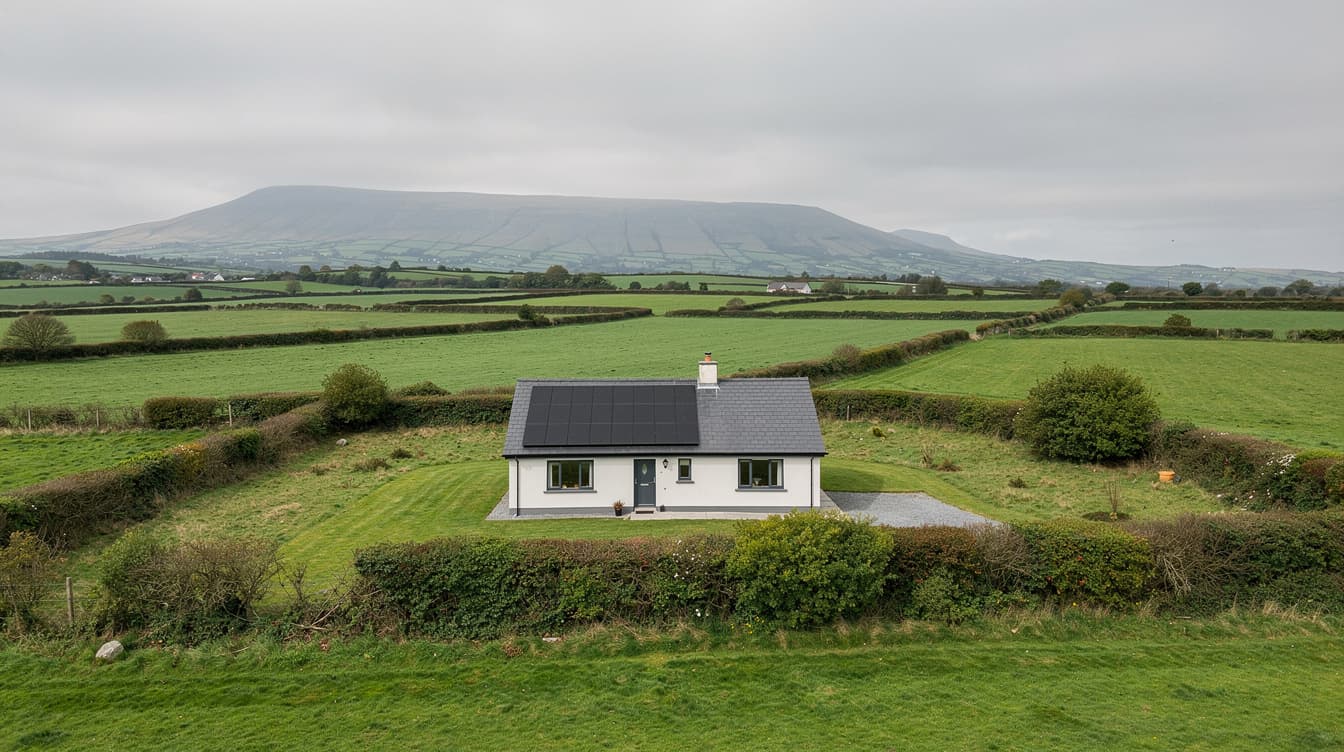
Solar Panels Carlow 2026 — Costs, Grants and the Best Installers
Carlow is Ireland’s second-smallest county and one of the most overlooked solar markets in the country. It also happens to have one of the most favourable solar economic profiles in Leinster: south-east sunshine yields are right behind Wexford, install prices are 4–7% lower than Dublin commuter belt counties, planning is genuinely simple, and the dairy/tillage farming base means TAMS 3 grant economics are exceptional for the working farms south of the N80.
The catch — or, more accurately, the reason for this guide — is that there are only three installers headquartered in Carlow itself. The other quotes you’ll get come from companies based in Kilkenny, Wexford, Kildare or Dublin who service the county on weekly runs. That changes how you should evaluate quotes and when you should expect installation.
This guide covers the real 2026 costs for Carlow homes and farms, how yields differ between Bagenalstown and Tullow, where the €1,800 SEAI grant slots in, and how to pick between the seven or eight installers actively quoting in the county.
Get a Carlow Solar Quote
Three free quotes from SEAI-registered installers actively quoting in Carlow.
Quick answer: cost and payback in Carlow
A typical 4 kWp domestic install in Carlow in 2026 lands at €8,300–€9,600 gross, or €6,500–€7,800 net of the €1,800 SEAI grant. Carlow’s solar yields run 945–975 kWh per kWp in the south of the county and 935–955 along the northern Wicklow Mountains foothills — meaning your 4 kWp array produces 3,780–3,900 kWh per year. At a typical 38% self-consumption rate on a Carlow semi-detached, you save roughly €500–€560 on import bills plus €420–€450 in Clean Export Guarantee income. Total annual benefit: €920–€1,010. Net payback: 6.7–8.0 years — among the fastest in Leinster on a no-battery domestic install.
For farms, the picture is much stronger. A 15 kWp TAMS 3-funded array on a Carlow dairy or tillage holding costs the farmer roughly €9,200–€11,600 net of the 60% TAMS grant. With 14,400–14,800 kWh/yr of generation displacing milking parlour, bulk tank cooling and grain-store loads, payback is typically 2.4–3.1 years.
Yields by Carlow area: south sun vs north foothills
Carlow benefits from the same south-east sunshine belt that makes Wexford the best solar county in Ireland. The southern third — Borris, Bagenalstown, the Blackstairs Mountains edge — sees almost identical yields to north Wexford. Move up towards Tullow and Hacketstown and you start losing 2–4% to higher elevations and earlier morning shadow from the Mount Leinster range.
| Carlow area | Typical yield (kWh/kWp/yr) | Notes |
|---|---|---|
| Borris, St Mullins, Bagenalstown | 955–975 | Best in county — south Carlow, low cloud |
| Carlow town, Leighlinbridge | 945–970 | Central county, river valley flat |
| Tullow, Rathvilly | 940–960 | Higher ground, slight shadow from Mt Leinster |
| Hacketstown, Clonmore | 925–950 | Northeast corner, Wicklow Mountains edge |
| Myshall, Fenagh | 945–965 | East central, similar to Tullow |
The headline: Carlow generates roughly 2–3% more solar electricity per kWp than the national average, and 8–10% more than Donegal. That’s worth roughly €90–€140 per year on a 4 kWp array vs national average — and the difference compounds over the 25-year array life to roughly €2,500–€3,800.
Cost by system size in Carlow (2026)
Carlow installer pricing comes in 4–7% under the Dublin commuter belt rate, partly because the labour and overhead base is cheaper, partly because most installs are bungalows or two-storey detached homes that don’t need complex scaffolding. The exception is town-centre Carlow town terraces where access constraints push prices back up to Dublin-equivalent.
| System size | Panels | Gross price | After €1,800 grant | Best fit |
|---|---|---|---|---|
| 3 kWp | 7–8 | €7,000–€8,200 | €5,200–€6,400 | 2–3 bed cottage, small bungalow |
| 4 kWp | 9–10 | €8,300–€9,600 | €6,500–€7,800 | 3 bed semi, 4 bed bungalow — Carlow average |
| 5 kWp | 11–12 | €9,400–€10,900 | €7,600–€9,100 | 4 bed detached, family of 5 |
| 6 kWp | 13–14 | €10,900–€12,500 | €9,100–€10,700 | Large detached, EV household |
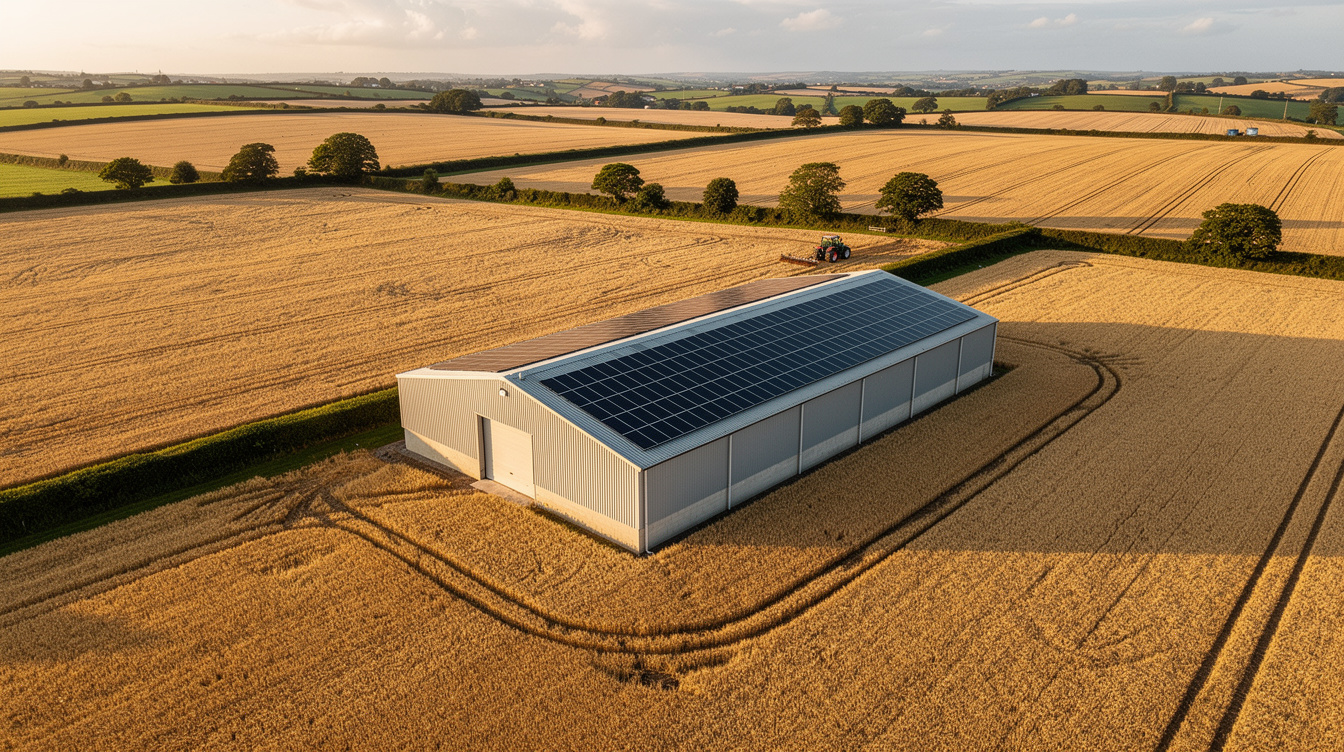
| 15 kWp (farm) | 33–36 | €23,000–€29,000 | €9,200–€11,600 (after 60% TAMS 3) | Dairy parlour, tillage grain store |
Batteries: add €3,500–€4,200 for a 5 kWh AC-coupled battery. Tesla Powerwall 3 (13.5 kWh) is €7,600–€9,000 in Carlow — slightly less than national average because three of the active installers run weekly Powerwall runs through the south-east. EV charger integration adds €850–€1,200 if you don’t already have one.
The Carlow small-county effect on quotes and lead times
Carlow’s small market (population ~62,000, roughly 22,500 households) means you’ll see a wider quote spread than in bigger counties. A 4 kWp install in Carlow might quote at €7,800 from a local installer and €9,400 from a Dublin-based national for essentially the same kit. The reasons:
- Travel and accommodation costs: National installers covering Carlow include 60–120 km round trips in their pricing. Local installers don’t need to.
- Lead times: Local installers in Carlow town can typically start within 2–3 weeks. Nationals will quote 4–7 weeks because Carlow falls on their weekly south-east route.
- Battery certification depth: Only one or two Carlow-headquartered installers are full Tesla Powerwall 3 certified. The nationals all are.
- Warranty and aftercare: Local installers will come out within a week if something goes wrong. The nationals work to a 14–28 day aftercare window because of routing.
Practical recommendation: always get three quotes — at least one local Carlow installer and at least one south-east national (typically headquartered in Wexford, Kilkenny or Dublin). Don’t just default to the cheapest, but don’t pay the national premium unless there’s a specific reason (Powerwall 3, heat-pump integration, complex roof).
Carlow planning realities: mostly straightforward
Carlow has fewer planning constraints than any of the surrounding counties. There’s no National Park, no major AONB beyond a small section of the Blackstairs Mountains, and only a handful of Architectural Conservation Areas (Carlow town centre, Bagenalstown, Borris village core, parts of Tullow). Outside those zones, the standard Planning and Development (Solar Panels) Regulations 2022 rules apply: no cap on roof area, no setback, no notification required for domestic rooftop solar.
The relevant exceptions:
- Protected structures (~310 in Carlow): Need a Section 5 declaration. Roughly €165 in fees, 6–10 weeks turnaround.
- Borris and Bagenalstown ACAs: Matt-black panels strongly preferred, especially on streetfront elevations. Inverter ideally hidden from the street.
- Carlow town centre ACA: Rooftop solar is fine on rear elevations. Front elevations on protected commercial buildings need a planning conversation.
- Ground-mount on farms over 50 sq m: Needs full planning permission. Most farm installs use barn roofs to avoid this trigger.
Outside those scenarios, you should be ordering panels rather than waiting on the council.
The TAMS 3 angle for Carlow farms
Carlow has roughly 1,800 working farms split roughly 60% tillage / 30% dairy and suckler beef / 10% mixed. The TAMS 3 Solar Capital Investment Scheme funds 60% of the cost of a solar PV install on a registered farm up to a €90,000 grant ceiling (so up to €150,000 gross system spend).
Why this matters for Carlow specifically:
- Tillage farms have grain stores with massive roof areas — the ideal canvas for 20–40 kWp systems with no planning issue.
- Dairy parlour electrical loads are concentrated 5am–9am and 4pm–7pm — less aligned with solar than tillage grain-drying loads but still 40–55% self-consumption achievable.
- South Carlow yields (955–975) are exceptional — payback under 3 years is realistic on most working farms.
- The Microgeneration Support Scheme (MSS) lets farms export excess at 18–22c/kWh — turning even oversized arrays into income.
A representative 20 kWp tillage install in Carlow:
- Gross install: €32,000
- TAMS 3 60% grant: €19,200
- Farmer net: €12,800
- Annual generation (965 kWh/kWp): 19,300 kWh
- Self-consumption 50%: 9,650 kWh at avoided import cost 33c (commercial rate): €3,185
- Export 9,650 kWh at MSS 20c: €1,930
- Total annual benefit: €5,115
- Payback: 2.5 years
Choosing a Carlow installer in 2026
The current shortlist of installers actively quoting in Carlow:
- Three Carlow-headquartered specialists — typically the cheapest, fastest lead time (2–3 weeks), strong on standard residential installs but variable on battery and Powerwall depth.
- Two Kilkenny-based installers — mid-priced, 3–5 week lead time, good coverage of south Carlow especially.
- Two Wexford-based installers — competitive pricing, strong farm/agri experience, 4–6 week lead time.
- Several Dublin/Kildare nationals — highest quotes by 4–9%, 5–7 week lead time, full Powerwall 3 certification and warranty depth.
Questions to ask:
- How many Carlow installs have you completed in the last 12 months?
- Are you handling SEAI grant paperwork end-to-end, or do I apply?
- What’s your aftercare process if something fails after the install?
- For farms: do you have TAMS 3 paperwork experience? Some installers don’t.
- Is scaffolding included in the quote, or is it an “access fee” that lands later?
- Do you offer monitoring (typically via SolarEdge or myenergi app)?
Browse the Carlow solar installers directory for the current list, or use the quote form below to be matched against three SEAI-registered installers covering the county.
Four Carlow payback scenarios
Scenario 1: Bagenalstown 3-bed semi, family of 4. 4 kWp south-facing, no battery. €8,800 gross, €7,000 net of grant. Annual output 3,860 kWh, self-consumption 36% = 1,390 kWh saved at 35c = €487, plus 2,470 kWh exported at 18c = €445. Total: €932/yr. Payback: 7.5 years.
Scenario 2: Tullow 4-bed detached, one EV. 5 kWp south-east, 5 kWh battery. €13,400 gross, €11,600 net of grant. Annual output 4,750 kWh, self-consumption 71% (EV+battery) = 3,373 kWh saved at 35c = €1,181, plus 1,377 kWh exported at 18c = €248. Total: €1,429/yr. Payback: 8.1 years.
Scenario 3: Borris bungalow, retired couple. 3 kWp south-facing, diverter. €7,800 gross, €6,000 net of grant. Annual output 2,910 kWh, self-consumption 28% baseline boosted to 56% by diverter feeding the immersion = 1,629 kWh saved at 35c = €570, plus 1,281 kWh exported at 18c = €231. Total: €801/yr. Payback: 7.5 years.
Scenario 4: South Carlow tillage farm, 20 kWp on grain store roof. €32,000 gross, €12,800 net of 60% TAMS 3. Annual output 19,300 kWh, mixed self-consumption + Microgeneration Support Scheme export = €5,115/yr. Payback: 2.5 years — the highest-ROI install in this article and the reason TAMS 3 is moving fast on Carlow tillage in 2026.
Model Your Carlow Payback
Use our Ireland solar calculator with your specific roof, consumption and battery scenario.
Common Carlow solar questions
Why are Carlow quotes cheaper than Dublin? Lower labour rates, less complex two-storey scaffold, shorter rural commute times for installer crews, and a smaller number of access surcharges. Carlow installers typically run leaner overhead than Dublin nationals.
Do I need planning permission? Almost never for domestic rooftop solar — the 2022 regulations cover most homes with no upper limit. Exceptions: protected structures and the four Architectural Conservation Areas mentioned above. Farms putting up ground-mount over 50 sq m do need full planning.
Will solar work on a north-facing roof in Hacketstown? Pure north-facing arrays lose roughly 30% of optimal yield in Ireland — not zero, but enough that payback gets uncomfortable. North-east or north-west pitches lose 12–18% and can still pay back inside 10 years. East-west split arrays (panels on both east and west pitches) are now common in Carlow and produce only 6–8% less than pure south for higher self-consumption.
How long will my install take? A 4 kWp install is typically 1.5–2 days. Adding a battery extends it to 2–3 days. Farm installs on grain stores or barn roofs can take 4–7 days depending on access.
What about EV charging at home? A 4–5 kWp array with a smart EV charger like myenergi zappi can deliver 8,000–12,000 free EV miles per year. Total install cost €850–€1,400 for the charger, no SEAI grant on the charger itself but the array still qualifies for the €1,800. This is one of the best small-county ROI plays in 2026.
Is my farm eligible for TAMS 3? If you’re a registered Irish farmer with a herd number and at least three years of farm income, yes — the 60% grant on solar PV is open through several scheduled tranches in 2026. Confirm tranches on the Department of Agriculture website.
The bottom line for Carlow
Carlow is one of the strongest no-frills solar markets in Ireland. South-east yields, low install pricing, simple planning and a working farm base mean that whether you’re putting 4 kWp on a Bagenalstown semi or 20 kWp on a tillage grain store, the payback maths is among the best in the country. The only friction is the small installer base — get three quotes including at least one local and one national to triangulate fair pricing.
Ready for Carlow Solar Quotes?
Get three free quotes from SEAI-registered installers covering Carlow town, Tullow, Bagenalstown, Borris and the south-county farming areas.
Related Articles
Solar Panels Longford 2026: Costs, Grants, Installers & Real Yields
Longford solar 2026: 4kWp costs €6,800–€8,200 pre-grant, 6–8 year payback, best installers, CEG rates and TAMS farm guide.
Solar Panels Laois 2026 — Costs, Grants and the Best Installers
Real 2026 Laois solar costs, €1,800 SEAI grant, yields from Portlaoise to Slieve Bloom, M7/M8 EV commuter maths and TAMS 3 tillage farm payback.
Solar Panels Roscommon 2026 — Costs, Grants and the Best Installers
Real 2026 Roscommon solar costs, €1,800 SEAI grant, yields from Athleague to Boyle, lakeshore second-home maths and TAMS 3 farm payback.