

Is It Worth Getting a Battery With Solar Panels in Ireland? (2026 Analysis)
You've decided to get solar panels — or you already have them — and now you're wondering: should I add a battery? It's the most common question Irish homeowners ask after committing to solar, and the honest answer is it depends on how you use electricity.
Mid-2026 update (30 June 2026)
LFP battery prices have continued falling through H1 2026. The typical 5 kWh installed cost is now €3,800–€5,500 (down from €4,500–€7,000 in early 2026), and 10 kWh systems now land around €6,500–€8,500. Payback for a battery added to a 4 kWp system is now 7–10 years for most households on smart tariffs — one to two years better than at the start of the year. The CEG export rate (now 21–24 c/kWh from most suppliers) means the “sell low, buy high” arbitrage is also tighter than it was in 2025. See our 2026 CEG rates tracker for current numbers.
A solar battery stores surplus electricity your panels generate during the day so you can use it in the evening instead of buying from the grid. It sounds great in theory. But at €4,500–€7,000 installed, the payback is significantly longer than the panels themselves. This guide breaks down exactly when a battery is worth it, when it isn't, and what the real numbers look like for Irish homes in 2026.
⚡ Quick Summary: Solar Batteries in Ireland 2026
- Cost (2026): €3,800–€5,500 for 5 kWh, €6,500–€8,500 for 10 kWh fully installed (prices down ~15% in H1 2026)
- SEAI grant for batteries: None (the old €600 grant was discontinued)
- VAT: 0% when installed with solar panels on the same contract
- Annual savings: Approximately €450–€650 per year on a smart tariff
- Payback period: 7–10 years on smart tariffs (down from 8–12 in early 2026)
- Battery lifespan: 10–15 years (some premium models up to 20 years)
- Self-consumption increase: From 30–40% without battery to 60–80% with battery
- Popular brands in Ireland (2026): Huawei Luna 2.0, Tesla Powerwall 3, GivEnergy AIO, Sigenergy SigenStor, Pylontech
How Does a Solar Battery Work?
Without a battery, your solar panels generate electricity during the day. Whatever you don't use immediately gets exported to the grid — you get paid 15–25c per kWh for it, but you're buying it back in the evening at 30–45c per kWh. You're selling low and buying high.
A battery changes this equation. It stores your surplus solar electricity during the day and releases it in the evening when you need it. Instead of exporting at 19c and importing at 34c, you're using your own stored electricity for free. The saving is the difference between import and export rates — roughly 15–20c per kWh stored.
Modern batteries can also charge from the grid at cheap night rates (as low as 10–15c/kWh on smart tariffs) and discharge during expensive peak hours (35–45c/kWh). This "grid arbitrage" works even on cloudy days when your panels aren't producing much.
What Does a Solar Battery Cost in Ireland?
| Battery Size | Installed Cost | Best For |
|---|---|---|
| 3–4 kWh (small) | €3,500–€5,000 | 1–2 person household, low evening usage |
| 5–6 kWh (popular) | €4,500–€6,000 | Average 3-bed home — the sweet spot for most |
| 8–10 kWh (large) | €5,500–€7,000 | Large families, high evening usage, EV charging |
| 12–15 kWh (very large) | €7,000–€10,000 | Near off-grid, power cut backup, very high usage |
Prices include installation and a compatible hybrid inverter. If you already have a hybrid inverter from your solar installation, costs will be lower. 0% VAT applies when installed with solar panels on the same contract.
⚠️ No SEAI Grant for Batteries
The SEAI used to offer a €600 grant for battery storage, but this was discontinued several years ago. There is currently no standalone SEAI grant for home batteries in 2026. However, batteries qualify for the 0% VAT rate when supplied and installed as part of the same contract as your solar PV system — saving you roughly €700–€1,100 compared to the 23% standard VAT rate.
The Real Savings: Does a Battery Pay for Itself?
Let's look at realistic numbers for a typical Irish home with a 4 kWp solar system and a 5 kWh battery:
| Scenario | Without Battery | With 5 kWh Battery |
|---|---|---|
| Self-consumption rate | 30–40% | 60–80% |
| Annual electricity bill savings | €700–€900 | €1,000–€1,400 |
| Annual export income | €200–€300 | €80–€150 (less export) |
| Total annual benefit | €900–€1,200 | €1,080–€1,550 |
| Extra benefit from battery | — | €180–€500/year extra |
A 5 kWh battery adds roughly €400–€500 per year in additional savings for a typical home. At a 2026 cost of €3,800–€5,500, that means a payback period of 7–10 years.
Compare this to solar panels alone, which pay back in 4–7 years. The battery's payback is longer, but it's still within its lifespan (10–15 years). After payback, the remaining years are pure profit.
The Smart Tariff Bonus
If you're on a smart electricity tariff with night rates as low as 10–15c/kWh, your battery can charge from the grid at night and discharge during peak hours at 35–45c/kWh. This "grid arbitrage" can save an additional €200–€315 per year — even on cloudy days — and can shorten battery payback by 1–3 years.
When a Battery IS Worth It
A solar battery makes strong financial sense if:
- You're out during the day: If the house is empty from 8am–6pm, most of your solar electricity would be exported without a battery. A battery stores it for when you get home.
- You use most electricity in the evenings: Cooking, TV, heating, EV charging — if your peak usage is after dark, a battery shifts your solar electricity to when you need it.
- You're on a smart tariff: Night-rate charging at 10–15c/kWh and peak-rate discharging at 35–45c/kWh works 365 days a year, rain or shine.
- You have an EV: Charging your electric car from stored solar electricity instead of the grid saves significantly more than exporting that power.
- You want power cut protection: With a battery and a changeover switch, you can keep essential appliances running during grid outages. Standard solar systems shut down during power cuts for safety.
- You're installing solar now: Adding a battery at the same time as panels qualifies for 0% VAT and avoids the cost of a separate installation visit later.
When a Battery is NOT Worth It
A battery may not make financial sense if:
- You're home during the day: If you're a pensioner, work from home, or have family at home during daylight hours, you're already using most of your solar electricity directly. Your self-consumption rate is already high.
- Your budget is tight: The €4,500–€7,000 for a battery might be better spent on extra solar panels, which have a faster payback (4–7 years vs 8–12 years).
- You already have a power diverter: An immersion diverter (€300–€500) sends surplus solar to your hot water tank. It's a much cheaper way to use excess electricity, and for some households it captures enough surplus to make a battery unnecessary.
- You have a small solar system: A 2–3 kWp system (5–7 panels) may not generate enough surplus to justify a battery. The battery would sit half-empty most days.
💡 The Smart Compromise: Install a Hybrid Inverter Now, Add Battery Later
If you're unsure about a battery, ask your installer to fit a hybrid inverter instead of a standard string inverter. It costs €300–€600 extra but makes your system "battery-ready." You can add a battery in 2–3 years when prices have dropped further — without replacing the inverter (saving €1,000+). This is what most solar installers in Ireland now recommend as standard.
Popular Solar Batteries in Ireland
| Battery | Capacity | Approx. Cost (Installed) | Notes |
|---|---|---|---|
| Huawei Luna 2000 | 5–15 kWh (modular) | €4,500–€8,000 | Most popular in Ireland. Pairs perfectly with Huawei inverters (used by most Irish installers). Modular — start with 5 kWh, add more later. |
| Tesla Powerwall | 13.5 kWh | €8,000–€12,000 | Premium brand, large capacity, built-in inverter. More expensive but well-known. Good for large homes or full backup power. |
| GivEnergy | 2.6–10.4 kWh (modular) | €4,000–€7,000 | Growing rapidly in Ireland. Good value, modular, strong monitoring app. Popular for retrofitting to existing systems. |
| SolarEdge Home Battery | 4.6–23 kWh | €5,000–€9,000 | Pairs with SolarEdge inverters. Good option if your installer uses SolarEdge equipment. |
| Sigenergy | 5–20 kWh | €5,000–€8,500 | Newer to the Irish market. All-in-one integrated system with inverter and battery. Growing installer adoption. |
Prices are approximate and include installation. Actual costs vary by installer. The Huawei Luna 2000 is the dominant choice in Ireland because most installers already use Huawei hybrid inverters, making it a plug-and-play addition.
What Size Battery Do You Need?
The right battery size depends on how much surplus solar electricity you generate and your evening electricity usage. Here's a rough guide:
- 5 kWh: Suits most 3-bed homes with a 4 kWp solar system. Covers 4–6 hours of typical evening usage (lights, TV, fridge, cooking). This is the most popular size in Ireland.
- 10 kWh: For larger homes, families with high evening usage, or homes with an EV charger. Covers most of the evening and night without drawing from the grid.
- 15+ kWh: For near off-grid living, full backup power during outages, or homes with multiple EVs and heat pumps. Overkill for most Irish households.
A good rule of thumb: your battery capacity (in kWh) should roughly equal your daily surplus solar generation. Your installer can calculate this based on your system size and usage patterns.
Can You Add a Battery to Existing Solar Panels?
Yes — retrofitting a battery to an existing solar system is absolutely possible and increasingly common in Ireland. The key consideration is inverter compatibility:
- If you have a hybrid inverter: Adding a battery is straightforward. The Huawei Luna or compatible battery simply plugs in. Cost: €2,000–€5,000 for the battery unit and installation.
- If you have a standard string inverter: You'll need either a separate battery inverter (AC-coupled) or to replace your existing inverter with a hybrid model. This adds €1,000–€2,000 to the cost.
Important: if you add a battery to an existing solar system as a separate contract (not at the same time as the original panel installation), it may attract the standard 23% VAT rate instead of 0%. Check with your installer.
Do Solar Batteries Work During Power Cuts?
By default, no. Standard solar installations (with or without battery) are required to shut down during grid outages. This is a safety requirement — ESB Networks needs to prevent electricity being fed back into the grid while engineers are working on the lines.
However, you can add a changeover switch (sometimes called a backup box or EPS — Emergency Power Supply) that allows your battery to power essential circuits in your home during an outage. This costs an additional €500–€1,000 and should be discussed with your installer at the time of installation.
Battery vs Extra Panels vs Power Diverter
If you have €5,000 to spend on improving your solar setup, here's how the three main options compare:
| Option | Cost | Annual Benefit | Payback | Best For |
|---|---|---|---|---|
| 5 kWh Battery | €4,500–€6,000 | €400–€600 | 8–12 years | Homes empty during the day |
| Extra 4 panels | €1,500–€2,500 | €300–€500 | 4–6 years | Homes with roof space and high daytime usage |
| Power diverter | €300–€500 | €150–€250 | 1–2 years | Every solar home (sends surplus to hot water) |
The power diverter is almost always worth it — the payback is just 1–2 years. Extra panels have a faster payback than a battery. But a battery provides the most evening self-sufficiency and protection against rising electricity prices.
Our recommendation for most Irish homes in 2026: Install a power diverter (€300–€500), fit a hybrid inverter (battery-ready), and add a battery in 1–2 years when prices drop further. This gives you the best of all worlds.
Frequently Asked Questions
Is a solar battery worth it in Ireland in 2026?
For households that use most electricity in the evenings and are out during the day, yes — a battery saves approximately €400–€600 per year and pays for itself in 8–12 years. For households that are home during the day and already use most solar electricity directly, the financial case is weaker.
How much does a solar battery cost in Ireland?
A 5 kWh battery costs approximately €4,500–€6,000 fully installed. A larger 10 kWh battery costs €5,500–€7,000. Prices include installation and integration with your solar inverter. 0% VAT applies when installed with solar panels on the same contract.
Is there an SEAI grant for solar batteries?
No. The previous €600 SEAI battery grant was discontinued. There is no standalone grant for home battery storage in 2026. However, batteries qualify for 0% VAT when installed alongside solar panels, saving roughly €700–€1,100 compared to standard VAT.
What is the best solar battery for Ireland?
The Huawei Luna 2000 is the most popular solar battery in Ireland because it integrates seamlessly with Huawei inverters (used by most Irish installers). The Tesla Powerwall is a premium alternative with larger capacity. GivEnergy is a growing value-for-money option, especially for retrofitting to existing systems.
Can I add a battery to existing solar panels?
Yes. If you have a hybrid inverter, adding a battery is straightforward. If you have a standard string inverter, you'll need a separate battery inverter or to upgrade to a hybrid model, which adds €1,000–€2,000 to the cost.
How long does a solar battery last?
Most lithium-ion solar batteries last 10–15 years, with some premium models lasting up to 20 years. They typically come with a warranty guaranteeing a certain number of charge cycles (6,000–8,000 cycles) and minimum capacity after 10 years.
Will a battery work during a power cut?
Not by default. Standard solar installations shut down during power cuts for grid safety. You need an additional changeover switch (€500–€1,000) to run essential circuits from your battery during an outage.
Should I get a battery or extra panels?
If your budget is limited, extra panels have a faster payback (4–6 years vs 8–12 years). But if you're out during the day and need evening electricity, a battery provides more value. The best approach for most homes is to install a hybrid inverter now and add a battery later when prices drop.
Can I charge a battery from the grid at night rates?
Yes, if you have a smart meter and a compatible hybrid inverter. You can set the battery to charge from the grid at cheap night rates (10–15c/kWh) and discharge during expensive peak hours (35–45c/kWh). This "grid arbitrage" saves an additional €200–€315 per year and works even on cloudy days.
What size battery do I need?
A 5 kWh battery suits most Irish 3-bed homes with a 4 kWp solar system, covering 4–6 hours of typical evening usage. Larger homes or those with EVs should consider 10 kWh. Your installer can calculate the ideal size based on your surplus generation and evening consumption patterns.
📞 Get Expert Advice on Solar Batteries
Not sure if a battery is right for you? Get 3 free quotes from SEAI-approved installers who can assess your home and recommend the right setup — panels only, panels plus battery, or a battery-ready system you can expand later.
Related 2026 reads
If you’re weighing a battery, see also our best solar batteries 2026 buyer’s guide, solar battery storage costs, and our new solar panel fire safety guide — battery rooms have specific isolation and ventilation requirements under IS 10101 Section 712.
Related Guides
Related Articles
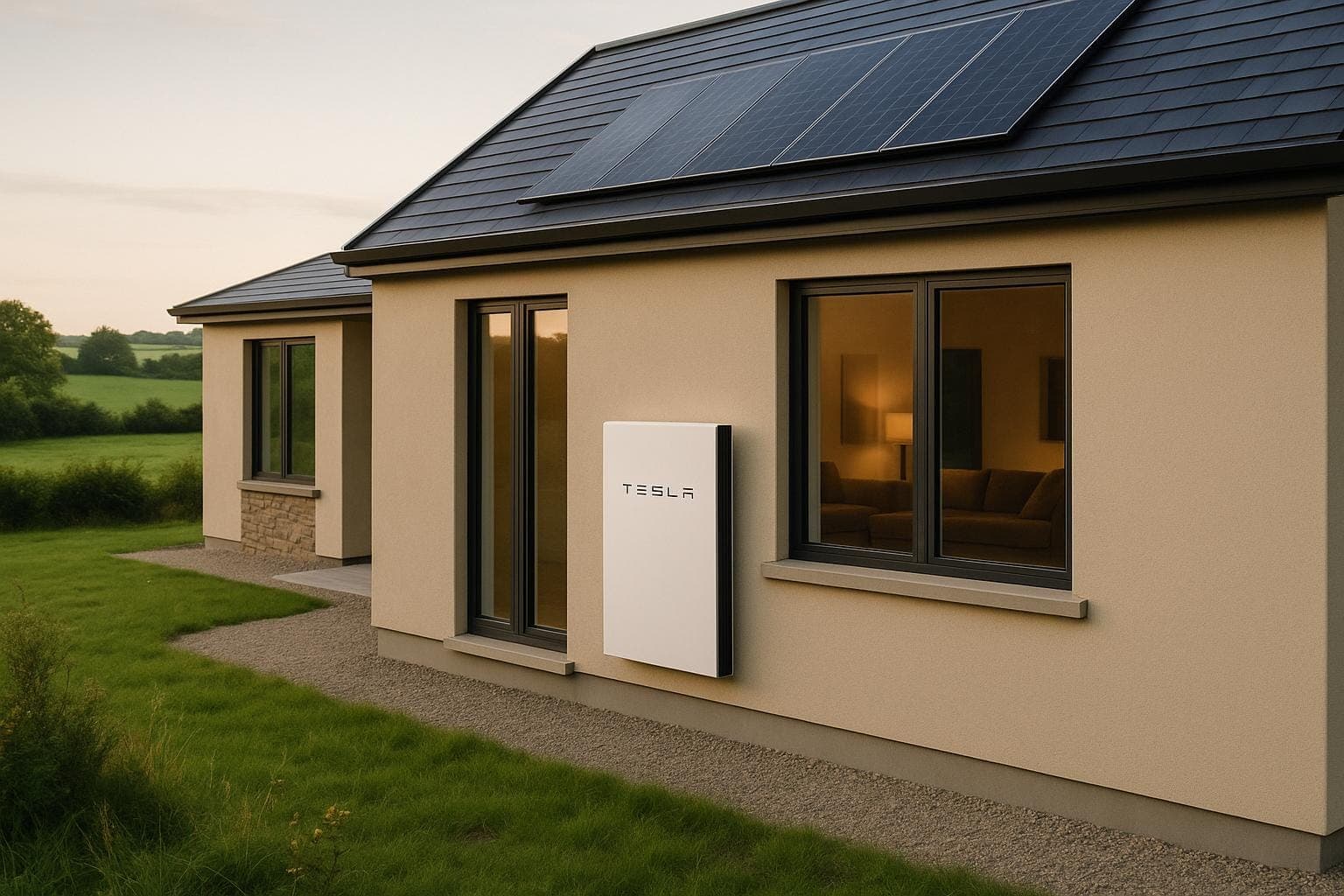
Tesla Powerwall Costs in Ireland 2026: Price, Specs, Alternatives & Is It Worth It?
Tesla Powerwall 3 costs €12,000–€15,000 installed in Ireland (2026). 13.5 kWh, built-in inverter, backup power. Plus cheaper Huawei & GivEnergy alternatives.
How Much Do Solar Panels Cost in Ireland? 2026 Prices, SEAI Grant & Real Payback
Solar panel cost Ireland 2026 — updated July: 4 kWp €8,900–€9,600 pre-grant (€7,100–€7,800 net), 6 kWp €9,900–€11,200 net, 10 kWp €16,000–€18,600 net. Full 2/4/5/6/8/10 kWp table with battery pricing & annual savings.
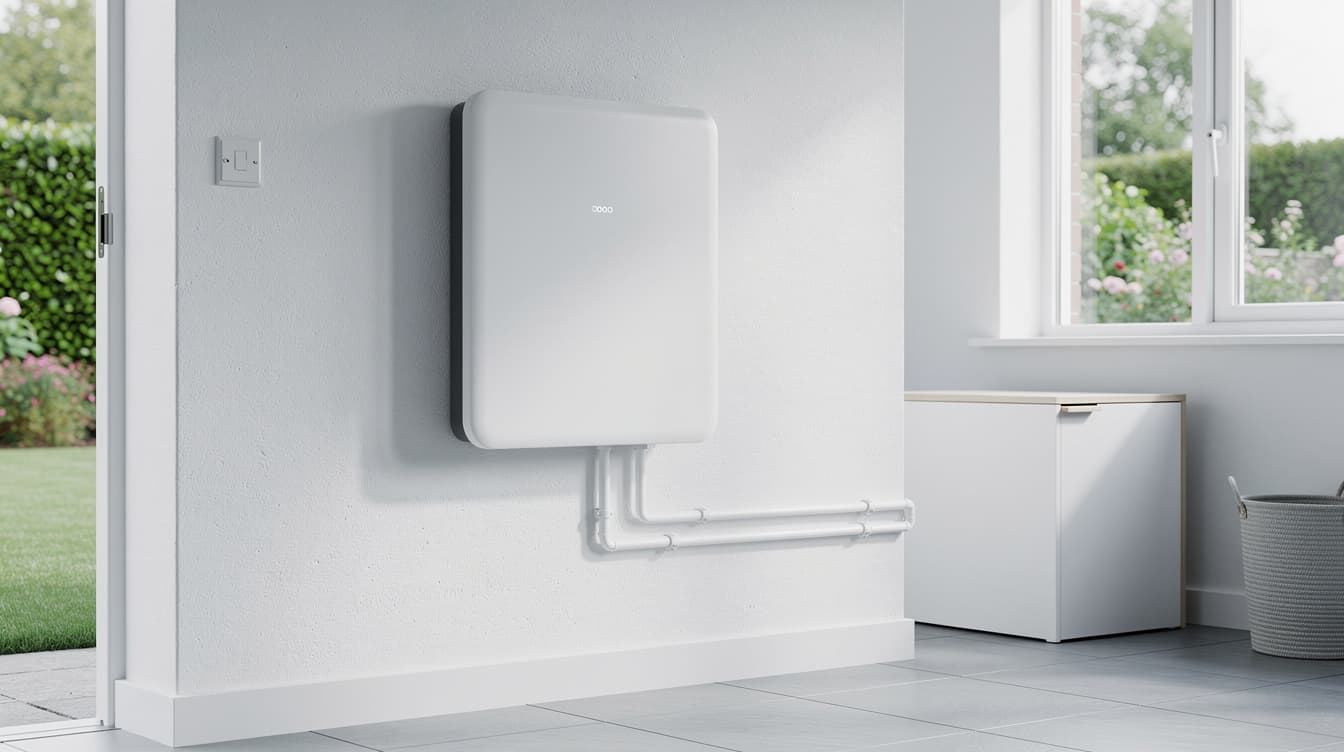
Solar Battery Brands Ireland 2026: Tesla Powerwall 3 vs BYD vs Pylontech vs Sigenergy vs Sunsynk Compared
Compare Tesla Powerwall 3, BYD, Pylontech Force H2, Sigenergy and Sunsynk for Irish homes in 2026: installed prices, warranties, cycle counts, backup and V2G.