
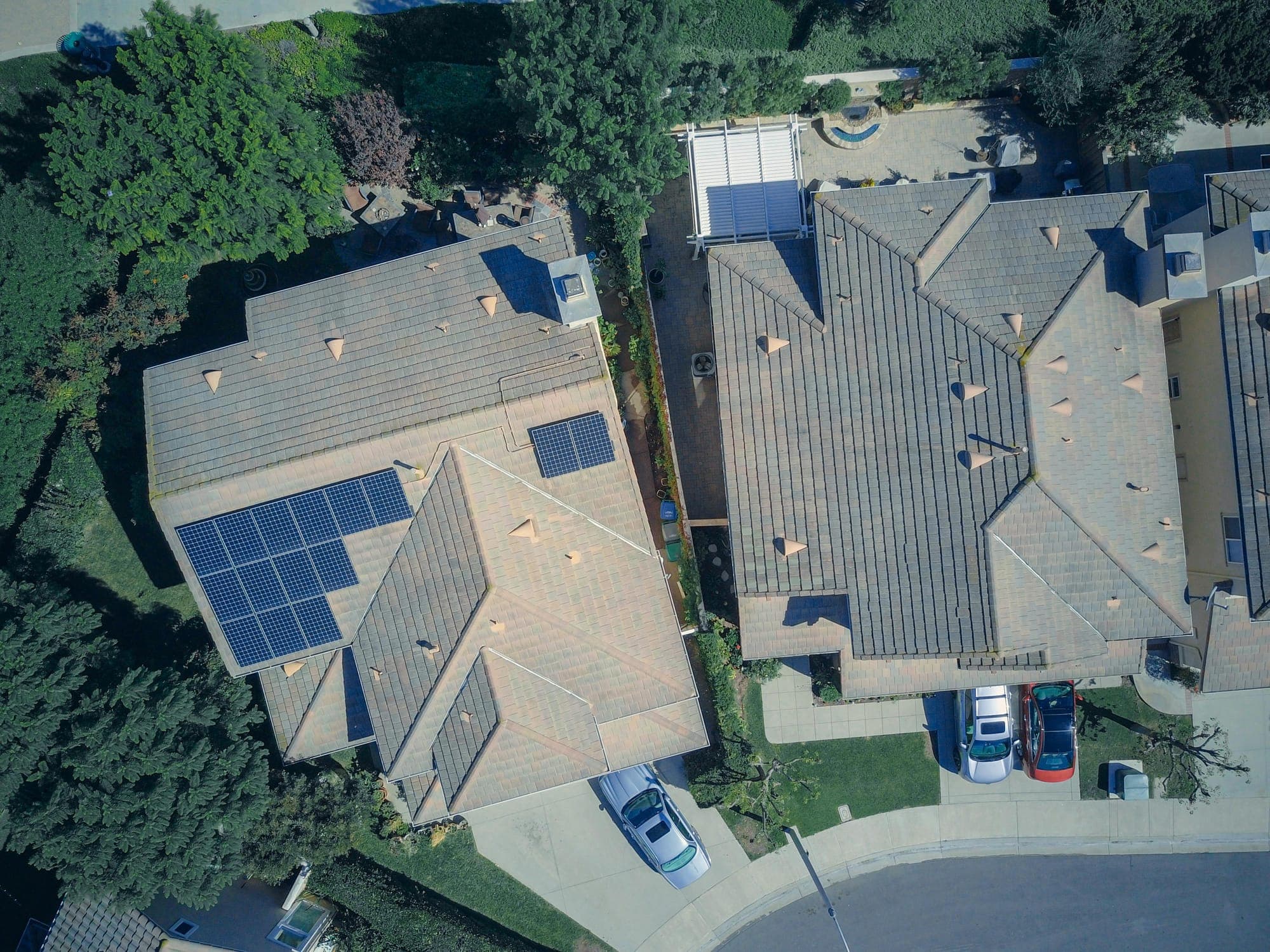
Free Solar Panels for Pensioners in Ireland 2026: Grants, Schemes & How to Apply
3 August 2026 refresh: as of Q3 2026, the SEAI Solar PV grant is unchanged at €1,800 max for domestic installs (tiered: €700 up to 2 kWp, plus €300 per additional kWp, capped at €1,800 at 4+ kWp). The Warmer Homes Scheme (fully-funded upgrade for eligible pensioners on Fuel Allowance, Working Family Payment, or the Job Seeker's Allowance) added solar PV as an eligible measure in April 2025 and remains free-of-charge for qualifying applicants — the current wait list from application to install is 12–18 months (SEAI intake data, July 2026). Median 4.4 kWp install price nationally is now €9,050 net after grant (down €150 since June as Jinko/AIKO wholesale prices softened), and the SEAI-registered domestic PV contractor count stands at 1,247 (up from 1,200 in July). Residential unit rate for Q3 2026: 42.8c/kWh.
With electricity prices in Ireland continuing to climb, solar panels are one of the smartest investments a pensioner can make. A typical 4 kWp system saves Irish homeowners between €800 and €1,200 per year on electricity bills — and with the current SEAI grant, 0% VAT, and the option to sell excess electricity back to the grid, the upfront cost has never been lower.
But can pensioners in Ireland actually get free solar panels? The short answer: not entirely free in most cases, but there are several schemes that can reduce the cost to almost nothing for qualifying households. This guide covers every option available to pensioners in 2026.
July 2026 update
Two changes worth knowing this month: (1) The Warmer Homes Scheme waiting list has come down to roughly 12–18 months for high-priority cases (down from 24+ months in 2025), so pensioners on Fuel Allowance who applied last year are now being surveyed. (2) The SEAI Home Energy Upgrade Loan Scheme has added seven credit unions as participating lenders at rates from 2.99% APR – the cheapest legal financing route for a pensioner who wants to co-fund solar alongside insulation. See our solar financing guide for the full breakdown.
The SEAI Solar PV grant remains €1,800 maximum, and 0% VAT on residential supply-and-install is confirmed to 31 December 2026.
⚡ Key Takeaways for Pensioners in 2026
- SEAI Solar PV Grant: Up to €1,800 off your installation (confirmed for 2026, unchanged from 2025)
- 0% VAT: No VAT on solar panel supply and installation for private homes since May 2023
- Warmer Homes Scheme: Fully funded free energy upgrades (including insulation and heating) for pensioners receiving Fuel Allowance — solar PV may be included
- Sell Excess Electricity: Earn 15–25c per kWh selling surplus power back to the grid, with first €400/year tax-free
- No Planning Permission: Most homes no longer need planning permission for rooftop solar panels
- Typical Cost After Grant: €3,500–€7,000 for a standard 4–6 kWp system (down from €5,500–€10,500 before grant)
Can Pensioners in Ireland Actually Get Free Solar Panels?
Let's be upfront: there is no single scheme in Ireland that gives pensioners completely free solar PV panels just for being a pensioner. However, there are multiple schemes that, when combined, can reduce the cost dramatically — and in some cases, to zero.
Here are the three main routes available to pensioners in 2026:
Route 1: The SEAI Solar PV Grant (€1,800 Off)
The Sustainable Energy Authority of Ireland (SEAI) offers every eligible homeowner — including pensioners — a grant of up to €1,800 towards the cost of installing solar PV panels. This is the primary scheme that makes solar affordable for most Irish households.
How much do you get?
The grant amount depends on your system size, measured in kilowatt-peak (kWp):
| System Size | Grant Amount | Typical Panels |
|---|---|---|
| 1 kWp | €700 | 2–3 panels |
| 2 kWp | €1,400 | 5–6 panels |
| 3 kWp | €1,600 | 7–8 panels |
| 4 kWp or larger | €1,800 (maximum) | 10+ panels |
Eligibility for the SEAI Solar PV Grant:
- You must be the homeowner (owner-occupier or landlord)
- Your home must have been built and occupied before 31 December 2020
- The property must have an MPRN (Meter Point Reference Number)
- You must not have previously received a solar PV grant for this property
- The installer must be on the SEAI Registered Solar PV Company list
- There is no age restriction or means test — all homeowners qualify
💡 Important for Pensioners
The SEAI grant has NO means test and NO age restriction. Whether you're 66 or 96, if you own your home and it was built before 2021, you qualify. You don't need to be on any social welfare payment to get this grant.
Route 2: The Warmer Homes Scheme (Fully Funded Upgrades)
The SEAI Warmer Homes Scheme is the closest thing Ireland has to "free solar panels for pensioners." This scheme provides fully funded energy upgrades at no cost to eligible homeowners. The upgrades typically include attic insulation, cavity wall insulation, draught-proofing, heating controls, and in some cases, heating system replacements.
While the Warmer Homes Scheme does not currently list solar PV panels as a standard measure, it does cover renewable heating systems (such as heat pumps) and the scope of works is determined by an SEAI surveyor based on your home's needs. SEAI has been expanding the scheme's coverage, so it's always worth applying and asking.
Eligibility for the Warmer Homes Scheme:
You must meet ALL four of these criteria:
- The home must be your main residence and you must be the homeowner
- The home was built and occupied before 2006
- The home has a BER rating of C, D, E, F, or G (SEAI will do a free BER assessment if you don't have one)
- You receive one of the following welfare payments: Fuel Allowance, Carer's Allowance (living with the person you care for), Disability Allowance, Working Family Payment, One-Parent Family Payment, or Jobseeker's Allowance (over 6 months with a child under 7)
⚠️ Warmer Homes Scheme: Be Aware of Wait Times
The Warmer Homes Scheme is very popular and there is currently a waiting time of approximately 24–26 months from application to completion. Applications are dealt with on a first-come, first-served basis, so if you think you qualify, apply as early as possible.
Homes built before 1993 with a BER of E, F, or G are prioritised.
Route 3: Solar PV Scheme for Medically Vulnerable Households
If someone in your household relies on life support equipment such as dialysis machines, ventilators, or similar medical devices, you may be entitled to free solar PV panel installation through a special SEAI scheme. This scheme is completely free of charge and is funded by the Government of Ireland through SEAI in partnership with electricity suppliers.
To qualify, you must be registered with your electricity supplier under the life support category of the Priority Services Register. Contact your supplier (e.g., SSE Airtricity, Electric Ireland, Energia) to discuss eligibility.
0% VAT on Solar Panels: Extra Savings for Pensioners
Since 1 May 2023, Ireland has applied a 0% rate of VAT on the supply and installation of solar panels for private homes. This means you pay no VAT at all on your solar panel system — a saving of 13.5% compared to the standard rate that applied previously.
Combined with the €1,800 SEAI grant, the 0% VAT makes solar panels significantly more affordable. For example, a system that costs €6,000 before grant would cost you just €4,200 out of pocket (€6,000 minus €1,800 grant, with no VAT added).
Earn Money by Selling Excess Electricity Back to the Grid
Under Ireland's Microgeneration Support Scheme, you can sell any surplus electricity your solar panels generate back to the national grid. Your electricity supplier pays you for every kWh you export.
Current export rates from Irish suppliers (as of early 2026):
| Supplier | Export Rate (per kWh) |
|---|---|
| Pinergy | 25.0c |
| Electric Ireland | 19.5c |
| Energia | 18.5c |
| Bord Gáis Energy | 18.5c |
| SSE Airtricity | 18.0c* |
*Rates as of February 2026. Check with your supplier for the latest rates.
A typical 4 kWp system exports around 1,500–2,000 kWh per year. At an average rate of 19c/kWh, that's roughly €285–€380 per year in export income. The first €400 per year of this income is tax-free (exemption in place until end of 2028).
You'll need a smart meter to participate. If you don't have one yet, contact ESB Networks — they are rolling out smart meters nationwide and will prioritise households with solar panels.
What Solar Panels Actually Cost a Pensioner in 2026
Let's look at a realistic example for a typical 4 kWp system (10 panels):
| Item | Amount |
|---|---|
| System cost (4 kWp, installed) | €5,500–€7,000 |
| VAT (0% rate) | €0 |
| SEAI Grant | -€1,800 |
| Your out-of-pocket cost | €3,700–€5,200 |
| Annual electricity savings | €800–€1,200 |
| Annual export income | €285–€380 |
| Total annual benefit | €1,085–€1,580 |
| Estimated payback period | 3–5 years |
After the payback period, all the savings and income are pure profit. Given that solar panels last 25–30 years with minimal maintenance, a pensioner investing today could save €20,000–€35,000 over the lifetime of the system.
How to Apply: Step-by-Step Guide for Pensioners
Step 1: Check Your Eligibility
Confirm your home was built and occupied before 31 December 2020. Check if you have an MPRN (it's on your electricity bill — an 11-digit number). If you receive Fuel Allowance or another qualifying payment, also consider applying for the Warmer Homes Scheme.
Step 2: Get Quotes from SEAI-Registered Installers
Contact at least 2–3 SEAI-registered solar PV installers and get detailed written quotes. Ask about system size, expected output, battery storage options, and what's included in the price. Make sure the installer is on the SEAI Registered Solar PV Company list.
Step 3: Apply for the SEAI Grant
Apply online through the SEAI website (seai.ie) or by phone on (01) 808 2004. You'll need your MPRN, construction year, chosen installer, and system size. You MUST get grant approval BEFORE installation begins. Many installers will help you with the application process.
Step 4: Installation
Once approved, schedule the installation with your chosen company. A typical residential installation takes 1–2 days. You'll have 8 months from grant approval to complete the work.
Step 5: Post-Installation Paperwork
After installation, your installer submits a Declaration of Works to SEAI. You'll also need a post-installation BER assessment (your installer can usually arrange this). SEAI will review the documents and process your grant payment by electronic transfer within approximately 4–6 weeks.
Step 6: Register for Microgeneration (Optional)
To sell excess electricity, your installer will submit an NC6 form to ESB Networks on your behalf. Once processed, your electricity supplier will start crediting you for exported power on your bill.
New for 2026: Additional Grant Supports
The Government announced several new and enhanced grants from early 2026 that may benefit pensioners:
- Higher grants for welfare recipients: From 2 March 2026, homeowners on qualifying welfare payments can get higher grants for attic and cavity wall insulation. These grants often cover most or all of the cost.
- Windows and doors grant: A new grant for energy-efficient windows and doors is available from 2 March 2026.
- Home Energy Upgrade Loan: Government-backed loans of up to €75,000 from as little as 3% interest for energy upgrades not fully covered by grants.
- Solar PV grant stays at €1,800: The government confirmed the solar PV grant will NOT be reduced in 2026, despite earlier plans to cut it by €300 per year.
Why Solar Panels Are Particularly Smart for Pensioners
You're home during the day: Pensioners typically use more electricity during daylight hours when solar panels produce the most power. This means higher "self-consumption" rates, which saves more money than exporting to the grid.
Fixed income protection: Electricity prices have risen dramatically in Ireland in recent years. Solar panels lock in your energy costs for 25+ years, protecting you from future price increases.
Low maintenance: Solar panels require virtually no maintenance. An occasional rinse with a garden hose is enough. There are no moving parts and most systems come with 25-year warranties.
Increases property value: Homes with solar panels typically have higher BER ratings and sell for more. Even if you're not planning to sell, it's a good investment for your family.
No planning permission needed: Since 2022, the old 12m² or 50% roof cap no longer applies. You can now install solar panels on your full roof without planning permission in most cases.
Frequently Asked Questions
Can pensioners get completely free solar panels in Ireland?
Not through a single scheme, but the combination of the SEAI grant (€1,800), 0% VAT, and annual export income can reduce the effective cost significantly. Pensioners on Fuel Allowance may qualify for the Warmer Homes Scheme which provides fully funded energy upgrades. Households with medically vulnerable members on the Priority Services Register may qualify for completely free solar PV installation.
Is there a means test for the SEAI solar panel grant?
No. The SEAI Solar PV Grant has no means test and no age restriction. Any homeowner with a property built before 2021 can apply, regardless of income or pension status.
How much does a solar panel system cost after the grant?
A typical 4 kWp system costs €5,500–€7,000 installed. After the €1,800 SEAI grant (and with 0% VAT), you'll pay approximately €3,700–€5,200 out of pocket. Annual savings of €1,000+ mean most systems pay for themselves in 3–5 years.
What grants are available for pensioners over 70?
The SEAI Solar PV Grant is available to all homeowners regardless of age. If you're over 66 and receiving the Fuel Allowance (which most pensioners over 70 qualify for), you may also be eligible for the fully funded Warmer Homes Scheme. Check both options to maximise your savings.
Can I get solar panels if I rent my home?
Tenants cannot apply for the SEAI Solar PV Grant directly — only homeowners can. However, your landlord can apply for the grant and install solar panels on the rental property. Landlords can also claim a tax deduction of up to €10,000 for retrofit works on rental properties.
How long do solar panels last?
Modern solar panels last 25–30 years and come with performance warranties guaranteeing at least 80–85% output after 25 years. Inverters typically need replacing once after 10–15 years (costing around €1,000–€1,500).
Will solar panels work on my roof?
South-facing roofs are ideal, but east/west facing roofs also work well (producing around 80–85% of a south-facing system). Your roof needs to be in good structural condition. A qualified installer will assess your roof during the quotation process.
Do I need planning permission for solar panels?
In most cases, no. Since 2022, the old restrictions have been removed and you can install solar panels on your full roof without planning permission. There are rare exceptions for homes in solar safeguarding zones — your installer will advise you.
📞 Ready to Get Started? Get 3 Free Solar Quotes Today
Compare quotes from SEAI-approved installers in your area. It's 100% free, with no obligation.
Our trusted installers will help you with the full SEAI grant application process.
Related Guides
Related Articles
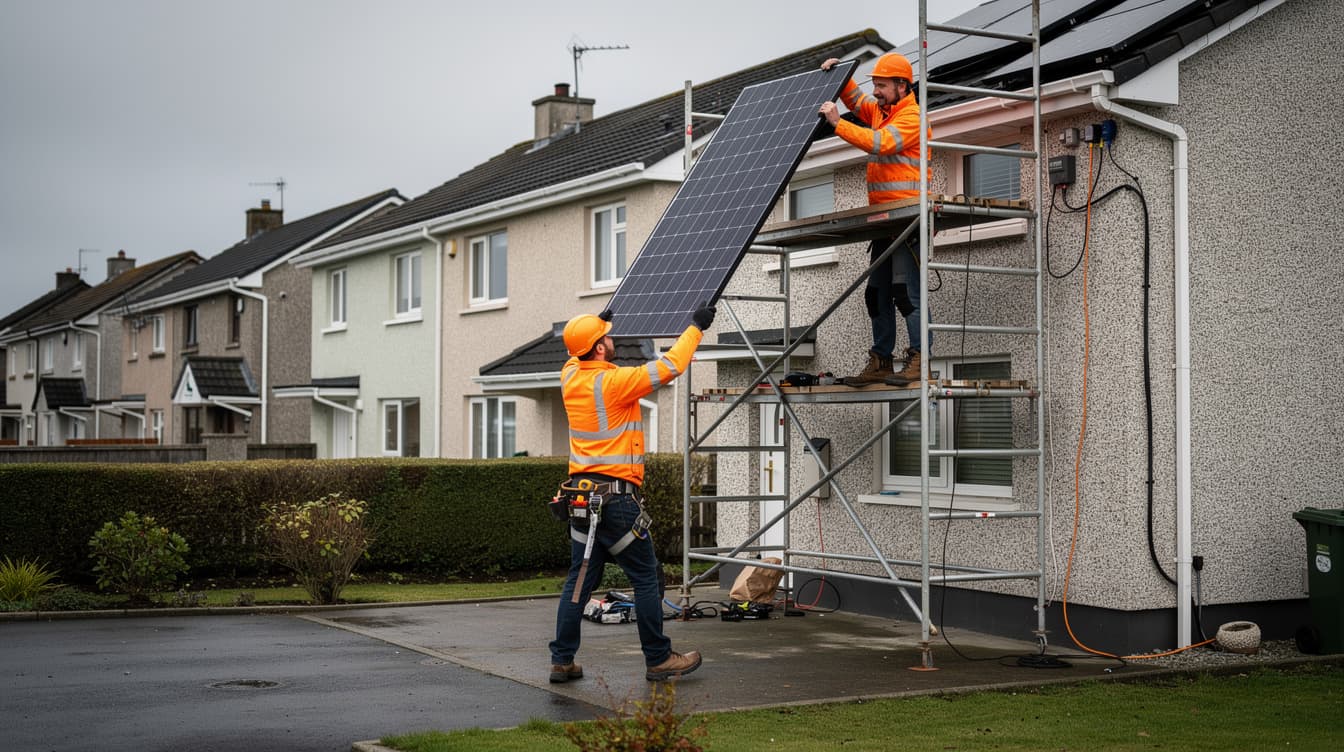
How Long Does Solar Panel Installation Take in Ireland? The Full Timeline (2026)
Solar panel installation takes 1-2 days but the full process is 6-12 weeks. Here is every stage from quotes to grant payment and how to avoid delays.
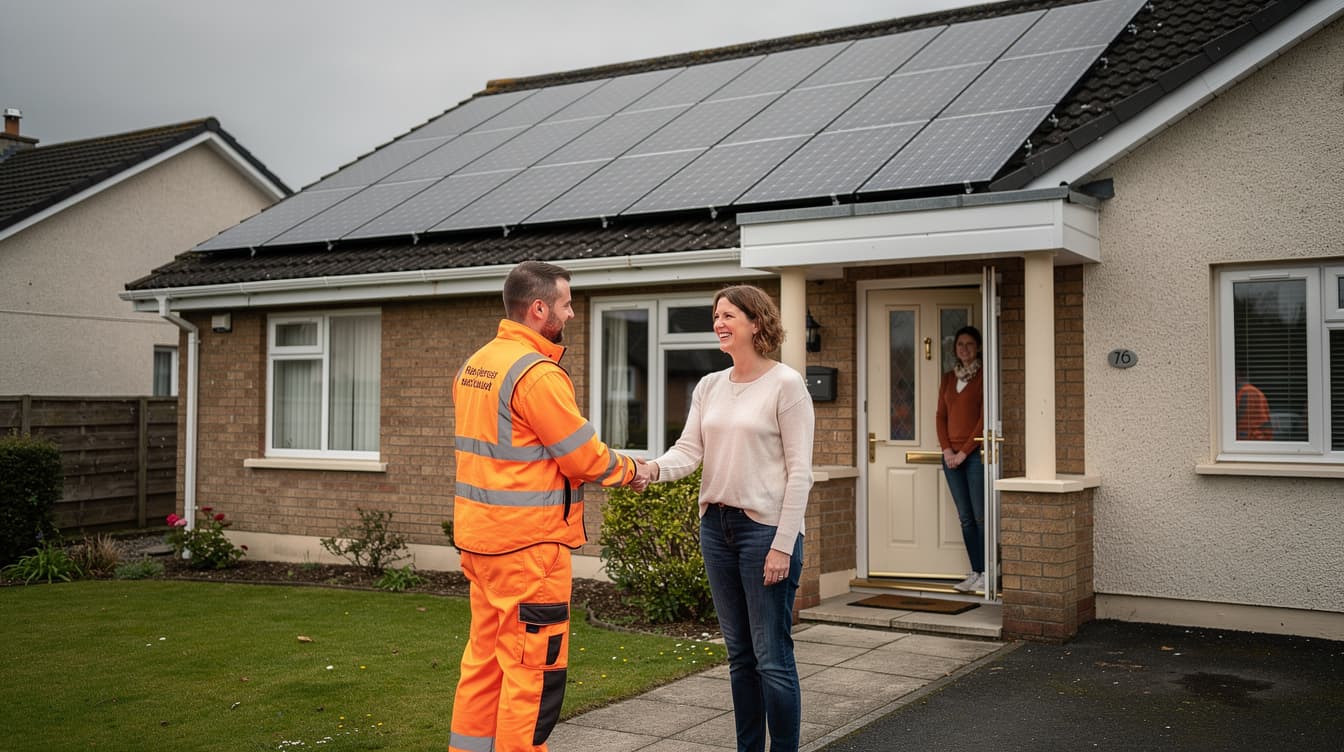
How to Choose a Solar Installer in Ireland: The Complete 2026 Guide
SEAI registration, what to compare in quotes, red flags, 10 questions to ask, and 2026 pricing benchmarks for choosing the right solar installer in Ireland.
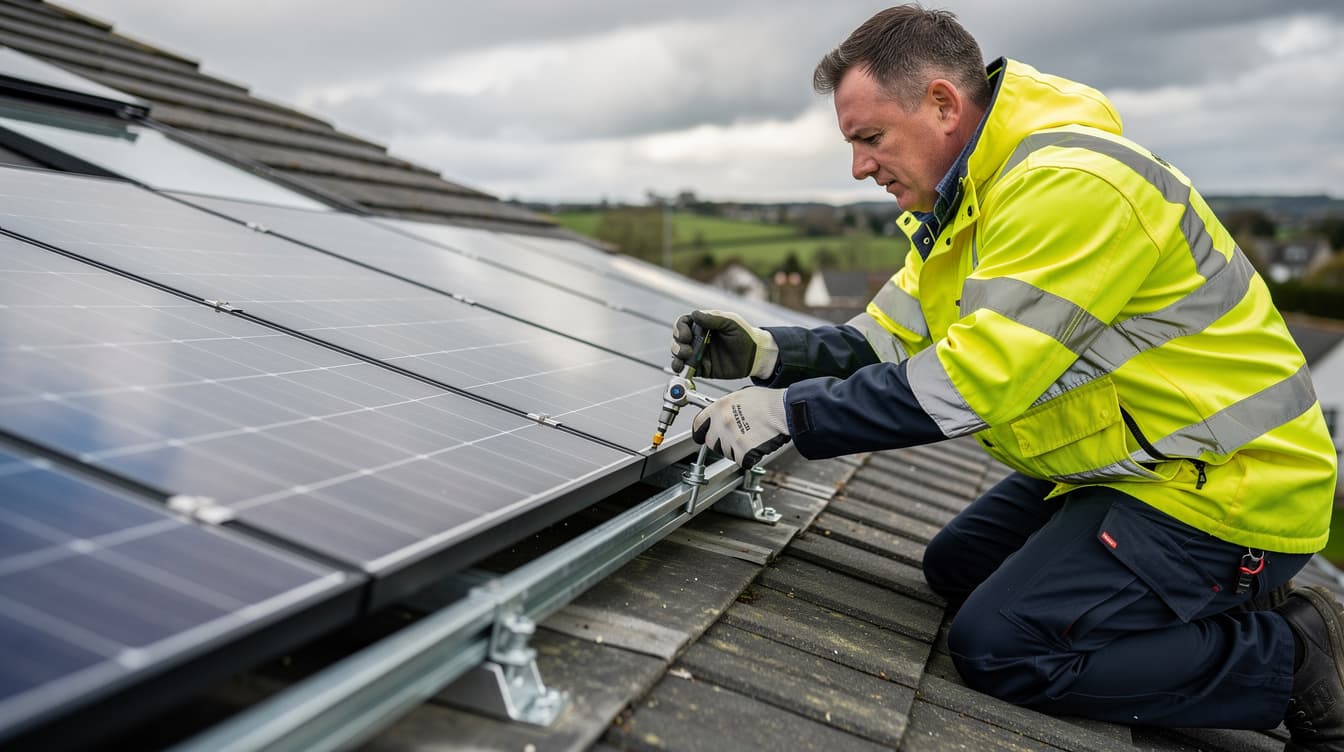
Solar Panel Warranty Ireland 2026: Product, Performance & Workmanship Explained
The three warranties on every Irish solar system explained, honest 2026 brand-by-brand terms, and what actually voids a claim — before you sign the quote.