Ireland's #1 Solar Installation Service — Connecting You With Top SEAI-Approved Installers
Solar Roof Tiles Ireland: A Sustainable Solution for Irish Homes

Solar Roof Tiles Ireland: A Sustainable Solution for Irish Homes

Published: Last Updated:

Solar roof tiles replace your conventional roof tiles with photovoltaic cells that generate electricity while protecting your home from the elements — all without the visible racking and panels of a traditional solar installation. They look stunning, but in Ireland in 2026, they cost 2-3 times more than standard solar panels and generate 10-20% less electricity. Here is everything you need to know.

If you have been researching rooftop solar tiles, solar electric roof options, or slate solar panels for your Irish home, you have probably noticed that the information available is often vague, overly optimistic, or simply copied from US and UK sources that do not reflect the Irish market. This guide cuts through the noise with honest pricing, real availability data, and a clear-eyed comparison to help you decide whether solar roof tiles — or traditional panels — are the right choice for your home in 2026.

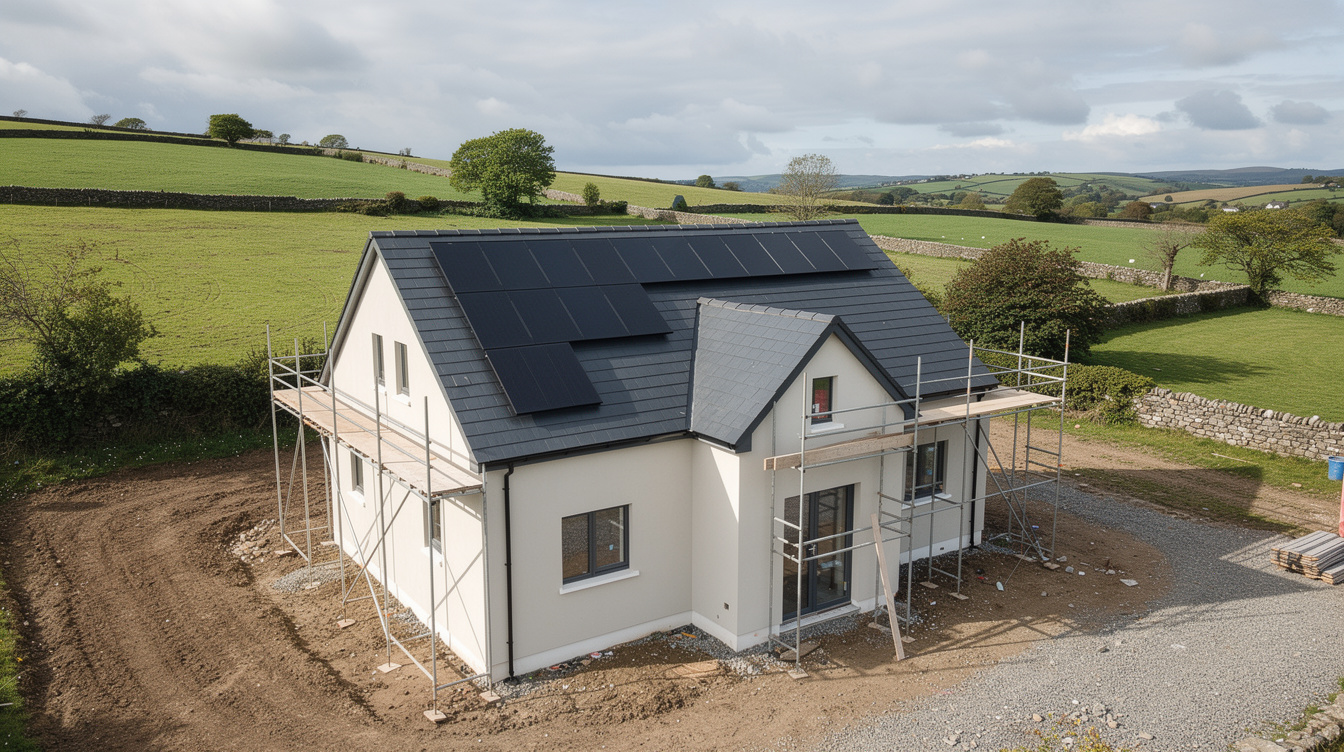
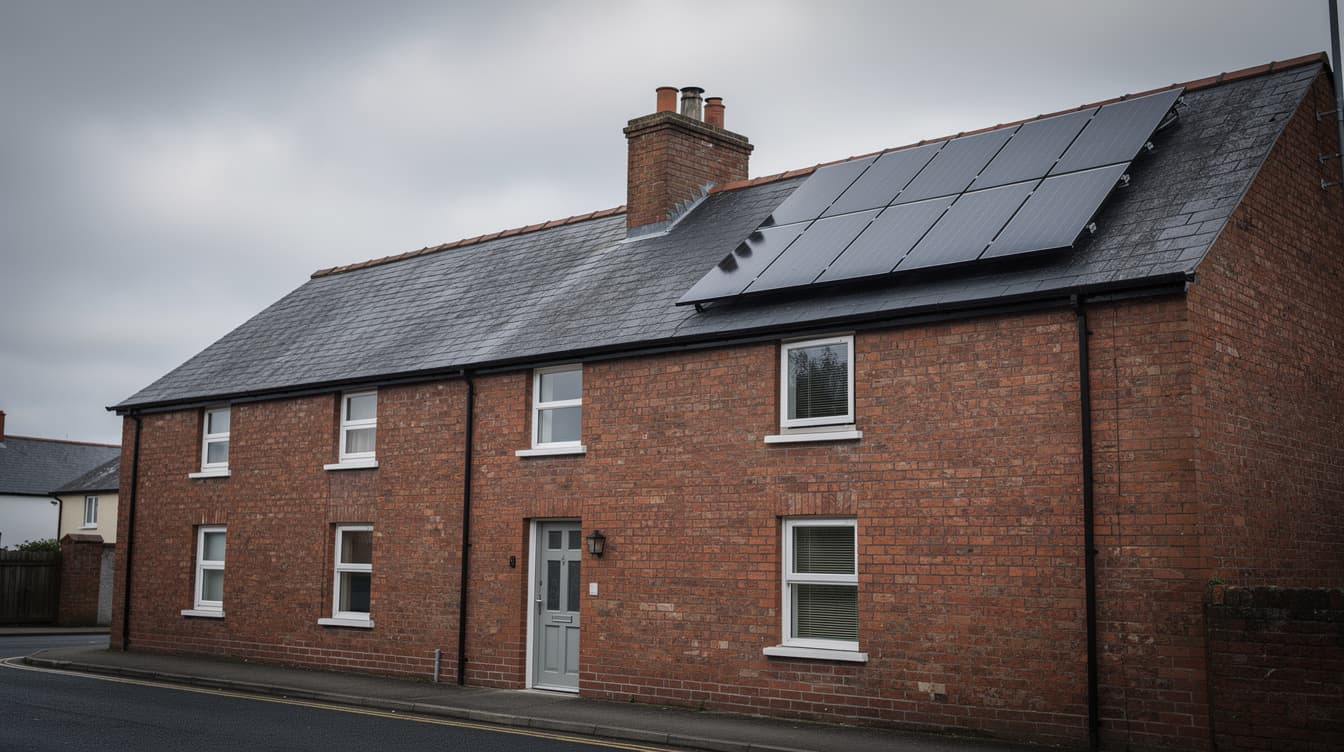
Modern home with integrated solar roof tiles
Solar roof tiles integrate seamlessly into the roofline — virtually indistinguishable from conventional tiles

What Are Solar Roof Tiles?

Solar roof tiles — also called solar shingles, photovoltaic tiles, or building-integrated photovoltaics (BIPV) — are roofing materials that have solar cells embedded directly into them. Unlike traditional solar panels that are mounted on brackets above your existing roof, solar tiles replace the roof covering itself. Each tile is a miniature solar panel that locks into place alongside conventional tiles, creating a roof surface that generates electricity while functioning as a fully weatherproof barrier.

The key distinction is integration. A traditional solar panel system sits on top of your roof, attached with rails and clamps. You can see the panels clearly — they protrude above the roofline and are obviously additions to the building. Solar roof tiles, by contrast, sit flush with the rest of the roof. From the street, it can be nearly impossible to tell which tiles are generating electricity and which are standard tiles.

There are several types of solar roof tiles available in 2026:

  • Monocrystalline silicon tiles — The most efficient type, using the same cell technology as standard solar panels but cut to fit a tile form factor. These typically achieve 15-20% efficiency.
  • Thin-film solar tiles — Use a thin layer of photovoltaic material deposited on a tile substrate. Less efficient (10-14%) but can be made in more varied shapes and colours.
  • Solar slate tiles — Designed to mimic the look of natural slate, these are particularly relevant in Ireland where slate roofs are common on period and rural properties.
  • Tempered glass solar tiles — Such as the Tesla Solar Roof tiles, which use tempered glass with embedded solar cells. Extremely durable but currently not available in Ireland.

Each tile connects to its neighbours and feeds into a central inverter, just like a traditional panel system. The electricity generated can power your home, charge a battery, or be exported to the grid under Ireland's Clean Export Guarantee (CEG) scheme. You still qualify for the SEAI solar grant with eligible BIPV products — the grant is based on the system's electrical output, not the type of panel used.

Solar Roof Tiles vs Traditional Solar Panels

This is the comparison that matters most. Solar tiles and traditional panels both generate electricity from sunlight, but they differ significantly in cost, efficiency, installation complexity, and practicality. Here is an honest, side-by-side comparison based on the Irish market in 2026:

Factor Solar Roof Tiles Traditional Solar Panels
Cost per kW installed €4,000 – €6,500 per kW €1,500 – €2,200 per kW
Total cost (typical 4kW system) €20,000 – €40,000 (full roof) €6,000 – €10,000
Efficiency 15 – 20% 20 – 23%
Annual output (4kW, south-facing) ~3,200 – 3,600 kWh ~3,600 – 4,200 kWh
Aesthetics Excellent — flush, integrated, near-invisible Visible panels on racking, noticeable from street
Installation time 1 – 3 weeks (includes re-roofing) 1 – 2 days
Lifespan 25 – 30 years (tiles) / 25 years (electrical) 25 – 30 years
Maintenance Low — but tile replacement is specialised Very low — standard cleaning, easy panel swap
Weight Comparable to standard roof tiles Adds 12-15 kg/m² to existing roof
Availability in Ireland Very limited — few installers, long lead times Widely available — hundreds of certified installers
SEAI grant eligible Yes (if system meets criteria) Yes
Payback period 15 – 25+ years 5 – 8 years
Best for New builds, full re-roofs, conservation areas Existing roofs, budget-conscious, maximum ROI

The numbers tell a clear story. Traditional solar panels deliver more electricity per euro spent, install faster, and are readily available across Ireland. Solar roof tiles win on aesthetics alone — and that is a genuine advantage in certain situations, which we will cover below — but for the vast majority of Irish homeowners, panels remain the better investment by a significant margin.

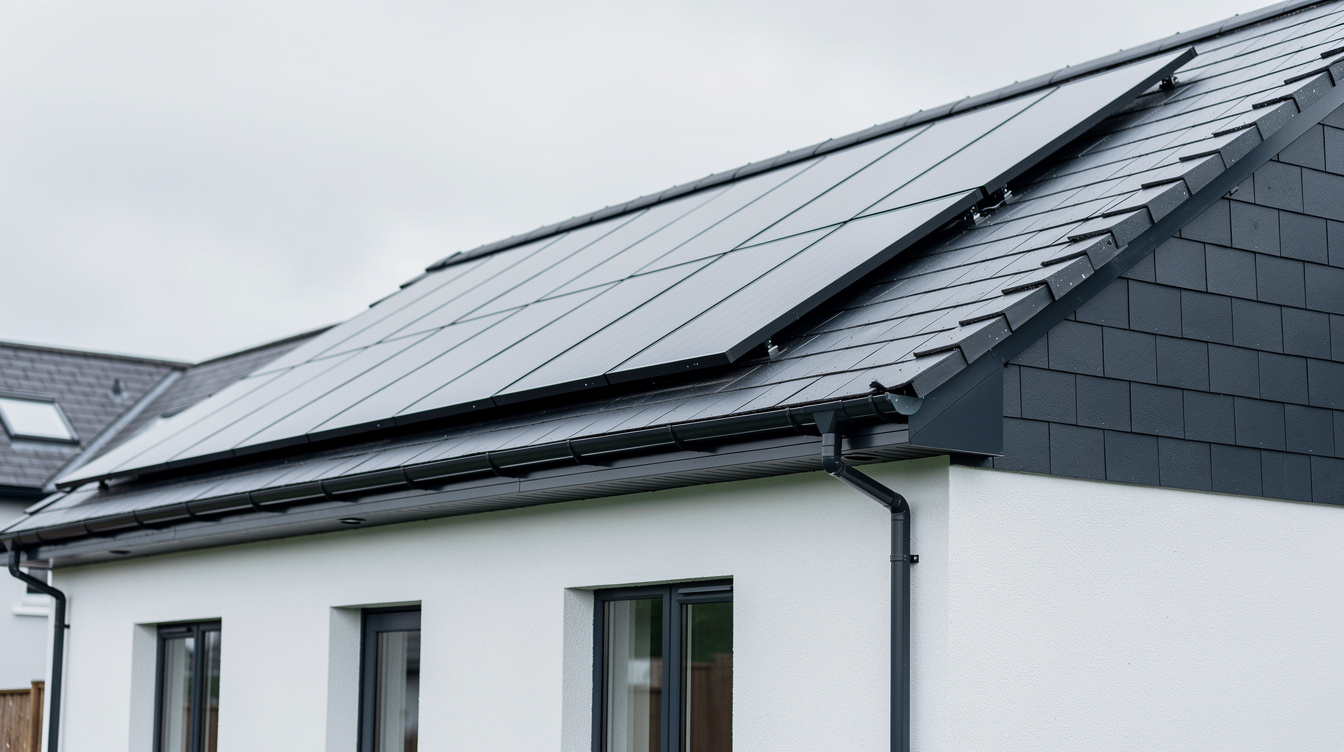
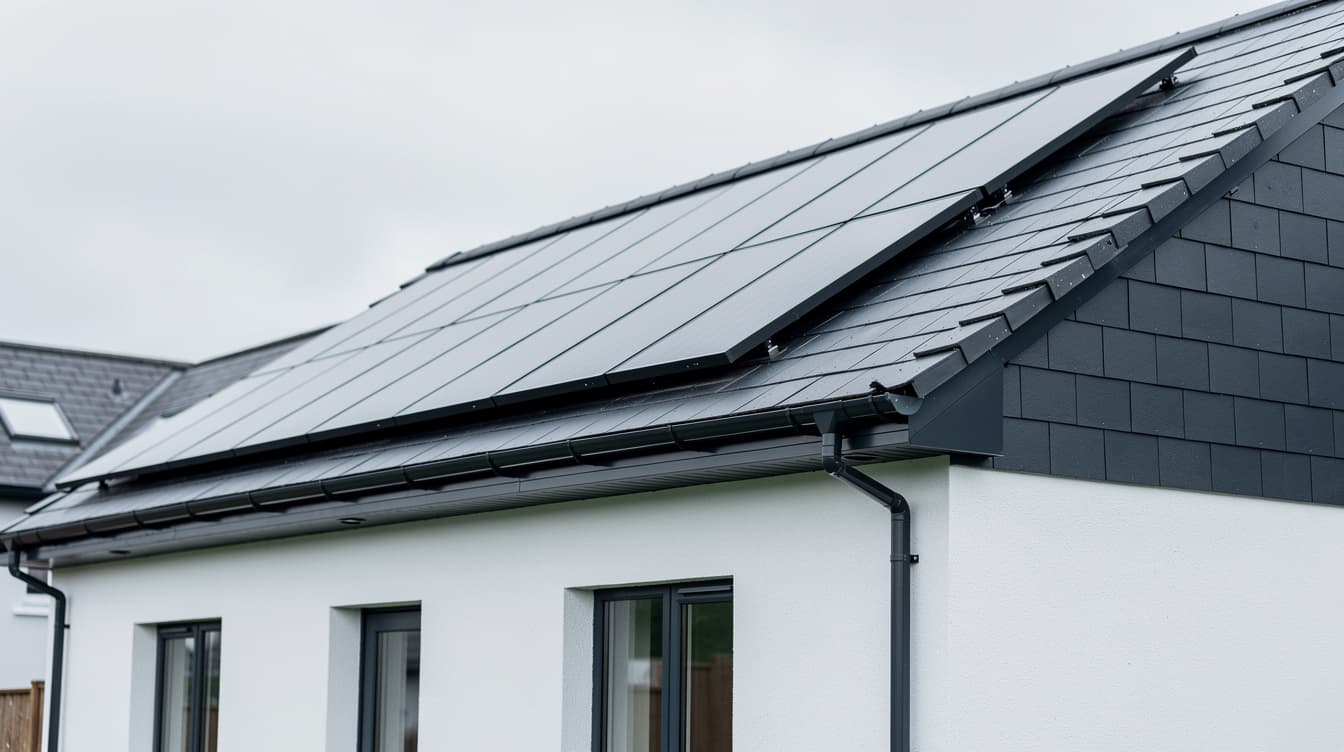
Traditional solar panels mounted on a roof
Traditional solar panels remain the most cost-effective option for the vast majority of Irish homes

One important nuance: the cost comparison changes if you already need a new roof. If your existing roof tiles are at the end of their life and you are facing a €10,000-€15,000 re-roofing job anyway, the incremental cost of solar tiles over standard tiles narrows considerably. In that scenario, you are comparing the premium of solar tiles over conventional tiles, not the full installed cost versus a panel-only system.

How Much Do Solar Roof Tiles Cost in Ireland?

Let us be direct about pricing, because this is where many articles on solar roof tiles get vague or misleading. Solar roof tiles are significantly more expensive than traditional panels in Ireland in 2026. Here is a realistic pricing breakdown:

System Size / Scenario Solar Roof Tiles (Estimated) Traditional Solar Panels Difference
Small system (2-3 kW) €12,000 – €22,000 €4,000 – €6,500 €8,000 – €15,500 more
Standard system (4 kW) €20,000 – €35,000 €6,000 – €10,000 €14,000 – €25,000 more
Large system (6 kW+) €30,000 – €50,000+ €9,000 – €14,000 €21,000 – €36,000 more
Full roof replacement with solar tiles €25,000 – €45,000 N/A (different scenario)

Why are solar tiles so much more expensive?

  • Manufacturing complexity — Each tile must function as both a roofing element and a solar cell, requiring more complex engineering than a standard panel.
  • Installation labour — Installing solar tiles requires both roofing skills and electrical expertise. The installation takes days or weeks, not hours. Many installers in Ireland do not yet offer this service.
  • Lower production volumes — Solar tiles are a niche product compared to standard panels, so they do not benefit from the same economies of scale.
  • Wiring complexity — Each tile must be individually wired and connected, creating a more complex electrical installation than standard panels which come in larger, pre-wired units.
  • Import costs — Most solar tile products available in Ireland are manufactured in the UK or continental Europe, adding shipping and supply chain costs.

What about the SEAI grant? The SEAI solar PV grant of up to €2,100 applies to solar roof tiles just as it does to traditional panels, provided the system is installed by a registered installer and meets the scheme's technical requirements. However, €2,100 off a €30,000 installation is a 7% discount — compared to a 21-35% effective discount on a €6,000-€10,000 panel installation. The grant makes panels an even better deal relative to tiles.

The payback period tells the real story. A standard 4 kW solar panel system in Ireland typically pays for itself in 5-8 years through electricity savings and export payments. A solar tile system of equivalent output may take 15-25 years — potentially longer than the warranty on the electrical components. If your primary motivation is financial return, traditional panels are the clear winner.

Want to know exactly what solar would cost for your specific home? Get a free, no-obligation quote tailored to your roof, energy usage, and budget.

Are Solar Roof Tiles Available in Ireland?

This is one of the most important questions — and the honest answer is that availability is very limited in Ireland in 2026. The solar tile market here is years behind the UK and other European countries, and finding an experienced installer can be challenging.

Here is the current state of solar tile availability in Ireland:

What Is NOT Available in Ireland

Tesla Solar Roof — Despite being the most well-known solar tile product globally, the Tesla Solar Roof is not available in Ireland in 2026. Tesla has not expanded its Solar Roof installations beyond the United States, and there is no confirmed timeline for European availability. If you have seen articles mentioning Tesla Solar Roof for Irish homes, they are speculative. Do not plan your project around this product.

What IS Available (With Caveats)

Marley SolarTile — Manufactured by Marley, one of the UK's largest roofing product companies. The SolarTile is a building-integrated PV product designed to sit flush within a standard interlocking tile roof. It is technically available through some Irish roofing contractors who import from the UK, but supply is inconsistent and lead times can be 8-16 weeks. Each tile produces around 16-17 watts, so you need a significant number to match the output of standard panels.

Viridian Solar (Clearline Fusion) — Viridian Solar's Clearline Fusion system is an in-roof solar panel system rather than individual tiles. The panels sit within the roof plane rather than on top of it, giving a cleaner look than standard mounted panels. This is currently the most practical "integrated" solar option available in Ireland, as it uses standard panel technology in a flush-mount configuration. Some SEAI-registered installers in Ireland can source and fit these.

Solarcentury (C21e and C21s tiles) — Solarcentury offers solar tile products designed to integrate with standard roof tile and slate profiles. Their products have been installed in some UK and European projects but availability in Ireland is limited. You would typically need to work with a specialist importer or a roofing contractor willing to source the product directly.

GB-Sol — A Welsh manufacturer producing solar slates that mimic natural slate. Relevant for Irish homes given our strong slate roofing tradition. Available by special order but with limited Irish installer experience.

Nulok Solar — An interlocking roofing system that incorporates solar panels into the roof structure. Available in Ireland through selected distributors, though not widely installed.

The Practical Reality

Even where products are technically available, the number of Irish installers with hands-on experience fitting solar roof tiles is extremely small. Most SEAI-registered solar installers specialise in standard panel installations. Finding a contractor who can competently handle both the roofing and electrical aspects of a solar tile installation — and who carries appropriate warranties and insurance — requires significant research.

This is not a reason to avoid solar tiles entirely, but it is a reason to be realistic about timelines, pricing, and the risk of a less experienced installation. If you are considering solar tiles, expect longer lead times (3-6 months from enquiry to installation), higher quotes, and potentially fewer warranty options compared to a standard panel installation.

If you want to explore what solar options — including integrated systems — are available for your home, submit your details here and we will connect you with installers who can advise on the best solution for your situation.

Do Solar Roof Tiles Work in Irish Weather?

Ireland's climate is not exactly famous for sunshine, so it is reasonable to wonder whether solar roof tiles can perform adequately here. The short answer is yes — but with some important caveats compared to traditional panels.

Output in Irish Conditions

Ireland receives between 1,100 and 1,600 hours of sunshine per year, depending on location. The south and southeast get the most sun, while the northwest gets the least. In these conditions, a well-installed 4 kW solar system (whether tiles or panels) will typically generate between 3,200 and 4,200 kWh of electricity per year.

However, solar roof tiles generally produce 10-20% less electricity than an equivalent-rated traditional panel system in Irish conditions. There are several reasons for this:

  • Lower cell efficiency — Most solar tile products use older or smaller cell technology compared to the latest standard panels. The best panels in 2026 achieve 22-23% efficiency; most solar tiles are in the 15-20% range.
  • Ventilation — Traditional panels mounted on racking have an air gap between the panel and the roof, which helps cool the cells. Cooler cells are more efficient. Solar tiles sit flush with the roof, reducing airflow and allowing more heat buildup, which marginally reduces output — even in Ireland's mild climate.
  • Tilt angle limitations — Standard panels can be mounted at optimal angles using adjustable racking. Solar tiles must follow the existing roof pitch, which may not be ideal. The optimal angle for solar in Ireland is roughly 30-35 degrees from horizontal, facing south.
  • Shading impact — When one tile in a string is shaded, it can disproportionately affect output from the entire string. Modern panel systems use optimisers or microinverters to mitigate this; solar tile systems may not always include this technology.

Weather Resilience

On the positive side, solar roof tiles perform well in several areas relevant to Irish weather:

  • Wind resistance — Solar tiles are integrated into the roof structure, making them inherently more wind-resistant than mounted panels. This is a genuine advantage in Ireland, particularly in exposed coastal and western locations where wind speeds regularly exceed 100 km/h. Standard panels can (rarely) be lifted by extreme winds if not properly secured; solar tiles have no such vulnerability.
  • Rain performance — Light rain actually helps keep solar cells clean, which maintains output. Solar tiles and panels perform equally in rain. Ireland's frequent light rain can be a minor advantage for keeping a solar installation clean without manual washing.
  • Hail resistance — Quality solar tiles are tested to withstand hailstones up to 25mm in diameter at terminal velocity. While hail is relatively uncommon in Ireland, solar tiles are well-protected. Most products carry IEC 61215 or equivalent certification for impact resistance.
  • Overcast performance — Both tiles and panels generate electricity in overcast conditions, though at reduced output (typically 10-25% of peak). Modern solar cells are better at capturing diffuse light than older generations, which benefits Ireland where much of our solar radiation is diffuse rather than direct.

The bottom line on weather: solar roof tiles work perfectly well in Ireland's climate. They just produce somewhat less electricity per kW of rated capacity compared to optimally mounted traditional panels. In a country where maximising every kilowatt-hour matters due to lower solar irradiance, that 10-20% efficiency gap is worth considering.

When Solar Roof Tiles Make Sense

Despite the higher cost and lower efficiency, there are specific situations where solar roof tiles are genuinely the right choice. If any of the following apply to you, tiles may deserve serious consideration:

1. You Are Building a New Home

If you are constructing a new house, solar tiles can be integrated into the roof design from the start. You are already paying for roofing materials and labour, so the incremental cost of solar tiles over standard tiles is significantly less than the headline price of a full solar tile retrofit. Additionally, new builds must meet strict Building Energy Rating (BER) requirements, and integrated solar can help achieve an A-rated home. Some architects and developers are now specifying BIPV as a design feature in premium new builds.

2. Your Existing Roof Needs Full Replacement

If your roof is at the end of its life — leaking, missing tiles, deteriorating underlayment — and you are already facing a €10,000-€15,000 re-roofing bill, solar tiles become a more cost-effective proposition. You are paying for the roof regardless; the question becomes how much extra the solar element costs compared to standard tiles. In this scenario, the effective premium for solar can drop to €10,000-€20,000 for a 4 kW system, which narrows (though does not close) the gap with traditional panels.

3. Your Property Is in a Conservation Area or Is a Listed Building

This is perhaps the strongest argument for solar tiles in Ireland. Properties in Architectural Conservation Areas (ACAs) or those designated as Protected Structures face restrictions on visible alterations. Standard solar panels mounted on racking can be refused planning permission in these areas because they alter the building's appearance. Solar tiles, because they are virtually invisible and replace rather than add to the roof, may be permitted where panels would not. If you own a period property in a conservation area and want to go solar, tiles may be your only realistic option.

4. Aesthetics Are Your Top Priority

Some homeowners simply do not want visible solar panels on their roof — and that is a valid preference. If you are investing in a high-end property and the visual appearance of the roof is important to you, solar tiles deliver a clean, uncluttered roofline that panels cannot match. This is a personal choice with a financial premium, but for some people, the aesthetic value justifies the additional cost.

5. You Have an Exposed, High-Wind Location

For homes in particularly exposed locations — hilltops, coastal areas, or western Ireland where storms are frequent and severe — solar tiles offer superior wind resistance compared to mounted panels. While modern panel mounting systems are engineered for high winds, the integrated nature of solar tiles eliminates the risk of panel lift entirely.

When Solar Roof Tiles DON'T Make Sense

For the majority of Irish homeowners, traditional solar panels are the better choice. Here is when solar tiles are not the right answer:

1. Your Existing Roof Is in Good Condition

If your roof has 15-20+ years of life remaining, stripping it to install solar tiles is wasteful and prohibitively expensive. You would be throwing away a perfectly functional roof and paying a premium for a less efficient solar system. Standard panels can be installed on your existing roof in a day or two with no disruption to the roof covering.

2. You Are Budget-Conscious

If return on investment matters to you — and for most homeowners it does — traditional panels win decisively. A €7,000-€8,000 panel system (after SEAI grant) pays for itself in 5-8 years and then generates free electricity for another 17-22 years. A €25,000-€35,000 solar tile installation may never fully pay for itself in pure financial terms. If your goal is to save money on electricity and make a smart financial investment, panels are the answer.

3. You Want Maximum Electricity Output

Traditional panels are more efficient, can be angled optimally, benefit from better ventilation, and use the latest cell technology. If maximising kilowatt-hour production from your available roof space is the priority — perhaps because you have an electric vehicle to charge, a heat pump to power, or a high electricity consumption — panels will generate 10-20% more electricity from the same roof area.

4. You Want a Quick, Simple Installation

A standard solar panel installation takes 1-2 days. Solar tile installations take 1-3 weeks and involve significant disruption as the existing roof is partially or fully stripped and replaced. If you want to go solar with minimum hassle, panels are the obvious choice.

5. You Want Wide Installer Choice and Strong Warranties

There are hundreds of SEAI-registered solar panel installers across Ireland, creating healthy competition on price and service. Solar tile installers can be counted on one hand. With panels, you have leverage to negotiate, established warranty processes, and the confidence that comes from a mature, competitive market.

For most people reading this, the honest recommendation is traditional solar panels. They are proven, affordable, widely available, and deliver excellent returns. If that sounds right for your situation, get a free quote here — it takes two minutes and there is absolutely no obligation.

Solar Slate Tiles: The Irish Option

Ireland has a deep roofing tradition built around natural slate. Drive through any Irish town and you will see slate roofs everywhere — from Georgian townhouses in Dublin to farmhouses in Kerry. For owners of these properties, standard solar panels can look jarring against the dark, textured surface of a slate roof. This is where solar slate tiles become particularly relevant.

Solar slate tiles are photovoltaic tiles specifically designed to mimic the appearance of natural slate. They match the colour, texture, and profile of traditional slate, making them virtually indistinguishable from the real thing when viewed from ground level. Several manufacturers produce slate-effect solar tiles:

  • GB-Sol Solar Slates — Manufactured in Wales, these are among the most authentic-looking solar slates on the market. Each slate produces approximately 10-15 watts and measures roughly the same as a standard roofing slate. They interlock with conventional slates, so only part of the roof needs to be solar — the rest can be standard slate. Available by special order for Irish projects.
  • Solarcentury C21s — Designed specifically for slate roofs, these solar tiles blend with natural and artificial slate. They have been used on heritage buildings in the UK and could be specified for similar projects in Ireland.
  • Nulok Solar Inserts — The Nulok system uses an interlocking tile base with solar inserts, and their slate-effect product is designed for the Irish and UK markets.

Why Solar Slates Matter for Irish Properties

For owners of period properties — particularly those built before 1900 — the visual impact of solar installations is a genuine concern. Many of these homes have slate roofs that are central to their character. Standard solar panels mounted on aluminium racking over slate tiles look incongruous and can detract from the property's appearance and value.

Solar slates address this directly. They allow period property owners to generate renewable energy without altering the roofline or compromising the building's aesthetic. For Protected Structures and properties in Architectural Conservation Areas, solar slates may be the only PV option that will receive planning approval.

Pricing for Solar Slates

Solar slate tiles sit at the premium end of the solar tile market. Expect to pay €5,000-€8,000 per kW installed — roughly 3-4 times the cost of traditional solar panels. A 3 kW solar slate system might cost €15,000-€24,000 before the SEAI grant. This is a significant investment, but for owners of valuable period properties, it can be justified as both an energy and a heritage investment.

If you have a slate roof and want to explore solar options that respect your property's character, tell us about your home and we will advise on the best approach — whether that is solar slates, in-roof panels, or a traditional system placed on a less visible roof elevation.

Planning Permission for Solar Roof Tiles in Ireland

One of the potential advantages of solar roof tiles over traditional panels is the planning permission situation. Understanding the rules can help you decide which option is more practical for your specific property.

Standard Homes (Not Protected, Not in a Conservation Area)

For most Irish homes, solar panels are exempt from planning permission under the Planning and Development Regulations, provided they meet certain conditions:

  • The total panel area does not exceed 12 square metres (or 50 square metres for systems installed after recent exemption expansions).
  • Panels do not protrude more than 15 cm above the roof plane.
  • Panels are at least 50 cm from any edge of the roof.
  • The installation does not involve a business premises or an apartment.

Solar roof tiles typically meet these conditions more easily than standard panels because they sit flush with the roof and do not protrude at all. For standard homes, planning permission is unlikely to be an issue for either option.

Protected Structures and Conservation Areas

This is where the situation becomes more interesting. Properties that are Protected Structures, or that sit within an Architectural Conservation Area (ACA), are subject to stricter rules. Any works that would materially affect the character of the structure — including alterations to the roof — may require planning permission and may be refused if deemed inappropriate.

Traditional solar panels mounted on racking visibly alter the roofline and are frequently considered to affect a building's character. Local authorities in Dublin, Cork, Galway, and other cities with significant ACAs have been known to refuse permission for standard panels on prominent roof slopes of protected buildings.

Solar roof tiles, however, present a different case. Because they replace existing tiles without altering the roofline or adding visible structures, they are arguably more sympathetic to the building's character. Some conservation officers have taken a more favourable view of BIPV installations compared to standard panels. That said, this is not guaranteed — each case is assessed individually, and you should consult your local planning authority before committing to any solar installation on a protected property.

Practical Steps

  1. Check your property's status — Search your local authority's Record of Protected Structures and ACA maps to confirm whether your property is affected.
  2. Contact your local planning office — A pre-planning consultation (often free) can clarify whether solar tiles or panels would be acceptable on your specific property.
  3. Consider a Section 5 declaration — If there is ambiguity about whether your proposed installation is exempt from planning permission, you can apply for a Section 5 declaration from your local authority to get a definitive answer.
  4. Document everything — If proceeding with solar tiles on a protected property, keep records of all consultations, approvals, and the rationale for choosing tiles over panels.

The Verdict: Should You Choose Solar Tiles or Panels in Ireland?

After weighing the costs, efficiency, availability, aesthetics, and practicality, here is our honest recommendation for Irish homeowners in 2026:

For approximately 90% of Irish homes, traditional solar panels are the right choice. They cost less, generate more electricity, install faster, come with robust warranties, and are widely available from hundreds of certified installers. A typical 4 kW panel system costs €6,000-€10,000 (less with the SEAI grant), pays for itself in 5-8 years, and saves €800-€1,200 per year on electricity bills. The financial case is compelling and straightforward.

Solar roof tiles make sense in a narrow set of circumstances:

  • You are building a new home and want to integrate solar into the roof design from the start.
  • Your existing roof needs complete replacement anyway, reducing the effective cost premium.
  • Your property is a Protected Structure or sits in a Conservation Area where standard panels may not be permitted.
  • You own a period property with a slate roof and the visual integrity of the roofline is paramount to you.
  • Money is genuinely no object and aesthetics are your top priority.

If you fall into one of those categories, solar tiles are worth investigating — but go in with realistic expectations about cost, timeline, and installer availability. If you do not fall into those categories, spend your money on a high-quality traditional panel system and enjoy the faster payback, higher output, and simpler installation.

Beautiful Irish home with solar installation
Whether you choose tiles or panels, going solar saves €800-€1,200 per year — get your free quote to find out which suits your home

Whichever route you are leaning towards, the next step is the same: understand what solar will cost for your specific home, with your roof, your orientation, and your electricity usage. Get your free, personalised solar quote here — we will help you find the right system, whether that is panels, tiles, or something in between.

Frequently Asked Questions

How long do solar roof tiles last?

Solar roof tiles typically last 25-30 years as roofing material and 25 years for electrical output (with gradual degradation). Most manufacturers warrant at least 80% of original output at 25 years. The roofing element — waterproofing and structural integrity — is generally warranted for 25-30 years, comparable to standard roof tiles. After 25 years, the tiles will still generate electricity, just at a reduced rate (typically 80-85% of original capacity).

Can I get the SEAI grant for solar roof tiles?

Yes. The SEAI solar PV grant (up to €2,100 in 2026) applies to solar roof tiles provided the installation is carried out by an SEAI-registered installer and the system meets the scheme's technical requirements. The grant is based on the electrical capacity of the system (per kWp installed), not the type of solar product used. However, finding an SEAI-registered installer experienced with solar tiles may be more challenging than finding one for standard panels.

Are solar roof tiles waterproof?

Yes. Solar roof tiles are designed to function as primary roofing material, meaning they must be fully waterproof. Quality products are tested to the same standards as conventional roofing tiles for water ingress, wind-driven rain, and freeze-thaw cycling. The tiles interlock with each other and with any adjacent conventional tiles to create a continuous weatherproof barrier. An underlayment (breathable membrane) is installed beneath the tiles as an additional waterproofing layer, just as with any tiled roof.

Do solar tiles work on north-facing roofs?

Technically yes, but with significantly reduced output. North-facing solar installations in Ireland generate approximately 50-60% less electricity than south-facing ones. This applies equally to tiles and panels. Given the already higher cost and lower efficiency of solar tiles, installing them on a north-facing roof is generally not recommended. East and west-facing roofs are acceptable compromises (generating 80-85% of a south-facing system's output), but south-facing is always preferred.

Can I mix solar tiles with normal roof tiles?

Yes, and this is the standard approach. A typical solar tile installation does not cover the entire roof with solar tiles — only the south-facing or best-oriented section. The remaining roof area uses conventional tiles that match the solar tiles in colour and profile. The solar tile manufacturers design their products to integrate seamlessly with standard tile ranges, so the transition between solar and non-solar tiles is virtually invisible.

How many solar roof tiles do I need?

This depends on the tile product and your desired system size. As a rough guide, most solar tiles produce between 10 and 70 watts each. To achieve a 4 kW system (4,000 watts), you might need anywhere from 60 tiles (using larger, higher-output tiles like the Marley SolarTile at ~65W each) to 300+ tiles (using smaller solar slates at ~12W each). Your installer will calculate the exact number based on the product, your roof dimensions, and your energy requirements.

Do solar roof tiles add value to my home?

Solar installations generally add value to Irish homes, with research suggesting a BER improvement of one or two ratings can add 3-5% to a property's value. Solar roof tiles may add slightly more value than standard panels in situations where aesthetics are important — such as premium properties or homes in desirable conservation areas — because they enhance rather than detract from the roof's appearance. However, given the much higher installation cost, the net financial impact may still favour traditional panels.

Can I install solar roof tiles myself (DIY)?

No. Solar roof tile installation requires both professional roofing skills and qualified electrical work. The roofing element must be installed to ensure weatherproofing, and the electrical connections must be completed by a qualified electrician registered with Safe Electric Ireland. Furthermore, to qualify for the SEAI grant, the installation must be carried out by an SEAI-registered installer. DIY installation would void warranties, potentially create safety hazards, and disqualify you from grant funding.

What happens if a solar tile breaks?

Individual solar tiles can be replaced, but the process is more involved than replacing a standard roof tile. The broken tile must be electrically disconnected from the string, removed, and a replacement tile installed and reconnected. This requires a specialist installer — your regular roofer is unlikely to have the electrical expertise, and your electrician is unlikely to have the roofing skills. Some solar tile manufacturers offer replacement tile services; check the warranty and support terms before purchasing. By contrast, a damaged traditional solar panel can typically be unclipped from its racking and swapped in under an hour.

Are solar roof tiles heavier than normal tiles?

Solar roof tiles are comparable in weight to standard concrete or slate roof tiles. Most solar tiles weigh between 4 and 8 kg each, which falls within the normal range for roofing tiles. This means your roof structure should not need reinforcement for a solar tile installation — unlike some traditional panel installations where the additional 12-15 kg/m² load of panels and racking on top of existing tiles may require structural assessment, particularly on older properties.

Will solar roof tiles void my roof warranty?

If you are replacing an existing roof with solar tiles, the solar tile manufacturer's warranty replaces your previous roofing warranty. If you are installing solar tiles as part of a new build, the warranty arrangements will be specified in your building contract. It is important to ensure that both the roofing and electrical elements are covered — some warranties only cover one aspect. With traditional panels, your existing roof warranty remains intact (provided the installer does not damage the roof during mounting), and the panel manufacturer provides a separate warranty for the solar equipment.

Can I add a battery with solar roof tiles?

Yes. Solar roof tiles feed into an inverter and produce electricity in exactly the same way as traditional panels. Any battery storage system compatible with your inverter — such as the Tesla Powerwall, Huawei LUNA, GivEnergy, or similar — can be added to a solar tile installation. The battery stores excess solar electricity generated during the day for use in the evening and at night, maximising your self-consumption and reducing your reliance on grid electricity. Battery costs in Ireland in 2026 typically range from €3,500 to €7,000 for a 5-10 kWh system.

How do solar roof tiles compare to in-roof solar panels?

In-roof solar panels (such as the Viridian Clearline Fusion) are a middle ground between standard mounted panels and full solar tiles. They sit within the roof plane rather than on top of it, giving a cleaner look than racked panels, but they are still recognisably solar panels rather than tiles. In-roof panels are significantly cheaper than solar tiles (typically only 10-20% more than standard panels), use the same high-efficiency cells, and are easier to install and maintain. For many homeowners who want a tidier look without the full cost of solar tiles, in-roof panels are an excellent compromise. Ask about in-roof options when you request your free quote.

Related Articles