Ireland's #1 Solar Installation Service — Connecting You With Top SEAI-Approved Installers

Solar Panels Dublin 2026: Best Installers, Costs & Savings

Dublin is Ireland's solar panel hotspot — with more SEAI-registered installers, more installations, and more demand than any other county. Whether you're in a Victorian terrace in Rathmines, a semi-D in Lucan, or a detached home in Malahide, going solar in Dublin in 2026 is one of the best investments you can make for your home.

Dublin accounts for roughly a third of all residential solar installations in Ireland. The reason is simple: high electricity bills, dense housing with decent roof space, and over 100 SEAI-registered installers competing for your business. That competition is good news for Dublin homeowners — it keeps prices sharp and quality high.

This guide covers everything you need to know about getting solar panels in Dublin in 2026: real costs by house type, the best SEAI-registered installers, Dublin-specific challenges (from slate roofs in Portobello to salt air in Howth), and exactly how much you'll save.

Quick Dublin Solar Facts for 2026

  • SEAI-registered installers serving Dublin: 100+ (highest density in Ireland)
  • Solar irradiance: ~1,050 kWh/m² per year (slightly above the national average of 1,000 kWh/m²)
  • Typical system for a Dublin semi-D: 3.5–4.5 kWp (8–10 panels)
  • Cost after SEAI grant: €5,000–€7,000 for a standard 4 kWp system
  • Annual savings: €800–€1,200 depending on usage and export
  • Payback period: 5–7 years
  • VAT rate: 0% on residential solar installations
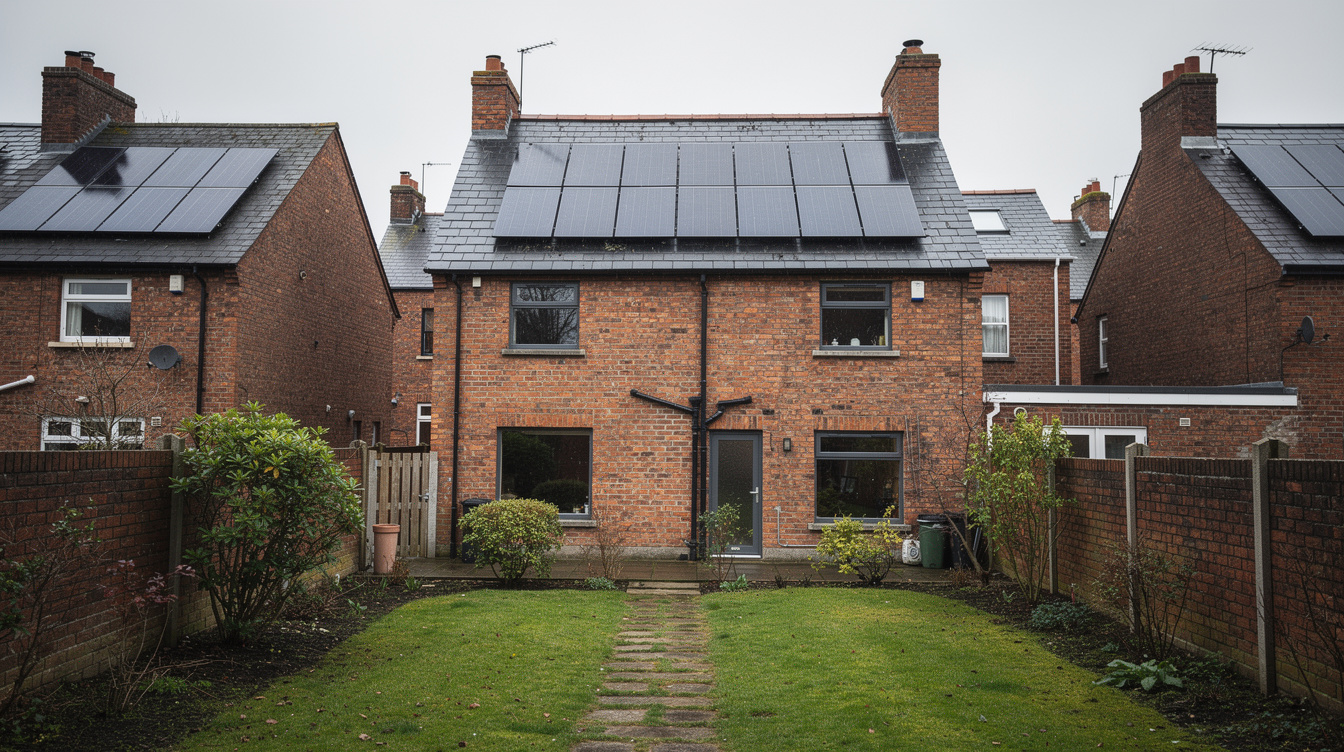
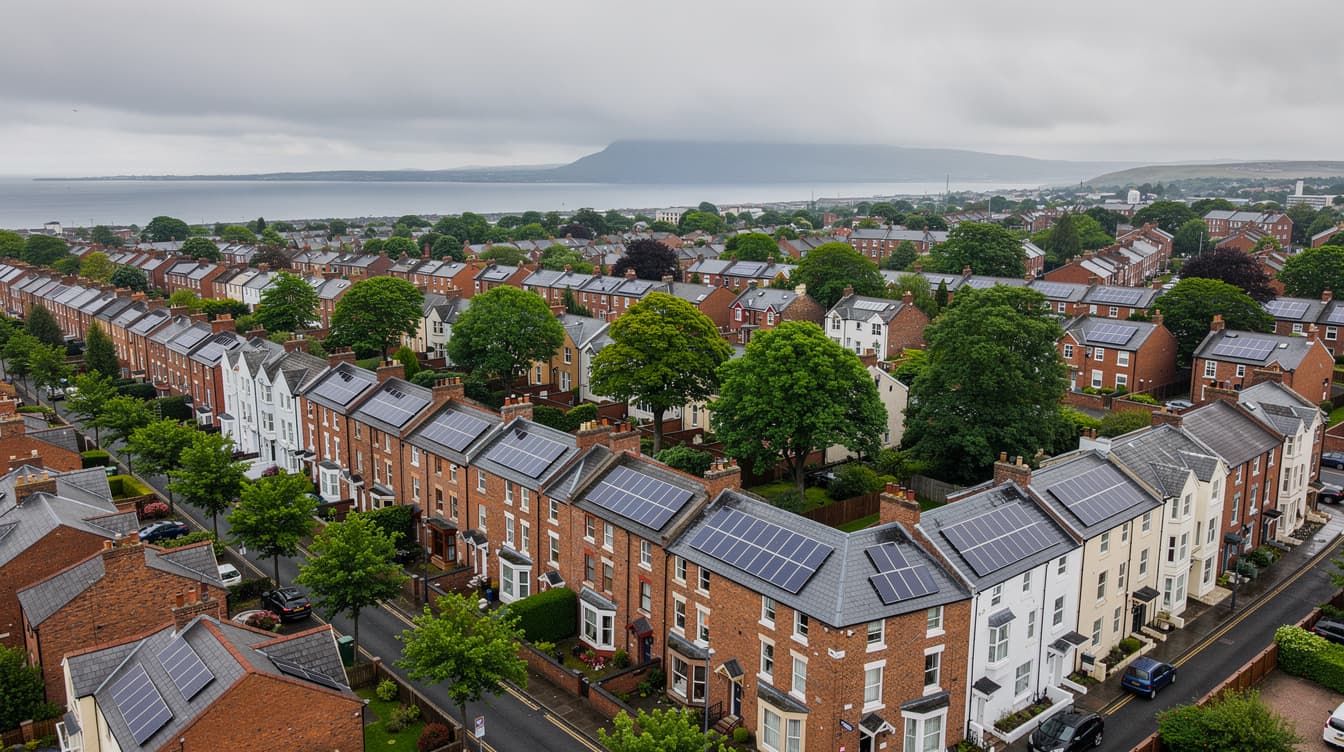
Solar panels installed on semi-detached homes in a Dublin suburb
Dublin semi-detached homes with solar panels — a common sight across suburbs like Lucan, Swords, and Tallaght
☀️ Why Dublin Homeowners Love Solar
Highest installer competition = best prices in Ireland
Above-average solar irradiance (1,050 kWh/m²)
Higher electricity bills = faster payback period
Strong EV adoption — solar + EV = massive savings
100+
SEAI Installers
1,050
kWh/m² Sunlight
€4,100
Avg Cost After Grant
5-7yr
Avg Payback

Solar Panels in Dublin: What You Need to Know in 2026

Dublin isn't just Ireland's capital — it's the country's solar capital too. The county has the highest concentration of SEAI-registered solar PV installers anywhere in Ireland, with over 100 companies actively serving Dublin postcodes. That means shorter wait times, more competitive pricing, and a deep pool of experienced fitters who know the quirks of Dublin housing stock inside out.

One common misconception is that Dublin doesn't get enough sun for solar. In reality, Dublin receives approximately 1,050 kWh/m² of solar irradiance per year — slightly above the national average and more than enough to make solar panels highly effective. Dublin actually gets comparable solar radiation to cities in northern Germany, where solar adoption is among the highest in Europe.

Dublin's Housing Stock and Solar Suitability

Dublin's housing is remarkably varied, and that affects what kind of solar system fits best. Here's how the most common Dublin house types match up:

House Type Typical Dublin Areas Avg Floor Area Recommended System Panels Needed
2-bed terraced Stoneybatter, Phibsborough, Ringsend, East Wall 65–80 m² 2–3 kWp 5–7
3-bed terraced Rathmines, Ranelagh, Drumcondra, Glasnevin 85–110 m² 3–4 kWp 7–10
3-bed semi-detached Lucan, Clondalkin, Tallaght, Blanchardstown, Swords 100–120 m² 3.5–4.5 kWp 8–10
4-bed detached Malahide, Castleknock, Foxrock, Killiney, Churchtown 140–200 m² 5–6 kWp 12–15
5-bed detached Dalkey, Howth, Mount Merrion, Ballsbridge 200+ m² 6+ kWp 14–18

The vast majority of Dublin homes — from the red-brick terraces along the South Circular Road to the 1970s semis in Tallaght and the modern estates in Adamstown — have enough usable roof space for a meaningful solar installation. Even homes with east-west facing roofs (common in estates built in the 80s and 90s across Lucan and Blanchardstown) can generate 80–85% of what a perfect south-facing roof produces, especially with modern split-array systems.

How Much Do Solar Panels Cost in Dublin?

Dublin solar prices tend to sit slightly above the national average — typically 5–10% more — due to higher demand and the general cost of doing business in the capital. However, the flip side is that Dublin has the most installer competition in Ireland, which keeps prices from running away. Dublin has the highest concentration of SEAI-approved installers in Ireland, which means competitive pricing — and our free matching service finds the best one for your area.

Dublin Solar Panel Costs by House Type (2026)

House Type System Size Panels Cost Before Grant SEAI Grant Cost After Grant Annual Savings
2-bed terraced 2–3 kWp 5–7 €4,500–€6,200 €1,200–€1,600 €3,300–€4,600 €500–€700
3-bed semi-D 3.5–4.5 kWp 8–10 €6,800–€9,000 €1,800 €5,000–€7,200 €800–€1,100
4-bed detached 5–6 kWp 12–15 €9,000–€12,000 €1,800 €7,200–€10,200 €1,000–€1,400
Large detached (with battery) 6 kWp + 5 kWh battery 14–15 €11,500–€15,000 €1,800 €9,700–€13,200 €1,200–€1,600

All prices include 0% VAT on residential solar. SEAI grant amounts are based on the 2026 grant structure: €900 for the first 2 kWp, plus €300 per additional kWp up to a maximum of €1,800 at 4 kWp. Systems above 4 kWp still receive the maximum €1,800 grant.

The highlighted row is the most common installation in Dublin — a 3.5–4.5 kWp system on a three-bed semi-detached house. This is the sweet spot for most Dublin families: large enough to cover 60–80% of your electricity needs, small enough to fit comfortably on one roof slope, and delivering a payback period of 5–7 years.

Want to know exactly what solar would cost for your Dublin home? Submit your details and we'll match you with an SEAI-registered installer in your area for a free, no-obligation quote — including the exact system size, savings estimate, and grant amount for your property.

Get My Free Dublin Solar Quote →

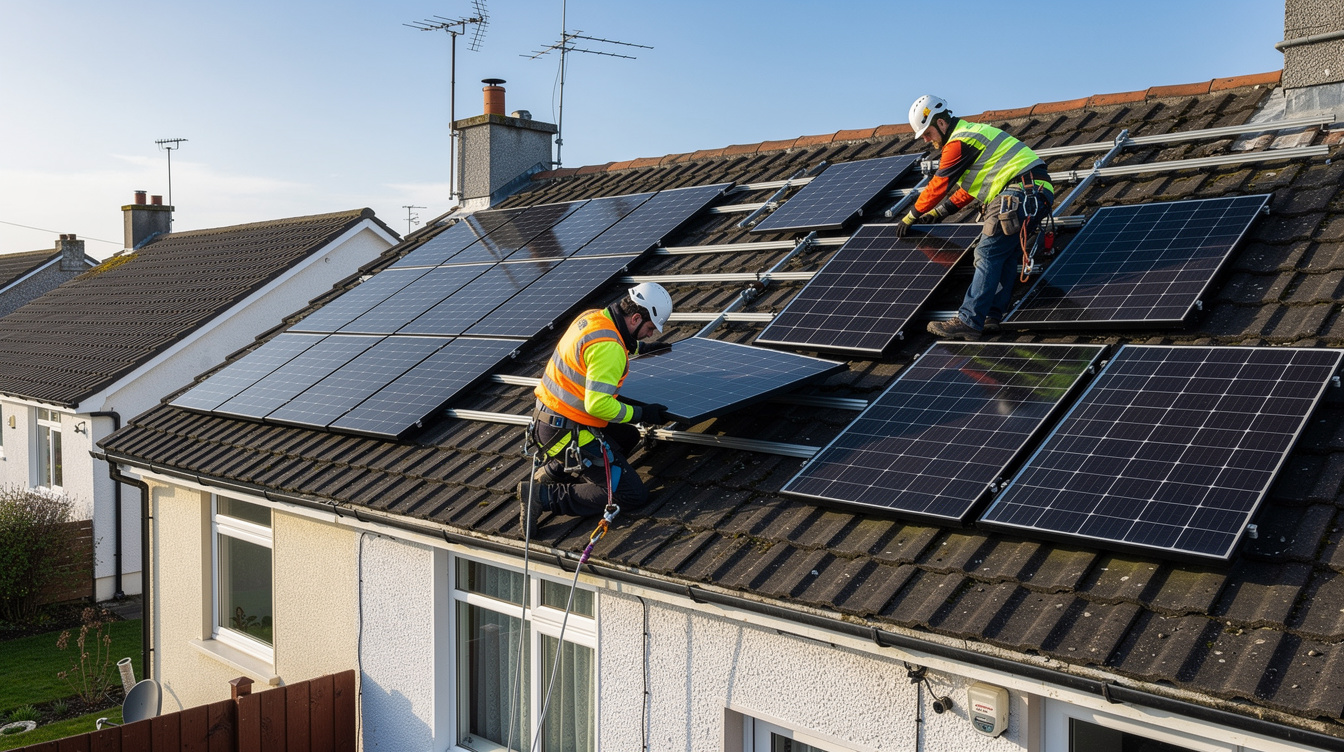
SEAI-registered installer fitting solar panels on a Dublin terraced house slate roof
An SEAI-registered installer fitting panels on a Victorian terrace in Dublin — slate roofs require specialist mounting

Top SEAI-Registered Solar Installers Serving Dublin

Dublin is served by more SEAI-registered solar companies than any other county. Below are some of the most established and well-reviewed installers actively working across Dublin in 2026. All are SEAI-registered, meaning they can complete grant-eligible installations and handle the paperwork on your behalf.

1. Activ8 Solar Energies

Based: Dublin (nationwide coverage) | Speciality: Residential & large commercial

One of Ireland's biggest solar installers with over 100,000 panels installed across the country. Activ8 manufactures their own 445W Atlas panels and employs around 200 staff. Now 50% owned by SSE Airtricity, they have serious backing and multiple Dublin installation crews. They're particularly strong in the suburban Dublin belt — Swords, Malahide, Lucan, Celbridge — where their scale means shorter wait times. They also install batteries and EV chargers, making them a one-stop shop for homeowners doing a full energy upgrade.

2. Ecoplex Energy Solutions

Based: Malahide, Co. Dublin | Speciality: Solar PV, heat pumps, EV chargers

Dublin-born and bred, Ecoplex operates from Malahide and has completed over 8,000 solar installations in under five years. They're known for always conducting proper on-site surveys before quoting — not every company does this, and it makes a real difference to system accuracy. Ecoplex covers all Dublin postcodes from D1 through D24 and extends into North County Dublin, Kildare, and Wicklow. If you're planning to combine solar with a heat pump or EV charger, Ecoplex handle all three under one roof.

3. Solar Clarity

Based: Dublin & Wicklow | Speciality: Residential solar PV, battery storage

A smaller, owner-operated company with a perfect 5.0 Google rating from over 150 reviews — one of the highest-rated solar installers anywhere in Ireland. Solar Clarity's strength is personal service: you deal directly with the person who designs and oversees your installation. They're particularly popular in South Dublin — Dundrum, Rathfarnham, Stillorgan, Blackrock — and across the Dublin-Wicklow border into Bray and Greystones. If you value direct communication over corporate scale, Solar Clarity is worth considering.

4. PureVolt Solar

Based: Dublin & Galway | Speciality: Transparent residential solar

PureVolt has built a strong reputation for transparency — their website publishes detailed cost breakdowns, real production data from Dublin installations, and honest guides about when solar does and doesn't make sense. They cover all of Dublin and the greater Leinster area. Unusually for the industry, PureVolt also runs a "free solar for good causes" scheme, donating profits in the form of free installations. They're a good fit for homeowners who want straightforward, no-pressure dealings.

5. Alternative Energy Ireland (AEI)

Based: Churchtown, Dublin 14 | Speciality: Residential & commercial solar PV

One of Dublin's longest-established solar companies, operating from Churchtown in D14. AEI is known for taking time on the consultation stage to design cost-effective systems rather than simply pushing the largest system possible. They serve all Dublin postcodes plus Kildare, Wicklow, and Wexford. They offer a 20-year output guarantee on installations — well above the industry standard for workmanship warranties. If your home has an unusual roof layout or shading issues (common on older Dublin houses in D6, D8, and D12), AEI's design-first approach can make a real difference to performance.

6. Wizer Energy

Based: Dublin | Speciality: Residential solar & whole-home energy upgrades

Wizer Energy takes a whole-house approach, often combining solar PV with insulation, heating upgrades, and ventilation improvements. They're SEAI-registered for multiple grant categories, which is useful if you're planning a deeper energy retrofit — common in older Dublin homes around Cabra, Crumlin, Drimnagh, and Walkinstown where BER ratings are typically D or E. Wizer handles the full SEAI grant coordination across multiple upgrade types.

7. Power Right Energy

Based: Nationwide (strong Dublin presence) | Speciality: Solar PV, heating, insulation

A large national energy upgrade company with significant Dublin operations. Power Right is a one-call solution for homeowners planning multiple upgrades — solar panels, heat pumps, external wall insulation, and windows. They're particularly active in Dublin's older housing estates from the 1960s–1980s (areas like Ballyfermot, Coolock, Finglas, Kilbarrack) where homes often benefit from solar alongside insulation upgrades. Their scale means competitive pricing and relatively fast scheduling.

8. Veep Energy

Based: Dublin | Speciality: Engineer-led residential solar

A Dublin-based installer led by engineers rather than salespeople — and it shows. Veep is praised for technical depth and hands-on service, with the founder often personally involved in system design. They offer flexible financing options for homeowners who want to spread the cost. Particularly well-reviewed for installations in Dublin's inner suburbs — Terenure, Harold's Cross, Inchicore, Rialto — where older houses and tighter spaces demand more careful planning.

9. LVP Renewables

Based: North City Business Park, Dublin 11 | Speciality: No-pressure residential solar

Based in Dublin 11 with over 40 years in the renewable energy sector. LVP takes a deliberately low-pressure approach: they won't send a rep to your house until you've received a quote, understand the technology, and feel ready. This makes them popular with homeowners who've been put off by aggressive sales tactics from other companies. Strong coverage across North Dublin — Glasnevin, Santry, Beaumont, Raheny, Clontarf — and North County areas including Swords, Donabate, and Portmarnock.

10. GoKonnect Solar

Based: Dublin (multiple locations) | Speciality: Tech-forward 3D-modelled solar design

GoKonnect uses 3D modelling and bespoke design to optimise panel placement, which is particularly valuable on complex Dublin roofs — think dormer bungalows in Templeogue, L-shaped roofs in Castleknock, or hip roofs on 1990s builds in Ongar and Hansfield. They emphasise quick turnaround from survey to installation. A good choice for newer Dublin developments where roof geometry isn't straightforward.

Not sure which installer is right for you? Submit your details and we'll match you with the best SEAI-registered installer for your area — free and no obligation. We work with trusted Dublin installers so you get the right company for your house type, budget, and location.

Get Matched With the Best Installer for Your Area →

Dublin-Specific Solar Considerations

Solar installation in Dublin comes with its own set of challenges and advantages that you won't encounter in Galway, Cork, or rural Ireland. Here's what makes Dublin different.

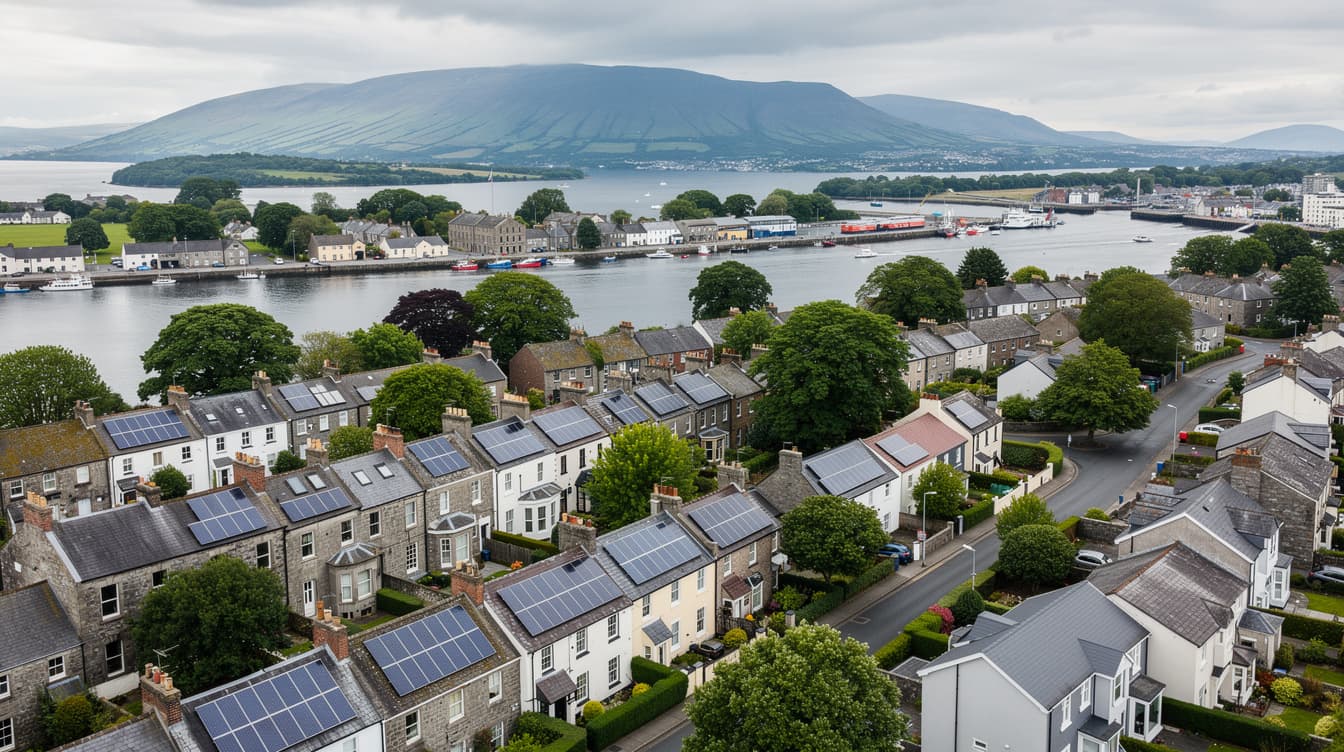
Coastal Dublin neighbourhood in Howth with solar panels on period homes overlooking the Irish Sea
Coastal Dublin areas like Howth and Dún Laoghaire — solar panels here need marine-grade mounting to handle salt air

Roof Types: Slate Roofs on Victorian and Edwardian Homes

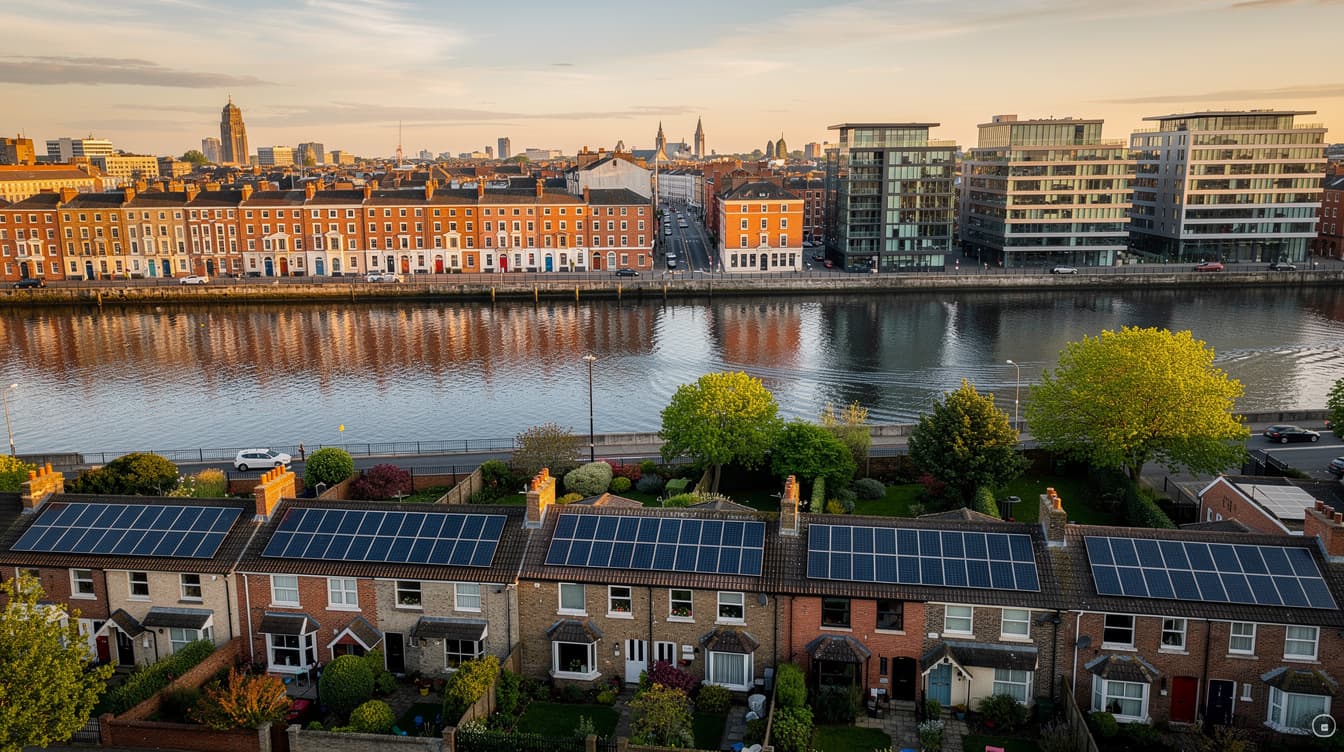
Dublin's inner suburbs — D3 (East Wall, North Strand), D6 (Rathmines, Ranelagh, Rathgar), D6W (Harold's Cross, Terenure), D8 (Portobello, South Circular Road, Kilmainham) — are dominated by Victorian and Edwardian terraced houses with original slate roofs. These homes are excellent candidates for solar, but the installation requires specialist mounting systems designed for slate rather than standard concrete tiles.

Slate roof installations typically add €300–€500 to the overall cost because installers must use slate hooks rather than standard tile hooks. The hooks slide under existing slates without requiring any drilling into the slate itself, preserving the integrity of the roof. Most experienced Dublin installers handle slate roofs routinely, but it's worth confirming this when requesting your quote — not every installer has slate experience.

Planning Permission: Dublin City Council Exemptions

Since 2022, solar panels on residential properties in Ireland are generally exempt from planning permission under the Planning and Development Regulations. This applies whether you're under Dublin City Council (DCC), South Dublin County Council, Fingal County Council, or Dun Laoghaire-Rathdown County Council.

However, there are exceptions that are particularly relevant in Dublin:

  • Architectural Conservation Areas (ACAs): Parts of D2 (Merrion Square, Fitzwilliam Square), D4 (Ballsbridge, Donnybrook), D6 (Rathmines, Rathgar), and D8 (Portobello, The Liberties) fall within ACAs. If your home is in an ACA, you may need to check with your local authority before proceeding. In practice, rear-facing panels that aren't visible from the street are usually fine.
  • Protected structures: If your home is on the Record of Protected Structures (some Georgian and Victorian homes in Dublin 2, 4, 6, and 8), you will need planning permission.
  • Apartments: If you live in a managed apartment complex, you'll need management company approval regardless of planning exemptions.

For the vast majority of Dublin homes — the semis in Lucan, the terraces in Cabra, the detached houses in Castleknock — no planning permission is needed. Your installer will confirm this during the site survey.

South Dublin vs North Dublin: Orientation Differences

Dublin's suburban sprawl means housing estates were built across decades with varying orientations. Some general patterns worth noting:

  • 1960s–1970s estates (Ballyfermot, Finglas, Coolock, Kilbarrack): Often built in grid patterns with a mix of orientations. Many have east-west facing roofs, which work well with split-array systems on both sides.
  • 1980s–1990s estates (Lucan, Blanchardstown, Tallaght): Frequently built in cul-de-sac layouts with more varied orientations. Most have at least one roof slope facing within 45 degrees of south.
  • 2000s–2010s developments (Adamstown, Ongar, Hansfield, Clongriffin): Modern estates often have more complex roof shapes (hip roofs, dormers) that require careful panel layout but generally offer good solar access.
  • Victorian/Edwardian terraces (D3, D6, D8): These typically run in long rows and the orientation depends entirely on which street you're on. A terrace on a north-south street will have east-west facing roofs; one on an east-west street will have a south-facing rear roof — ideal for solar.

Coastal Areas: Salt Air Considerations

Dublin's coastline stretches from Balbriggan in the north through Howth, Bull Island, Sandymount, Dun Laoghaire, Dalkey, and Killiney in the south. Homes within 1–2 km of the coast are exposed to salt-laden air, which can accelerate corrosion on mounting hardware and panel frames over time.

If you live in Howth, Sutton, Clontarf (seafront), Sandymount, Booterstown, Blackrock, Dun Laoghaire, Sandycove, Dalkey, or Killiney, ask your installer about:

  • Anodised aluminium or marine-grade stainless steel mounting rails — standard galvanised steel can corrode faster in coastal conditions
  • Panel frame quality — premium panels from manufacturers like SunPower and REC use superior anti-corrosion coatings
  • Regular cleaning schedule — salt spray can reduce panel efficiency by 3–5% if not rinsed periodically

This isn't a reason to avoid solar in coastal Dublin — it just means choosing the right equipment. Any good Dublin installer will factor this in automatically for coastal addresses.

Apartments and High-Rise Buildings

Dublin has seen significant apartment development over the past decade — particularly in the Docklands, the IFSC, Sandyford, Cherrywood, and along the Luas corridors. Unfortunately, individual apartment owners generally cannot install their own solar panels. The roof is a shared common area controlled by the management company, and individual installation isn't practical.

However, if you own a duplex (common in newer Dublin developments in Adamstown, Clongriffin, and Pelletstown) with your own dedicated roof space, solar is often feasible. Ground-floor duplexes with access to garden space could also explore ground-mounted systems, though this is less common in Dublin due to garden sizes.

Scaffolding Costs and Access on Narrow Streets

Scaffolding is a necessary part of most Dublin solar installations, and it costs more in Dublin than elsewhere in Ireland — typically €400–€800 compared to €250–€500 nationally. There are two reasons:

  • Narrow terraced streets: Homes in Stoneybatter, The Liberties, Phibsborough, and the older parts of D3 and D8 often have narrow lanes or alleyways with limited access. Scaffolding crews may need to carry equipment longer distances or use specialised narrow-access scaffolding.
  • Road permits: If scaffolding needs to be erected on the public footpath (common on terraced streets with no front garden), Dublin City Council requires a road opening licence. Your installer should handle this, but it adds to the timeline and cost.

Most Dublin installers include scaffolding in their quoted price. Always confirm whether scaffolding is included when reviewing quotes — it's one of the most common hidden extras.

Solar Savings for Dublin Homes: Real Numbers

Dublin households tend to have higher electricity consumption than the national average. Between larger appliances, home offices (remote working remains common in Dublin), and multi-person households, a typical Dublin home uses 4,500–5,500 kWh per year — compared to the national average of around 4,200 kWh. That higher consumption actually makes solar more valuable in Dublin, because you self-consume more of what you generate.

Solar inverter and smart meter display showing real-time energy generation in a Dublin home
Modern solar inverters let you monitor your generation and savings in real-time from your phone

Annual Savings by House Type

House Type System Size Annual Generation Self-Use Savings CEG Export Income Total Annual Saving
2-bed terraced 2.5 kWp ~2,200 kWh €400–€500 €80–€120 €500–€620
3-bed semi-D 4 kWp ~3,500 kWh €600–€800 €120–€180 €750–€1,000
4-bed detached 5.5 kWp ~4,800 kWh €800–€1,000 €150–€250 €1,000–€1,250
Large detached + battery 6 kWp + 5 kWh ~5,300 kWh €1,000–€1,200 €100–€150 €1,200–€1,400

Self-use savings assume current Dublin electricity rates of approximately 35c/kWh (unit rate including standing charge). CEG (Clean Export Guarantee) export rates vary by supplier — typically 15–24c/kWh in 2026. A battery increases self-consumption from ~40% to ~70%, reducing export income but increasing the more valuable self-use savings.

Solar + EV Charging: A Dublin No-Brainer

Dublin has the highest EV adoption rate in Ireland, and it's accelerating. If you already have an EV — or plan to get one — solar panels become an even better investment. Charging an EV from the grid costs roughly 10–14c per km. Charging from your solar panels costs nothing.

A typical Dublin commuter driving 40 km per day (think Lucan to the city centre and back, or Malahide to Sandyford) uses about 8 kWh. On a sunny day, a 4 kWp system produces 16–20 kWh — more than enough to cover your commute and run the house. Set a timer to charge your EV during peak solar hours (10am–3pm) and you could save an additional €400–€600 per year on fuel costs alone.

Many Dublin installers now offer combined solar + EV charger packages, which saves on installation costs since both require work at the fuse board.

Heat Pump + Solar: The Dublin Upgrade Combo

A growing number of Dublin homeowners are combining solar panels with air-to-water heat pumps — and for good reason. Older Dublin homes (particularly the 1950s–1970s stock in areas like Crumlin, Raheny, Artane, and Beaumont) often have oil or gas boilers that are expensive to run and approaching end of life.

A heat pump runs on electricity, so adding solar panels to a home with a heat pump dramatically reduces running costs. The SEAI offers separate grants for heat pumps (up to €6,500) and solar panels (up to €1,800), and many Dublin installers handle both. If you're planning a heat pump upgrade, installing solar at the same time makes the economics significantly better and avoids the disruption of two separate projects.

Solar Panel Installation Timeline in Dublin

From your first enquiry to the moment your system goes live, expect a timeline of 6–10 weeks in Dublin. This is slightly longer than in less busy counties because Dublin installers typically have fuller order books. Here's how the process breaks down:

Stage What Happens Typical Duration Dublin-Specific Notes
1. Initial enquiry Submit your details, get matched with an installer, receive a preliminary quote 1–3 days Dublin installers respond fast due to competition
2. Site survey Installer visits your home, assesses roof, shading, electrics, and designs the system 1–2 weeks to schedule Dublin installers are busier — book early, especially March–June
3. Final quote & contract Detailed quote based on survey, contract signing, deposit payment 1 week Review what's included — especially scaffolding and BER cert
4. SEAI grant application Installer submits grant application on your behalf 1–3 weeks for approval High Dublin volume can slow SEAI processing — patience needed
5. Installation Scaffolding erected, panels mounted, inverter installed, electrical connection made 1–2 days on-site Terraced homes may need road permit for scaffolding on footpath
6. ESB notification & commissioning NC6 form submitted to ESB Networks, smart meter confirmed, system goes live 1–2 weeks Most Dublin homes already have smart meters — speeds this up
7. CEG registration Register with your electricity supplier for export payments 1–2 weeks Contact your existing supplier — Electric Ireland, Energia, SSE, Bord Gais, etc.

Pro tip for Dublin homeowners: If you want your system installed before summer (when solar generation peaks), start the process in January or February. Dublin installers' books fill up quickly from March onwards. The early bird genuinely gets the worm here — and catches more sun.

Ready to get started? Submit your details now and we'll match you with an available SEAI-registered installer in your Dublin area. The sooner you begin, the sooner you start saving.

Start My Free Solar Quote →

Dublin Areas We Cover

We connect Dublin homeowners with SEAI-registered solar installers across every part of the county. No matter where you are in Dublin, we have trusted installers ready to quote your property.

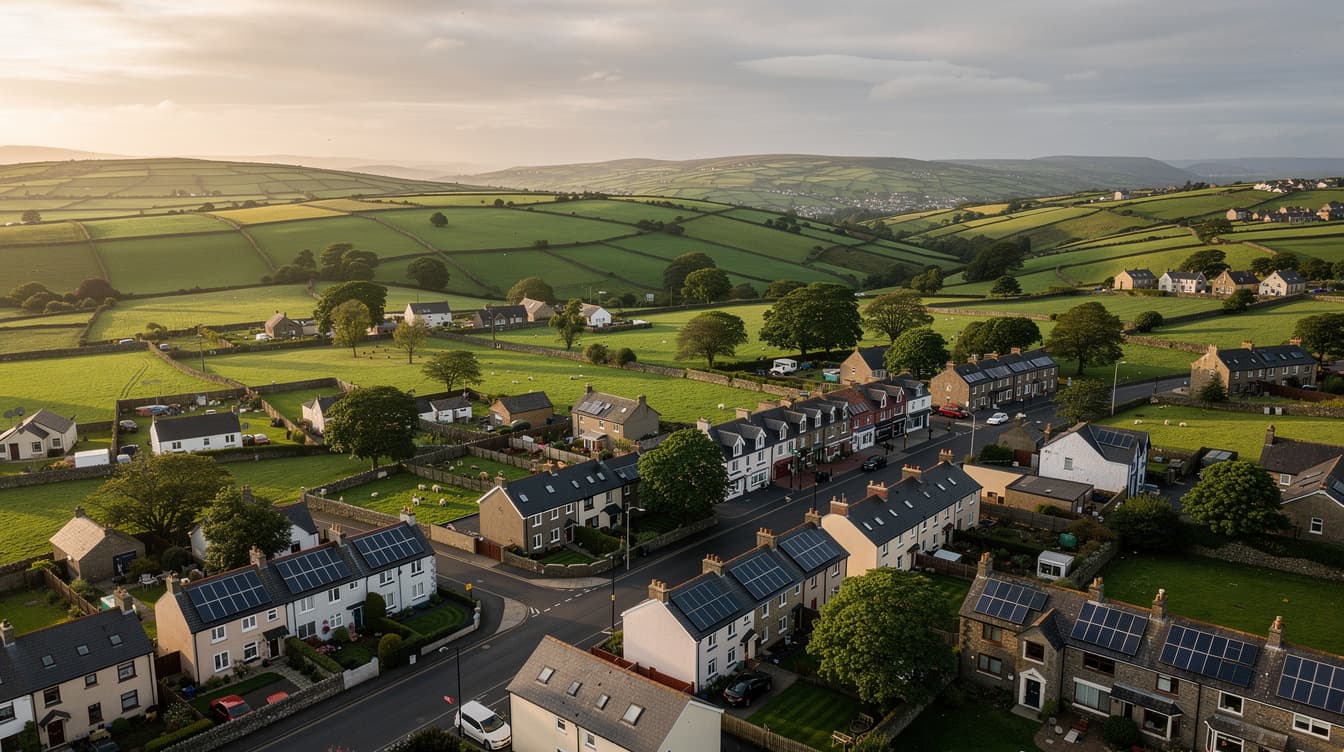
Happy Dublin family in front of their home with newly installed solar panels
Dublin homeowners enjoying the benefits of solar — savings of €800-€1,200 per year on electricity bills

Dublin City Postcodes

Dublin 1 — North Inner City, IFSC, Parnell Square
Dublin 2 — City Centre South, Merrion Square
Dublin 3 — Clontarf, Fairview, East Wall
Dublin 4 — Ballsbridge, Donnybrook, Sandymount
Dublin 5 — Raheny, Artane, Harmonstown
Dublin 6 — Rathmines, Ranelagh, Rathgar
Dublin 6W — Harold's Cross, Terenure, Templeogue
Dublin 7 — Phibsborough, Stoneybatter, Cabra
Dublin 8 — Portobello, The Liberties, Kilmainham
Dublin 9 — Drumcondra, Glasnevin, Beaumont
Dublin 10 — Ballyfermot, Cherry Orchard
Dublin 11 — Finglas, Glasnevin North
Dublin 12 — Crumlin, Drimnagh, Walkinstown
Dublin 13 — Donaghmede, Baldoyle, Howth, Sutton
Dublin 14 — Dundrum, Churchtown, Goatstown
Dublin 15 — Blanchardstown, Castleknock, Ongar
Dublin 16 — Ballinteer, Knocklyon, Rathfarnham
Dublin 17 — Coolock, Darndale, Priorswood
Dublin 18 — Sandyford, Foxrock, Cabinteely
Dublin 20 — Palmerstown, Chapelizod
Dublin 22 — Clondalkin, Neilstown
Dublin 24 — Tallaght, Firhouse, Jobstown

North County Dublin

Swords | Malahide | Portmarnock | Donabate | Lusk | Rush | Skerries | Balbriggan | Kinsealy | Balgriffin | Clongriffin

South County Dublin

Dun Laoghaire | Blackrock | Stillorgan | Dalkey | Killiney | Shankill | Sandycove | Glasthule | Monkstown | Booterstown | Mount Merrion | Kilmacud | Stepaside | Glencullen

West Dublin & Dublin-Kildare Border

Lucan | Adamstown | Leixlip (technically Kildare, served by Dublin installers) | Celbridge (Kildare, served by Dublin installers) | Newcastle | Rathcoole | Saggart | Citywest

Dublin-Wicklow Border

Bray (technically Wicklow but served by all Dublin installers) | Greystones | Enniskerry | Kilmacanogue

Live in one of these areas? Submit your Eircode and we'll match you with the best-rated SEAI-registered installer covering your specific area.

Get My Free Local Quote →

Ready to Go Solar in Dublin?
Join hundreds of Dublin homeowners who’ve already made the switch. Get your free, personalised quote in 60 seconds.
Get My Free Dublin Quote →

Frequently Asked Questions About Solar Panels in Dublin

How much do solar panels cost in Dublin?

A standard 4 kWp system (the most common size for a Dublin three-bed semi-D) costs €6,800–€9,000 before the SEAI grant, or €5,000–€7,200 after the grant. Prices in Dublin are typically 5–10% higher than rural counties due to demand and overheads, but strong competition between 100+ installers keeps pricing competitive. Smaller systems for two-bed terraced homes start from around €3,300 after grant, while larger systems for four- or five-bed detached homes can reach €10,000–€13,000 after grant (especially with a battery).

Are solar panels worth it in Dublin?

Yes — Dublin is actually one of the best places in Ireland for solar panel value. Here's why: Dublin electricity consumption is higher than average (more appliances, home offices, larger families), meaning you use more of what you generate. Dublin gets 1,050 kWh/m² of solar irradiance — slightly above the national average. And Dublin has the most competitive installer market in Ireland, keeping prices keen. A typical Dublin system pays for itself in 5–7 years, then generates essentially free electricity for another 20+ years. Over 25 years, a 4 kWp system saves approximately €20,000–€25,000.

Do solar panels work in Dublin's weather?

Absolutely. Solar panels work on daylight, not direct sunshine. Even on an overcast Dublin day (and we have plenty), panels still generate electricity — typically 10–25% of their peak output. Dublin's total annual solar irradiance of ~1,050 kWh/m² is comparable to cities in northern Germany and Denmark, where solar is hugely popular. The key metric is total annual generation, not daily sunshine hours — and Dublin delivers more than enough for excellent returns. Your panels will generate most during April–September, with June and July being peak months.

Do I need planning permission for solar panels in Dublin?

No, for the vast majority of Dublin homes. Solar panels have been exempt from planning permission since 2022 for standard residential installations. The only exceptions are: homes in Architectural Conservation Areas (parts of D2, D4, D6, D8 — check with Dublin City Council, South Dublin County Council, Fingal, or DLRCC as appropriate); protected structures on the Record of Protected Structures; and panels that project more than 15cm above the roof plane or 50cm above the ridgeline (which no standard installation does). Your installer will confirm whether your home qualifies for the exemption during the site survey.

How long does solar panel installation take in Dublin?

The actual on-site installation takes 1–2 days for a standard residential system. However, the full process from first enquiry to a working system is typically 6–10 weeks in Dublin. This includes the site survey (1–2 weeks to schedule), grant application (1–3 weeks for SEAI approval), scheduling the installation, and ESB commissioning afterwards. Dublin timelines tend to be slightly longer than rural areas because installers are busier. If you want to be generating by summer, start the process in January or February.

Can I get solar panels on a terraced house in Dublin?

Yes, and many Dublin homeowners in terraced houses are doing exactly that. Terraced homes in areas like Stoneybatter, Phibsborough, Rathmines, Ranelagh, Harold's Cross, and The Liberties are popular candidates for solar. You'll typically fit 5–8 panels depending on your roof size. The main considerations are: roof orientation (your rear roof slope is usually the one used), slate roof mounting (common on Victorian/Edwardian terraces — requires specialist hooks, adding €300–€500), scaffolding access (narrow streets may need road permits from DCC), and shading from neighbouring buildings or chimneys. A good Dublin installer handles all of this routinely.

What's the best direction for solar panels in Dublin?

South-facing is ideal and produces the maximum output — roughly 100% of potential generation. Southeast and southwest are nearly as good at 95%. East or west facing roofs produce about 80–85% of a south-facing system, which is still excellent and very worthwhile. Many Dublin semis and terraces have east-west oriented roofs, and modern split-array inverter systems allow panels on both sides to maximise total generation. True north-facing roofs are the only ones where solar isn't recommended. Dublin sits at approximately 53.3°N latitude, so the optimal tilt angle for panels is around 30–35 degrees — which happens to match the pitch of most Dublin roofs.

How much can I save with solar panels in Dublin?

A typical 4 kWp system on a Dublin three-bed semi saves €750–€1,000 per year through a combination of reduced electricity bills (self-consumption savings) and CEG export income for surplus electricity fed back to the grid. Exact savings depend on your consumption patterns, how much electricity you use during daylight hours, and your export tariff rate. Homes with EVs can add €400–€600 in additional fuel savings. Homes with heat pumps save even more, as the heat pump's electricity consumption is partly covered by solar generation. Over 25 years, total savings typically reach €20,000–€30,000.

Are there grants for solar panels in Dublin?

Yes. The SEAI Solar PV Grant is available to all Dublin homeowners and is confirmed for 2026. The grant covers €900 for the first 2 kWp of your system, plus €300 per additional kWp, up to a maximum of €1,800 at 4 kWp and above. The grant is paid after installation and must be completed by an SEAI-registered installer. Your installer handles the entire grant application process — you don't need to deal with SEAI directly. There is no separate Dublin-specific grant, but Dublin homes built before 2011 are eligible, and there is no income test. VAT on residential solar is 0%, which effectively acts as an additional saving.

Which is the best solar company in Dublin?

There is no single "best" company — it depends on your house type, location, budget, and what matters most to you (price, speed, personal service, or technical expertise). Dublin's 100+ SEAI-registered installers range from large national companies like Activ8 Solar Energies to smaller owner-operated businesses like Solar Clarity. What matters most is that your chosen installer is SEAI-registered (non-negotiable for the grant), conducts a proper site survey, provides a detailed written quote, and has solid reviews from other Dublin homeowners. The easiest way to find the right match is to submit your details through our free matching service — we'll connect you with an installer suited to your specific Dublin area and house type.

Can I sell electricity back to the grid in Dublin?

Yes. Under the Clean Export Guarantee (CEG) scheme, any surplus electricity your panels produce is exported to the grid and you receive payment from your electricity supplier. Rates in 2026 typically range from 15–24c per kWh depending on your supplier (Electric Ireland, Energia, SSE Airtricity, Bord Gais Energy, and others all offer CEG tariffs). You'll need a smart meter — ESB Networks has been rolling these out across Dublin and most homes now have one. If you don't have a smart meter yet, ESB Networks will install one free of charge. Your installer handles the NC6 notification to ESB Networks as part of the installation process.

What happens if I sell my Dublin home after installing solar?

Solar panels increase your property value. They improve your BER (Building Energy Rating) — often by one or two grades — which is increasingly important to Dublin buyers. A BER upgrade from C3 to B2, for example, is a genuine selling point in the Dublin market where energy-efficient homes command a premium. The panels, inverter, and any battery are fixtures of the property and transfer with the sale. There is no obligation to repay the SEAI grant if you sell. In Dublin's competitive property market, solar panels are a net positive for resale value.

Do I need a new electricity meter for solar panels in Dublin?

You need a smart meter to receive export payments under the CEG scheme. Most Dublin homes have already been upgraded to smart meters as part of ESB Networks' national rollout. If you don't have one yet, ESB Networks will install a smart meter free of charge — your installer will trigger this process through the NC6 notification. The smart meter tracks both your import (electricity you buy from the grid) and export (surplus solar electricity you send back), enabling accurate billing and export payments.

Get Your Free Dublin Solar Quote Today

Join thousands of Dublin homeowners already saving with solar. Submit your details and we'll match you with the best SEAI-registered installer for your area — completely free, no obligation.

Get My Free Quote →

Related Guides