
Solar Panels vs Heat Pumps: Which Should You Install First in Ireland?
Solar Panels vs Heat Pumps: Which Should You Install First in Ireland?
\nUpdated May 2026 · 12 min read
\n\nIf you are a homeowner in Ireland weighing up renewable energy upgrades, you have almost certainly asked yourself this question: should I get solar panels or a heat pump first? With SEAI grants available for both, energy costs still elevated, and BER ratings increasingly tied to property values, the decision carries real financial weight.
\n\nThe honest answer is that there is no single right answer for everyone. Your existing heating system, your home’s insulation level, your budget, and your energy usage patterns all shape the correct sequence. This guide walks through every angle — costs, grants, savings, payback periods, and BER impact — so you can make a confident, informed decision for your home in 2026.
\n\nThe Dilemma: Budget for One or Both?
\n\nMost Irish households do not have €15,000–€20,000 sitting in a savings account earmarked for energy upgrades. Even with generous SEAI grants, the upfront cost of installing both solar panels and a heat pump in a single project can exceed €10,000 out of pocket. That is a significant sum, especially when you factor in the disruption of having two major installations happening at once.
\n\nThe practical reality for many families is that they need to phase their upgrades — install one system this year and the other in 12 to 24 months, once savings have started to accumulate and budgets have recovered. The question then becomes: which one delivers the most value when installed first?
\n\nLet us start with a direct comparison before diving deeper into each option.
\n\nSide-by-Side Comparison: Solar Panels vs Heat Pumps
\n\n| Factor | \nSolar Panels (4–6 kW) | \nAir-to-Water Heat Pump | \n
|---|---|---|
| Cost before grant | \n€6,000–€8,000 | \n€11,000–€15,000 | \n
| SEAI grant | \n€1,800 | \n€6,500–€11,000 | \n
| Cost after grant | \n€4,200–€6,200 | \n€1,500–€4,000 | \n
| Annual savings | \n€800–€1,200 | \n€1,000–€1,500 (vs oil) | \n
| Payback period | \n4–6 years | \n1–3 years | \n
| BER improvement | \n+1–2 grades | \n+2–3 grades | \n
| Maintenance | \nMinimal — annual check | \nAnnual service recommended | \n
| Lifespan | \n25–30 years | \n15–20 years | \n
| Installation time | \n1–2 days | \n3–5 days | \n
Both technologies offer compelling economics in 2026. But the right choice depends on your starting point, which we will explore next.
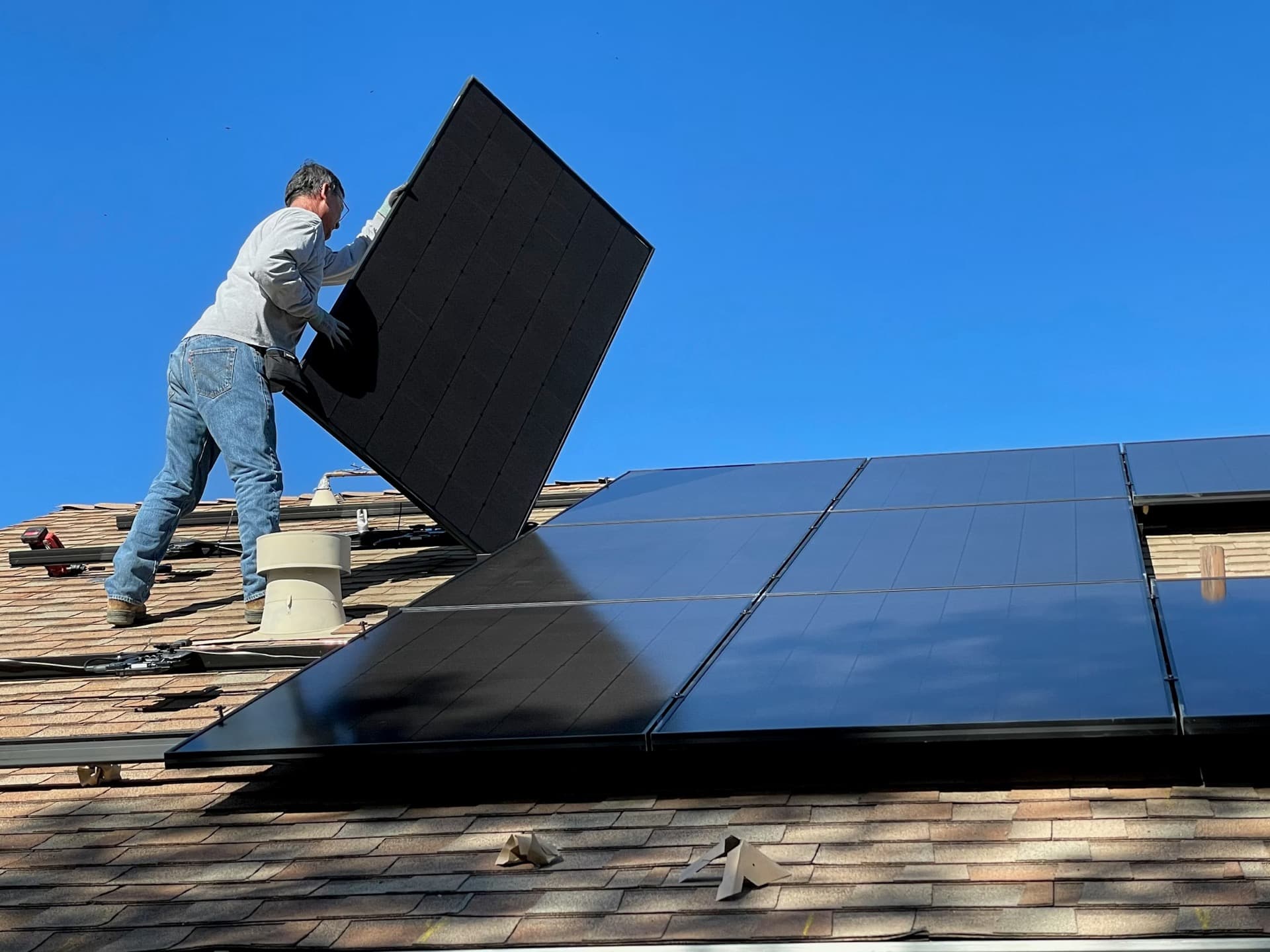
\n\nThe Case for Solar Panels
\n\nA typical residential solar PV system in Ireland (4–6 kW with a battery) costs between €6,000 and €8,000 before the SEAI grant of €1,800, bringing the net cost down to €4,200–€6,200. Annual electricity savings range from €800 to €1,200 depending on your consumption patterns, whether you have a battery, and how much you export under the Clean Export Guarantee.
\n\nThe payback period of 4–6 years is attractive, and once the system is paid off, you enjoy essentially free electricity generation for another 20+ years. Maintenance is minimal — an annual visual inspection and occasional panel cleaning is typically all that is required. There are no moving parts to wear out and no annual servicing contracts.
\n\nFrom a BER perspective, solar panels typically boost your rating by 1–2 grades. A home sitting at a C2 could jump to a B3 or even a B2 with a well-sized solar installation.
\n\nUse our solar panel calculator to estimate savings specific to your home.
\n\nThe Case for Heat Pumps
\n\nAn air-to-water heat pump system typically costs between €11,000 and €15,000 before grants. The SEAI heat pump grant ranges from €6,500 for a standard installation up to €11,000 under the National Home Energy Upgrade Scheme for qualifying homes, bringing the out-of-pocket cost down to as low as €1,500–€4,000.
\n\nCompared to oil heating, a heat pump saves approximately €1,000–€1,500 per year. With the generous grant levels available in 2026, the payback period can be as short as 1–3 years — making heat pumps one of the best returning investments available to Irish homeowners right now.
\n\nThe BER impact is even more dramatic than solar. Switching from an oil boiler to a heat pump can improve your rating by 2–3 grades, often catapulting a D-rated home into solid B territory. This matters enormously for property value — research from the ESRI shows that each BER grade improvement adds approximately 1.5–2% to a home’s sale price.
\n\nFor a deeper dive, see our complete guide to air-to-water heat pumps in Ireland for 2026.
\n\nNot Sure Which to Install First?
\nGet free, no-obligation quotes from vetted Irish installers. We will match you with specialists who can assess your home and recommend the right sequence.
\nGet My Free Quotes →\nWhen to Install Solar Panels First
\n\nSolar panels should be your priority if several of the following apply to your situation:
\n\n- \n
- You already have a modern, efficient boiler. If your gas or oil boiler is less than 5–7 years old and running well, replacing it with a heat pump right now means scrapping a perfectly good appliance. Install solar first, bank the savings, and plan the heat pump switch when your current boiler reaches end of life. \n
- Your budget is limited. The out-of-pocket cost for solar (€4,200–€6,200 after grant) is significantly lower than a heat pump in most scenarios. If you can only afford one upgrade right now, solar gets you into the renewable energy game with a lower financial barrier. \n
- You want a quick, low-disruption win. Solar panel installation typically takes just one to two days with minimal disruption to your daily life. There is no need to replace radiators, upgrade pipework, or reconfigure your heating system. \n
- You have high electricity consumption. If you work from home, run an electric vehicle charger, or have a large household with high daytime electricity use, solar panels will deliver outsized returns because you will self-consume a larger proportion of the generated electricity. \n
- Your home already has decent insulation. Solar panels do not depend on your home’s thermal envelope. They work equally well on a draughty cottage as on a passive house. If your insulation is poor, solar still delivers full value while you plan and budget for deeper retrofits. \n
When to Install a Heat Pump First
\n\nA heat pump should take priority if these conditions describe your home:
\n\n- \n
- You are running an old oil or gas boiler. If your boiler is 15+ years old, inefficient, or showing signs of failure, replacing it is urgent. A heat pump is the obvious modern replacement rather than installing another fossil fuel boiler that will need replacing again before 2040. \n
- Your heating bills are exceptionally high. Households spending €2,500–€4,000 per year on oil have the most to gain from a heat pump. The savings delta is enormous, and the payback can be under two years when the full SEAI grant is applied. \n
- Your BER rating is poor and you need to improve it. If you are looking to sell, rent, or simply want to meet future regulatory requirements, a heat pump delivers the single biggest BER improvement of any individual measure. Going from a D1 to a B1 in one step is entirely possible. \n
- Your insulation is already in good shape. Heat pumps operate most efficiently in well-insulated homes with low heat loss. If you have already invested in attic insulation, cavity wall insulation, or external wall insulation, your home is primed to get maximum performance from a heat pump. \n
- You qualify for the higher SEAI grant. Under the National Home Energy Upgrade Scheme, some homeowners can access grants covering up to 80% of the heat pump cost. If you qualify, the out-of-pocket cost becomes remarkably low, and it would be unwise not to take advantage. \n
Why Installing Both Is the Ultimate Move
\n\nWhile phasing makes sense for budget reasons, installing both solar panels and a heat pump is the gold standard of home energy upgrades in Ireland. Here is why the combination is so powerful:
\n\nSolar powers your heat pump. A heat pump runs on electricity. Solar panels generate electricity. When you combine them, a significant portion of your heat pump’s running costs are covered by free solar energy. During spring and autumn — when you still need heating but the sun is reasonably strong — this synergy is at its peak.
\n\nCombined grants exceed €14,300. The SEAI grant for solar panels (€1,800) stacks on top of the heat pump grant (€6,500–€11,000+). When you add in potential insulation grants and the bonus for completing a one-stop-shop deep retrofit, total grant support can exceed €14,300. That is a remarkable level of state support.
\n\nThe BER impact is transformative. Solar plus heat pump can lift a home from a D or E rating all the way to an A3 or B1. That kind of improvement can add €20,000–€40,000 to a property’s resale value, dwarfing the cost of the upgrades themselves.
\n\nFuture-proofing. With carbon taxes set to rise to €100 per tonne by 2030, the cost advantage of renewables over fossil fuels will only widen. Installing both systems now locks in decades of savings at today’s installation prices.
\n\nFor a detailed look at how these two systems complement each other, read our guide to combining heat pumps and solar panels in Ireland.
\n\nWorked Example: Combined Installation
\n\nLet us walk through a realistic scenario for a 3-bed semi-detached home in County Meath, currently heated by a 20-year-old oil boiler with a BER of D2.
\n\n| Item | \nAmount | \n
|---|---|
| Solar PV system (5.2 kW + battery) | \n€7,200 | \n
| Air-to-water heat pump (8 kW) | \n€13,000 | \n
| Total before grants | \n€20,200 | \n
| SEAI solar grant | \n−€1,800 | \n
| SEAI heat pump grant | \n−€6,500 | \n
| Additional retrofit bonus | \n−€2,000 | \n
| Total grants | \n−€10,300 | \n
| Net cost to homeowner | \n€9,900 | \n
| Annual savings (heating + electricity) | \n€2,100 | \n
| Payback period | \n4.7 years | \n
| BER improvement | \nD2 → B2 | \n
| 25-year net value | \n€42,600 | \n
The 25-year net value is calculated as total savings over 25 years (€2,100 × 25 = €52,500) minus the net installation cost (€9,900). This does not even account for rising energy prices, carbon tax increases, or the uplift in property value from the BER improvement. In reality, the true value is likely well north of €50,000.
\n\nThat is a life-changing return on a €9,900 investment.
\n\nInsulation First? The Fabric-First Argument
\n\nBefore we wrap up the solar-vs-heat-pump debate, we need to address the elephant in the room: should you actually do insulation before either of them?
\n\nThe “fabric-first” approach is a principle followed by energy assessors and retrofit specialists. The logic is straightforward: there is little point in installing an efficient heating system if your home is leaking heat through the walls, roof, and windows. You would be heating the outside air.
\n\nThis is particularly relevant for heat pumps. Because heat pumps operate at lower flow temperatures than traditional boilers, they work best in homes with good thermal envelopes. Installing a heat pump in a poorly insulated home can result in higher electricity bills than expected, as the system has to work harder to maintain comfortable temperatures.
\n\nThe general rule of thumb:
\n- \n
- Solar panels: No insulation prerequisite. Solar works independently of your home’s thermal performance. Install whenever it suits you. \n
- Heat pumps: Ideally, ensure your attic insulation is at least 300mm, your walls have some form of insulation (cavity, internal, or external), and your windows are at minimum double-glazed. If your home falls short on these basics, address them before or alongside the heat pump installation. \n
SEAI grants are available for insulation measures too, and many one-stop-shop retrofit providers can bundle insulation, heat pump, and solar into a single managed project. This is often the most cost-effective and least disruptive approach.
\n\nDecision Flowchart
\n\nTo simplify your decision, ask yourself these questions in order:
\n\n- \n
- Is your home poorly insulated? If yes, start with insulation (especially attic and walls). Then move to step 2. \n
- Is your boiler old, failing, or fossil fuel? If yes, prioritise a heat pump. If no (modern gas or oil boiler under 7 years old), go to step 3. \n
- Do you have budget for both? If yes, install both together for maximum grants and synergy. If no, install solar panels first — it is the lower-cost, lower-disruption option that starts saving immediately. \n
Ready to Start Your Upgrade?
\nWhether you are leaning towards solar, a heat pump, or both, we will connect you with up to 3 vetted installers in your area for free, no-obligation quotes.
\nGet My Free Quotes →\nFrequently Asked Questions
\n\nCan I get SEAI grants for both solar panels and a heat pump?
\nYes, absolutely. The grants stack. You can claim €1,800 for solar PV and up to €6,500 (or more under the National Home Energy Upgrade Scheme) for a heat pump on the same property. There is no rule preventing you from claiming both, whether you install them simultaneously or months apart. Many homeowners also claim additional grants for insulation and other energy efficiency measures as part of the same retrofit journey.
\nDo solar panels generate enough electricity to run a heat pump?
\nA typical 5 kW solar system in Ireland generates around 4,500–5,000 kWh per year. An air-to-water heat pump for an average home uses approximately 3,000–4,500 kWh per year. So on an annual basis, solar can theoretically cover most or all of your heat pump’s electricity consumption. However, the timing does not always align perfectly — heat pump demand peaks in winter when solar generation is lowest. A battery helps bridge this gap, and you will still draw from the grid on dark winter evenings.
\nWill a heat pump work in my home without underfloor heating?
\nYes. While underfloor heating is ideal because it operates at the low flow temperatures that heat pumps prefer, modern heat pumps work perfectly well with radiators. In many cases, you may need to upsize one or two radiators in the coldest rooms to ensure adequate heat output at the lower temperatures. Your installer will perform a heat loss calculation and advise on any radiator upgrades needed. This is a routine part of the installation process.
\nHow long do solar panels and heat pumps last?
\nSolar panels typically come with a 25-year performance warranty and can continue generating electricity for 30 years or more. Inverters may need replacing once during that period (around year 12–15), at a cost of €1,000–€1,500. Heat pumps have an expected lifespan of 15–20 years with proper annual servicing. When you factor in these lifespans, solar panels offer a longer period of return on investment, which is worth considering in your planning.
\nIs it better to do a full deep retrofit or upgrade one thing at a time?
\nA full deep retrofit through an SEAI-registered one-stop-shop provider often delivers better value because you can access higher grant levels, the work is coordinated to avoid conflicts between trades, and the combined BER improvement is maximised. However, it requires a larger upfront commitment. If cash flow is tight, phasing upgrades — starting with the highest-impact, lowest-cost measure for your situation — is a perfectly valid strategy. Many Irish homeowners take a phased approach over two to three years.
\nWhat happens if energy prices drop — will my investment still pay off?
\nEven if electricity and oil prices were to fall 20% from current levels, both solar panels and heat pumps would still pay for themselves within their lifetimes given the grant levels available in 2026. In practice, energy prices in Ireland have trended upward over the past two decades, and carbon tax legislation guarantees further increases in fossil fuel costs through 2030. The risk of energy prices dropping so far that your investment does not pay off is extremely low. The greater risk is waiting and missing out on current grant levels, which are not guaranteed to last indefinitely.
\nThe Bottom Line
\n\nThere is no universally correct answer to whether you should install solar panels or a heat pump first. But the decision framework is clear:
\n\n- \n
- If your boiler is old and your heating bills are high, start with a heat pump. \n
- If your boiler is fine and your budget is modest, start with solar panels. \n
- If you can manage both, install them together for maximum grants, savings, and BER improvement. \n
- And always consider insulation first if your home’s thermal envelope is poor. \n
Whichever path you choose, 2026 is an excellent time to act. SEAI grants are at historically high levels, installer availability has improved, and the technology is mature and proven in Irish conditions. Every month you delay is a month of savings lost.
\n\nNext steps: Request your free quotes · Try our solar savings calculator · Read the heat pump guide
\n\n\nRelated Articles
Solar Battery Brands Ireland 2026: Tesla Powerwall 3 vs BYD vs Pylontech vs Sigenergy vs Sunsynk Compared
Compare Tesla Powerwall 3, BYD, Pylontech Force H2, Sigenergy and Sunsynk for Irish homes in 2026: installed prices, warranties, cycle counts, backup and V2G.
PV Solar Diverter Ireland 2026: Eddi vs iBoost vs PowerDiverter Compared
Compare Eddi, Solar iBoost+ and PowerDiverter for Irish solar homes in 2026: real prices, install costs, VAT savings, and honest payback vs the CEG.
2kW Solar System Ireland 2026: Cost, Suitability & Payback for Small Homes
2 kWp solar in Ireland 2026: costs €3,500 net after €700 SEAI grant, generates 1,850 kWh/yr south-facing, pays back in 5.4 years. When it fits vs going to 4.4 kWp.