

SEAI One Stop Shop: Complete Guide to Home Retrofitting in Ireland 2026
If you have been thinking about making your home warmer, cheaper to run, and more energy-efficient, the SEAI One Stop Shop (OSS) scheme is the single most important programme to understand in 2026. Rather than juggling multiple contractors, chasing separate grant applications, and trying to coordinate a complex retrofit yourself, the OSS model gives you one provider who manages everything — from the initial survey right through to your final BER certificate.
\n\nIn this guide, we break down exactly how the scheme works, what grants are available, what it will cost you after subsidies, who the registered providers are, and how to decide if the One Stop Shop route is right for your home.
\n\n \n\n
\n\nWhat Is the SEAI One Stop Shop Scheme?
\n\nThe One Stop Shop scheme is a government-backed programme administered by the Sustainable Energy Authority of Ireland (SEAI). It was designed to remove the biggest barriers to home retrofitting: complexity, upfront cost, and the hassle of coordinating multiple tradespeople.
\n\nUnder the OSS model, a single registered provider takes responsibility for your entire retrofit project. They carry out or subcontract all the necessary works — insulation, heat pumps, solar PV, ventilation, windows, airtightness improvements — and critically, the SEAI grant is deducted from your bill upfront. You never have to pay the full amount and wait for a rebate. The provider claims the grant directly from SEAI on your behalf.
\n\nThis “whole-house” approach means your home is treated as a single system. Instead of patching one problem at a time, the OSS provider assesses everything together: how heat escapes, where draughts come in, how your heating system performs, and what combination of upgrades will get you to a BER rating of B2 or better. The result is a more effective retrofit, with fewer callbacks and better long-term performance.
\n\nOne Stop Shop vs Individual SEAI Grants: What Is the Difference?
\n\nMany homeowners are familiar with the individual SEAI grants, where you apply for a single measure — say, attic insulation or a heat pump — hire your own contractor, and claim the grant afterwards. The OSS scheme works differently in several important ways.
\n\n| Feature | \nIndividual Grants | \nOne Stop Shop | \n
|---|---|---|
| Project management | \nYou manage everything yourself | \nProvider manages entire project | \n
| Grant payment | \nYou pay full cost, claim grant back later | \nGrant deducted upfront from your bill | \n
| Scope of works | \nSingle measure at a time | \nWhole-house deep retrofit | \n
| BER target | \nNo specific target required | \nMust reach B2 or better | \n
| Floor insulation grant | \nNot available | \n€3,500 available | \n
| B2 bonus | \nNot available | \n€2,000 bonus for reaching B2 | \n
| Project management grant | \nNot available | \n€800–€2,000 | \n
| Maximum total grant | \nVaries by measure | \n€25,000–€30,000+ | \n
The OSS route unlocks additional grants that are simply not available through the individual grant pathway, including the floor insulation grant (€3,500), the B2 achievement bonus (€2,000), and the project management grant (€800–€2,000). For most homeowners undertaking a significant retrofit, the OSS route delivers substantially more financial support.
\n\nHow the One Stop Shop Process Works: 4 Simple Steps
\n\nThe beauty of the OSS scheme is its simplicity from the homeowner’s perspective. Here is how it works in practice:
\n\nStep 1: Initial Assessment and BER Survey. Your chosen OSS provider visits your home and carries out a detailed energy assessment. They evaluate your current BER rating, identify heat loss areas, assess your heating system, and determine which combination of upgrades will bring your home to B2 or better. You receive a detailed proposal and a clear quote showing the total cost, the SEAI grants being applied, and your net cost after subsidies.
\n\nStep 2: Design and Planning. The provider designs the full retrofit package. This includes specifying insulation types and thicknesses, selecting the right heat pump for your home, planning ventilation systems, and coordinating any structural work needed for external wall insulation or window replacements. They handle all SEAI paperwork and grant applications on your behalf.
\n\nStep 3: Works and Installation. The provider manages all contractors and tradespeople. A typical deep retrofit takes 2–6 weeks on site, depending on the size and complexity of your home. You will have a single point of contact throughout, and the provider is responsible for quality control, scheduling, and resolving any issues that arise.
\n\nStep 4: Completion, BER Certification, and Payment. Once all works are finished, a final BER assessment is carried out to confirm your home has reached B2 or better. The provider submits the completed documentation to SEAI, and you pay only your net cost — the grant has already been deducted from your bill.
\n\nReady to find out what a retrofit would cost for your home?
\nGet a free, no-obligation assessment from a registered SEAI One Stop Shop provider in your area.
\n\nSEAI One Stop Shop Grant Amounts by Measure (2026)
\n\nThe following table sets out the grant amounts available for each retrofit measure under the OSS scheme. These are the maximum amounts — your actual grant depends on the measures included in your whole-house plan.
\n\n| Retrofit Measure | \nGrant Amount | \n
|---|---|
| Attic insulation | \n€800–€2,000 | \n
| Cavity wall insulation | \n€700–€1,800 | \n
| External wall insulation | \n€3,000–€8,000 | \n
| Internal wall insulation | \n€1,500–€4,500 | \n
| Floor insulation (OSS only) | \n€3,500 | \n
| Heat pump (air-to-water or ground source) | \nUp to €12,500 | \n
| Windows | \n€1,500–€4,000 | \n
| Doors (max 2) | \n€800 each | \n
| Solar PV panels | \n€1,800 | \n
| Mechanical ventilation with heat recovery (MVHR) | \n€1,500 | \n
| Airtightness improvement | \n€1,000 | \n
| Heating controls upgrade | \nIncluded in heat pump grant | \n
| Project management (OSS only) | \n€800–€2,000 | \n
| B2 BER achievement bonus (OSS only) | \n€2,000 | \n
| Maximum total grant (OSS) | \n€25,000–€30,000+ | \n
The grant amounts vary by house type and size because larger homes require more insulation material and bigger heat pumps. The ranges above reflect the difference between, say, a mid-terrace house and a large detached property. Your OSS provider will confirm the exact grants applicable to your home during the assessment stage.
\n\nAverage Retrofit Costs by House Type (After Grants)
\n\nOne of the most common questions homeowners ask is: “What will it actually cost me?” The following figures are based on published data from Electric Ireland Superhomes, one of the largest OSS providers in Ireland, and represent typical deep retrofit costs including all measures needed to reach B2.
\n\n| House Type | \nTotal Cost (Before Grants) | \nNet Cost (After Grants) | \n
|---|---|---|
| Apartment | \n€24,477 | \n€15,677 | \n
| Mid-terrace house | \n€48,062 | \n€29,762 | \n
| Semi-detached house | \n€61,730 | \n€41,030 | \n
| Detached house | \n€68,000 | \n€44,650 | \n
These figures cover a comprehensive deep retrofit — insulation on all surfaces, heat pump installation, ventilation, airtightness work, and solar PV. Your actual cost could be lower if your home already has some upgrades in place (for example, if your attic is already insulated or your windows are relatively modern). The only way to get an accurate figure is to request a home assessment from an OSS provider.
\n\nTo get a quick estimate of what solar panels alone could save you, try our solar panel calculator for Ireland.
\n\nEligibility: Does Your Home Qualify?
\n\nNot every home is eligible for the One Stop Shop scheme. Here is a quick checklist to help you determine if yours qualifies:
\n\n- \n
- Year of construction: Your home must have been built before 2011. \n
- Current BER rating: Your home must currently have a BER of B3 or lower (i.e., C1, C2, C3, D1, D2, E1, E2, F, or G). \n
- Target BER rating: The retrofit must bring your home to at least a B2 rating. \n
- Ownership: You must own the property. Landlords can also apply for rental properties. \n
- Previous grants: You cannot claim a grant for a measure that has already received an SEAI grant. \n
2026 update: SEAI has introduced a relaxation to the eligibility rules in 2026. If your retrofit includes the installation of a heat pump, the B2 target requirement may be more flexibly applied. This is designed to encourage heat pump adoption in homes where achieving B2 through insulation alone would be prohibitively expensive. Check with your OSS provider for the latest guidance on this.
\n\n\n\nAll 32 Registered SEAI One Stop Shop Providers (2026)
\n\nAs of 2026, there are 32 companies registered with SEAI as One Stop Shop providers. These range from large energy utilities to specialist retrofit firms operating in specific regions. Here is the full list:
\n\n- \n
- Activ8 Solar \n
- Bord Gais Energy \n
- Dolmen Energy \n
- EasyGo Energy \n
- Eirgrid Retrofit Solutions \n
- Electric Ireland Superhomes \n
- Energlaze \n
- Energy Crew \n
- Energy Hub \n
- Enerpower \n
- FHC Group \n
- Greenrock Energy \n
- Glenergy \n
- Halo Energy \n
- HES (Home Energy Solutions) \n
- House2Home Energy \n
- IE Energy \n
- IES (Integrated Energy Solutions) \n
- Imagine Energy \n
- Kingspan \n
- Kore Retrofit \n
- Linesight Retrofit \n
- NRG Panel \n
- OHK Energy \n
- RetroFit Works \n
- Secto Energy \n
- Space Energy \n
- SSE Airtricity \n
- ThermoHouse \n
- Tipperary Energy Agency \n
- Verde Energy \n
- Wizer Energy \n
The larger providers like Electric Ireland Superhomes, SSE Airtricity, and Bord Gais Energy operate nationwide and handle large volumes of retrofits each year. Smaller, regional providers can sometimes offer more personalised service and faster scheduling. We recommend getting quotes from at least two or three providers before making a decision.
\n\nIf you are also considering solar panels as a standalone installation, browse our directory of trusted solar installers across Ireland.
\n\nRetrofit Timeline: How Long Does It Take?
\n\nFrom your first enquiry to completion, a typical One Stop Shop retrofit takes 3–6 months in total. Here is how that time breaks down:
\n\n- \n
- Weeks 1–3: Initial home assessment, BER audit, and retrofit design. \n
- Weeks 4–8: Detailed proposal, quote preparation, grant application submitted to SEAI, and grant approval received. \n
- Weeks 8–12: Materials ordered, works scheduled, and any planning permissions obtained if needed (mainly for external wall insulation in certain areas). \n
- Weeks 12–18: On-site works (typically 2–6 weeks depending on house size and scope). \n
- Weeks 18–20: Snagging, final BER assessment, SEAI documentation, and handover. \n
Demand for OSS retrofits remains high in 2026, so starting the process early is advisable. Some providers have waiting lists of several months, particularly during the busy spring and summer season.
\n\nEnergy Bill Savings After a Deep Retrofit
\n\nA deep whole-house retrofit typically saves Irish homeowners between €1,000 and €2,500 per year on energy bills, depending on the starting condition of the home, the fuel being replaced, and the measures installed.
\n\nThe biggest savings come from two changes: replacing an oil or gas boiler with a heat pump (which is 3–4 times more efficient), and adding comprehensive insulation so your home retains heat far longer. Add solar PV panels to generate your own electricity, and many retrofitted homes see their annual energy spend drop by 50–70%.
\n\nOver a 20-year period, cumulative savings of €20,000–€50,000 are realistic. When you factor in the increased property value (homes with higher BER ratings command a premium of 5–15% in the Irish market), the financial case for retrofitting is compelling.
\n\nCurious about how much solar panels could save you specifically?
\nUse our free calculator to estimate your savings based on your roof, location, and electricity usage.
\n\nFinancing Your Retrofit: The Home Energy Upgrade Loan Scheme (HEULS)
\n\nEven after grants, a deep retrofit can still require a significant out-of-pocket investment. The government’s Home Energy Upgrade Loan Scheme (HEULS) was created specifically to bridge this gap.
\n\nKey details of the HEULS in 2026:
\n\n- \n
- Loan amounts: €5,000 to €75,000 \n
- Interest rates: 2.99%–4.5% (significantly below standard personal loan rates) \n
- Unsecured: No need to put your home up as collateral \n
- Repayment term: Up to 10 years \n
- Availability: The scheme is currently open until December 2026 \n
The HEULS is available through participating banks and credit unions. Because the loan is subsidised by the government, the interest rates are substantially lower than you would get on a standard home improvement loan. For a €30,000 loan at 3.5% over 10 years, monthly repayments would be approximately €296 — which in many cases is comparable to or less than the monthly energy savings from the retrofit.
\n\nIt is worth noting that the December 2026 deadline for the HEULS means time is limited. If you are considering using this financing option, starting your retrofit process sooner rather than later is wise.
\n\nThe Warmer Homes Scheme: Free Retrofits for Qualifying Households
\n\nIf your household income is low, you may qualify for a completely free retrofit under the SEAI Warmer Homes Scheme. This programme targets fuel poverty and provides deep energy upgrades at no cost to the homeowner.
\n\nYou may be eligible if you receive any of the following:
\n\n- \n
- Fuel Allowance \n
- Jobseeker’s Allowance (for more than 6 months) \n
- Working Family Payment \n
- One-Parent Family Payment \n
- Domiciliary Care Allowance \n
- Carer’s Allowance \n
- Disability Allowance \n
The Warmer Homes Scheme covers the same types of measures as the OSS programme — insulation, heat pumps, ventilation, windows, and solar PV. There is a waiting list, and priority is typically given to homes in the worst condition (BER of E, F, or G). If you think you might qualify, apply through the SEAI website as early as possible.
\n\nHow to Choose the Right One Stop Shop Provider
\n\nWith 32 registered providers to choose from, selecting the right one for your home can feel daunting. Here are the key factors to consider:
\n\nGeographic coverage. Some providers operate nationally while others focus on specific counties or regions. Check that your chosen provider works in your area before requesting a quote.
\n\nTrack record and reviews. Look for providers with a proven track record of completed retrofits. Ask for references, check online reviews, and look for case studies on their website showing before-and-after BER improvements.
\n\nTransparency on costs. A good provider will give you a detailed, itemised quote showing the cost of each measure, the SEAI grants being applied, and your net out-of-pocket cost. Be wary of any provider who is vague about pricing.
\n\nAftercare and warranties. Ask about warranties on the work completed and what aftercare support is provided. Heat pumps, for example, should come with manufacturer warranties of at least 5–7 years, and workmanship guarantees should cover the insulation and other installations.
\n\nTimeline. Ask about current waiting times. If one provider has a 6-month waiting list and another can start in 8 weeks, that may influence your decision — particularly if you want to take advantage of the HEULS before it closes in December 2026.
\n\nGet multiple quotes. We strongly recommend getting quotes from at least 2–3 different OSS providers. Costs can vary by 10–20% between providers for the same scope of work, and comparing quotes helps you understand the market rate for your home type.
\n\nCompare quotes from SEAI-registered providers in your area
\nTell us about your home and we will connect you with up to 3 vetted OSS providers for free, no-obligation quotes.
\n\nFrequently Asked Questions
\n\n1. Can I choose which measures are included in my OSS retrofit?
\nYour OSS provider will recommend the combination of measures needed to bring your home to B2 or better. You can discuss priorities and preferences, but the provider must design a package that meets the BER target. If you only want a single measure like solar PV or attic insulation, the individual SEAI grant route may be more appropriate.
\n\n2. Do I need to move out of my home during the retrofit?
\nIn most cases, no. Homeowners can remain in the house while works are carried out, though there will be some disruption. External wall insulation, for example, involves scaffolding around the outside of your home but minimal disruption inside. Internal work like floor insulation or MVHR installation may require you to vacate certain rooms temporarily. Your provider will advise on what to expect.
\n\n3. How long do the energy savings last?
\nThe improvements are permanent. Insulation has a lifespan of 40–60 years, heat pumps last 15–20 years (with periodic servicing), and solar PV panels are warranted for 25 years but often produce electricity for 30+ years. You will continue to benefit from lower energy bills for decades after the retrofit.
\n\n4. Can I get the OSS grant if I already have solar panels or a heat pump?
\nYes, but you cannot claim a grant for a measure that has already received an SEAI grant. If you installed solar panels using an individual SEAI grant, you would not receive the €1,800 solar PV grant again. However, you can still access the OSS scheme for other measures like insulation, windows, or MVHR. Your provider will factor existing upgrades into the retrofit plan.
\n\n5. Is there a maximum household income limit for the OSS scheme?
\nNo. The standard One Stop Shop scheme is open to all homeowners regardless of income. There is no means test. The separate Warmer Homes Scheme is specifically for low-income households on qualifying social welfare payments.
\n\n6. What happens if my home cannot reach B2?
\nSome older or architecturally constrained homes may struggle to reach B2 through standard measures. In 2026, SEAI has introduced a relaxation for homes that install a heat pump as part of their retrofit, making the B2 target more achievable. In genuinely exceptional cases, your OSS provider can discuss the situation with SEAI to find a workable solution.
\n\n7. Can I add solar PV panels as part of my OSS retrofit?
\nAbsolutely. Solar PV panels are one of the eligible measures under the OSS scheme, attracting a grant of €1,800. When combined with a heat pump, solar panels can significantly offset the electricity the heat pump consumes, making your home even cheaper to run. Many OSS providers include solar PV as a standard part of their deep retrofit packages.
\n\n8. What if I want to do the retrofit in stages rather than all at once?
\nThe OSS scheme is designed as a whole-house approach, meaning all works are completed in a single project phase. If you prefer a staged approach, the individual SEAI grant pathway allows you to tackle one measure at a time. However, you will miss out on the OSS-exclusive grants (floor insulation, B2 bonus, project management) and the convenience of having the grant deducted upfront. For most homeowners, doing it all at once through the OSS route delivers better value and better results.
\n\nFinal Thoughts: Is 2026 the Right Year to Retrofit?
\n\nWith grants of up to €30,000, low-interest government-backed loans available until December 2026, rising energy costs, and the new heat pump eligibility relaxation, 2026 is arguably the best year yet to undertake a home retrofit in Ireland. The financial supports currently available are among the most generous in Europe, and there is no guarantee they will remain at these levels indefinitely.
\n\nThe One Stop Shop model has matured significantly since its launch, with 32 providers now competing for your business. This competition has driven improvements in service quality, pricing transparency, and turnaround times. Whether you live in an apartment in Dublin or a detached farmhouse in Kerry, there is an OSS provider equipped to transform your home.
\n\nThe first step is simple: request a home energy assessment. It costs you nothing, commits you to nothing, and gives you the information you need to make an informed decision about your home’s future.
\n\nRelated Articles
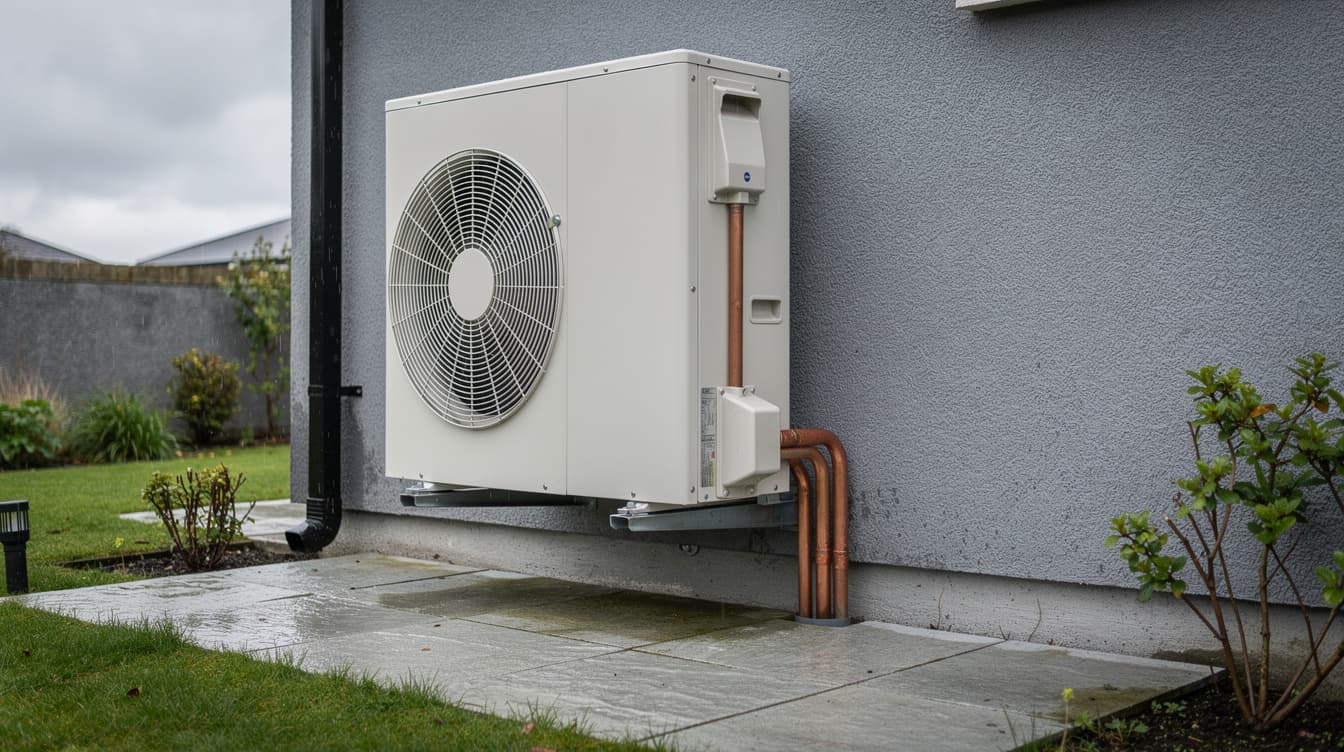
Air to Water Heat Pump Cost Ireland 2026: Real Installer Prices & Running Costs
Air to water heat pump cost Ireland 2026 — real installer prices, €6,500 SEAI grant, mid-year update on tariffs, oil-vs-pump economics, 15yr TCO.

Air to Air Heat Pumps Ireland 2026: Costs, vs Air-to-Water & Why There's No SEAI Grant
Air-to-air heat pump costs Ireland 2026: €1,200-€11,000 installed. Why there's no SEAI grant, vs air-to-water, best brands and when they make sense.
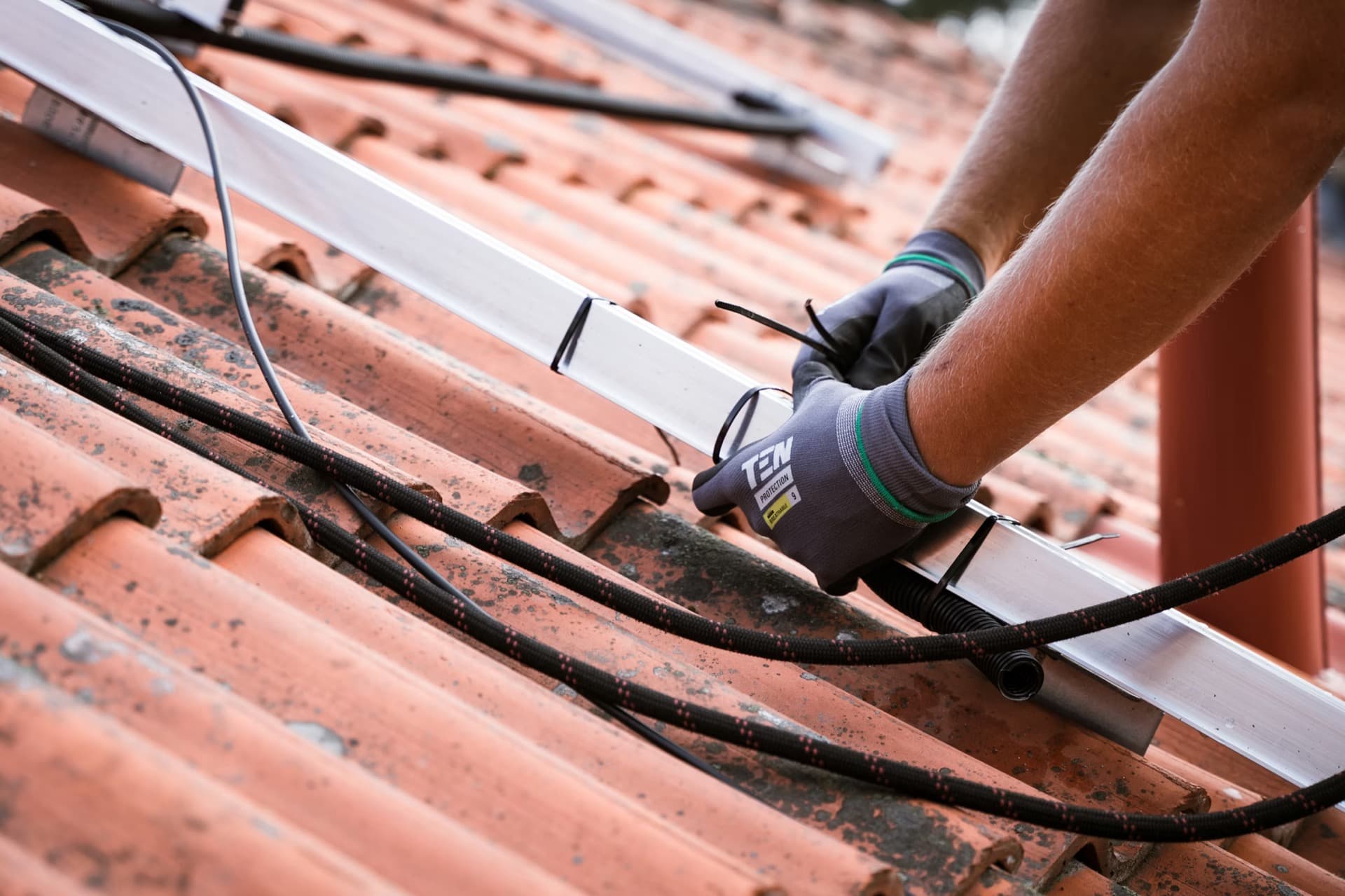
Heat Pump Installation Ireland: What Actually Happens (2026 Guide)
What actually happens during a heat pump installation in Ireland. Day-by-day timeline, radiator upgrades, pipework, commissioning, SEAI grant process, and how to choose an installer.