The Tesla Powerwall is the most recognised home battery in the world — and it's now fully available in Ireland with the Powerwall 3. But at €12,000–€15,000 fully installed, it's also one of the most expensive residential battery systems on the market. Is it worth the premium over alternatives like the Huawei LUNA or GivEnergy that can cost half the price? See our full battery comparison guide for more details.See our solar panel costs for more details.
This guide covers everything Irish homeowners need to know about the Tesla Powerwall in 2026: the real costs broken down line by line, full Powerwall 3 specifications, what it can and can't power during an outage, how it stacks up against every major competitor available in Ireland, SEAI grant savings, and an honest verdict on whether it makes financial sense for your home. See our full SEAI solar grant guide for 2026 for more details.
Tesla Powerwall 3: Key Specs at a Glance
Storage capacity: 13.5 kWh usable
Continuous power output: 11.5 kW (enough to run a full house)
Peak power output: 185 A (briefly, for motor startup loads)
Built-in solar inverter: Yes — 11.5 kW, eliminates the need for a separate inverter
Round-trip efficiency: 97.5%
Battery chemistry: Lithium Iron Phosphate (LFP)
Warranty: 10 years
Installed price in Ireland: €12,000–€15,000 (before SEAI grant)
How Much Does a Tesla Powerwall Cost in Ireland in 2026?
The Tesla Powerwall 3 costs between €12,000 and €15,000 fully installed in Ireland as of 2026. This is the total price including the battery unit, the built-in solar inverter, all electrical work, commissioning, and VAT (which is currently 0% on solar and battery installations for homes over two years old).
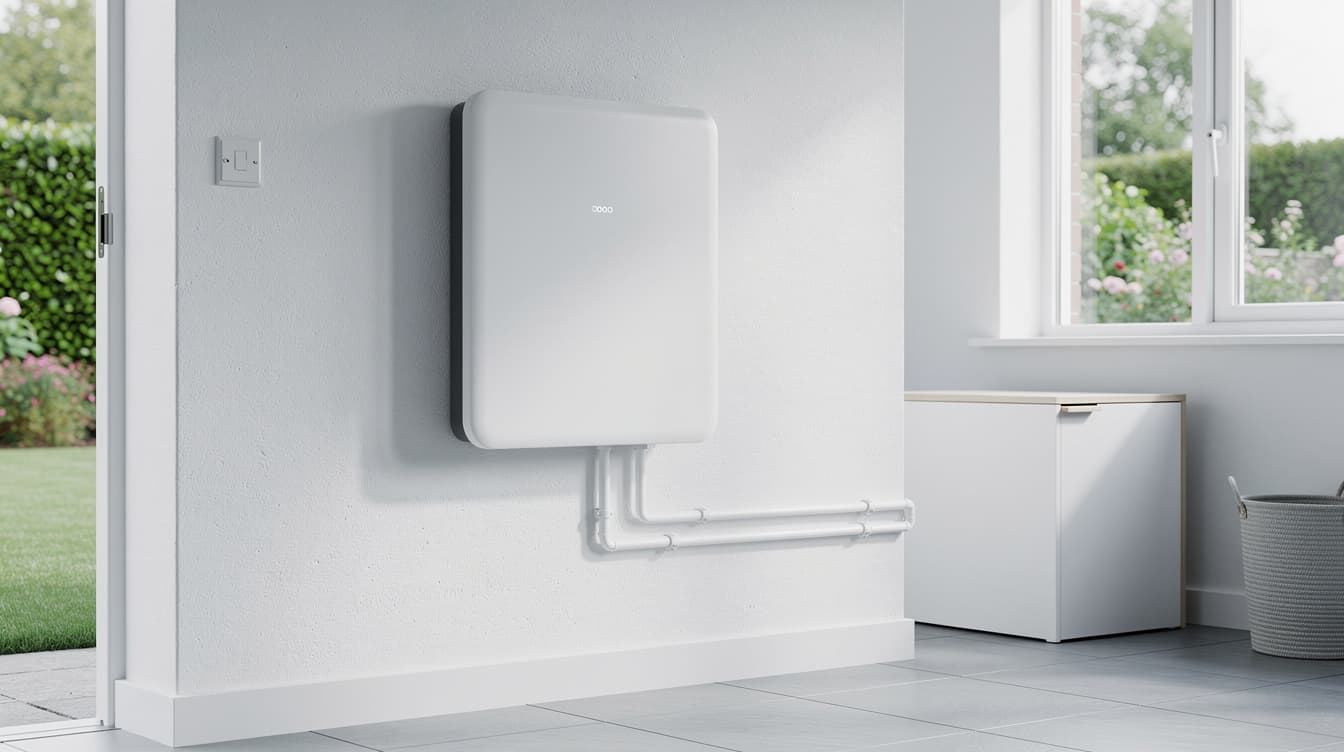
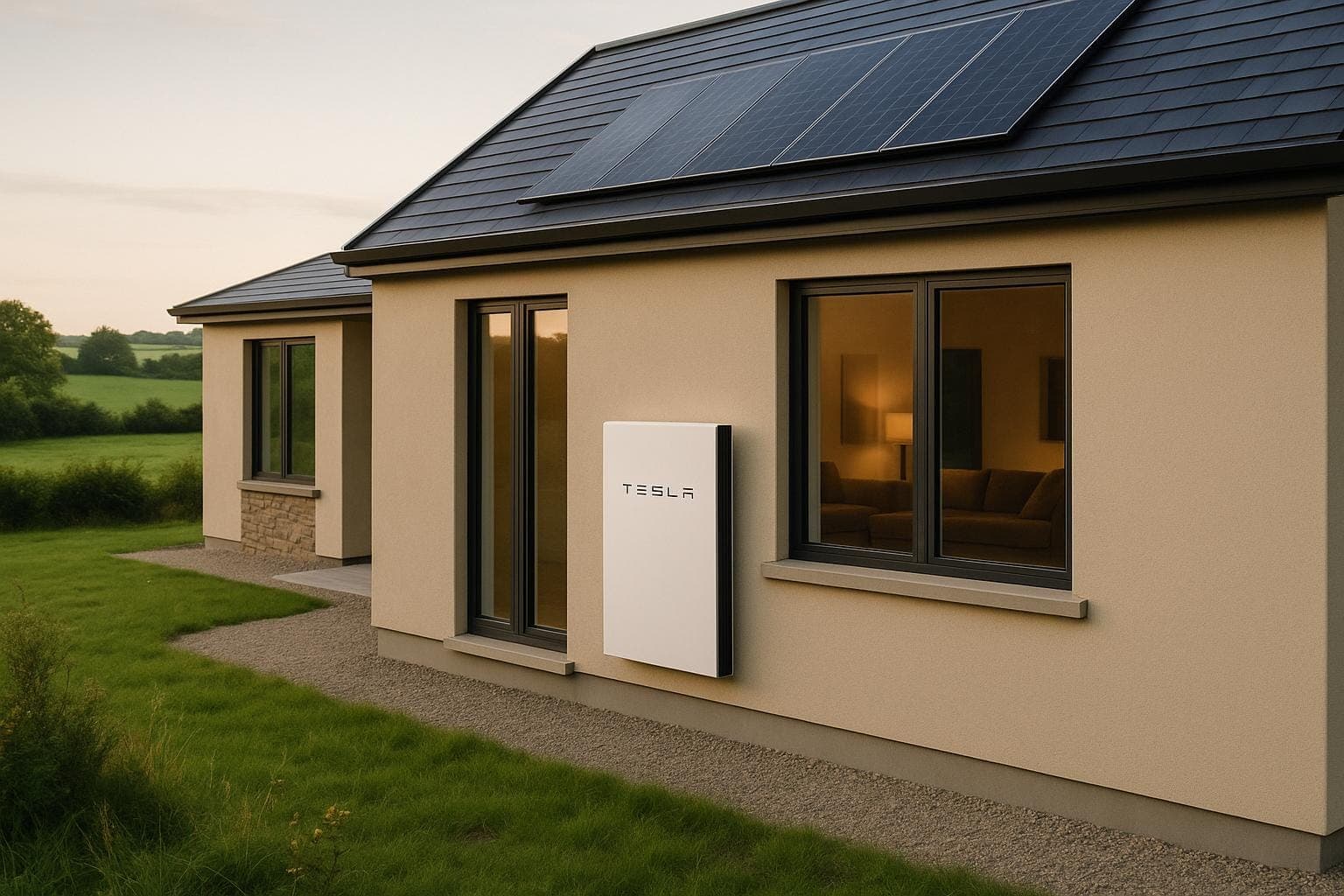
The Tesla Powerwall 3 — 13.5 kWh of storage with a built-in inverter
The price varies depending on your installer, the complexity of your electrical setup, and whether you're adding the Powerwall to an existing solar panel system or installing it as part of a new system.
Cost Component
Estimated Cost (€)
Tesla Powerwall 3 unit (inc. built-in inverter)
€8,500–€10,000
Gateway / Backup Gateway
€500–€800
Installation labour
€1,500–€2,500
Electrical work (consumer unit, wiring, meter)
€500–€1,000
Commissioning and ESB notification
€200–€400
Total installed cost
€12,000–€15,000
0% VAT (when bundled with solar PV)
Saves ~€1,000–€1,500 vs 13.5% rate
Net installed cost
€12,000–€15,000
Important: The Tesla Powerwall 3 includes a built-in 11.5 kW solar inverter. If you're installing a new solar panel system, this eliminates the need to purchase a separate string inverter (typically €1,000–€2,000), which effectively reduces the total system cost. However, if you already have an existing inverter with your solar panels, the Powerwall 3 can also be configured as AC-coupled, meaning your current inverter stays in place.
How does the price compare to other countries?
The Tesla Powerwall 3 retails for approximately $9,200 (around €8,500) in the United States before installation. In Australia, installed prices range from AUD 16,000–19,000 (approximately €9,800–€11,700). Ireland sits at the higher end globally, partly due to a smaller installer network and logistics costs, but the 0% VAT rate and SEAI grant help offset this.
Tesla Powerwall 3 Specs and Features
The Powerwall 3 is a significant upgrade over the Powerwall 2, which was sold in Ireland from around 2018 to 2023. Here's the full specification breakdown.
Specification
Powerwall 3
Powerwall 2 (legacy)
Usable capacity
13.5 kWh
13.5 kWh
Continuous power output
11.5 kW
5 kW
Peak power
185 A
32 A
Built-in solar inverter
Yes (11.5 kW)
No
Round-trip efficiency
97.5%
90%
Battery chemistry
LFP (Lithium Iron Phosphate)
NMC (Lithium Nickel Manganese Cobalt)
Backup capability
Full home backup
Partial home backup
Dimensions
1098 x 609 x 193 mm
1150 x 753 x 147 mm
Weight
130 kg
114 kg
Operating temperature
-20°C to 50°C
-20°C to 50°C
Warranty
10 years
10 years
Stackable
Up to 4 units (54 kWh)
Up to 10 units
Key improvements in Powerwall 3
The biggest upgrade is the built-in solar inverter. The Powerwall 3 accepts DC input directly from your solar panels via four MPP trackers, converting it to AC for your home. This means one less box on your wall, one less potential point of failure, and often a lower total system cost when installing solar and battery together.
The 11.5 kW continuous power output is more than double the Powerwall 2's 5 kW. This is critical for backup power — it means the Powerwall 3 can run your entire home during a grid outage, including high-draw appliances like electric showers (if managed carefully), ovens, and heat pumps. The Powerwall 2 could only manage lights, fridges, and a few sockets. See our selling electricity back to the grid for more details.
The switch to LFP chemistry (Lithium Iron Phosphate) is another major improvement. LFP batteries are inherently safer (no thermal runaway risk), last longer (typically 4,000–6,000 cycles vs 2,000–3,000 for NMC), and maintain capacity better over time. Most industry experts expect the Powerwall 3 to comfortably outlast its 10-year warranty.
Finally, the 97.5% round-trip efficiency is among the highest in the residential battery market. For every 10 kWh you put in, you get 9.75 kWh back out. Competing systems typically achieve 90–95%.
NEW: Tesla Powerwall 3P — Three-Phase for Europe
In April 2026, Tesla launched the Powerwall 3P — a native three-phase version designed specifically for European markets. This is significant for Ireland, where some homes (particularly larger or rural properties) use three-phase electricity supply.
Previously, Irish homeowners with three-phase supply needed up to three separate Powerwall units to achieve whole-home backup. The Powerwall 3P solves this with a single unit that delivers 15.4 kW of continuous AC power (up from 11.5 kW on the single-phase model) and can peak at 21 kW for heavy startup loads like heat pumps and water heaters.
Key Powerwall 3P specs relevant to Irish homeowners:
15.4 kW continuous power across all three phases
21 kW peak output for motor startup loads
Four solar MPPTs supporting multiple roof orientations and shading conditions
Mixed DC and AC configurations supported
Same 13.5 kWh capacity as the standard Powerwall 3
Irish pricing for the Powerwall 3P has not yet been confirmed, but expect it to sit slightly above the standard model at approximately €13,000–€17,000 installed. If you have a three-phase supply, the 3P eliminates the need for multiple units — potentially saving thousands compared to the previous workaround.
Tesla has also announced that firmware updates will allow existing Powerwall 2 owners to pair their units with a new Powerwall 3, enabling mixed-generation setups. Additionally, charging speeds for DC expansion packs have increased by approximately 40% with firmware 26.2.
What Can a Tesla Powerwall Power During an Outage?
One of the main reasons Irish homeowners consider a Tesla Powerwall is backup power during grid outages. Ireland's grid is generally reliable, but storm-related outages have become more frequent — Storm Éowyn in early 2025 left hundreds of thousands of homes without power for days.
Monitor your battery charge level in real-time through the inverter display or smartphone app
With 13.5 kWh of usable capacity and 11.5 kW of continuous output, a single Powerwall 3 can power:
Lights throughout your home — LED lighting uses very little power (typically 200–400W total)
Fridge and freezer — approximately 100–200W continuous
Internet router and WiFi — 15–30W
Phone and laptop charging — 50–100W
TV and entertainment — 100–200W
Central heating controls and circulation pump — 50–100W (gas/oil boilers need electricity to operate)
Washing machine — approximately 500W per cycle
Electric cooker/oven — 2–3 kW (yes, the Powerwall 3 can handle this)
How long will a Powerwall last during an outage?
It depends entirely on your consumption. Here are realistic scenarios for an average Irish home:
Usage Scenario
Average Draw
Duration
Essential loads only (lights, fridge, heating controls, WiFi)
400–600W
22–34 hours
Moderate use (essentials + cooking + TV + charging)
1–1.5 kW average
9–13 hours
Heavy use (running the house normally)
2–3 kW average
4.5–7 hours
If you have solar panels, the Powerwall will recharge during daylight hours, potentially allowing you to ride out multi-day outages. Even on a cloudy Irish winter day, a 6 kW solar array might generate 5–10 kWh, extending your backup significantly.
What about heat pumps and EV chargers? A heat pump typically draws 2–4 kW continuously. A single Powerwall can run a heat pump, but it will drain the battery in 3–6 hours. If backup heating is a priority, you may want to consider two stacked Powerwalls (27 kWh). EV charging at 7 kW would drain the battery in under two hours, so it's best avoided during outages unless solar is actively generating.
Tesla Powerwall Installation Cost Breakdown
Understanding what you're paying for helps you evaluate quotes from different installers. Here's a detailed breakdown of what goes into a Tesla Powerwall installation in Ireland.
The hardware
The Powerwall 3 unit itself accounts for roughly 65–70% of the total installed cost. This includes the battery pack, the integrated 11.5 kW hybrid inverter, thermal management system, and the Tesla Backup Gateway 2 (which manages the switchover between grid and battery during outages).
Electrical work
The installation requires a qualified electrician (RECI registered in Ireland) to:
Mount the Powerwall unit (wall-mounted or floor-standing)
Wire the Powerwall to your consumer unit (fuse board)
Install the Backup Gateway and configure backup circuits
Connect solar panel DC cables (if using the built-in inverter)
Install any required isolator switches and AC/DC disconnects
Configure the Tesla app and connect the system to WiFi
Complete electrical testing and certification
ESB Networks and grid connection
Any battery storage system connected to the grid in Ireland must be registered with ESB Networks under the microgeneration framework (NC6). Your installer should handle this notification as part of the installation. There is no charge from ESB Networks for this registration, but it's a legal requirement. If you're also exporting solar electricity, your installer will ensure your system is compliant with the Clean Export Guarantee (CEG) scheme.
Factors that increase installation cost
Three-phase supply: Homes with three-phase electricity may require additional wiring and configuration, adding €500–€1,000
Long cable runs: If the Powerwall is installed far from your consumer unit or solar array, additional cabling can add €200–€500
Older consumer units: If your fuse board needs upgrading to accommodate the Powerwall, expect an additional €300–€600
Outdoor installation: The Powerwall 3 is rated for outdoor installation (IP56), but some homeowners prefer indoor installation in a garage or utility room. Outdoor mounting may require additional weatherproofing considerations
Scaffolding or access: Rarely needed for battery installation, but may apply if solar panels are being installed at the same time
Powerwall as part of a full solar system
Many Irish homeowners install a Powerwall alongside a new solar panel system. A typical combined system costs:
6 kW solar + Powerwall 3: €17,000–€22,000 installed
8 kW solar + Powerwall 3: €19,000–€24,000 installed
10 kW solar + Powerwall 3: €21,000–€26,000 installed
These prices include the SEAI solar grant of up to €2,100 being deducted. The Powerwall 3's built-in inverter eliminates the separate inverter cost, which can save €1,000–€2,000 compared to installing a separate battery and inverter.
Tesla Powerwall vs Alternatives in Ireland
The Tesla Powerwall is far from the only battery storage option available to Irish homeowners. Here's how it compares to the most popular alternatives on the Irish market in 2026.
Tesla Powerwall vs Huawei LUNA vs GivEnergy — each has different strengths for Irish homes
Feature
Tesla Powerwall 3
Huawei LUNA 2000
GivEnergy All-in-One
BYD HVS/HVM
SolarEdge Home Battery
Usable capacity
13.5 kWh
5–15 kWh (modular)
9.5 kWh
5.1–12.8 kWh (modular)
9.7 kWh
Continuous output
11.5 kW
5 kW
3.6 kW
5 kW (with compatible inverter)
5 kW
Built-in inverter
Yes (11.5 kW)
No (requires Huawei inverter)
Yes (3.6 kW)
No (requires compatible inverter)
No (requires SolarEdge inverter)
Backup power
Full home
Partial (with backup box)
Partial
Depends on inverter
Partial (with backup interface)
Chemistry
LFP
LFP
LFP
LFP
LFP
Round-trip efficiency
97.5%
95%
95.5%
95.3%
94.5%
Warranty
10 years
10 years
12 years
10 years
10 years
App & monitoring
Tesla app (excellent)
FusionSolar app (good)
GivEnergy portal (good)
Varies by inverter brand
mySolarEdge app (good)
Installed price in Ireland
€12,000–€15,000
€5,500–€8,500
€5,000–€7,000
€5,500–€8,000
€6,000–€8,500
Cost per kWh
€889–€1,111
€550–€567
€526–€737
€430–€625
€618–€876
When does the Tesla Powerwall make sense over cheaper alternatives?
The Powerwall 3 costs roughly double its competitors per kWh of storage. But it does offer genuine advantages that may justify the premium for some homeowners:
Full home backup is a priority: The 11.5 kW output means the Powerwall 3 can run your entire house during an outage. Competitors at 3.6–5 kW can only manage essential circuits. If you've experienced extended power cuts and want seamless whole-home backup, the Powerwall is the strongest option.
New solar installation: The built-in inverter saves €1,000–€2,000 on a separate inverter, closing the price gap somewhat.
The Tesla ecosystem: If you drive a Tesla, the Powerwall integrates with your vehicle and the Tesla app for unified energy management.
Brand confidence: Tesla's global scale and software update capability provides some assurance of long-term support.
For homeowners focused purely on financial return — maximising self-consumption of solar and reducing electricity bills — the Huawei LUNA 2000 or GivEnergy typically offer better value per euro spent. They store and discharge energy just as effectively for daily use; they simply can't match the Powerwall's raw backup power.
SEAI Grants and VAT Savings on a Tesla Powerwall in Ireland (2026)
Important update for 2026: The previous €600 SEAI battery storage grant has been discontinued. As of 2026, there is no standalone SEAI grant specifically for battery storage. The Sustainable Energy Authority of Ireland now supports solar-plus-battery installations through the solar PV grant (up to €1,800) and the 0% VAT rate on solar equipment, not a separate battery grant.
The full home energy ecosystem — solar panels, battery storage, and EV charging working together
What grants are available in 2026?
SEAI Solar PV Grant: Up to €1,800 for solar panels (€900 per kWp, capped at €1,800 for systems 2 kWp and above). This grant applies to the panels, not the battery — but fitting a Powerwall alongside new panels keeps you eligible.
0% VAT on batteries: Since May 2023, batteries installed alongside solar PV on homes more than two years old attract 0% VAT instead of 13.5% or 23%. On a €13,000 Powerwall install this saves roughly €1,700–€3,000.
Home age: The SEAI solar PV scheme requires the home to have been built and occupied before 2021.
BER: A BER assessment is no longer a mandatory post-install requirement for the solar PV grant as of 2026.
VAT savings
Since 2023, Ireland applies a 0% VAT rate on solar panels and related equipment, including battery storage systems, for homes that are more than two years old. This is a significant saving — at the standard 23% VAT rate, a €13,000 Powerwall installation would cost an additional €2,990. This zero-rate VAT applies automatically and does not need to be claimed separately.
Total financial support for a Tesla Powerwall in 2026
Combining the 0% VAT rate (available since May 2023) and the SEAI solar PV grant of up to €1,800 for any paired panel install, Irish homeowners effectively save €2,800–€4,500 on a combined solar-plus-Powerwall installation compared to a pre-2023 scenario. The Powerwall 3's built-in 11.5 kW solar inverter also eliminates a €1,000–€2,000 string-inverter cost if you're installing new panels, which is a significant hidden saving.
Microgeneration and export payments
Under the Clean Export Guarantee (CEG), Irish homeowners with solar panels can sell excess electricity back to the grid. Most suppliers pay between €0.175–€0.245 per kWh exported as of April 2026. A battery changes the maths here: instead of exporting cheap and buying expensive, you store solar energy generated during the day and use it in the evening when electricity costs €0.30–€0.45 per kWh. This self-consumption approach typically saves more than exporting, making a battery a smart financial addition to any solar system.
Is a Tesla Powerwall Worth It in Ireland?
This is the question every Irish homeowner asks — and the honest answer depends on what you value most.
The case for the Tesla Powerwall
Best-in-class backup power: No other residential battery on the Irish market matches the 11.5 kW continuous output. For whole-home backup during storms and outages, the Powerwall 3 is unmatched.
Integrated inverter saves money on new solar installs: If you're installing solar panels from scratch, the built-in inverter eliminates a separate purchase, narrowing the price gap with competitors.
Excellent software and app: The Tesla app provides real-time monitoring, Storm Watch (which pre-charges ahead of forecast storms), time-of-use optimisation, and remote diagnostics. It's widely considered the best battery management app available.
Proven technology: Tesla has installed over 500,000 Powerwalls globally. The Powerwall 3's LFP chemistry is proven and safe.
Future-proofing: Tesla regularly pushes over-the-air software updates that add new features. The Powerwall 3 is designed to work with future smart grid and virtual power plant programmes.
High round-trip efficiency: At 97.5%, you lose very little energy in the storage cycle.
The case against
Significantly more expensive: At €889–€1,111 per kWh of storage, the Powerwall costs nearly double the €430–€625/kWh of alternatives. For the price of one Powerwall, you could install a Huawei LUNA system with 15 kWh of storage and a separate hybrid inverter.
Slower payback period: A Powerwall paired with solar takes approximately 8–12 years to pay for itself through electricity savings, compared to 5–8 years for cheaper battery alternatives.
You may not need full home backup: If your area rarely experiences extended outages, the backup premium is wasted. Partial backup (lights, fridge, heating controls) from a 5 kW system covers most people's needs.
Limited installer network in Ireland: Fewer installers carry and install the Powerwall compared to Huawei or GivEnergy, which can mean longer wait times and less competitive pricing.
13.5 kWh may not be enough: For larger homes or homes with heat pumps, 13.5 kWh runs out quickly. Stacking a second Powerwall doubles the cost to €24,000–€30,000, while modular systems like the Huawei LUNA let you add capacity more affordably.
Our honest verdict
If your primary motivation is financial return — reducing your electricity bills and maximising the value of your solar panels — a cheaper battery like the Huawei LUNA 2000 or GivEnergy offers better value. You'll get the same daily self-consumption benefits at half the cost.
If you want premium whole-home backup power, the best app experience, and a fully integrated solar-plus-battery system — and you're willing to pay for it — the Tesla Powerwall 3 is the best product in its class. It's a premium product at a premium price, and there's nothing wrong with choosing it if backup power and quality are your priorities.
For most Irish homeowners, the sweet spot is probably a mid-range system like the Huawei LUNA 2000 (10 kWh) paired with a Huawei hybrid inverter. It costs €5,500–€7,500 installed, handles daily solar self-consumption perfectly, and offers partial backup capability.
Who Installs Tesla Powerwall in Ireland?
Tesla does not sell the Powerwall directly to consumers in Ireland. You must purchase and install through a Tesla Certified Installer. As of 2026, the installer network in Ireland is smaller than for other battery brands, but it is growing.
What to look for in an installer
Tesla Certified: Only certified installers can purchase Powerwall units from Tesla. Ask to see their certification.
SEAI registered: To claim the SEAI solar PV grant (up to €1,800) when pairing your Powerwall with new panels, your installer must be on the SEAI Approved Installer list.
RECI registered: All electrical work in Ireland must be carried out by a Registered Electrical Contractor of Ireland (RECI) member.
Experience: Ask how many Powerwall installations they've completed. Battery installation is relatively specialist work.
Warranty support: Clarify who handles warranty claims — the installer or Tesla directly. The battery hardware warranty is from Tesla, but installation workmanship warranties come from the installer.
Getting quotes
We always recommend getting at least three quotes from different installers. Prices can vary by €2,000–€3,000 for the exact same Powerwall installation. Make sure each quote includes the same scope of work (battery, gateway, all electrical work, commissioning, ESB notification, and SEAI grant application).
At GetSolarPanels.ie, we can connect you with vetted, SEAI-registered installers who are experienced with the Tesla Powerwall and other battery systems. Get a free, no-obligation quote and compare your options.
Ready to Go Solar?
Get your free personalised quote from SEAI-registered installers.
With a Powerwall, your home runs on stored solar energy through the evening and nightFrequently Asked Questions
How much does a Tesla Powerwall cost in Ireland?
The Tesla Powerwall 3 costs €12,000–€15,000 fully installed in Ireland as of 2026. This includes the battery unit with its built-in 11.5 kW solar inverter, the Backup Gateway, all installation and electrical work, and commissioning. After the SEAI grant of €600, the net cost is approximately €11,400–€14,400. VAT is currently 0% on solar and battery installations for qualifying homes.
Is the Tesla Powerwall available in Ireland?
Yes. The Tesla Powerwall 3 is available in Ireland through Tesla Certified Installers. Tesla does not sell directly to homeowners — you must purchase through a certified installer. The installer network in Ireland is growing, though it remains smaller than for some competing brands like Huawei and GivEnergy.
How long does a Tesla Powerwall last?
The Tesla Powerwall 3 comes with a 10-year warranty guaranteeing at least 70% capacity retention. In practice, the LFP (Lithium Iron Phosphate) battery chemistry used in the Powerwall 3 is expected to last 15–20 years before significant degradation. LFP cells typically support 4,000–6,000 charge cycles, and a home battery averages one cycle per day — meaning the cells themselves could last 12–16+ years.
Powerwall 3 vs Powerwall 2: What's the difference?
The Powerwall 3 is a major upgrade over the Powerwall 2. Key differences include: 11.5 kW continuous output (vs 5 kW), a built-in solar inverter (the Powerwall 2 required a separate inverter), 97.5% round-trip efficiency (vs 90%), and LFP battery chemistry (vs NMC). The storage capacity remains the same at 13.5 kWh. The Powerwall 2 is no longer available for new installations in Ireland.
Can I install a Tesla Powerwall without solar panels?
Yes. The Powerwall 3 can be installed as a standalone battery without solar panels. In this setup, it charges from the grid during off-peak hours and discharges during peak hours to save on your electricity bill (time-of-use arbitrage). However, the financial return is much smaller without solar — the savings from time-of-use shifting alone typically don't justify the Powerwall's high cost. A cheaper battery would be more appropriate for this use case. Note that without solar panels you will not qualify for the 0% VAT rate on a standalone battery — the zero-rating only applies when the battery is installed alongside solar PV.
How many solar panels do I need for a Tesla Powerwall?
Tesla recommends a solar array of at least 4–6 kW to pair with a single Powerwall 3. In Ireland, a 6 kW system (approximately 14–16 panels) is the most common pairing. This generates roughly 5,000–5,500 kWh per year — enough to fill the Powerwall most days from spring to autumn. In winter, a 6 kW system will still generate 5–15 kWh on most days, partially charging the battery.
Can a Tesla Powerwall power my house during a blackout?
Yes. The Powerwall 3 is designed for full home backup with 11.5 kW of continuous power. It automatically disconnects from the grid during an outage and powers your home within milliseconds — most homeowners don't even notice the transition. With 13.5 kWh of storage, it can power essential loads for 22–34 hours or a full home for 4.5–7 hours. If solar panels are generating, the Powerwall recharges during the day, allowing you to ride out multi-day outages.
Is a Tesla Powerwall worth the money in Ireland?
It depends on your priorities. For pure financial return, cheaper alternatives like the Huawei LUNA 2000 (€5,500–€8,500 installed) offer better value per kWh of storage and a faster payback period. The Powerwall makes sense if you prioritise whole-home backup power, want the Tesla ecosystem integration, or are installing a new solar system (where the built-in inverter reduces total costs). The Powerwall's payback period with solar is approximately 8–12 years, compared to 5–8 years for budget alternatives.
What is the SEAI grant for battery storage?
The SEAI provides a €600 grant for battery storage when installed alongside solar PV panels (or added to an existing solar installation that received the SEAI solar grant). The grant is a flat rate regardless of battery size. Your installer must be SEAI-registered, and your home must have been built and occupied before 2021. The grant is applied for through your installer as part of the SEAI Solar PV scheme.
How much electricity can I save with a Tesla Powerwall?
A Powerwall paired with solar panels typically saves an Irish household €800–€1,500 per year on electricity bills, depending on your solar system size, electricity consumption, and tariff. The savings come from storing free solar energy during the day and using it in the evening instead of buying from the grid at €0.30–€0.45/kWh. Without solar panels, savings from time-of-use arbitrage alone are much smaller — typically €200–€400 per year.