
100kW Solar System Cost Ireland 2026 — Farm & SME Buyer's Guide
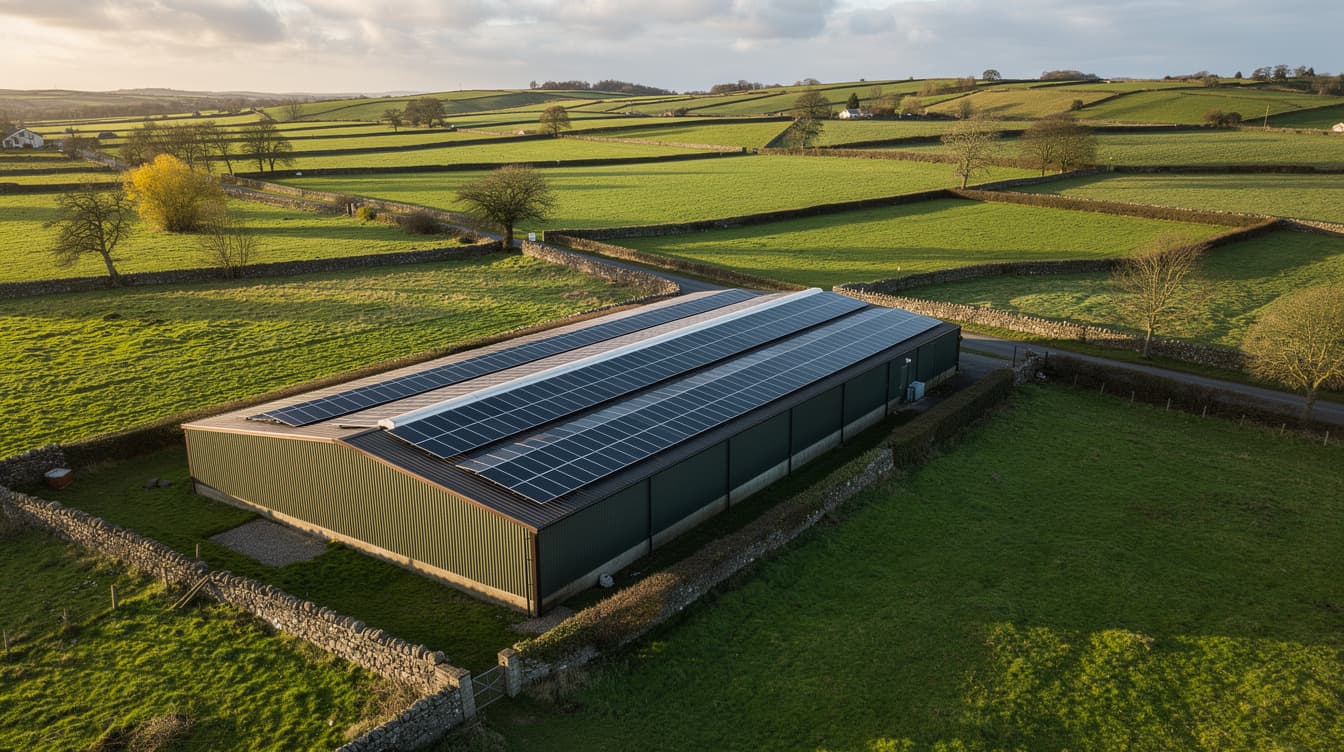
A 100 kWp solar PV system sits in a specific band of the Irish market: too big for the SEAI domestic Solar PV grant, too small for an industrial-scale utility deployment, and squarely where most working farms, dairy yards, SME warehouses, garden centres and family-run hotels land in 2026. It's the sweet spot of Irish commercial solar — large enough to materially shift your electricity bill, small enough that the system pays back within the ROI window most owners require.
This guide walks through what a 100 kW solar install actually costs in Ireland in 2026, what grant funding is available for farms (TAMS 3) vs SMEs (the SEAI Non-Domestic Microgen Grant), planning rules for systems above 50 kW, and realistic ROI numbers based on real Irish 100 kW deployments completed in the last 18 months.
Quick Answer: 100 kW Solar System Cost Ireland 2026
A 100 kWp rooftop solar PV system in Ireland typically costs €82,000–€115,000 installed in 2026 (€820–€1,150 per kWp depending on roof, mounting, and connection complexity). After the SEAI Non-Domestic Microgen Grant (up to €162,600 for a system of this size) or TAMS 3 (60% grant for farms, capped at €90,000), net cost typically falls to €25,000–€65,000. Annual output: ~90,000 kWh. Annual savings: €18,000–€28,000 for a business with high daytime load. Payback: 2–5 years.
What a 100 kWp System Actually Looks Like
A 100 kWp system in Ireland typically uses 220 to 240 modules of 425–460 W bifacial panels, mounted on a flat or pitched roof, with a 3-phase inverter or pair of inverters totalling 80–100 kW AC. The roof area required is roughly 450–550 m² — a typical industrial warehouse, multi-bay agricultural shed, or large hotel roof.
| Component | Typical Spec for 100 kWp | 2026 Cost Range |
|---|---|---|
| Panels (220×460W or 235×425W) | JA Solar, Trina, Jinko, LONGi Tier 1 | €22,000–€28,000 |
| Inverters (3-phase 80–100 kW) | SolarEdge, Huawei, Sungrow, Fronius Eco | €9,000–€14,500 |
| Mounting (flat or pitched) | Schletter, K2, IBC ballasted or rail | €7,500–€13,000 |
| DC/AC cabling, DC isolators | Compliant with I.S. 4146 + ESB Networks rules | €3,500–€6,000 |
| 3-phase ESB connection & meter | NC7 (export <200 kVA) application | €1,800–€4,200 |
| Installation labour (8–14 days) | 3–6 person crew, Safe Electric certified | €14,000–€22,000 |
| Scaffolding, edge protection, lift hire | 5–14 days, depends on roof height | €6,000–€12,000 |
| Design, engineering, certification | Structural sign-off, NC7, RECI cert | €3,200–€6,500 |
| VAT (0% if business reg, 23% if not) | Most commercial buyers reclaim | €0 (VAT-registered) |
| Total before grant | — | €82,000–€115,000 |
The Two Grant Routes — Farms vs SMEs
Where you sit on the grant ladder is the single biggest driver of net cost for a 100 kWp install. The split is sharp: farms apply through TAMS 3, everyone else through the SEAI Non-Domestic Microgen Grant.
Route 1: SEAI Non-Domestic Microgen Grant (SMEs, hotels, garden centres, community)
The SEAI Non-Domestic Microgen scheme pays per-kWp on a sliding scale up to 1,000 kWp. For 2026:
- First 6 kWp: €700 per kWp = €4,200
- Next 994 kWp (6–1,000 kWp): €200 per kWp
For a 100 kWp system: €4,200 + (94 × €200) = €22,800 grant, paid directly to the contractor at commissioning. Net 100 kWp install cost after grant: €59,200–€92,200.
Eligibility: any non-domestic MPRN holder, including farms registered as limited companies (sole-trader farms typically prefer TAMS 3 below). Maximum one grant per MPRN per scheme. The system must be sized to load (i.e. roughly matched to annual consumption); SEAI won't fund a 100 kWp system on a building consuming 20,000 kWh/year.
Route 2: TAMS 3 Solar Capital Investment Scheme (Farms only)
For working farms with a herd number, the Targeted Agricultural Modernisation Scheme (TAMS 3) is dramatically better. TAMS 3 funds 60% of the eligible cost of solar PV up to a per-farm cap of €90,000 of grant (i.e. covering up to €150,000 of eligible spend). For a typical 100 kWp install at €90,000–€110,000, that's a grant of €54,000–€66,000.
Net 100 kWp install cost after TAMS 3: €28,000–€55,000.
TAMS 3 application happens via the Department of Agriculture's online portal (agfood.ie), opens in specific tranches throughout the year, and the works must be approved before any spending. You cannot retrospectively claim TAMS 3 against a system already paid for — this is the single most common eligibility loss.
| Buyer Type | Grant Scheme | Grant for 100 kWp | Net Cost (Typical) |
|---|---|---|---|
| Dairy/beef farm (sole trader) | TAMS 3 (60%) | €54,000–€66,000 | €28,000–€55,000 |
| SME, hotel, garden centre | SEAI Non-Domestic | €22,800 | €59,200–€92,200 |
| Community group, sports club | SEAI Non-Domestic (Community top-up) | €22,800 + boost | €55,000–€88,000 |
| Limited company, no farm | SEAI Non-Domestic only | €22,800 | €59,200–€92,200 |
Considering Solar for Your Business or Farm?
Get a no-pressure quote from commercial-experienced installers. We'll match you with installers who handle TAMS 3 paperwork or SEAI Non-Domestic applications.
Annual Output and Realistic Savings
A well-sited 100 kWp Irish rooftop system generates roughly 87,000–95,000 kWh per year, varying by location and orientation. The southern half of Ireland (Wexford, Waterford, Cork) hits the upper end at around 95,000 kWh, while a north-facing slope in Donegal or Sligo might produce 80,000–85,000 kWh.
| Region | Annual Yield (kWh/kWp) | 100 kWp Output |
|---|---|---|
| Wexford / Waterford | 950–965 | ~95,000 kWh |
| Cork / East Munster | 925–945 | ~93,000 kWh |
| Greater Dublin | 895–920 | ~90,000 kWh |
| West / Midlands | 870–900 | ~88,000 kWh |
| Donegal / Sligo / Mayo | 840–880 | ~85,000 kWh |
Where the Savings Come From
Commercial 100 kWp savings depend entirely on how much of the generation you self-consume versus export. Self-consumed electricity displaces grid power at your business tariff (typically 26–38c/kWh inclusive of VAT and PSO levy), while exported power earns the Clean Export Guarantee rate (average 12c/kWh for commercial micro-export in mid-2026, lower than residential because most suppliers pay a wholesale-linked rate).
A typical 100 kWp install on a business with high daytime load (dairy, manufacturing, hospitality, refrigeration) might self-consume 70–85% of output, giving:
- 70,000 kWh self-consumed at 32c/kWh = €22,400 saving
- 20,000 kWh exported at 12c/kWh = €2,400 income
- Total annual benefit: €24,800
For a low-daytime-load operation (storage, low-occupancy buildings, businesses closed weekends/evenings), self-consumption falls to 40–55%, and the benefit drops to €14,000–€18,000 a year. Adding a 50–100 kWh battery typically lifts self-consumption by 10–15 percentage points but adds €25,000–€55,000 of capex.
Payback — Three Worked Examples
The numbers below come from three actual Irish 100 kWp deployments commissioned in 2024 and 2025, with cost and savings figures updated to 2026 grant and electricity rates.
Example 1: Mid-Sized Dairy Farm, Kilkenny
110 cow herd, parlour milks twice daily, ice bank chilling, three milk tank refrigeration cycles — high daytime electricity load. 100 kWp rooftop install on the main shed: gross €98,000, TAMS 3 grant €58,800, net €39,200. Annual saving: ~€24,500. Payback: 1.6 years.
Example 2: 32-Bed Boutique Hotel, West Cork
Year-round occupancy with peak summer demand (laundry, kitchens, hot water). 100 kWp split across two roof pitches with east-west bifacial array. Gross €105,000, SEAI Non-Domestic grant €22,800, net €82,200. Annual saving: ~€19,000. Payback: 4.3 years.
Example 3: SME Engineering Workshop, Galway
Single-shift operation, Mon–Fri 8am–5pm, CNC machinery and welding bays. Excellent overlap with solar generation. Gross €92,000, SEAI Non-Domestic grant €22,800, net €69,200. Annual saving: ~€22,000. Payback: 3.1 years.
Across all three: payback under 5 years even on the least-favoured case, and 1.6 years for a high-load farm with TAMS 3. This is why 100 kWp has become the default size for Irish commercial solar in 2026 — the economics are now significantly better than any other capital investment most owner-managers can make in their business.
Planning Permission for 100 kWp Systems
Under the Planning and Development Regulations 2022 (SI 92), rooftop solar on commercial, industrial, agricultural and community buildings is fully exempt from planning permission regardless of size, with no kWp cap. This is a sharp change from the pre-2022 rules where commercial solar above 50 kWp typically required planning.
The conditions:
- Panels must not project more than 50 cm above the roof surface
- Building must not be a protected structure or in an Architectural Conservation Area (ACA)
- Solar generation primary purpose must be on-site consumption (i.e. not a standalone solar farm)
For ground-mount installations, the exemption is more restricted — up to 75 m² on commercial premises with a 10 m setback from property boundaries. A 100 kWp ground array (~500 m²) exceeds the exemption and requires full planning permission.
ESB Networks Connection: NC7 Application
Any system above 11 kW in Ireland connecting to the grid requires an NC7 mini-generator application to ESB Networks. For 100 kWp on a 3-phase supply, the NC7 is straightforward as long as your service capacity supports the export (typically requires a 200 kVA or larger service). Application turnaround is currently 6–10 weeks; the installer files it on your behalf. Connection fee for an NC7 sits at €1,800–€4,200 depending on whether meter changes are needed.
When You Need Planning Permission Anyway
Even with the SI 92 exemption, certain situations still require planning:
- The building is a protected structure (most listed buildings) or in a conservation area
- You're oversizing for export — if the system is intended primarily to sell back to grid rather than serve on-site load, it's a commercial generation project and needs planning
- Ground-mount over 75 m² (most 100 kWp ground arrays exceed this)
- The roof structure requires a material alteration to support the load (most modern shed roofs don't; older slate roofs sometimes do)
Accelerated Capital Allowance (ACA) — Tax Treatment
One of the biggest reasons commercial solar in Ireland is so attractive in 2026 is the Accelerated Capital Allowance scheme: businesses can write off 100% of the eligible cost of energy-efficient equipment (including solar PV) in Year 1, against corporation tax at the standard rate (12.5%).
For a 100 kWp gross spend of €98,000 (Kilkenny dairy example): the company writes off the full €98,000 in year one, saving €12,250 in corporation tax. Combined with the TAMS 3 grant and direct electricity savings, the effective net cost falls to roughly €27,000 — under 28% of the gross install price.
The ACA is administered by SEAI: the equipment must appear on the Triple E Product Register at the time of purchase. All Tier 1 modules and major inverter brands are listed. Your accountant claims it on the corporation tax return.
Battery Storage: When It Adds Up
A 100 kWp system without battery storage is the default in 2026, and for most businesses it's the right call. Batteries are expensive (€25,000–€55,000 for 50–100 kWh capacity), they're not eligible for TAMS 3 or SEAI grants, and their payback only works when self-consumption can't be lifted any other way.
Battery storage is worth it for a 100 kWp install when:
- Your business operates outside daylight hours (most consumption in evenings or 24/7)
- You're on a time-of-use tariff with high peak rates (17:00–19:00 at 45c+/kWh)
- You're in an area with frequent grid outages and need backup power
- You want to qualify for ESB demand-side response programs paying for peak shaving
For a typical farm or daytime SME, the simpler path is no battery, full self-consumption during the day, export the excess at 12c/kWh. The payback math wins comfortably without storage.
FAQ: 100 kW Solar Systems Ireland 2026
Do I need 3-phase electricity supply for a 100 kWp system?
Yes. A 100 kWp inverter (or pair of inverters) cannot connect to a single-phase 230V supply — the export current would exceed safe limits. Almost every commercial premises in Ireland is already on 3-phase 400V. Farms in remote locations sometimes are not; upgrading from single-phase to 3-phase can cost €2,500–€15,000 depending on distance to the nearest 3-phase line. ESB Networks provides a quote on request.
How long does a 100 kWp install take?
Typical end-to-end timeline: 12–20 weeks. The breakdown is roughly: 2 weeks for design and quote acceptance, 6–10 weeks for the NC7 grid connection application, 2–3 weeks for site preparation and scaffolding, 8–14 days of on-roof installation, then commissioning. TAMS 3 applications can add 8–12 weeks of additional time before any spending can begin.
What roof type is best for a 100 kWp system?
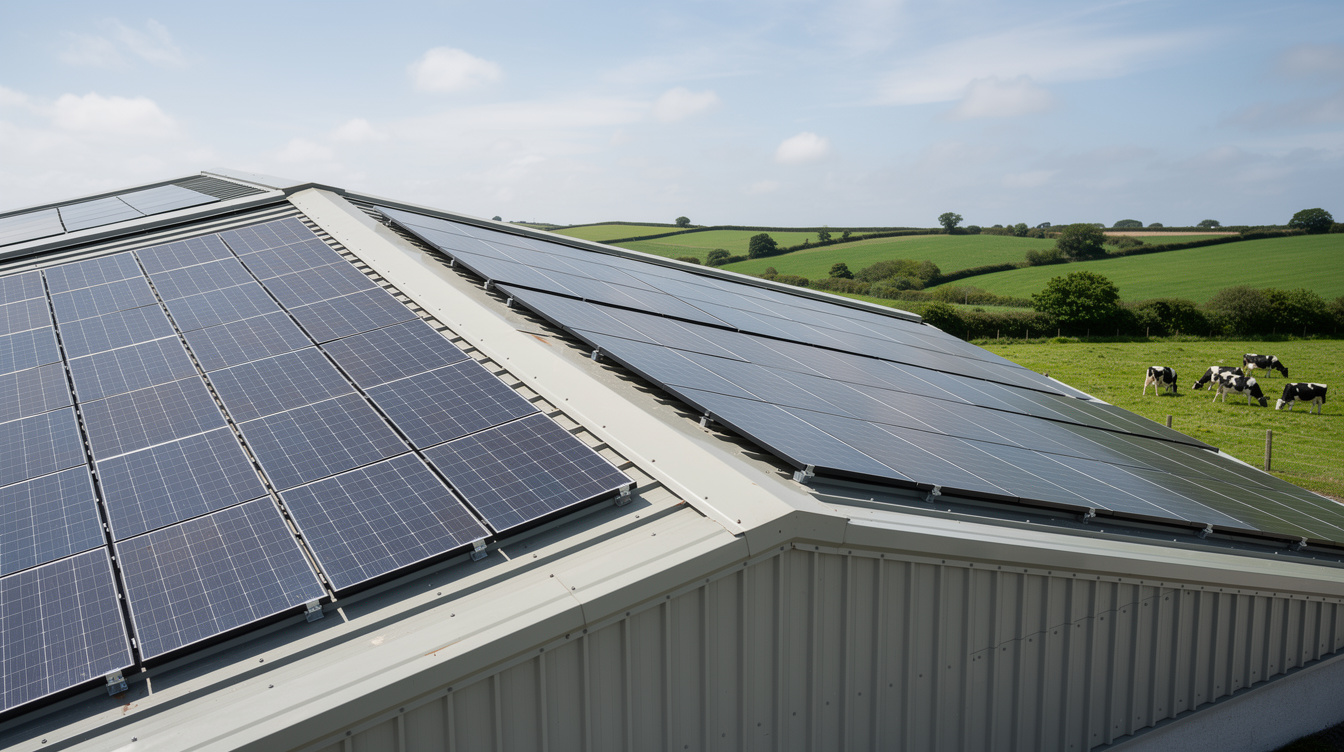
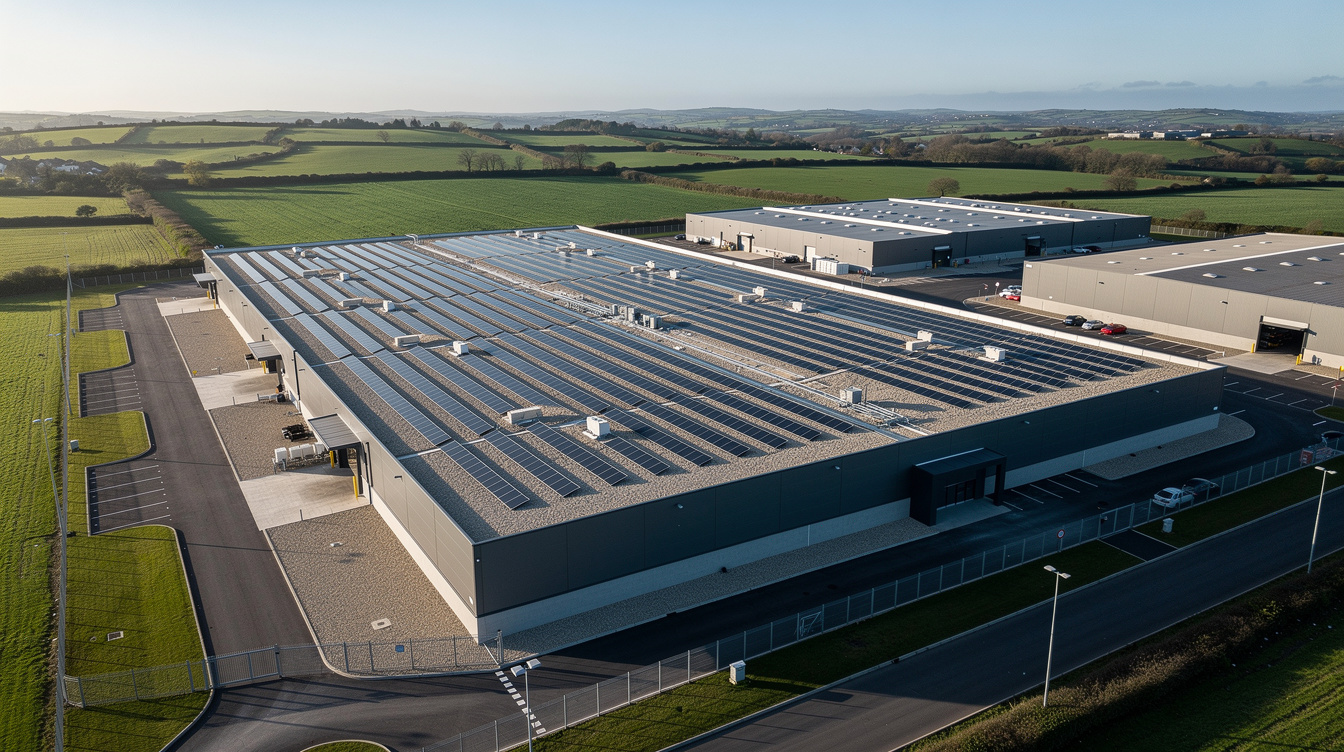
Flat industrial roof (trapezoid metal sheeting or membrane) is ideal: ballasted mounting, optimal panel angle (10–15°), no penetrations, fast install. Pitched corrugated agricultural sheeting is the next-best option, with K2 or Schletter trapezoid mounts that clamp to the sheet ribs. Slate roofs over 25 years old often require structural assessment before a 100 kWp load goes on.
Can I export 100 kWp to the grid?
Yes, under the SEAI Microgen Support Scheme up to 50 kVA AC export per MPRN, or up to 200 kVA via the Mini-Generator NC7 connection. Most 100 kWp DC systems are inverter-capped at 60–80 kVA AC export. Beyond 200 kVA, you move from "mini-generator" to "small generator" rules and the connection process becomes much more involved.
What's the difference between TAMS 3 and the SEAI Non-Domestic grant for a farm with a limited company?
A farm operating as a sole-trader (the most common structure) qualifies for TAMS 3 (60% grant) but not for SEAI Non-Domestic. A limited company farm can apply for SEAI Non-Domestic (€22,800 for 100 kWp) but not TAMS 3 if it's solely incorporated. Most family farms keep sole-trader status precisely to access TAMS 3 grants — the difference is €30,000–€40,000 of grant funding on a 100 kWp install.
Should I oversize the inverter or oversize the panels?
For Irish commercial 100 kWp, slight DC oversizing (110 kWp of panels on 100 kWp of inverter) is standard practice. The extra panels capture more energy in low-light Irish weather without losing significant generation to clipping. DC oversizing of 5–15% is the industry norm. Going beyond 20% oversize is uneconomic.
Bottom Line
A 100 kWp solar PV system in Ireland in 2026 costs €82,000–€115,000 gross, falls to €28,000–€92,000 net after the relevant grant scheme, and pays back in 1.6 to 5 years depending on grant eligibility, electricity tariff, and self-consumption profile. For working farms on TAMS 3, the economics are exceptional – few capital investments in Irish agriculture deliver under two-year payback. For SMEs on the SEAI Non-Domestic scheme, payback under four years is the norm, with the Accelerated Capital Allowance pulling the effective net cost down further.
The two pre-requisites are a clean 3-phase supply with sufficient export headroom, and roof area of 450–550 m² (flat or pitched). If you have both, 100 kWp is the size most Irish commercial premises should be sizing for in 2026 – large enough to materially offset consumption, small enough to fit the SEAI scheme's per-kWp grant taper and the NC7 mini-generator connection process.
Related Articles
Solar Panels Cavan 2026 — Costs, Grants & Installers
Solar Panels Cavan 2026: drumlin east-west arrays, Virginia M3 commuter EV maths, Lough Sheelin lakeshore planning, Bailieborough dairy TAMS 3 payback.
Solar Panels Donegal 2026 — Costs, Grants & Installers
Solar Panels Donegal 2026: pricing by area, Atlantic salt-spec mounting, Lifford basin TAMS 3 dairy maths, Wild Atlantic Way B&B economics, Strabane comparison.
Solar Panels Tipperary 2026 — Costs, Grants & Installers
Solar Panels Tipperary 2026: pricing by micro-market, Tipp plain yields, Knockmealdown shadow, M7/M8 EV commuter maths, Golden Vale TAMS 3 dairy payback.