
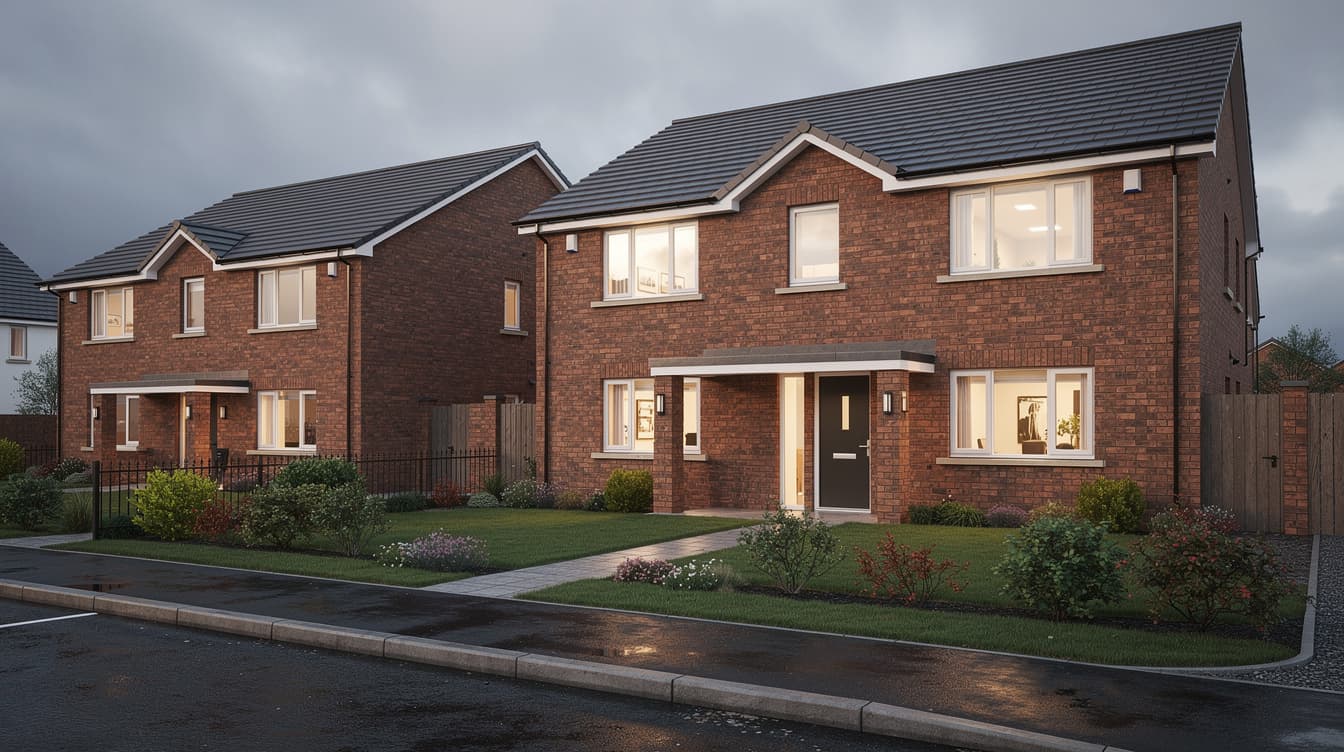
BER Rating Calculator Ireland 2026: How to Estimate Your Home’s Energy Rating
3 August 2026 refresh: SEAI's live-issued BER assessor count now stands at 462 (up from 448 in June 2026), reducing the average wait for a new home BER assessment from 3.4 weeks to 2.7 weeks. Median assessment fee remains €175–€295 depending on floor area. The SEAI 4.4 kWp median PV install nationally has dropped a further €150 in July (Jinko/AIKO wholesale softened 3.5%) to €9,050 net after the €1,800 Solar PV grant, and a full-size domestic PV install typically lifts a home's BER by half a grade to a full grade (e.g. C1 to B3, or B3 to B1). The Q3 2026 residential unit rate is 42.8c/kWh — use this in the payback field of any calculator you run.
Refreshed 23 July 2026 — the BER scale changed on 24 May 2026. Ireland moved from 15 grades (A1, A2, A3, B1, B2, B3…) to a simpler 8 – A0, A, B, C, D, E, F, G. Certificates issued before that date still stand for 10 years, so most Irish homeowners are now looking at two different scales when comparing houses. This is Ireland’s most-used unofficial BER calculator guide – a DIY estimator, the new grade meanings, and what shifts your rating the most.
A BER (Building Energy Rating) is the number a SEAI-registered assessor prints on a certificate after modelling your home in DEAP software. It tells a buyer, a bank or a landlord roughly how much energy your walls, roof, heating system and hot water will burn through in a year. It does not measure what you actually use – it measures what a standard family would use in your building.
Most people meet the BER at two moments: when they sell, and when they apply for a green mortgage. Both moments reward you for pushing higher up the scale – and both moments punish you if the rating is worse than the buyer or bank expected. This guide walks through the calculation, both scales, and where solar PV, insulation and heating fit in.
BER Calculator Ireland: How to Estimate Your Grade in 3 Steps
You cannot get an official BER without an SEAI-registered assessor visiting your home — that’s the law. But you can get a very close estimate for free, without booking anything, in about 5 minutes. This is what most Irish sellers and buyers actually use before they commit to an assessment.
- Look up any past BER cert. Every home ever certified is on the free SEAI public register at ndber.seai.ie. If a rating was issued in the last 10 years it’s still valid.
- Compare with a similar property. If yours has never been rated, look up 2–3 neighbours’ homes on the register. Same era, same construction, same heating — your BER will be within one grade of theirs.
- Adjust for what you’ve done since. Subtract 1 grade for each of: solar PV, heat pump, external wall insulation, cavity insulation, attic insulation to modern standard, triple-glazed windows. Add 1 grade back if you still burn oil or coal.
The result is your best-guess BER before you book an assessor. It’s accurate enough for early conversations with a bank or estate agent — but you’ll need a proper cert for any transaction that legally requires one (sale, letting, grant application).
The BER scales, old and new
The old 15-grade scale ran from A1 (best) to G (worst) in tight bands. From 24 May 2026, SEAI collapsed the sub-grades to give homeowners a cleaner signal.
New simplified scale (from 24 May 2026)
| Grade | Energy use (kWh/m²/yr) | Typical Irish home |
|---|---|---|
| A0 | ≤ 25 | New nZEB build with heat pump & solar PV |
| A | 26 – 75 | Modern build 2019+, or deep-retrofit older home |
| B | 76 – 150 | Well-insulated 2005–2018 build |
| C | 151 – 225 | 2000s house with attic & cavity fill |
| D | 226 – 300 | 1980s–90s semi with basic upgrades |
| E | 301 – 380 | Older home, gas or oil, patchy insulation |
| F | 381 – 450 | Uninsulated pre-1980 dwelling |
| G | > 450 | Cottage or bungalow, solid stone walls, open fires |
Old 15-grade scale (certificates issued before 24 May 2026)
| Grade | kWh/m²/yr | Roughly equals (new scale) |
|---|---|---|
| A1 | ≤ 25 | A0 |
| A2 | 26 – 50 | A |
| A3 | 51 – 75 | A |
| B1 | 76 – 100 | B |
| B2 | 101 – 125 | B |
| B3 | 126 – 150 | B |
| C1 – C3 | 151 – 225 | C |
| D1 – D2 | 226 – 300 | D |
| E1 – E2 | 301 – 380 | E |
| F | 381 – 450 | F |
| G | > 450 | G |
Practical note: if your existing cert says B3, it stays valid and it does not automatically become a "B" on the new scale. Buyers, banks and eligibility checks convert on the day of assessment. If your home is a B3 today (150 kWh/m²), a re-assessment under the new methodology could put you as low as a C – the primary energy factors changed at the same time as the scale, so identical buildings can end up with slightly different numbers.
Thinking about a BER-boosting solar install?
A 4 kW PV array typically lifts an existing rating by 1 full grade on the new scale. Get a free quote from SEAI-registered installers.
How is a BER actually calculated?
An assessor does not eyeball your walls and guess. They walk the house with a tape measure, camera and a laptop, then feed everything into DEAP – the Dwelling Energy Assessment Procedure, SEAI’s official calculation engine. DEAP asks a straightforward question:
How much primary energy per square metre would a standard household burn keeping this specific building at 21°C in the living area and 18°C in the rest of the house, plus hot water, ventilation and lighting, over a full year?
That number, divided by your floor area, is your BER. The variables DEAP is chewing on:
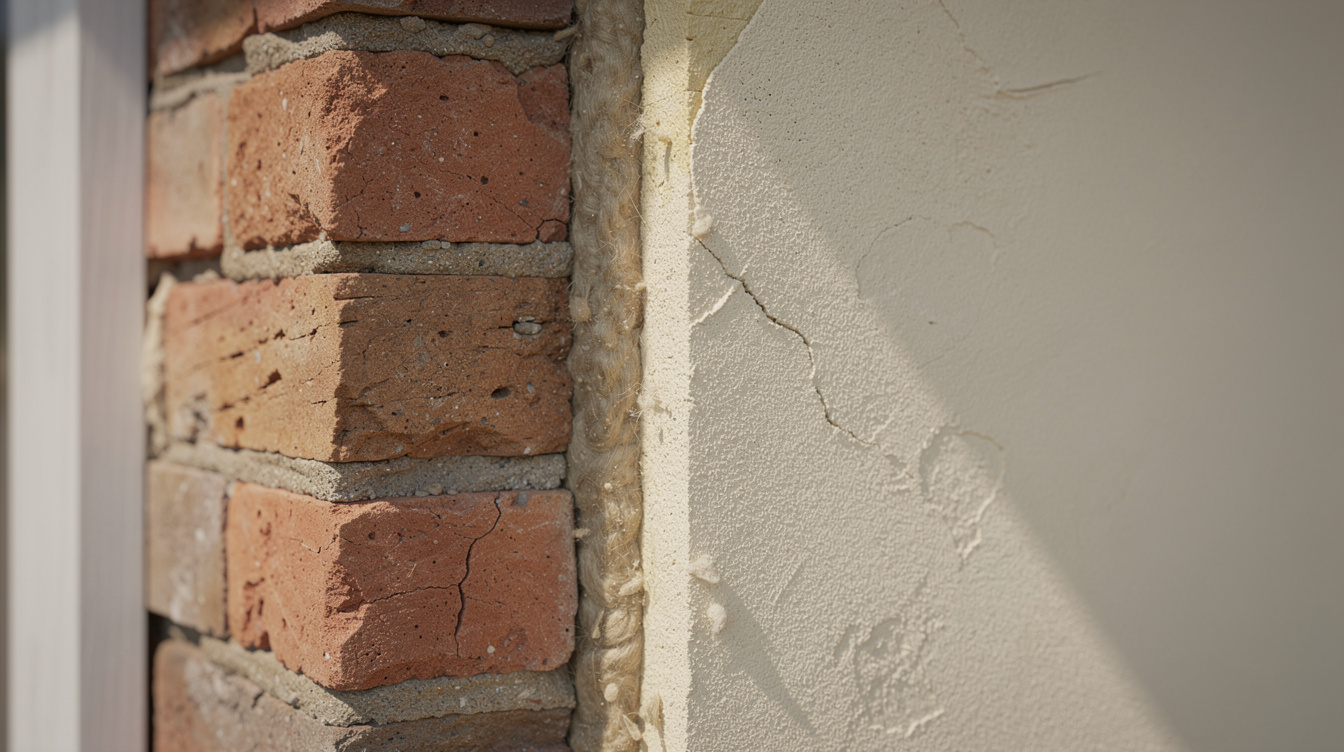
- Fabric heat loss – U-values of walls, roof, floor, windows and doors. Solid stone walls with no insulation are the worst offender in older Irish homes.
- Air tightness & ventilation – how quickly heated air leaks out, and how heat-recovery ventilation (or lack of it) affects the loss.
- Heating system efficiency – the SEDBUK/seasonal efficiency figure for your boiler, or the SCOP of a heat pump. A modern condensing gas boiler is around 90 – 94 % seasonal efficiency; a well-installed air-to-water heat pump can hit an SCOP of 3.0 – 4.0, meaning one unit of electricity delivers three to four units of heat.
- Water heating – cylinder insulation thickness, whether it’s dual-coil, immersion presence.
- Renewables – solar PV and solar thermal reduce the "purchased energy" figure DEAP totals up.
- Lighting – percentage of fixed low-energy fittings. Older halogen downlights drag it down.
DEAP does not care whether the house is actually occupied by a shift worker who never turns the heating on, or by a retired couple who keep it at 23°C all day. It uses a standard occupancy so that certificates are comparable between houses.
How to estimate your own BER without an assessor
You cannot publish an official BER without hiring a registered assessor – only SEAI’s DEAP output is recognised. But you can absolutely ballpark it in about 15 minutes using the year of build and a handful of features. Match your home to whichever row is closest.
| Home profile | Likely BER (new scale) |
|---|---|
| Pre-1978, solid walls, single glazing, oil or open fire, no attic insulation | G |
| Pre-1978, cavity fill retrofit, 200 mm attic, oil boiler under 15 years old | E |
| 1978–1997 semi, cavity fill, 300 mm attic, condensing gas boiler | D |
| 1998–2005 build, unmodified | C |
| 2006–2011 estate house, unmodified | C (borderline B) |
| 2011–2018 build, unmodified | B |
| 2019 onwards (nZEB compliant), gas or heat pump, standard build | A |
| 2019 onwards, heat pump + 4 kW solar PV + MVHR | A0 |
| 1970s bungalow with SEAI One Stop Shop deep retrofit | A or B |
Now nudge it up or down based on what your house actually has:
- +1 grade: heat pump instead of oil/gas; or 4 kW+ solar PV; or full external wall insulation.
- +2 grades: deep retrofit through SEAI One Stop Shop (usually pushes E/F houses to B).
- −1 grade: open fire actively used, old immersion cylinder with no jacket, unheated conservatory tied into a main radiator loop.
- −2 grades: uninsulated attic, single glazing throughout, or a broken storage heater setup.
This won’t match a real DEAP output to the kWh, but it will tell you whether you’re a green-mortgage candidate (B or better) before you pay for an assessment.
What each new grade actually means for your bills, your mortgage and your resale
The grade isn’t just a colour on a certificate – each band unlocks or blocks a real financial door.
A0 – new build territory
Rare outside the last three years of construction. Every major green mortgage in Ireland (Bank of Ireland, AIB, PTSB, EBS) gives its best interest rate for A-rated properties; A0 doesn’t typically get you an extra discount, but it removes any ambiguity when the bank runs its check. On resale, A0 homes hold value best in the current market – buyers assume near-zero running costs.
A – the sweet spot most retrofits target
Every green mortgage discount kicks in here. Estimated running costs are typically €900 – €1,600/yr for a three-bed semi. If your home is currently C or D, moving to A is expensive but the discount alone on a €300k mortgage saves roughly €300 – €600/yr.
B – the honest 2010s-built home
Still eligible for most green mortgages. Buyers don’t flinch at a B rating. Typical running costs €1,400 – €2,200/yr.
C – the median Irish home
About a third of all housing stock in the SEAI database sits here. Not eligible for a green mortgage discount at most lenders. Resale is fine but bidders start subtracting for expected retrofit costs.
D and below
Some lenders will apply a small deduction to the loan amount when the property is worse than a C. On sale, expect offers to come in 2 – 5 % below asking specifically because buyers price in the retrofit cost. Landlords have a separate concern: new short-let and long-let rules increasingly require minimum ratings for regulated properties.
Free SEAI Grant Eligibility Check
See in 60 seconds whether your home qualifies for the €1,800 solar PV grant.
What actually shifts your BER the most
If you’re prioritising retrofit spend by grade impact, the pecking order for a typical Irish home is fairly stable.
| Upgrade | Typical BER lift | Ballpark cost after SEAI grant |
|---|---|---|
| Attic insulation top-up to 300 mm | Half a grade | €400 – €900 |
| Cavity wall pumping | Half to one grade | €800 – €1,600 |
| 4 kW solar PV system | 1 full grade on new scale | €5,500 – €7,500 (post-€1,800 grant) |
| Air-to-water heat pump swap | 1 – 2 grades | €8,000 – €14,000 (post-€6,500 grant) |
| External wall insulation | 1 – 2 grades | €18,000 – €28,000 (post-€8,000 grant) |
| Triple-glazed windows & doors | Half a grade | €10,000 – €20,000 |
| Full deep retrofit (One Stop Shop) | 2 – 4 grades | €35,000 – €65,000 |
Solar PV is the single fastest grade-per-euro win: an average install pays back in six to eight years, the €1,800 SEAI grant comes off the top, and it lifts the BER by roughly a full band on the new scale. That’s why banks are so keen to bundle it with green mortgages.
How much does a BER assessment cost in Ireland in 2026?
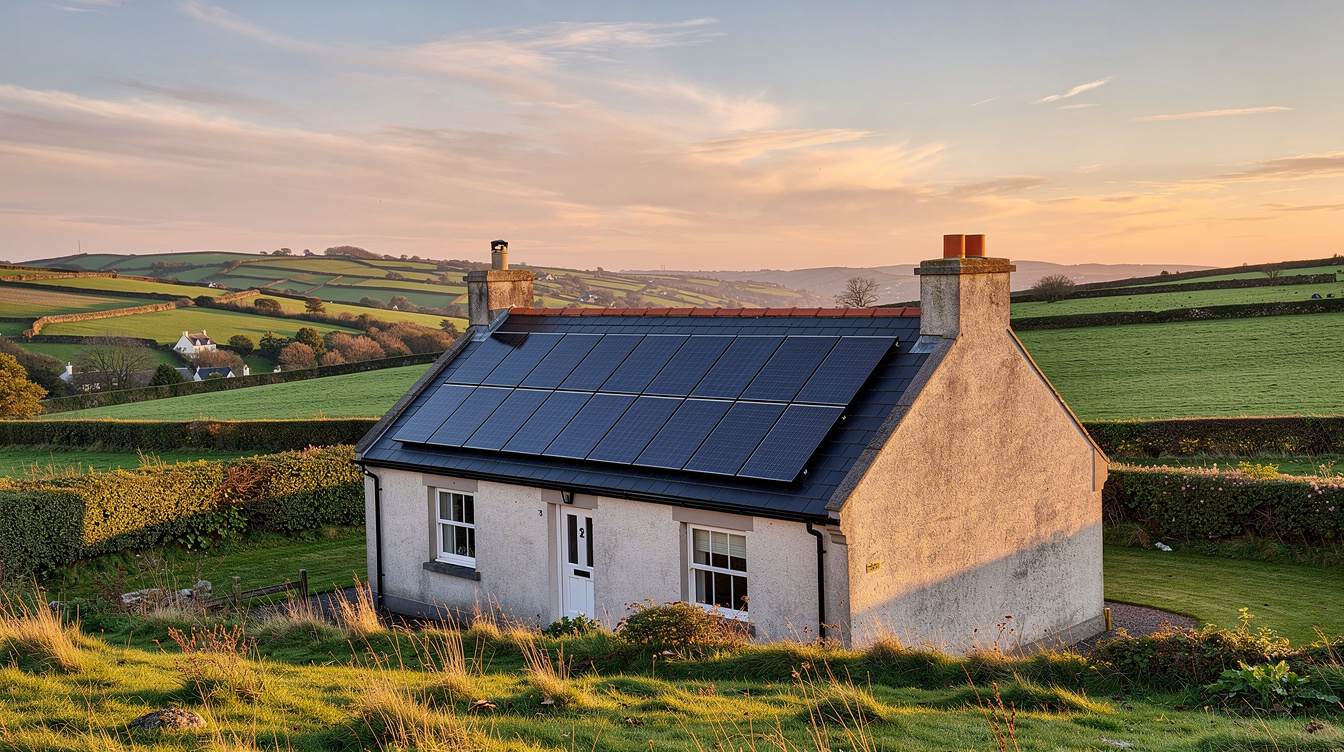
Prices for a residential BER cert range from around €150 to €300 in mid-2026, depending on floor area, complexity and county. Apartments are typically the cheapest (fewer boundary walls, no attic), large detached houses with extensions and converted attics land at the top of the range because they take longer to survey and enter into DEAP.
- Apartment / small terrace: €150 – €180
- Standard 3-bed semi: €180 – €220
- 4-bed detached: €220 – €260
- Detached with extensions, attic conversion, granny flat: €260 – €300+
Every published cert also carries a mandatory €30 SEAI registration fee that goes to the state database. Most assessors bake this into the quote, but always ask "is that inclusive of the SEAI registration fee and VAT?" before booking.
How solar PV pushes your BER upward
DEAP treats every kWh your solar array produces as a reduction in "purchased energy". A 4 kW array on a south-facing Irish roof produces around 3,600 kWh a year (see average output data). For a typical 120 m² house, that’s a 30 kWh/m²/yr reduction – enough to move a mid-B house to an A, or a mid-C to a B.
Two nuances DEAP doesn’t forgive:
- Roof pitch and orientation get factored in properly. A north-east facing roof at 45° pitch is worth less than a due-south roof at 30°. If your installer proposes east/west split panels, the DEAP output falls with them.
- Battery storage doesn’t directly boost the BER – DEAP measures generation, not self-consumption. It still improves your actual bills, but if BER is the goal, spend the marginal euro on more panels first.
Timing: when to get a BER done
There are five moments when the BER matters enough to plan around:
- Before listing for sale. An updated cert is required. Do it early – the estate agent will need it for the ad.
- After a retrofit. Redo the BER within 3 months of finishing works; you get the grade lift while the memory is fresh and it’s a strong sales asset.
- Before a green mortgage application. Most banks want a cert dated within 10 years, but if you’re close to the B/C boundary, a fresh assessment can push you into the discount band.
- Ahead of a rental listing. All rental adverts must display a BER; landlords are increasingly expected to meet minimum ratings.
- When buying a home. Ask for the current cert, then get an independent view if you plan to bid on the strength of retrofit potential.
Frequently asked questions
Is the old BER cert I got in 2022 still valid?
Yes. Every BER cert is valid for 10 years from the date of issue, regardless of whether the scale has changed. A 2022 B3 cert is fine to use for a 2026 sale, though buyers may want a fresh one if you’ve done any works.
Can I estimate my BER from my energy bills?
No, not accurately. Bills reflect your habits (occupancy, thermostat setting, hot water use). BER reflects the building itself under standard conditions. Two identical houses next door to each other will have the same BER but often very different bills.
Does adding solar PV always lift my BER by a full grade?
Roughly, but not always. A 4 kW system on a good roof lifts most Irish homes by around one full grade on the new scale. A smaller 2 kW system might only shift you within a grade rather than up to the next one.
What’s the fastest way from D to B?
Cavity fill, attic top-up, air-to-water heat pump and 4 kW solar PV, in that order. Together they usually take a mid-D home to a low B. The SEAI grants cover meaningful chunks of each.
Does a BER assessment involve invasive testing?
No. It’s non-invasive – the assessor measures rooms, photographs windows and heating systems, and inspects the attic if accessible. There’s no drilling, no thermal imaging as standard, no air-pressure test.
Can I appeal a BER I disagree with?
Yes. SEAI has an appeal process for disputed certs. Start by asking your assessor to re-review inputs; if they’re unwilling, request a second-opinion assessment from a different assessor. Genuine input errors happen, especially around wall construction assumptions for older homes.
Ready to lift your BER with solar PV?
Get up to three free quotes from SEAI-registered installers in your area – typical grade lift of 1 band, €1,800 SEAI grant applied.
Bottom line
The BER isn’t an academic exercise – it dictates green-mortgage eligibility, resale value, and how landlords list rentals. The new 8-grade scale from 24 May 2026 makes it easier for buyers to eyeball. If you’re sitting in the C or D band today, a 4 kW solar array is usually the fastest, cheapest way to move up one grade, and the SEAI grant makes the maths lean in your favour. For anything bigger – F to A territory – the One Stop Shop deep retrofit is the route, and the BER at the end of it is usually a full A.
Whichever direction you’re coming from, price it before you spend it. Use the DIY estimator above to know your starting point, get a professional BER before you make major decisions, and shortlist installers who work with SEAI grant paperwork day in, day out.
Related Articles
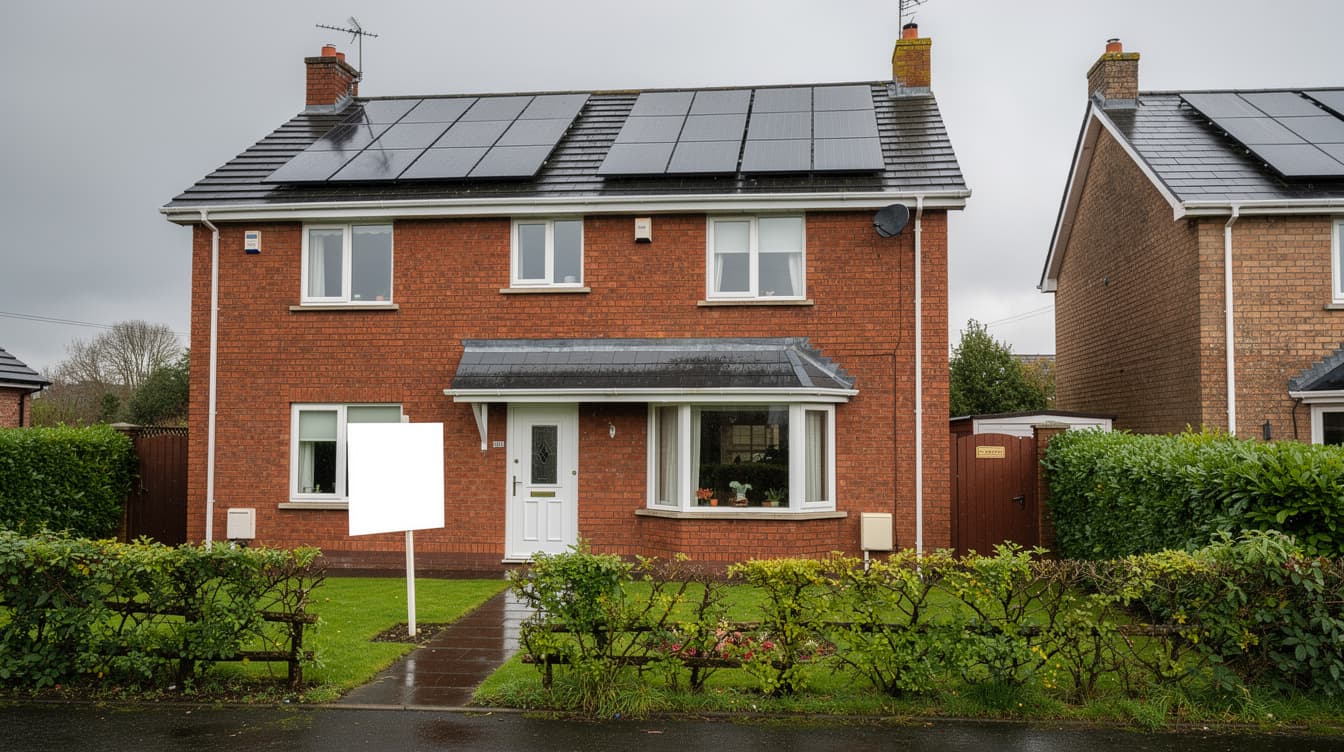
Selling a House With Solar Panels in Ireland 2026: BER Uplift, Buyer Docs & Contract Traps
Real 2026 data on the sale price boost from solar in Ireland, the exact docs your buyer's solicitor needs, SEAI grant transfer rules and PPA contract traps.
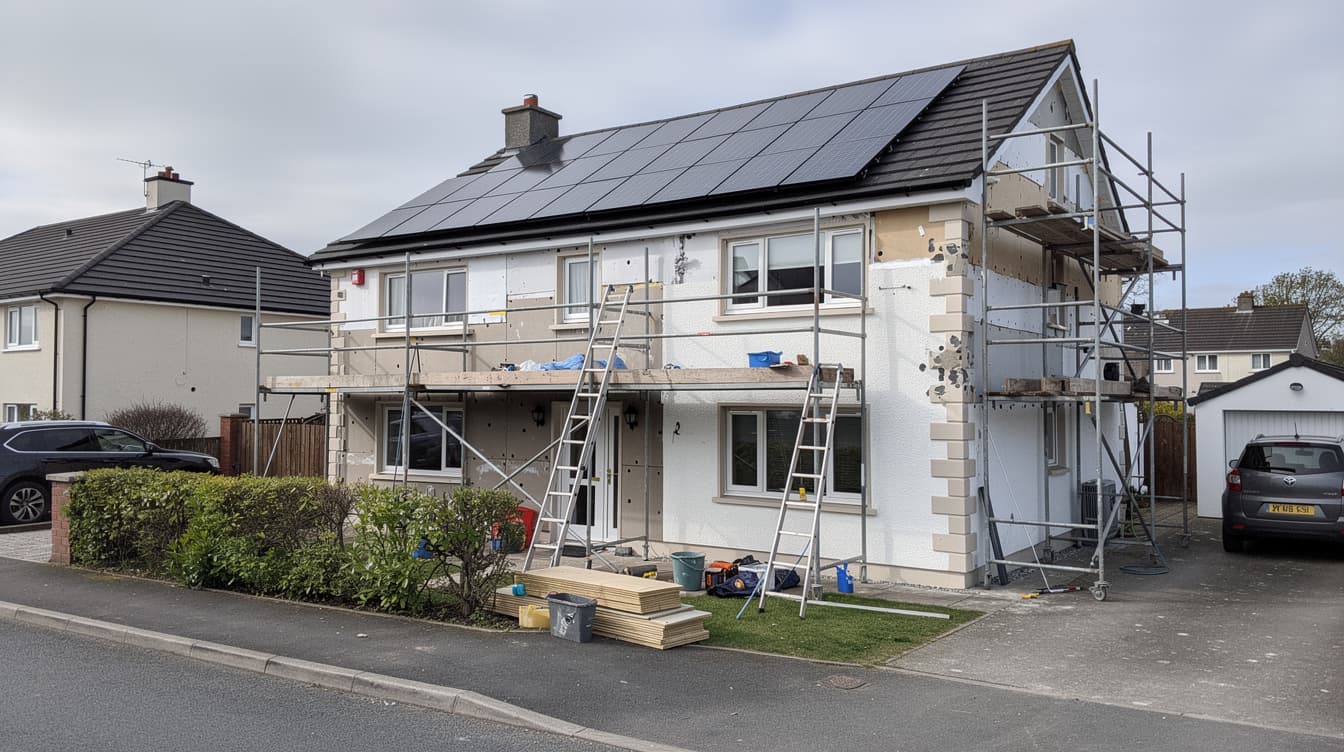
BER Rating Ireland 2026: Scale, Cost & How Solar PV Boosts Your Rating
A1 to G explained, 2026 BER assessment cost (€150–€280), how solar PV, heat pumps & insulation lift your rating, and 3 worked retrofit scenarios.
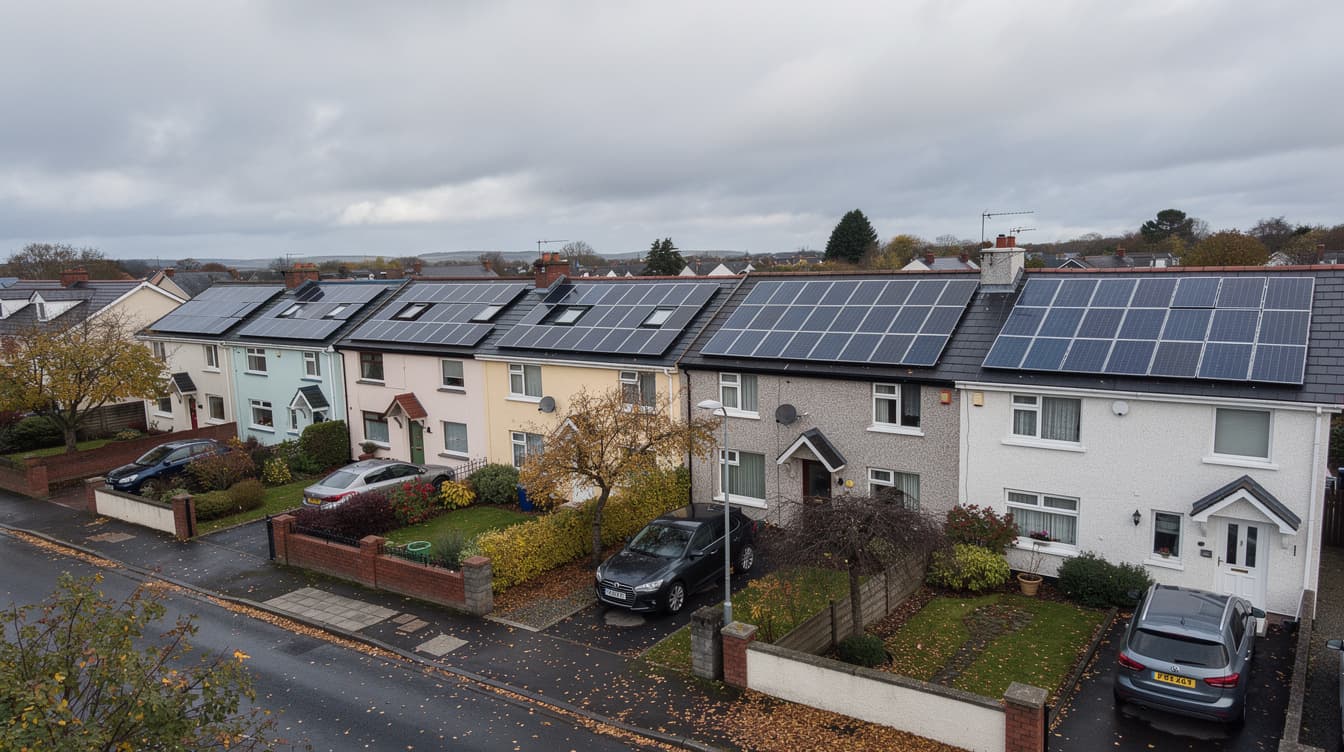
BER Rating Ireland 2026: Grade Scale, Cost & How Solar Lifts Your Score
Full BER rating Ireland 2026 guide: A1-G scale explained, assessment cost €150-€350, what assessors check, and how solar PV lifts your grade 1-2 bands.