
Selling a House With Solar Panels in Ireland 2026: BER Uplift, Buyer Docs & Contract Traps
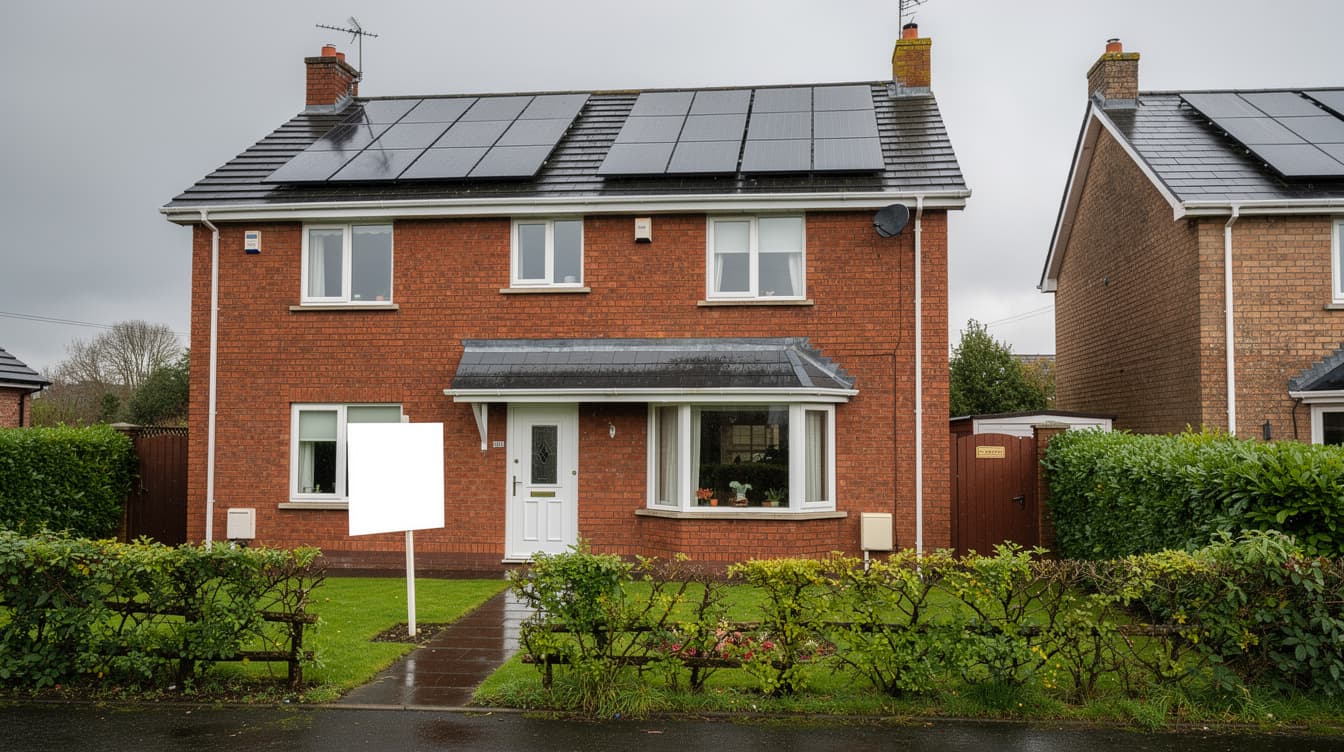
You’ve had solar panels on the roof for a few years, the meter has been running backwards, and now you’re about to put the house on the market. Question every seller asks their estate agent in 2026: does the solar system add value – and how much extra work does it create on the paperwork side?
The short answer: yes, solar panels almost always help the sale price in Ireland – but only if the buyer’s solicitor can tick off a small stack of documents before contracts sign. Miss those and you can lose the deal at the last minute over a €150 form.
This guide walks you through the real Irish sale price uplift from solar, the exact paperwork your buyer will want, the SEAI grant rules on resale, and the contract traps that catch sellers who bought under a PPA or leaseback deal.
Do Solar Panels Actually Add Value to an Irish House?
Yes, and the data is now solid enough that estate agents in Dublin, Cork and Galway routinely list solar as a headline feature. The value comes through two channels: a direct BER grade improvement, and a “running cost” premium buyers now factor in when comparing homes.
Recent Irish market data shows how the BER grade alone translates into sale price:
| BER Grade Move | Typical Sale Price Uplift | Example on a €350,000 Home |
|---|---|---|
| D to C | ~1.7% | +€5,950 |
| D to B | ~5.2% | +€18,200 |
| D to A | ~10–14% | +€35,000 – €49,000 |
Solar PV alone very rarely pushes a D-rated house to an A – that usually needs insulation and a heat pump too. But moving a C to a B is well within reach for a typical 4 kWp system with a battery, and that alone is a mid-five-figure gain on a €350,000 home. A more realistic scenario for most sellers is a B3 lifted to B1 or B2, which still pulls the property into the “green mortgage” band that AIB, Bank of Ireland and Permanent TSB reward with rates 0.1–0.3 percentage points below their standard variable.
The BER Math: Why Solar Punches Above Its Weight
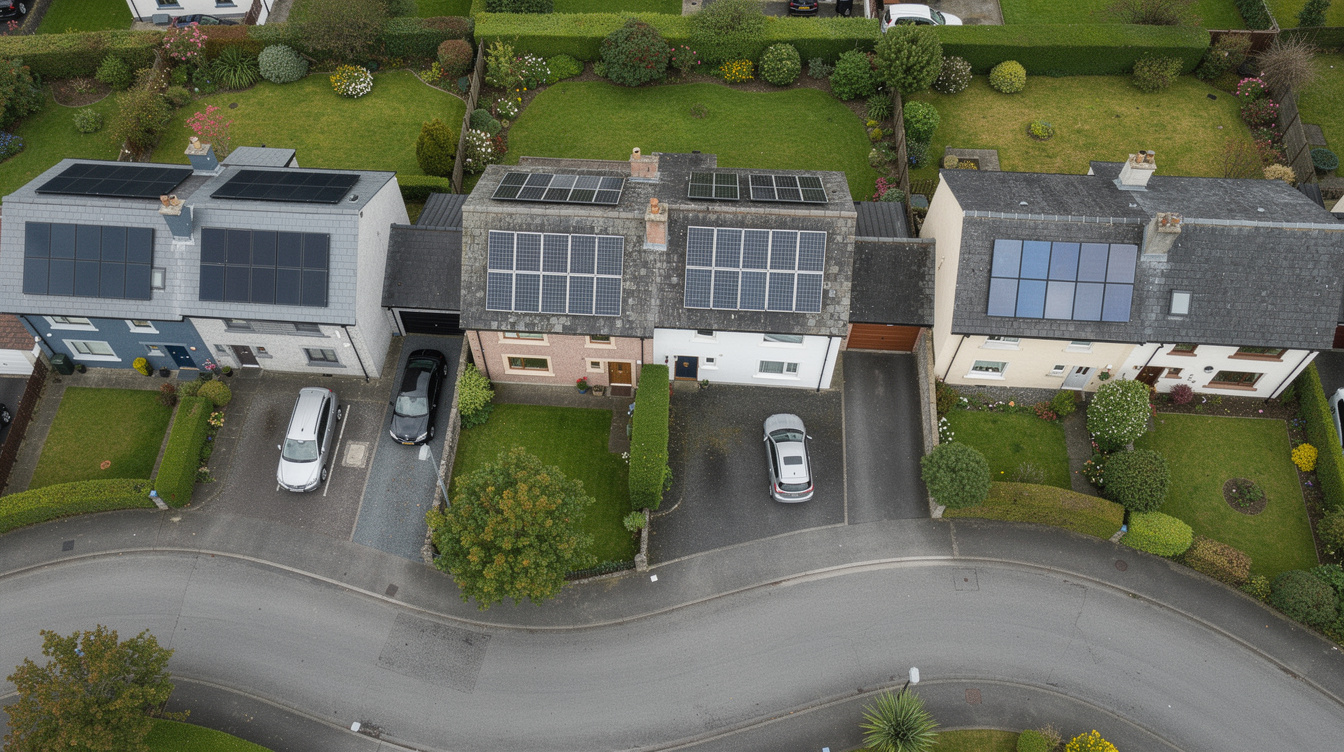
Ireland’s DEAP (Dwelling Energy Assessment Procedure) software – the engine behind every BER cert – gives solar PV a 1.75x primary-energy multiplier. In plain English: for every 1 kWh of electricity your panels generate, the BER calculation credits you as if you’d saved 1.75 kWh of primary energy from the grid.
That’s why a modest 3 kWp system that generates ~2,700 kWh a year can move a home’s BER by a full grade – it counts on paper as ~4,725 kWh of primary energy avoided. It’s also why a battery matters here: without one, the daytime export is credited at a lower value because it displaces grid supply rather than your own use.
Practical takeaway: if your BER cert is more than 3 years old, get a new one done after you install (or after any efficiency upgrades) and before you list the property. Cost: €150–€250. The revised cert routinely pays for itself hundreds of times over in asking price.
Thinking of Adding Solar Before You Sell?
A B-band lift typically returns more than the install cost. Get a free quote from an SEAI-registered installer.
The Solar Sale Checklist: What Your Buyer’s Solicitor Will Ask For
The single biggest reason solar-equipped sales get delayed at contract stage is missing documentation. Buyer solicitors have got a lot sharper about this since 2024 as MPRN and grid-connection issues have become more common. Here’s the exact bundle you should have ready before you even accept an offer.
- Installer invoice – the original itemised invoice showing panel make/model, inverter, battery (if any), install date and installer name/company.
- SEAI grant confirmation letter – the grant approval and the post-inspection sign-off. Prove the grant was drawn down correctly.
- SEAI Registered Installer certificate – confirming your installer was on the SEAI Solar Electricity Registered Installer list on the day of install.
- MCS or equivalent certification – installer’s MCS or Safe Electric registration.
- NC6 form – ESB Networks approval – the mini-generator connection notification that gets you the export tariff. Must be in your name and MPRN. See our NC6 form guide for the exact wording.
- Grid export contract – your Clean Export Guarantee (CEG) contract with Electric Ireland, Bord Gáis, SSE Airtricity, or whichever supplier bought your surplus.
- Manufacturer warranties – panel product warranty (usually 25 years, sometimes 30), power/performance warranty, inverter warranty (10–12 years typically), battery warranty (10 years is standard).
- Installer workmanship warranty – typically 2–10 years depending on the installer.
- Updated BER cert – issued after install, showing the improved grade.
- Electrical installation cert – the RECI/Safe Electric completion certificate for the DC and AC works.
Keep a physical folder and a PDF pack on a USB stick or shared drive. When your solicitor requests replies to pre-contract enquiries, you want to send this whole bundle in one go rather than dribble it out over three weeks.
Does the SEAI Grant Get Clawed Back If I Sell?
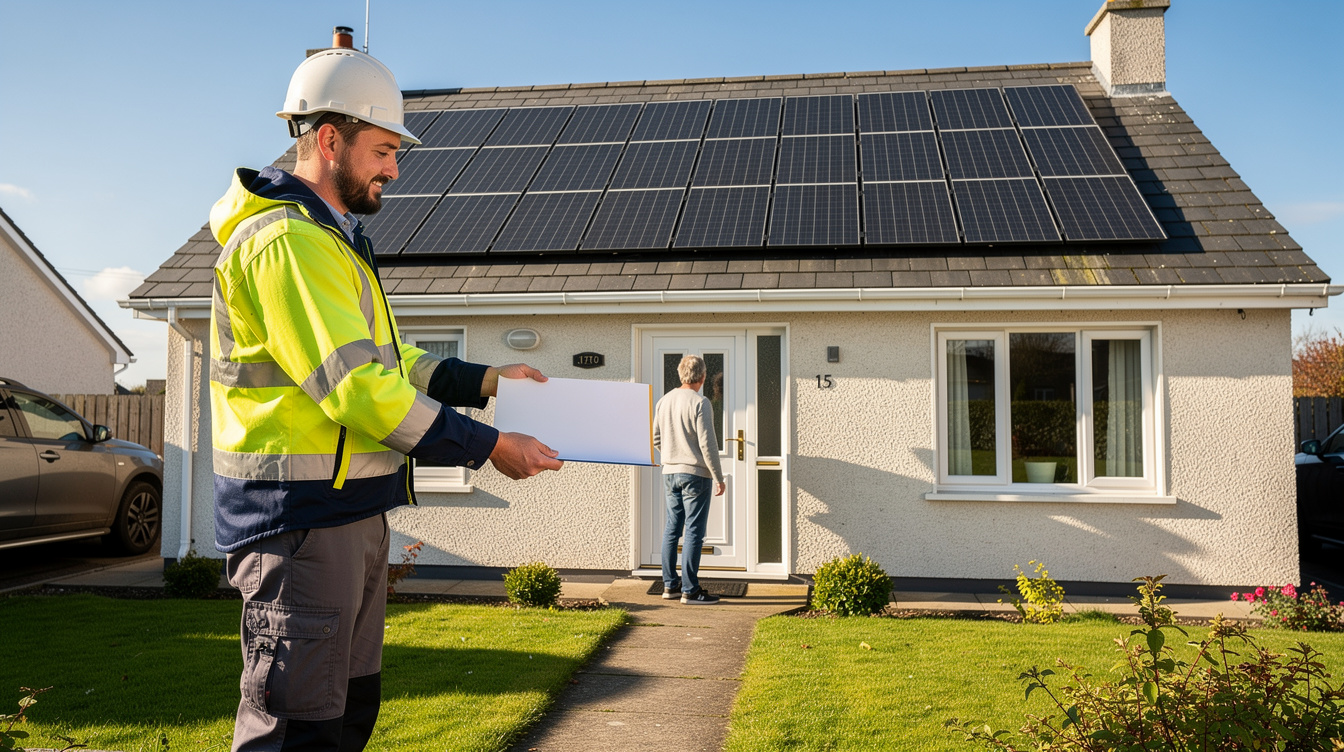
No – and this is the single most common seller misconception in 2026. The SEAI Solar PV grant (up to €1,800) has no clawback clause if you sell the house. Once the grant is paid and the post-install inspection is complete, the money is yours regardless of what happens to the property afterwards.
What matters for the buyer is that they can’t re-claim a Solar PV grant for the same MPRN in future – SEAI grants are one-per-MPRN, not one-per-owner. That’s a genuinely relevant fact to disclose, but it’s not a negative: any sensible buyer would rather move into a home with the system already there than have to install one from scratch.
Quick tip: If you claimed the SEAI grant and are selling within 12 months of install, keep an eye out for solicitors asking whether the grant conditions remain met. The main condition – that the system remains installed and connected – is trivially satisfied.
Transferring the ESB Networks Connection and CEG Export Tariff
The grid connection sits with the MPRN, not with you personally. When the buyer completes their meter registration with their chosen electricity supplier post-sale, the export tariff contract follows the same standard process:
- The buyer opens an account with any Irish electricity supplier at the same MPRN.
- Once the supplier confirms the MPRN has an existing microgeneration NC6 on file (which ESB Networks logs against the MPRN when your NC6 was originally approved), the buyer can request activation of the Clean Export Guarantee tariff on their account.
- Rates as of July 2026 range from 18.1 c/kWh (Electric Ireland residential CEG) down to about 12 c/kWh at the low end, so the buyer can shop around.
You do not need to file a new NC6 form when selling. That’s a job that’s already done and stays on record with ESB Networks against the MPRN.
Do Manufacturer Warranties Transfer to the New Owner?
Almost always yes, but there are a few small traps. Here’s the state of play for the brands most commonly installed in Ireland in 2026:
| Brand | Transfer Terms | Action Required |
|---|---|---|
| Longi, JA Solar, Trina (panels) | Automatic transfer with property | Hand over original invoice |
| Solaredge, Sungrow, Huawei, GoodWe (inverters) | Transfers with system; new owner can register account | Reset monitoring app, hand over serial numbers |
| Tesla Powerwall | Transfers with property; buyer must create Tesla account | Remove device from your Tesla app before completion |
| GivEnergy, Huawei LUNA, SolaX (batteries) | Warranty attached to serial number, not owner | Deregister your app account, hand over paperwork |
| Installer workmanship warranty | Varies – some transfer, some don’t | Email installer to confirm in writing |
The one to double-check before completion is the installer workmanship warranty. Some Irish installers explicitly bind it to the original customer; others let it run with the address. A one-line email confirming transferability, printed and included in the doc pack, kills the issue.
Contract Traps: PPA, Leaseback, and Finance Deals
If you paid cash or used a green mortgage/credit union loan, none of this applies to you – you own the panels outright and the sale is straightforward. But a small number of Irish installs, particularly larger commercial-adjacent systems, were sold under a Power Purchase Agreement (PPA), a rent-a-roof leaseback, or a hire-purchase finance product with a title retention clause. These need careful handling:
- PPA (Power Purchase Agreement): A third party owns the panels and sells you the electricity. On resale, you either pay to buy out the PPA or the buyer takes over the contract. The PPA operator’s consent is required and it can take 4–8 weeks to process. Flag this to your solicitor at day one.
- Leaseback / rent-a-roof: Rare in Ireland but occasionally seen. The rooftop is legally leased to the panel owner for a fixed term (often 20–25 years). The lease binds the property, not you personally, so it transfers to the buyer automatically – but any competent buyer’s solicitor will spot it in the folio and it will affect the price.
- Hire-purchase with title retention: If you financed the panels via HP and the finance is not fully repaid at completion, the finance company still owns the panels. You must clear the balance from sale proceeds or arrange a transfer of the finance agreement to the buyer (rarely accepted).
Most Irish sellers reading this will have owned their panels outright from day one thanks to the SEAI grant and 0% VAT structure – the traps above only apply to a small minority, but the delays are severe when they do.
What Do Irish Buyers Actually Ask About Solar?
These are the questions we see coming through valuers’ and estate agents’ feedback forms in 2026:
- What’s the current annual generation and self-consumption? (Answer with your inverter app export – a screenshot of the last 12 months is gold.)
- Is there a battery, and what’s its remaining warranty?
- Has the system had any faults or replacements?
- What was the last electricity bill compared with pre-solar?
- Does the inverter have an EPS/backup function during power cuts?
- What’s the current CEG export rate you’re on?
A one-page “solar system summary” pinned to the fridge on viewing days answers most of these before the buyer even asks – and it converts curious viewers into confident offer-makers.
Timing: Sell Now or Wait Until After the Panels Are Paid Off?
A common seller question: “My panels have only been on 18 months – should I wait until I’ve got more use out of them before selling?”
Financially, the answer is almost always sell when you’re ready to move. Here’s why:
- The BER-linked capital gain is captured on the very first day the sale closes with the upgraded BER on file.
- The typical 4 kWp system with battery in Ireland saves €900–€1,300 a year on electricity plus €200–€450 in export income. Waiting a year to save that runs your own life on a timetable dictated by an appliance on the roof.
- Property prices in Ireland have been rising ~3–6% year-on-year across most counties. Delaying a sale to earn a small extra chunk of solar savings can be a false economy if the market moves against you.
The exception: if you’re within 2–3 months of completion of a system you’re still commissioning, it’s usually worth waiting for the SEAI post-install inspection to be signed off before contracts sign. Buyers’ solicitors will ask for it.
Frequently Asked Questions
Do I need to remove the panels before I sell?
No. The buyer inherits them as a fixture of the property. Trying to strip a system off the roof pre-sale would damage the roof, void warranties, and reduce your price.
What if the buyer doesn’t want the panels?
Very rare in 2026 given rising energy bills, but if it happens, treat it like any fixture negotiation. Removing panels professionally costs €800–€1,500 plus roof repair; most buyers who initially say they don’t want them change their mind once they see the electricity bill data.
Does my house insurance need to be transferred separately for the panels?
The system is insured under the buildings policy of whoever owns the property at any given time. The buyer’s new buildings policy needs to be told solar is fitted (a small premium loading or none, depending on insurer) – but that’s their job, not yours. See our house insurance guide for detail.
Can the buyer “take over” my existing electricity supplier and CEG rate?
No – electricity contracts are personal. The buyer will open their own account at the MPRN and choose their own supplier (and CEG rate). The rate they lock in may be different from yours.
Does my house sell faster with solar?
Estate-agent feedback in Dublin, Cork and Galway consistently reports solar-equipped homes attract more viewings and shorter times to sale-agreed. There’s no formal published metric, but agents put the time-on-market benefit at roughly 20–30% shorter for equivalent stock.
Selling or Thinking of Solar Before You Sell?
Whether you already have solar or want to add it before listing, get a free installer assessment.
Last updated: July 2026. BER premium data reflects Irish market analyses of energy-efficient homes. SEAI grant amounts and conditions verified against seai.ie for 2026.
Related Articles

BER Rating Calculator Ireland 2026: How to Estimate Your Home’s Energy Rating
Estimate your home's BER on the new 2026 A0-G scale, learn how DEAP calculates it, and see which upgrades lift the rating most in Ireland.
BER Rating Ireland 2026: Scale, Cost & How Solar PV Boosts Your Rating
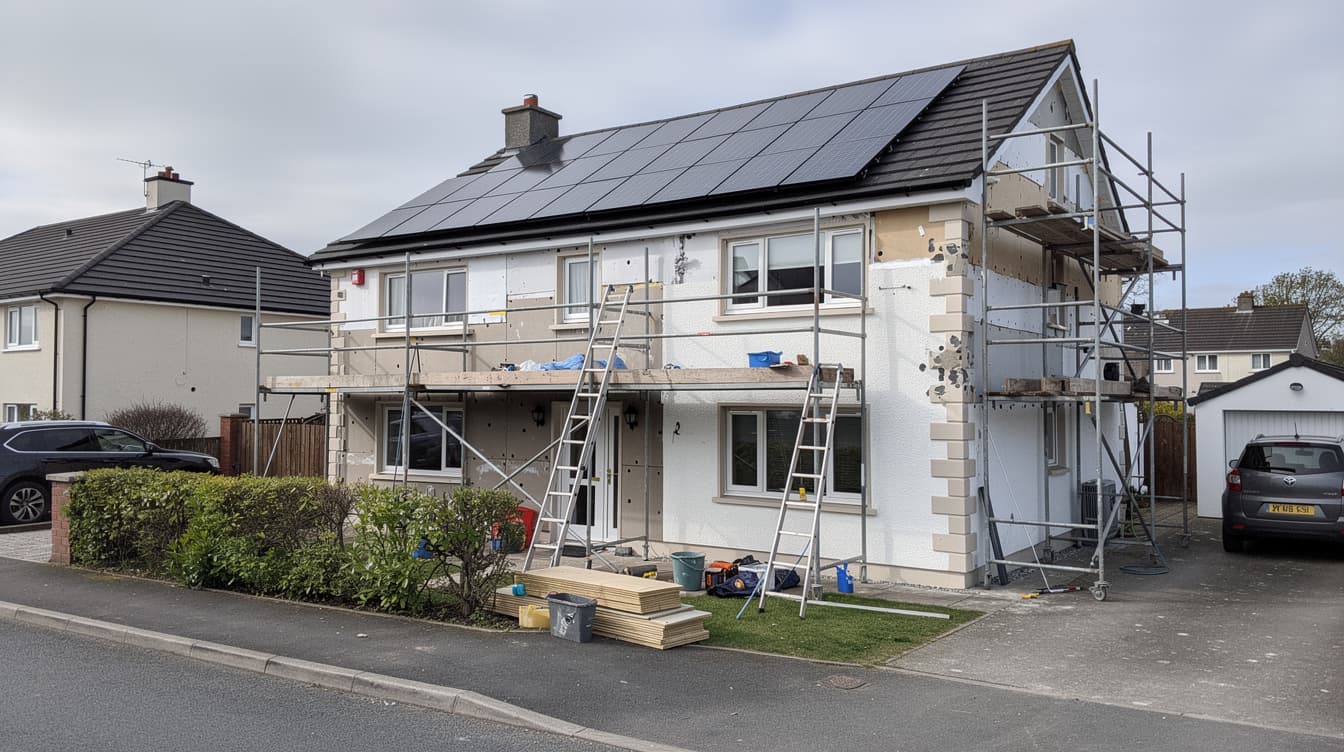
A1 to G explained, 2026 BER assessment cost (€150–€280), how solar PV, heat pumps & insulation lift your rating, and 3 worked retrofit scenarios.
BER Rating Ireland 2026: Grade Scale, Cost & How Solar Lifts Your Score
Full BER rating Ireland 2026 guide: A1-G scale explained, assessment cost €150-€350, what assessors check, and how solar PV lifts your grade 1-2 bands.