
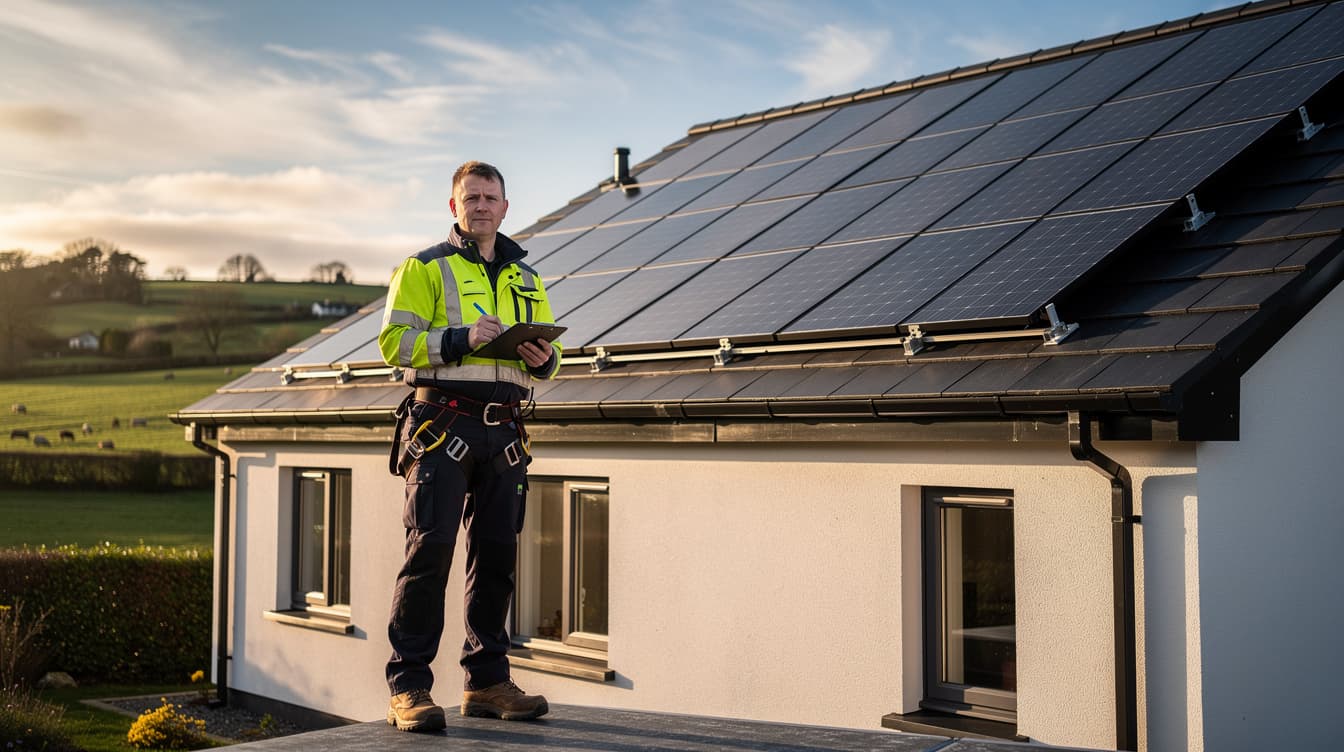
ESB Networks NC6 Form Ireland 2026: The Solar Homeowner's Walkthrough
You’ve had your quote, you’ve picked an installer, and someone has just mentioned the “NC6” — and you’ve nodded politely because everyone else in the room seems to know what it is. The NC6 form is the single piece of paperwork that turns your rooftop solar array from an unlicensed home appliance into a legally-connected microgenerator that ESB Networks will let you push electricity back into. Skip it and your export payments stall, your smart meter reprogramming doesn’t happen, and if anything goes wrong on the grid side you’ll have an insurance conversation nobody wants.
This is the plain-English 2026 walkthrough — who fills it in, what happens after, how long everything takes, and the three things Irish installers get wrong often enough that it’s worth knowing about.
Getting solar installed?
Every SEAI-registered installer on our panel handles the NC6 submission as part of the job. Get a free quote and skip the paperwork worry.
What the NC6 form actually is
NC6 stands for “Notification of Connection, Category 6” — the sixth in a set of ESB Networks connection notification forms, this one specifically for embedded microgenerators. In practical terms, it’s a two-page technical declaration your installer submits to micro.gen@esbnetworks.ie or through the ESB Networks installer portal after commissioning your system. It tells ESB Networks:
- Which MPRN (your meter point reference number) is now generating
- Which inverter is fitted (make, model, serial, IS EN50549-1 type-test certificate)
- What the total AC output rating is (in kVA and amps)
- The Safe Electric registration number of the electrician who signed off the install
- Whether it’s single-phase or three-phase, and which protection settings are configured
If your total AC output stays under 25 A single-phase (approx. 6 kVA / 6 kW) or 16 A three-phase (approx. 11 kVA / 11 kW), you’re under the micro-generation threshold and the NC6 is all that’s needed. Above that threshold you drop into NC7 territory — a longer “mini-generation” process with fees. Almost every domestic Irish install stays inside the NC6 window.
Why the NC6 matters more than most homeowners realise
Three things fail silently if the NC6 doesn’t land properly:
- Your Clean Export Guarantee (CEG) payments never start. Suppliers only pay for exported electricity once ESB Networks confirms your MPRN as a valid microgeneration site. No NC6 processed = no confirmation to your supplier = no export payments even if your inverter is happily pushing kilowatt-hours out to the grid. Every summer we hear from homeowners who’ve been generating for six months with zero payments because the paperwork stalled.
- Your smart meter never gets reprogrammed for export reads. ESB Networks endeavours to install or reconfigure the meter within four months of a valid NC6 being processed. Without that reconfiguration, the meter records total consumption but doesn’t split export — so even if payments technically start, the numbers are wrong.
- Your household insurance may not cover you. Most Irish home policies require any embedded generation to be “lawfully installed and notified to the DSO”. Unnotified microgeneration is arguably not lawful. Ask your broker how they read the clause; almost none will pay a claim on a system the DSO doesn’t know exists.

Who submits it — and what your job actually is
The NC6 is not your job as a homeowner. Under Safe Electric rules, only a Safe-Electric-registered electrical contractor can commission a microgeneration installation and sign the accompanying Completion Certificate. That contractor then submits the NC6 to ESB Networks. This split is deliberate — ESB Networks won’t accept homeowner-submitted NC6 forms, and even a self-installed system needs a Safe-Electric contractor to inspect, commission and file.
What you should do, as the homeowner:
- Confirm at quote stage that the NC6 submission is included in the price. Almost every reputable Irish installer does this, but confirm in writing.
- Ask for the submitted NC6 reference number by email. It takes 30 seconds, and it’s the only proof you have.
- Ask when they expect the Safe Electric Completion Certificate to be uploaded. You’ll need this later for the SEAI grant claim and for any insurance query.
- Tell your electricity supplier (in writing) that your NC6 has been submitted, and ask them to enrol you in their Clean Export Guarantee tariff. Suppliers do not do this automatically.
The full 2026 timeline — commissioning to first export payment
| Day | What happens | Who |
|---|---|---|
| Day 0 | Panels, inverter and (usually) battery are commissioned and turned on for the first time. System begins generating and self-consuming. | Installer |
| Day 0–3 | NC6 form uploaded to ESB Networks with inverter type-test cert and Safe Electric Completion Certificate. | Installer |
| Day 5–15 | ESB Networks reviews the NC6 (5–10 working days is the typical 2026 turnaround; 15 working days is the published maximum). If flagged, they email the installer with the issue. | ESB Networks |
| Day ~20 | Processed NC6 triggers a message to your electricity supplier confirming your MPRN is now a microgeneration site. | ESB Networks → Supplier |
| Day 20–60 | Supplier enrols you on their CEG tariff. Some suppliers do this automatically; others need you to opt in via a webform. | You + Supplier |
| Up to Day ~120 | Smart meter reconfigured (or newly installed) to record half-hourly export reads. If you already had a smart meter, this is usually a firmware push and requires no visit. | ESB Networks |
| Next billing cycle | First CEG credit appears on your bill. Under €200/year first year is common; more for south-facing systems. | Supplier |
Total time from commissioning day to first paid export credit: typically 6–10 weeks if everything goes cleanly. The four-month figure ESB publishes is a legal maximum on the meter side, not the norm.
The three things installers get wrong (and how to spot them)
1. NC6 filed without the IS EN50549-1 type-test certificate
Since 2022, Irish inverter compliance moved from the older G100 / G59 UK standards to IS EN50549-1. Every inverter sold in Ireland for grid-tied domestic use is supposed to carry a type-test certificate showing compliance. If the installer submits the NC6 without attaching the type-test PDF, ESB Networks bounces the form and the clock resets. This is the single most common rejection reason in 2026.
How to check: ask the installer for the inverter model, then Google “[model] EN50549-1 type test certificate Ireland”. If the PDF turns up in seconds, you’re fine. If nothing surfaces, the installer may be trying to file with a UK-only G99 certificate — not accepted here.
2. Wrong AC output declared
Homeowners sometimes assume the DC panel rating is what gets declared — e.g. “I have 4.4 kWp of panels so my NC6 must say 4.4 kW.” The NC6 declares the AC output of the inverter, not the DC panel rating. If your installer over-panels a 5 kW inverter with 6 kW of DC panels (common, and legal), the NC6 still declares 5 kW. Filing at the wrong number can technically push you above the 6 kVA threshold if the inverter is over-rated, forcing an NC7 process nobody wants.
3. Forgetting to move you onto a CEG tariff
ESB Networks processes the NC6 and confirms the MPRN — that’s where their job ends. Your supplier is responsible for actually starting the payments, but only after you sign up to their CEG plan. Suppliers like Electric Ireland, SSE Airtricity, Energia, Pinergy and Bord Gáis each have a separate CEG enrolment form, and none of them chase you for it. Six weeks after installation, log into your supplier account and check that “microgeneration” or “export payments” is showing on your plan. If not, ring them.
Sizing your system correctly?
Use our free Ireland solar calculator to estimate the right inverter size for your roof and consumption — before the NC6 conversation even starts.
What ESB Networks actually checks
The NC6 review isn’t a rubber-stamp. ESB Networks are checking a specific short list:
- Inverter compliance: does the model appear on the ESB Networks-recognised list of IS EN50549-1 compliant inverters?
- Total AC capacity vs threshold: is it under 6 kVA single-phase or 11 kVA three-phase?
- Protection settings: are the frequency, voltage and anti-islanding settings on the “Ireland” profile, not the default UK/EU factory profile?
- Signed Completion Certificate: is there a Safe Electric-registered contractor with a valid RECI number attached?
- Address / MPRN match: does the MPRN on the form belong to the address on the form? (Yes, this gets fudged occasionally by installers copy-pasting from a previous job.)
If any of these fail, you get a “query” email — and the 20-working-day maximum clock stops until the installer replies. In our experience, well-run Irish installers close a query within a business day; poorly-run ones can drag it out for weeks.
NC6 vs NC7 vs NC1—5 — a quick sanity check
| Form | When it applies | Fee |
|---|---|---|
| NC1–5 | Standard low-voltage new connections, upgrades, disconnections, temporary supplies. Not solar-specific. | Varies |
| NC6 | Micro-generation notification. Under 6 kVA single-phase or 11 kVA three-phase AC output. | Free |
| NC7 | Mini-generation application. 6–50 kVA single-phase, 11–200 kVA three-phase. | Application fee applies |
| NC8+ | Larger generation. Commercial / MV connections. | Full connection charges |
For anyone reading this on a domestic rooftop project, you are 99% certainly in NC6 territory. The moment the inverter model on your quote crosses 6 kVA (which is not the same as 6 kW panels — it’s the inverter AC rating), have a specific conversation with your installer.
Battery-only and hybrid systems: does the NC6 still apply?
Yes, in most configurations. Any inverter that can export to the grid needs an NC6 notification, even if the system is nominally battery-only. A Tesla Powerwall 3, Sigenergy SigenStor or GivEnergy AC3 — even when installed without solar panels — is a grid-tied inverter with export capability, and it triggers the NC6. See our home battery without solar guide for the full paperwork trail.
The only exception is a strictly non-export installation, where the installer configures the inverter to never push power back regardless of state of charge. That variant uses a simpler notification, forfeits any CEG earnings, and is unpopular because it locks off the ability to earn export payments later.
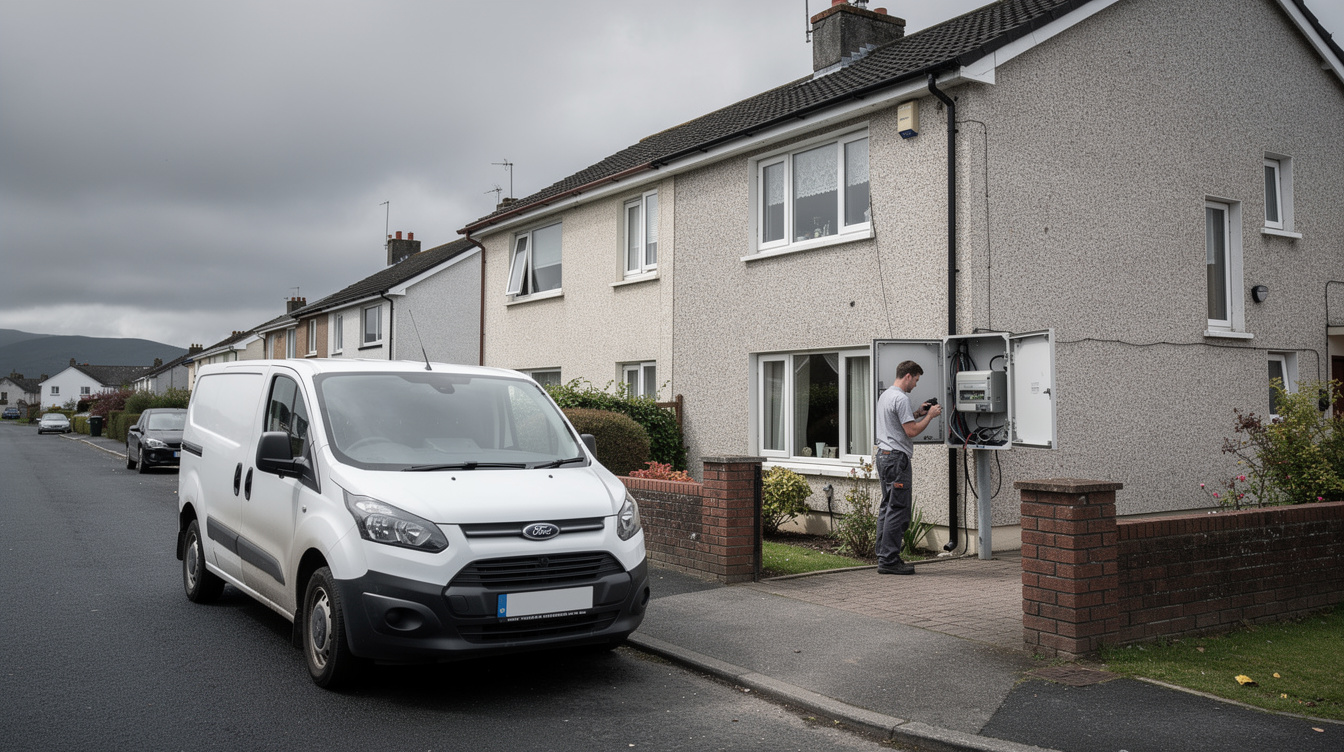
What to do if your NC6 stalls
You commissioned, you were told the paperwork was filed, but three months on there’s no CEG on your bill. Do this in order:
- Email your installer and ask for the NC6 submission reference and the ESB Networks response. Legitimate installers can produce these within a day. If they can’t, or they go quiet, the NC6 probably wasn’t filed.
- Email micro.gen@esbnetworks.ie quoting your MPRN and asking whether your address is registered as a microgeneration site. They respond within a few working days.
- Ring your supplier and ask whether your account shows a “microgeneration” flag and whether you’re enrolled on their CEG plan. If they say no, ask specifically what needs to happen — usually a two-minute form.
- If the installer will not act, RECI (the Register of Electrical Contractors of Ireland) will pursue a Safe-Electric registered contractor who won’t file paperwork on a completed job. Very few disputes actually reach this stage — the threat usually breaks the logjam.
Frequently asked questions
Do I need to file an NC6 for a small plug-in solar panel?
Technically yes if it’s grid-tied, but the enforcement in Ireland is currently uneven. See our plug-in solar legal guide for the nuance — the short answer is that a Safe-Electric contractor still needs to inspect and file.
Can I switch electricity supplier once my NC6 is processed?
Yes, freely. The NC6 attaches to your MPRN, not to your supplier account. Any new supplier will see the microgeneration flag on your MPRN and enrol you on their CEG plan.
What’s the difference between the NC6 and my SEAI grant?
The NC6 is ESB Networks paperwork about your connection. The SEAI €1,800 solar grant is a Sustainable Energy Authority of Ireland grant against your cost. They are separate processes with separate forms, both usually filed by your installer, but timelines are independent.
How do I know if my inverter is IS EN50549-1 compliant?
Ask the installer for the type-test certificate PDF and check the standard is EN50549-1 (not the older EN50438 or a UK G99). Every major brand sold in Ireland — Solis, Sungrow, GivEnergy, Sigenergy, GoodWe, Fox ESS, Tesla, Enphase — has current certificates.
My installer wants me to sign the NC6. Should I?
The homeowner does sign the form, but the technical fields must be completed by the electrical contractor. Sign only after the technical fields are filled in and you can see them.
Is the NC6 required for a garden shed or outbuilding install?
Yes, if the system exports to the grid at all. See our shed and garage solar guide for the mechanics.
What happens on an NC6 if I later add battery or panels?
Any material change — adding panels, uprating the inverter, changing manufacturer — needs an NC6 modification. It goes through the same 5–15 working day process. Adding a battery downstream of an existing hybrid inverter usually does not need a new NC6.
What if I’m in Northern Ireland, not the Republic?
The NC6 process is Republic-of-Ireland-specific. Northern Ireland uses the G99/G100 process under NIE Networks. Different form, different regulator, similar principles.
The bottom line
The NC6 is one of those pieces of paperwork you’ll happily never think about again once it’s done. But if your installer skips it, files it badly, or forgets to hand you the reference, you can lose six months of export earnings and complicate your insurance without ever knowing. Ask the questions at quote stage; ask again when the panels go on; and check your supplier account six weeks later to confirm the CEG has kicked in. Ten minutes of homeowner attention closes off nearly every case we see of stalled solar payments in 2026.
Choose an installer who handles the paperwork
The SEAI-registered installers on our panel manage the NC6, the SEAI grant, and the CEG enrolment. Get a free quote today.
Related Articles
3-Phase Voltage Ireland Explained: 400V, 230V & Home Solar 2026
Ireland’s 3-phase mains is 400V line-to-line and 230V line-to-neutral. Full explainer on tolerance bands, voltage rise, inverter over-voltage trips & how to check your supply.
MPRN Ireland 2026: What Your Meter Point Reference Number Is & Why Every Solar Installer Asks for It
Every Irish solar quote asks for your MPRN. What the 11-digit number means, where to find it, and the SEAI grant mistake it prevents.
Solar Panels & Three-Phase Electricity Ireland 2026: NC6 Rules, Inverters & Payback
Three-phase Irish homes can export 11 kW under NC6, fit 10-25 kW inverters and run heat pump + EV + solar together. Real 2026 prices and payback scenarios.