
Are Plug-In Solar Panels Legal in Ireland? 2026 ESB Networks Rules Explained
The short answer most homeowners want: a plug-in solar panel kit is not strictly illegal to own or plug into a socket in Ireland in 2026, but using one to back-feed electricity into your home wiring without notifying ESB Networks and using compliant equipment puts you outside the regulations that protect you, your insurer, and the people working on the grid downstream.
That nuance is what every "is Lidl solar legal?" article on the Irish web tends to dodge. So we wrote this one to answer the legal question properly — with the actual rules, the actual regulator, and an honest read on the grey zone in the middle.
The 30-second version
Off-grid use (charging a battery, powering a shed): Legal. Treat it like any 230V appliance.
Grid-tie via a wall socket without notification: Not compliant with the ESB Networks Distribution Code. Most home insurance policies will not cover any incident arising from it.
Notified, micro-generator install (NC6 form, IS EN 50549 inverter): Fully legal and eligible for the SEAI €1,800 grant and the Clean Export Guarantee.
What "plug-in solar" actually means — and why Ireland is different
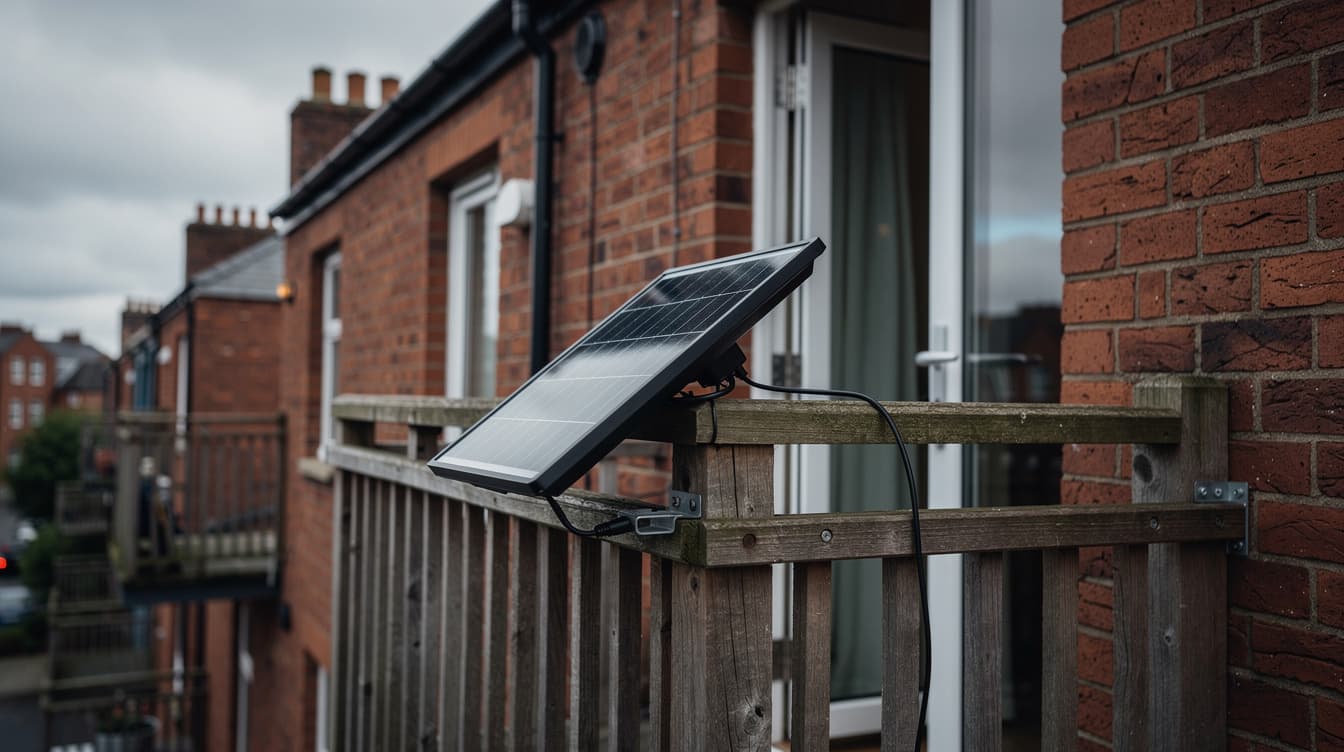
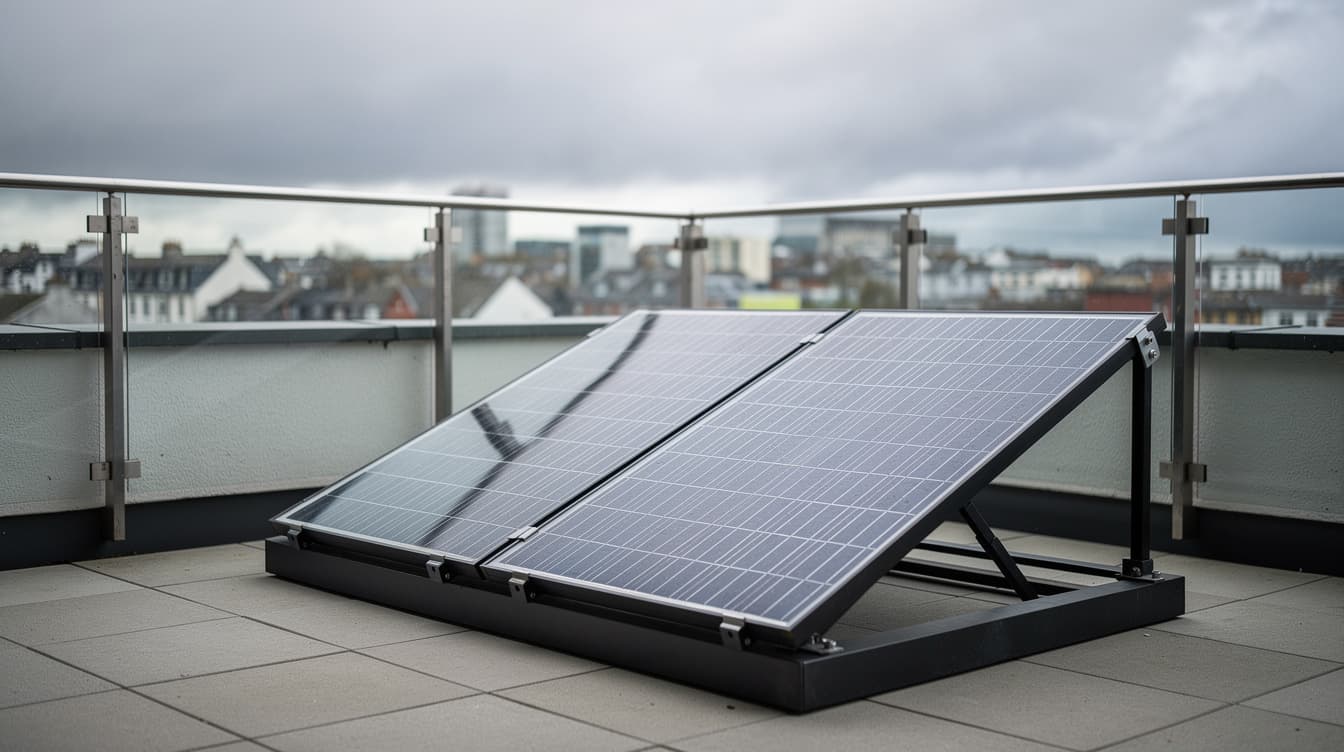
In Germany and parts of central Europe, you can buy a balcony solar kit at a hardware shop, hang it on the railing, plug it into a special outlet, and legally generate up to 800 W of power that your home consumes first and the grid absorbs the surplus. Germany changed the law in 2024 to make this trivially easy. Ireland did not follow.
That matters because the typical 300–800 W "Lidl plug-in solar panel" sold in Ireland (and the bigger online imports from Anker, EcoFlow and Bluetti) is designed for that German market. It comes with a built-in microinverter that you plug into a normal Schuko socket, and the marketing leans hard on "no installer needed."
The 2026 reality in Ireland is that the regulations don't recognise this category. The Commission for Regulation of Utilities (CRU), ESB Networks, and Safe Electric Ireland all assume that any device generating electricity onto your home wiring is permanently wired by a Registered Electrical Contractor (REC), has a compliant grid-tie inverter, and has been notified to ESB Networks. A plug-and-play kit bypasses all three.
The three legal frameworks that apply
1. ESB Networks Distribution Code
Any micro-generator (under 6 kW single-phase or 11 kW three-phase) connecting to the low-voltage grid in Ireland must be notified to ESB Networks via the NC6 form before commissioning and the NC7 form after. The inverter must be on the ESB Networks "type-tested inverter" list, which means it complies with IS EN 50549-1:2019. The form is free and the connection is automatic for systems under the threshold.
A plug-in kit can be technically capable of meeting IS EN 50549 — many German-market microinverters do — but the issue is that plugging it into a socket isn't a "connection" that ESB Networks has a process for. Their assumption is hard-wired only.
2. Safe Electric Ireland / National Wiring Rules (IS 10101)
The Irish National Wiring Rules (NWR) require any "fixed wiring" change in a domestic installation to be certified by a Registered Electrical Contractor. Plugging a generation device into a socket isn't strictly a "fixed wiring" change, which is the loophole the German market exploits. But the NWR also expects every circuit to have appropriate over-current protection sized for the generation source, and a standard ring final circuit was never designed to have power injected into it.
3. Building Regulations Part L / Planning
Roof-mounted solar is largely exempt from planning permission since the 2022 amendments (and the 2023 expanded exemption). Balcony or garden mounted plug-in panels are not explicitly covered by the exemption — they're treated like any other "ancillary garden development" and in apartment blocks are usually governed by management company rules, not law.
Want a Compliant Solar Setup?
Get free quotes from SEAI-registered installers who handle the NC6 notification and the €1,800 grant paperwork for you.
What's actually legal, what's grey, what's not
| Use case | Status in Ireland 2026 | What you need |
|---|---|---|
| Charging a 12V battery in a shed, caravan, or campervan | Legal | Nothing — this is off-grid and unregulated |
| Powering a fridge or freezer via a small inverter, off-grid only | Legal | Off-grid inverter, no connection to mains |
| Plugging a 300–800 W panel into a kitchen socket to "reduce import" | Grey zone | Not enforced — but voids insurance and is not notified |
| Hard-wiring a microinverter to a dedicated circuit, no notification | Not compliant | Breach of Distribution Code — ESB Networks can disconnect |
| Roof-mounted PV via REC, NC6 notified, IS EN 50549 inverter | Legal | SEAI grant + CEG export tariff available |
The Lidl plug-in solar question
Lidl Ireland has run several plug-in solar promotions through 2024–2026, usually a 300–420 W panel with built-in microinverter for around €199–€249. The product is identical to what's sold in their German stores, and the box typically shows a Schuko plug. We covered the buying side in detail in our Lidl plug-in solar guide and the broader category in our plug-in solar overview.
The legal status of the Lidl-style kit specifically:
- Lidl Ireland's small print typically says the product is "for off-grid use" and recommends a qualified electrician for any mains connection. That's the company covering its position.
- The microinverter inside usually has German VDE certification, which is similar to but not identical to the IS EN 50549 type-test ESB Networks requires. In practice it would likely meet the standard, but it's not on the official ESB Networks list.
- Plugging it into a socket and walking away is what 90% of buyers do, and the regulatory consequence in Ireland is almost zero — nobody is going to knock on your door. The real-world risk is your home insurance policy, which can refuse to pay out on any incident (fire, electrical damage, even unrelated claims) on the basis that you modified the electrical installation without certification.
This is the same risk profile as installing an outdoor socket yourself, plumbing in a dishwasher, or extending a ring main. Most insurers will turn a blind eye until they have a reason not to.
If you want it to be fully legal: the actual path
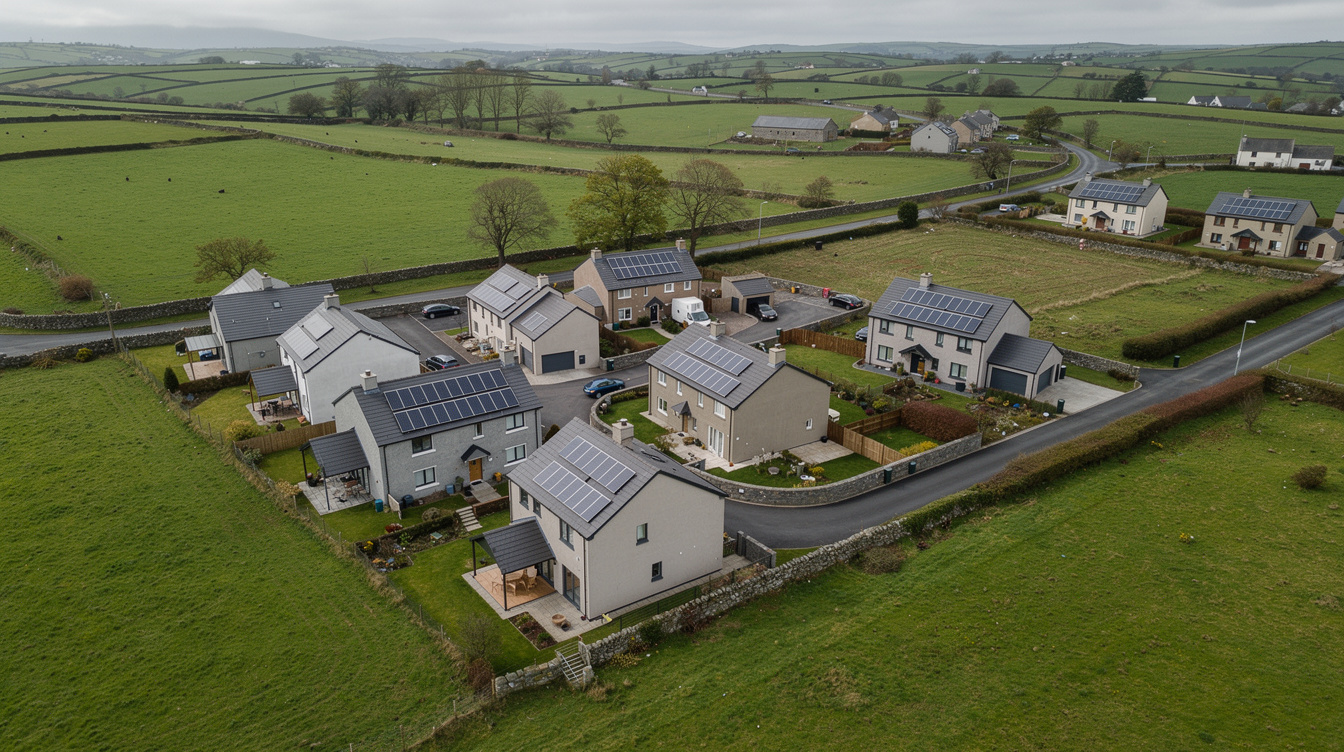
- Buy from an SEAI-registered installer, not a retail kit. The smallest grant-eligible system is around 2 kW (5–6 panels), which costs €4,500–€6,000 before the €1,800 SEAI grant.
- The installer files the NC6 form with ESB Networks before commissioning. This is automatic for systems under 6 kW.
- The inverter is from the approved list (SolarEdge, Huawei, GoodWe, Fronius, Solis, Growatt — current 2026 list is published on the ESB Networks website).
- The installer issues a Cert of Compliance under the National Wiring Rules and you get a copy.
- Your electricity supplier registers you for the Clean Export Guarantee (CEG) and starts paying you for surplus exported to the grid. We track current rates in our CEG rates guide.
This is the only path that gives you the SEAI grant (€1,800 in 2026), the CEG payments (typically 18–24 c/kWh in 2026 depending on supplier), and insurer protection. For a 4 kW system the lifetime delta vs an unregistered plug-in is roughly €15,000–€20,000 in your favour.
What about apartments?
If you live in an apartment, the question is layered. Even if a plug-in kit were unambiguously legal, your management company's lease almost certainly prohibits modifications to the building exterior or attachments to balcony railings. We've seen Dublin apartment blocks issue residents with formal notices over balcony solar panels even where the unit owner argues it's reversible.
The legal route for apartments is collective — the management company votes for a shared roof installation that benefits all units. We cover this in detail in our solar panels for apartments guide.
Common questions
Can ESB Networks detect a plug-in solar panel? In theory yes — modern smart meters can detect reverse power flow. In practice the installed base of plug-in kits is too small and the per-event power too low for ESB Networks to bother investigating individual customers. The risk is your insurer, not the network operator.
Is there a small-scale exemption coming? The CRU has consulted on a "simple connection" pathway for systems under 800 W, modelled on the German Steckersolar regime, but no implementation date has been announced as of mid-2026. Don't bet on it for 2026.
Does the SEAI grant cover plug-in panels? No. The grant requires a Registered Installer and an SEAI Triple-E listed product. Lidl plug-in kits are not on the list. The grant is one of the strongest financial arguments against the plug-in route.
What if I'm renting? A non-fixed, removable plug-in panel on a balcony is something a landlord can usually neither prohibit nor approve cleanly — it's not a modification to the dwelling. Practically, most landlords don't notice and most don't care. We have a fuller answer in our solar panels and landlords guide.
Will my smart meter run backwards? An MID-compliant smart meter (which is what ESB Networks has been installing since 2019) records import and export separately. Any export you generate from an unregistered plug-in panel is essentially gifted to the grid — you don't get paid for it because you're not registered for CEG.
The bottom line
Plug-in solar isn't quite "illegal" in Ireland in 2026, but it's not fully legal either. The Irish regulatory framework simply hasn't recognised the category, and that ambiguity is doing all the work in the marketing copy you'll see on retailer websites.
For most Irish homeowners, the plug-in route makes sense only as an off-grid use case (a shed, a campervan, a charging station for power tools) where the legal questions don't arise. If you want to reduce your electricity bill from your roof, the SEAI-registered route is the only one that's both fully legal and financially better — the €1,800 grant alone closes most of the cost gap.
If you want to size a compliant rooftop system, our solar panel calculator gives you a realistic budget and payback. Or compare quotes from vetted local installers below.
Ready to Go Solar Properly?
Get your free personalised quote from SEAI-registered installers who handle compliance, grant paperwork and CEG registration.
Related Articles
Solar Panel Fire Safety in Ireland 2026: Real Risks, Rules and Prevention
Are solar panels a fire risk? The 2026 Irish guide: real incident rates, IS 10101 Section 712 rules, common causes, installer checklist, insurance.

Top 10 Solar Companies in Ireland 2026: The Honest National Guide
Honest 2026 guide to picking a solar installer in Ireland — 10 installer archetypes, county-by-county vetting framework, real prices, SEAI grant maths, no SEO league tables.
Balcony Solar Power Ireland 2026: What’s Legal, What Works & What It Costs
Full 2026 guide to balcony solar in Ireland: ESB Networks rules, EN 50549 inverters, best kits, real yield on Irish balconies, management-company reality and payback.