
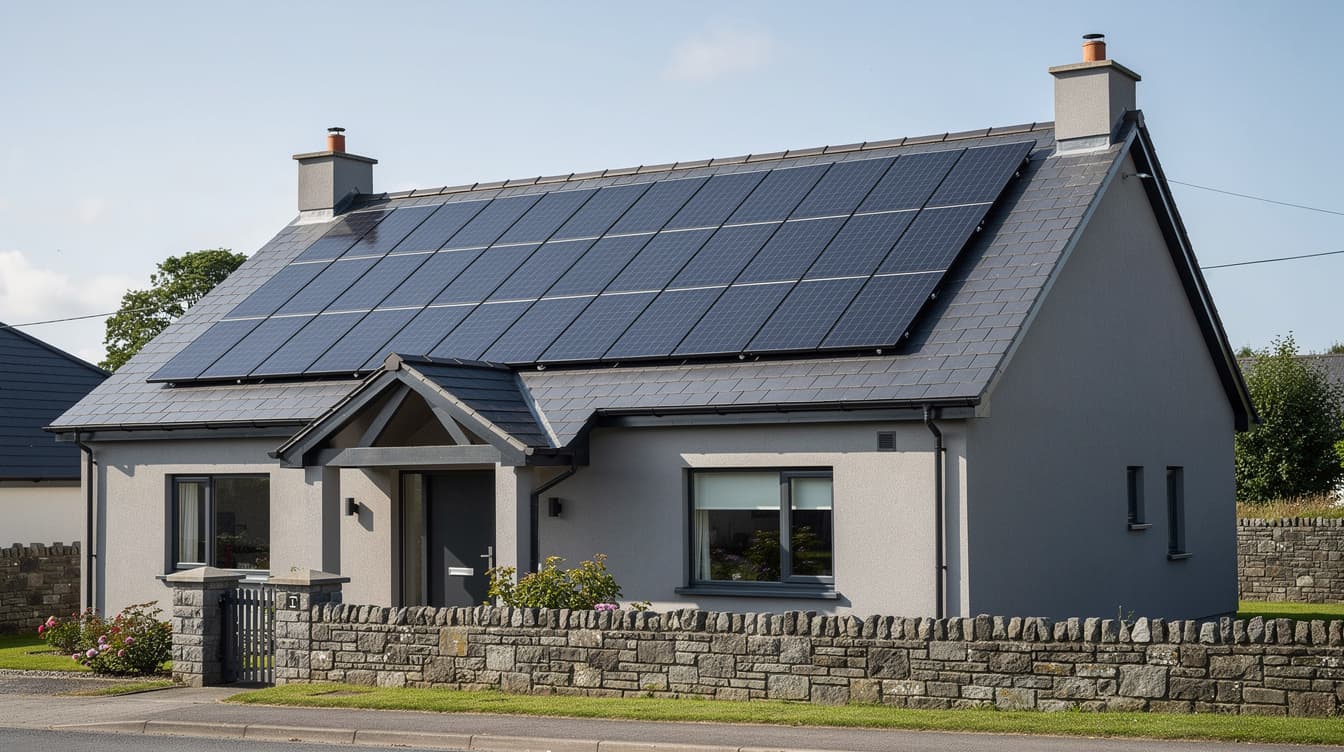
Solar Panel Fire Safety in Ireland 2026: Real Risks, Rules and Prevention
Solar PV fires are rare in Ireland — rare enough that the National Directorate for Fire and Emergency Management does not publish a separate category for them. But "rare" is doing a lot of work in that sentence. When a rooftop PV array does ignite, the consequences for the homeowner are out of proportion to the underlying risk: the array can't be easily shut down, fire brigade access is restricted, and insurance disputes are common.
This guide is the homeowner-grade explainer most installers don't volunteer. Real risk levels, what the 2026 Irish regulations require, what causes 90% of the incidents, and the practical checklist you should run through before, during, and after your install.
In a sentence
A properly installed Irish rooftop PV system is statistically about as risky as a domestic dishwasher — but the failure modes are different, and the difference between a compliant install and a bad one is mostly about three things: DC isolation, connector quality, and clear roof margins for the fire brigade.
How rare is "rare"?
The best dataset we have is the BRE Building Research Establishment study commissioned by the UK Department for Business, Energy and Industrial Strategy in 2017 and refreshed in 2022, plus the German TUV data — both jurisdictions have far longer PV install histories than Ireland. Combining them, the reported fire incidence is roughly:
| Source | PV-related fires | Per 10,000 installs |
|---|---|---|
| BRE UK 2017 | 58 confirmed (2010-2016) | ~0.6 per 10,000 |
| TUV Germany 2018 | 350 (1.5m installs) | ~2.3 per 10,000 |
| Comparison: domestic dishwashers (UK 2022) | ~1,200/yr | ~5 per 10,000 |
For Ireland's roughly 130,000 installed domestic systems in 2026, that maps to a statistical expectation of roughly 8–30 PV-related fire events per year. The Irish fire services don't categorise PV separately, but anecdotally Dublin Fire Brigade and Cork City Fire Brigade both report PV-involved callouts are now a routine training scenario, not a novelty.
The rare bit is real. The "out of proportion consequences" is the bit homeowners under-weight.
What actually causes PV fires
Across the BRE and TUV datasets, the root causes cluster surprisingly tightly. Roughly 70–80% of all PV fires trace back to one of three things:
- DC connector failure — MC4 connectors that were mismatched between manufacturers, crimped incorrectly, or contaminated with moisture. This is by some distance the single largest cause. The DC arc that results can sustain combustion in a way that AC faults can't.
- Junction box or bypass diode failure — manufacturing defects in the panel itself, usually showing up 5–10 years after install. Tier-1 brands have very low rates here; cheap imports much higher.
- Inverter installation faults — inverters mounted in inadequately ventilated cupboards, on combustible surfaces, or without proper isolation on the DC and AC sides.
The remaining ~20% is a mix of cable damage from rodents and roof movement, undersized cable runs causing thermal degradation over years, and a small tail of genuinely defective panels recalled by the manufacturer.
The pattern matters because almost every cause is preventable at install time. That makes the choice of installer the single biggest fire-risk lever a homeowner controls. We cover the vetting framework in detail in our national installer vetting guide.
The 2026 Irish regulatory layer
Solar PV installation in Ireland is governed by three overlapping rule sets, all of which the installer (not the homeowner) is responsible for — but it pays to know what they require so you can audit the install.
IS 10101 National Wiring Rules (Section 712)
Section 712 specifically covers solar PV. The key safety-relevant clauses for fire are:
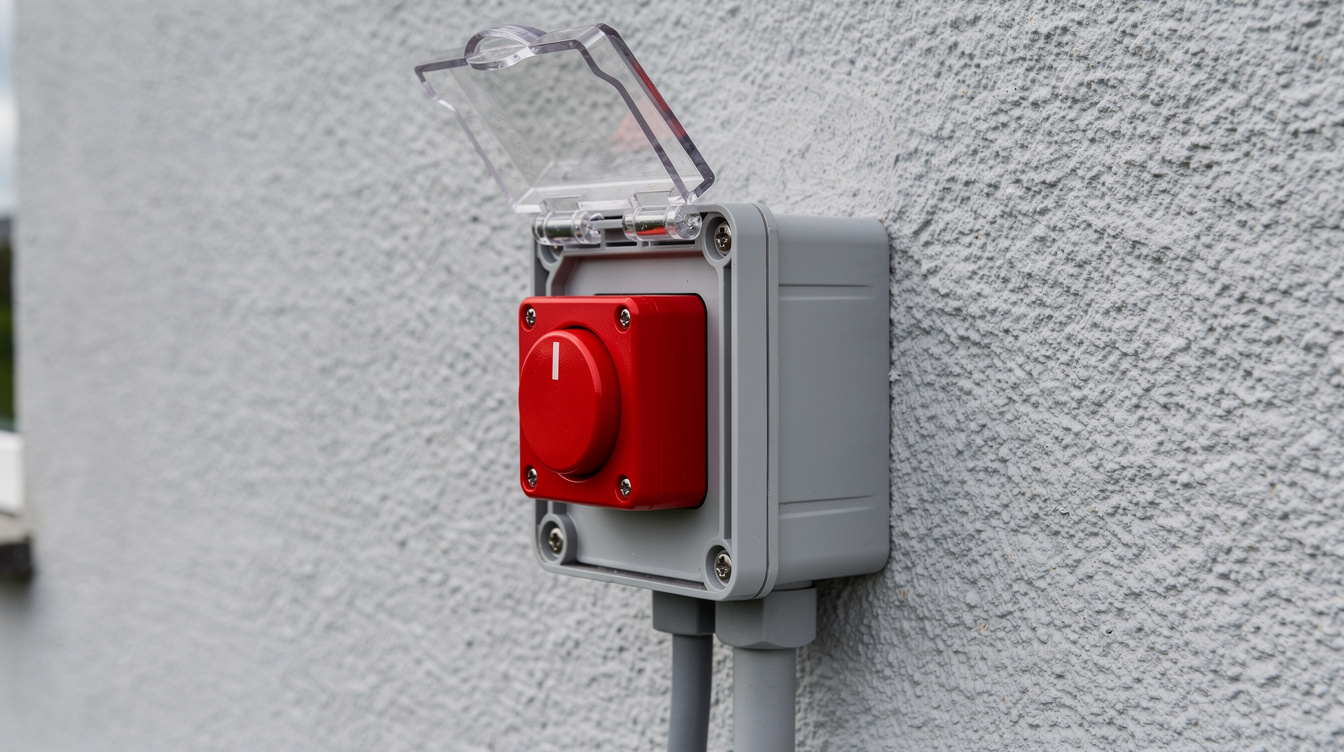
- A DC isolator must be installed within 1 metre of the inverter and accessible without tools.
- An AC isolator on the inverter output, plus an emergency isolation switch at the consumer unit clearly marked.
- DC cabling must be double-insulated (H1Z2Z2-K is standard), UV-resistant, and protected from mechanical damage.
- An AFDD (Arc Fault Detection Device) is now strongly recommended — not strictly mandatory in domestic in 2026, but most reputable installers fit one.
I.S. EN 62446-1 Commissioning and Documentation
Every install must come with a commissioning report including DC string voltage measurements, insulation resistance test results, polarity test, and earth bond verification. If your installer didn't hand you this document, the install is not compliant. This is the single document that matters most in an insurance dispute.
National Directorate for Fire and Emergency Management (NDFEM) guidance
The NDFEM 2023 guidance for fire services responding to PV-involved fires assumes:
- The PV system can be isolated at the AC side (within the building) but not on the DC side from outside. Panels exposed to any daylight (even moonlight in some cases) remain live.
- The fire service may refuse to put water on a live PV array if the situation allows it — meaning the fire is allowed to develop while they work around it.
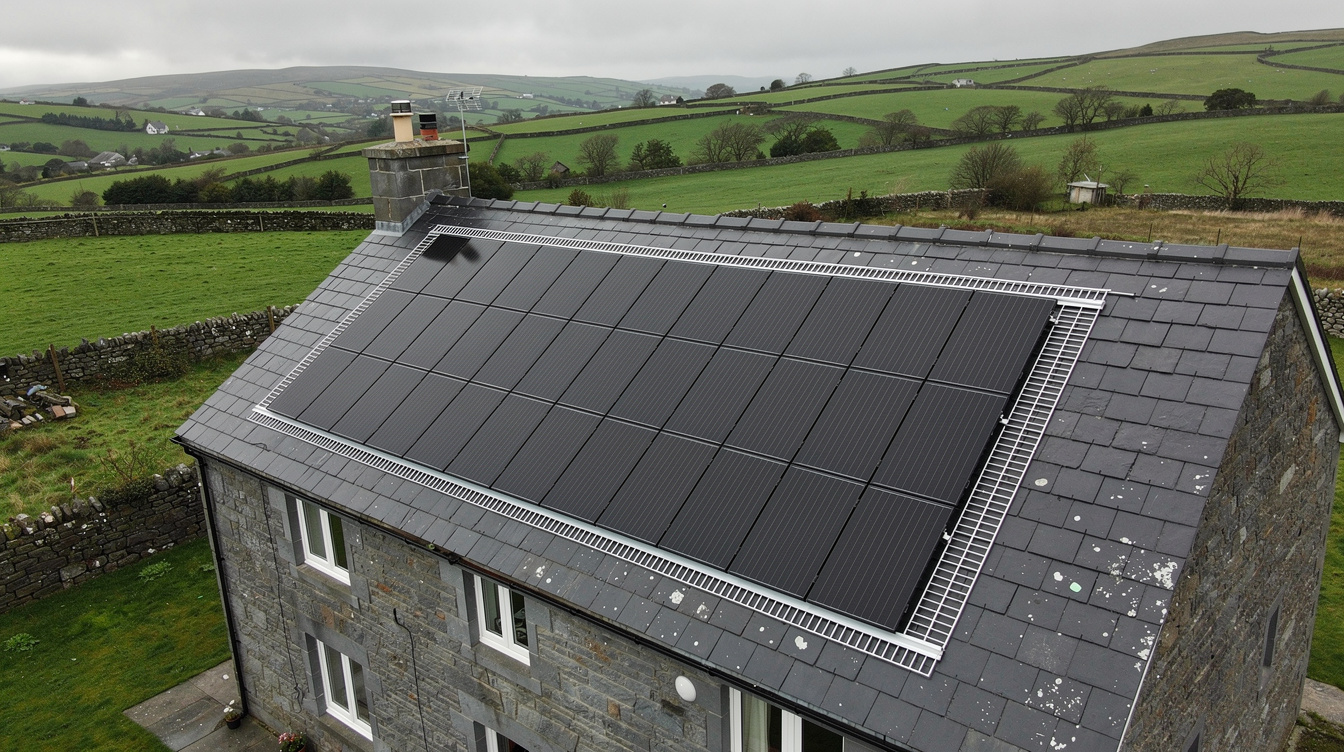
- The expected roof margin for fire-brigade access is at least 500 mm clear at the eaves, ridge, and at least one verge. Many older Irish installs lack this; current best practice always provides it.
Need a Safety-First Quote?
Get free quotes from SEAI-registered installers who follow IS 10101 Section 712 and provide the commissioning documents your insurer will ask for.
The pre-install homeowner checklist
Most fire-risk reduction happens before you sign the contract. Five things to ask every installer who quotes you:
- Are the DC connectors all the same brand as the panel? MC4 is a standard, but different manufacturers' "MC4-compatible" connectors are the leading cause of arc faults. Tell the installer you want matched connectors, not mixed.
- What's the maximum DC voltage on each string and what's the inverter limit? You want the installer to design strings comfortably below the inverter's maximum, with margin for cold-weather voltage rise. A string designed to hit 99% of the inverter's limit on a sunny day is asking for trouble in a January cold snap.
- Will you install an AFDD? The marginal cost is €80–€150 on a domestic system. A reputable installer says yes without needing prompting.
- Where will the inverter be mounted? Inverters need at least 100 mm clearance on all sides for thermal dissipation, away from combustibles, and ideally not in a sealed attic where summer temperatures hit 50°C. A garage or utility room on an exterior wall is best.
- What's the warranty on labour vs panels? Panel-only warranties are useless for fire issues — if a DC connector fails because of how it was crimped, the panel warranty doesn't help. You want a labour warranty of at least 5 years from an installer who'll still be trading.
The post-install homeowner checklist
You won't catch most issues that lead to a fire 5 years out, but you can catch the ones that develop in the first few months — which is when a meaningful fraction of failures show up.
- Monitor the inverter app weekly for the first 3 months, then monthly thereafter. A string that's producing 15% less than its peers is the canonical early warning sign of a developing connector issue.
- Check the inverter LED status every time you walk past it. Reputable inverters log fault codes; act on any persistent code within 7 days.
- Smell the inverter room periodically. A faint burning electrical smell that comes and goes is the most under-reported early warning sign. If you ever smell it, kill power at the AC isolator and call the installer that day.
- Check the visible cable runs at the loft hatch annually for rodent damage. Squirrels and rats are not picky about PV insulation.
- Get the commissioning report re-tested every 5 years. An insulation resistance test takes 30 minutes and catches developing faults before they become events.
What to do during a fire involving solar panels
This is the part homeowners don't think about until they need it:
- Get everyone out and call 999/112. Tell the call handler specifically that the property has solar PV. They'll dispatch with the right SOPs.
- Hit the AC emergency isolator at the consumer unit if it's safe to do so. This kills the inverter's output to the house but does not de-energise the DC side from the panels.
- Don't try to disconnect anything DC. Even in the dark, a string can hold enough voltage to sustain an arc.
- Tell the responding fire crew the location of the inverter, the consumer unit, and the DC isolator as they arrive. They are trained on this but every second of orientation helps.
- Photograph the panels, the inverter, and the consumer unit after the event before anything is moved. Your insurer will want this.
Insurance — the bit that costs you
Most Irish home insurance policies cover solar PV automatically once you've notified the insurer that it's installed. We covered the broader insurance question in our solar panels and house insurance guide, but the fire-specific points worth knowing:
- Insurers can and do refuse claims where the install can't be evidenced as IS 10101 compliant. The commissioning report and the SEAI grant paperwork (if applicable) are the two documents that protect you.
- If you installed the system yourself or used an unregistered electrician, expect a fight. Even if you "win" by escalating to the Financial Services Ombudsman, the process takes 12–18 months.
- An SEAI-registered installer is the cleanest evidence in an insurance claim because it implies REC certification, IS 10101 compliance, and a paper trail.
- Notify your insurer in writing within 30 days of commissioning. Get the confirmation in writing back. Keep both with the commissioning report.
The bottom line
Solar PV fires are rare in Ireland, and almost all the rare ones are preventable at install time. The three things that drive the risk are connector quality, inverter location, and isolation design — and you control all three by choosing the right installer. A €200 saving on a quote from a non-SEAI-registered crew using mixed-brand connectors is the worst kind of false economy.
If you want quotes from installers who follow Section 712, provide commissioning reports, and fit AFDDs as standard, use the form below to get matched with vetted SEAI-registered installers. Or run the numbers first on our solar panel calculator.
Get a Safe, Compliant Install
Free quotes from SEAI-registered installers who provide full IS 10101 commissioning documentation.
Related Articles
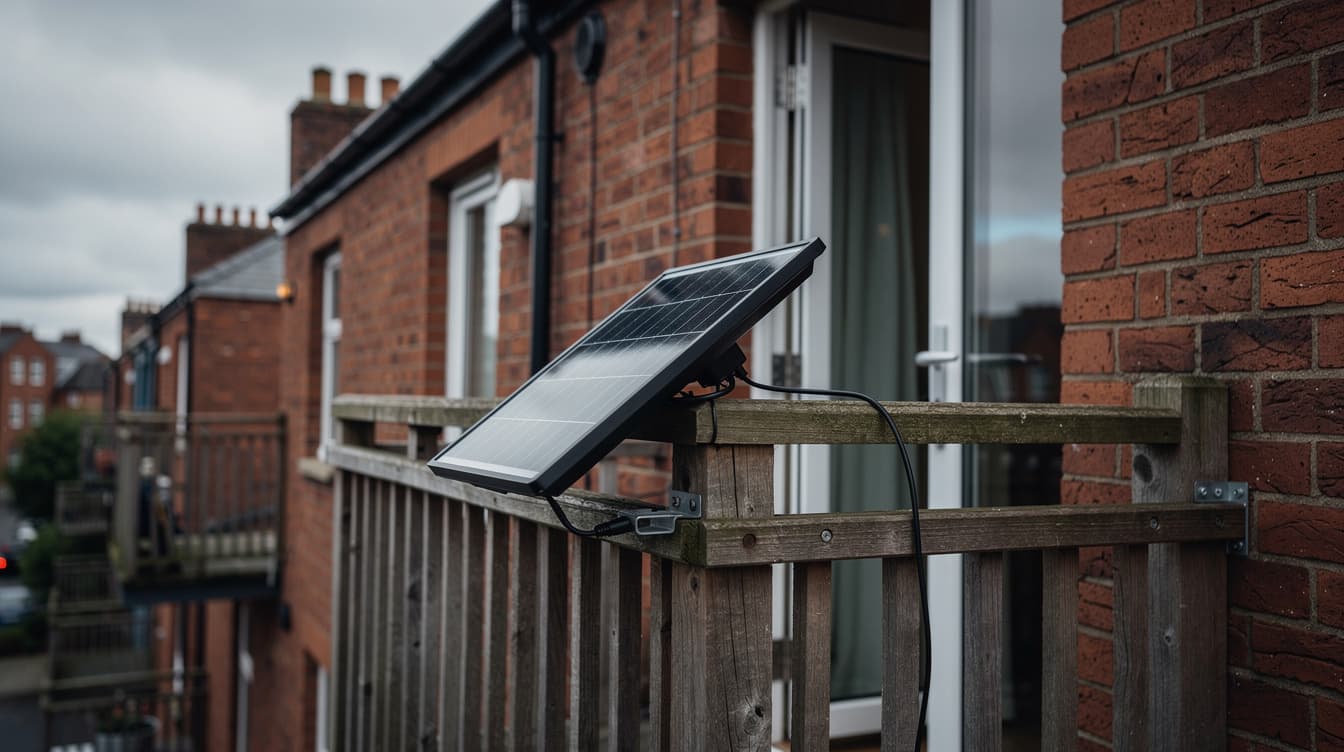
Are Plug-In Solar Panels Legal in Ireland? 2026 ESB Networks Rules Explained
Plug-in solar panels sit in a grey zone in Ireland. The 2026 rules: NC6 notification, IS EN 50549, what's allowed on balconies vs prohibited DIY plug installs.
Top 10 Solar Companies in Ireland 2026: The Honest National Guide
Honest 2026 guide to picking a solar installer in Ireland — 10 installer archetypes, county-by-county vetting framework, real prices, SEAI grant maths, no SEO league tables.
Removing & Reinstalling Solar Panels for a Re-Roof Ireland 2026: Real Costs, Insurance & Warranty Rules
Removing and reinstalling a 4 kWp solar array for a roof replacement costs €1,200–€1,850 in 2026 Ireland. Insurance rules, warranty pitfalls, upgrade vs reinstall.