
Removing & Reinstalling Solar Panels for a Re-Roof Ireland 2026: Real Costs, Insurance & Warranty Rules
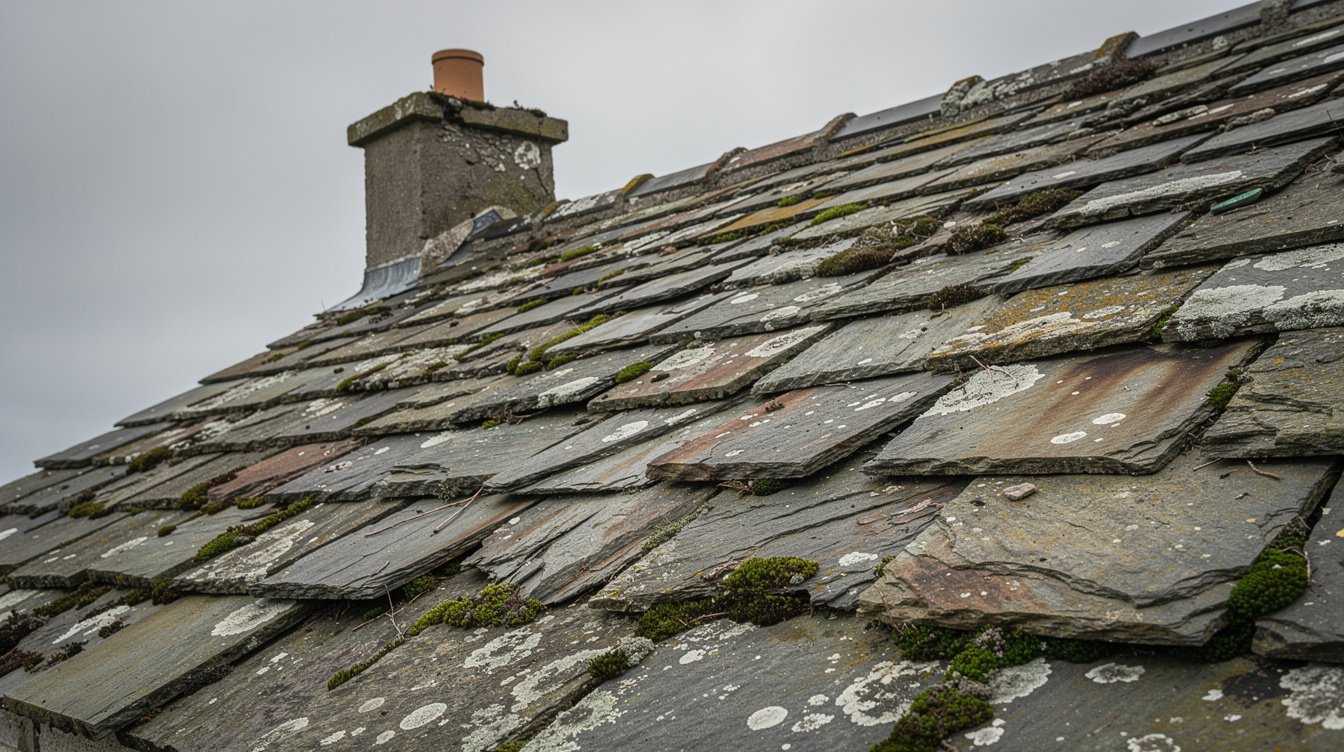
Most Irish solar arrays fitted in the 2015–2018 SEAI grant boom are now sitting on roofs that will need attention within the next 10 years. If your slate is lifting, your felt is perished, or a storm has cracked half a dozen tiles, the immediate question is a nasty one: what do you do with the 12 solar panels bolted on top?
The good news is that removing and reinstalling solar panels for a re-roof is a routine, well-priced job for any competent Irish installer. The bad news is that many homeowners get quoted for it as if it were exotic, or worse, are told they need a brand-new solar system. Neither is true. Here is what the job actually involves in 2026, what it should cost, what to look out for in the small print, and when it’s the right moment to upgrade the system rather than reinstall.
In a sentence
Expect to pay €1,200–€2,600 to remove and reinstall a typical 10–12 panel Irish domestic array, on top of the roofing job itself. Using the original installer usually preserves your product warranty and cuts the price by 15–25%.
When you actually need to remove the panels
Not every roof repair requires a full removal. The decision hinges on where the work is and how invasive it is:
| Roofing work | Panels need removal? | Notes |
|---|---|---|
| Replacing a few isolated tiles well away from panels | No | Roofer works around the array |
| Repointing a chimney or ridge tiles | Usually no | Provided scaffolding can be safely landed clear of the panels |
| Replacing tiles directly under the array | Yes, that section | Partial removal is possible if the array has a rail-and-clip mount |
| Full re-slate or re-tile of the pitch | Yes, complete removal | The most common scenario — every roof rail and roof hook has to come off |
| Replacing roof felt / membrane | Yes, complete removal | Felt sits directly under the tiles — nothing else works |
| Storm-damage insurance claim | Depends | Loss adjuster will specify — often removal + reinstall is claimable |
| Loft insulation top-up from inside | No | No effect on panels |
What the job actually involves
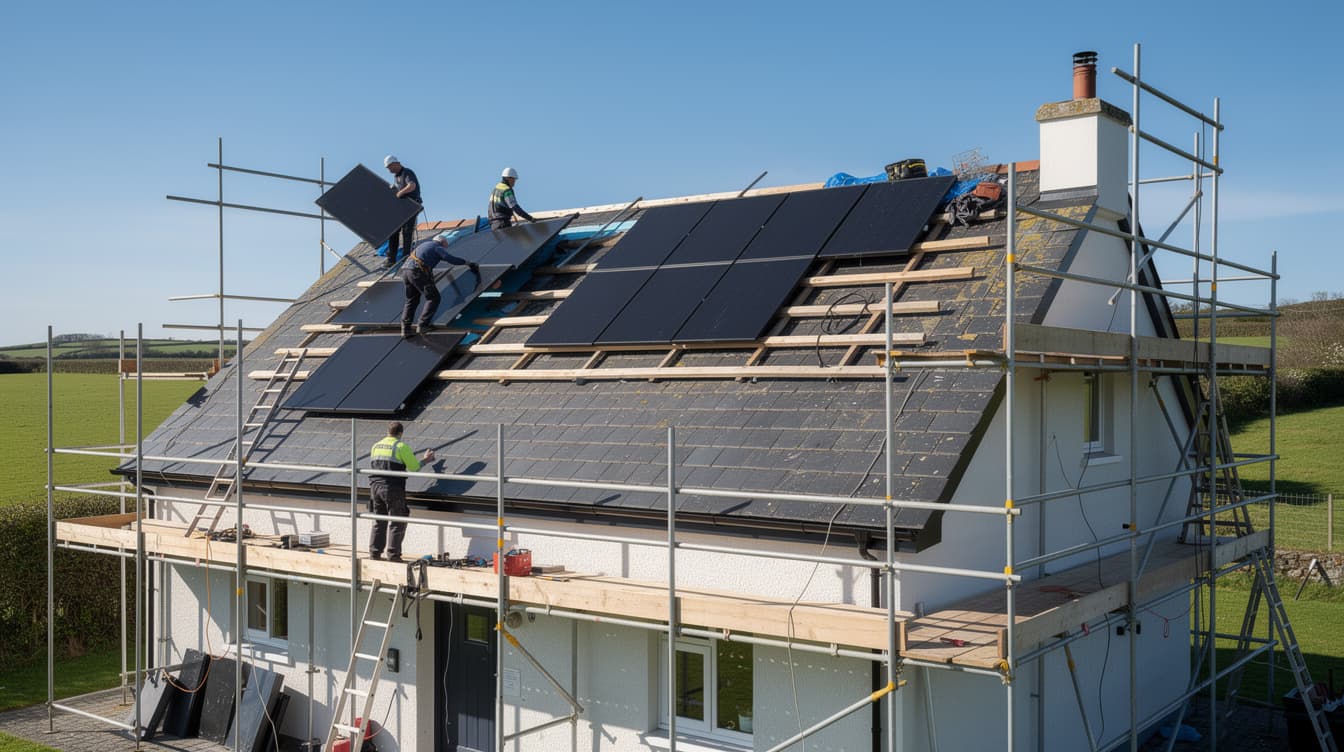
A full removal-and-reinstall of a domestic array is a five-step job, taking two crews (roofer + solar installer) and typically 3–7 days total elapsed time depending on the roofing work in between.
1. System isolation and disconnection
The AC and DC isolators are switched off, and the DC circuits are disconnected at the inverter. On any post-IS 10101 install (i.e. anything installed after mid-2020), there is a rooftop DC isolator too, which is opened first. The inverter is powered down completely and its screen goes dark — that is the safe state before anyone climbs the roof.
2. Panel removal
Panels are unclipped from the aluminium rails (never drilled or unscrewed at the panel itself), carried down to ground level, and either stacked on foam blocks on the driveway or moved into a garage. The MC4 DC connectors are labelled or masked so they can be re-mated correctly on reinstall. Rails, hooks and flashings are then removed.
3. Roofing work
The roofer takes over — strip the roof, replace felt or membrane, batten out, and re-tile or re-slate. This is where the majority of the elapsed time is spent. On a standard 3-bed semi-D re-slate, expect 2–4 days.
4. Panel reinstall
The solar installer returns. New roof hooks are installed into the fresh timbers or slates, new flashing is added, rails go on, and the panels are refitted. Almost always the installer uses fresh roof hooks and flashings rather than trying to reuse them — new hooks are cheap (€12–€18 each) and the labour cost of a leak two years later dwarfs the saving.
5. Recommissioning and test
DC insulation resistance is tested with a megger, isolators are closed in sequence, the inverter is powered up and re-registered to the monitoring platform if needed, and the ESB Networks NC6 record (if you have a smart export tariff) remains valid because the system size hasn’t changed. A fresh commissioning certificate is issued.
Planning a Solar Install?
Fit solar on a roof that has 25+ years of life left — ask your quoted installers about the age of your existing roof before you sign.
2026 pricing: what the job actually costs
The removal and reinstallation cost is separate from — and additional to — the roofing work itself. Prices below reflect quotes gathered from Irish installers in H1 2026. VAT is included at the current domestic 13.5% rate.
| Array size | Panels | Removal only | Reinstall only | Combined R&R |
|---|---|---|---|---|
| Small (2 kWp) | 4–6 | €450–€600 | €550–€800 | €900–€1,300 |
| Standard (4 kWp) | 10–12 | €550–€850 | €750–€1,100 | €1,200–€1,850 |
| Medium (6 kWp) | 14–16 | €650–€950 | €900–€1,300 | €1,450–€2,150 |
| Large (8–10 kWp) | 18–24 | €800–€1,150 | €1,100–€1,550 | €1,850–€2,600 |
Line items usually included in that price:
- Labour for the two crews (roofer + solar installer) plus 1–2 helpers
- Fresh roof hooks, flashings and rail fixings (approx €80–€220 in materials)
- Fresh MC4 crimped connectors on any DC leads that show wear
- Panel storage during the roofing works — typically on foam pads in a garage
- Recommissioning test and fresh certificate
Line items usually not included, but which you should ask about:
- Scaffolding. Add €450–€800 for a two-storey house (3–5 day rental). Often it’s already erected for the roofer — make sure the two crews share.
- Replacement panels. If any panel is damaged during removal (roughly 1–2% of panels break in transit), replacement matched panels cost €180–€280 each.
- New inverter. If your inverter is out of warranty and already 10+ years old, some installers will push you to replace it while everything is opened up. Only agree if it genuinely makes sense — a modern hybrid inverter is €1,400–€2,400.
- Bird proofing. If you never had it and the roof is stripped anyway, this is the moment to add it. Marginal cost is typically €150–€300 — see our bird proofing guide.
Insurance: when the cost is claimable
If the roof needs replacing because of a specific insured event — storm damage, wind damage from a named storm, hail, fallen tree, fire — the removal and reinstall of the solar panels is usually claimable alongside the roofing repair, provided you notify the insurer early. Key rules:
- Notify the insurer before doing anything. A loss adjuster will typically want to inspect. Doing work first and claiming later almost always leads to a reduced payout or refusal.
- Get an itemised quote. Panel removal, reinstall, and any damaged component replacements should be on separate line items so the insurer can see what they’re paying for.
- Use the original installer. Insurers prefer this because it maintains the system warranty chain.
- Keep the commissioning certificate. Some insurers require proof that the recommissioned system is safe before they pay out.
If the roof is being replaced for wear and tear — age, moss damage, general deterioration — that is not an insured event, so the solar removal cost is on you.
Warranty: don’t break it
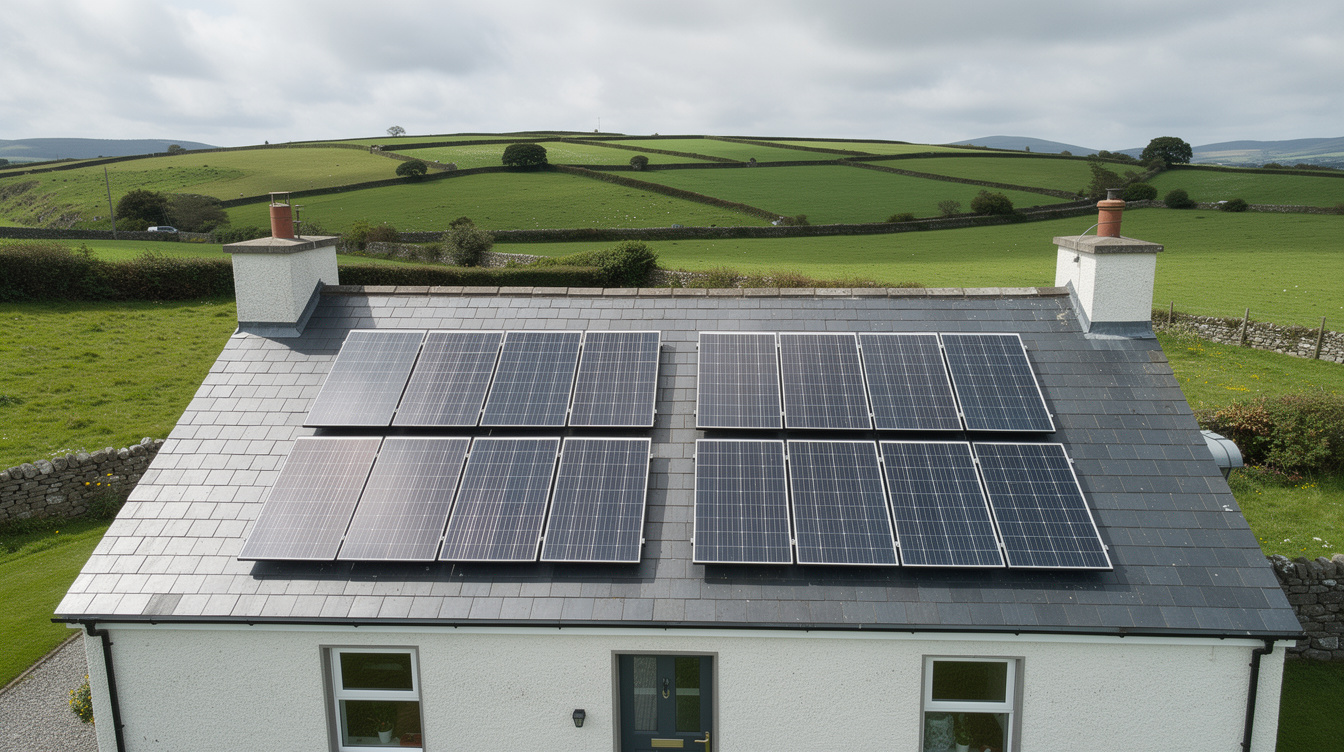
Your panel manufacturer’s product warranty (typically 25–30 years) usually remains intact through a removal and reinstall, but only if the work is done by an SEAI-registered installer using warranty-safe methods. Watch for these three common pitfalls:
- Do not let anyone drill into the panel frame or backsheet. That includes DIY mounting brackets. Only rail-clip systems keep the warranty.
- Do not let a roofer stack panels flat with weight on top. Panels store best on their long edge with 25 mm foam pads between them. Stacked flat, they can micro-crack under their own weight in 48–72 hours.
- Do not skip a fresh megger test after reinstall. Any cell damage during handling will show up in a DC insulation-resistance drop, and you need documented proof to claim on the product warranty if a panel fails later.
Your installer warranty (typically 5–10 years, covering workmanship) is usually voided if a non-original installer or a general roofer does the removal work. Whenever possible, use the original installer — they know the array, they have the DC test records, and they will honour the warranty chain.
When it’s worth upgrading rather than reinstalling
If your existing system is 8+ years old, this is a genuine decision point. Removing and reinstalling old panels costs a certain amount; upgrading the array while the roof is open costs more, but gives you a much better system for the next 25 years. When does upgrade beat reinstall?
- Existing panels are < 300 W each. Modern panels are 425–500 W. On the same roof space you can double or triple the array output. For anyone planning an EV or a heat pump, this is transformational.
- String inverter is out of warranty. A modern hybrid inverter opens the door to battery storage without a second inverter install.
- You never had a battery. Retrofit battery costs are dropping fast in 2026 — see our battery storage guide.
- You can still claim the SEAI grant. The €1,800 SEAI Solar PV grant is available for genuine new-system installations, but not for like-for-like reinstalls. If you upgrade the panels and inverter to a substantially bigger system, most installers will help you apply.
Rule of thumb: if the upgrade quote is less than €3,500 above the R&R quote, and your existing system is over 8 years old, upgrading is usually the better financial call over the next 20 years.
Frequently asked questions
Can my roofer just do it — do I need a solar company involved?
No. Roofers are not qualified to disconnect the DC circuit safely, and doing so without the correct isolation invalidates the panel product warranty and your home insurance. Even if the roofer is capable of physically unclipping panels, the electrical disconnect/reconnect must be done by an SEAI-registered installer.
How long can panels sit off the roof?
Weeks, if stored on their long edge with foam pads in a dry space out of direct sun. Panels stored flat, in strong sunlight, or in a damp shed for more than a fortnight are at higher risk of micro-crack damage. Practically speaking, most re-roofs are completed in 3–7 days, which is comfortably within safe storage limits.
Do I need to inform ESB Networks?
If your system remains the same size and configuration, no — your NC6 registration is still valid. If you use the opportunity to add battery storage or increase the inverter size, yes, a new NC6 amendment is required (see our NC6 guide).
Will my SEAI grant have to be repaid if I remove the panels?
No, provided you reinstall them (or an equivalent or better system) on the same roof. The SEAI grant is a one-time payment made after commissioning — there is no obligation to keep the specific hardware forever. Removing panels and never reinstalling them at that address may trigger a review if it happens within the 5-year audit window, but this is very rare.
Will my export tariff (CEG) contract stay live?
Yes, provided the system returns to the same size and export characteristics. If you upgrade the inverter or add battery storage, notify your electricity supplier and have the NC6 updated first — some suppliers require this to be settled before they will resume export payments (see our CEG rates guide).
Should I replace the roof felt underneath, even if the roof looks fine?
If the felt is over 25 years old and you have the panels off anyway, replacing it is cheap and buys you another 40+ years of dry roof. This is a case where sunk labour cost (scaffolding, roofer callout, panel removal) turns a €500 optional job into an obvious yes.
Bottom line
Solar panels don’t stop you re-roofing. They add €1,200–€2,600 to a typical semi-D roofing job and 2–4 days of elapsed time. Use the original installer if possible, insist on a fresh commissioning certificate, and use the moment to fit bird proofing while everything is off the roof.
If your system is 8+ years old, get an upgrade quote at the same time as the R&R quote. On a large fraction of Irish homes, the marginal cost of a bigger, modern, battery-ready array is worth it over the next 20 years.
To get quotes from SEAI-registered installers for either a straight reinstall or an upgrade combined with your re-roof, use the form below.
Free R&R or Upgrade Quotes
Get matched with SEAI-registered installers experienced with removal, reinstallation and system upgrades on Irish roofs.
Related Articles
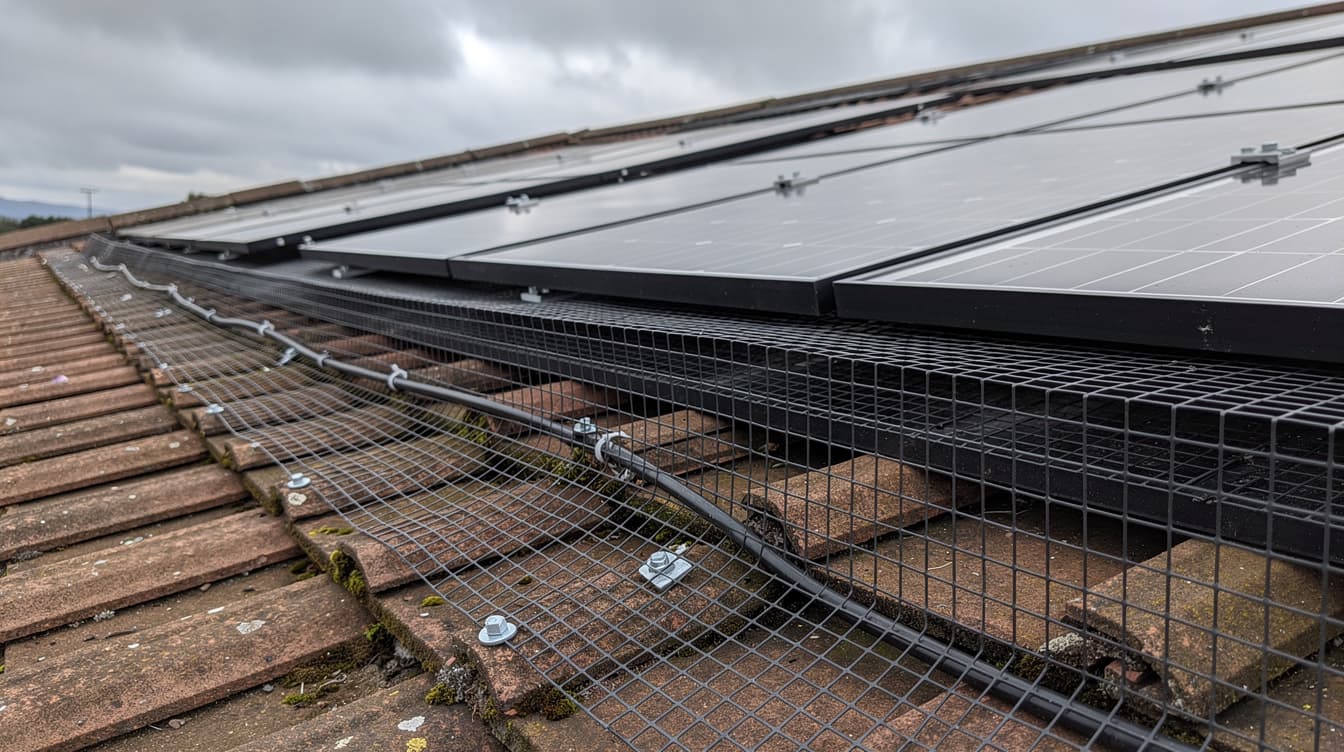
Bird Proofing Solar Panels Ireland 2026: Costs, Mesh vs Spikes & Warranty Rules
Perimeter mesh at install costs €200–€400; retrofit is €600–€1,400. 2026 Ireland guide: what works, warranty rules, wildlife law.
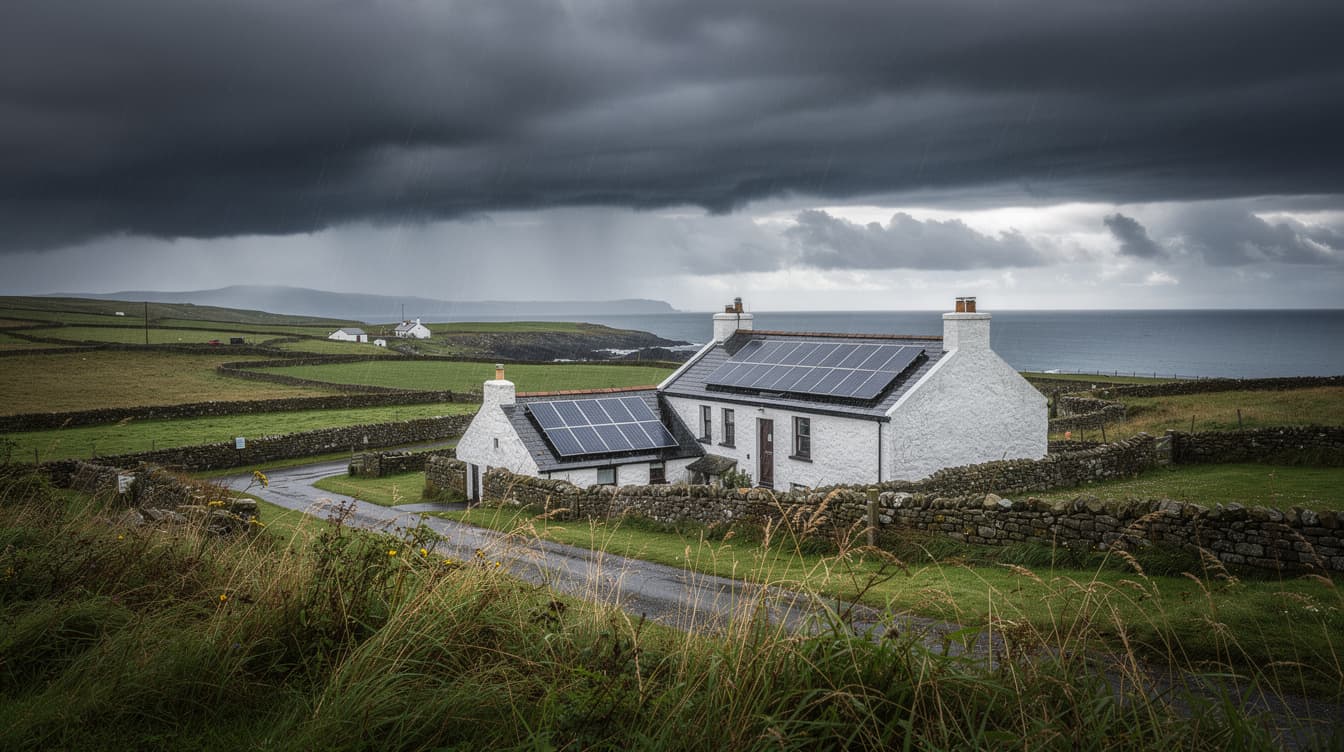
Storm & Lightning Damage to Solar Panels Ireland 2026: Insurance, Surge Protection, Repairs
How Irish solar systems survived Storm Éowyn's 183km/h gusts. Wind loading zones, surge protection costs, home insurance gotchas, before-storm checklist.
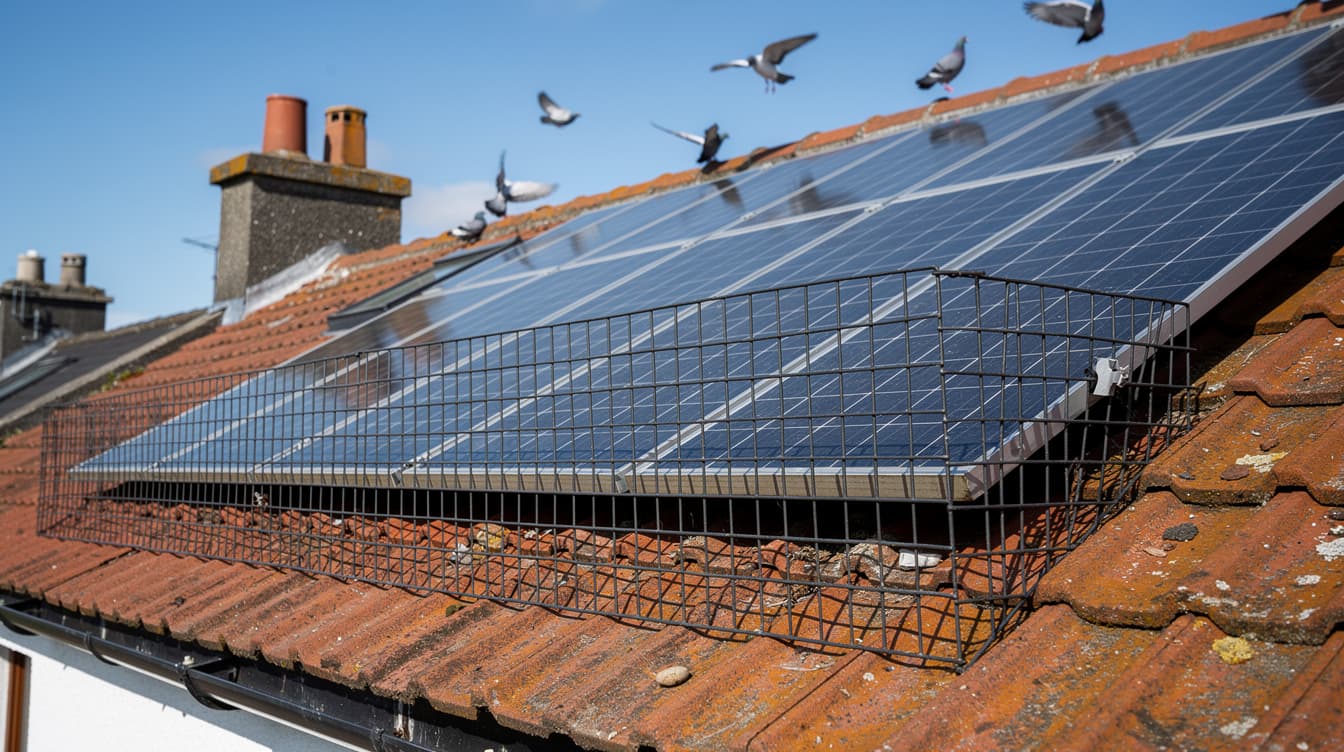
Bird Proofing Solar Panels Ireland 2026: Pigeon Guards, Costs & DIY vs Pro
Pigeons nest under solar panels — here's how to stop them. Costs, mesh vs skirting, install-day vs retrofit prices, DIY safety notes.