
Bird Proofing Solar Panels Ireland 2026: Pigeon Guards, Costs & DIY vs Pro
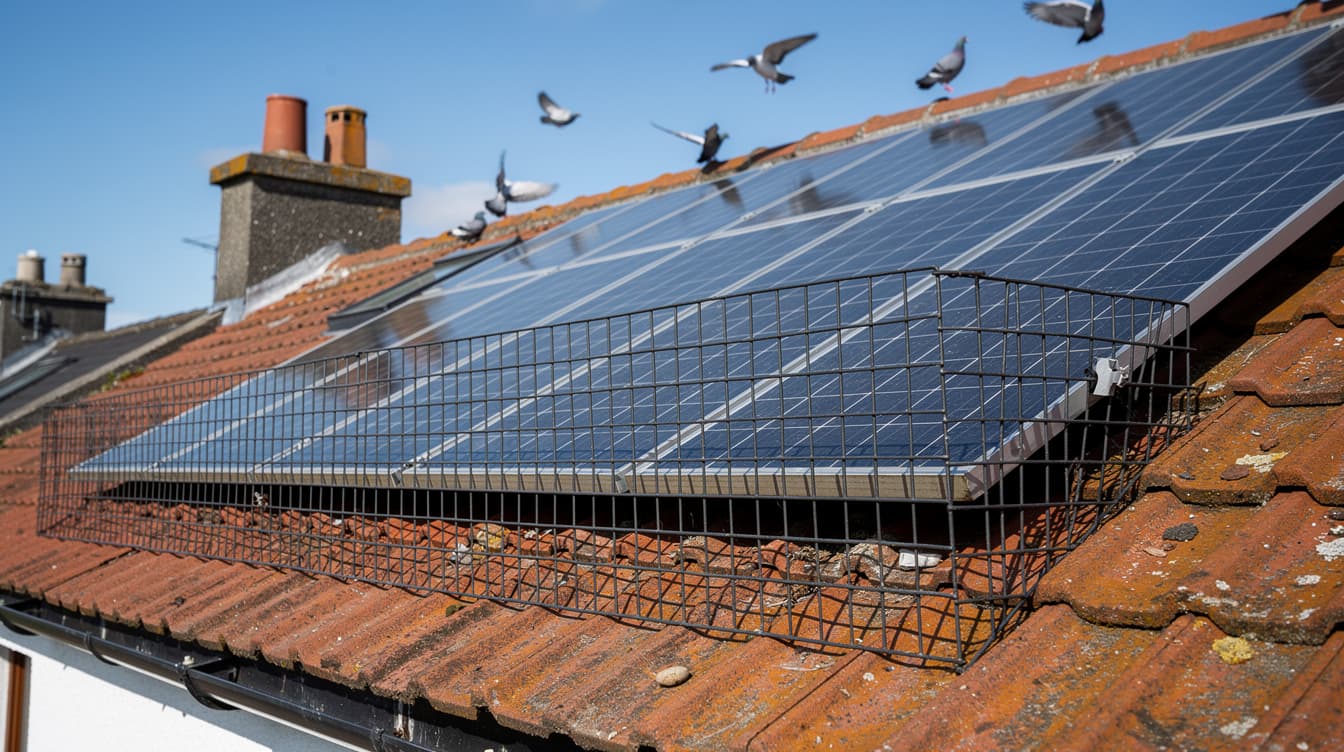
You spend €10,000 on solar panels. Six months later a pair of pigeons decide the gap between your panels and roof tiles is the perfect nesting cavity. Feathers block the ventilation, droppings streak the panels, and the guano begins to eat the aluminium frames. Welcome to the most underrated maintenance problem in Irish solar.
Bird proofing (also called "pigeon proofing" or "solar skirting") is the single fix that stops all of it — and the cheapest time to do it is on install day, not after you have found a chick colony on the roof.
Why Solar Panels Are a Magnet for Pigeons in Ireland
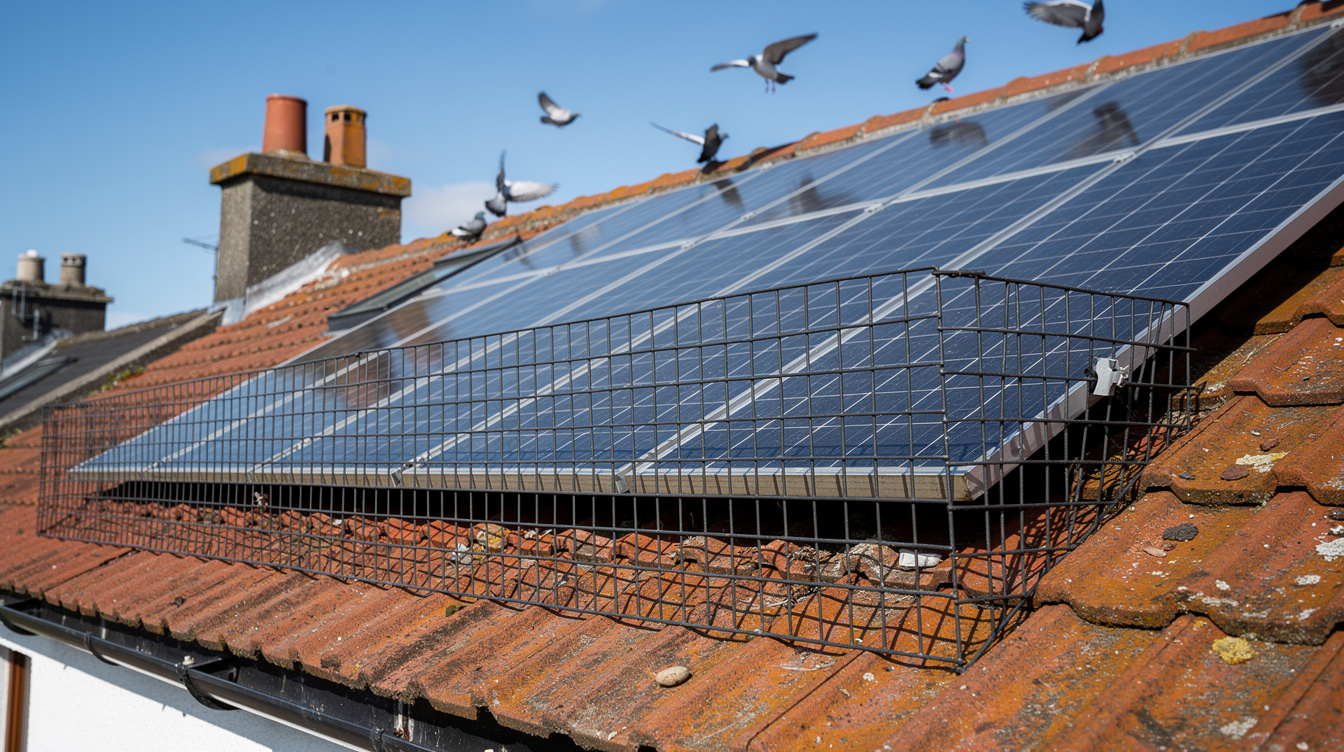
Feral and wood pigeons dominate Irish urban and suburban roofs. Once one pair discovers the cavity underneath your panels, the whole flock knows within a week. Panels tick every box a nesting pigeon looks for:
- Shelter from wind and rain — the 8–12 cm gap between panel and tile is a covered dry space, elevated safely off the ground.
- Warmth — panels warm the cavity by several degrees, even in Irish winter.
- Predator-safe height — cats and foxes cannot reach a roof, gulls do not target pigeon nests, and humans very rarely look.
- Constant food nearby — suburban bin day, bird feeders in neighbouring gardens, and takeaway leftovers on paths.
Starlings, sparrows and even the occasional jackdaw will follow the pigeons in. Bats will not use the cavity in Ireland — the temperature range is wrong for our roost species — so bird proofing has no protected-species implications on a domestic install.
What the Damage Actually Looks Like
Bird colonisation is not a single problem — it is four separate ones stacked on top of each other:
- Guano corrosion. Pigeon droppings are highly acidic (roughly pH 3–4). Sustained contact strips the anodised finish on aluminium panel frames within 12–18 months and voids most panel warranties. It also etches PV glass over time, reducing transmission.
- Ventilation blockage. Panels rely on airflow underneath to shed heat. Nesting material, feathers and droppings pack the cavity, panels run 5–15°C hotter, and generation drops around 3–7% permanently — often blamed on "panel degradation" that is actually just dirty ventilation.
- Fire and electrical risk. Dry nesting material sitting on DC cabling near roof-level isolators is a genuine, if rare, ignition hazard. Insurers have flagged it in loss-adjuster reports since 2023.
- Health and smell. A colonised roof produces a musty ammonia smell in the loft below within a few months. Guano dust harbours cryptococcus and histoplasmosis spores — you do not want to be the one cleaning it out unmasked.
Warranty warning
JA Solar, Longi, Trina, REC and SunPower all list "damage caused by animal or bird activity" as an explicit warranty exclusion. A claim for a corroded frame or cracked backsheet is almost always rejected once photos show guano. Bird proofing is often the difference between a warrantable panel and a €450 replacement.
The Three Bird-Proofing Systems Used in Ireland
Not all bird proofing is equal. There are three products in common use in 2026, and they solve slightly different problems.
| System | How It Works | Typical Cost (10-panel array) | Best For |
|---|---|---|---|
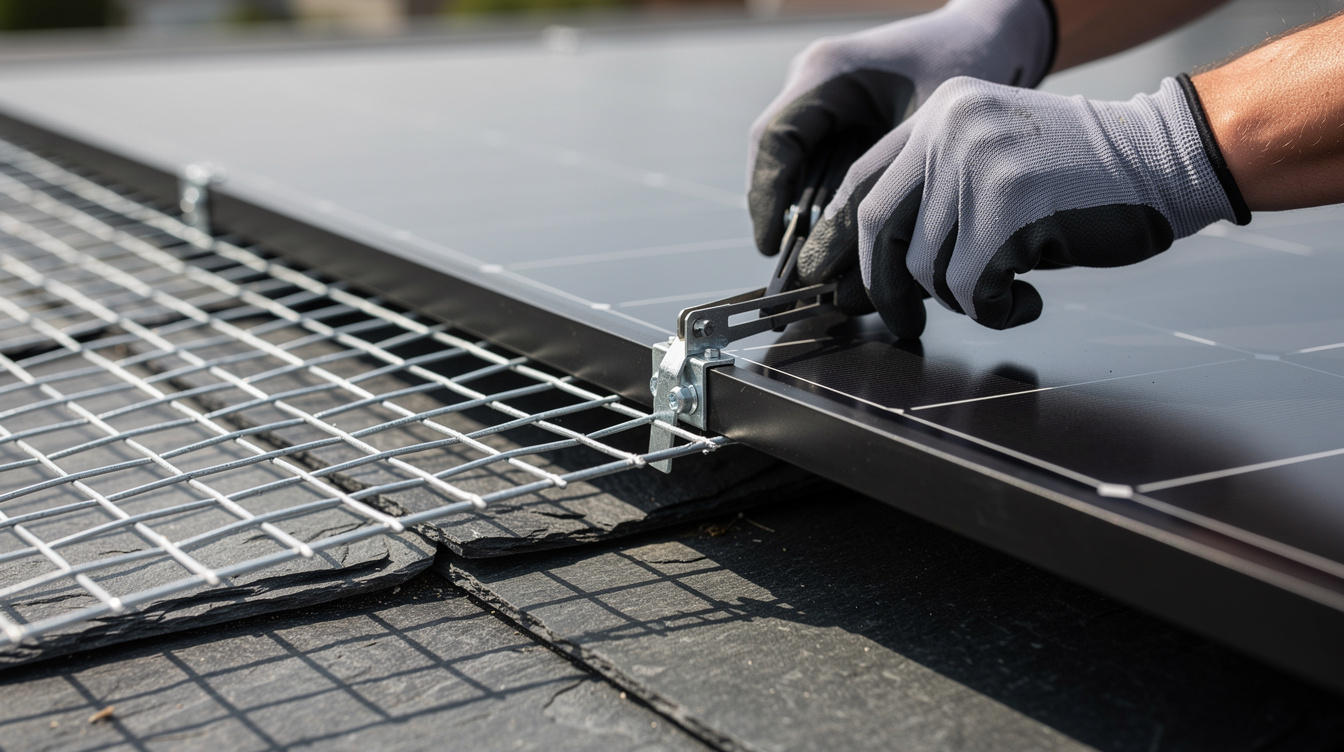
| Perimeter wire mesh + clips | Galvanised 25 mm mesh clipped to panel edges, no drilling into panels or roof | €350 – €550 | Most Irish homes, all panel brands, retrofit-friendly |
| Rigid PVC skirting | Moulded plastic strip clipped along the panel edge like a fascia | €480 – €700 | Aesthetic-first jobs, all-black panel arrays |
| Metal roll-form skirt (aluminium) | Continuous folded aluminium fascia, colour-matched to panels | €620 – €900 | Exposed coastal sites, larger 15 + panel arrays |
The wire mesh option is what SEAI-registered Irish installers fit by default in 2026, and it does 95% of the job at the lowest price. The rigid skirting is a step up on looks (you cannot see the mesh from ground level once the panels are up, but the perimeter is neater with skirting). The metal roll-form is what larger commercial jobs use and is overkill for a normal 3-bed semi.
Bird Proofing on Your Next Quote?
Ask installers to include bird proofing on install day — it is a fraction of the retrofit cost. Get free quotes from SEAI-registered installers.
Install Day vs Retrofit: The Price Gap Nobody Warns You About
Bird proofing fitted at the same time as your solar panels is dramatically cheaper than retrofit — because the scaffold is already up, the panels are being handled anyway, and the mesh takes 45–90 minutes for a competent installer to clip on.
| Scenario | 10-Panel System | 14-Panel System |
|---|---|---|
| Fitted on install day (wire mesh) | €350 – €450 | €450 – €600 |
| Retrofit later, panels clean | €750 – €1,050 | €950 – €1,300 |
| Retrofit + full clean of established nest | €1,150 – €1,600 | €1,400 – €1,900 |
The gap is almost entirely scaffold. Erecting scaffold to a two-storey Irish home costs €350–€600 for a short job, plus €120–€180/day rental. Bird proofing on its own does not justify that scaffold, so the labour ratio on a retrofit is much worse.
Rule of thumb: if your quote does not include bird proofing, ask for it as a line item before you sign. On a €10,000 install, adding €400 to lock out pigeons is worth roughly 20× that in avoided damage over the panels' lifetime.
What About Bird Spikes and Ultrasonic Deterrents?
Two other products get advertised for solar panel bird proofing. Neither works well.
- Plastic bird spikes on panel edges. Pigeons in Irish estates are habituated to bird spikes on chimney tops and shop signs, and they will nest around them. Spikes also do nothing to close the cavity underneath. They look like a solution but only reduce daytime roosting on top of panels — not colonisation underneath.
- Ultrasonic and reflective deterrents. Bird-scarer devices (holographic tape, plastic hawk kites, ultrasonic emitters marketed on Amazon) have a habituation window of 5–20 days. Pigeons figure out they are not a threat and go right back to nesting. Independent RSPB testing rates them as "no lasting effect" for urban feral pigeons.
The only reliable long-term fix is a physical barrier that closes the cavity. Everything else is a delaying action.
DIY vs Professional: Should You Fit It Yourself?
Bird-proofing mesh kits are available online in Ireland for €80–€180 depending on array size — that is genuinely all the material costs. So why do installers charge €350–€500 to fit it?
Three reasons, and they are the reasons this is not a good DIY job for most homeowners:
- Working at roof height. Two-storey Irish homes are 6–8 m to eaves. A domestic ladder is legal for access but not for the 3–4 hours of hands-free work bird proofing needs. You want scaffold or a proper roof-safety harness setup — both of which cost more to hire for a day than the professional install.
- Panel warranty risk. The mesh clips onto panel frames. Wrong clip type or over-tightened fixings can dimple the frame — enough to make a warranty claim harder if the panel fails later. Installers use compatible frame clips as part of their trade insurance.
- Cavity inspection. Before mesh goes on, the cavity should be checked and any existing nest material removed. Doing that without disturbing the panels themselves takes practice.
DIY makes sense if: it is a single-storey bungalow with easy roof access, you own or can hire the right safety kit, and you are comfortable working on tiles. Otherwise, fold it into a professional service — either as a line item on your original quote, or as part of a scheduled annual solar maintenance visit.
Coastal, Urban, Rural: Where the Risk Is Highest
Not every Irish rooftop is equally attractive to pigeons. If you are on any of these, prioritise bird proofing from day one:
- Suburban Dublin, Cork, Limerick, Galway city and towns: highest feral pigeon density in the country. Bird proofing should be default.
- Coastal towns (Skerries, Bray, Wicklow, Kinsale, Salthill, Bundoran): gulls do not colonise panel cavities, but the salt-air corrosion on any exposed metal frame is already a problem — guano on top accelerates it. See coastal solar panels in Ireland for the wider picture.
- Rural homes near dairy farms, grain silos or old barns: feral pigeons flock in numbers around any regular food source. Farms attract them, and neighbouring homes get the roosting overflow.
- Homes with fruit trees, bird feeders or open bin storage: you are running an unintentional pigeon canteen. Bird proofing on the panels is essential and it may also be worth moving feeders further from the house.
What to Do If You Already Have a Bird Problem
If you have discovered a nest under your panels, the sequence matters — do it in the wrong order and you break the law.
- Check for active nests first. In Ireland, wild birds and their nests are protected under the Wildlife Act 1976 (as amended) during the active nesting season. You cannot remove an occupied nest with eggs or chicks — you must wait for the young to fledge (usually 4–6 weeks from first spotted).
- Once the nest is empty, clean and disinfect. Full PPE (FFP3 mask, gloves, coveralls), remove all nesting material, disinfect the cavity with a broad-spectrum roof-safe biocide. A professional pest-control clean of a colonised solar array typically costs €250–€450 in Ireland.
- Immediately fit bird proofing. The window between a clean cavity and re-colonisation is short — pigeons remember roost sites for years. Same-day mesh install is ideal.
- Book a system check. Any acid damage to panel frames, MC4 connectors or DC cabling should be spotted while the installer is up there. Photograph everything — if damage is severe enough for a warranty conversation, evidence matters.
Protect Your Solar Investment
Whether you are quoting a new install or need bird proofing on existing panels, SEAI-registered installers can handle both. Get free quotes now.
Frequently Asked Questions
Does bird proofing affect solar panel output?
No — correctly fitted mesh sits at the panel edge and does not shade any cell. In fact, by keeping the cavity clear of debris and nesting material, bird proofing usually improves summer output by 2–5% because panels stay cooler.
Do I need bird proofing on all four sides of my array?
Yes. Pigeons will find any gap. Skirting a three-sided perimeter and leaving one side open is worse than no proofing at all because it funnels birds to the one entrance, concentrating damage. Full perimeter mesh is the standard install.
How long does bird-proofing mesh last on an Irish roof?
Galvanised 25 mm mesh is warranted for 20–25 years — effectively the life of your panels. Coastal locations are the exception: salt air can eat galvanised mesh in 8–12 years, so specify stainless-steel or PVC-coated mesh within 3 km of the sea.
Will bird proofing invalidate my solar panel warranty?
Only if it is fitted with the wrong type of clip. Any SEAI-registered installer using standard MC4-compatible edge clips is fine. If you retrofit yourself with random hardware-store fixings, some warranty terms could arguably apply — check with your installer before ordering a DIY kit.
Are seagulls a problem for solar panels in coastal Ireland?
Not the way pigeons are. Gulls are too big to nest under a domestic panel cavity, and they do not seek out that kind of shelter — they prefer chimneys and flat roof valleys. What you do get in coastal areas is gull guano on top of the panels, which is a cleaning issue rather than a cavity issue. A twice-yearly rinse handles it.
Can I claim bird damage on my house insurance?
Usually no. Most Irish home insurers list "damage by vermin, pests or birds" as an explicit exclusion. A small number of specialist solar warranty add-ons (offered by a handful of installers in 2026) cover it, at typically €40–€80/year. Bird proofing at install time is a far better use of that money.
Guidance verified against SEAI installer guidance, Irish Wildlife Act 1976 and installer quotes from June and July 2026. Bird proofing is a maintenance investment — the cheapest version is the one you never have to pay for because you fitted it on day one.
Related Articles
Storm & Lightning Damage to Solar Panels Ireland 2026: Insurance, Surge Protection, Repairs
How Irish solar systems survived Storm Éowyn's 183km/h gusts. Wind loading zones, surge protection costs, home insurance gotchas, before-storm checklist.
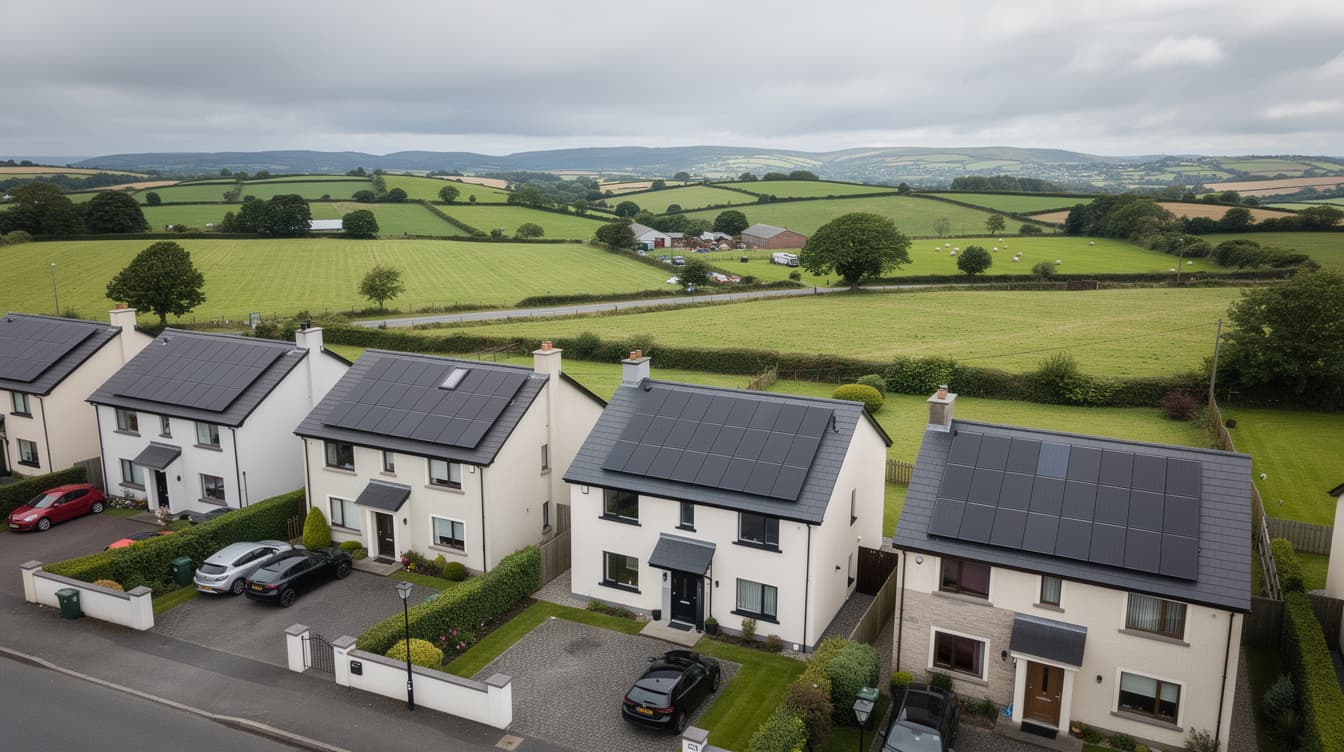
SolarEdge vs Enphase Ireland 2026: Price, Warranty & Which Wins on Irish Roofs
Full Ireland 2026 comparison: SolarEdge vs Enphase microinverters. Real installer prices, warranty gap, shading gains, and which wins for Irish roofs.
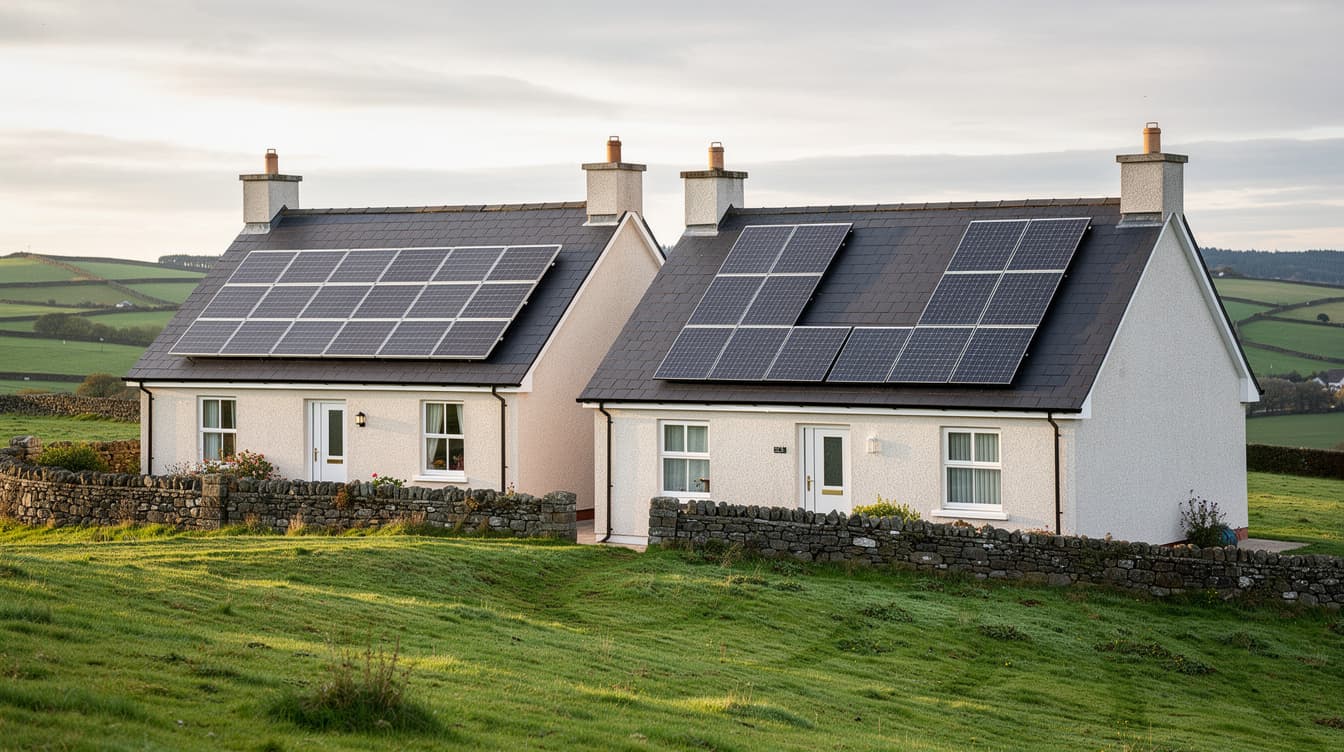
East-West vs South-Facing Solar Panels Ireland 2026: Which Actually Wins?
South-facing wins on kWh, east-west wins on self-consumption. 2026 numbers, real household examples and dual-MPPT wiring notes.