
Solar Panel Shading Ireland 2026: Trees, Chimneys & Real Output Loss
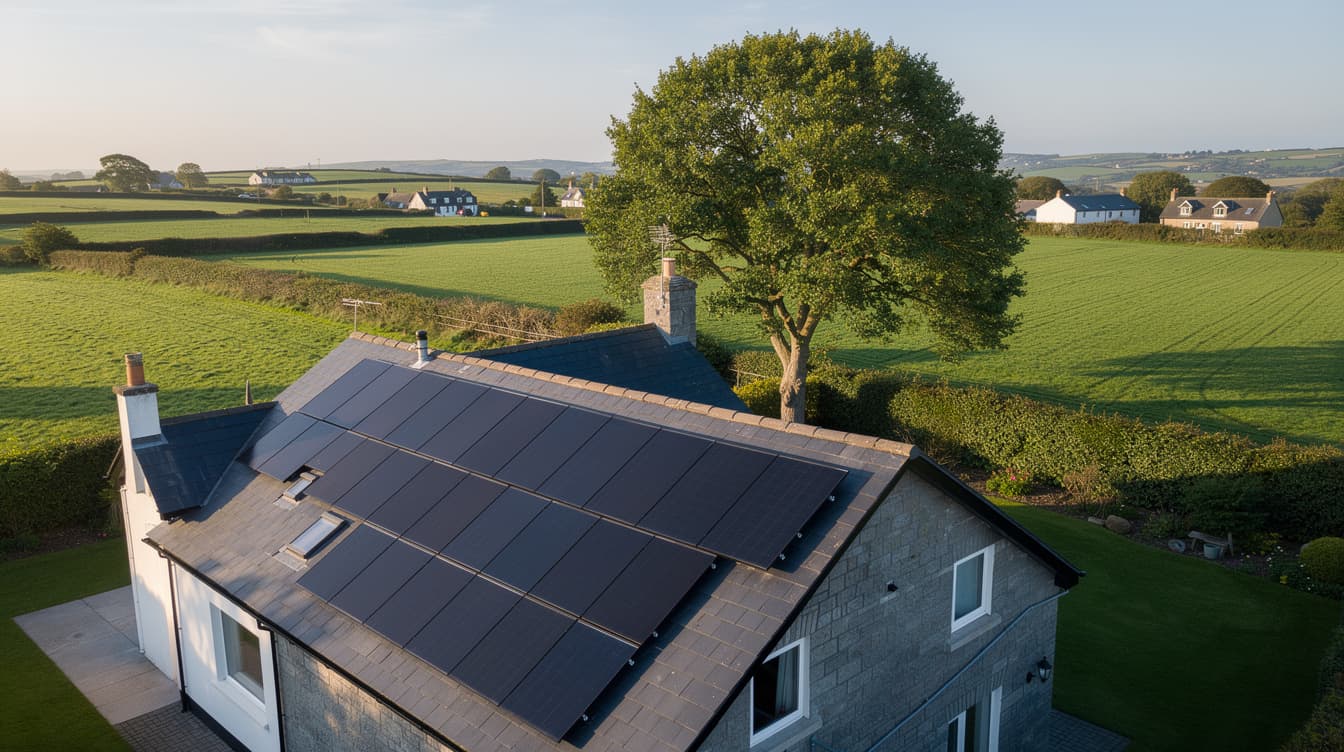
Every Irish solar quote conversation eventually gets to the tree. Or the chimney. Or the dormer window. The homeowner points at a photo of the roof and asks "what about that?" – and if the installer's answer is a shrug and a promise that "modern panels handle shade fine", walk away. Shading is the single biggest cause of underperforming solar systems in Ireland, and it's the area where cheap quotes hide the biggest performance penalties.
This is a July 2026 guide to shading on Irish rooftops: how much output you actually lose from a tree, a chimney or a satellite dish, how to model it before you sign, and when to spend the extra €400–€900 on power optimisers or microinverters instead of a standard string inverter.
The short version
A single fully-shaded panel on a standard string inverter can drop a whole string's output by 40–70%. A single fully-shaded panel with an optimiser attached loses only that one panel's share (typically ~4–8%). Microinverters give the same isolation with a slightly different fault mode. If you have real shading – anything more than passing morning haze from a distant tree line – you need panel-level electronics, not a bare string inverter.
What actually causes shade on Irish rooftops
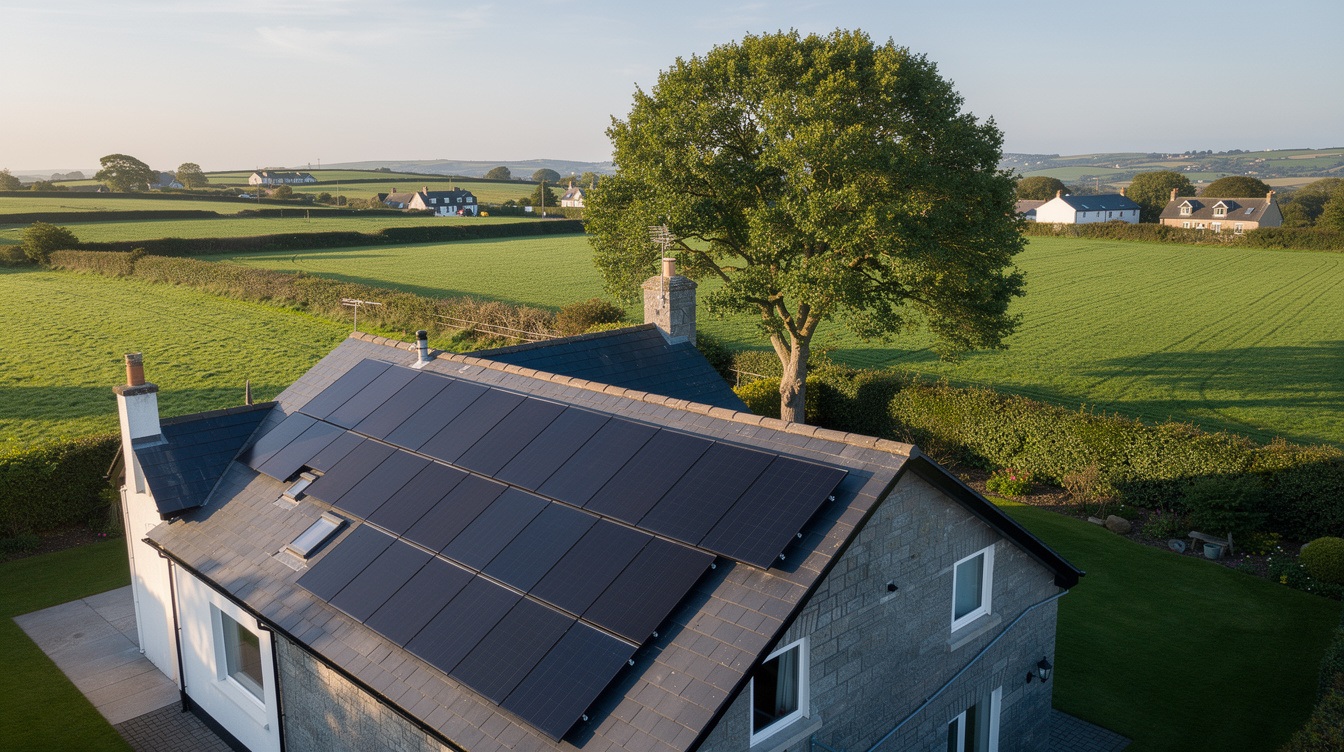
Ninety percent of shading complaints we see come from one of six specific sources. In rough order of frequency across the ~600 residential quotes reviewed in our network in the last year:
| Shade source | Frequency | Typical annual loss (string inverter) |
|---|---|---|
| Neighbour's mature tree (oak, ash, sycamore) | ~35% | 15–30% |
| Own chimney | ~22% | 5–12% |
| Dormer or gable projection | ~14% | 6–15% |
| Satellite dish or aerial | ~10% | 4–8% |
| Adjacent taller building | ~9% | 10–25% |
| Own trees the homeowner planted | ~7% | Variable, growing |
| Everything else (birds, moss, hedges) | ~3% | 1–3% |
Notice the ranking. Neighbours' trees are the biggest cause because homeowners rarely think of them when planning – the tree isn't on your survey, isn't in the installer's drone photo unless you ask, and can't be pruned by you without a conversation. Chimneys sit second because the homeowner assumes the installer will design around them – they usually do, but only within the panel layout, not by choosing better electronics.
Why string inverters are so brutal on shade
A traditional solar array wires panels together in a series "string" that feeds one inverter. If any single panel in that string is shaded – even partially – the current through the whole string drops to match the weakest panel. The other panels still generate voltage but can't deliver their rated current, and the whole string can drop by 40–70% while a single small shadow crosses one cell.
Modern panels include bypass diodes that split the panel into three sub-sections, so a shadow across one third of a panel triggers a bypass rather than a total loss. That helps – but the string-level current bottleneck still applies. A single fully-shaded panel with the bypass diodes triggered runs at roughly two-thirds voltage and drags the whole string with it.
The maths for an installer's shading model on a 5.5 kWp string-inverter system with a single chimney shading one panel for two hours a day, June through August:
- String-level current drop during shade window: ~35% of string output
- Total shading hours affected per year: ~500 hours (mostly summer)
- Total kWh lost per year: ~350 kWh
- Value in c/kWh (blended self-consume + CEG): ~€90/yr
Sounds small, but that €90/yr compounds over 25 years to €2,250 lost income – and a full set of DC optimisers costs €400–€700 to add on install day. Simple maths says optimisers pay themselves off in 4–8 years and generate free performance for the remaining 17+ years.
Got shade on your roof? Ask for a shading survey.
Our SEAI-registered installer network runs 3D shading simulations before quoting. No guesswork – you'll see the exact kWh loss forecast for your specific roof.
How installers should model shade at quote stage
A competent Irish installer in 2026 has three tools that give you a real answer before you sign:
- Drone survey of the roof and immediate surroundings, with a horizon capture that traces trees, buildings and structures around the array. Time-cost: ~30 minutes, usually free if you're comparing 2–3 quotes.
- Aurora Solar or Helioscope 3D model, which imports the drone imagery, generates a shade mask hour-by-hour across the year, and calculates kWh loss per panel. Cost to the installer: ~€5–€10 per site.
- PVGIS shading factor for the specific coordinates – the free EU-published dataset that already includes typical horizon shading for Irish sites.
An installer who says "we don't model shade, we just fit optimisers if it looks shady" is guessing. That works out fine sometimes but locks you into unnecessary electronics on some quotes, and misses subtle winter-shading problems on others. Ask specifically for a shading report as part of your quote package.
The three mitigation options – and what they actually cost
Option A: DC power optimisers (SolarEdge, Tigo, Huawei)
An optimiser is a small electronics module clipped to the back of each panel that decouples that panel's output from the rest of the string. Each panel operates at its own maximum power point. A shaded panel simply produces less; the others carry on at full output.
- Add-on cost: €400–€700 for a 5.5 kWp system (10–13 panels)
- Best for: partial shading, mismatched roof facets, or a small number of shaded panels
- Downside: extra hardware = more failure points; SolarEdge inverters historically have a shorter warranty than string equivalents
- Warranty: optimisers usually 25 years, inverter 12–15 years
Option B: Microinverters (Enphase IQ8, Hoymiles HMS)
Each panel has its own tiny inverter mounted underneath, and panels connect to the house via AC cabling rather than one long DC string. Every panel is independent; there's no string at all.
- Add-on cost: €700–€1,300 vs baseline string inverter for a 5.5 kWp system
- Best for: heavy shade, complex multi-facet roofs, or homes that plan to expand the array later
- Downside: higher upfront; roof-mounted electronics that are harder to service; battery pairing is trickier
- Warranty: Enphase IQ8 microinverters 25 years standard
Option C: Layout redesign (free)
Sometimes the best answer is to leave panels off the shaded roof area entirely. If the chimney casts shade across two panels only in high summer, and those two spots wouldn't add much generation anyway, drop them from the design and quote a slightly smaller array. Reputable Irish installers do this routinely on the quote – watch for a proposed 5.5 kWp array that leaves a suspicious gap near a dormer.
When to use which option: a decision tree
| Situation | Recommended fix |
|---|---|
| No shade – clean south-facing roof | Bare string inverter, no optimisers |
| One chimney casting light shade <90 minutes/day | Layout redesign – skip the shaded panel |
| Multi-facet roof (east + south + west) | Optimisers on one string, or hybrid inverter with multiple MPPTs |
| Mature tree(s) causing 3–6 hours daily shade | Full DC optimisers on all shaded panels |
| Heavy year-round shade from tall building | Microinverters – or reconsider whether solar is worth it here |
| Plan to extend the array in 2–3 years | Microinverters – easy to add panels later |
Real Irish case study: Kildare semi-detached, chimney and neighbour's ash
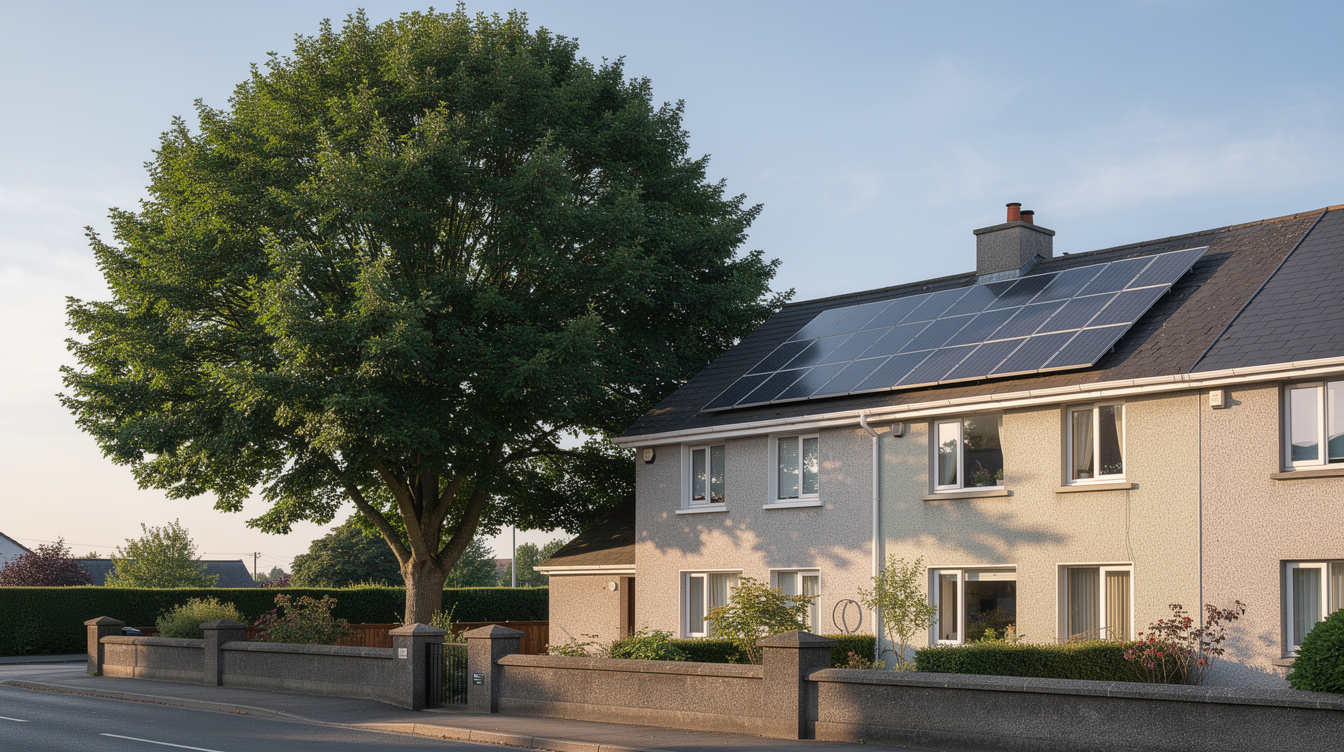
A 2025 Kildare survey: 4-bed semi in a mature estate, south-west facing 30° roof, own chimney projecting 900mm above ridge line on the west gable, neighbour's ash tree 6m from the property line, 12m tall. Panels proposed: 12 × 460W = 5.5 kWp.
Installer A quoted a bare string inverter, €9,200 gross. Shading estimate: "shouldn't be a problem". Estimated annual generation: 4,900 kWh.
Installer B quoted the same panels with SolarEdge optimisers on all 12 panels, €9,850 gross. Shading model showed the chimney knocking 6% off the west-facing three panels through summer afternoons, and the ash knocking 15% off the two south-eastern panels in morning shade from May to September. With optimisers those losses stay isolated to the affected panels. Estimated annual generation: 5,220 kWh.
The maths: Installer B's system generates 320 kWh/yr more, worth ~€85/yr. Payback on the €650 optimiser premium: 7.6 years. The rest of the panel-warranty life (17+ years) is pure benefit. Homeowner went with Installer B.
The seasonal trap: winter shade is worse than you think
Solar generation in Irish winters is already low – December output can be 10–12% of the June figure. What people miss is that winter shading is proportionally more severe because the sun tracks low in the sky. A tree that clears the array by mid-morning in June may block it entirely from 10am to 2pm in December – the exact window when you'd get any winter generation at all.
A proper shading model doesn't just report annual loss – it reports monthly loss. Ask for the monthly output curve alongside the headline number. A quote that shows 5.2 MWh annually but with December output effectively zero because of winter tree shade is a different proposition to a quote where December still produces 180 kWh.
Trees you can and can't do anything about
Your own trees are yours to prune, coppice or fell – subject to any local tree-preservation order or protected-hedgerow rule. Trees along the property boundary get thornier:
- Neighbour's tree overhanging your roof: under Irish common law you can trim the overhanging portion back to the property line without permission, and you must return the cuttings to the neighbour if they ask. Cutting beyond the boundary or damaging the tree's health without consent risks a civil dispute.
- Neighbour's tree next to but not over your roof: no automatic right to prune. A polite conversation and a formal request in writing usually work – but not always.
- Council-owned street tree: contact your local authority's Parks Department. Many councils have a "solar amenity" policy but it's not universal and can take months.
- Protected trees (TPO): pruning may require Local Authority consent. Check the online planning map before doing anything you can't undo.
If you're relying on someone else's tree being pruned or removed for your system to hit its estimate, don't sign the contract until you have written confirmation – from the tree owner or the council – that it's actually going to happen.
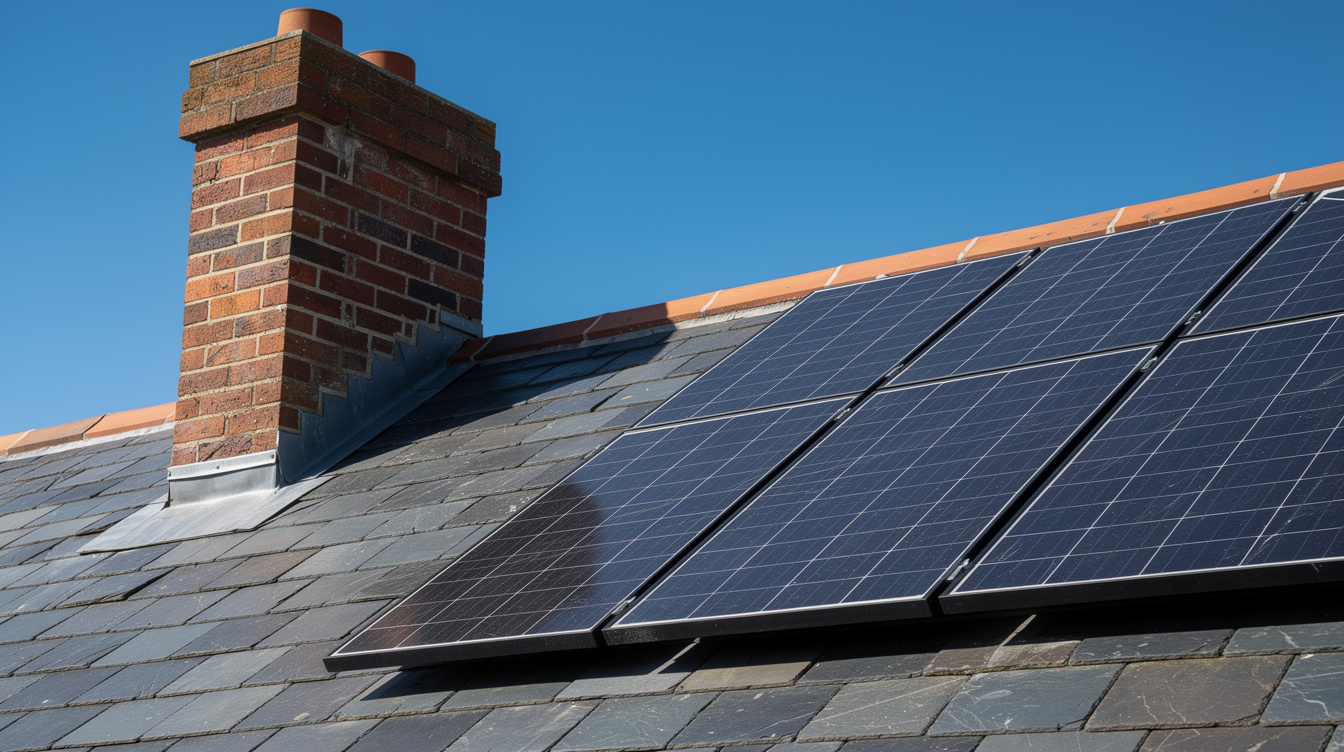
Chimneys: keep, cap, or panel-around?
Homes built after 2010 often no longer have a working fireplace but still have the chimney projecting from the roof. Three options if it's shading your best panel spot:
- Panel around it – simplest, cheapest, loses 1–3 panel positions.
- Cap or reduce the chimney – typically €400–€900 by a competent roofer, brings the top down flush to the ridge tile. Only worth doing if the chimney is truly disused – check the flue isn't being used for boiler or stove venting.
- Full removal down to ceiling joists – €1,500–€3,000, needs a builder plus roofer, opens up the roof but disrupts the interior. Rarely worth it just for solar unless you're renovating anyway.
Most installers won't push chimney work – it's outside their scope. If you're renovating the roof anyway, get the roofer to look at the chimney at the same time.
Dormers, aerials and satellite dishes
These fall into the "small movable object with a big shadow" category. Satellite dishes and TV aerials are cheap to relocate (€80–€150 by an aerial fitter) and get out of the way of the panels. Ask before install – installers won't touch them unless requested.
Dormers are structural and stay put. On a hipped roof with a dormer, the standard fix is to place the string of shaded panels on a separate MPPT input, so they run independently of the main string. Every reputable hybrid inverter sold in Ireland (Sungrow, GivEnergy, SolaX, Fox) has at least two MPPT inputs precisely for this reason.
Get a proper shading survey before you sign
SEAI-registered installers in our network include a drone-based shading model as standard on residential quotes.
The cheap installer trap
Here's the pattern we see on shading-affected roofs: three quotes arrive. Two propose optimisers or microinverters for €9,500–€10,200; one proposes a bare string inverter for €8,300. The cheap quote "wins" because it's a better headline price. Twelve months later the homeowner complains the panels aren't generating what was promised. The cheap installer shrugs and blames "the weather".
What actually happened: the cheap quote used the same PVGIS annual figure as the other two but ignored the shading loss modelled by the competitors. On paper it looked competitive. In reality it under-generates by 15–30% for the life of the system, quietly losing the homeowner €200–€400/yr against the promised figure.
The fix is to ask every installer for their shading model, and to see side-by-side comparison of expected annual generation. See our solar contract red flags guide for the full checklist.
Testing shade after install: are you getting what you paid for?
Every hybrid inverter sold in Ireland in 2026 comes with a monitoring app (SolarEdge Monitoring, Enphase Enlighten, Sungrow iSolarCloud, GivEnergy Cloud, Fox ESS). These give you daily and hourly generation graphs. In the first summer:
- Check daily production against installer's estimate for a matched-weather day (i.e. a sunny day in July).
- If a panel-level system: check that all panels show similar output at midday. A panel showing 30% less than its neighbours is a service call – either shaded (fixable) or faulty (warranty).
- Log a weekly generation number for the first 12 months and compare against the installer's forecast.
If reality is more than 10–15% below the modelled figure and you were told shading was already accounted for, you have a legitimate case with the installer.
FAQ
Do optimisers work with any panel brand?
Yes. SolarEdge and Tigo optimisers are panel-agnostic and clip onto the standard MC4 connectors under any panel. Enphase microinverters similarly work with any 60-cell or 66-cell panel from 350W upwards.
Can I retrofit optimisers on an existing string install?
Technically yes – typically €600–€1,000 for a 5.5 kWp retrofit including labour. In practice it's rarely worth doing unless you have persistent underperformance and can point at a specific shading source. If you're inside the installer's workmanship warranty period, ask them to model actual output vs promised output first.
Is a heat pump affected by shading on a related array?
No – the heat pump runs off the household's electricity supply and doesn't care whether solar is contributing. What changes is your household's blended cost per kWh, and how much of the pump's daytime consumption is being met by solar directly.
Do bifacial panels help with shade?
Not really. Bifacial panels catch reflected light onto their rear surface for a 3–8% total-output gain, but that's ambient light – not enough to punch through a hard shadow. See our bifacial panels guide.
What about cleaning – can moss or bird droppings cause "soft shading"?
Yes, but it's usually a maintenance issue, not a design one. Panels tilted 20°+ self-clean well in Irish rain; flat or shallow tilts (<15°) tend to accumulate moss or bird droppings and can lose 3–5% output over a couple of years. A garden-hose rinse every 12 months is enough. See our bird-proofing guide if you have a persistent problem.
Does the SEAI grant care whether I use optimisers?
No. The €1,800 SEAI grant is flat, regardless of hardware spec, as long as the installer is SEAI-registered and the equipment is on the SEAI Triple E register. Optimisers, microinverters and bare string inverters are all fine.
Bottom line
Shade on an Irish roof is common and usually manageable – but only if it's modelled before you sign, priced honestly, and mitigated with the right hardware. A drone survey, a shading report, and a discussion of optimisers vs microinverters vs layout-only fixes are the three deliverables you want from a professional quote. Any installer who skips them is telling you they don't know or don't care what your specific roof will produce.
If you have a chimney, a dormer, a mature tree line, or a neighbour's house looming, get quotes with shading detail baked in. Our free quote form connects you with SEAI-registered installers who include a shading model as standard.
Ready to model your shaded roof?
Get 3 free quotes with a drone-based shading survey included – SEAI-registered installers, no obligation.
Related Articles
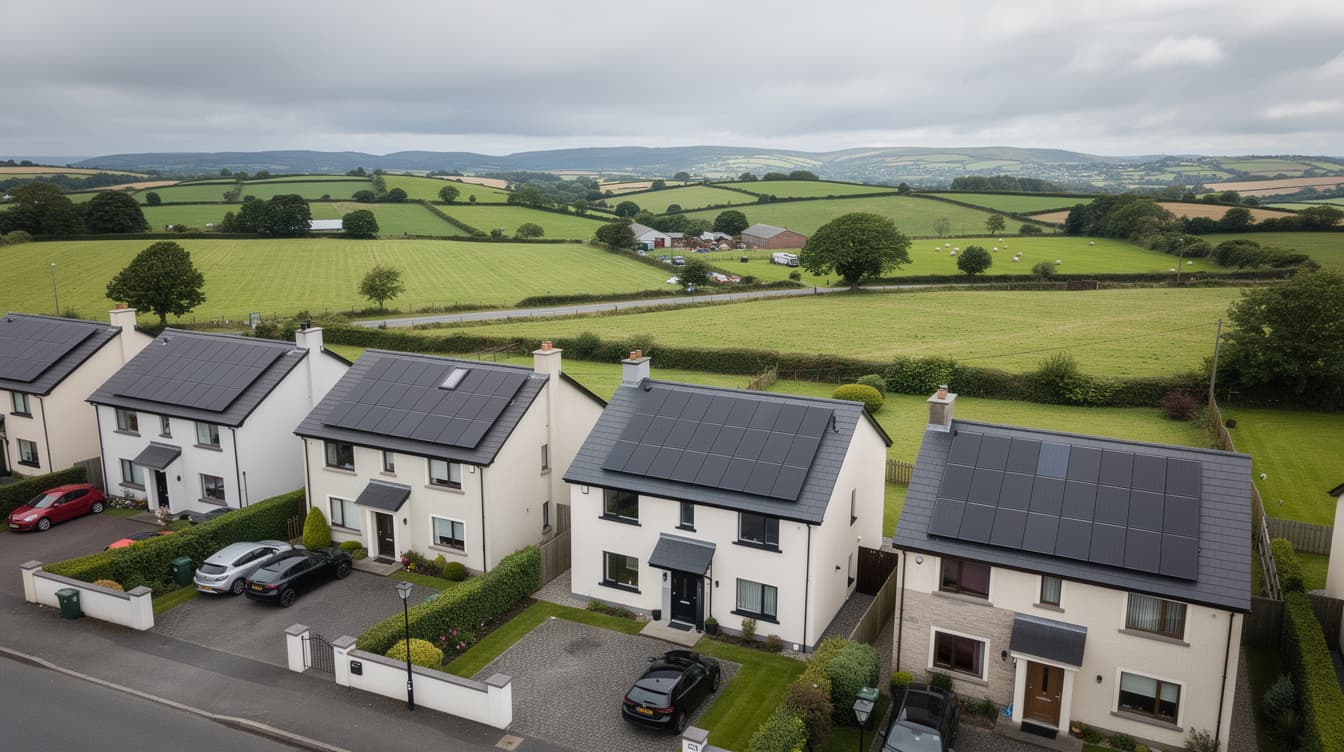
SolarEdge vs Enphase Ireland 2026: Price, Warranty & Which Wins on Irish Roofs
Full Ireland 2026 comparison: SolarEdge vs Enphase microinverters. Real installer prices, warranty gap, shading gains, and which wins for Irish roofs.
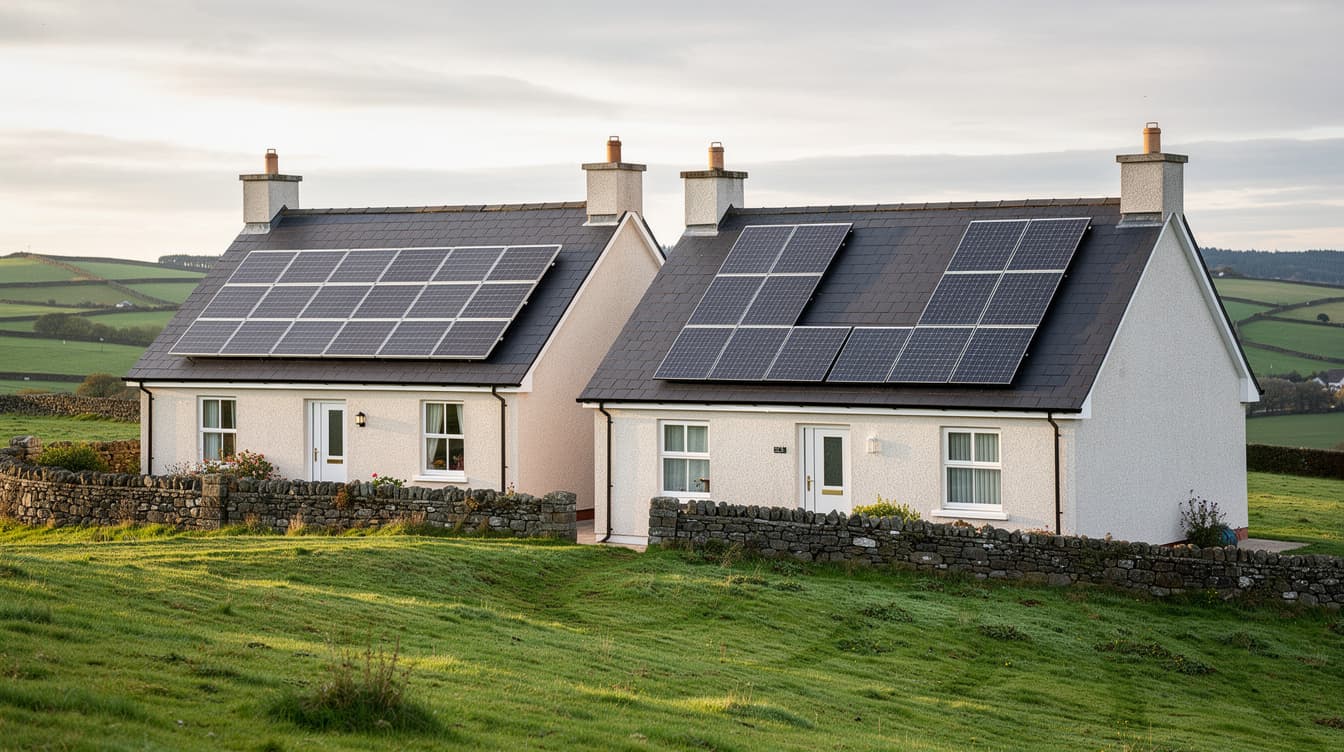
East-West vs South-Facing Solar Panels Ireland 2026: Which Actually Wins?
South-facing wins on kWh, east-west wins on self-consumption. 2026 numbers, real household examples and dual-MPPT wiring notes.
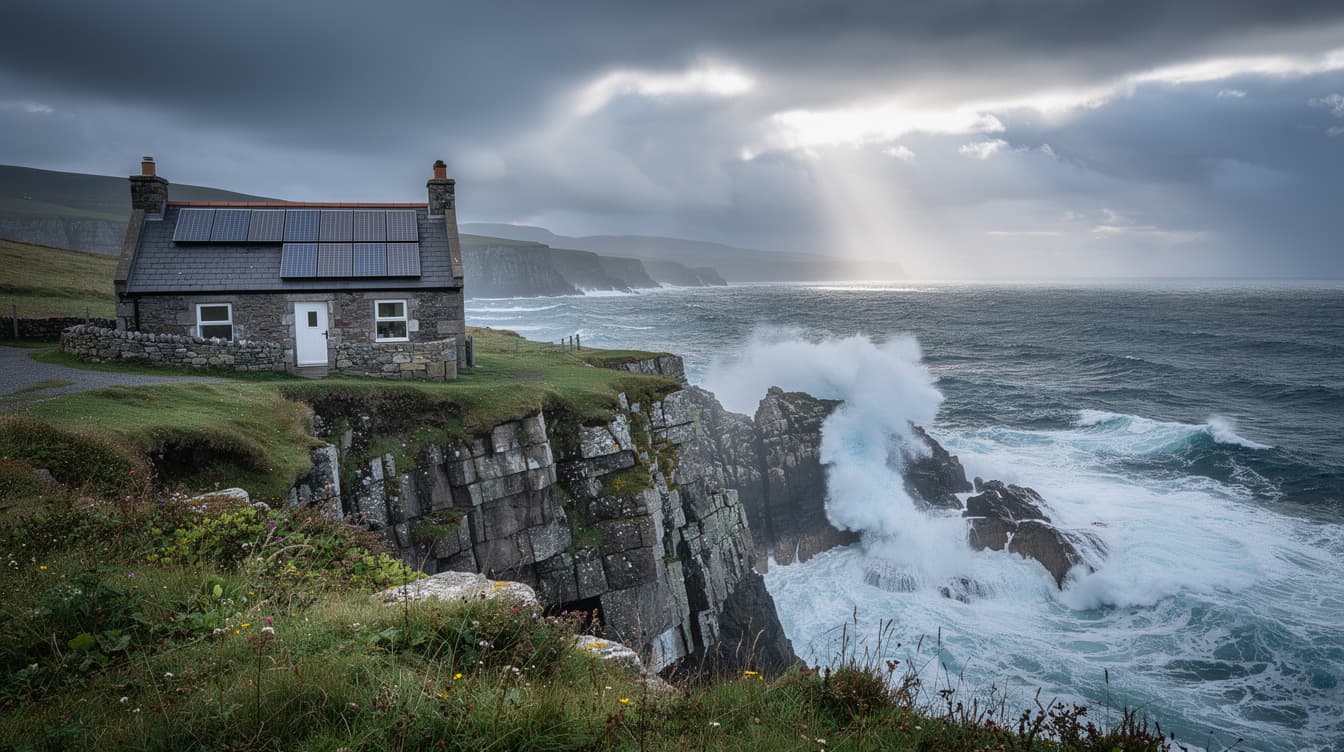
Coastal Solar Panels Ireland 2026: Salt-Air Corrosion & Marine-Grade Install Guide
Fitting solar within 3km of the Irish coast? 2026 guide to salt-air corrosion, marine-grade racking, warranty exclusions and 6-monthly maintenance.