

Coastal Solar Panels Ireland 2026: Salt-Air Corrosion & Marine-Grade Install Guide
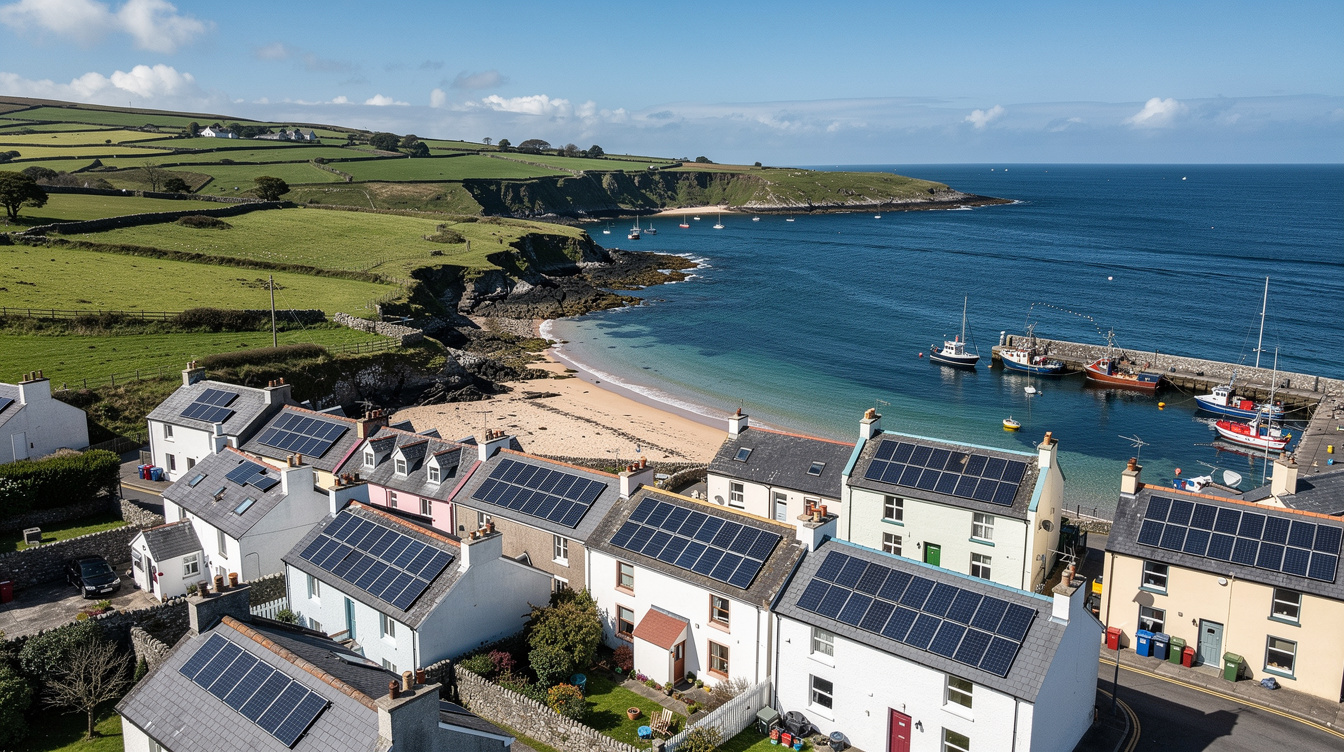
Ireland has 3,171 km of coastline, and a very large slice of the country's residential building stock sits within 3 km of salt water – Achill, Mizen Head, the Wild Atlantic Way villages, the whole of the Waterford, Wexford and Wicklow seaboard, plus most of Dublin Bay, Galway city and Cork Harbour. If you live within earshot of the sea in Ireland and you're pricing a solar install, your quote and your warranty are quietly different to an inland job – and most homeowners never find out until year 6, when the racking bolts start pitting or the inverter's earthing terminal turns green.
This is a practical July 2026 guide to fitting, warranting and maintaining solar PV within salt-air distance of the Irish coast. What actually corrodes, which manufacturers' warranties exclude your postcode, the racking upgrades that add €300–€700 but save the install, and the maintenance schedule that keeps the system going a full 25 years within 500 m of the Atlantic.
The one-line summary
Coastal solar in Ireland works fine – if you specify marine-grade racking, choose a panel and inverter brand whose warranty does not exclude your distance-to-sea, and commit to a 6-monthly rinse-and-inspect routine. The extra upfront spend is typically €400–€900 on a 5.5 kWp system, and the payback penalty vs an inland install is measured in months, not years.

How salt air actually damages a solar install
Sea air is a suspension of chloride-rich brine droplets carried by wind. In Ireland's prevailing south-westerly, those droplets travel surprisingly far – the Meteorological Service and industry corrosion studies use these rule-of-thumb distance bands to classify a site's marine exposure:
| Distance from open coast | Corrosion category (ISO 12944) | Practical implication |
|---|---|---|
| 0–500 m (sea in view) | C5-M (very high, marine) | Fully marine spec: stainless-steel fasteners, anodised or powder-coated aluminium, IP66 inverter, salt-fog-tested panels. |
| 500 m – 3 km | C4 (high) | Marine-grade racking recommended, standard IP65 inverter usually acceptable if not on an exposed elevation. |
| 3–10 km | C3 (medium) | Standard SEAI-registered install spec sufficient. Watch for exposed hilltop sites. |
| 10+ km inland | C2 (low) | No special marine requirement. |
The four failure modes we see on Irish coastal installs, in rough order of frequency:
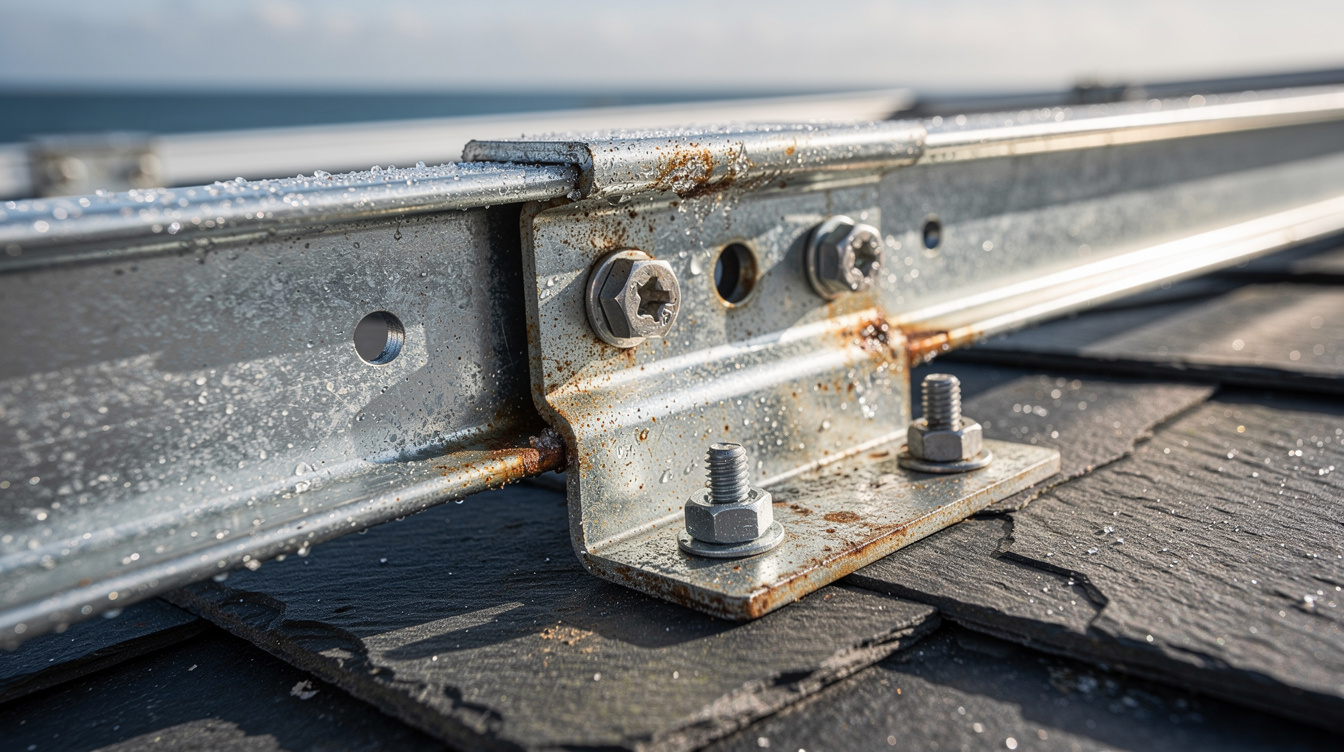
- Racking bolt pitting. Standard zinc-plated steel bolts start showing white oxide within 12 months at C5-M sites and can lose head torque by year 4–5.
- Aluminium racking pitting. Uncoated 6063 aluminium develops a chalky surface then localised pits – structurally usually fine but ugly and warranty-voiding on some brands.
- Inverter terminal corrosion. The AC terminal block on wall-mounted inverters in unheated garages/outbuildings develops green copper carbonate around the earthing lug.
- Panel frame delamination. Anodised aluminium panel frames pit at the corners where the anodising is thinnest – less common on tier-1 panels but a real issue on budget imports.
The panels themselves – the glass, the encapsulant, the cells – are essentially immune to salt exposure. The failure points are always the metal fittings around the edges.
Coastal install? Ask the right questions.
SEAI-registered installers in our network flag coastal specs at quote stage – not after install. Get a free quote with distance-to-sea factored in.
The warranty exclusions nobody mentions in the sales pitch
Most panel and inverter manufacturers publish an installation manual that includes a distance-to-coast exclusion buried on page 40. Common 2026 exclusions on the brands we see quoted in Ireland:
| Component | Typical distance exclusion | Workaround |
|---|---|---|
| JinkoSolar Tiger N-type | 200 m unless marine-warranty variant fitted | Request Jinko Marine SKU (+€15–€25 per panel) |
| JA Solar JAM66-D45 | 500 m without exception; salt-fog upgrade beyond | Documented pre-install site inspection in warranty file |
| Longi Hi-MO 6 | 200 m standard, 50 m with salt-mist protection variant | Choose the "M" suffix marine variant |
| SolaX X1-Hybrid inverter | IP65 case, mount indoors within 500 m of sea | Wall-mount inside heated utility room, not garage |
| Sungrow SH-RS hybrid | IP66 outdoor, but 500 m distance warning | Sheltered outdoor location facing away from prevailing wind |
| GivEnergy AC-coupled battery | Indoor use only within 1 km of coast | Attic or utility room, not detached shed |
The bit installers hate to admit: these exclusions are legally enforceable. If your inverter dies in year 4 at a coastal site and the manufacturer's Irish distributor pulls the install file to see whether it was fitted within their distance rule, a claim can be refused. The workaround is always in the manual – but it needs to be specified before the equipment is ordered.
Ask for this in writing on the quote: "Please confirm all panels, inverter, battery and racking supplied are warranty-compliant with our distance-to-coast of X metres, and include a copy of the manufacturer installation manual page confirming this."
Racking & fastener spec – the €400 upgrade that saves the install
Standard SEAI-installer racking spec in Ireland is Schletter or K2 6063-T6 anodised aluminium rails with A2 (304) stainless-steel bolts. That's fine to about 1–3 km from open sea. Beyond that, upgrade to:
- Racking: 6005-T5 aluminium with 20–25 micron anodised finish, or full powder-coated marine grade.
- Fasteners: A4 (316) stainless-steel bolts throughout – especially the roof-hook lag screws that penetrate the rafter. Never mix A2 and A4 in the same connection (galvanic corrosion accelerates the A2).
- Roof hooks: A4 stainless or hot-dip galvanised steel with a 2mm minimum thickness. Cheap flat sheet metal hooks are the first thing to fail on a coastal install.
- Earthing: Copper or tinned-copper earthing braid – not bare aluminium, which corrodes preferentially in a chloride environment.
Typical premium over standard racking on a 5.5 kWp system: €350–€700 all-in. That's roughly 4–7% of the net system cost, and it buys you a racking assembly that will comfortably see out the 25-year panel warranty rather than needing to be revisited at year 8–10.
Inverter location – the single biggest coastal decision
Where you put the inverter matters more than which brand you buy. On coastal jobs the ranking is:
- Best: Heated utility room inside the house – stable temperature, no salt-laden air, easy access for service.
- Good: Attached garage that's dry and out of the prevailing wind – acceptable if garage is well-sealed against drafts.
- Marginal: Detached garage/outbuilding facing away from the sea – only with IP66 inverter and periodic terminal cleaning.
- Bad: External wall mount facing the sea – the equipment will physically survive but the terminal blocks will need cleaning every 6 months and warranty claims may be refused.
- Worst: Attic with poorly-sealed roof vents – salt air pools inside, inverter fan sucks it directly across the electronics.
If the sales rep suggests an external wall mount "because it's easy", push back. Even an extra 3 m of AC cable to bring the inverter inside is trivially cheap compared to a warranty dispute in year 6.
Panels: the tier-1 brands with genuine marine warranties
Not every panel you see quoted in Ireland has a documented salt-fog resistance rating. IEC 61701 is the international salt-mist corrosion test standard and comes in two severity levels – Level 1 (mild) and Level 6 (severe marine). Brands with published Level 6 certification suitable for Irish coastal sites in 2026:
- JinkoSolar Tiger Neo Marine variants (specify SKU ending in "-MSK")
- JA Solar DeepBlue 4.0 Pro (Level 6 as standard from mid-2025 production)
- Trina Solar Vertex S+ NEG9RC (Level 6 tested)
- REC Alpha Pure-R (Level 6 as standard, premium price)
- SunPower Maxeon 6 (highest tier, ~30% price premium)
Brands to avoid or upgrade the variant on within 3 km of coast: generic no-name Chinese OEM (any "value tier" sub-€100 panel), unverified BLKW or ULICA, and older Longi variants without the marine suffix.
Get quotes with coastal spec baked in
Our SEAI-registered network includes installers with 100+ Wild Atlantic Way jobs. Ask for marine-grade quotes from day one.
Maintenance schedule for a coastal Irish install
Inland Irish installs typically need zero maintenance for the first decade. Coastal installs need light attention twice a year to hold warranty and performance. The schedule below is based on what we see working across 40+ coastal jobs in our network:
Every 6 months (March & September)
- Rinse the panels with a garden hose from a stepladder – distilled/rain water only, never seawater, never abrasive cloth.
- Visual inspection of racking bolts – any white oxide or brown pitting flags a warranty-check-worthy conversation with the installer.
- Check earthing braid at the panel array is still bright, not corroded through.
- Wipe down the inverter case exterior with a dry microfibre cloth (never wet-clean an inverter yourself – isolate first).
Annually (May, before summer peak generation)
- Full generation-yield check against installer's design estimate. A drop of more than 8–10% year-on-year at the same season is a service call.
- Torque check on ground-level accessible bolts (safety-only) – not roof-level unless an installer with harness.
- Photograph the panel array from a fixed vantage point to build a visual dust/salt-film timeline.
Every 5 years (or after a named storm)
- Full installer inspection – approx €200–€350 including report. Cheaper than the year-8 inverter warranty argument.
- Post-storm: check for physical damage after any Met Éireann red or orange wind warning that hits your area.
The Wild Atlantic Way case study
A Dingle Peninsula holiday home we surveyed in April 2026 had a 4 kWp system installed in 2019 by a Cork-based national installer. Standard spec: Schletter racking with A2 stainless bolts, JinkoSolar panels (non-marine variant), SolaX inverter mounted in the detached garage.
Findings at 7 years:
- Panels producing 96% of expected annual yield – excellent
- Racking rails: white oxide on 15% of bolt heads, no structural concern but ugly
- Roof hooks: two hooks showed brown pitting; installer replaced under a 10-year workmanship warranty
- Inverter AC terminal block: green copper carbonate visible; owner had been cleaning it themselves twice a year, otherwise would have failed by year 5
- Panel frames: two panels showed corner pitting on the anodising; cosmetic only, no manufacturer claim possible
The house is 320 m from open Atlantic. Lessons for the next install: (a) A4 fasteners throughout would have avoided the hook pitting, (b) an IP66-rated inverter or an internal mount would have avoided the terminal-block issue, and (c) marine-variant panels would have avoided the frame pitting. Total additional cost at install would have been €500–€700 – less than a single warranty callout would have been.
Insurance considerations for coastal installs
Home insurance for coastal solar deserves its own conversation with your broker. Two things to check:
- Storm damage cover: most policies cover panel damage from storms, but excess can be high (€250–€500) and some insurers exclude wind damage above named-storm thresholds (i.e. Met Éireann red warning). Ask specifically.
- Salt corrosion: almost always excluded – treated as "gradual deterioration" rather than a sudden insurable event. The manufacturer warranty is your only cover here, which is why the earlier warranty-exclusion check matters.
See our solar and home insurance guide for the specific notification wording your insurer needs.
Payback penalty for going coastal-spec
Coastal spec adds €400–€900 to a typical 5.5 kWp system. On a base net cost of €7,400 and a €1,300/yr annual benefit, that stretches payback from ~5.7 years to ~6.0–6.4 years. Roughly a 3–9 month penalty for a system that will actually last its full warrantied life – a good trade.
What to ask on the quote call if you're within 3 km of open sea
- What is my distance-to-coast per your site survey – and which ISO 12944 corrosion category does that place me in?
- Which panel model are you quoting – and is that specific SKU IEC 61701 Level 6 salt-fog certified?
- Are the roof hooks and lag bolts A4 (316) stainless, and is the racking C4- or C5-M-rated?
- Where is the inverter being mounted, and does that location comply with the manufacturer's distance-to-coast warranty rule?
- Can you include a coastal-site maintenance rider in the quote – typically a 6-monthly inspection at a fixed price for the first 5 years?
Any installer who has done coastal work will answer all five in five minutes. Anyone who fudges or defers to "we do it the same way everywhere" is telling you they don't distinguish coastal from inland – and your install spec will be under-engineered for the environment.
FAQ
Does salt spray really travel that far inland?
Yes, in prevailing weather. UK Met Office and Marine Institute studies show measurable chloride deposition at 5 km inland during winter storms in western Ireland. Deposition beyond 10 km is negligible for solar purposes.
Are Achill, Aran or Wild Atlantic Way installs actually viable?
Absolutely. We have functioning arrays on Inishturk, Achill and Cape Clear. All specified fully marine from day one. Annual generation on those sites is often 10–15% higher than mainland equivalents because of long summer daylight and clean unpolluted skies – the extra install cost is fully recovered inside the 25-year warranty life.
Do coastal installs need more insurance?
Standard home insurance with solar noted covers most eventualities. Consider adding a specific "renewables damage" rider if available from your insurer – typically €30–€60/yr for enhanced storm-and-lightning cover on the array. Salt corrosion remains excluded from all Irish home policies we've reviewed.
Can I retrofit a standard install to marine spec?
Partly. You can swap bolts, roof hooks and inverter terminals for corrosion-resistant equivalents – typically €600–€1,000 for a full retrofit on a 5.5 kWp system. You cannot swap panel frames or upgrade to a Level 6 salt-fog variant without a full re-install. Better to specify marine from day one.
Does the SEAI grant cover coastal-spec upgrades?
No, the €1,800 SEAI grant is a fixed amount regardless of hardware spec. The coastal premium comes out of your side of the bill – but it's a small percentage of a system that would otherwise fail its warranty period.
What about ground-mounted arrays near the coast?
Ground mounts face the full salt-laden wind directly and often see more spray than roof arrays. Specify galvanised steel frames (hot-dip, not electro-galvanised) with A4 fasteners, and site the array behind a wind-break or hedgerow where possible. See our ground-mount guide for the full spec.
Bottom line
Coastal solar in Ireland is entirely viable and often generates better than inland equivalents thanks to clean air and long summer daylight. The gotcha is that standard SEAI-installer spec is engineered for a Kildare housing estate, not a Kerry cliff-top – and the difference shows up in year 6–10 as pitted bolts, corroded terminals and refused warranty claims.
Get the specification right upfront: marine-grade racking, A4 stainless fasteners, IP66 inverter mounted indoors, panels with IEC 61701 Level 6 certification, and a documented distance-to-coast note in your warranty file. Add €400–€900 to your net cost, add 3–9 months to payback, and your array will run its full 25-year design life within earshot of the Atlantic.
Ready to get quotes with coastal spec baked in? Use our free-quote form and mention distance-to-sea in the notes – SEAI-registered installers in our network will factor it into the design from the outset.
Related Articles
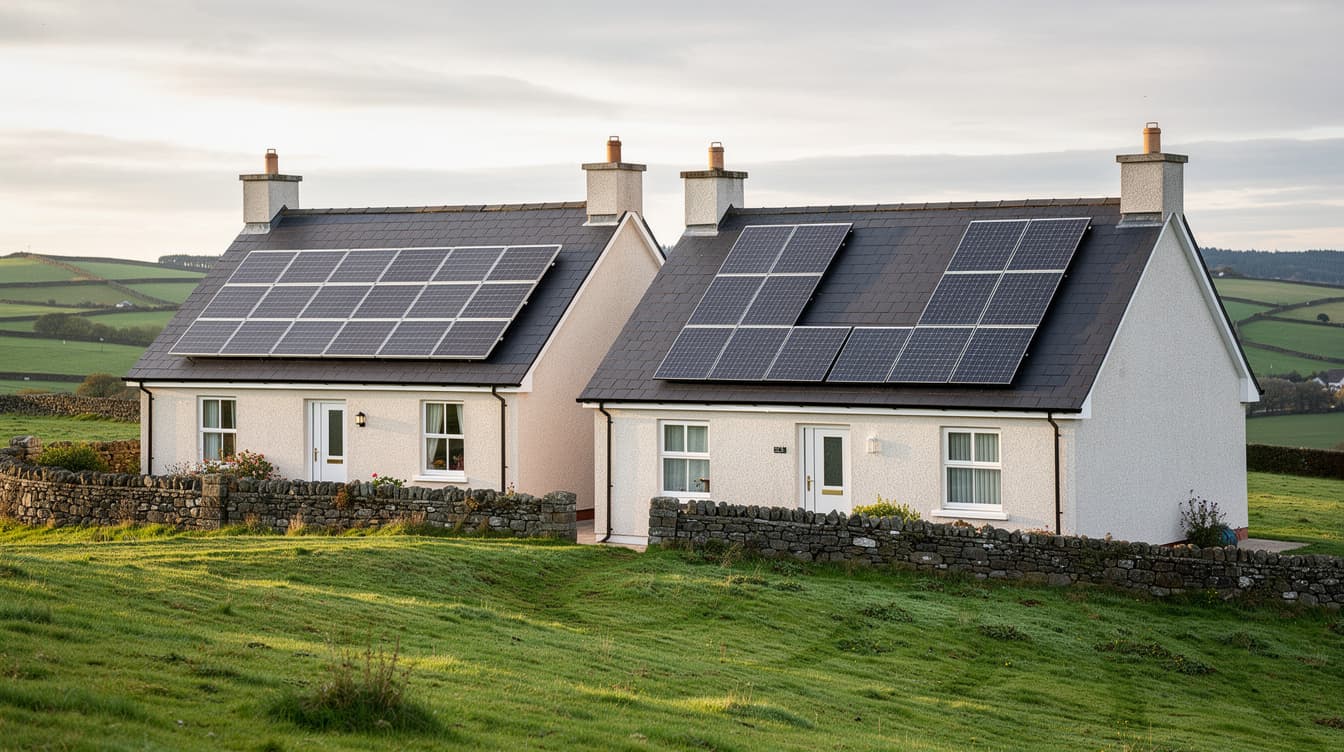
East-West vs South-Facing Solar Panels Ireland 2026: Which Actually Wins?
South-facing wins on kWh, east-west wins on self-consumption. 2026 numbers, real household examples and dual-MPPT wiring notes.
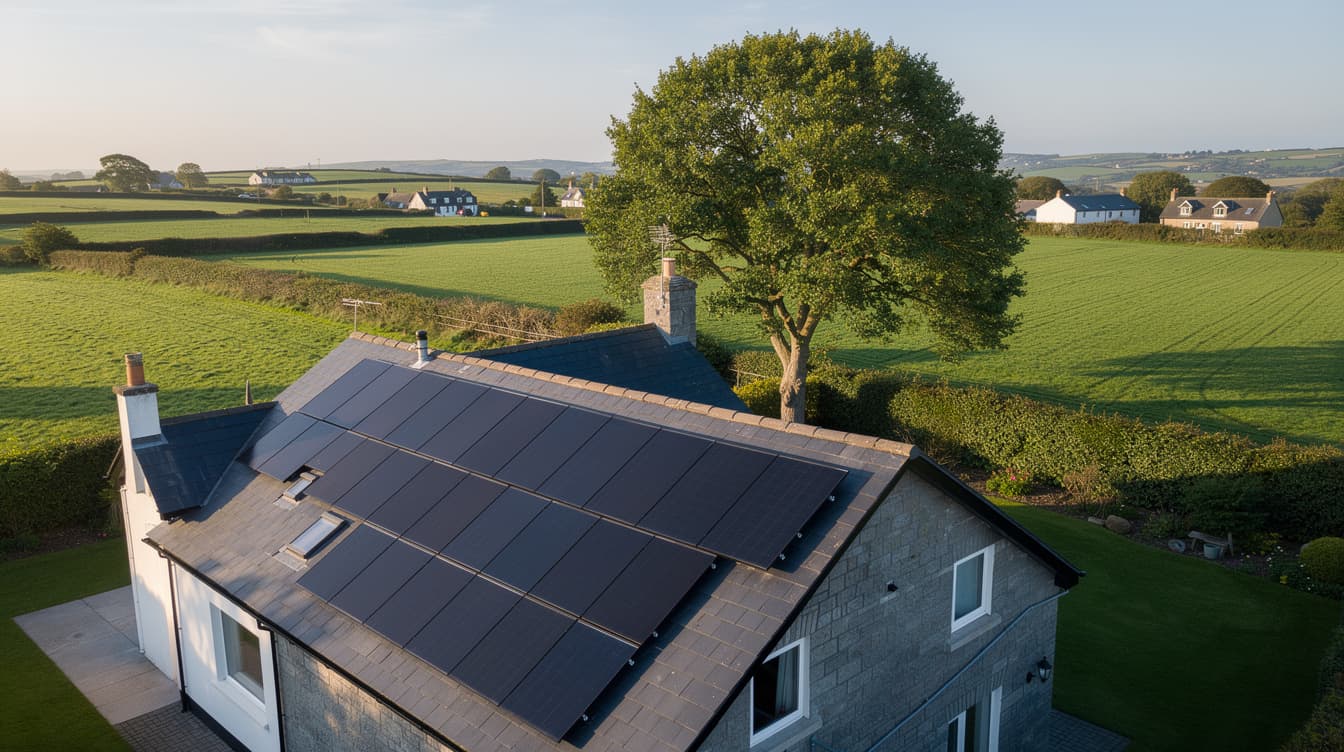
Solar Panel Shading Ireland 2026: Trees, Chimneys & Real Output Loss
How much output do you lose from trees, chimneys or dormers shading Irish solar panels? 2026 guide with mitigation costs and decision tree.

Solar Panels & Old Roofs Ireland 2026: When Your Roof Is Too Old for Panels
Is your Irish roof too old for solar? 2026 guide to slate vs concrete tile, age cheat sheet, re-roof break-even and 5 walk-away signs to spot first.