
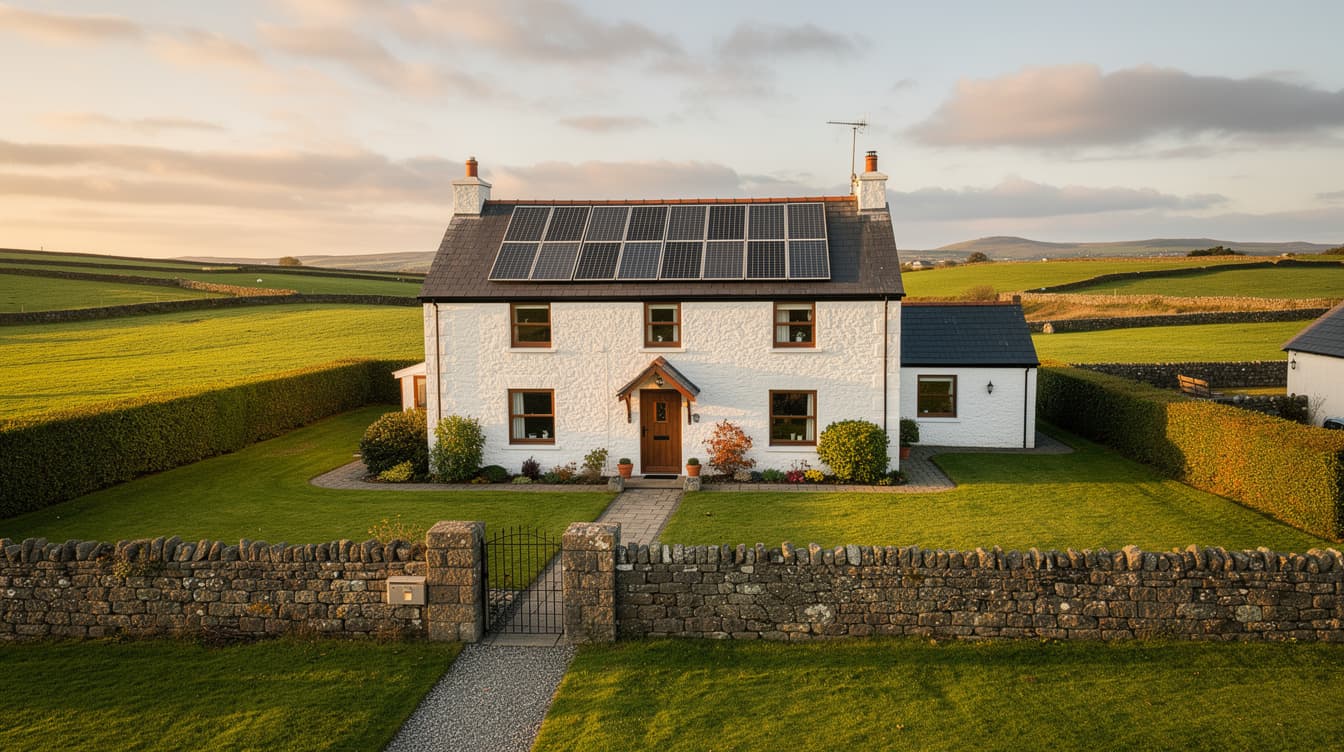
Solar Panel Payback Period Ireland 2026: Real Numbers & Worked Examples
Every solar quote conversation in Ireland eventually lands on the same question: "when do I get my money back?" The honest 2026 answer is 6 to 9 years for a well-sized cash-buy residential system – but that headline hides a lot of variation. A retired couple who spend all day at home hit break-even sooner than a two-earner household who leave the house at 8am. A north-Kerry installation on a west-facing roof pays back differently to a south-Dublin south-facing install. Adding a battery slightly extends payback but changes the downstream bill from €600/year to almost zero.
This guide walks through how payback is calculated in Ireland today, what the range actually looks like on real July 2026 quotes, and the six variables that push your specific number faster or slower than the average.
Payback in one sentence
Payback = net installed cost ÷ annual saving. Net installed cost is the price you actually paid after the €1,800 SEAI grant. Annual saving is your grid-import cost avoided plus your Clean Export Guarantee (CEG) credits earned. Every other refinement – battery ROI, panel degradation, inflation of electricity prices, tariff changes – is a modifier on those two numbers.
For a typical 5–6 kWp system in July 2026:
| Line | Typical value |
|---|---|
| Gross system price (5.5 kWp panels + hybrid inverter, no battery) | €9,000–€10,500 |
| Less SEAI grant | –€1,800 |
| Net cost to homeowner | €7,200–€8,700 |
| Annual generation (PVGIS-modelled Ireland) | 4,800–5,400 kWh |
| Blended annual saving (self-consume + CEG) | €1,150–€1,400 |
| Simple payback | 6.5–7.6 years |
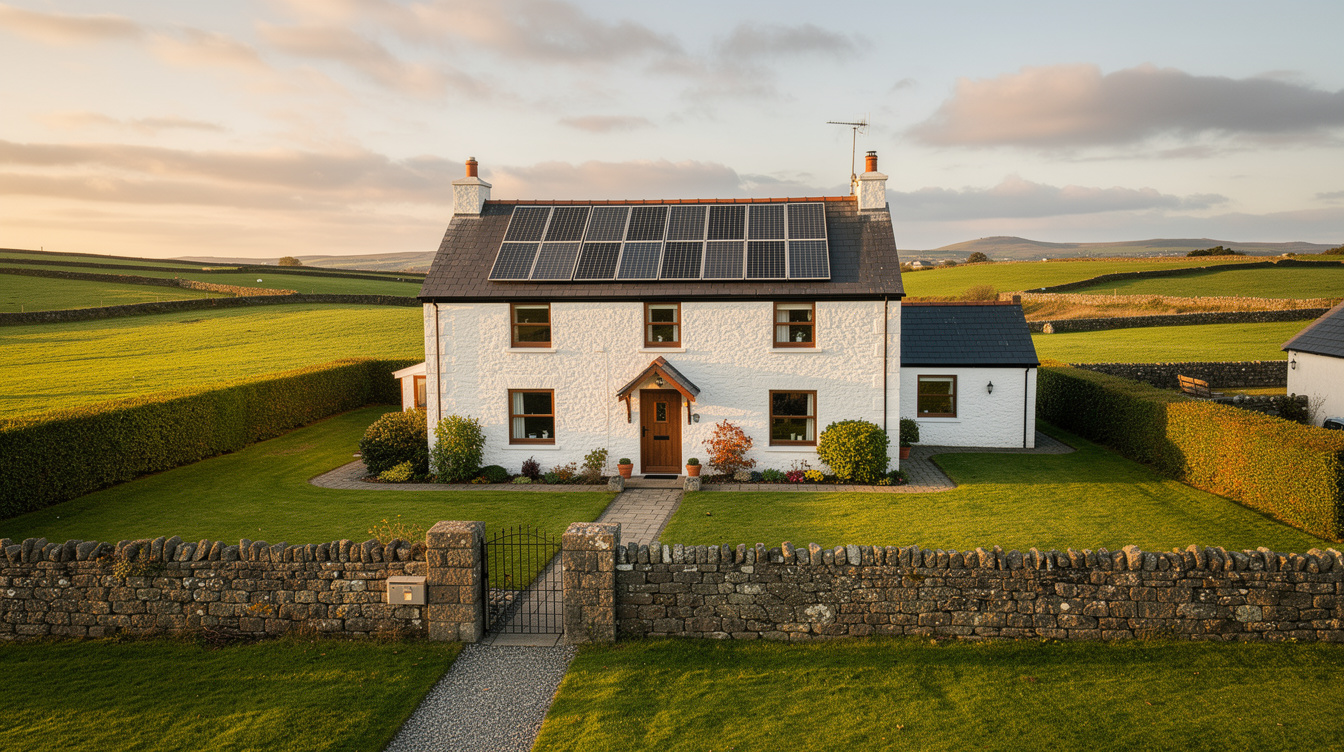
The six variables that move your payback faster or slower
1. Roof orientation & pitch
A south-facing 30° pitch is the "100%" baseline. Anything else scales generation:
- South-facing 30–40°: 100% (base case, ~950 kWh/kWp/yr)
- South-east or south-west 30°: ~95% (slight morning or evening shift)
- East or west 30°: ~85% – spread generation across the day (good for load-shifting)
- North-east or north-west 30°: ~70–75%
- Pure north-facing: ~55–60% – rarely worth doing
Payback stretches roughly proportionally. A south-facing 7-year payback becomes 8.2 years east-facing, 10 years north-east, and 12+ years pure north.
2. Household daytime consumption
Self-consumed solar is worth 27–34 c/kWh (your saved grid import). Exported solar is worth 18–24 c/kWh (CEG). The gap between those two rates is your load-shifting reward. Households that consume more of their generation directly:
- Retirees, WFH, families with young kids at home: 55–70% self-consumption – fast payback
- Two-earner commuting households: 25–35% self-consumption – slower payback
- Holiday homes: 5–10% self-consumption – slowest payback (CEG-dependent)
Every 10-percentage-point rise in self-consumption knocks about 9–12 months off payback on a typical system.
3. The tariff you're paying for grid import
Cheaper grid electricity means smaller savings per kWh displaced. In July 2026 the range of new-customer tariffs across the ten Irish suppliers is 27–34 c/kWh day rate. If you're currently on the cheap end (∼27c), payback stretches by ~6 months vs someone on 34c. If you switch to a smart time-of-use plan, the arithmetic changes materially – day rates drop but peak rates rise, and payback often shortens because your battery/load-shift dodges the expensive peak window.
4. CEG rate at your supplier
Every kWh you can't self-consume goes to the grid and earns Clean Export Guarantee credit. Rates in July 2026:
| Supplier | CEG rate (c/kWh) |
|---|---|
| Electric Ireland | 24.0 |
| Bord Gáis | 21.0 |
| SSE Airtricity | 20.0 |
| Energia | 18.0 |
| Pinergy | 21.0 |
The difference between the top and bottom rate is 6c/kWh. On 3,000 kWh/yr exported, that's €180/yr – enough to knock nearly a year off payback if you switch to the highest-paying supplier. See our CEG guide.
5. Battery inclusion (or not)
A 5 kWh battery costs €3,000–€3,800 fitted in 2026. It doesn't shorten payback – it pushes total system cost up faster than it pushes annual savings up. A typical no-battery system pays back in 6.5–7.6 years; add a battery and payback stretches to 7–8.5 years. Where the battery earns its keep:
- Peak-shave during the 5–7pm smart-tariff peak (saves €150–€250/yr on its own)
- Higher self-consumption (45% no-battery → 70–80% with battery)
- Backup during power cuts (worth €50–€150/yr in avoided food spoilage and hotel stays, harder to model)
- Cheap-rate arbitrage (charge battery from 8c overnight, discharge at 33c peak) – often ignored but worth €100–€200/yr
Choose a battery for what it gives you post-payback, not to accelerate the payback itself. See our battery-sizing guide.
6. Financing method
Cash buyers pay €7,400 upfront, save €1,328/yr, and are square at year 5.6–7.6.
Credit-union borrowers at 6.5% APR over 10 years pay €7,400 gross + ~€2,500 interest = €9,900 total, but only fund it via monthly savings of €83/mo (~€1,000/yr). Their annual saving of €1,328 covers the €100/mo repayment plus ~€300/yr net cashflow. Payback of the interest is roughly 8–9 years, comparable to cash-buy.
Green mortgage top-ups at 3.5% APR essentially disappear into the mortgage – they cost you 30–40€/mo extra for 25 years while the panels save you €1,000+/yr. Net-net payback on incremental spend can be as short as 4–5 years.
Bank personal loans at 9–12% APR eat most of year-1 saving. Not recommended – see our financing guide.
Model your own payback with a real quote
Get a personalised payback breakdown from SEAI-registered installers who model your specific roof, bill and tariff.
Three worked examples from real 2026 Irish quotes
Example A – Cork suburbs, retired couple, WFH garden studio
- Roof: south-west 35°, no shading, 6.0 kWp array (13 × 460W panels)
- Battery: 5 kWh Pylontech
- Household consumption: 4,200 kWh/yr, 65% during daytime
- Supplier: Electric Ireland Home Electric+ (33.4c day / 24c CEG)
- Gross cost: €12,800; net after grant: €11,000
- Annual generation: 5,700 kWh
- Self-consumed 75%: 4,275 kWh × 33.4c = €1,428 saved
- Exported 25%: 1,425 kWh × 24c = €342 credit
- Total annual benefit: €1,770
- Payback: 6.2 years
Example B – Meath commuter belt, dual-earner family with EV
- Roof: south-east 30°, minor shading, 5.5 kWp array
- No battery, but has smart EV charger
- Household consumption: 6,800 kWh/yr (includes EV), 35% during daytime
- Supplier: Bord Gáis Weekend Discount (31c day / 23.5c night / 21c CEG)
- Gross cost: €9,600; net after grant: €7,800
- Annual generation: 4,950 kWh (SE-30 factor)
- Self-consumed 40%: 1,980 kWh × 31c = €614 saved
- Exported 60%: 2,970 kWh × 21c = €624 credit
- Total annual benefit: €1,238
- Payback: 6.3 years
Example C – Donegal cottage, holiday-let, no daytime consumption
- Roof: due south 40°, no shading, 4.5 kWp array
- No battery
- Household consumption: 2,100 kWh/yr (mostly weekends and July/August)
- Supplier: SSE Smart Home (30.2c day / 20c CEG)
- Gross cost: €7,900; net after grant: €6,100
- Annual generation: 4,275 kWh
- Self-consumed 15%: 641 kWh × 30.2c = €194 saved
- Exported 85%: 3,634 kWh × 20c = €727 credit
- Total annual benefit: €921
- Payback: 6.6 years
Three very different households, three payback numbers within a year of each other. The system self-adjusts to your consumption pattern – homes that consume more save more per kWh; homes that consume less export more and lean on CEG. In all three cases, the panels are paid off before their inverter warranty expires and long before the panel product warranty runs out.
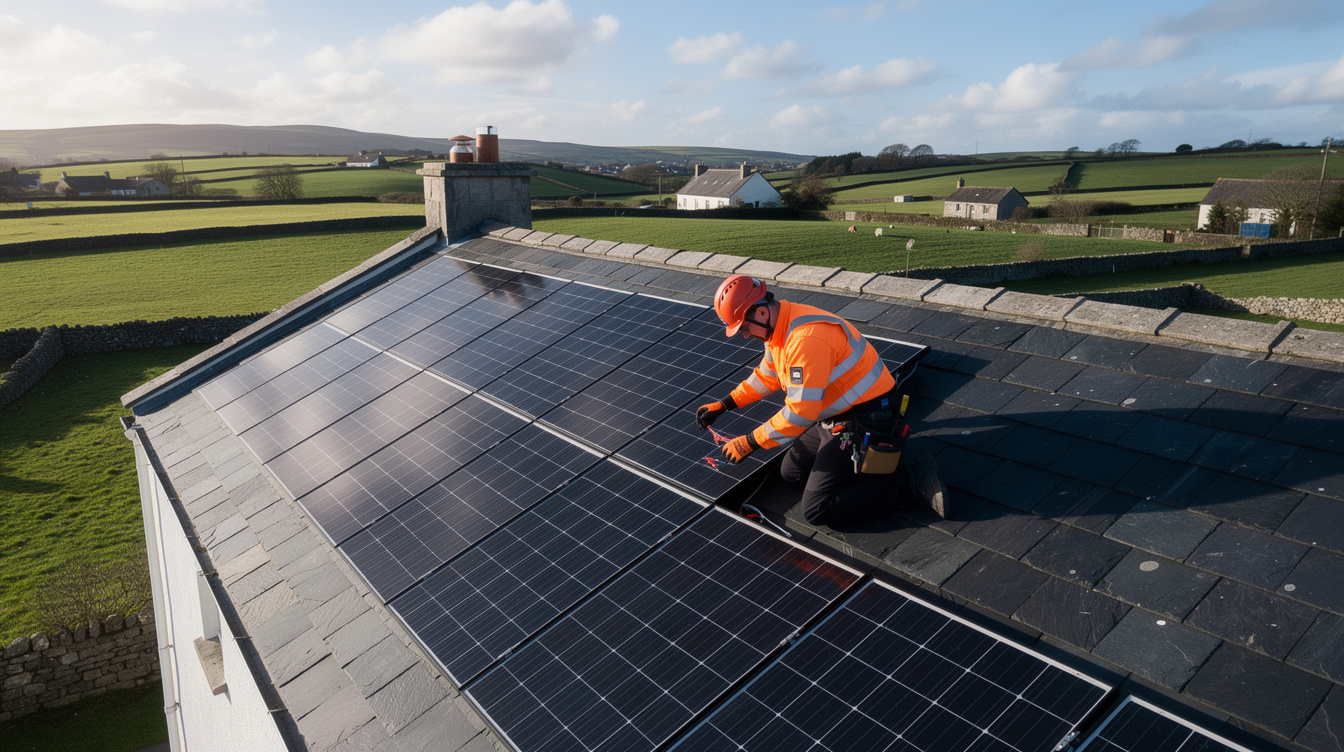
Panel degradation – the small print people forget
Panels don't produce their year-1 output forever. The industry standard for monocrystalline panels in 2026 is:
- Year 1: 100% of rated output
- Year 2 onwards: ~0.4–0.5% loss per year
- Year 25 warrantied output: 87–92% of nameplate
Baked into a payback calculation, this means the €1,328/yr saving in year 1 is more like €1,220/yr by year 15 and €1,180/yr by year 25. Over the panel life the average is about 94% of year-1 output. The naive payback of 5.6 years becomes a "degradation-adjusted" payback of 5.9 years – still comfortably ahead of the 10-year inverter warranty and vastly ahead of the 25-year panel warranty.
Electricity price inflation – the "hidden accelerator"
Every payback model assumes today's electricity prices continue forever. In reality, wholesale electricity has risen 6–9% per year in real terms since 2019 in Ireland, driven by carbon pricing, grid upgrade costs, and gas volatility. If your grid rate goes from 33c to 40c over the next five years, your annual saving climbs from €727 to €886 for exactly the same behaviour – and payback shortens by 6–10 months.
This is the biggest reason why real-world payback in Ireland tends to come in earlier than the model predicts. Almost every homeowner we've followed up with 3–4 years after install has broken even on schedule or ahead of it, because grid rates have risen faster than they expected.
What happens after payback
The panels are still generating. From year 7–9 onwards you're essentially getting free electricity plus CEG credit. On a typical system that translates to:
- Years 8–15: ~€1,300–€1,400/yr in net savings/credits – €10,000+ cumulative
- Years 16–25: ~€1,200–€1,300/yr – another €12,000+ cumulative
- Total 25-year net benefit on a €7,400 investment: €30,000+ nominal (undiscounted)
Even accounting for a mid-life inverter replacement (€1,800 at year 10–12) and one panel-tile relay (€300–€500), the lifetime return is comfortably 3–4× the net cost.
The IRR view for the finance-minded
If you'd rather see solar's return as an internal rate of return (IRR), the same numbers work out to:
- Cash-buy no battery: ~13–15% IRR over 25 years (real, degradation-adjusted)
- Cash-buy with battery: ~10–12% IRR (battery reduces return but adds resilience)
- Green mortgage funded: ~18–24% IRR on marginal cash outlay
- Credit union loan funded: ~8–10% IRR after interest paid
For context, a maxed-out Irish domestic pension fund returns ~5–7% real over 25 years after fees. Solar comfortably beats it on a risk-adjusted basis, provided the roof is sound and the installer is reputable.
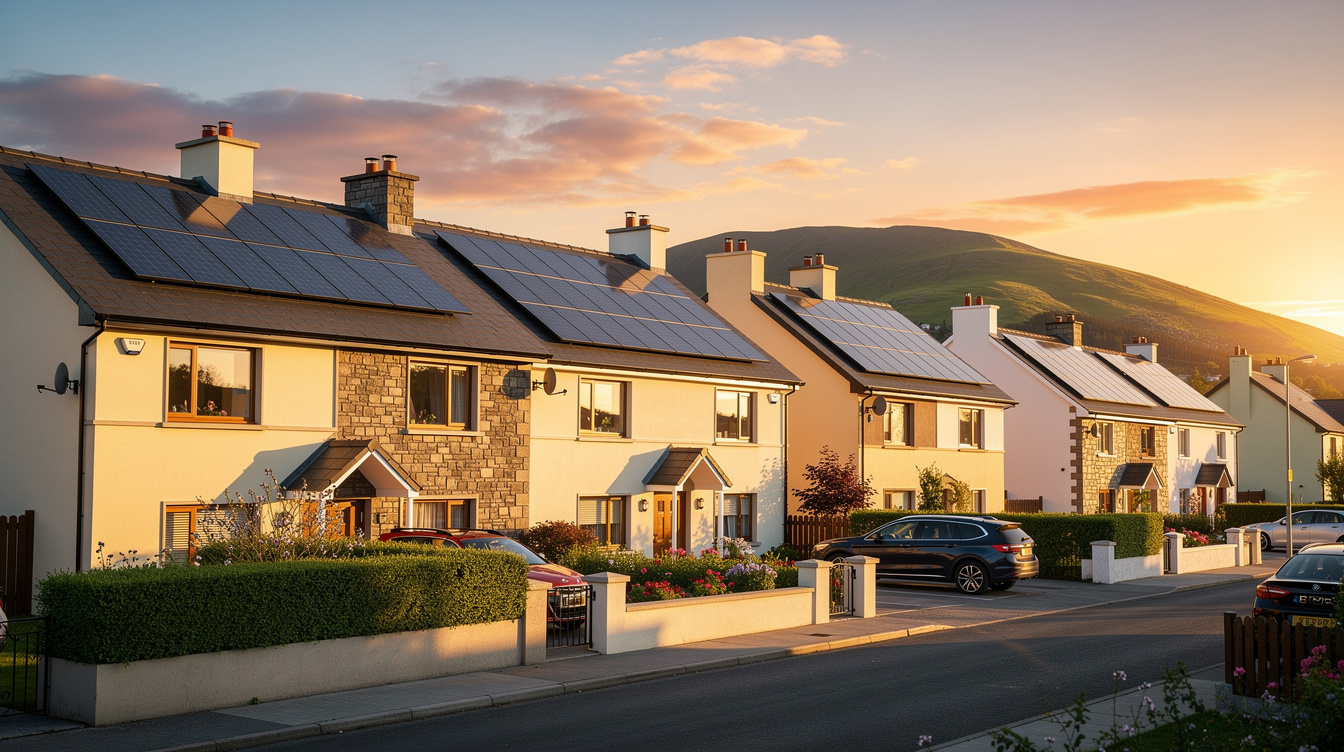
Sensitivity: what changes payback the most?
If you can only move one dial to shorten your payback, which one? We ran sensitivity on our worked Example A and got this ranking:
| Change | Payback impact |
|---|---|
| Grant increases to €2,400 (historical high) | –5 months |
| Switch to highest-CEG supplier (Electric Ireland 24c) | –4 months |
| Raise self-consumption 40% → 60% via battery | +3 months (higher upfront) |
| Grid tariff rises 20% over 5 years (likely) | –10 months |
| Roof orientation from south to east | +10 months |
| Add smart tariff + load-shift discipline | –6–9 months |
The two biggest levers you actually control are: (a) shop competitively for CEG rate, and (b) commit to load-shifting on a smart tariff. Both together can knock 12+ months off payback with no additional hardware cost.
Frequently asked
Does my payback include the grant application effort?
Yes – almost every installer submits the SEAI grant on your behalf and the grant is deducted from your invoice at the source. See our SEAI grant guide for the paperwork trail.
What if the grant is cut before I install?
Bank the current grant amount by applying before install; SEAI honours the grant at the amount valid on your application date, not the install date. Your installer will file the application within days of your contract signing.
Does inflation help or hurt payback?
Helps. Electricity price inflation raises the value of every kWh your panels generate. Panel installation costs are fixed at day 1, but savings grow with the wholesale market. Historically Ireland's residential grid rate has risen faster than general CPI, which shortens payback in real terms.
What if my house is sold before payback?
The panels stay with the house. The 2025 SCSI Green Premium report puts the typical resale premium at ~2.1% – roughly the same order of magnitude as a five-year residual payback balance. Effectively you recover the unused payback in the sale price. See our selling-with-solar guide.
Is payback shorter in the sunnier south of Ireland?
Yes, but not by much. PVGIS data shows a ~7–10% higher annual yield in Wexford / east Cork vs Donegal for identical hardware – enough to shave 3–6 months off payback. Not the deciding factor in whether solar is worth it.
How does a heat pump change my payback?
A heat pump doubles typical household electricity consumption. Because the pump uses a lot of daytime power (shoulder season, hot water top-ups), self-consumption jumps to 65–75% without a battery. Payback for a solar + heat pump combo is typically 5–6 years – the fastest of any Irish domestic scenario.
Bottom line
Solar payback in Ireland in 2026 is 6–9 years for a competently installed cash-buy system, with real-world outcomes often 6–12 months faster than the model thanks to rising electricity prices. Battery inclusion, north-facing roofs and holiday-home usage stretch that number; heat pumps, EVs, work-from-home households, and switching to the highest-CEG supplier all shorten it.
The reliable answer to "when do I get my money back?" is: well before the panels stop working. Get two or three quotes with itemised payback modelling from SEAI-registered installers, apply the sensitivity levers above to fit your household, and you'll have a defensible target date in a week.
Get 3 payback breakdowns to compare
SEAI-registered installers will model your specific roof, bill and tariff – you'll know payback in days, not weeks.
Related Articles
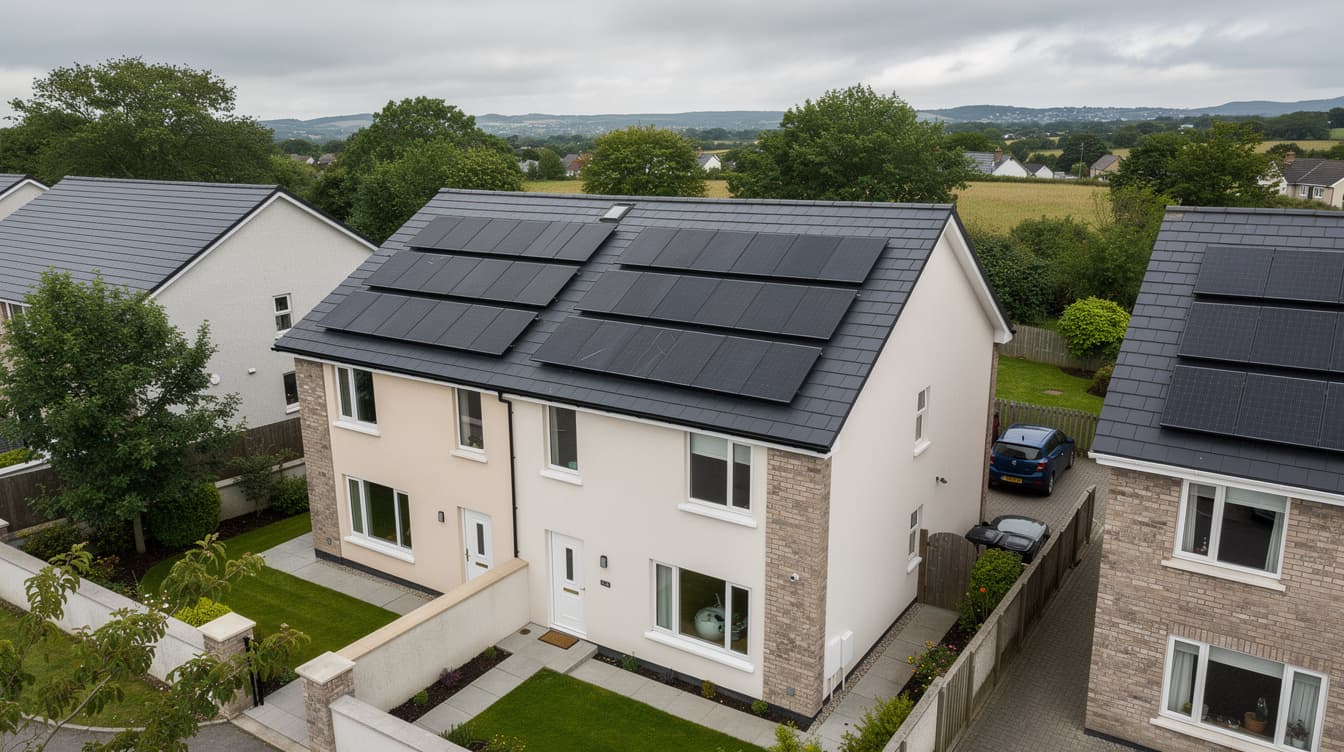
Solar Panel System Cost by Number of Panels Ireland 2026: 8, 12, 14, 20, 24 Panel Prices
What 8, 12, 14, 16, 20 or 24 solar panels actually cost in Ireland 2026 — net after €1,800 SEAI grant & 0% VAT, output kWh, roof area & battery add-ons.
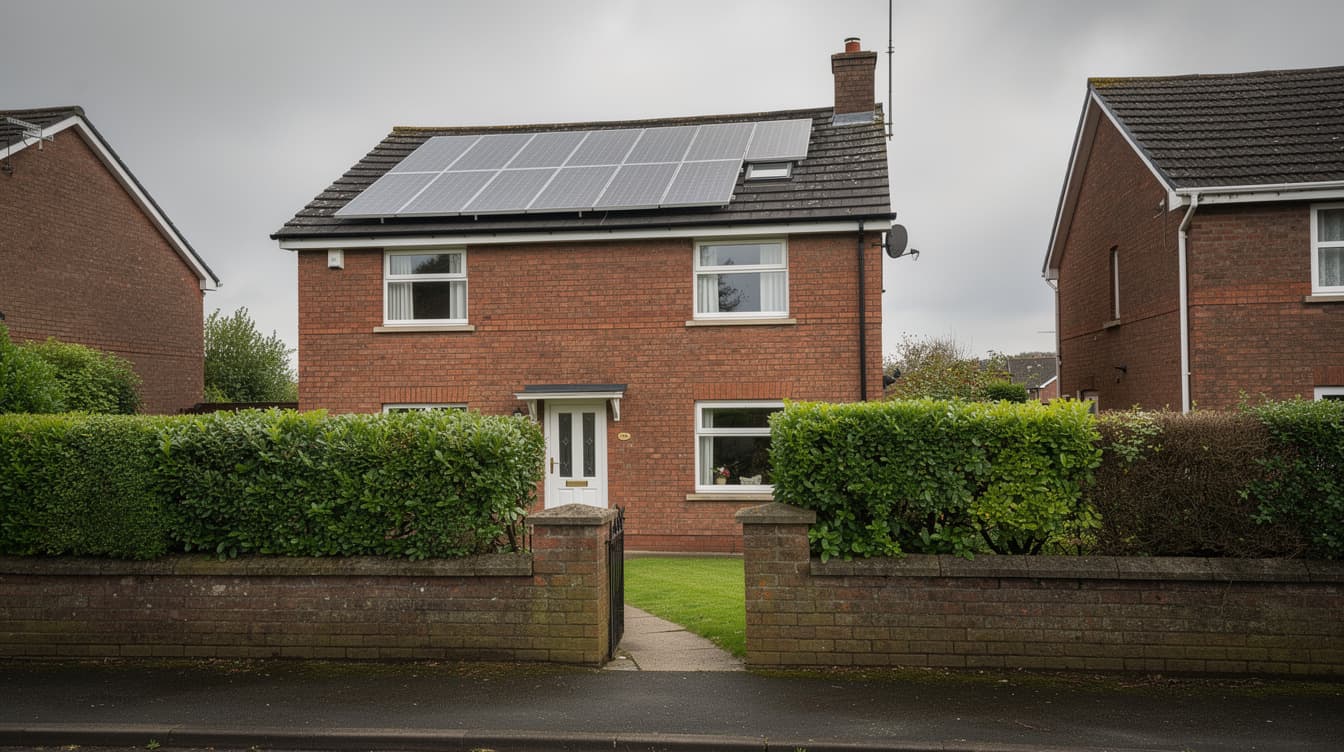
4kW Solar System Cost Ireland 2026: Real Prices, Output & Payback
Real 2026 Irish 4kW quotes (€7,210 gross, €5,410 net after €1,800 SEAI grant), 3,600–4,200 kWh/yr output, 4.8yr payback and when 4kW beats 3kW or 5kW.
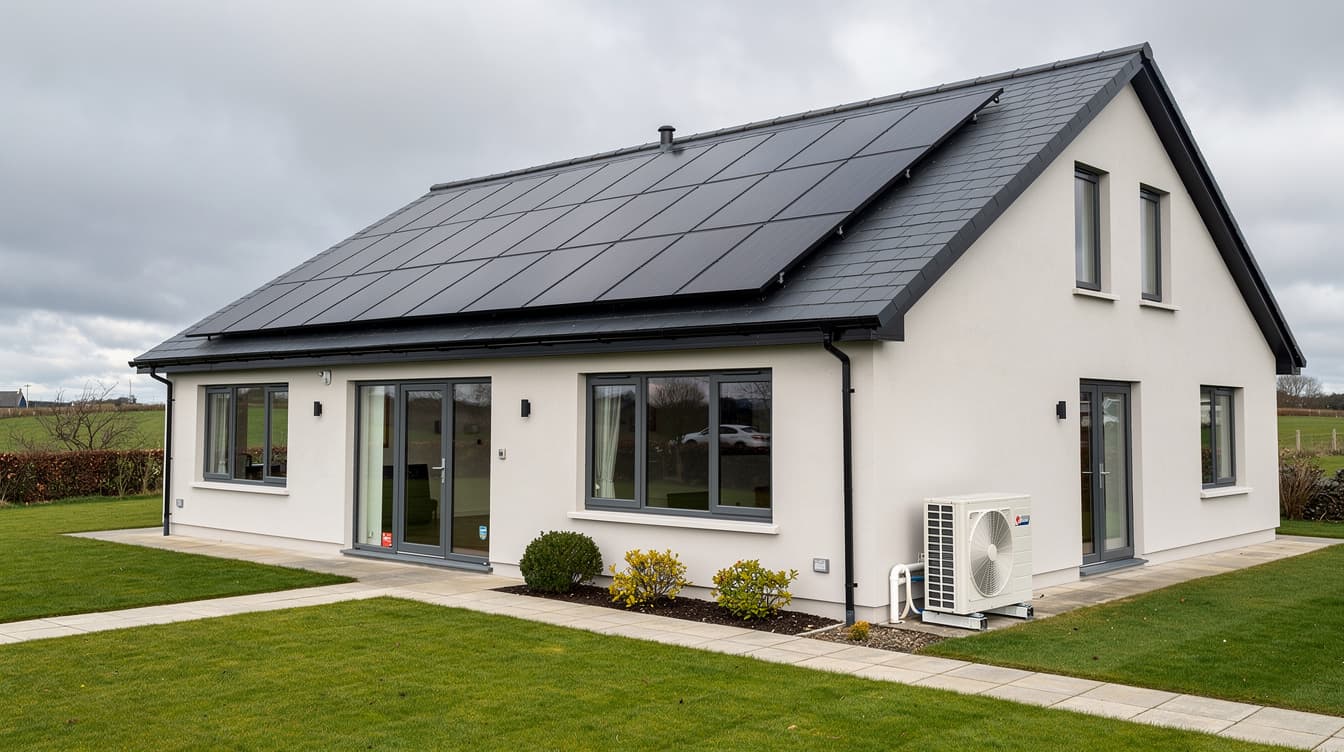
10kW Solar System Cost Ireland 2026: Price, Output & When It’s Worth It
Real 2026 Irish installer prices for a 10kW solar system (€14,300 gross – €1,800 SEAI grant), three-phase rules, expected output and when 10kW beats 6kW.