
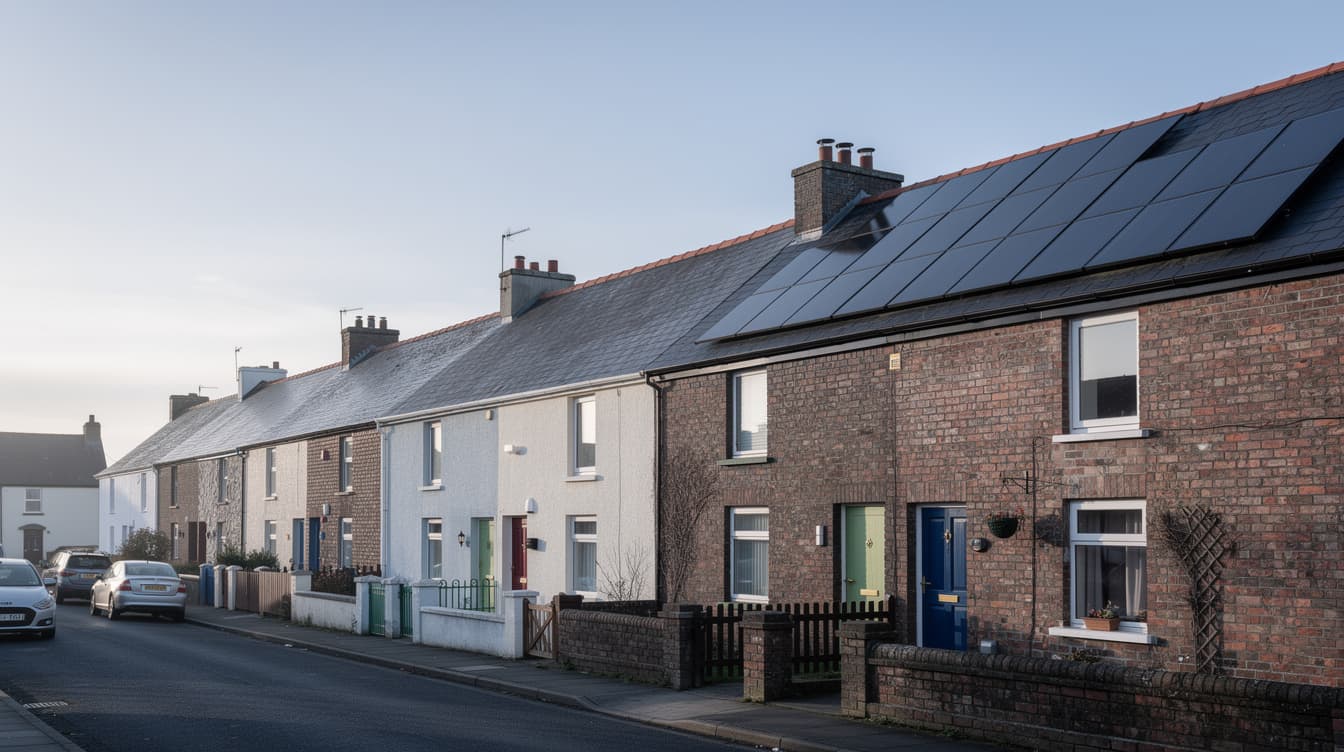
Solar Panel Financing Ireland 2026: Loans, Grants & Payment Options
The bill for a full solar install in Ireland lands between €7,500 and €12,000 for a typical 4 kW home system in 2026. The €1,800 SEAI grant takes a chunk off. Almost everyone finances the rest – the question is how, and at what rate. This is the honest breakdown of every option Irish homeowners actually use in 2026, ranked by cost.
Solar in Ireland has moved from “niche renewable” to “standard home upgrade” largely because the payback maths finally works: a 4 kW system pays for itself in six to eight years, sometimes faster if you have an EV or a heat pump. But most homeowners don’t have €7,000 lying around to pay upfront, and the way you fund it materially changes the payback. A 2.99 % government-backed loan looks nothing like a 12 % credit card balance. Here’s every route worth knowing.
Total cost of a solar install in Ireland 2026
Before deciding how to fund it, know what you’re actually funding. Median 2026 prices for the mainstream system sizes, before the SEAI grant:
| System size | Panels (approx) | Installed price | After €1,800 grant |
|---|---|---|---|
| 2 kW (small terrace, apartment retrofit) | 4 – 5 | €5,500 – €7,000 | €3,700 – €5,200 |
| 4 kW (median 3-bed semi) | 10 – 11 | €7,500 – €9,500 | €5,700 – €7,700 |
| 6 kW (4-bed detached) | 14 – 16 | €9,500 – €12,000 | €7,700 – €10,200 |
| 4 kW + 5 kWh battery | 10 – 11 | €11,000 – €13,500 | €9,200 – €11,700 |
| 6 kW + 10 kWh battery + EV charger | 14 – 16 | €14,000 – €18,000 | €12,200 – €16,200 |
The two numbers that matter for financing are the post-grant total and the timing gap between when you pay the installer and when the SEAI grant lands in your account. Most installers now offer to invoice the pre-grant amount and wait for the SEAI payment, but not all – ask upfront.
Get a real installer quote first
The financing option that suits you depends on the actual number. Free quotes from SEAI-registered installers in your area.
The seven ways Irish homeowners fund solar in 2026
Ranked from cheapest to most expensive over a typical 4 kW install:
1. Cash (or savings)
Nothing beats it. You skip interest completely, keep 100 % of the future export income, and hit the six-to-eight-year payback point cleanly. About one in three Irish solar customers pay cash. The catch is opportunity cost – if your savings are earning 3.5 % in a state savings product, you’re foregoing that yield. In practice the returns from solar (roughly 12 – 15 % IRR) outstrip savings interest by a wide margin, so cash still wins if you have it.
2. SEAI Home Energy Upgrade Loan (HEULS) – if you’re bundling with a retrofit
This is the government-backed scheme run through the Strategic Banking Corporation of Ireland (SBCI). Rates start from 2.99 % APR, terms up to 10 years, amounts from €5,000 to €75,000.
The catch that bites everyone at first: the HEULS won’t cover solar-only projects. Solar is eligible only when it’s part of a wider retrofit that also includes at least one fabric measure (insulation, windows) or a heating upgrade (heat pump, heating controls). If you’re thinking of doing insulation and solar together, or a heat pump and solar together, this loan is the cheapest option in Ireland – often by a wide margin.
Participating lenders in 2026:
- PTSB, AIB, Bank of Ireland
- Avant Money (through An Post)
- Credit unions: Clonmel, Connect, First South, Listowel, Naomh Breandan, North Midlands, Progressive
Applications close on 31 December 2026 or when the SBCI funding envelope is used up – whichever comes first. Don’t leave it until Q4.
3. Credit union green loan (solar-only OK)
Irish credit unions offer solar-specific “green” loans at 4 – 8 % APR. Typical loan amount €5,000 – €25,000, term 3 – 7 years. Unlike the HEULS, credit unions will lend for solar as a standalone install – you don’t need to bundle insulation.
Two practical advantages that make credit unions punch above their weight:
- You often already have a share account, which speeds application.
- Local underwriters are more forgiving on lightly-blemished credit history than a bank algorithm.
The Irish League of Credit Unions (ILCU) “green home improvement loan” is offered by dozens of member unions and usually caps at 5.9 % APR. Check your specific local union – rates and promotional offers vary.
4. Bank green personal loan
All three main pillar banks offer a “green” personal loan for solar and other energy upgrades, at rates around 6.25 – 7 % APR. Typical figures in mid-2026:
| Lender | Rate (APR) | Amounts | Term |
|---|---|---|---|
| AIB Green Personal Loan | 6.40 % (var) | €3,000 – €60,000 | 1 – 10 yrs |
| Bank of Ireland Green Personal Loan | 6.50 % (var) | €5,000 – €75,000 | 1 – 10 yrs |
| PTSB Green Loan | 7.00 % (fixed) | €3,000 – €50,000 | 1 – 10 yrs |
| An Post Green Hub Loan | 6.90 % (var) | €5,000 – €75,000 | 1 – 10 yrs |
The bar to qualify for the “green” rate rather than the standard rate is that at least 50 % of the loan is spent on eligible green measures – solar PV clears that easily. You’ll usually be asked for the installer’s quote at drawdown.
5. Green mortgage top-up
If you’re remortgaging, refinancing or drawing on equity, adding solar to a green mortgage is usually the second-cheapest option after HEULS. Rates in mid-2026:
- Bank of Ireland Green Mortgage: 3.5 – 4.1 % variable for B-rated or better homes.
- AIB Green Mortgage: similar rate structure, requires B or better.
- Avant Money Green Mortgage: 3.2 – 3.9 % for eligible ratings.
- Haven / KBC-equivalent products: in the 3.4 – 4.0 % band.
The advantage: mortgage rates are dramatically lower than personal loan rates. The disadvantage: you’re spreading a €7,000 solar bill over 20 – 30 years, which triples the total interest paid despite the low rate. Only use this route if you’re already remortgaging for other reasons and can add solar in the same transaction.
Green mortgages also require a BER of B or better – see our BER Rating Calculator guide to know whether you qualify.
6. Installer 0 % or promotional finance
A handful of large national installers now bundle 0 % finance over 12 – 24 months, or ultra-low-rate finance over 5 – 10 years through a third-party lender (usually Retail Credit Ireland or PayItMonthly). The 0 % offer is usually genuine but conditional on you accepting the sticker price without haggling – check whether a cash discount would beat the interest saving.
Watch-outs:
- The 5 – 10 year installer finance products often carry APRs of 8 – 13 % once the promotional window ends. Read the small print on whether the rate is fixed or steps up.
- Missing a repayment on installer finance is often treated more harshly than a bank loan, and can be flagged to the Central Credit Register.
- You cannot combine installer finance with the SBCI Home Energy Upgrade Loan – you pick one route.
7. Credit card or standard personal loan
The most expensive route, and yet not uncommon for last-minute installs. Standard bank personal loans run 8 – 11 % APR in 2026; credit cards 15 – 22 %. Both cost roughly €1,500 – €3,500 more in interest over a typical solar install than a credit union green loan. Only defensible if you’re paying it off in under 12 months.
What the same install actually costs across each route
The gap between the cheapest and dearest route is bigger than most people expect. Modelling a €7,700 post-grant install (a mid-range 4 kW system), over a 7-year term:
| Finance route | Rate (APR) | Monthly repayment | Total interest |
|---|---|---|---|
| Cash | 0 % | n/a | €0 |
| SEAI HEULS (bundled retrofit) | 2.99 % | €101 | €780 |
| Credit union green loan | 5.90 % | €112 | €1,720 |
| AIB Green Personal Loan | 6.40 % | €114 | €1,870 |
| BOI Green Personal Loan | 6.50 % | €114 | €1,900 |
| Standard bank personal loan | 9.50 % | €125 | €2,780 |
| Credit card (paid over 3 yrs) | 18.90 % | €282 | €2,470 |
Approximate figures for illustration; actual repayments depend on lender, credit assessment and exact terms. Verify with your provider at application.
The difference between the SEAI HEULS route and a standard bank personal loan on this €7,700 install is €2,000 in extra interest over 7 years. On a 6 kW system with battery, that gap widens to €4,000+.
How to actually apply, step by step
- Get two or three quotes from SEAI-registered installers. See our installer vetting guide for what to compare. Don’t apply for finance until you have a firm quote – the loan amount depends on the number.
- Register for the SEAI grant. This must be done before the installer starts work. The grant is credited to your bank once the install is complete and BER re-issued.
- Decide the funding route. If you’re also doing insulation or a heat pump ⇒ SEAI HEULS. If solar only ⇒ credit union or bank green loan. If you’re remortgaging anyway ⇒ add it to the green mortgage.
- Apply for pre-approval before signing. Even 5 working days of turnaround can push an install by a fortnight if the installer’s calendar is busy.
- Get the loan drawdown timed to invoice. Ask the lender to release funds to your account rather than direct to the installer – you’ll retain leverage if there’s any snag at commissioning.
Free SEAI grant eligibility check
See in 60 seconds whether your home qualifies for the €1,800 solar PV grant.
Can I finance a battery, EV charger or heat pump together with solar?
Yes, and it’s often the smartest play. Every route in this guide can be sized to cover the full package:
- SEAI HEULS was designed for the bundle – solar + insulation + heat pump on one 2.99 % loan.
- Credit union green loans stretch to €25,000, which comfortably covers PV + battery + EV charger.
- Bank green loans go to €75,000 – enough for a whole-home retrofit.
Grouping the upgrades gives you two extra advantages: a bigger BER lift (which can qualify you for a green mortgage), and installer discounts for bundling – most solar firms will discount the battery 10 – 15 % if you buy it with the PV rather than retrofit later.
What about the tax side?
Solar PV on your primary residence is not tax-deductible in Ireland (unlike a rental property, where it’s a capital allowance). But there are three tax-adjacent points worth knowing:
- SEAI grant is not treated as income. You don’t need to declare it or pay tax on the €1,800.
- Export income via the Clean Export Guarantee is tax-free up to €400/yr for microgeneration. Above that, it’s liable to income tax at your marginal rate. See our CEG rates guide.
- 0 % VAT applies to solar PV installations on principal private residences since May 2023. Installers should be quoting you 0 % VAT on labour and materials for the panels – check your quote line-by-line if it looks high.
Frequently asked questions
Can I get the SEAI HEULS loan for solar panels alone?
No. The Home Energy Upgrade Loan Scheme requires solar to be part of a wider retrofit package that includes at least one fabric or heating measure. For solar-only, use a credit union green loan or bank green personal loan.
What’s the cheapest route for a €7,000 solar-only install in 2026?
Cash if you have it. Otherwise a credit union green loan at 4 – 6 % APR usually beats every bank product for solar-only, especially if you already have a share account.
Do I need a BER before applying for a solar loan?
Not for a bank or credit union loan. You do need one for a green mortgage – typically B or better. For the SEAI HEULS, a pre-works BER is required to qualify for the grant and confirm the loan is for eligible measures.
Can I refinance if I take an expensive loan now and rates drop?
Yes. Personal loans in Ireland can generally be repaid early without penalty (check your specific product). If you take a 9.5 % loan now and a 4 % green loan launches next year, you can switch.
Does taking a solar loan hurt my mortgage application?
A modest loan (€5,000 – €10,000) reduces your borrowing capacity by roughly 3 – 4 × the monthly repayment. If you plan to buy or trade up within 12 months, model both scenarios with a broker before signing.
Is 0 % installer finance too good to be true?
Usually genuine, but check whether you’d get a 5 – 10 % cash discount instead. On a €9,000 install, that’s €450 – €900 back in your pocket – often more than the interest saving.
Which installers offer their own finance?
Several national installers partner with third-party consumer credit providers (typically Retail Credit Ireland, PayItMonthly, Humm or FlexiFi). Rates and terms vary. Always compare the installer’s finance product against a credit union quote before agreeing.
Ready to Go Solar?
Get your free personalised quote from SEAI-registered installers.
Bottom line
Financing a solar install in Ireland in 2026 breaks down neatly:
- If you have the cash – use it. Fastest payback, no interest, no paperwork.
- If you’re bundling with a retrofit – SEAI HEULS at 2.99 %. Cheapest debt available.
- If you’re doing solar only – credit union green loan at 4 – 6 %.
- If you’re remortgaging anyway – add solar to a green mortgage.
- Avoid – credit cards, standard personal loans, and installer finance products above 8 % APR unless you’re certain you’ll clear the balance quickly.
The payback on solar is strong enough in Ireland (six to eight years for cash buyers, seven to ten with a modest loan) that the difference between good finance and bad finance is measured in years of extra work. Choose the cheapest route your circumstances allow, and start with a real installer quote so you know the actual number you’re borrowing.
Related Articles
Average Cost of Solar Panels Ireland 2026: What Homeowners Really Pay
Real 2026 Ireland solar prices by kW size, region and battery option. Average 5kW after SEAI grant: €7,100-€9,000. Full breakdown inside.
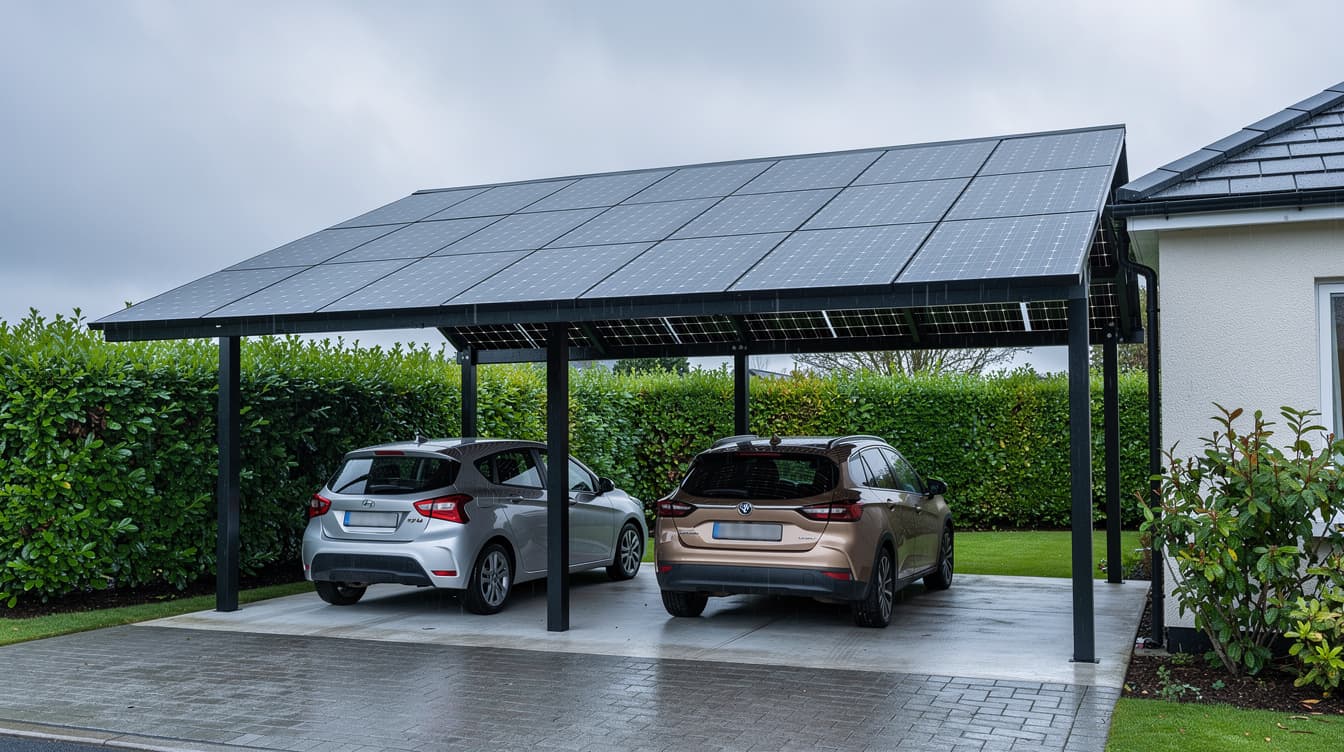
Solar Carports Ireland 2026: Costs, Planning & When They Beat a Roof Install
What a solar carport really costs in Ireland in 2026, whether the SEAI grant applies, planning rules, EV charger pairing and payback maths.
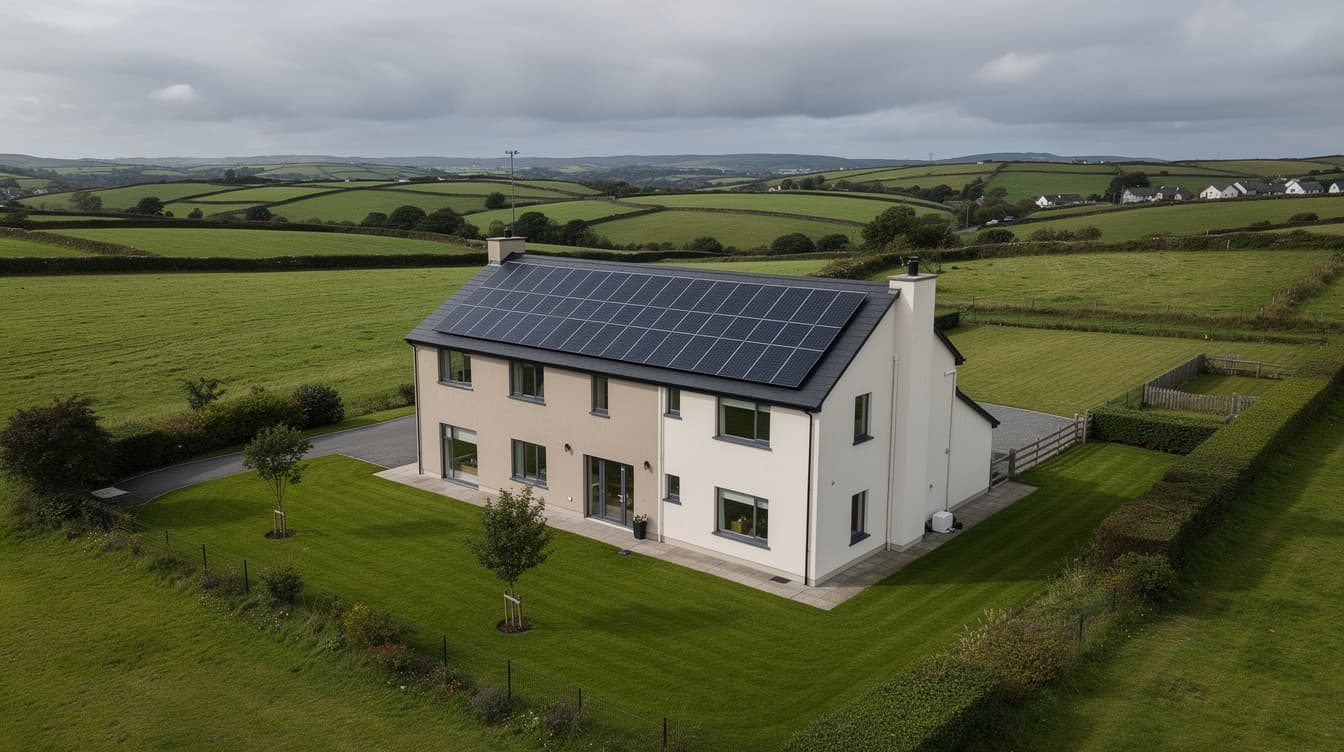
20 Solar Panels Ireland 2026: Cost, Output, Battery & Payback
What 20 solar panels cost in Ireland 2026 (€12.7-18.6k net after grant), 7,600-8,100 kWh output, roof space, battery choice and payback vs 10 or 14 panels.