
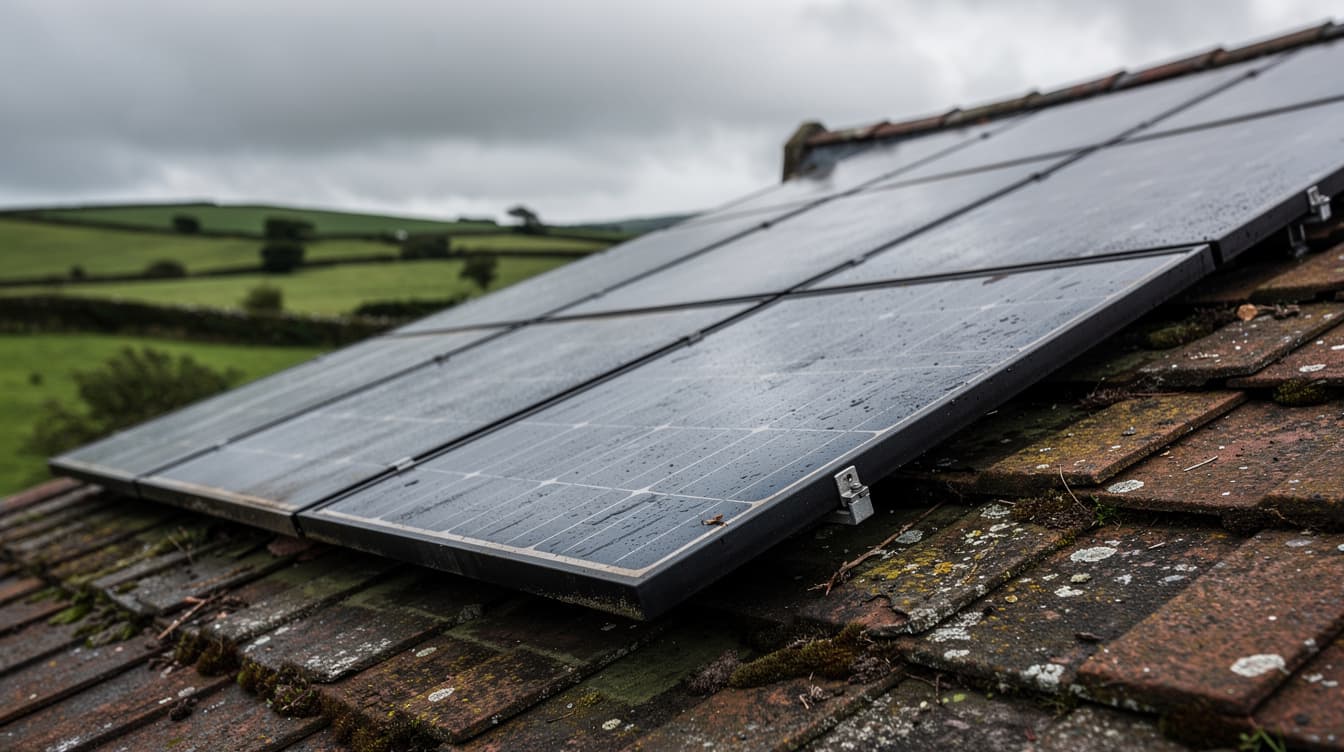
How Long Do Solar Panels Last in Ireland? Lifespan, Warranties & What Actually Wears Out
Solar panels installed on Irish homes today will last 25–35 years — and many will keep generating electricity well beyond that. Modern monocrystalline panels degrade at just 0.5% per year, meaning after 25 years they’re still producing around 87–90% of their original output. But not everything in your solar system lasts equally long. Your inverter will likely need replacing after 10–15 years, and battery storage has a different lifespan again. This guide covers what actually wears out, what doesn’t, and how to get the maximum life from your Irish solar installation.
One of the most common questions we hear from Irish homeowners considering solar is: “Will they still be working in 20 years?” The short answer is yes. The longer answer involves understanding the difference between panel lifespan, inverter lifespan, and battery lifespan — because they’re three very different things, and knowing the distinction will save you money and surprises.
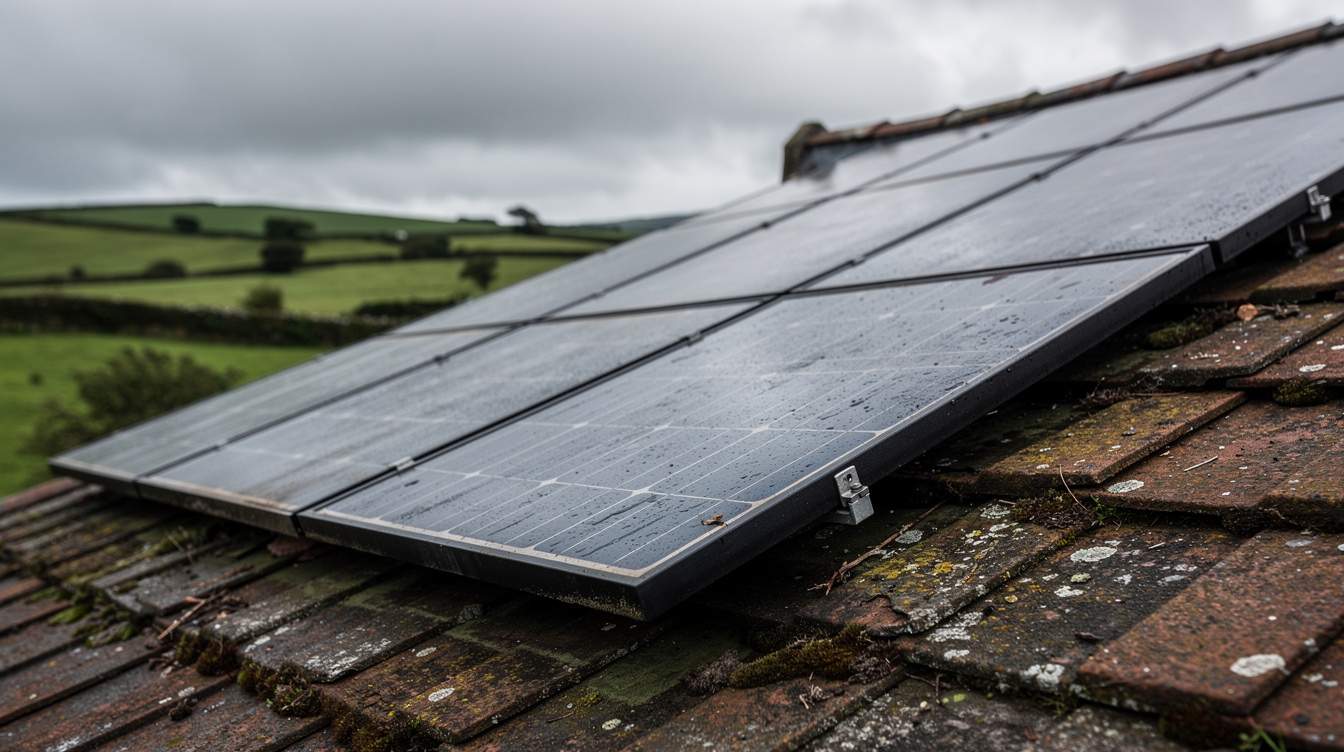
Solar Panel Lifespan: The Quick Answer
| Component | Expected Lifespan | Typical Warranty | When You’ll Need to Replace |
|---|---|---|---|
| Solar panels (monocrystalline) | 25–35+ years | 25–30 year performance | Rarely — still generating after 30 years |
| Solar panels (polycrystalline) | 25–30 years | 25 year performance | Rarely before year 25 |
| String inverter | 10–15 years | 5–12 years | Once during panel lifetime |
| Microinverters | 20–25 years | 15–25 years | May not need replacing at all |
| Battery (lithium-ion) | 10–15 years | 10 years | Once during panel lifetime |
| Mounting hardware | 25–40 years | 10–20 years | Rarely — stainless/aluminium is durable |
| Wiring and connectors | 25+ years | Varies | Rarely if quality MC4 connectors used |
The panels themselves are the most durable part of your system. They have no moving parts, no fans, no pumps — just silicon cells behind tempered glass. It’s the electronics (inverter, battery) that will need attention during the panels’ lifetime.
How Solar Panel Degradation Actually Works
Solar panels don’t suddenly stop working one day. They gradually produce slightly less electricity each year. This is called degradation, and it’s predictable and well-studied.
Here’s what happens over 30 years with a typical 5 kWp system installed in Ireland in 2026:
| Year | Output (% of Original) | Annual Generation (kWh) | Annual Savings (€) |
|---|---|---|---|
| Year 1 | 100% | ~4,500 kWh | €1,000–€1,200 |
| Year 5 | 97.5% | ~4,390 kWh | €975–€1,170 |
| Year 10 | 95% | ~4,275 kWh | €950–€1,140 |
| Year 15 | 92.5% | ~4,160 kWh | €925–€1,110 |
| Year 20 | 90% | ~4,050 kWh | €900–€1,080 |
| Year 25 | 87.5% | ~3,940 kWh | €875–€1,050 |
| Year 30 | 85% | ~3,825 kWh | €850–€1,020 |
At 0.5% degradation per year, your panels are still producing 85% of their original output after 30 years. That’s still saving you €850+ per year. The degradation is so gradual you won’t notice it from one year to the next.
What causes degradation? Mainly UV exposure (light-induced degradation), thermal cycling (expansion/contraction from temperature changes), and moisture ingress at microcracks. Ireland’s moderate climate actually helps — our panels don’t suffer the extreme heat cycling that accelerates degradation in hot countries like Spain or Australia.
Understanding Solar Panel Warranties
Solar panels come with two separate warranties, and understanding both is important:
1. Product warranty (10–25 years)
Covers manufacturing defects, delamination, broken glass, faulty junction boxes, and premature failure. If a panel stops working due to a manufacturing fault within this period, the manufacturer replaces it. Budget panels typically offer 10–12 years; premium brands offer 25 years.
2. Performance warranty (25–30 years)
Guarantees the panel will still produce a minimum percentage of its rated output after 25 years. This is the more important warranty for long-term value.
| Manufacturer | Product Warranty | Performance at Year 25 | Commonly Used in Ireland? |
|---|---|---|---|
| SunPower/Maxeon | 25 years | 92% | Yes (premium installs) |
| LG | 25 years | 90% | Yes (widely available) |
| Panasonic | 25 years | 90.76% | Yes |
| JA Solar | 12 years | 84.8% | Very common (value tier) |
| Trina Solar | 15 years | 84.8% | Very common |
| Canadian Solar | 12 years | 84.8% | Common |
| Longi | 15 years | 84.8% | Very common |
The difference between premium and budget panels over 25 years is real but moderate. A SunPower panel guaranteed at 92% vs a JA Solar panel at 84.8% means the SunPower produces about 7% more electricity in year 25. On a 5 kWp system, that’s roughly €150–€200 per year more. Whether that justifies the higher upfront cost depends on your budget and how long you plan to stay in the home. Read our guide to the best solar panels in Ireland for a full brand comparison.
Ready to Go Solar?
Get your free personalised quote from SEAI-registered installers.
The Inverter: Your System’s Weak Link
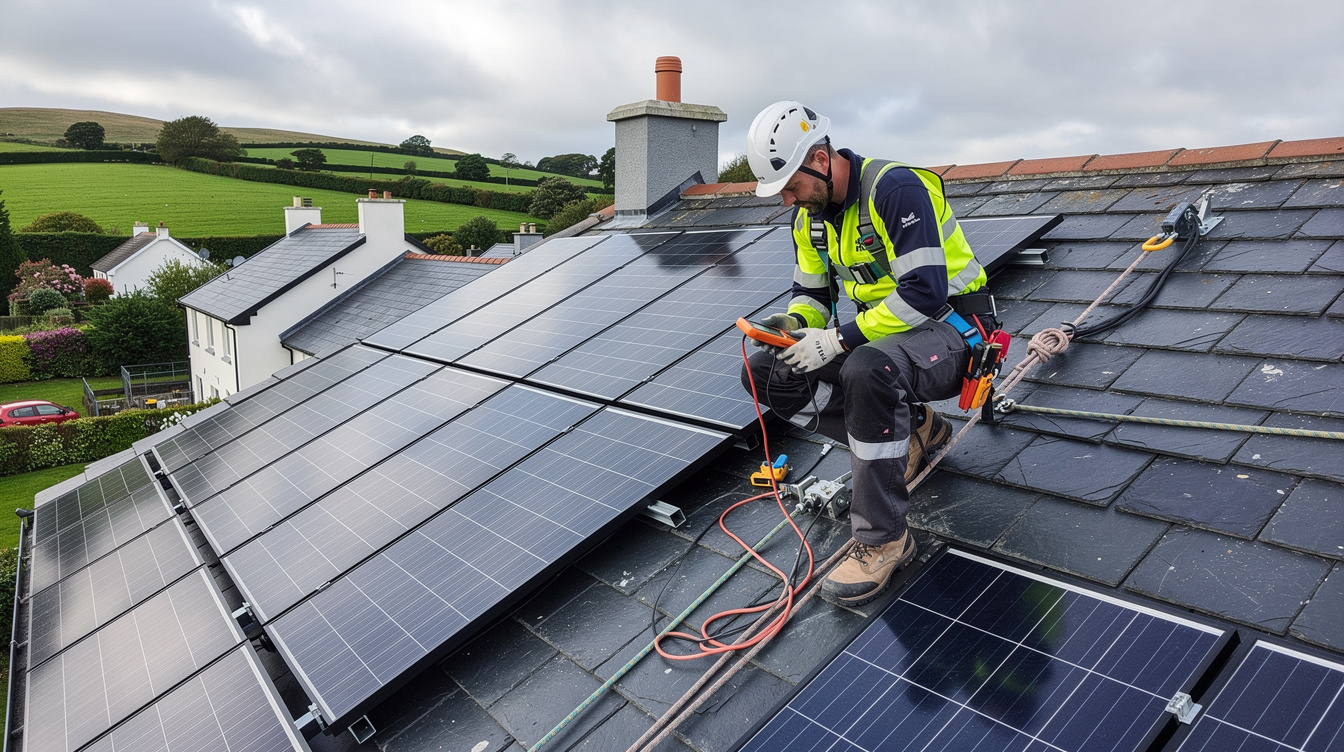
If anything in your solar system is going to fail before the panels, it’s the inverter. The inverter converts the DC electricity your panels generate into the AC electricity your home uses. It’s the hardest-working component in the system, processing every watt of energy every day.
String inverters (the most common type in Ireland, mounted on a wall indoors or in the garage) typically last 10–15 years. They cost €1,000–€2,000 to replace. Budget for one replacement during the lifetime of your panels.
Microinverters (small units attached to each panel on the roof) last 20–25 years because they handle less power individually and have better thermal management. Brands like Enphase warrant their microinverters for 25 years. The downside: if one fails, a technician needs roof access to replace it.
Hybrid inverters (combined solar + battery inverter) have a similar lifespan to string inverters: 10–15 years. Since they also manage battery charging, they work harder and may degrade slightly faster.
Signs your inverter needs attention: Error lights or fault codes on the display, reduced generation on sunny days (check your monitoring app), strange buzzing or clicking noises, or the system shutting down and restarting. If you notice any of these, contact your installer.
How Long Do Solar Batteries Last?
If you have a solar battery, its lifespan depends on the chemistry, how heavily it’s cycled, and the manufacturer.
| Battery | Chemistry | Warranty | Expected Lifespan | Warranted Capacity at End |
|---|---|---|---|---|
| Tesla Powerwall 2 | Li-ion (NMC) | 10 years | 12–15 years | 70% |
| GivEnergy All-in-One | LFP | 10 years | 12–15 years | 70% |
| Huawei LUNA2000 | LFP | 10 years | 12–15 years | 70% |
| BYD HVS/HVM | LFP | 10 years | 12–15 years | 60% |
LFP (lithium iron phosphate) batteries are increasingly common in Ireland and generally last longer than NMC batteries, especially in systems that cycle daily. They also handle Ireland’s moderate temperatures well — extreme heat is what kills batteries fastest, and we don’t have that problem.
After 10–15 years, a battery doesn’t die completely — it just holds less charge. A 10 kWh battery might only store 7 kWh at end of life. You can keep using it at reduced capacity or replace it. By then, battery prices will almost certainly be lower than today.
Does Irish Weather Affect Solar Panel Lifespan?
Ireland’s climate is actually better for solar panel longevity than most people assume:
- Temperature: Extreme heat accelerates degradation. Ireland’s cool, temperate climate (rarely above 25°C) means less thermal stress on panels. This is why Irish panels often outperform their degradation warranties.
- Rain: Frequent rain naturally cleans panels, reducing the need for manual cleaning and preventing build-up that can cause hotspots. Learn more in our guide to solar panels in Irish weather.
- Wind: Strong winds (especially in coastal and elevated areas) put mechanical stress on mounting hardware, not the panels themselves. Proper installation with quality brackets handles Irish wind speeds without issue.
- Salt spray: For coastal homes, salt air can corrode aluminium frames and mounting hardware over time. If you live within 1 km of the coast, ensure your installer uses marine-grade stainless steel fixings. Read our weatherproofing guide for more detail.
- Hail: Solar panels are tested to withstand 25mm hailstones at 80 km/h. Irish hailstones rarely exceed 15mm. Panel breakage from hail in Ireland is essentially unheard of.
The biggest threat to Irish solar panels isn’t weather — it’s birds nesting underneath them, which can cause wiring damage and efficiency loss.
How to Maximise Your Solar Panel Lifespan
Most of these are simple, low-cost actions that make a real difference over 25+ years:
- Keep panels clean — Ireland’s rain does most of the work, but bird droppings, lichen, and tree sap need occasional cleaning. An annual wash with a soft brush and clean water is sufficient for most homes.
- Trim overhanging trees — Falling branches can crack panels, and leaves create shading and moisture traps. Keep a 2-metre clearance above and around your array.
- Install bird proofing — Wire mesh around panel edges prevents nesting, which causes wiring damage and efficiency loss. Best done at installation time. See our bird proofing guide.
- Monitor output regularly — Use your inverter’s app or monitoring portal to check daily/weekly generation. A sudden drop in output often signals a fault (failed panel, inverter error, shading issue) that’s cheaper to fix early.
- Get a professional inspection every 3–5 years — A solar maintenance technician will check wiring, connectors, mounting bolts, and inverter health. Costs around €100–€200 and catches issues before they become expensive.
- Don’t walk on panels — This seems obvious, but it happens. Solar panels can develop invisible microcracks from foot traffic that reduce output over time.
- Check your inverter display periodically — Error codes or flashing lights mean something. Don’t ignore them for months.
Want Expert Installation That Lasts?
SEAI-registered installers use quality components and proper mounting for maximum lifespan.
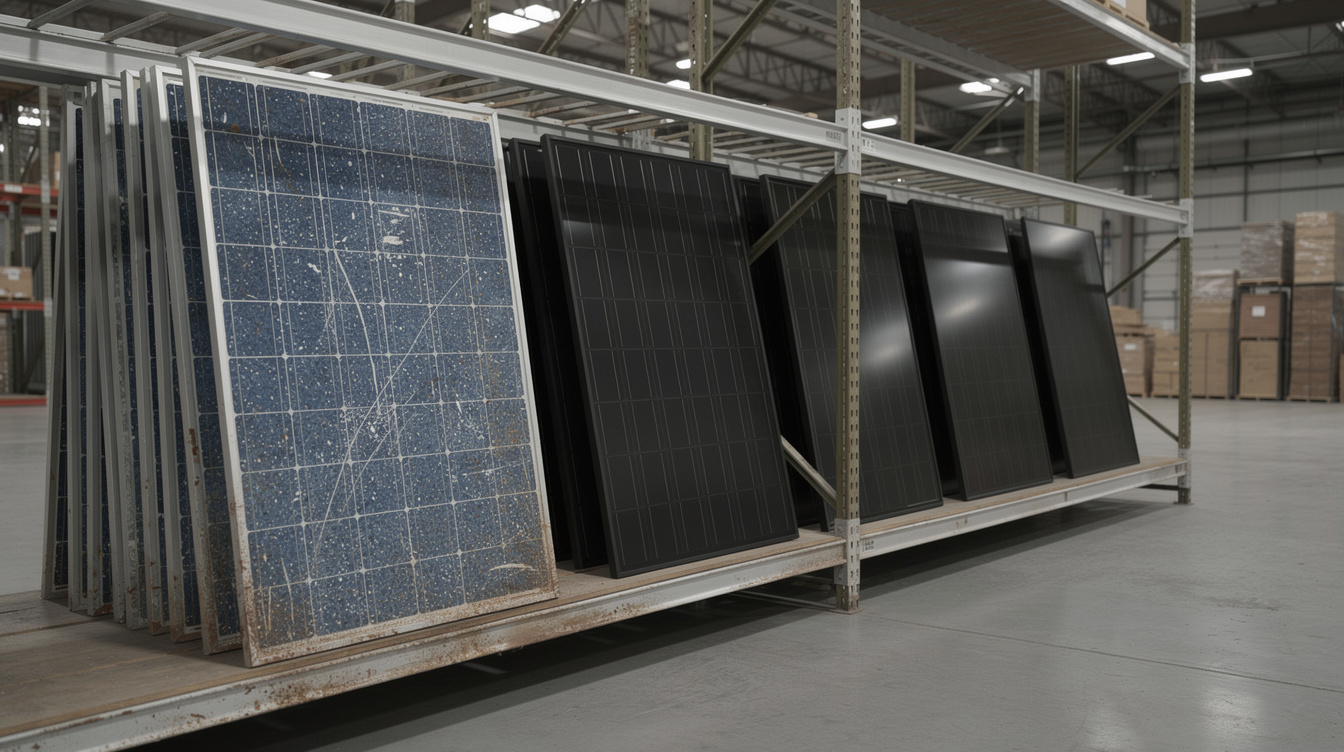
What Happens When Solar Panels Reach End of Life?
When your panels eventually need replacing (likely 30+ years from now), you have three options:
1. Recycling (free under WEEE regulations)
Under the EU WEEE Directive, manufacturers are legally responsible for recycling solar panels at no cost to the homeowner. In Ireland, WEEE Ireland manages this through partnerships with PV Cycle, a European specialist in photovoltaic waste recycling. Up to 95% of panel materials (silicon, glass, aluminium, copper) can be recovered and reused.
2. Repurposing
Panels producing 80%+ of original output are perfectly usable for less demanding applications: garden sheds, holiday homes, EV charging stations, or off-grid setups. Some companies buy used panels for this purpose.
3. Upgrading
By the time your panels are 30 years old (2056), solar technology will be vastly more efficient. The panels available then will likely produce 2–3 times more electricity per square metre than today’s panels. Replacing old panels with new ones on your existing mounting hardware will be straightforward and dramatically boost your generation.
The 30-Year Cost of Ownership
Let’s put together the true lifetime cost for a typical 5 kWp system installed in Ireland in 2026:
| Item | Cost | When |
|---|---|---|
| System installation (after SEAI grant) | €7,200–€9,200 | Year 0 |
| Inverter replacement | €1,000–€2,000 | Year 12–15 |
| Professional inspections (6 visits) | €600–€1,200 | Every 5 years |
| Occasional cleaning (if needed) | €0–€500 | As needed |
| Total 30-year cost | €8,800–€12,900 | — |
| Total 30-year electricity savings | €27,000–€33,000 | — |
| Net benefit over 30 years | €14,000–€24,000 | — |
Even accounting for inverter replacement and maintenance, a solar system generates €14,000–€24,000 in net savings over 30 years — and that’s before you count the property value increase or Clean Export Guarantee income.
Frequently Asked Questions
Do solar panels need replacing after 25 years?
No. The 25-year warranty is a guarantee, not an expiry date. Panels will still generate electricity after 25 years — just at a slightly reduced capacity (typically 85–90% of original). Many solar installations from the 1990s are still operating today.
What’s the first thing to fail in a solar system?
The inverter, almost always. It handles the most electrical stress and has electronic components that degrade faster than silicon cells. Budget €1,000–€2,000 for a replacement around year 12–15.
Can I replace just one damaged panel?
Yes, individual panels can be replaced. However, after 10+ years, the exact same model may not be available. Your installer can source a compatible panel with similar specifications. On a string inverter system, mismatched panels can slightly reduce efficiency; on a microinverter system, it makes no difference.
Do solar panels work less well over time in Ireland specifically?
Actually, the opposite. Ireland’s cool climate means less thermal degradation compared to hotter countries. Irish panels tend to outperform their warranty degradation curves because they don’t suffer extreme heat stress.
Is it worth buying premium panels for a longer lifespan?
If you plan to stay in the home for 20+ years, premium panels (SunPower, LG, Panasonic) with 25-year product warranties and 90%+ performance guarantees offer peace of mind. If you might sell within 10 years, the difference between premium and mid-tier panels is less significant — both will perform well within that timeframe.
What happens to my panels if the manufacturer goes bankrupt?
The panels keep working regardless. You lose the warranty backup, but a well-made panel doesn’t need the manufacturer to exist to keep generating electricity. This is one reason to choose established, financially stable manufacturers.
Ready to Invest in 25+ Years of Solar Savings?
Get quotes from SEAI-registered installers who use quality, long-lasting components.
The Bottom Line
Solar panels are a 25–35 year investment with a proven track record. The panels themselves are the most reliable part — no moving parts, gradual and predictable degradation, and warranties that guarantee 85–92% output after a quarter century. Your inverter will need replacing once (budget €1,000–€2,000 around year 12–15), and batteries last 10–15 years if you have one. Ireland’s cool, wet climate is actually ideal for panel longevity.
The total cost of ownership over 30 years — including maintenance and inverter replacement — is €9,000–€13,000. The total savings over the same period: €27,000–€33,000. That’s a net return of €14,000–€24,000, making solar one of the best long-term financial decisions an Irish homeowner can make.
Related Articles
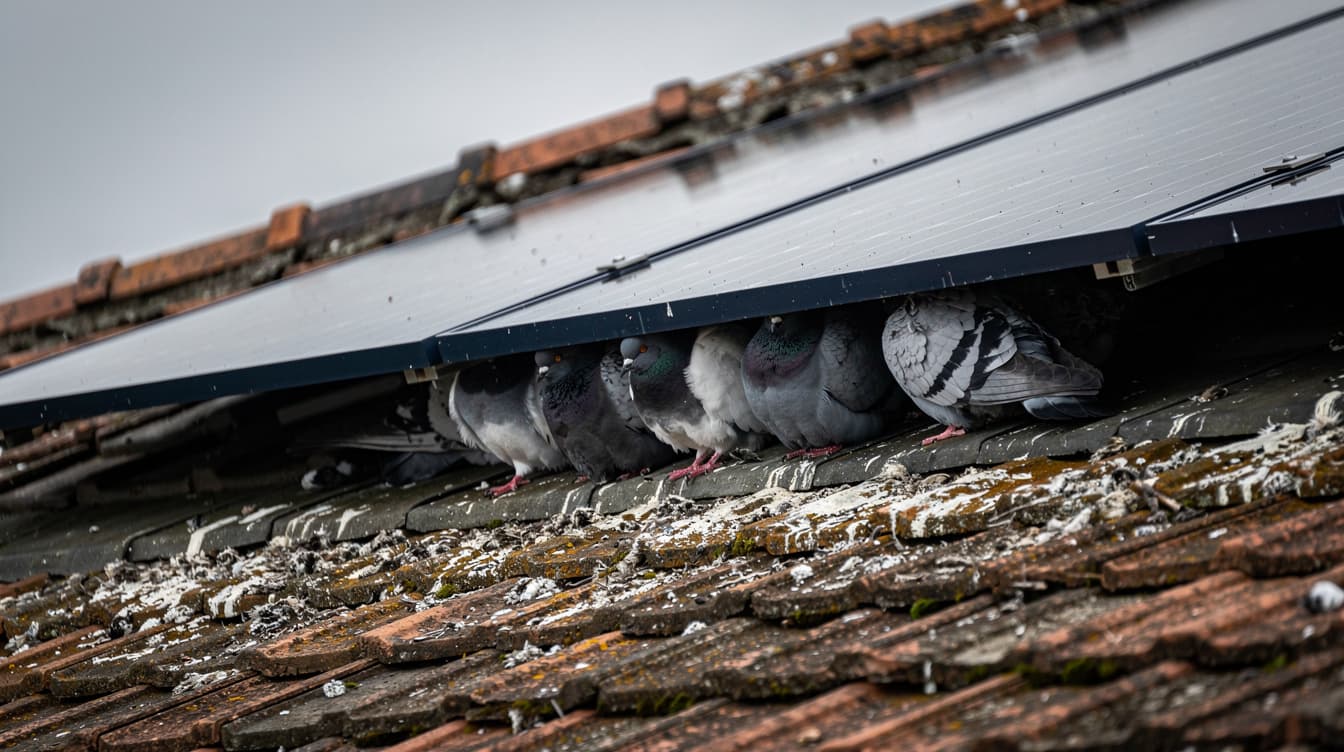
Solar Panel Bird Proofing Ireland: How to Stop Pigeons Nesting Under Your Panels
How to bird proof solar panels in Ireland. Costs, methods, DIY vs professional, and legal rules. Wire mesh from €300 solves pigeon problems permanently.
Do Solar Panels Increase Home Value in Ireland? The 2026 Data
ESRI data shows solar panels add 1-5% to Irish home values via BER improvement. See the numbers, green mortgage benefits, and how to maximise your ROI.
Solar Panel Costs Ireland 2026: Complete Price Breakdown by System Size
Solar panel costs in Ireland 2026: €3,100–€11,700 after SEAI grants. Full breakdown, brand comparison & ROI calculator. Get an accurate quote today.