
Solar Inverter Sizing Ireland 2026: DC:AC Ratio, Types & Brand Guide
Choosing the right solar inverter for an Irish home is the most under-discussed decision in the whole install. Homeowners spend hours comparing panels and almost no time on the inverter — yet the inverter is what determines how much of your panel output actually reaches your appliances and the grid, what your warranty looks like, and whether you can add a battery later without ripping the kit out. This guide explains how to size a solar inverter for Irish conditions in 2026, why DC:AC ratios above 1:1 are now the norm, and the three inverter types you'll actually be quoted on.
Quick Answer: Inverter Sizing for Irish Homes
For most Irish homes a hybrid string inverter sized at roughly 80–90% of panel nameplate is the right choice in 2026. A 5 kWp panel array typically pairs with a 4–4.6 kW inverter. The 1.2–1.3:1 DC:AC ratio captures Ireland's relatively low irradiance ceiling without significant clipping while saving €200–€500 on inverter cost. Always specify a hybrid (battery-ready) inverter even if you're not installing a battery on day one — the upgrade cost is €0–€300 versus €1,500–€2,000 to swap later.
What an Inverter Actually Does in an Irish Solar System
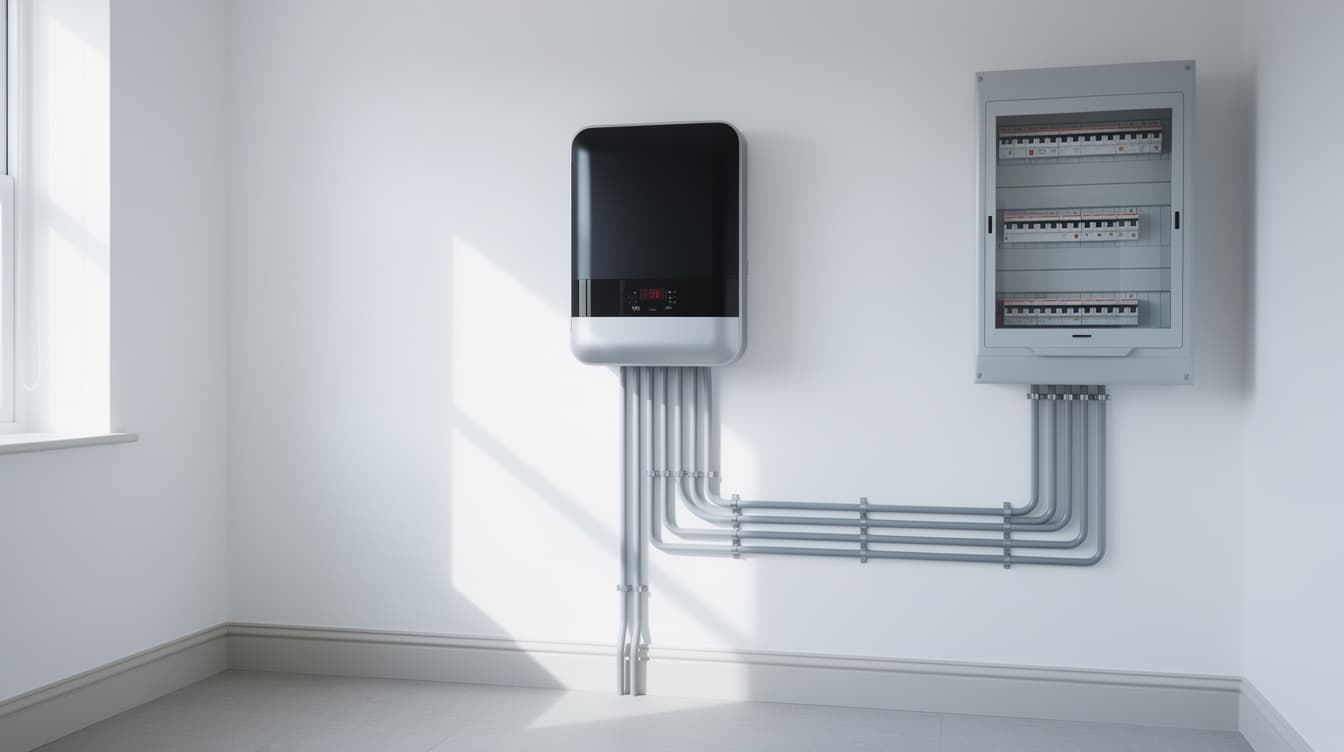
Solar panels generate direct current (DC) electricity at variable voltage depending on irradiance, temperature and shading. Your home, the grid and the Clean Export Guarantee all need alternating current (AC) at 230 V, 50 Hz, single phase. The inverter sits between them, converting DC to AC and managing four jobs:
- Maximum Power Point Tracking (MPPT) — constantly adjusting voltage to extract the most power from the panels as cloud cover changes.
- Grid synchronisation — matching frequency and phase so power flows cleanly to the ESB network.
- Anti-islanding protection — disconnecting within 200 ms of a grid outage to protect ESB Networks staff during repairs.
- Smart Meter and CEG metering interface — reporting export volumes to your smart meter so your supplier credits you the 19c per kWh CEG export rate.
What Size Solar Inverter Do I Need? The DC:AC Ratio Explained
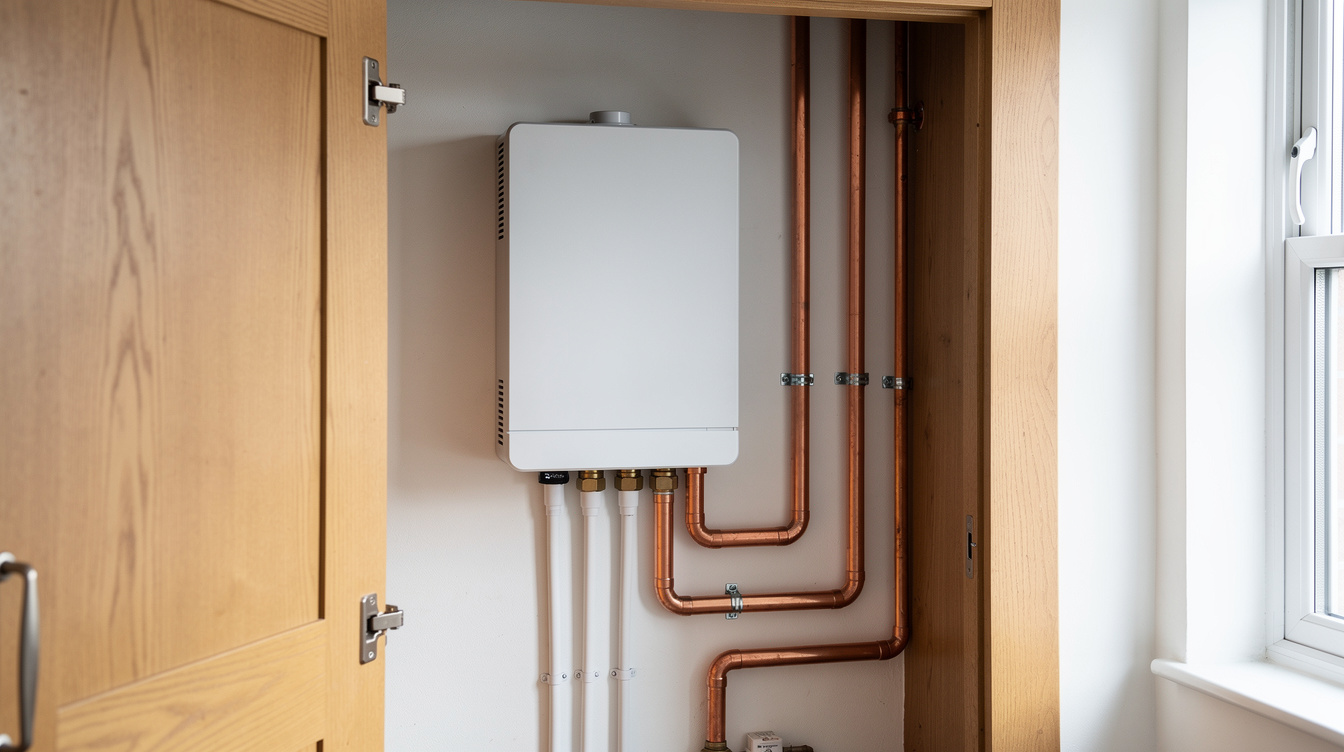
The "size" of an inverter is its peak AC output in kilowatts (kW). The "size" of your solar array is the panels' peak DC output in kilowatts-peak (kWp). The ratio between them — DC:AC — is the single most important sizing decision.
For decades the convention was a 1:1 ratio: a 5 kW inverter for 5 kWp of panels. That convention was inherited from sunnier markets where panels regularly hit their nameplate Wp. In Ireland, panels almost never hit nameplate. Standard Test Conditions (STC) assume 1,000 W/m² irradiance, 25°C cell temperature, and AM1.5 spectrum. A typical Irish summer noon delivers 700–850 W/m² with cells running at 35–45°C, knocking 15–25% off the panels' nameplate before the inverter even sees the DC. In winter, irradiance rarely exceeds 400 W/m².
This is why under-sizing the inverter relative to the panels — called "DC oversizing" — has become standard practice for Irish installs. A 1.2:1 or 1.3:1 ratio means the panels can theoretically deliver more than the inverter can convert, but Ireland's irradiance ceiling means that "clipping" almost never occurs. The result: a smaller, cheaper inverter that operates at higher capacity factor and is more efficient in real conditions.
How much clipping does DC oversizing cause in Ireland?
SEAI's own analysis of monitored Irish PV systems shows the following clipping losses at increasing DC:AC ratios on south-facing roofs (the worst case for clipping — east-west and north-facing roofs see virtually no clipping at any ratio):
| DC:AC Ratio | Example System | Annual Clipping Loss | Inverter Cost Saving |
|---|---|---|---|
| 1.0:1 | 5 kWp panels + 5 kW inverter | 0% | Baseline |
| 1.1:1 | 5 kWp panels + 4.6 kW inverter | <0.3% | ~€150 |
| 1.2:1 | 5 kWp panels + 4.2 kW inverter | 0.5–0.8% | ~€250 |
| 1.3:1 | 5 kWp panels + 3.8 kW inverter | 1.2–1.8% | ~€400 |
| 1.4:1 | 5 kWp panels + 3.6 kW inverter | 2.5–3.5% | ~€500 |
| 1.5:1 | 5 kWp panels + 3.3 kW inverter | 4–6% | ~€650 |
The sweet spot for Irish residential installs is 1.2:1 to 1.3:1 on south-facing arrays. Going beyond 1.3:1 starts to cost real generation. Going below 1.1:1 (i.e. inverter the same size as panels or larger) wastes inverter capacity that will never be used.
Recommended Inverter Sizes by Common Irish System Sizes
The following are the inverter sizes most installers will quote in 2026, by typical residential array size. Panel wattage assumed at 430–450 W (the current standard).
| Panel Array Size | Number of Panels | Recommended Inverter (South-Facing) | Recommended Inverter (East-West) |
|---|---|---|---|
| 2.2 kWp | 5 panels | 2 kW | 2 kW |
| 3.5 kWp | 8 panels | 3 kW | 3 kW |
| 4.4 kWp | 10 panels | 3.6–4 kW | 3.6 kW |
| 5.3 kWp | 12 panels | 4.2–4.6 kW | 4 kW |
| 6.6 kWp | 15 panels | 5 kW | 5 kW |
| 8.0 kWp | 18 panels | 6 kW | 5.5–6 kW |
| 10.0 kWp | 22 panels | 8 kW (three-phase preferred) | 7–8 kW |
The ESB Networks 6 kW Rule You Must Know
ESB Networks (formerly ESB) limits single-phase residential micro-generation connections to 6 kW maximum AC inverter output under the NC6 Micro-Generation connection. Above 6 kW you move into the NC7 Mini-Generation regime, which requires:
- A formal grid connection application with technical assessment (4–6 weeks)
- Either three-phase supply (often unavailable in older Irish housing estates) or split-phase 6 kW max per phase
- A more expensive smart meter and metering arrangement
- An NC7 connection fee (currently €100–€400 depending on circumstances)
The 6 kW rule is why so many 8–10 kWp Irish residential arrays land on a 6 kW inverter even though the DC:AC ratio is suboptimal. There is no penalty for exceeding 1.3:1 if it keeps you in NC6 territory and avoids the NC7 paperwork.
For 10 kWp+ systems, the question becomes: do you have three-phase, do you want to pay for NC7, or do you accept 1.5:1 ratio with a 6 kW inverter? The honest answer for most homeowners is option 3 — the 4–6% clipping loss is far cheaper than the NC7 process and a three-phase upgrade.
String, Hybrid, Microinverter or Optimiser: Which Inverter Type for Irish Homes?
String Inverter (cheapest, most common)
A single central inverter handles the whole array in series ("string"). Output is limited by the weakest panel — a shaded or dirty panel drags the rest down. Best for: unshaded south-facing roofs with uniform panel orientation.
- Cost: €1,000–€1,800 for residential 4–6 kW units
- Warranty: typically 10 years standard, 12–15 years extended for €100–€300
- Examples in Irish market: Solis S6, Growatt MIN-XH, Goodwe DNS
Hybrid Inverter (battery-ready string — recommended default)
A string inverter with built-in battery management so a battery can be added at any time without replacing the inverter. The price premium over a non-hybrid string inverter has collapsed to €100–€300 in 2026 and most installers now quote hybrid by default.
- Cost: €1,200–€2,100 for residential 4–6 kW units
- Warranty: 10 years standard, 12 years extended
- Examples: GivEnergy AC3, Sigenergy SigenStor, Solis S6 Hybrid, Sungrow SH-RS, Solax X1 Hybrid
Recommendation: always specify hybrid even if you're not installing a battery now. The cost premium is negligible. Replacing a non-hybrid string inverter to add a battery later costs €1,500–€2,000 including labour and re-commissioning.
Microinverters (Enphase)
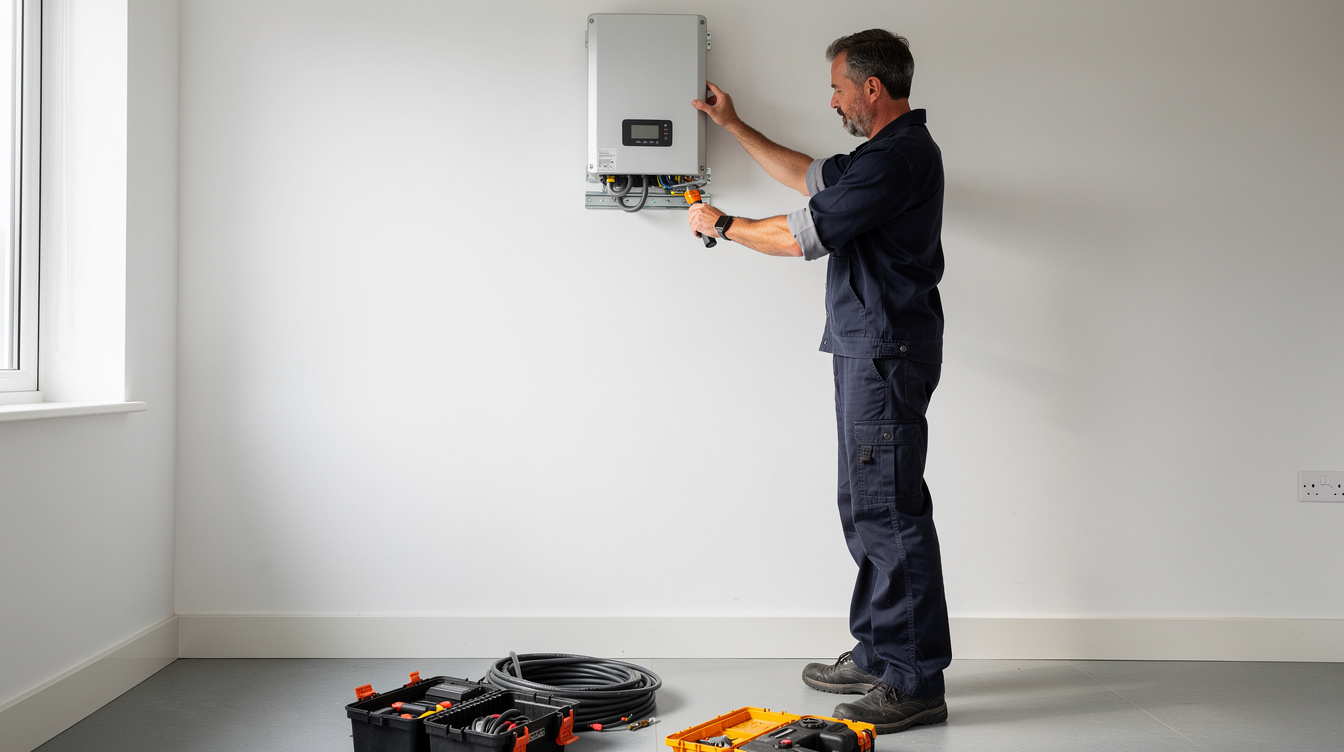
One small inverter per panel, mounted under each module. Each panel operates independently, immune to shading on neighbours. Best for: shaded roofs, multi-orientation roofs, future panel additions.
- Cost: €180–€240 per panel inverter (so €2,000–€2,700 for a 12-panel system)
- Warranty: Enphase IQ8 carries a 25-year microinverter warranty — the longest in the residential market
- Battery integration: requires Enphase IQ Battery; doesn't pair with third-party batteries
Premium of €700–€1,200 over a hybrid string for a typical 4–5 kWp install. Worth it on heavily shaded or multi-pitch roofs; overkill on a simple south-facing roof.
DC Optimisers (SolarEdge, Tigo)
A central string inverter paired with one small optimiser per panel. Each panel runs at its own maximum power point but the optimisers feed a single inverter. Combines some panel-level benefits of micros with the lower cost of strings.
- Cost: €500–€900 premium over plain string
- Warranty: 25 years on optimisers, 12 on the inverter
- Note: SolarEdge has had public financial difficulties through 2024–2025; warranty service in Ireland depends on the local distributor. Ask your installer to confirm the support arrangement.
Single-Phase, Split-Phase or Three-Phase: What Your Home Has
Most Irish homes are single-phase 230 V, 25 A supply (about 5.7 kW continuous). A handful of larger detached homes and farms have three-phase 400 V supply (typically 17.3 kW continuous). The inverter must match the supply type:
- Single-phase supply — needs a single-phase inverter, capped at 6 kW AC by ESB Networks NC6.
- Three-phase supply — needs a three-phase inverter (or three single-phase if doing split-phase). Can go up to 11 kW under NC7 without DSO-grade procedures.
- Two-phase Irish farm supply — rare but exists. Treat as single-phase for inverter sizing unless explicit confirmation from ESB Networks.
To check what your home has: open your fuse board. A single-phase board has one main switch fed by two wires (live and neutral). A three-phase board has three main switches or one larger 3-pole switch fed by four wires (three live and one neutral).
Want a Sized Quote for Your Home?
Get three SEAI-registered installers to quote inverter, panels and battery as one package.
Inverter Efficiency: Why "97%" Numbers Hide What Matters
Every inverter spec sheet quotes a Euro Efficiency (eta-euro) or California Efficiency (CEC) figure between 96.5% and 98%. These are weighted averages of efficiency at different load points and look impressive. In Irish conditions, what matters more is part-load efficiency below 20% of nameplate, because Irish solar systems spend a lot of the year running below 20% load (winter mornings, overcast summer days, evening tail).
Quality 2026 inverters — Sungrow, GoodWe, GivEnergy, Sigenergy — maintain 94–96% efficiency at 10% load. Lower-tier inverters can drop to 88–90% at the same point, losing meaningful annual generation that's never reported in the spec sheet headline.
When comparing quotes, ask the installer for the part-load efficiency curve from the manufacturer datasheet. Most reputable models publish this; if your installer can't supply it, that's a red flag about the brand.
Common Inverter Sizing Mistakes Irish Installers Make
- Over-sizing the inverter to "future-proof" battery integration. A 5 kW inverter on a 4 kWp array is wasted capacity. Batteries on hybrid inverters use the DC-coupled side for charging; the AC nameplate doesn't need to be enlarged.
- Quoting a 6 kW inverter for a 4 kWp system "for headroom". No, you'll run that inverter at 25–30% capacity its whole life. Inverters are most efficient between 50–90% load.
- Picking a separate inverter and battery (AC-coupled) when DC-coupled hybrid would be cheaper. AC-coupled batteries with separate hybrid inverters lose 5–8% round-trip efficiency vs DC-coupled hybrid. Sometimes justified for retrofits; rarely the right answer for new builds.
- Choosing a single string inverter for a multi-orientation roof. If your roof has both east and west pitches, you need either an inverter with two independent MPPTs or microinverters. A single MPPT averaging across two orientations loses 8–15% of output.
- Sizing for nameplate without checking ESB Networks NC6 limit. A 6.6 kWp + 6.5 kW inverter quote on a single-phase home will be rejected by ESB Networks. Installer should have caught it.
FAQ: Solar Inverter Sizing for Irish Homes
What size inverter do I need for a 4 kWp solar system in Ireland?
A 3.6 kW or 4 kW hybrid inverter is the right answer for a south-facing 4 kWp system in Ireland. The 1.1–1.2:1 DC:AC ratio captures essentially all generation while keeping inverter cost down. On east-west systems, 3.6 kW is sufficient.
Should my inverter be the same size as my panels?
No. A 1.2:1 to 1.3:1 DC:AC ratio is current best practice for Irish installs. A 5 kWp panel array should pair with a 3.8–4.2 kW inverter for optimal economics. Same-size inverters waste capacity that Ireland's irradiance ceiling will never reach.
What's the maximum inverter size for an Irish home?
6 kW AC on single-phase supply (ESB Networks NC6 connection). Above 6 kW you move to the NC7 Mini-Generation process, requiring a technical assessment, possible three-phase upgrade, and additional connection fees.
Do I need a hybrid inverter if I'm not installing a battery?
Strongly recommended. The price premium is €100–€300 in 2026. Adding a battery later with a non-hybrid inverter requires either swapping the inverter (€1,500–€2,000) or adding an AC-coupled battery system that's less efficient and more expensive.
What's the difference between a string and a microinverter system?
String inverters use one central unit for the whole array; microinverters use one tiny inverter per panel. Microinverters cost €700–€1,200 more on a typical 4 kWp install but produce 5–15% more output on shaded or multi-orientation roofs. On unshaded south-facing roofs the extra cost rarely pays back.
Which inverter brand is best in Ireland?
Sungrow, GoodWe, GivEnergy, Solis and Sigenergy are the top-tier brands installed across Ireland in 2026. Each has good local support, parts availability and battery integration. SolarEdge is also widely used but its financial position should be checked with your installer. Enphase microinverters are excellent for shaded roofs.
How long do solar inverters last?
String and hybrid inverters typically have a 10-year standard warranty extendable to 12–15 years for €100–€300. Real-world lifespan is 12–15 years before the first failure on most brands. Enphase microinverters carry a 25-year warranty — longest in the residential market.
Is a more efficient inverter worth the extra cost?
A 1% efficiency gain on a 4 kWp Irish system represents about €15–€20 annual savings. Premium inverters charging €500+ for that efficiency rarely pay back within their warranty period. Pay for reliability, warranty length and battery compatibility — not headline efficiency.
Can I install one inverter for solar and another for battery?
Yes — this is the AC-coupled approach. It's the right answer for retrofits where you already have a non-hybrid solar inverter and want to add battery later. For new installs, DC-coupled hybrid is cheaper, more efficient and simpler.
Bottom Line: Match the Inverter to Your Roof and Your Future Plans
The right inverter for an Irish solar install in 2026 is a hybrid string inverter sized at 80–90% of panel nameplate, from a top-tier brand (Sungrow, GivEnergy, Goodwe, Sigenergy), capped at 6 kW AC if you're on single-phase supply. The hybrid premium is small, the DC oversizing penalty is small, and the future-proofing on batteries is significant.
Pay close attention to part-load efficiency curves, warranty length and battery compatibility. Ignore the headline Euro Efficiency — all serious brands now cluster within 1% of each other.
The fastest way to evaluate options is to get three SEAI-registered installers to quote your full system with specified inverter brand, size and warranty terms. Differences in inverter choice often reveal a lot about which installer is thinking through your long-term outcome versus optimising for upfront price alone.
Related Articles
Solar Panel Tilt Angle Ireland 2026: Optimal Pitch, Flat-Roof Frames & Real Output Impact
Ireland tilt angle 2026: 35° optimum, why 20–50° is fine, flat-roof frames, ground mount, adjustable mounts and real PVGIS output numbers.
Solar Panel Installation Cost Breakdown Ireland 2026: Where Every Euro Goes
Every line of an Irish solar install quote explained for 2026: panels 22%, inverter 14%, labour 18%, scaffolding 6%, margin 20-26%. Spot inflated quotes and negotiate fairly.
SolarEdge vs Enphase Ireland 2026: Price, Warranty & Which Wins on Irish Roofs
Full Ireland 2026 comparison: SolarEdge vs Enphase microinverters. Real installer prices, warranty gap, shading gains, and which wins for Irish roofs.