
SolarEdge vs Enphase Ireland 2026: Price, Warranty & Which Wins on Irish Roofs
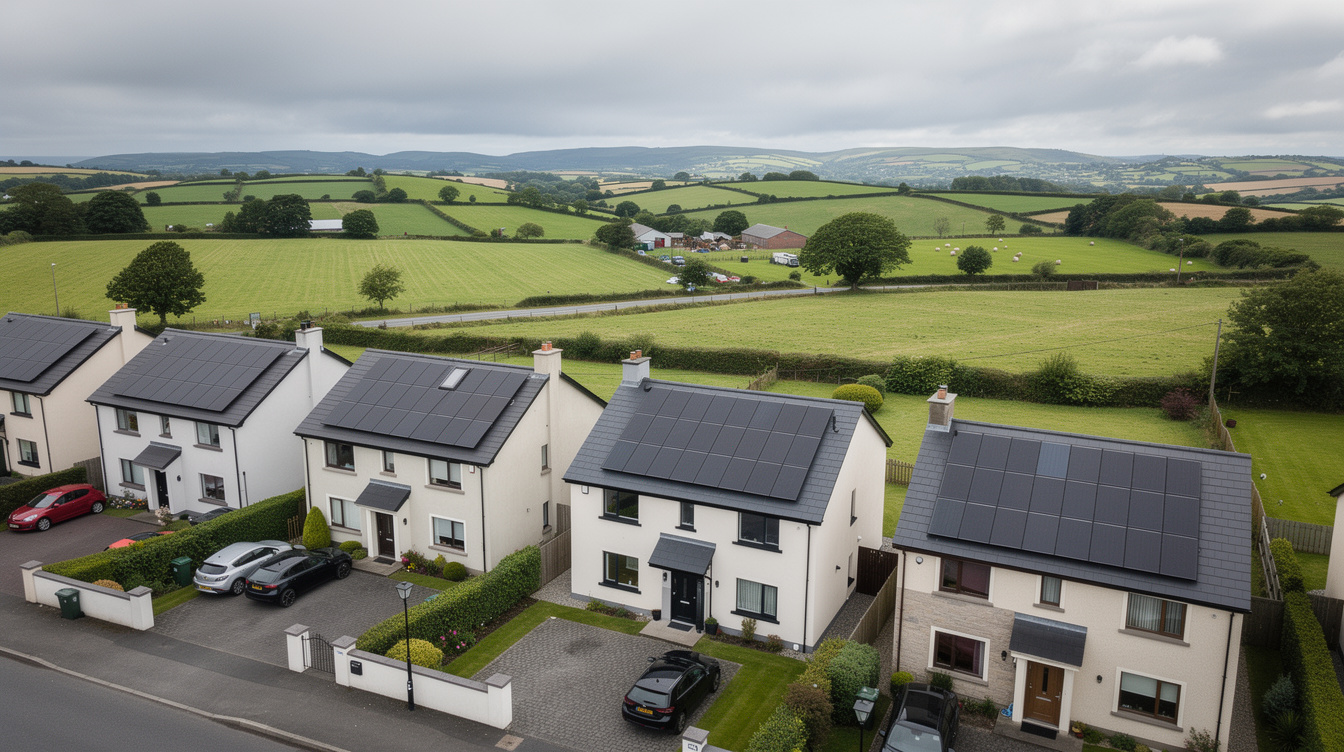
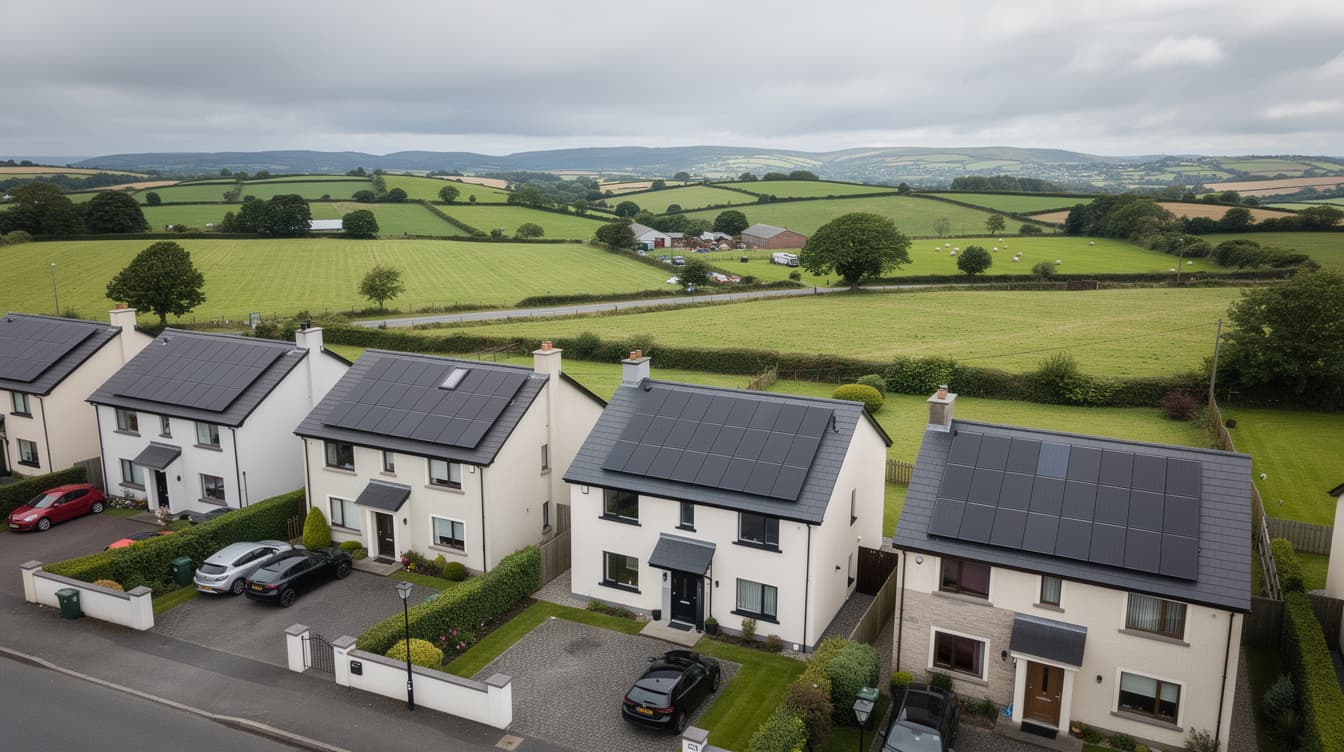
Two names dominate premium solar inverter conversations in Ireland: SolarEdge and Enphase. Both cost noticeably more than a mainstream Solis, Sungrow or GivEnergy string inverter — often €800–€1,500 more on a typical 4–6kWp home. The question is whether that premium is worth paying in an Irish climate, on an Irish roof, at Irish electricity prices in 2026. This guide answers it with numbers, not brochures.
Short answer
Enphase makes sense on shaded, split-orientation or complex Irish roofs — and if you want a 25-year everything warranty. SolarEdge makes sense if you want per-panel monitoring at a lower price point than Enphase, or a large battery-ready single hybrid. For a clean south-facing 3-bed with no shade, a mainstream hybrid string inverter (Sungrow, GivEnergy, Solis) usually beats both on payback.
How the two systems actually differ
Every solar PV system needs to convert DC electricity (what panels produce) into AC electricity (what your ESB Networks connection uses). Where that conversion happens is the whole argument.
Enphase puts a small microinverter behind every single panel. Each panel runs independently, produces its own AC, and reports its own numbers back to a gateway called the Envoy (now called IQ Gateway). If one panel is shaded, dirty or failing, only that panel drops output. If one microinverter dies, only that panel goes offline — the rest of the array keeps producing.
SolarEdge keeps a central inverter in your attic or plant room but adds a DC power optimiser to each panel. The optimiser does panel-level MPPT (Maximum Power Point Tracking), then sends the tuned DC up the string to one big inverter that does the DC-to-AC conversion. You get per-panel monitoring and much better shade tolerance than a plain string inverter — but if the central inverter fails, the whole array stops.
A conventional hybrid string inverter (Sungrow, GivEnergy, Solis, GoodWe) does neither. All panels on a string share one MPPT, so the shadiest panel drags down the rest of the string. That’s fine on an unshaded roof and worse on a complicated one.
Price in Ireland, 2026: what a real quote looks like
Prices below are what we’re seeing in real Irish quotes across Munster, Leinster and Connacht in mid-2026 for a typical 4kWp domestic system (10–12 panels, 5–10kWh battery optional). Grant is the €1,800 SEAI Solar PV grant. 0% VAT on residential PV runs until 31 December 2026.
| System | Before grant | After €1,800 grant | Notes |
|---|---|---|---|
| 4kWp + Sungrow / GivEnergy hybrid | €6,800–€8,400 | €5,000–€6,600 | Mainstream, no per-panel monitoring |
| 4kWp + SolarEdge hybrid + optimisers | €7,800–€9,600 | €6,000–€7,800 | +€900–€1,200 over mainstream |
| 4kWp + Enphase IQ8 microinverters | €8,400–€10,200 | €6,600–€8,400 | +€1,200–€1,800 over mainstream |
| Add 5kWh AC-coupled battery (Enphase IQ Battery 5P) | +€3,800–€4,600 | n/a (battery not grant-eligible) | Enphase battery is AC-coupled — simpler retrofit |
| Add 5–10kWh DC-coupled battery (SolarEdge Home Battery) | +€3,400–€5,200 | n/a | DC-coupled — ~2–3% round-trip advantage |
Two things drive the premium: hardware cost (a microinverter is roughly €150–€190 per panel installed; a SolarEdge optimiser is €40–€70 per panel plus the more expensive central inverter) and labour (Enphase in particular takes longer to commission because every microinverter is individually paired to the gateway).
Warranty: where Enphase pulls ahead hardest
This is the single biggest reason Irish homeowners pay the Enphase premium.
| Component | Enphase IQ8 | SolarEdge Home Hub | Sungrow / Solis hybrid |
|---|---|---|---|
| Inverter / microinverter | 25 years | 12 years (extendable to 20/25 for a fee) | 10–12 years |
| Optimisers (SolarEdge only) | n/a | 25 years | n/a |
| Battery (own brand) | 15 years / ~6,000 cycles | 10 years / 70% capacity | Varies by brand (Pylontech, BYD, Dyness) |
A domestic inverter in an Irish attic is easily the most failure-prone component in a solar system. A single central-inverter failure at year 13 in an Irish home outside warranty is a €1,500–€2,200 repair. Enphase’s 25-year cover moves that risk entirely off the homeowner. SolarEdge’s extended-warranty upgrade (roughly €150–€350 depending on inverter size and term) closes most of that gap and is worth quoting for at install.
Shading and orientation: the case for microinverters in Ireland
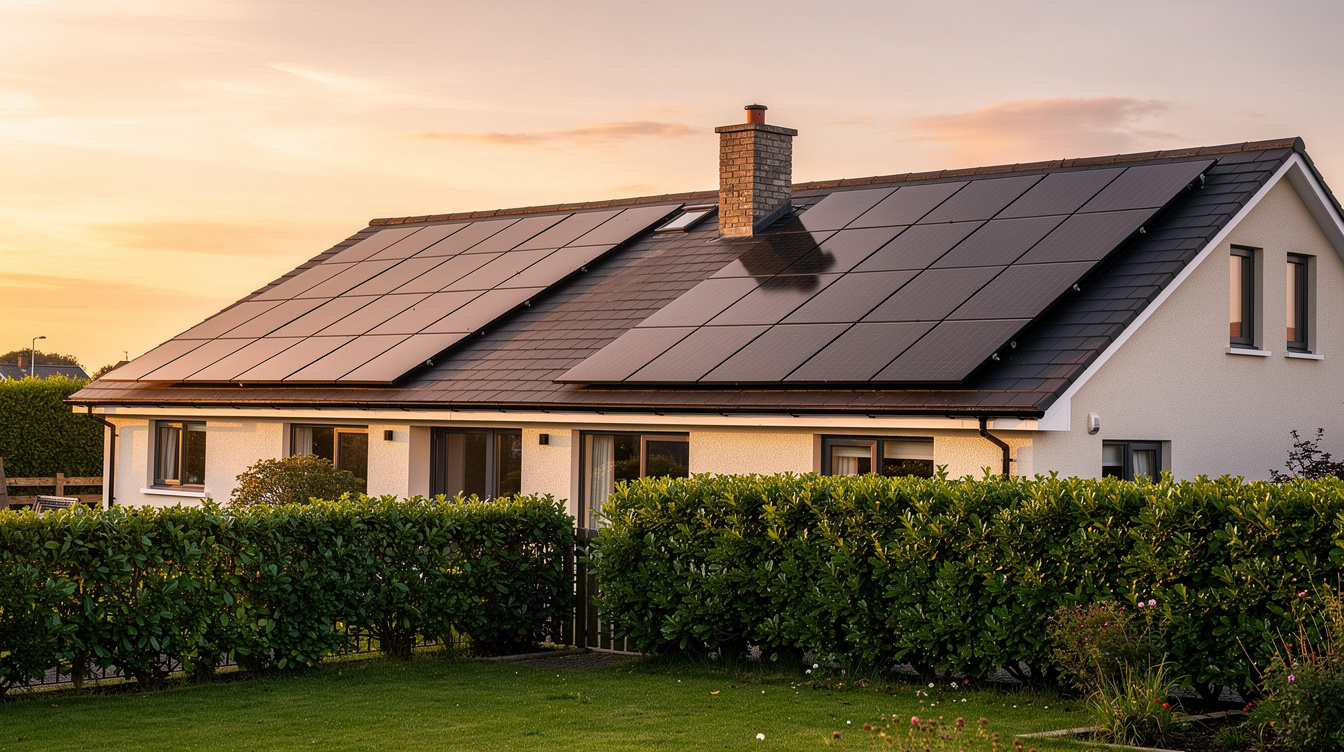
Most Irish roofs aren’t perfect. A typical semi-detached in Dublin, Cork, Galway or Limerick has at least one of: a chimney casting a wedge of morning shade, a dormer forcing panels onto two orientations (typically SE + SW), a neighbouring tree, or a solar-hot-water panel already occupying prime south-facing tile space.
On a clean, unshaded, south-facing roof with a single string, Enphase and SolarEdge and a plain string hybrid all produce roughly the same annual kWh. On any of the roof scenarios below, microinverters or optimisers pull ahead.
| Roof scenario | Enphase gain vs plain string | SolarEdge gain vs plain string |
|---|---|---|
| Clean, single orientation, no shade | 0–2% | 0–2% |
| Two orientations (SE + SW hip roof) | 4–7% | 3–6% |
| Chimney or vent pipe shade (partial daily) | 6–10% | 5–9% |
| Heavy shade (tree, neighbour’s dormer) | 10–15% | 8–13% |
At Irish tariff levels (28–36 c/kWh imported, 20 c/kWh CEG export as of July 2026), an extra 400–600 kWh per year on a shaded roof is €100–€180 of value annually. Over a 25-year system life that’s €2,500–€4,500 — well ahead of the typical €1,200–€1,800 hardware premium.
The counter-argument: if your roof is clean and south-facing, that same €1,500 buys you a bigger array. Adding two extra 440W panels to a plain string install often produces more kWh over 25 years than upgrading to microinverters on a smaller array.
Safety and Irish regulations
ESB Networks’ NC6 process for domestic PV connections is inverter-agnostic — SolarEdge, Enphase and mainstream hybrids are all G99-certified and all approved for domestic export. Two Irish-specific safety notes worth knowing:
- Rapid shutdown. Enphase microinverters shut down the panel-level AC as soon as the grid drops. There is no live 400V DC on the roof, ever. This is a genuine safety win for firefighters and for anyone working on the roof later. SolarEdge’s SafeDC feature drops the string voltage to ~1V per optimiser on grid loss — also very safe, and materially better than plain string.
- DC arc-fault detection. A plain string inverter carries hundreds of volts of DC from the roof to the inverter location. DC arc faults are the leading cause of rare-but-real solar fires. Enphase eliminates DC on the roof entirely. SolarEdge reduces it to per-optimiser levels. Both are safer than plain string.
Monitoring: what you actually see on your phone
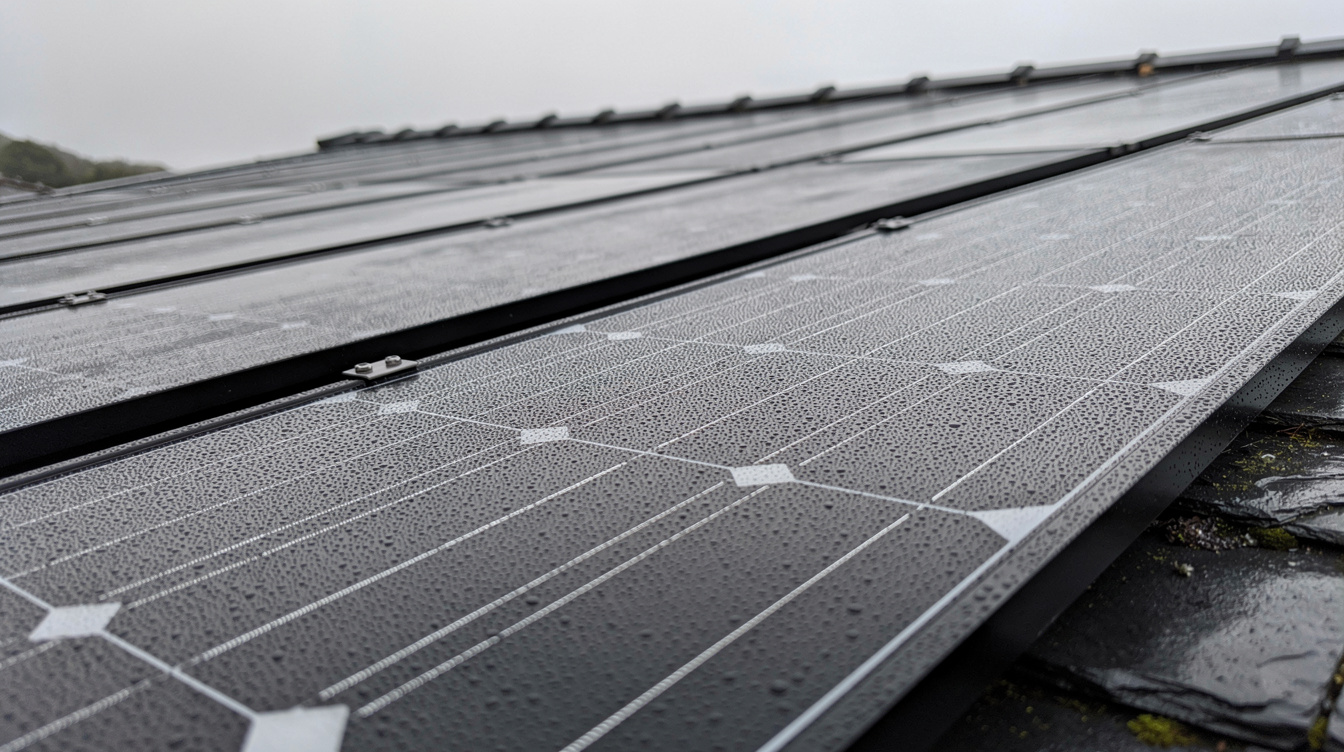
Both systems ship excellent monitoring — genuinely a differentiator over Solis/Sungrow’s more basic apps. Enphase App and mySolarEdge both show:
- Per-panel production, live
- Historic daily / monthly / yearly kWh
- Self-consumption vs export split (with a CT clamp on the tails)
- Battery state of charge and cycle history
- Fault alerts — you know a panel has under-produced before your installer does
For a homeowner who wants to actually understand what their solar is doing, this alone can justify the premium. Solis and GivEnergy have improved a lot, but per-panel data (not per-string) is a real quality-of-life feature.
Which one for an Irish home in 2026?
Pick Enphase if:
- Your roof has genuine shade, multiple orientations, or a chimney/dormer complication
- You value the 25-year microinverter warranty and want the least homeowner risk
- You’re planning to add an EV or heat pump later and want the modular AC-coupled battery flexibility (add batteries incrementally, no DC re-wiring)
- You have a listed / protected structure where roof re-work in year 15 would be a nightmare — installing 25-year electronics up front is cheaper than the alternative
Pick SolarEdge if:
- You want per-panel monitoring and shade tolerance but at a lower price than Enphase
- You’re installing a bigger battery (8–15kWh) and value the DC-coupled efficiency edge
- Your installer has strong SolarEdge experience — commissioning and after-sales matter more than brand
- You buy the extended inverter warranty at install so the 12-year gap is closed properly
Skip both and use a mainstream hybrid string if:
- Your roof is one plane, south-facing, unshaded, single string
- You want maximum kWp for your budget — use the €1,200–€1,800 saved to add two more panels or a larger battery
- You’re comfortable with per-string (not per-panel) monitoring
Finding installers in Ireland who fit Enphase and SolarEdge
Not every installer works with both brands. Enphase has fewer certified installers in Ireland than SolarEdge does — commissioning-tool licences and training tie installers to one ecosystem more than the other. Before signing, ask:
- How many Enphase / SolarEdge systems have you commissioned in the last 12 months?
- Who handles a warranty replacement if a microinverter or optimiser fails in year 8 — you or the wholesaler?
- Do you provide handover of the monitoring account, or are you the account owner?
- What’s your process if the central SolarEdge inverter fails and needs replacing?
Any installer worth hiring will answer these clearly. If they hedge, ask a second installer.
Ready to compare quotes?
Tell us your roof (orientation, shade, size) and we’ll match you with SEAI-registered installers who work with SolarEdge, Enphase and mainstream hybrid options — so you can see three real quotes side by side.
FAQs
Are SolarEdge or Enphase eligible for the €1,800 SEAI grant? Yes. The grant applies to the whole PV system regardless of inverter choice. As long as your installer is SEAI-registered and you meet the standard grant conditions (owner-occupier, built before end-2021 for the full grant, no prior PV grant at MPRN), both qualify.
Does 0% VAT apply to Enphase and SolarEdge kit? Yes. The 0% VAT rate on domestic PV supply-and-install (in effect until 31 December 2026) applies to any qualifying residential system, whichever inverter brand is used.
Can I mix a SolarEdge inverter with an Enphase battery, or vice versa? Not really. Both ecosystems are designed to be closed. A SolarEdge inverter pairs best with the SolarEdge Home Battery; an Enphase array pairs best with an Enphase IQ Battery. Cross-brand AC-coupled combinations are possible in principle but add commissioning complexity and can void warranties. Pick an ecosystem and stay in it.
What about future EV charger and heat-pump load? Both platforms have EV-charger integrations (Enphase IQ EV Charger, SolarEdge Home EV Charger) that can dynamically match charging to solar surplus. If you’re planning an EV or a heat pump within 5 years, factor that in when sizing the inverter and battery. See our heat pumps + solar and 3-phase electricity guides.
Is a plain string inverter genuinely fine for an Irish home? Yes — for most homes. See our full inverter guide and cost guide for how to decide.
Related Articles
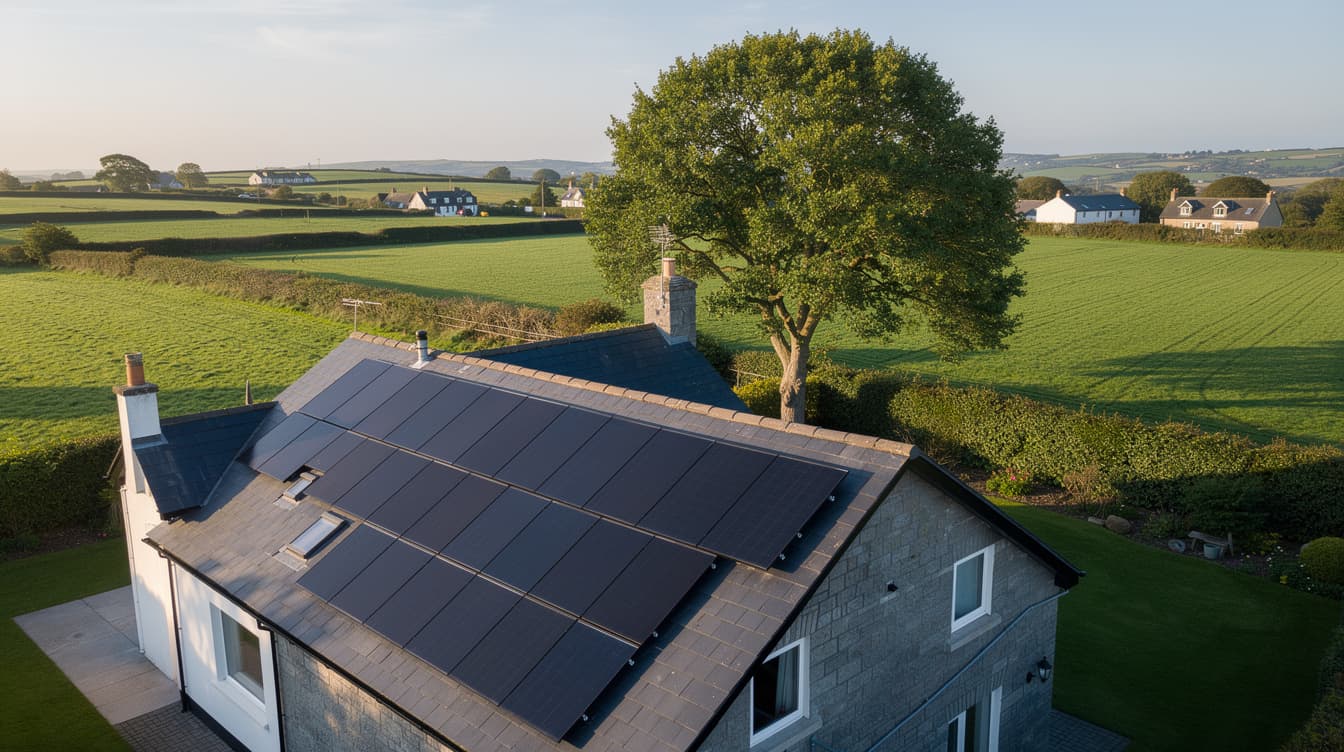
Solar Panel Shading Ireland 2026: Trees, Chimneys & Real Output Loss
How much output do you lose from trees, chimneys or dormers shading Irish solar panels? 2026 guide with mitigation costs and decision tree.
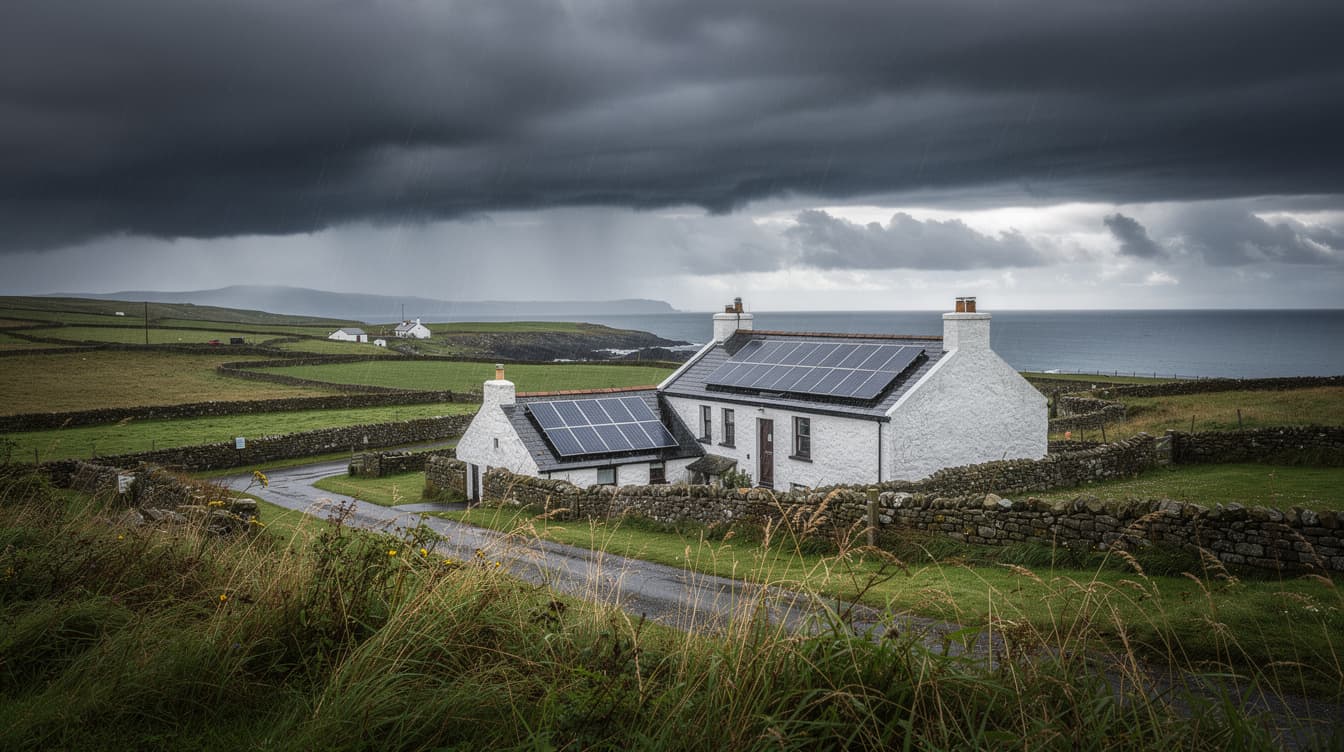
Storm & Lightning Damage to Solar Panels Ireland 2026: Insurance, Surge Protection, Repairs
How Irish solar systems survived Storm Éowyn's 183km/h gusts. Wind loading zones, surge protection costs, home insurance gotchas, before-storm checklist.
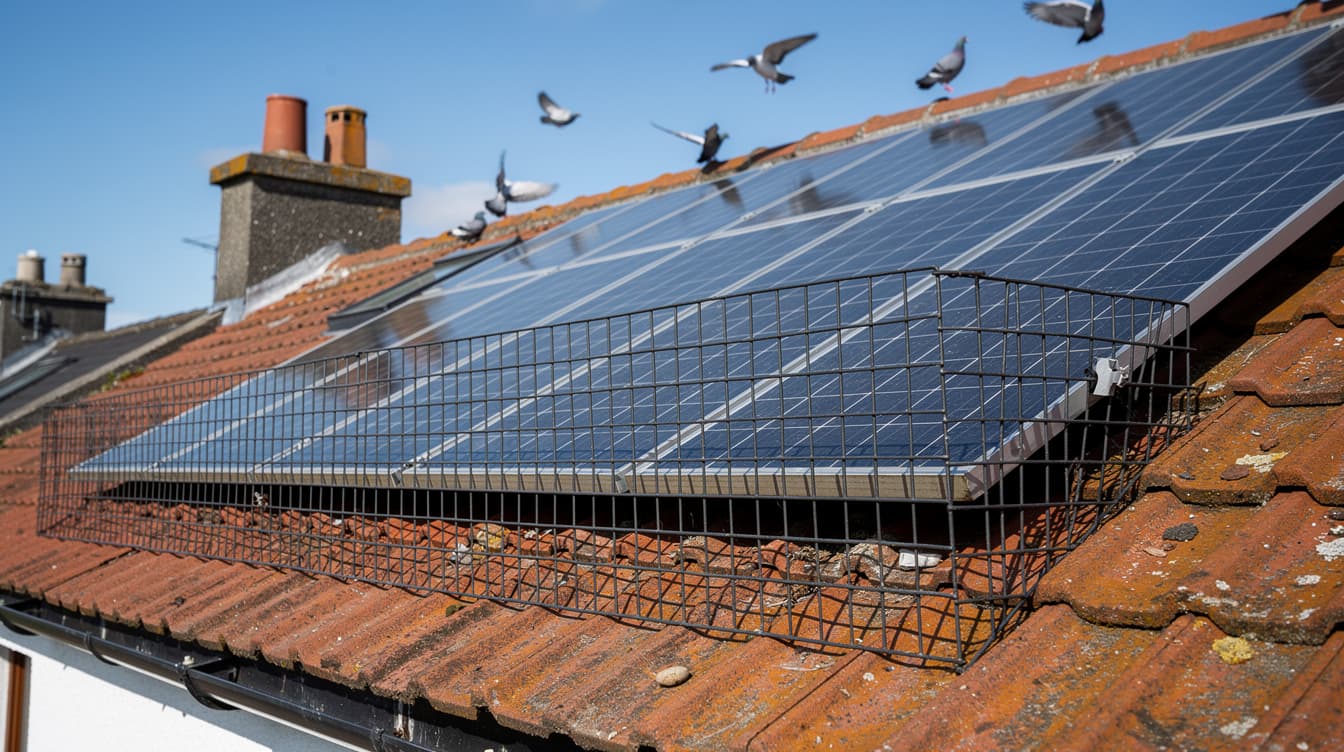
Bird Proofing Solar Panels Ireland 2026: Pigeon Guards, Costs & DIY vs Pro
Pigeons nest under solar panels — here's how to stop them. Costs, mesh vs skirting, install-day vs retrofit prices, DIY safety notes.