
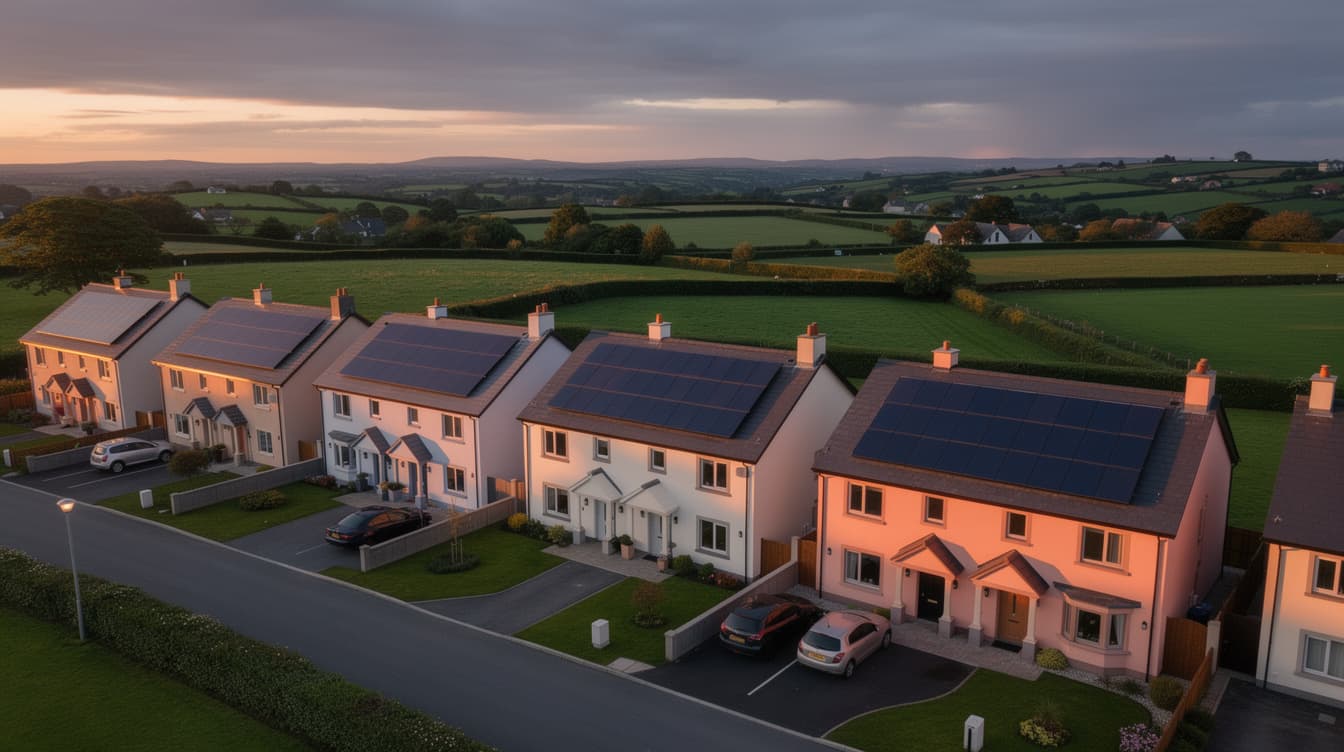
Solar Panel Deals & Discounts Ireland 2026 — Real Savings vs Sales Tactics
"Free solar panels." "0% finance for 10 years." "€3,000 off — this week only." Irish solar buyers are bombarded with offers, and the gap between a genuine deal and a sales-funnel trick has rarely been wider. In 2026 the headline numbers can mislead: a €2,500 "discount" is meaningless if the starting price was inflated, and "free panels" almost always means a 20-year power purchase agreement that costs you more than buying outright.
This guide pulls apart the most common solar offers running in Ireland right now, shows you how to verify a real saving, and lists the legitimate ways to cut your install cost – including grants, VAT relief, group-buying schemes, and timing your purchase to off-season pricing windows.
Quick Answer: Are Solar Panel Deals Real in Ireland 2026?
Yes – but most advertised "deals" stack discounts you're already entitled to (0% VAT, €1,800 SEAI grant) and present them as installer savings. Genuine extra savings come from: off-season timing (Nov–Feb, 5–10% lower quotes), group-buying schemes (5–8% off via collective bargaining), and installer end-of-quarter targets. Always compare three quotes for the same kWp size before judging any "deal."
The Seven Most Common "Deals" — and Whether They Save You Money
Below is a list of every common offer running in the Irish solar market in 2026, with the honest answer on whether it's a real saving or a repackaging of standard entitlements.
| Offer | Real Saving? | What You Actually Pay |
|---|---|---|
| "€1,800 instant grant deduction" | No – that's the SEAI grant you get automatically | Identical to any SEAI-registered installer |
| "0% VAT — this week only" | No – 0% VAT runs until 31 Oct 2026 by Revenue rule | Same VAT treatment everywhere |
| "Free solar panels — pay nothing" | No – usually a 20-year PPA, costs more long term | You pay for the electricity at a fixed rate for two decades |
| "€3,000 trade-in for old panels" | Sometimes – only if the starting price isn't inflated | Compare the post-trade-in price to standard market price |
| "End-of-quarter discount — March/June/Sep/Dec" | Yes – installers chase quarterly targets, 3–7% off realistic | Lower headline price, same spec |
| "Group-buy / community scheme" | Yes – if 10+ households commit, 5–8% group discount | Real bulk-buy saving from a single installer |
| "Off-season install (Nov–Feb)" | Yes – quotes typically 5–10% lower in winter | Lower install cost, slightly less production lost waiting |
The Discounts You Already Get — Don't Let Them Be Sold to You
Every Irish residential solar buyer is entitled to four cost reductions that are nothing to do with any individual installer. If a sales rep is presenting these as their offer, they're padding their price elsewhere.
1. The €1,800 SEAI Solar PV Grant
Every SEAI-registered installer can claim this on your behalf for any system 2 kWp and above, as long as you own a home built and connected to the grid before 1 January 2021 and have not previously claimed an SEAI Solar PV grant at the same MPRN. The grant amount is fixed by SEAI – no installer can offer "more grant." If you're not sure you qualify, the SEAI Grant Eligibility Checker gives you a yes/no in 60 seconds.
2. 0% VAT Until 31 October 2026
Since May 2023 the VAT rate on supply and installation of residential solar PV has been zero, and the Finance Act 2025 extended this until at least 31 October 2026. This is automatic on every domestic install. Any installer charging VAT on a residential job in 2026 is non-compliant – walk away.
3. SEAI's Microgeneration Support Scheme (Clean Export Guarantee)
Your electricity supplier must pay you for every kWh of solar you export back to the grid. The average rate in mid-2026 is 19c/kWh (down from 24c in 2024 and 21c in 2025). This isn't a discount on your install, but it reduces your effective payback by €100–€250 a year. Compare suppliers' export rates at switcher.ie before signing — the spread is currently 14c (SSE) to 24c (Energia).
4. Income Tax Exemption on Microgeneration Income
The first €400 of microgeneration income (Clean Export Guarantee payments) is tax-free every year through to 2026 inclusive. For a typical 4 kWp household exporting 1,500–2,000 kWh annually at 19c, this is essentially the entirety of your CEG income tax-free.
Get Three Real Quotes — No Pressure
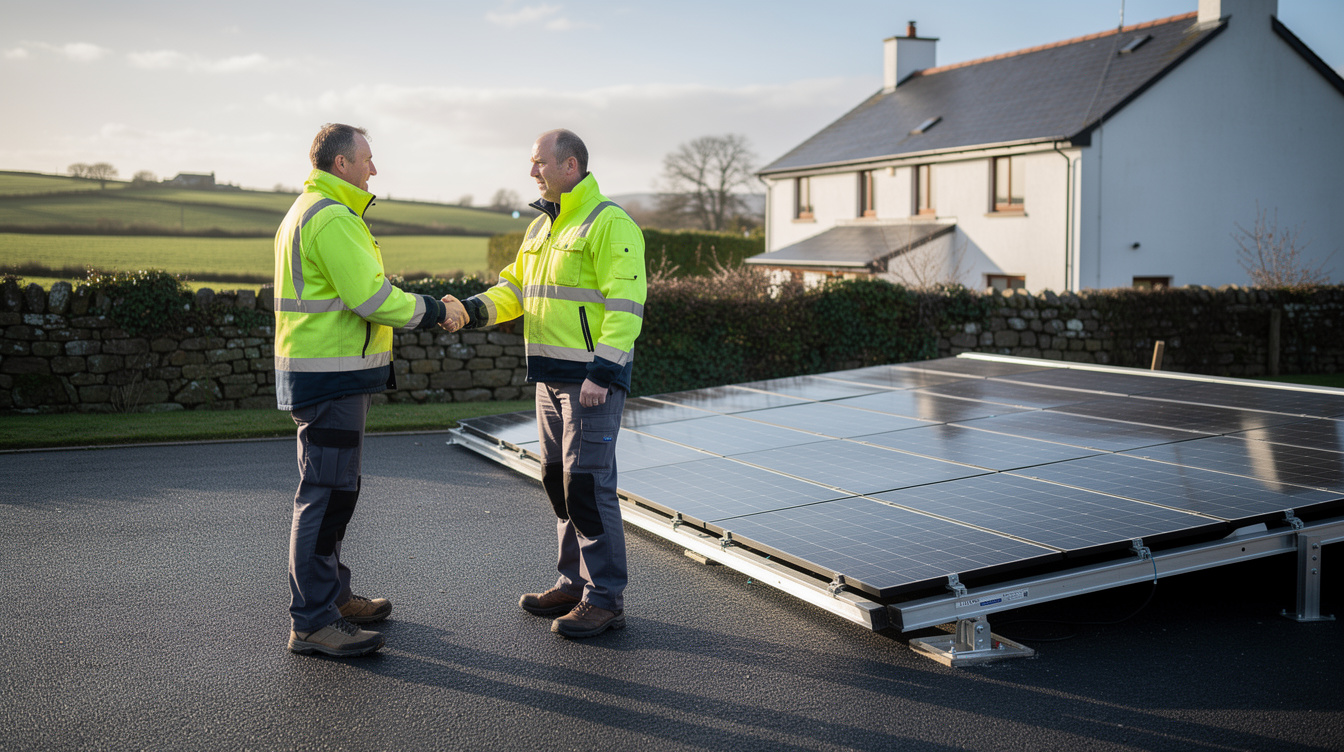
We send your details to up to three SEAI-registered installers in your area. You compare on like-for-like spec, then decide.
Group-Buying Schemes — Where the Real Group Discount Comes From
Group-buying is one of the few genuinely cheaper routes to solar in Ireland in 2026. Community energy groups (often a Tidy Towns committee, residents' association, or county SECs) aggregate 10–40 households into a single tender. Installers compete for the bundle and typically discount 5–8% off list prices for the scale of the order.
The largest current schemes are:
- Energy Communities Tipperary Cooperative (ECTC) – runs rolling group buys across the Munster region; quoted 6–7% off list in their 2025 round
- Dublin Community Energy – covers Dublin City Council and South Dublin, with batches twice yearly
- Kerry Sustainable Energy Cooperative – serves Kerry and West Limerick
- iCAN (Irish Community Action on Nature) – nationwide for Sustainable Energy Communities (SECs)
The catch: you give up choice of installer, and the price advantage is partly eaten by waiting (group rounds happen 2–3 times a year). If timing isn't critical and you're happy to take the scheme's selected installer, group-buy is a real 5–8% off market price.
What Group-Buy is NOT
Beware of "group offers" advertised by a single private installer to internet audiences. Genuine group-buy requires a non-profit aggregator (community group, SEC, Tidy Towns) tendering on behalf of named households. A solar company offering "€500 off when you and your neighbour both buy" is just a referral kickback, not a true group purchase.
Financing Offers — The Honest Comparison
"0% finance" is heavily advertised in 2026 Irish solar marketing. Sometimes it's real, often the cost is folded back into the headline price. Here's how to spot the difference.
| Financing Type | Typical Terms | Real Cost |
|---|---|---|
| SEAI Better Energy Home Loan | 3.7% APR via partner banks (AIB, BoI, EBS), up to €75,000, 10yr term | Cheapest credit available for solar in Ireland |
| Installer "0% finance" (subsidised) | Genuine 0% over 12–36 months, installer absorbs lender fee | Real saving only if headline cash price is same as non-financed quotes |
| Installer "0% finance" (inflated price) | 0% headline but cash price is 8–15% above market | More expensive than a normal credit union loan + cash discount |
| Credit union solar loan | 5.0–6.5% APR, up to €30,000, 5–7yr term | Higher rate than SEAI loan but no broker, fast approval |
| Power Purchase Agreement (PPA) | "Free" panels, you pay 15–22c/kWh to PPA owner for 20yrs | Total cost €14,000–€22,000 over 20yrs vs €6,000–€8,000 outright |
The 0% Finance Test
To tell whether a "0% finance" offer is real, ask the installer for two prices on the same job: cash, and 0% finance over 36 months. If the cash price is meaningfully lower (3% or more), the "0%" is funded by inflating the financed price. If they're the same, you have a genuine subsidised offer – usually a short-term promo paid by the installer to win the lead.
When to Buy: The Off-Season Price Window
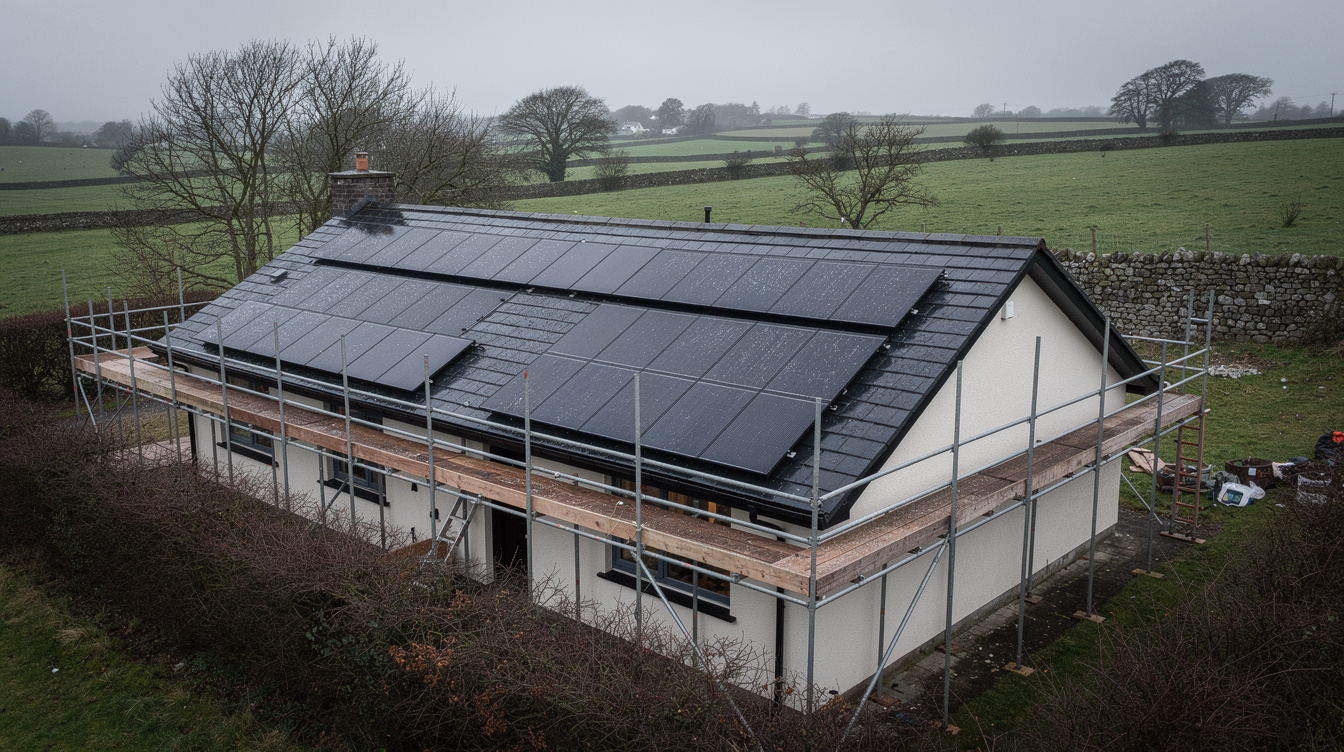
Irish solar installers price-track the season. From late October through February, demand drops sharply — consumer interest in solar peaks in spring when homeowners think about summer bills. Most installers will quote 5–10% lower in this window to keep their crews working.
The trade-off: you lose roughly €100–€200 of generation by installing in winter instead of waiting for March, but a 7% saving on a €7,500 system is €525 – comfortably ahead. November and January are the strongest months for negotiating leverage.
You also get faster turnaround: standard install lead times in March–June are 8–14 weeks; in November–January, 3–5 weeks.
Red Flags: Offers That Cost You More
"Free Solar Panels" — Almost Always a Trap
The "free solar" model running in Ireland in 2026 is a power purchase agreement (PPA): the company installs panels at their cost and sells you the electricity at a fixed long-term rate, typically 15–22c/kWh, for 20 years. Headline saving: €0 up front. Real cost: usually €14,000–€22,000 over 20 years for the same generation a €6,000–€8,000 outright purchase would give you.
Worse, PPAs make the house harder to sell (you don't own the panels), restrict alterations, and you get none of the SEAI grant value — the PPA owner claims it. Buy outright if you can afford the up-front cost or take an SEAI Better Energy loan; avoid PPAs unless you have no other option.
"Get 10 Quotes for the Best Price"
Compare three quotes from SEAI-registered installers, not ten. Each additional quote past three brings diminishing returns and gives the impression that you're shopping aggressively, which makes installers less willing to drop price further. Three quotes is the sweet spot — enough to spot inflated outliers, not so many that everyone treats you as a tyre-kicker.
"Pay 50% Deposit on Signing"
Reputable Irish solar installers ask for 20–30% deposit, with the balance on commissioning. A 50%+ deposit demand is a cash-flow problem at the installer; a 100% upfront demand is a red flag for insolvency risk. Several Irish solar firms collapsed in 2024 and 2025 leaving customers with paid-for systems that were never installed. The Microgen Trust scheme (similar to UK MCS) tracks installer financial health – check before signing.
"This Price Is Only Valid Today"
Pressure-selling tactics. SEAI grant amounts and 0% VAT are fixed by government policy until October 2026 minimum. No legitimate installer needs you to sign today. If you're asked to commit on the first call without a written quote and a 5–7 day cooling-off period, walk away.
The Real Path to Lowest Cost: Three-Step Method
Forget headline offers. Here's the method that actually delivers the lowest legitimate total cost for an Irish solar install:
- Get three written quotes from SEAI-registered installers for the same kWp size and battery option. Confirm each quote is net of grant and includes 0% VAT.
- Compare on like-for-like spec: panel brand and wattage, inverter brand, mounting system, scaffolding included or extra. Cheap quotes often skip scaffolding or substitute cheaper panels.
- Time your decision: if the quotes arrive in March–June, ask each installer for their best November price as a comparison. Then choose the timing that suits you.
Once you've picked an installer and a time, you've already captured every legitimate discount: SEAI grant, 0% VAT, competitive bidding, and (if applicable) off-season pricing. Anything more is either a group-buy scheme (if you can find one local to you) or a genuine end-of-quarter discount from your chosen installer.
Ready to Get Three Honest Quotes?
Skip the sales calls. We connect you with three vetted SEAI-registered installers for like-for-like comparison.
FAQ: Solar Panel Deals Ireland 2026
Are "free solar panel" offers ever a good deal?
Rarely. The PPA model (the most common "free solar" structure in Ireland) typically costs the household €14,000–€22,000 over 20 years for the same generation that a €6,000–€8,000 outright purchase would deliver. The exception is older homeowners who don't want a 4–7 year payback timeline and prefer immediate small monthly savings with no up-front cost – but even then, the SEAI Better Energy loan at 3.7% delivers a better total outcome.
Is December a bad time to install solar?
No. You'll lose roughly €120 of December–January generation by installing in winter vs March, but installers' off-season pricing typically saves €400–€700 on a 4 kWp job. Net: you're ahead by €280–€580, and your install slot is 5–10 weeks faster than the spring queue.
Should I go with the cheapest of three quotes?
Only if the spec is identical. Cheap quotes commonly substitute lower-wattage panels (370W vs 440W), no-name inverters, or skip scaffolding (typically a hidden €500–€800). Re-quote everyone for the same spec sheet, then take the lowest of those re-quotes.
Are credit union loans a good way to finance solar?
Better than installer financing for most buyers. Credit union solar loans run 5.0–6.5% APR with no broker fees and 24–48 hour approval. The SEAI Better Energy Home Loan at 3.7% is cheaper still but requires you to use one of the partner banks (AIB, BoI, or EBS) and adds 2–3 weeks to the timeline.
What's the typical solar installer profit margin — how much room to negotiate?
Installer gross margin on a residential job is typically 12–20%. After tradesman labour, scaffolding, panel/inverter cost, and fixed overhead, a realistic discount room is 4–8% off list. Anyone claiming to give you "30% off" is just discounting from an inflated list price.
Bottom Line
The cheapest legitimate path to solar in Ireland in 2026 is: three quotes from SEAI-registered installers, all priced net of grant and 0% VAT, all on identical kWp/battery spec, timed to a November–February install if your schedule allows. That gives you the €1,800 grant, 0% VAT, competitive market price, and a 5–10% off-season discount — all the real savings available in the market today, with no PPA traps and no inflated-then-discounted nonsense.
If a community group near you is running a current bulk-buy, that can knock a further 5–8% off, but only commit if the installer they've selected has good reviews and a clean financial record.
Everything else — "free panels," "today-only discounts," "0% finance" on inflated prices — is theatre, designed to look like a deal while paying the same or more than a straightforward cash purchase from a reputable local installer.
Related Articles
Solar Panels Cavan 2026 — Costs, Grants & Installers
Solar Panels Cavan 2026: drumlin east-west arrays, Virginia M3 commuter EV maths, Lough Sheelin lakeshore planning, Bailieborough dairy TAMS 3 payback.
Solar Panels Donegal 2026 — Costs, Grants & Installers
Solar Panels Donegal 2026: pricing by area, Atlantic salt-spec mounting, Lifford basin TAMS 3 dairy maths, Wild Atlantic Way B&B economics, Strabane comparison.
Solar Panels Tipperary 2026 — Costs, Grants & Installers
Solar Panels Tipperary 2026: pricing by micro-market, Tipp plain yields, Knockmealdown shadow, M7/M8 EV commuter maths, Golden Vale TAMS 3 dairy payback.