
UK Just Legalised Plug-In Solar Panels — Here's Where Ireland Stands (2026)
Yesterday, the UK officially legalised plug-in solar panels. As of 15 April 2026, any household in Britain can buy an 800W solar kit from Lidl or Amazon for around £400, plug it into a wall socket, and start generating electricity — no electrician, no paperwork, no permission. Meanwhile, in Ireland, doing exactly the same thing remains illegal without a certified electrician and an NC6 submission to ESB Networks. Here is where things stand, why the gap matters, and what Irish homeowners can actually do right now.
What Just Happened in the UK
On 15 April 2026, BS 7671 Amendment 4 — the update to the IET Wiring Regulations — came into force. This single regulatory change made it legal for UK householders to connect plug-in solar systems of up to 800W directly to a standard 13A wall socket without involving a qualified electrician.
The timeline moved fast:
- January 2026: The IET and BSI published Amendment 4, setting the 15 April effective date.
- March 2026: The UK government confirmed it was working with Lidl, Amazon, and other retailers to bring plug-in solar to shop shelves.
- 15 April 2026: Amendment 4 took effect. Sub-800W plug-in solar is now legal across the UK.
- Summer 2026 (expected): The complementary product standard certifying specific kits for the UK market is due around July, after which mass retail sales begin in earnest.
The UK government estimates a typical household could save between £70 and £110 per year, meaning a £400 kit pays for itself in roughly four years. Retailers including Lidl, Amazon, Iceland, and EcoFlow are confirmed, with Aldi, B&Q, Screwfix, and Toolstation expected to follow during 2026.
How These Systems Actually Work
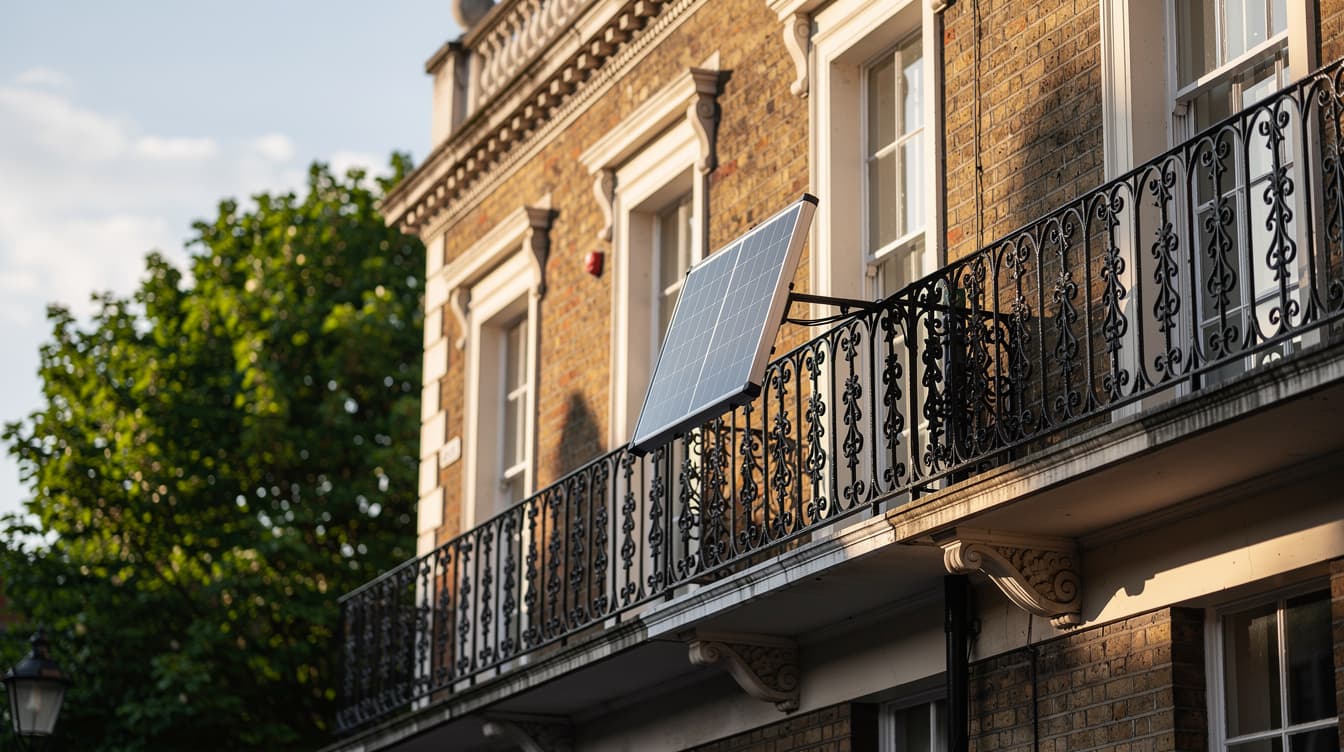
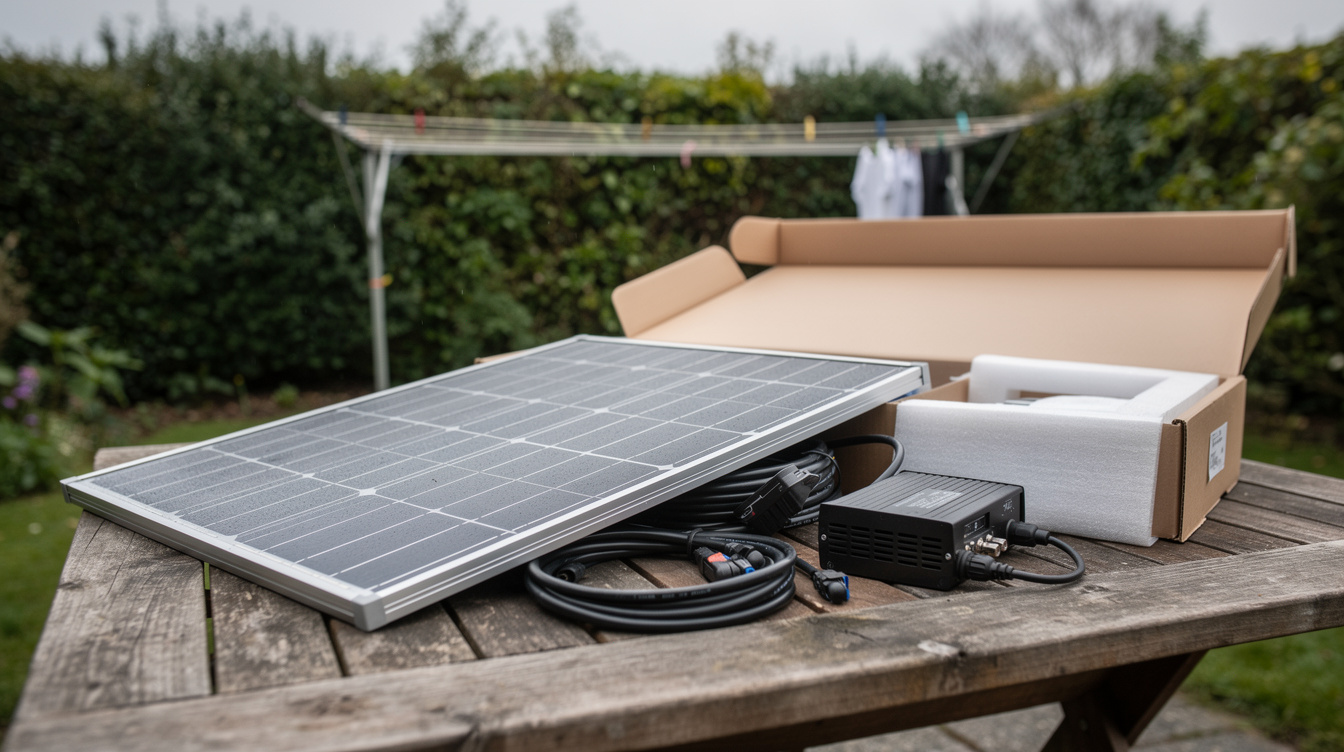
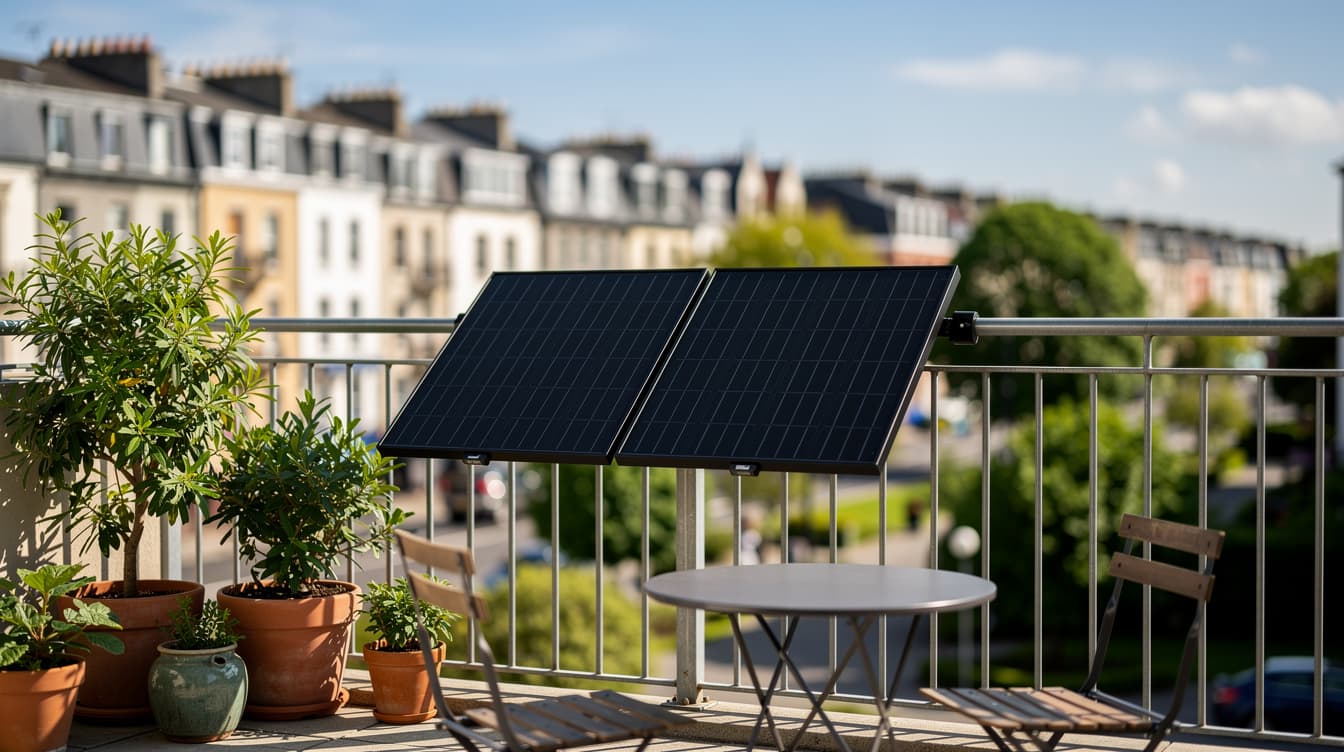
If you have not encountered plug-in solar before, the concept is disarmingly simple. A lightweight panel — typically two 400W modules — sits on a balcony railing, garden fence, or patio stand. A built-in micro-inverter converts the DC output to AC, and a standard plug feeds that electricity directly into your home circuit through any wall socket.
Your home uses that solar electricity first, reducing what you draw from the grid. Your meter slows down. Your bill drops. There is no battery, no complex wiring, and — in countries where it is permitted — no electrician required. The entire setup takes about 15 minutes.
This is not new technology. It has been mainstream in Germany for years. What changed in the UK is purely regulatory: the wiring rules now recognise that a sub-800W system feeding through a standard socket is safe.
Germany Already Proved This Works — at Scale
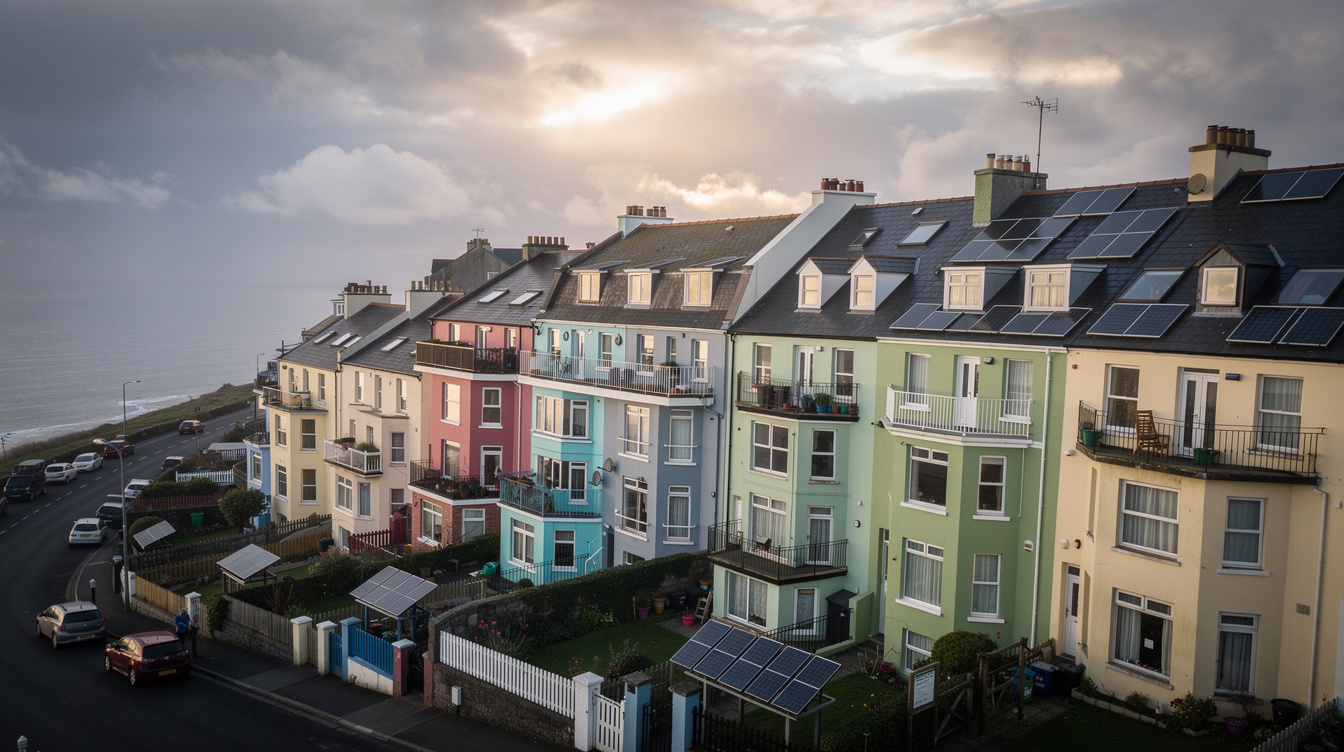
The UK did not take this step in a vacuum. Germany’s Balkonkraftwerk (balcony power plant) movement has been the proof of concept that regulators worldwide are now following.
The numbers are staggering. As of mid-2025, over one million balcony solar systems were registered in Germany’s Marktstammdatenregister — double the figure from just a year earlier. Between January and April 2025 alone, around 135,000 new systems were installed, adding 53.4 MW of distributed solar capacity. Experts believe the real total is even higher once unregistered systems are counted.
Germany simplified its rules in 2024, allowing registration through a single online form and raising the inverter limit to 800W. The result was an explosion in adoption — particularly among renters and apartment dwellers who had been locked out of rooftop solar entirely. An estimated 20–28% of new German installations now include battery storage as well.
The Netherlands, Austria, Belgium, Portugal, and Spain all permit plug-in solar in some form. The UK has now joined them. Ireland has not.
Want Solar Savings Now?
While Ireland catches up on plug-in rules, full rooftop solar is available today with up to €1,800 in SEAI grants.
Where Ireland Stands Right Now
Here is the blunt version: in Ireland, you cannot legally plug a solar panel into your wall socket and call it done. Even for a tiny 400W system, current regulations require:
- A Safe Electric registered electrician to wire the system into a dedicated circuit at your consumer unit (fuse board), with correct RCD protection.
- An NC6 notification form submitted to ESB Networks by your electrician before installation begins.
- A smart meter upgrade — ESB Networks will schedule this after processing the NC6, typically within four months.
There is no exemption for small systems. There is no simplified online registration like Germany offers. Whether your system is 400W or 4,000W, the process is fundamentally the same.
This adds significant cost. Where a UK consumer will shortly be able to buy an 800W kit for £400 (€470) and plug it in themselves, the equivalent legal setup in Ireland looks more like €1,000–€1,600 once you factor in electrician fees of €300–€800 on top of the hardware cost. For more detail on the full process, see our complete plug-in solar panels Ireland guide.
UK vs Ireland: The Comparison Table
| Factor | UK (from 15 April 2026) | Ireland (current rules) |
|---|---|---|
| Legal to plug in? | Yes — sub-800W, standard socket | No — electrician + NC6 required |
| Electrician needed? | No | Yes — Safe Electric registered |
| Grid notification? | No (sub-800W) | Yes — NC6 form to ESB Networks |
| Hardware cost (800W kit) | £400–£500 (€470–€590) | €600–€800 |
| Total installed cost | £400–£500 (DIY) | €1,000–€1,600 (with electrician) |
| Est. annual savings | £70–£110 | €120–€200* |
| Payback period | ~4 years | ~6–10 years |
| SEAI / grant support? | N/A | No — plug-in not eligible |
| Available for renters? | Yes — take it when you move | Technically yes, but process is a barrier |
*Irish savings are higher per kWh because Irish electricity prices (€0.35–€0.42/kWh) are significantly higher than UK rates.
What the Irish Government Has Said
There is a reason for cautious optimism. In recent Dáil proceedings, Energy Minister Darragh O’Brien stated the government is “very open” to plug-in solar panels and wants to make it “easier to deploy” renewable energy technologies.
Independent TD Barry Heneghan has been pushing the issue, highlighting that plug-in solar would be transformative for apartment dwellers — a group almost entirely shut out of Ireland’s solar revolution so far. His argument is straightforward: if a system can be bought and installed in 15 minutes in Berlin or (now) Birmingham, why should Dublin be different?
However, “very open” is not the same as “done.” No regulatory change has been announced. No timeline has been given. The Commission for Regulation of Utilities (CRU) and ESB Networks would both need to update their rules, and Ireland’s electrical safety standards (ET 101, the Irish equivalent of BS 7671) would likely need their own amendment.
Realistically, if the UK’s rollout goes smoothly this summer, Ireland could move on this by late 2026 or into 2027. But the history of Irish regulatory reform on micro-generation — we only got the Clean Export Guarantee in 2022, years behind most of Europe — suggests patience may be required.
Does the SEAI Grant Cover Plug-In Solar?
No. The SEAI solar electricity grant — worth up to €1,800 in 2026 — does not cover plug-in solar systems. To qualify, your installation must:
- Be carried out by an SEAI-registered installer
- Be in a home built and occupied before 2021
- Be a permanently installed rooftop or ground-mounted system
The grant rate is €700 per kWp for the first 2 kWp and €200 per kWp for the next 2 kWp. A typical 4 kW rooftop system costs around €6,500 before the grant, dropping to approximately €4,700 after it.
This is actually a critical point in the plug-in vs. rooftop comparison. While a plug-in 800W system might generate 600–750 kWh per year and save you €120–€200, a grant-supported 4 kW rooftop system generates 3,400–4,000 kWh per year and can save €800–€1,400 annually. The rooftop system also qualifies for the Clean Export Guarantee, paying you for surplus electricity exported to the grid.
Use our solar panel calculator to see what a full system would save at your address.
Ready to Go Solar?
Get your free personalised quote from SEAI-registered installers.
Who Would Benefit Most from Plug-In Solar in Ireland?
If and when Ireland legalises true plug-and-play solar, it will not replace rooftop installations — but it will unlock solar for groups currently left behind:
- Apartment dwellers: Ireland has roughly 200,000 apartments. Most cannot install rooftop solar due to shared ownership structures. A balcony panel changes everything. See our balcony solar panels Ireland guide for current options.
- Renters: You can take a plug-in system with you when you move. A rooftop installation stays with the property.
- Budget-constrained homeowners: Not everyone can afford €4,700 (after grant) for a rooftop system, even if the payback is better. A €400–€500 plug-in kit is a very different conversation.
- People wanting to start small: Plug-in solar is a low-risk way to experience solar energy before committing to a full installation.
For homeowners who can install rooftop solar, the maths still overwhelmingly favours a full system. But the point of plug-in solar was never to compete with rooftop — it is to bring solar to the millions who cannot access rooftop at all.
What You Can Do Right Now
You do not need to wait for regulatory change to start saving with solar in Ireland. Here are your options today, ranked by situation:
If you own your home
A full rooftop solar installation remains the single best investment you can make in your energy bills. With the SEAI grant covering up to €1,800, 0% VAT, and electricity prices above €0.35/kWh, payback periods are typically 4–6 years — after which you are generating free electricity for 20+ years. Get free quotes from SEAI-registered installers to see what is possible at your property.
If you rent or live in an apartment
Your options are more limited but not zero. You can legally install a plug-in system in Ireland today — it just requires an electrician and the NC6 process. If your landlord agrees (get it in writing), the total cost of €1,000–€1,600 for an 800W system is still worthwhile if you plan to stay for 5+ years. Our plug-in solar panels Ireland guide walks through the full process.
If you want to wait for rule changes
Keep an eye on Dáil proceedings and CRU announcements. If Ireland follows the UK, a simplified plug-in regime could arrive by late 2026 or 2027. In the meantime, consider whether the current process is worth it for your situation — or whether a full rooftop system might actually be the better long-term move.
If you are curious about costs
Our solar panel calculator gives you a personalised estimate based on your location, roof orientation, and electricity usage. It takes about 60 seconds and does not require any personal details.
Timeline: What Happens Next
| Date | Event | Relevance for Ireland |
|---|---|---|
| 15 Apr 2026 | UK BS 7671 Amendment 4 takes effect | Sets the precedent — plug-in solar now legal next door |
| Jul 2026 (est.) | UK product standard published | Certified kits hit shelves at Lidl UK, Amazon UK |
| Summer 2026 | Mass UK retail sales begin | Consumer pressure builds for Irish equivalent |
| Late 2026 | Earliest possible Irish regulatory review | CRU / ESB Networks consultation on simplified rules |
| 2027 | Realistic target for Irish rule change | ET 101 amendment or CRU exemption for sub-800W systems |
We will update this article as developments unfold. If you want to be ready the moment things change, register your interest here and we will keep you informed.
The Bigger Picture
The UK’s move is not just about solar panels — it is about who gets to participate in the energy transition. Rooftop solar has been a homeowner’s game. If you rent, live in an apartment, or simply cannot afford a €4,700 system, you have been largely excluded.
Germany showed that plug-in solar changes that equation. Over a million systems installed — overwhelmingly by renters and apartment dwellers — proves there is enormous pent-up demand from people who want to do something about their energy bills and their carbon footprint but have been blocked by cost or circumstance.
Ireland’s electricity prices are among the highest in Europe, averaging €0.35–€0.42 per kWh in 2026. That makes the case for accessible solar even stronger here than in the UK or Germany. The government says it is “very open” to change. The question is whether “very open” translates into action before another year passes.
In the meantime, the solar options available in Ireland today — from Lidl-style plug-in kits (installed legally with an electrician) to full SEAI-grant-supported rooftop systems — are saving Irish households hundreds to thousands of euro every year. The technology is proven. The savings are real. The only question is which path is right for you.
Find Out What Solar Could Save You
Free, personalised quotes from verified SEAI-registered installers across Ireland.
Related Articles
Plug-In Solar Panels Ireland 2026: Complete Guide to Balcony & Portable Solar Systems
Plug-in solar panels in Ireland: compare top kits from €310-€995, learn legal requirements & expected output. Find out if they're worth it!
Balcony Solar Panels Ireland 2026: A Complete Guide for Apartments & Renters
Complete guide to balcony solar panels in Ireland. Costs, regulations, best kits, savings and whether plug-in solar is worth it for apartments.
How Long Do Solar Panels Last in Ireland? Lifespan, Warranties & What Actually Wears Out
Solar panels last 25-35 years in Ireland. Learn about degradation rates, inverter replacement, battery lifespan, warranties, and 30-year cost of ownership.