
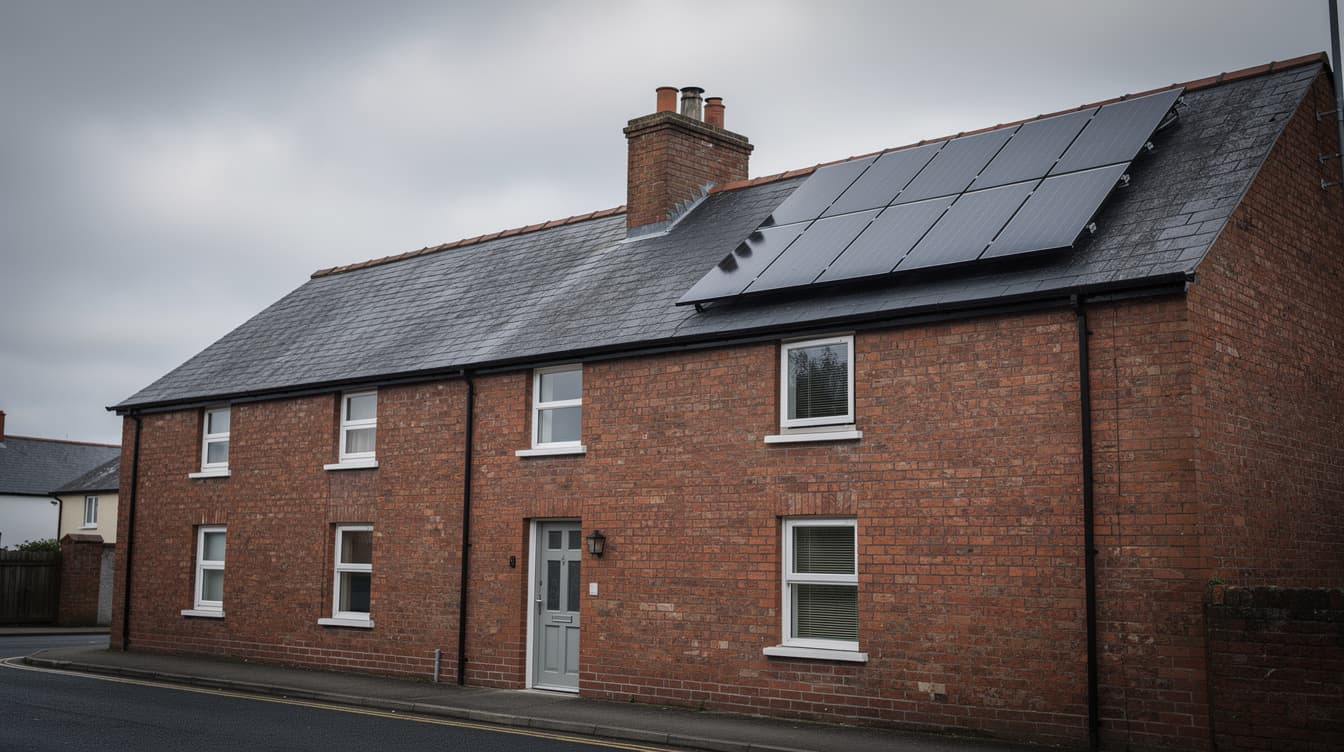
2kW Solar System Ireland 2026: Cost, Suitability & Payback for Small Homes
A 2 kW solar system is the smallest install most Irish contractors will fit. It's four or five panels, a small hybrid inverter, and roughly €3,500–€4,800 before the SEAI grant. For the right home — a small terrace, a Georgian townhouse with limited roof, a granny flat, or a one- or two-person household — it can be a smart, right-sized entry into solar. For most family homes, it's undersized. This guide covers when a 2 kWp array is the correct choice in Ireland in 2026, what it produces, what it costs installed, and how the numbers compare to going straight to 4–5 kWp.
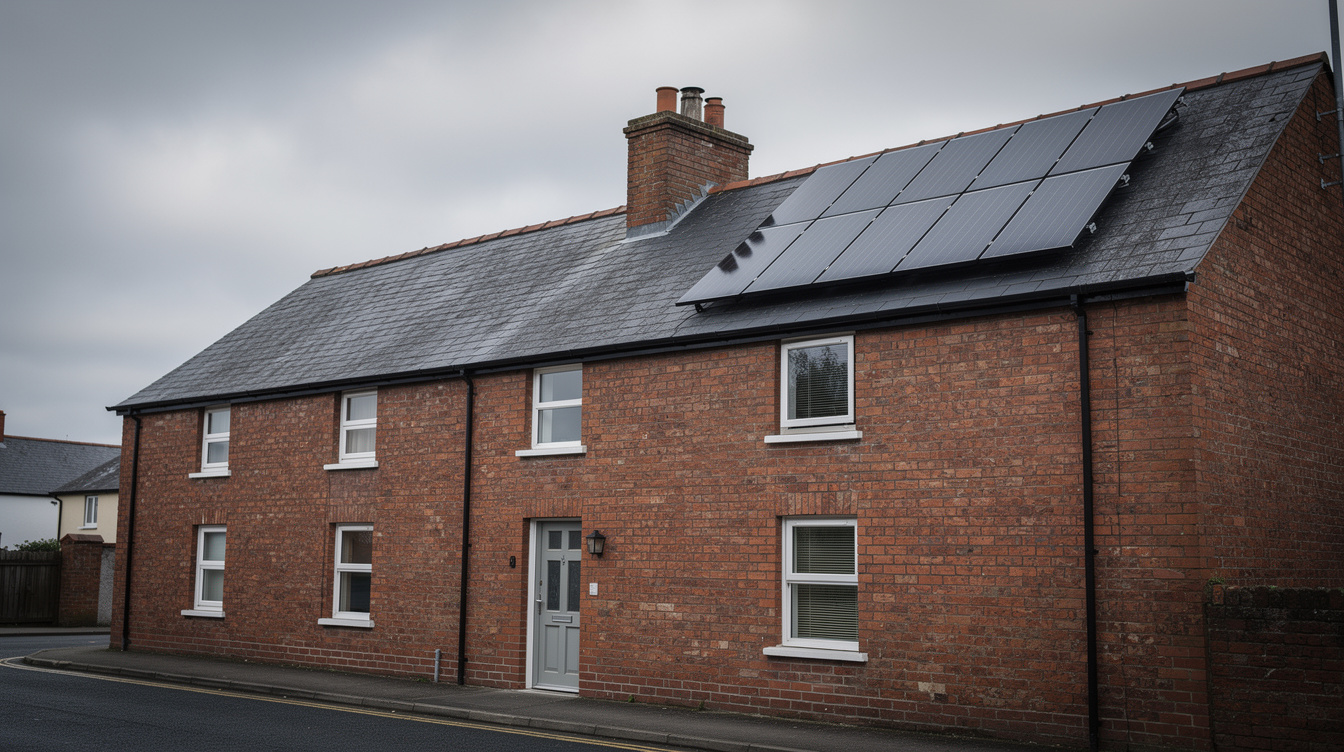
What "2 kW" actually means
2 kWp (kilowatt-peak) is the nameplate DC output of the panels under lab conditions (1,000 W/m² irradiance, 25°C cell temp). It's roughly:
- 4 × 500 W panels (larger modern format), or
- 5 × 400 W panels (older/smaller format).
Physical footprint on the roof: about 10–12 m² — roughly two king-size mattresses side by side. That's small enough to fit on a modest terraced roof, a rear-facing dormer, or even a garden shed with a suitably framed pitched roof.
How much a 2 kW system actually generates in Ireland
Using PVGIS 5.3 modelling for the Republic of Ireland (average of Dublin, Cork, Galway, and Athlone stations) with a south-facing 35° pitch and modern (2024–2026 vintage) panels, expect:
| Orientation | Annual kWh | Peak month | Worst month |
|---|---|---|---|
| South, 35° | 1,800–1,900 | May: 260 kWh | December: 45 kWh |
| South-east or south-west, 35° | 1,720–1,820 | May: 245 kWh | December: 42 kWh |
| East or west, 35° | 1,530–1,650 | May: 220 kWh | December: 38 kWh |
| Flat (5°) | 1,660–1,780 | June: 250 kWh | December: 30 kWh |
For context: the average Irish home uses 4,200 kWh/year (CRU 2025 figure). A 2 kW south-facing array covers roughly 43% of annual household electricity if you self-consume everything — which of course you won't, because generation and use don't line up perfectly. In practice, expect it to displace 30–38% of your bill in year one, more if you shift laundry, dishwasher, and immersion into daylight hours.
Who a 2 kW system actually suits
The good candidates for a 2 kWp install in Ireland:
- 1- or 2-person household using under 3,500 kWh/year.
- Small terraced house or Georgian townhouse where the roof geometry can't take more.
- Granny flat, converted garage, or annex with its own meter and modest load.
- Retired couple already careful with electricity — a big array would export most of the summer generation at 20c/kWh via the Clean Export Guarantee (CEG), which is worse than self-consumption at 40c/kWh but still fine.
- Budget-constrained homeowner who wants solar now, more later — the SEAI grant conditions allow one grant per MPRN, so a small install today can be extended later out-of-pocket.
2 kWp is not the right size for a typical 3- or 4-bedroom family home. If you have an EV, heat pump, or electric shower running daily, aim for 4–6 kWp instead. Our panel-count guide walks through the sizing logic.
Not sure what size system fits your home?
Get a free quote from an SEAI-registered installer who can size a system to your roof and usage.
What a 2 kW system costs in Ireland (2026)
Based on quotes collected across SEAI-registered installers in July and early August 2026:
| Configuration | Panels & inverter | Gross installed price | SEAI grant | Net cost |
|---|---|---|---|---|
| 2 kWp, no battery | 4 × 500W + 3 kW inverter | €3,600–€4,900 | €700 (2 kWp band) | €2,900–€4,200 |
| 2 kWp + 5 kWh battery | 4 × 500W + hybrid inverter + LFP | €7,800–€9,600 | €700 (2 kWp band) | €7,100–€8,900 |
| Comparison: 4.4 kWp, no battery | 10 × 440W + 5 kW inverter | €7,900–€9,300 | €1,800 (max) | €6,100–€7,500 |
Important: the SEAI grant is not a flat €1,800. It's a tiered structure:
- Up to 2 kWp: €700
- Above 2 kWp up to 4 kWp: additional €300 per kWp
- Total capped at €1,800
So a 2 kWp system captures only €700, while a 4+ kWp system captures the full €1,800. That means for many homeowners the net cost of jumping from 2 to 4.4 kWp is only about €2,500–€3,500 — and the extra kWh is essentially free money over the 25-year panel life.
Payback maths for 2 kW in 2026
Take a middle-of-market 2 kWp install at €3,500 net after grant. Assume:
- 1,850 kWh/year generation (south-facing, Dublin)
- 65% self-consumption at 42.8c/kWh Q3 2026 residential rate → saves €515
- 35% exported via CEG at ~20c/kWh → earns €130
Annual benefit: €645/year.
Simple payback: €3,500 ÷ €645 = 5.4 years.
Compare that to a 4.4 kWp install at €6,500 net, generating 4,050 kWh/year, saving roughly €1,290/year. Payback of 5.0 years — slightly better, but the 4.4 kWp system is doing more than twice the work at almost the same payback horizon because the grant scales.
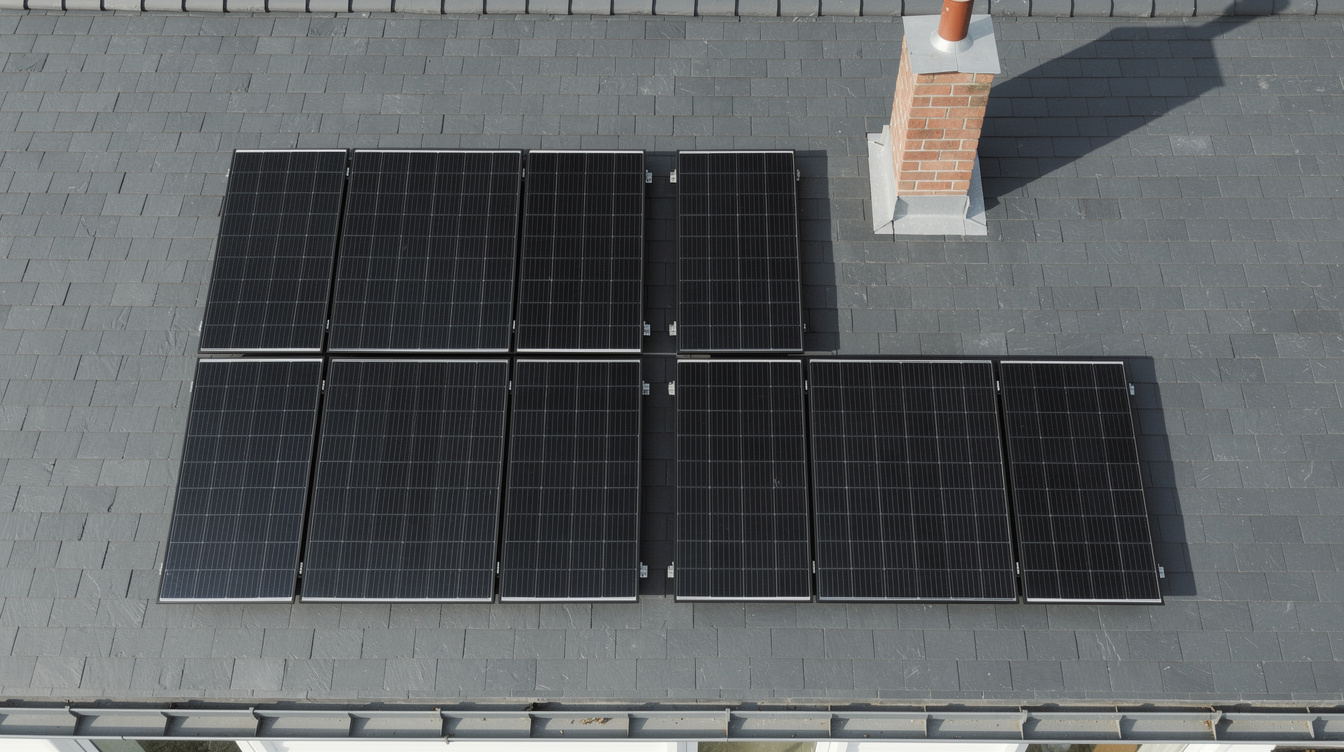
The single biggest 2 kW mistake in Ireland: undersized inverter
Homeowners quoted for 2 kW are often sold a matching 2 kW inverter to "save money". This is a false economy for two reasons:
- You can't add panels later. If you decide in year 3 to expand to 4 kW, you need a whole new inverter. That's an avoidable €900–€1,400 hit.
- Battery-ready hybrid inverters cost only ~€400 more. A 5 kW hybrid inverter sized for future expansion (extra panels, battery, EV charger) gives you complete flexibility for very little extra spend today.
Always specify a 5 kW hybrid inverter even on a 2 kWp install. The inverter will operate happily below its rated capacity, and you keep every upgrade path open.
Can you get a 2 kW system fully covered by the grant?
No. Even at the SEAI €700 grant, a 2 kWp system costs a homeowner €2,900 net at the cheapest end of the market. There is no way to get free solar in Ireland outside of the pensioner-focused schemes (see our pensioners guide) and the Community Energy Grants pilot which requires local group participation.
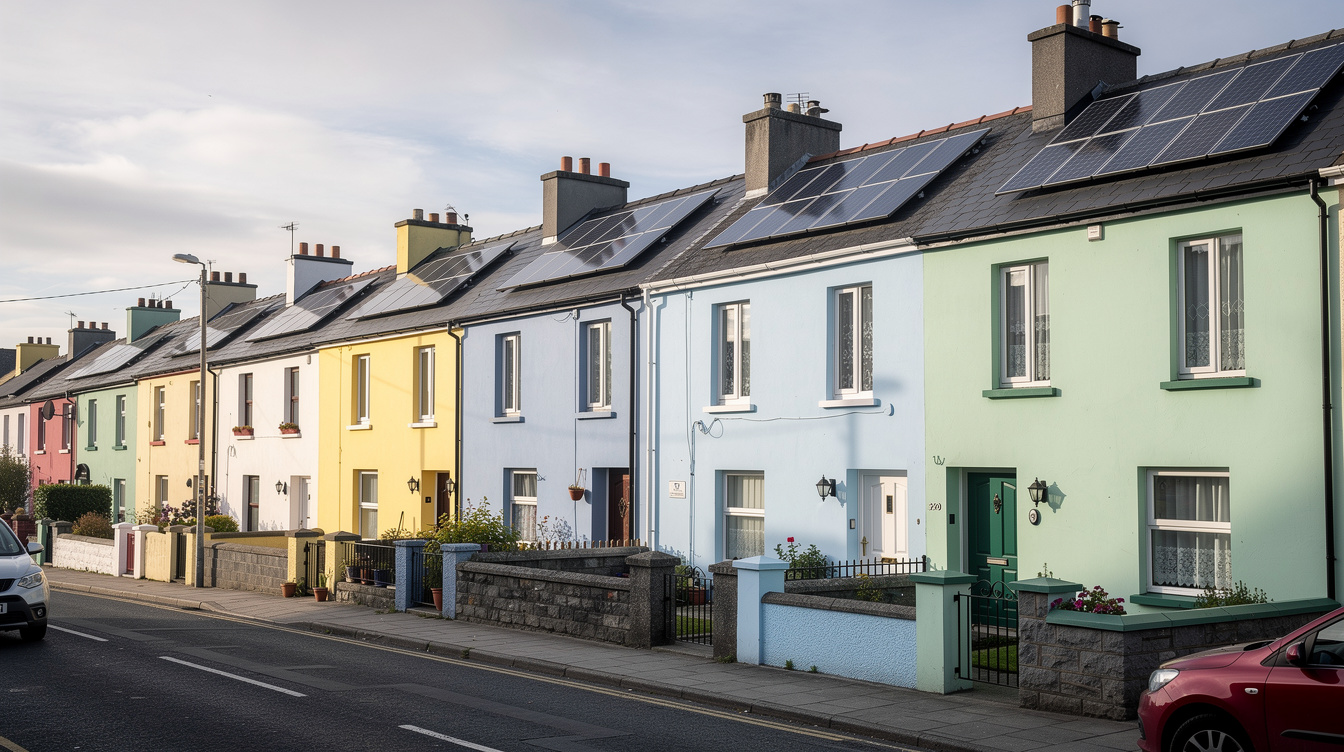
Should you go bigger than 2 kW?
In one line: almost certainly yes, if your roof can take it. The reasons are simple:
| System size | Net cost after grant | Annual kWh (S-facing) | Cost per annual kWh | Payback |
|---|---|---|---|---|
| 2 kWp | €3,500 | 1,850 | €1.89 | 5.4 yr |
| 3 kWp | €5,000 | 2,780 | €1.80 | 5.2 yr |
| 4.4 kWp | €6,500 | 4,050 | €1.60 | 5.0 yr |
| 6 kWp | €9,200 | 5,500 | €1.67 | 5.6 yr |
The 4.4 kWp is the sweet spot in 2026 — lowest cost per generated kWh, fastest payback, and it maxes out the SEAI grant. If your roof can only take 2 kWp, take it and move on. If your roof can take 4 kWp, don't stop at 2.
Frequently asked questions
Do I still need the ESB NC6 notification for such a small system? Yes. Any generation asset connected to the grid needs an NC6 filed by your installer. It's a formality at 2 kWp — approval typically arrives in 5–10 working days.
Can I install a 2 kW system myself? Legally, you cannot claim the SEAI grant unless the installer is on the SEAI Registered Contractor list. DIY installation also complicates home insurance and voids most Tier-1 panel warranties. See our DIY solar guide for the trade-offs.
Will Micro-generation Support Scheme (MSS) work for a 2 kWp system? The MSS was replaced by the Clean Export Guarantee (CEG) in 2022. Your 2 kW system exports whatever you don't self-consume, and your supplier pays a per-kWh export rate (~18–22c as of Q3 2026). Nothing extra to apply for beyond the standard smart meter and NC6.
Is a 2 kW system worth it for a rental property? Only in specific circumstances — the landlord bears the cost, but tenants get the bill savings. Some landlords bundle a small solar array into unusually competitive rental listings. Confirm your MPRN eligibility and any restrictive covenants first.
Ready to Get a Quote?
Get quotes for 2 kWp, 4 kWp and 6 kWp options in parallel so you can see the numbers side-by-side.
Bottom line
A 2 kWp solar system in Ireland in 2026 costs roughly €3,500 net after the €700 SEAI grant, generates 1,850 kWh/year on a south-facing roof, and pays back in around 5.4 years. It's the right choice for small terraces, granny flats, single-occupancy homes, and anywhere the roof is genuinely too small to go larger. For everyone else — especially family homes, EV owners, and heat pump households — a 4.4 kWp system delivers substantially more kWh per euro because the SEAI grant scales up to that size. Get quotes for both, insist on a 5 kW hybrid inverter regardless, and pick the size that matches your roof and your electricity bill.
Related Articles
Solar Battery Brands Ireland 2026: Tesla Powerwall 3 vs BYD vs Pylontech vs Sigenergy vs Sunsynk Compared
Compare Tesla Powerwall 3, BYD, Pylontech Force H2, Sigenergy and Sunsynk for Irish homes in 2026: installed prices, warranties, cycle counts, backup and V2G.
PV Solar Diverter Ireland 2026: Eddi vs iBoost vs PowerDiverter Compared
Compare Eddi, Solar iBoost+ and PowerDiverter for Irish solar homes in 2026: real prices, install costs, VAT savings, and honest payback vs the CEG.
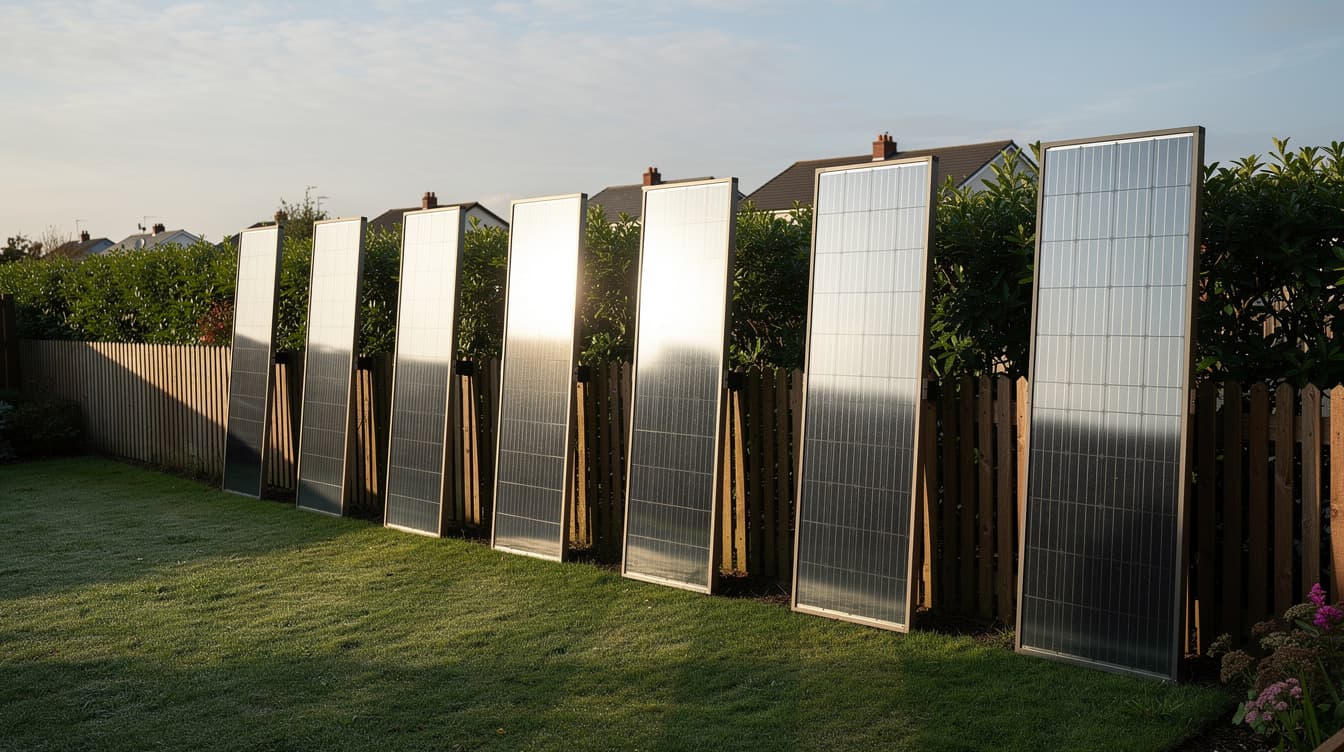
Vertical Solar Panels & Solar Fences Ireland 2026: When Bifacial on a Fence Beats a Rooftop Array
Vertical bifacial solar panels on Irish fences and gable walls in 2026: 85-95% of roof yield, peak-hour advantage, costs, planning rules, and when to choose them.