
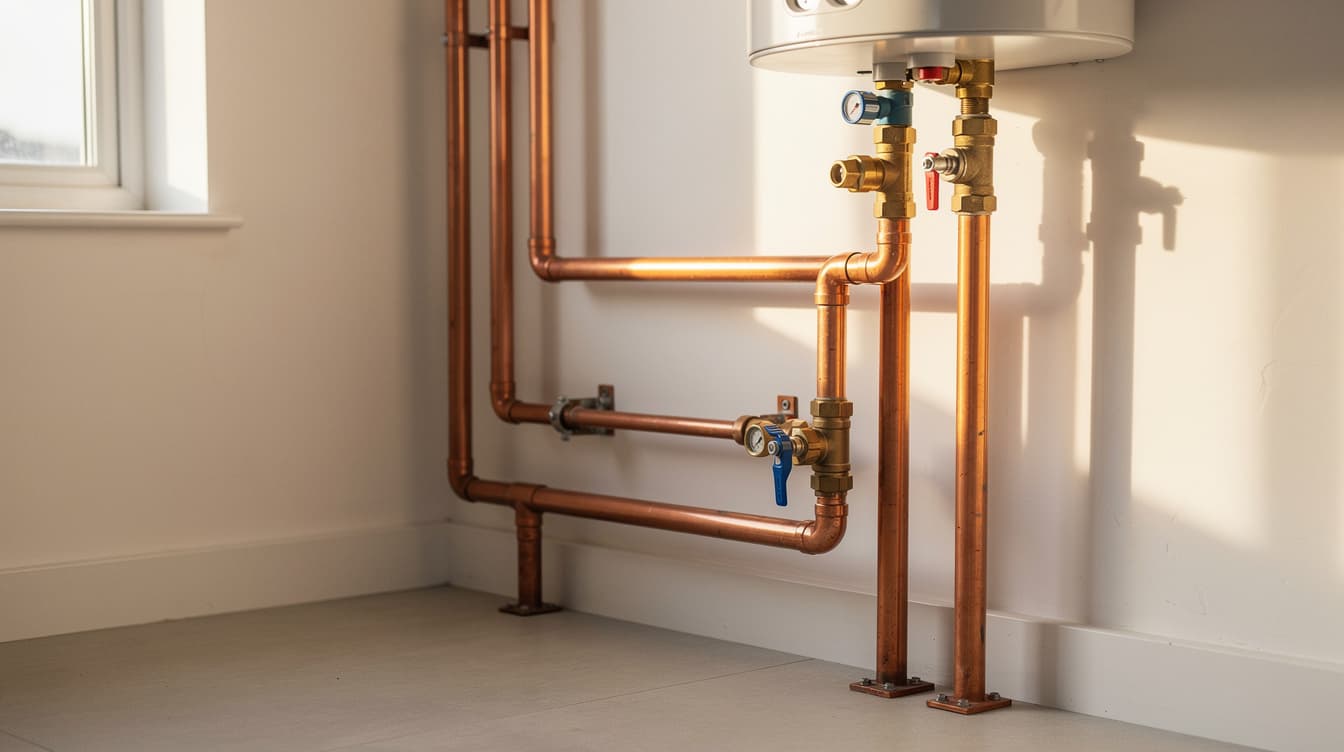
PV Solar Diverter Ireland 2026: Eddi vs iBoost vs PowerDiverter Compared
A PV solar diverter is a small box between your consumer unit and your immersion heater that catches the electricity your solar panels are about to export to the grid and pushes it into your hot water cylinder instead. For Irish homes that already have solar, it is the single cheapest way to raise self-consumption — because in 2026 the electricity you export is worth 21c/kWh under the Clean Export Guarantee, but the gas or oil you would otherwise burn to heat that same tank costs closer to 12–18c/kWh equivalent, and the immersion element itself is 100% efficient at converting the electricity to hot water.
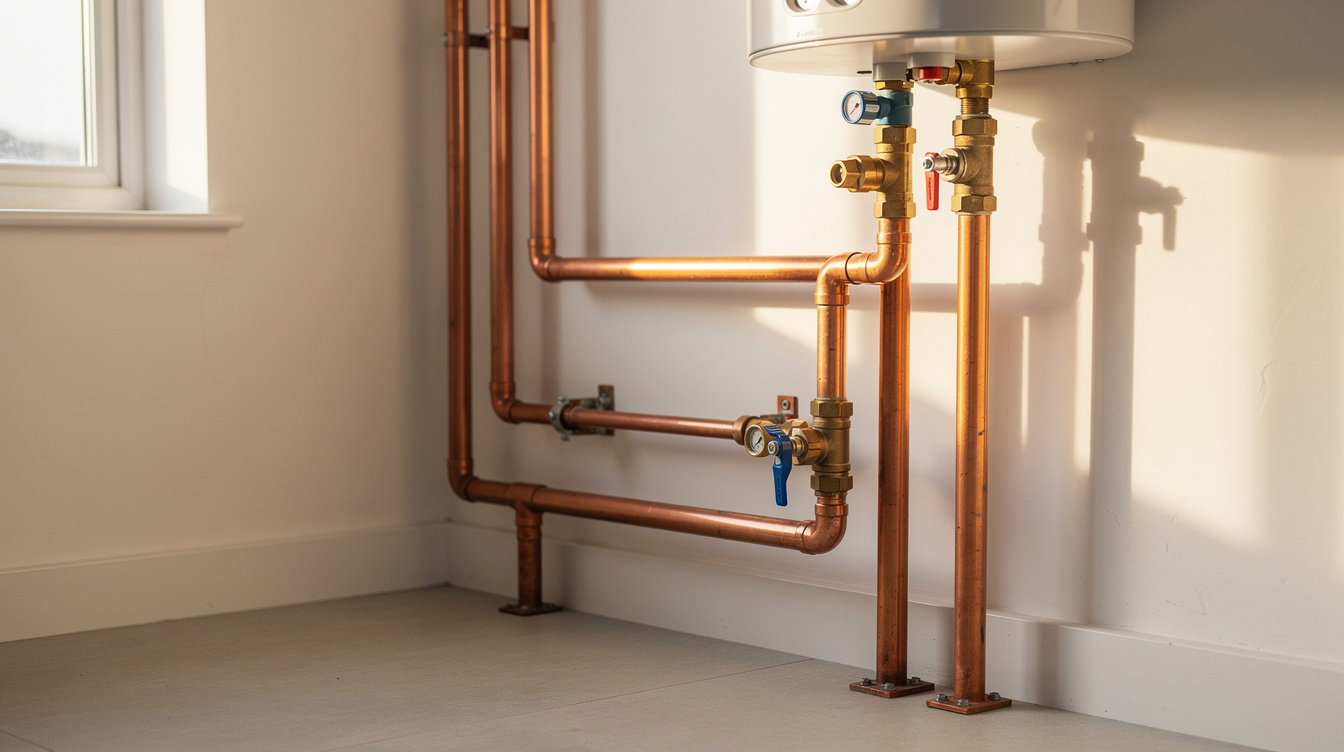
This guide compares the three diverters actually sold and fitted in Ireland — the myenergi Eddi, the Marlec Solar iBoost+, and the older-but-still-common Voltronic PowerDiverter — with real 2026 Irish prices, install costs, and the maths on when a diverter pays for itself against the Clean Export Guarantee.
How a PV diverter actually works
Without a diverter, any solar generation your house isn’t consuming in real time flows out through your smart meter to the grid, and the supplier pays you the Clean Export Guarantee tariff (21c/kWh average across suppliers in Q3 2026). A diverter changes that flow:
- A current sensor (CT clamp) is fitted on the tail cable at your consumer unit.
- The sensor reads whether power is flowing out of the house (export) or in (import).
- When export is detected, the diverter modulates power to the immersion heater in real time — ramping up when a cloud clears, ramping down when the kettle switches on — so it uses exactly the surplus and nothing more.
- Once the cylinder reaches its thermostat setpoint (usually 60°C for legionella safety), the diverter stops and any remaining surplus resumes exporting.
Because the modulation is continuous (not on/off), a diverter never pulls from the grid to top up the immersion — only surplus PV is used. That is the crucial detail: a diverter costs nothing to run on top of what your panels already generate.
2026 Irish prices, unit + install
| Diverter | Unit (ex VAT) | Install | Fitted with PV* | Retrofit total |
|---|---|---|---|---|
| myenergi Eddi (v2.1) | €495 | €180–€250 | €550–€620 | €790–€920 |
| Marlec Solar iBoost+ | €425 | €150–€220 | €480–€550 | €700–€820 |
| Voltronic PowerDiverter | €350 | €150–€220 | €410–€480 | €620–€720 |
* Fitted at the same time as a full solar install qualifies for the 0% VAT rate that has applied to residential solar since 1 May 2023. Retrofit fittings (added months or years after the panels) carry the standard 23% VAT because they’re not part of the original solar “supply and install” contract — a fact many homeowners only discover when the invoice arrives.
The single biggest cost lever is when you order it. A diverter added to the original SEAI-grant solar quote costs roughly €300 less than one retrofitted 18 months later, because you avoid a second callout charge and pick up the 0% VAT.
Adding Solar and Want a Diverter Quoted In?
Get free quotes from SEAI-registered installers who’ll price the diverter as part of your solar install — keeping it at 0% VAT.
Payback maths: is a diverter actually worth it?
The financial case for a diverter hinges entirely on what the electricity would otherwise have been worth. In Ireland in 2026 that is the Clean Export Guarantee (CEG) tariff. Here’s what a diverter is displacing for a typical 4.4 kWp Irish home with an oil-fired boiler heating the hot water cylinder:

| Scenario | Annual value | Notes |
|---|---|---|
| 1,200 kWh exported at 21c CEG (no diverter) | €252 | Straight-up sold to grid |
| 1,200 kWh diverted to immersion (displaces oil at €1.28/L, 85% boiler efficiency) | €175 | Oil saved: ~110 L/yr |
| 1,200 kWh diverted to immersion (displaces gas at 8.9c/kWh, 92% boiler) | €116 | Gas saved: ~1,300 kWh/yr |
| 1,200 kWh diverted to immersion (displaces electric immersion at 42.8c) | €514 | Only if you had no other water heat source |
Read the table carefully. If you have gas or oil, the CEG at 21c/kWh is worth more per kWh than the diverter’s displaced-fuel value. The diverter still makes sense — you save the standing charges of an oil delivery, and you get free showers on sunny afternoons — but the payback is 5–8 years, not 2–3 as many installer sales pitches claim.
The diverter is a clear win when:
- You heat water with the electric immersion year-round (no oil/gas boiler running).
- You live in a rural home on oil and want fewer 500L deliveries.
- Your CEG tariff is on the low side (some suppliers pay 18c, not 21c) and you actively use the hot water.
- You’re building the diverter into a new solar install — the 0% VAT and no second callout cut the price by ~€300, halving the payback.
It’s a marginal call when:
- You have a modern condensing gas boiler and a smart cylinder thermostat.
- You’re a small household using less than 100 L of hot water per day — the cylinder will hit its thermostat by 11am and stop accepting surplus.
Head-to-head: Eddi vs iBoost vs PowerDiverter
myenergi Eddi — the ecosystem choice
The Eddi is by far the most-fitted diverter in Ireland in 2026 — not because it’s cheapest (it isn’t) but because it fits into the myenergi hardware family that includes the Zappi EV charger and the Libbi battery. If you already own a Zappi or plan to, the Eddi shares the same app, the same “eco+” charging logic, and the same current-monitoring hardware. myenergi installers in Ireland can often bundle both units on the same callout.
Its standout feature is two heater outputs. You can prioritise the main cylinder immersion, then route any further surplus to a second immersion, a towel rail, or an electric underfloor circuit. That’s useful in larger homes with more than one cylinder or a heated garage.
Marlec Solar iBoost+ — the “set and forget” choice
The Marlec iBoost+ is a British-designed diverter that has been the market default for years. It’s the choice for homeowners who want zero fuss: no app, no cloud login, no firmware updates that occasionally wobble. A wireless “Buddy” display sits on the kitchen counter and shows daily divert kWh in real time. That’s it.
The wireless CT clamp is a genuine install advantage — it doesn’t need a hard-wired signal cable back to the diverter unit, so it can be fitted in a garage or utility room where cable routing to the consumer unit would be awkward.
Voltronic PowerDiverter — the price play
The Voltronic PowerDiverter is around €100–€145 cheaper than the Eddi at the till. It works, and it does the same job. What it lacks is a clean app, second-heater support, and myenergi ecosystem integration. For a homeowner who wants a working diverter for the lowest possible outlay and doesn’t care about phone dashboards, it’s a valid pick — but check the installer will warranty it, as Irish spare-parts stock is thinner than for Eddi/iBoost.
Feature-by-feature comparison
| Feature | Eddi | iBoost+ | PowerDiverter |
|---|---|---|---|
| App / cloud | Yes (myenergi) | No — Buddy display only | Basic web UI |
| Heater outputs | 2 | 1 | 1 |
| Wireless CT clamp | No (Harvi accessory adds it) | Yes (included) | No |
| Boost timer (top-up from grid) | Yes (schedulable) | Yes (manual) | Yes (manual) |
| Warranty | 3 yrs | 5 yrs | 2 yrs |
| EV-charger integration | Yes (Zappi) | No | No |
| Ireland installer network | Widest | Wide | Thinner |
What size cylinder actually catches all the surplus?
A common oversight: your existing hot water cylinder may not be big enough to hold a full afternoon of solar surplus. A 4.4 kWp array on a good June day can dump 8–12 kWh into an immersion between noon and 5pm. To store that much heat you need cylinder volume, because water heats from ambient (say 15°C) to 60°C at roughly 52 Wh per litre:
| Cylinder | kWh to heat 15°C → 60°C | Fits which array? |
|---|---|---|
| 120 L (small terraced) | 6.3 kWh | Up to 3 kWp before overflow |
| 180 L (standard family) | 9.4 kWh | Up to 4.4 kWp |
| 210 L (4-bed detached) | 11.0 kWh | Up to 5–6 kWp |
| 300 L (large family / heat-pump ready) | 15.7 kWh | Up to 8 kWp |
If your cylinder is smaller than the array can fill, the diverter simply stops when the thermostat trips at 60°C and the rest exports as normal. You’re not losing anything — you’re just capturing less of the possible benefit. A 180 L cylinder plus a 4.4 kWp array is the “typical Irish sweet spot” combination.
Diverter vs battery: what should you spend the money on first?
The single most common question we hear from homeowners considering their first upgrade after installing solar: diverter (€600) or a small 5 kWh battery (€3,800 installed)?
| Option | Cost | Annual value (avg home, oil water) | Simple payback |
|---|---|---|---|
| Diverter (retrofit) | €800 | €175 hot water displaced (net €77 vs CEG 21c) | ~10 yrs vs no diverter |
| 5 kWh battery (retrofit) | €3,800 | 1,400 kWh shifted from 42.8c import to solar (net €300–€420 vs CEG) | 9–13 yrs |
| Both (fitted at same time) | €4,400 | Diverter runs before battery in hierarchy → ~€400–€500 combined | 9–11 yrs |
The honest answer: if you have gas/oil, a battery pays back roughly as fast as a diverter in 2026 — the CEG at 21c has narrowed the gap. The diverter is much cheaper upfront but only saves you a fuel that’s already fairly cheap. The battery is much dearer but shifts electricity that costs 42.8c/kWh to import. For most homes: fit the diverter first if you already have panels and no battery; add battery when the CEG tariff falls (widely expected to drop to 12–15c/kWh once the Q1 2027 microgeneration review completes).
Setting the priority order (Eddi and Libbi in the same house)
If you install a Libbi (or other AC-coupled) battery alongside an Eddi diverter, the myenergi app lets you set the export-hierarchy:
- House load (always first — the running fridge, the lights).
- Battery charge (recommended second — every kWh into a battery displaces 42.8c import later).
- Diverter to immersion (third — displaces cheaper fuel).
- Grid export at CEG (last).
Do not set the diverter above the battery in the hierarchy — that’s a common installer error and it costs you roughly €150/yr because you end up heating water with expensive solar that should have been stored to displace evening imports.
Want a Diverter Priced Into Your Solar Quote?
Compare quotes from SEAI-registered installers with the Eddi, iBoost or PowerDiverter included — keeps the diverter at 0% VAT.
Common install pitfalls to avoid
- Immersion element must be single-phase resistive. Diverters cannot modulate a heat-pump water heater or a 3-phase immersion. If your cylinder has a heat-pump coil, a diverter will only work on the electric immersion element, not the pump.
- CT clamp on the correct tail. If the CT is fitted on the wrong side of the meter or the wrong phase (in a 3-phase house), the diverter will divert imported grid energy to hot water — the exact opposite of what you want. Ask the installer to demonstrate export detection at commissioning.
- Legionella cycle. A diverter can raise the cylinder to 60°C most sunny days, but on a run of dull weeks the cylinder may never get hot enough for legionella prevention. Keep the boiler’s weekly “cylinder heat” cycle enabled, or use the Eddi’s scheduled boost.
- Older cylinders with sacrificial anodes. Heating the tank to 60°C daily can accelerate anode wear. Budget for a replacement anode every 3–4 years (€40 DIY, €120 fitted).
FAQ
Can I fit a diverter myself?
Legally, the CT clamp on the meter tail must be fitted by a Safe Electric-registered electrician because it sits inside the consumer unit and touches the incoming supply. The diverter unit itself can be wall-mounted DIY, but the electrical connection to your immersion circuit and consumer unit is notifiable work. Expect to pay 1.5–2.5 hours of electrician time (€150–€250) for a compliant install.
Does a diverter affect the SEAI grant?
No. The SEAI Solar PV grant is for the panels, inverter and (optional) battery only. A diverter is not a grant-eligible item — but if it’s included in the installer’s original solar quote it can be VAT-zero-rated as part of the same supply-and-install contract.
Will a diverter reduce my Clean Export Guarantee payments?
Yes, by design — it captures export before it leaves the house. For a typical 4.4 kWp Irish home, expect CEG payments to drop by €180–€250/yr with a diverter fitted, offset (in most cases) by comparable savings on the displaced fuel. Do the maths against the current CEG tariffs from each supplier before deciding.
Which diverter works best with a Sunsynk or GivEnergy hybrid inverter?
Any AC-coupled diverter (Eddi, iBoost+, PowerDiverter) works with any hybrid inverter, because the diverter reads the CT clamp at the house tails, not the inverter itself. The only integration benefit is with myenergi’s own Libbi battery + Eddi combo, where hierarchy is manageable in one app.
Does the diverter still work if the grid is down?
No — when the grid drops, a G99/G98 hybrid inverter disconnects (anti-islanding), and the diverter loses its reference signal. See solar panels & power cuts in Ireland for what does keep working during blackouts.
The 60-second decision tree
- Fit a diverter now if: you already have solar, you have an electric-immersion-only water heat source, or you have oil delivered by tanker.
- Add a diverter to your solar install if: you’re installing panels this year — the incremental cost of €500–€600 is worth it just to lock in the 0% VAT.
- Skip the diverter and go straight to battery if: you have a modern condensing gas boiler, low hot-water usage, and would rather displace 42.8c/kWh grid import than 8.9c/kWh gas.
Ireland’s solar economics in 2026 are shifting fast: the CEG at 21c has made pure export more attractive than it’s ever been, but that tariff is expected to fall in Q1 2027. If it drops to 12c/kWh as many analysts expect, diverters become the obvious next-cheapest upgrade for every solar home in the country. Buying one this year at 0% VAT while it’s bundled with a new PV install is the lowest-regret move.
Ready to Go Solar?
Get your free personalised quote from SEAI-registered installers — and ask for a diverter to be quoted in from the start.
Related Articles
Solar Battery Brands Ireland 2026: Tesla Powerwall 3 vs BYD vs Pylontech vs Sigenergy vs Sunsynk Compared
Compare Tesla Powerwall 3, BYD, Pylontech Force H2, Sigenergy and Sunsynk for Irish homes in 2026: installed prices, warranties, cycle counts, backup and V2G.
2kW Solar System Ireland 2026: Cost, Suitability & Payback for Small Homes
2 kWp solar in Ireland 2026: costs €3,500 net after €700 SEAI grant, generates 1,850 kWh/yr south-facing, pays back in 5.4 years. When it fits vs going to 4.4 kWp.
Vertical Solar Panels & Solar Fences Ireland 2026: When Bifacial on a Fence Beats a Rooftop Array
Vertical bifacial solar panels on Irish fences and gable walls in 2026: 85-95% of roof yield, peak-hour advantage, costs, planning rules, and when to choose them.