
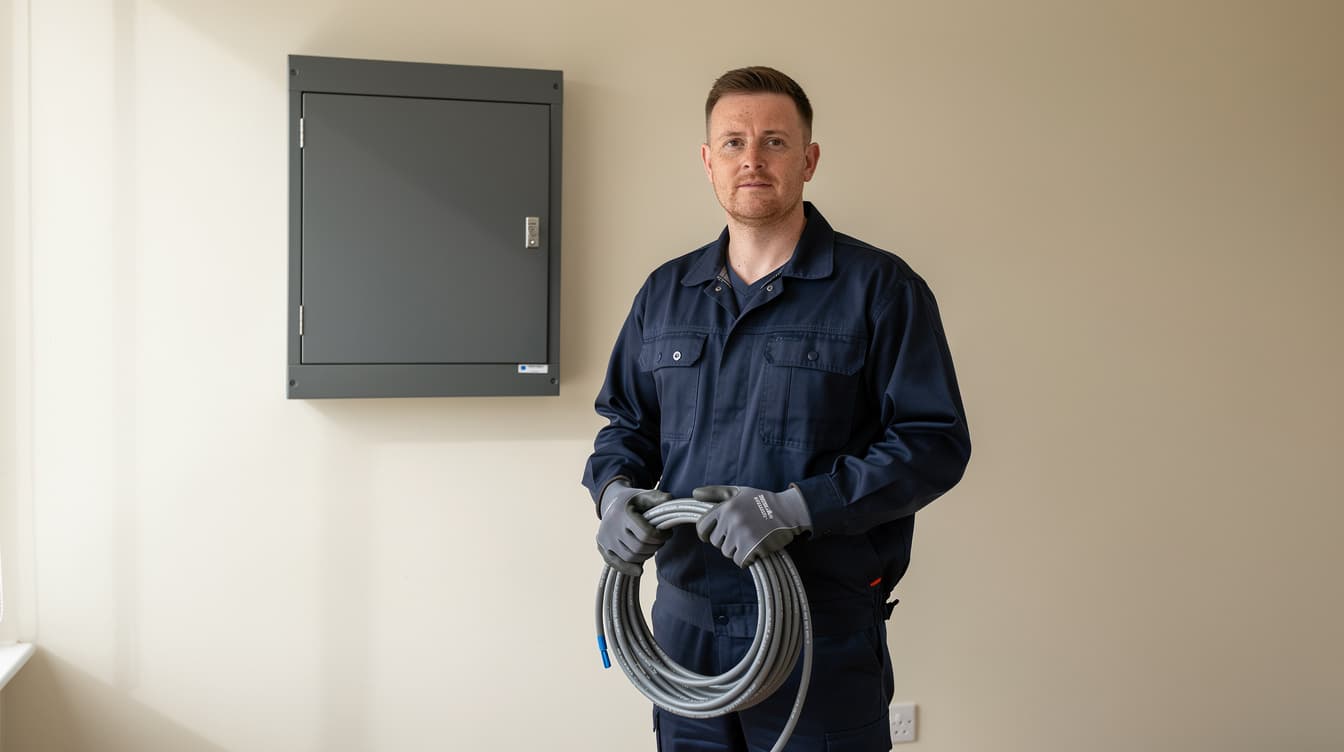
Is It Legal to Install Your Own Solar Panels in Ireland? 2026 Guide
Can you legally install solar panels yourself on an Irish home in 2026? The short answer is: yes for the off-grid stuff, no for anything that touches your house wiring. The legal line between a perfectly legal DIY off-grid setup and an illegal grid-tied install runs through one specific piece of legislation — the 2007 Electricity (Supply) Act and the more recent ESB Networks NC6 requirements — not the planning laws people usually assume.
This is the part most online guides get wrong. The 2022 Planning and Development (Solar Safeguarding) Regulations did make rooftop PV planning-exempt across most of Ireland in 2022, and that exemption was tweaked in 2024 to remove some remaining restrictions. But planning law is not the only law that applies. Anyone installing a solar system that’s connected to their house ring main — even just plugging an inverter into a socket — is also subject to Safe Electric regulations, which require a registered electrician (RECI or ECSSA) to complete and sign the work and the NC6 form. Doing the wiring yourself is technically illegal under Statutory Instrument 192/2018, regardless of how good your YouTube channel is.
Here’s the full 2026 picture: what you can do yourself, what you legally cannot, what the planning rules actually say, and how the new exemptions interact with the Safe Electric rules.
What planning law actually says in 2026
In 2026, almost all Irish residential rooftop solar installations are planning-exempt — meaning you don’t need to apply to your local council for planning permission before installing them. The relevant statutory framework is the Planning and Development Act 2000 (as amended) plus the Planning and Development Regulations 2001 (Class 2 of Part 1 of Schedule 2, as updated by SI 76/2022 and the 2024 Solar Safeguarding amendments).
The 2022 update removed the previous 12 m² cap on rooftop solar and dropped most of the historic restrictions. As of 2026, you can install rooftop PV without planning permission on a private home, as long as:
- The panels are mounted parallel to the existing roof plane (i.e. flush mounted — not angled or pole-mounted off the roof).
- The panels don’t extend above the ridgeline or beyond the roof edge.
- The building is not a Protected Structure listed on the local Record of Protected Structures.
- The building is not inside an Architectural Conservation Area (ACA) if the panels would be visible from a public road or public area.
- The installation doesn’t breach any historic preservation orders.
The 2022 regulations also explicitly removed the “solar safeguarding zone” restrictions that previously covered areas near Dublin Airport and several other airfields, although air traffic glare-mitigation guidelines remain in force where they were already applied.
Ground-mounted solar arrays in a residential garden are not automatically planning-exempt and usually require permission unless they fall under the small-scale exempted development rules (which limit ground-mount arrays to small footprints and specific configurations).
The electrical work is regulated separately — this is where DIY gets you in trouble
This is the bit nearly every “can I DIY solar in Ireland” article skims over. Planning law and electrical-safety law are completely separate frameworks in Ireland, and the electrical-safety side is much stricter.
Under the Safety, Health and Welfare at Work (General Application) (Amendment) Regulations 2018 and the underlying Statutory Instrument 192/2018, any electrical work on the “fixed wiring” of a dwelling (anything connected to the consumer board, anything in walls and ceilings, anything that feeds power to fixed sockets and lights) must be carried out by a Registered Electrical Contractor — in practice, that means a tradesperson on the RECI or ECSSA register. This includes:
- The wiring of solar PV panels through the inverter and into the consumer board.
- Installation of the inverter itself if it’s wall-mounted and hard-wired.
- Installation of a battery and its DC and AC wiring.
- Wiring of an EV charger, immersion diverter or any other DC- or AC-coupled solar component.
- Any modification to the meter tail or consumer board to accept a microgenerator.
The penalty for doing this work without registration is technically a fine of up to €5,000 and/or imprisonment for up to 12 months under the underlying Act, but in practice the more immediate consequences are:
- No NC6 form, no grid connection. ESB Networks requires the NC6 to be signed by a Safe Electric electrician. Without it, you can’t register your microgenerator, you can’t legally export to the grid, and you can’t claim CEG export payments.
- No SEAI grant. The €1,800 SEAI Solar PV grant is conditional on installation by a SEAI-registered installer using SEAI Triple-E listed equipment. A self-install never qualifies.
- House insurance complications. Almost every Irish home insurance policy excludes claims arising from non-compliant electrical work. A house fire caused by a self-installed inverter typically isn’t covered.
- Voids equipment warranty. Most inverter and battery manufacturer warranties are conditional on installation by a certified installer.
Want a Compliant, Grant-Eligible Install?
Get a free quote from a SEAI-registered installer who handles NC6 paperwork, grant submission and Safe Electric sign-off.
What you absolutely can do yourself — legal off-grid DIY
The good news: there’s a meaningful category of solar work that’s perfectly legal to do yourself, doesn’t require any electrician, and doesn’t involve any of the above paperwork.
If your solar system is completely off-grid — i.e. it never electrically connects to your house wiring or to the ESB network — then SI 192/2018 doesn’t apply to it. Off-grid solar is treated as a standalone appliance, like a generator or a portable power bank. You can buy it, install it and use it yourself, and the only requirement is that you do it safely.
Legal DIY off-grid setups include:
- Garden shed or outhouse solar. Panel on shed roof → charge controller → small battery → lights and 12 V or 230 V (via inverter) outlets inside the shed only. No connection to the house wiring.
- Caravan, motorhome or campervan solar. Fully legal, no paperwork.
- Portable power station + balcony panel. A 1–2 kWh portable battery (EcoFlow, Bluetti, Jackery, etc.) charged from a balcony or garden solar panel, powering devices through the battery’s own AC outlets. Loads run on extension leads — nothing connects to the house wiring.
- Garden water-pump or pond solar. Direct DC connection to a pump, no battery, no AC. Fully legal.
- Solar-powered outdoor lighting. Stand-alone lighting with integrated panel and battery.
Where this DIY route makes financial sense is for renters, apartment dwellers, or anyone who wants modest solar capacity (300–800 W) without an installer’s setup fee. A 2026 starter kit — one 400–500 W panel, a 1.5 kWh portable battery with built-in inverter, mounting hardware — costs €850–€1,400 fully assembled, fully legal, fully avoidable of any paperwork. Our plug-in solar Ireland guide and apartment solar guide cover this in detail.
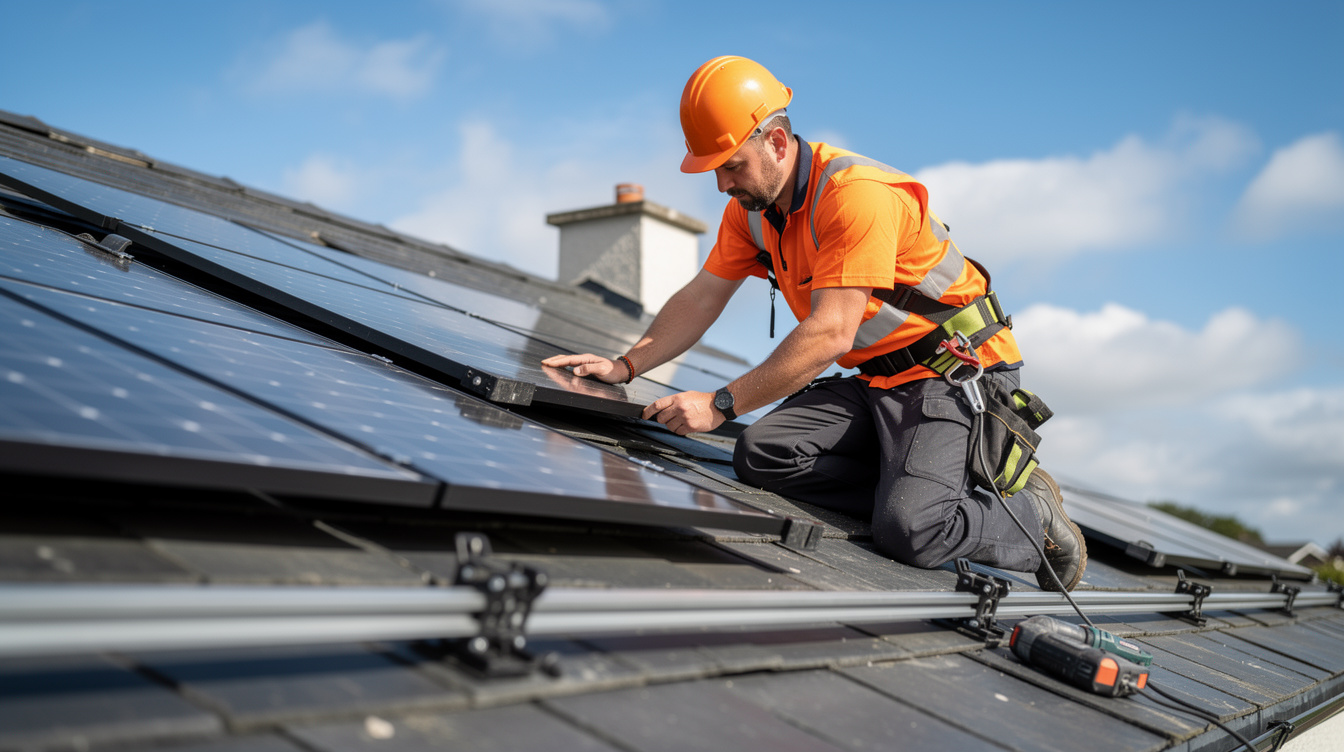
The plug-in solar grey zone in 2026
This is the area most Irish DIY-curious homeowners ask about: can I just buy a Lidl or Aldi plug-in solar kit, plug it into a wall socket, and let it push power into my house ring main?
Currently, the answer in Ireland is no. Unlike Germany (where 2024 legislation explicitly legalised sub-800 W balcony solar plugged into a Schuko socket), Ireland still treats any device that exports power into the ring main as a microgenerator, requiring an NC6 form and an electrician’s sign-off. The Commission for Regulation of Utilities (CRU) is currently consulting on a simplified pathway, but it’s not law yet.
Practical implication: even when Lidl Ireland eventually stocks the €299 Tronic plug-in battery or balcony solar kits, you legally cannot connect them to your house wiring without electrician sign-off until the CRU rules change. Our Lidl batteries 2026 guide and Lidl plug-in solar guide walk through the regulatory timeline.
The SEAI grant route: how compliant installs work in 2026
For most Irish homeowners, the legally-clean and financially-best route is hiring a SEAI-registered installer who handles the entire compliance chain. Here’s what they take care of:
| Compliance item | Who handles it |
|---|---|
| Planning exemption verification (ACA / RPS check) | Installer pre-survey |
| SEAI grant application and BER coordination | Installer + SEAI portal |
| Safe Electric (RECI/ECSSA) electrical sign-off | Installer’s electrician |
| NC6 form lodgement with ESB Networks | Installer’s electrician |
| Smart meter swap / supplier notification for CEG | ESB Networks + your supplier |
| SEAI Triple-E equipment certification | Built into installer quote |
| Building Energy Rating (BER) update | Required for grant payment |
This compliance bundle is most of what you’re paying for when you hire a SEAI installer over a non-registered “cheap” alternative. The labour itself is a fraction of the total bill — the rest is paperwork, certifications, and warranty registration.
Special cases — when even “exempt” installs need planning consent
Some installations still need full planning permission in 2026:
- Protected Structures. Any building on the local Record of Protected Structures requires explicit planning consent for any rooftop solar, regardless of size or visibility.
- Architectural Conservation Areas (front-roof or visible installations). Inside an ACA, rear-roof installs on non-protected buildings are usually fine, but front-roof installs visible from a public road or heritage view generally need a Section 5 declaration or full planning consent.
- Listed views or designated landscapes. Some rural counties have designated “Areas of Special Amenity” or “Special Landscape Areas” where additional restrictions apply.
- Ground-mounted arrays above certain footprints. Garden ground-mount over the exemption threshold (currently 25 m² total ground footprint) needs permission.
- Roof-mounted arrays that change roof structure. If installation requires new roof penetrations, new rooflights or structural modifications, planning consent may be needed.
- Non-residential properties. Commercial, agricultural and farm-shed installs have separate exemption rules and thresholds that vary by sector. TAMS 3 farm installs follow agricultural exemption logic.
The Section 5 declaration is the safe way through any of these. It’s a free 4-week process where you ask your local council’s planning department whether your specific proposal counts as exempted development. The decision is binding.
Frequently asked questions
Can I legally connect a Lidl or Aldi plug-in solar kit to my socket in Ireland in 2026?
No. Any device that exports power into your ring main is treated by ESB Networks as a microgenerator, requiring an NC6 form and electrician sign-off. The CRU is consulting on a simplified pathway but it has not been adopted as of 2026. Off-grid use only is legal.
Do I need planning permission to install solar panels on my house in Ireland in 2026?
For most rooftop installs on private homes, no. The 2022 Planning Regulations (as amended in 2024) made flush-mounted rooftop solar planning-exempt as long as the building isn’t a Protected Structure or in an ACA where the panels would be visible from public roads.
Can I install solar panels on a Protected Structure in Ireland?
Only with explicit planning consent and usually only on rear roof slopes or other non-visible locations. Each Protected Structure is assessed individually. Apply via a planning application or a Section 5 declaration.
Is it legal to do the electrical wiring myself if I’m a qualified electrician but not RECI/ECSSA registered?
No. SI 192/2018 requires the specific Safe Electric registration, not just a general electrical qualification. You can do the work but you can’t sign the certification, so you still need a registered colleague to inspect and sign off.
What about installing only the panels and mounting, then hiring an electrician for the wiring?
This is legal and is in fact how some installers do it (with their roofers doing panel-and-rail work while the electrician handles the inverter wiring). However, if you do the rail/panel work yourself and a separate electrician signs off the wiring, the electrician must inspect and warrant the entire system, including your work. Most registered electricians refuse to sign off work they didn’t supervise, so in practice this only works if you arrange it in advance with a willing electrician.
Will my self-install qualify for the SEAI grant?
No. The €1,800 SEAI Solar PV grant requires installation by a SEAI-registered installer using SEAI Triple-E listed equipment. Self-installs cannot claim the grant under any circumstances.
Can I sell my surplus solar to the grid if I self-installed?
Only if you can get an NC6 signed by a Safe Electric registered electrician after the fact. In practice this is difficult — most registered electricians won’t certify work they didn’t supervise. Without the NC6, you can’t register your microgenerator, can’t access the Clean Export Guarantee, and your meter will continue counting all exports as imports (i.e. you’ll be charged for sending power to the grid).
Can I install a battery and use it off-grid in my home without an electrician?
Only if the battery is genuinely off-grid — i.e. you charge it from a standalone solar panel and run loads from the battery’s built-in AC outlets through extension leads, with no connection to the consumer board. A wall-mounted, hard-wired battery connected to the house wiring is regulated work and needs registered-electrician sign-off.
Size Your Compliant Solar System
Use our calculator to estimate the right system size, battery and payback for your eircode and electricity usage.
The bottom line
Installing solar panels on an Irish home in 2026 is legal — in fact, planning-exempt for most rooftop residential installs. But the electrical work, including the inverter wiring, NC6 paperwork, and microgenerator registration, must be done by a Safe Electric registered electrician. Self-install is fully legal if you stay off-grid (a panel charging a portable battery powering loads on extension leads), and that route works well for renters, apartment dwellers, and anyone wanting modest solar capacity without paperwork. For anything that connects to your house wiring or pushes power back to the grid, hire a SEAI-registered installer — you’ll be paying for compliance, the €1,800 grant, the CEG export payments, warranty validity and house-insurance peace of mind, not just for the labour.
Get a Compliant SEAI Quote
Free quote from SEAI-registered installers covering your county. Handles planning, NC6, grant and warranty.
Related Articles
Best Solar Setup Ireland 2026: Complete System Design Guide
The best solar setup for Ireland 2026 — panels, inverter, battery, diverter and installer — with 4 real-world configurations, prices and paybacks.
20 Solar Panels Ireland 2026: Cost, Output, Battery & Payback
What 20 solar panels cost in Ireland 2026 (€12.7-18.6k net after grant), 7,600-8,100 kWh output, roof space, battery choice and payback vs 10 or 14 panels.
Solar Panel Temperature Coefficient Ireland 2026: How Heat Affects Output
What temperature coefficient really means for Irish solar output, real cell temps by season, 2026 brand rankings, and why low-light beats heat spec in Ireland.