
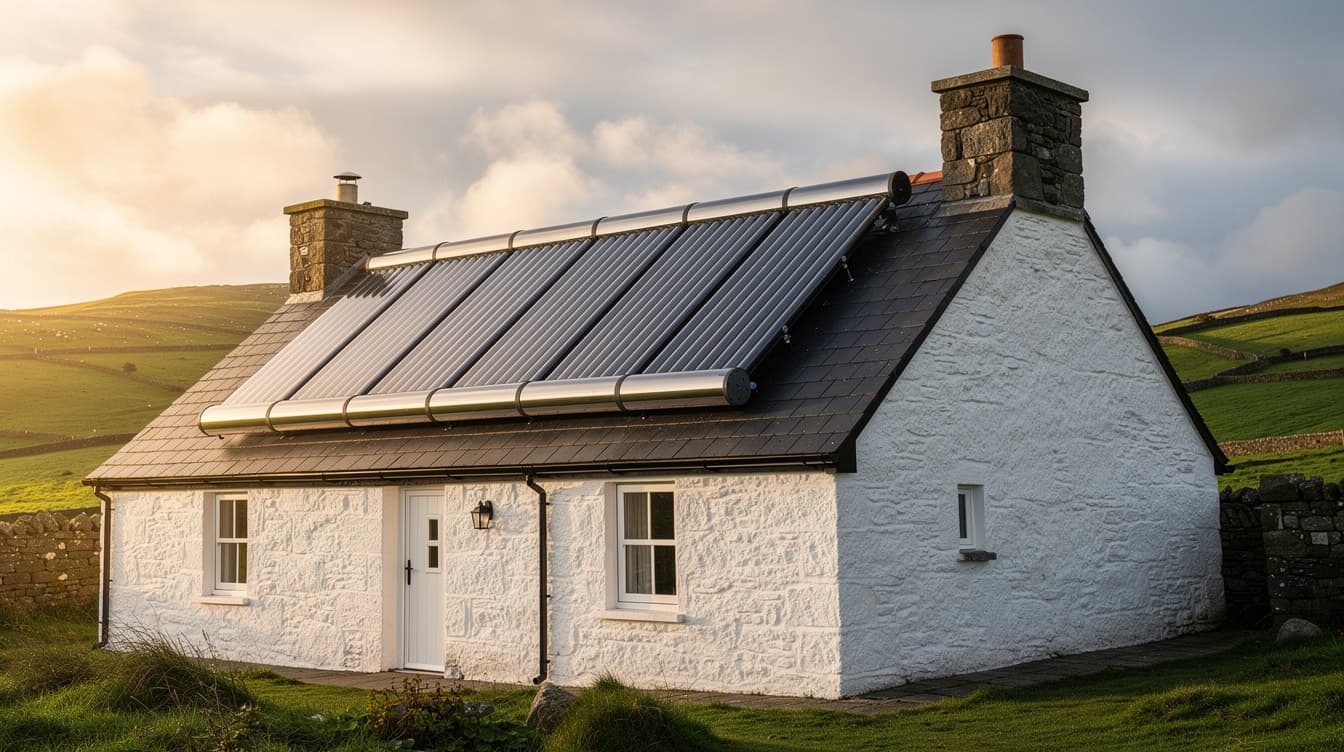
Solar Hot Water Systems Ireland 2026: Cost, Types & Is It Worth It?
Solar hot water systems — also called solar thermal panels — use the sun to heat water directly, not to make electricity. They've been around in Ireland for decades, they qualify for a €1,200 SEAI grant, and they can supply 50–70% of a typical home's annual hot water demand.
But in 2026, the question isn't really "does solar thermal work?" (it does). The question is: given that solar PV is now cheap, and a PV system can heat your water for a fraction of the cost via a diverter, is solar thermal still worth installing?
This guide gives you the honest answer — with current Irish pricing, grant rules, performance data, and the head-to-head comparison most installers won't put in writing.
Not sure which solar setup suits your home?
Compare solar thermal, PV, and PV-plus-diverter quotes from SEAI-registered installers — free, no pressure.
What is a solar hot water system?
A solar hot water (or solar thermal) system has three parts:
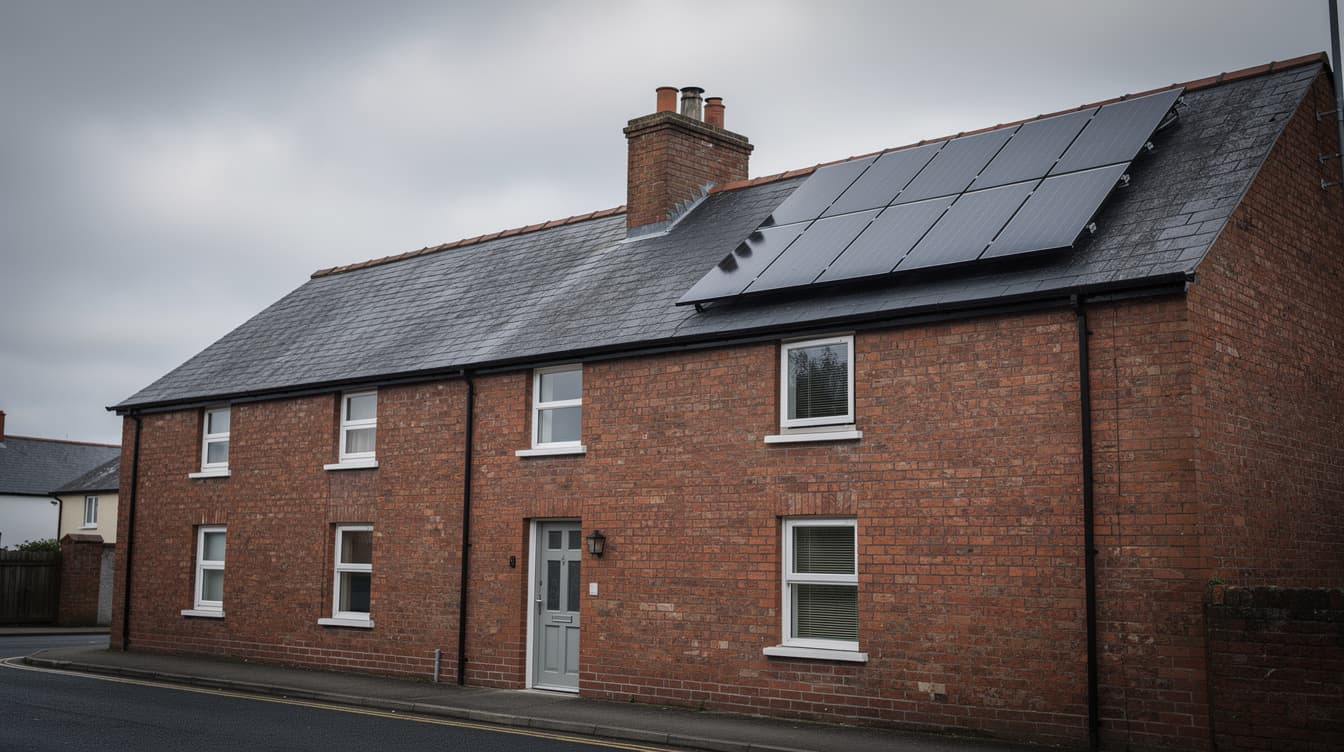
- Roof-mounted collectors — either flat plates or evacuated glass tubes filled with a heat-transfer fluid (a glycol/water mix).
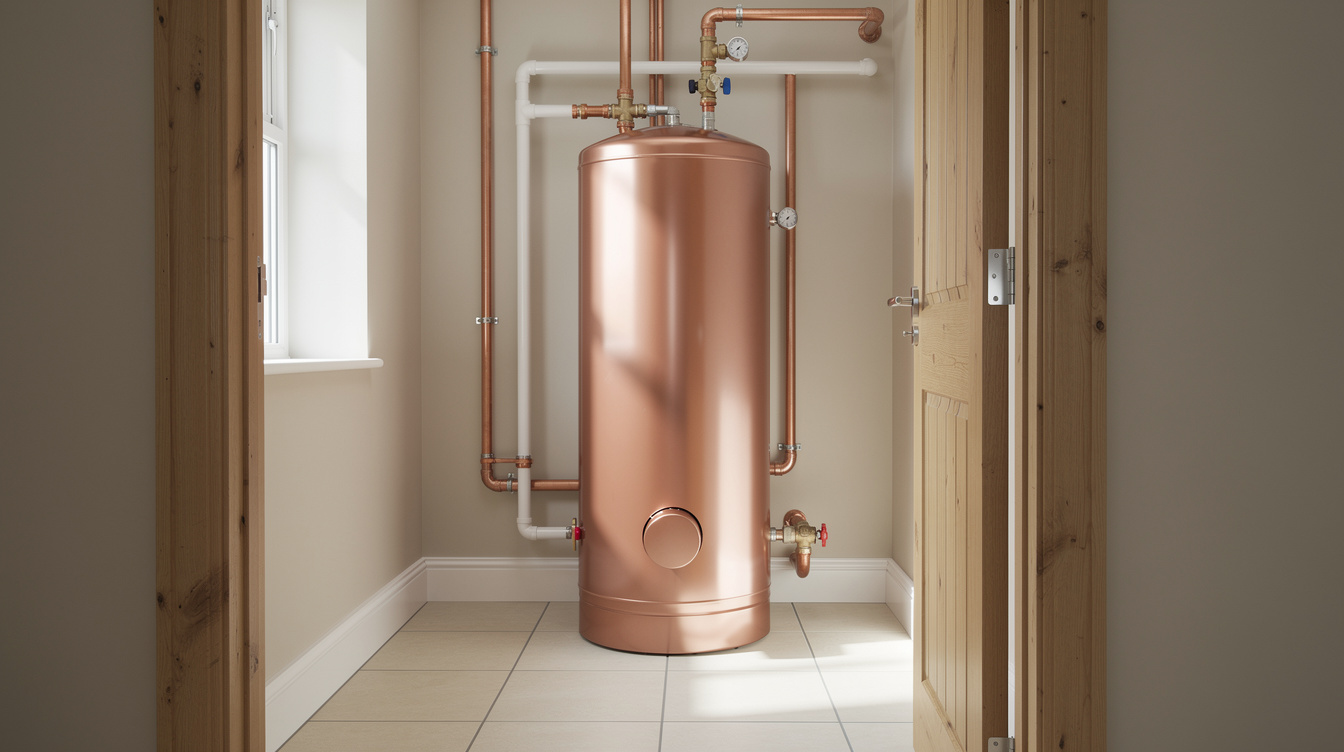
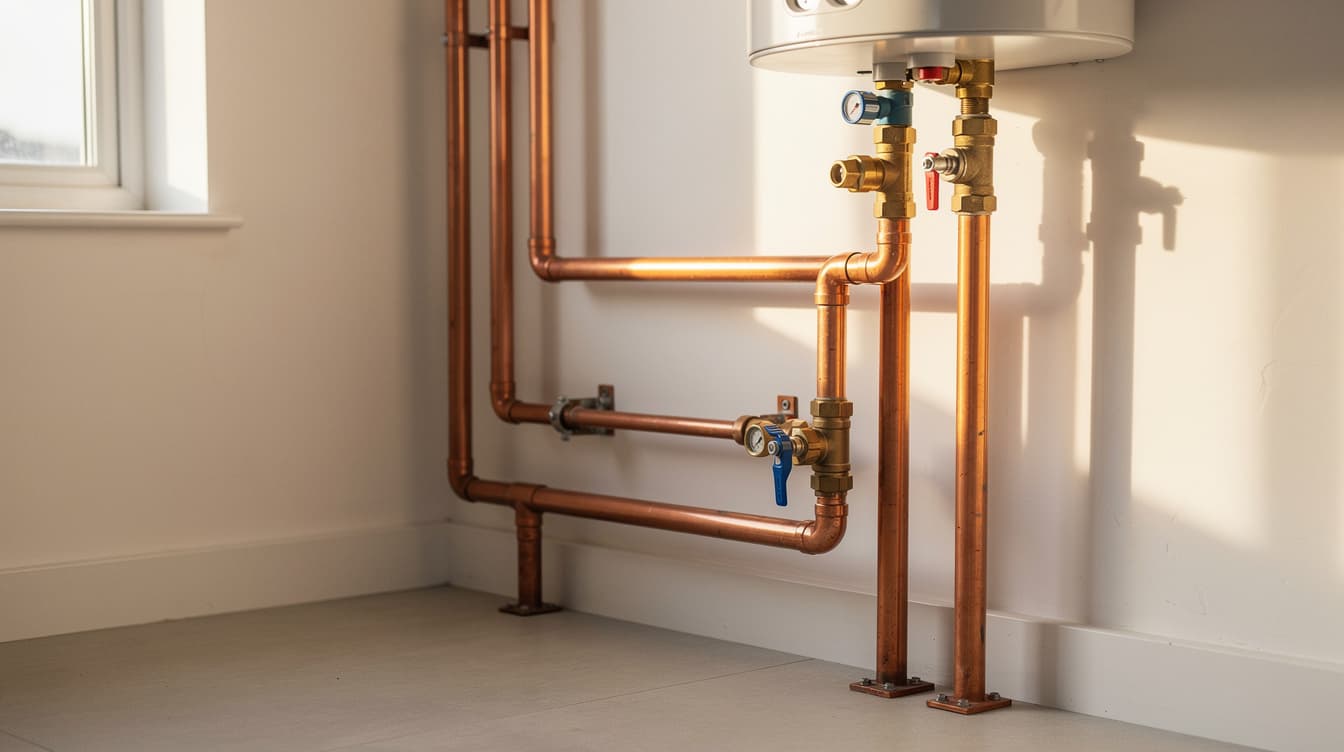
- A twin-coil hot water cylinder — sits in your hot press or utility room. The solar coil is at the bottom; your existing boiler or immersion coil is at the top.
- A controller and pump — circulates the glycol fluid through the panels whenever the roof is hotter than the cylinder.
When the sun heats the fluid, the pump moves it down to the cylinder, where it warms the water. Your boiler or immersion only kicks in if the solar contribution isn't enough — typically October through March.
Flat plate vs evacuated tube: which type?
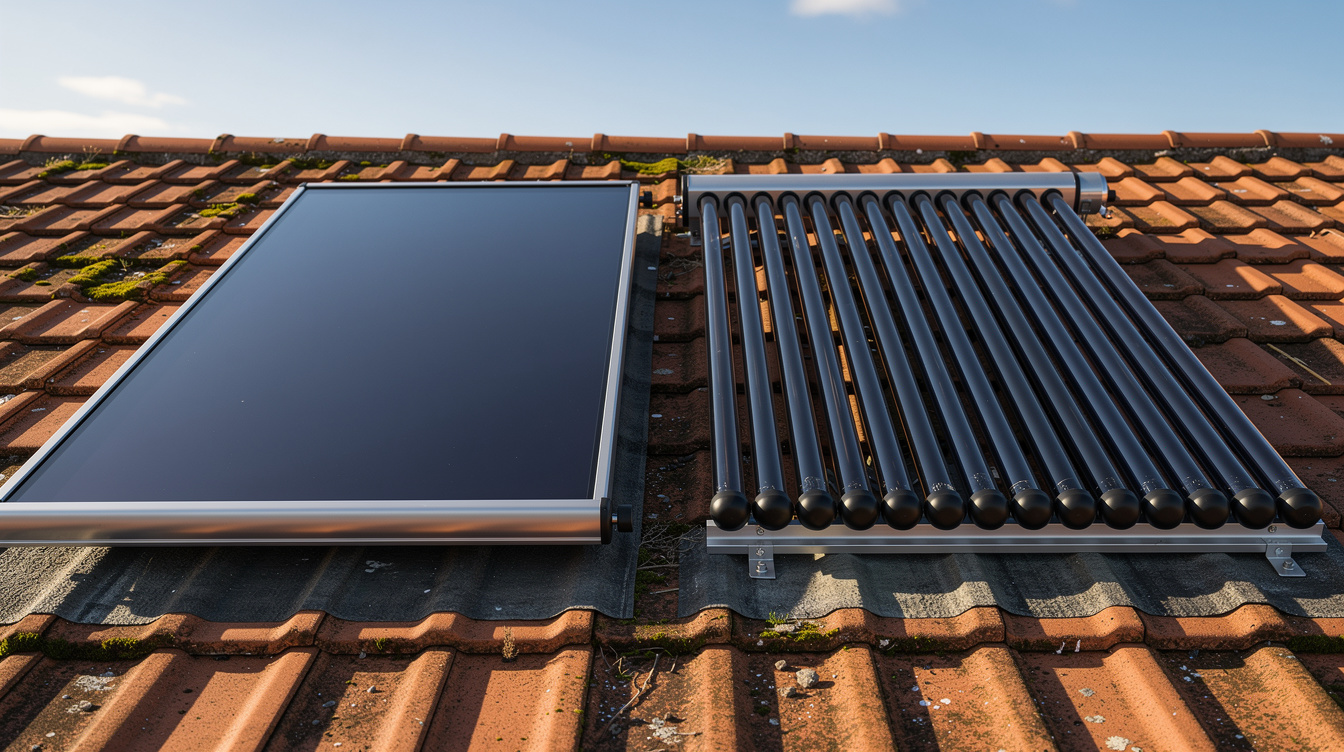
Two collector technologies dominate the Irish market. Most homes choose one or the other:
| Feature | Flat plate | Evacuated tube |
|---|---|---|
| Installed cost (2.5–5 m²) | €3,000–€4,500 | €3,500–€5,500 |
| Efficiency in summer | High | High |
| Efficiency in winter / cloudy days | Lower (heat loss) | Better (vacuum insulation) |
| Look on roof | Flush, panel-like | Raised tube array |
| Snow / frost handling | Snow sheds quickly | Snow lingers between tubes |
| Repairs if damaged | Whole-panel swap | Individual tube swap |
| Roof weight | ~25–30 kg/m² | ~15–20 kg/m² |
| Typical lifespan | 20–25 years | 15–20 years |
Quick rule of thumb: If your roof gets full sun for most of the day and you want the cheapest viable solar thermal option, flat plate is fine. If your roof has some shading, lower light levels, or you want better winter performance, evacuated tube edges ahead.
2026 cost breakdown
Here's what you can expect to pay for a full installation in Ireland, before and after the SEAI grant:
| System size | Suits | Installed price | After €1,200 SEAI grant |
|---|---|---|---|
| 2.5 m² flat plate + 200L cylinder | 1–2 person household | €3,000–€3,800 | €1,800–€2,600 |
| 4 m² flat plate + 300L cylinder | 3–4 person household | €3,800–€4,500 | €2,600–€3,300 |
| 20-tube evacuated + 250L cylinder | 3–4 person household | €4,200–€5,000 | €3,000–€3,800 |
| 30-tube evacuated + 300L cylinder | 4–5+ person household | €4,800–€5,500 | €3,600–€4,300 |
What's included in those prices: collectors, twin-coil cylinder, pump station, controller, glycol fluid, scaffolding, MCS-certified installer labour, and certification paperwork for the SEAI grant.
What's NOT included: any electrical work to your immersion (if needed), removal of an old cylinder if non-standard, or new pipework if your hot press is more than 5 metres from the roof penetration.
The SEAI Solar Water Heating Grant explained
The SEAI grant for solar thermal is a flat €1,200 regardless of system size or property type. It's one of the older home energy grants and the eligibility rules are stricter than most homeowners realise.
To qualify in 2026, all of the following must be true:
- The home must have been built and occupied before 2021. Newer homes are excluded.
- You haven't already claimed a solar water heating grant for that property.
- The installer is on the SEAI registered list.
- You apply before works start — retrospective grants aren't paid.
- The system meets the SEAI technical specification (collector area, cylinder volume relative to occupancy, pipework insulation, controller spec).
You can stack this grant with the BER assessment grant (€50) and, if you do other upgrades at the same time, the bonus grants for fully-funded retrofits. You cannot stack it with the One Stop Shop grant rate for solar thermal — it's one or the other.
Heads-up: the SEAI solar thermal grant has been quietly shrinking in real terms while the solar PV grant has risen. Some homeowners now find the maths works better for a 3–4 kWp PV system with a diverter (€1,800 grant) than for solar thermal (€1,200 grant). See the comparison below.
How much hot water will it actually produce?
The standard SEAI estimate is that a well-installed system supplies 50–70% of annual hot water demand. That headline number hides huge seasonal swings:
| Month | % of hot water from solar | Top-up needed? |
|---|---|---|
| June–August | 90–100% | Rarely |
| April, May, September | 60–85% | Some, on cloudy days |
| October, March | 30–50% | Most days |
| November–February | 10–25% | Yes — boiler / immersion does the heavy lifting |
If your house uses around 3,000–4,000 kWh of energy per year heating water (typical 3–4 person Irish home), a solar thermal system saves roughly 1,500–2,500 kWh per year. At today's gas/oil/electricity prices, that's a saving of:
- If heating water with gas: €180–€280 / year
- If heating water with oil: €220–€320 / year
- If heating water with day-rate electricity: €540–€840 / year
- If heating water with night-rate electricity (€0.12/kWh): €180–€300 / year
Payback period is therefore highly dependent on what fuel you're displacing. Displace day-rate electricity and the system pays back in 5–7 years. Displace night-rate electricity or a modern gas boiler and you're looking at 12–18 years — not far off the system's useful life.
Solar thermal vs PV plus diverter: the real 2026 comparison
This is the question nobody on the installer side wants to engage with directly. A "solar PV diverter" (also called an immersion diverter, e.g. Eddi, Solic 200, iBoost) is a small box that diverts surplus solar PV electricity into your immersion heater when you'd otherwise be exporting it to the grid for low rates.
| Solar thermal (4 m²) | Solar PV 4 kWp + diverter | |
|---|---|---|
| Installed cost | €3,800–€4,500 | €7,500–€9,000 |
| SEAI grant | €1,200 | €1,800 |
| Net cost | €2,600–€3,300 | €5,700–€7,200 |
| Roof area used | 4 m² | ~20 m² |
| % of annual hot water covered | 60% (water only) | 40–55% (water via diverter) |
| Also powers your home? | No | Yes — ~3,200 kWh/year of electricity |
| CEG export income | €0 | €150–€300 / year |
| Annual maintenance | Glycol check every 5 yrs; pump life ~10 yrs | Effectively nil |
| Payback (typical Irish home) | 10–15 yrs | 6–9 yrs |
The honest verdict for most Irish homes in 2026: If you have the roof space, a solar PV system with a diverter delivers more value — you get hot water heating plus general electricity offset plus a CEG export income. Solar thermal beats PV on hot water per square metre of roof, but that's only relevant if your roof is very small or only partly suitable for PV.
Want the numbers for your specific home?
Get free quotes for solar thermal, solar PV, or both — from SEAI-registered Irish installers.
When does solar thermal still make sense in 2026?
There are real cases where solar thermal is the better choice. Don't let anyone dismiss them out of hand.
Solar thermal beats PV-plus-diverter when…
- Your roof is tiny. If you can only fit 3–4 m² of any kind of panel, solar thermal extracts more hot water from that area than a 1–1.5 kWp PV system would via a diverter.
- Hot water demand is unusually high. Large families (5+), B&Bs, holiday lets, or homes with high-flow showers benefit because solar thermal directly heats large cylinder volumes efficiently.
- You heat water with day-rate electricity right now. The savings against €0.30+/kWh day rate make payback genuinely fast.
- You won't qualify for the PV system size needed. Listed buildings or homes with planning constraints sometimes have fewer issues with discreet flat-plate thermal collectors than with bigger PV arrays.
- You already have a working PV system. Adding solar thermal can push your renewable-water share towards 90–95% if you're a renewable-heating perfectionist.
Solar thermal does NOT make sense when…
- You have a south-facing roof big enough for 3 kWp+ of PV.
- You already heat water with a modern condensing gas boiler — payback stretches beyond 15 years.
- You're on a smart-meter night tariff and run the immersion overnight at €0.12–€0.15/kWh.
- Your home was built after 2021 — you can't claim the SEAI grant.
- You're planning a heat pump in the next 5 years (heat pumps integrate poorly with solar thermal in most retrofit setups).
Installation: what to expect
A solar thermal install on a typical Irish home takes 1–2 days. Here's the sequence:
- Day 1 morning: Scaffolding goes up. Installers strip back roof tiles or slates where collectors will mount.
- Day 1 afternoon: Collectors are bolted to rafters with flashing kits. Two insulated pipes (flow and return) drop into the roof and run down to where the cylinder lives.
- Day 2 morning: Old cylinder removed (if replacing). New twin-coil cylinder plumbed in. Pump station, controller, and expansion vessel installed beside cylinder.
- Day 2 afternoon: System filled with glycol fluid, pressure-tested, commissioned. Controller programmed. Installer hands over paperwork and demonstrates the system.
You don't need planning permission for solar thermal collectors on a domestic roof in Ireland under the 2022 amended planning regulations, unless your home is a protected structure or in an architectural conservation area.
Maintenance and running costs
Solar thermal isn't fully fit-and-forget the way solar PV is. Annual running costs are minimal (€10–€20 of electricity to run the pump), but there are wear items:
| Item | Interval | Cost |
|---|---|---|
| Glycol fluid inspection / pH test | Every 3–5 years | €120–€200 |
| Glycol fluid replacement | Every 7–10 years | €250–€400 |
| Circulation pump replacement | Around 10–15 years | €200–€350 |
| Expansion vessel recharge | As needed | €80–€150 |
| Anti-freeze stagnation check | After any prolonged shutdown | Free / part of service |
Total lifetime maintenance: budget €1,500–€3,000 over 20 years. That's materially more than a PV system (which is closer to zero unless an inverter dies). Factor it into payback maths.
FAQ
Can I buy a solar thermal panel from a hardware store and install it myself?
You can buy components — but you cannot claim the SEAI grant on a DIY install, and most home insurance policies require a registered installer for roof work involving pressurised glycol systems. The plumbing and electrical commissioning is non-trivial. A DIY install also voids most collector warranties.
Where do I buy solar water heater components in Ireland?
Specialist suppliers like SolarShop.ie, EcoEnergy, and Joule Group sell to both trade and public, but to qualify for the €1,200 grant the install must be done by an SEAI-registered company using SEAI-listed equipment. Most of those companies will source the kit for you.
Can solar panels heat my radiators as well as my water?
Solar thermal can technically contribute to underfloor heating loops in summer/shoulder seasons, but it's not practical for radiators in Irish winters — that's when you need heat most and when solar contribution is lowest. If you want renewable space heating, a heat pump (with or without solar PV powering it) is the better answer.
Does solar thermal work in cloudy Irish weather?
Yes — collectors respond to diffuse light, not just direct sun. They produce less on grey days than on sunny ones, but on a typical Irish summer day with broken cloud you'll still get 60–80% of full output. Evacuated tube performs noticeably better than flat plate in low-light conditions.
What size cylinder do I need?
Rule of thumb: 50–60 litres of cylinder per person. So a 4-person home wants 250–300L. The SEAI grant requires your cylinder to be appropriately sized relative to the collector area and occupancy.
Will it freeze in winter?
No. The system is filled with a glycol/water mix rated to below −25°C, which is well below the coldest Irish winter night ever recorded.
How does solar thermal compare to a heat pump for hot water?
A heat pump can heat water year-round at a CoP of ~2.5 (so for every 1 kWh of electricity in, you get 2.5 kWh of heat). Solar thermal gives you "free" heat 6 months of the year but nothing useful in mid-winter. If you're heat-pump-curious, see our air-to-water heat pump guide — combining a heat pump with solar PV is typically more cost-effective than solar thermal.
Bottom line
Solar thermal is mature, reliable, and works perfectly well on Irish roofs. In 2026 it remains a good choice for small roofs, high-hot-water-demand households, and anyone currently heating water on day-rate electricity. For most other homes, a solar PV system with a diverter delivers more total value — hot water plus household electricity plus CEG export income — for a similar net outlay.
The honest recommendation: get quotes for both, run the numbers against your actual hot water and electricity bills, and let the maths decide. Avoid any installer who'll only quote you for the one option they install.
Get solar thermal & PV quotes side-by-side
Free quotes from SEAI-registered installers across Ireland. No pressure, no hidden fees.
Related Articles
Solar Battery Brands Ireland 2026: Tesla Powerwall 3 vs BYD vs Pylontech vs Sigenergy vs Sunsynk Compared
Compare Tesla Powerwall 3, BYD, Pylontech Force H2, Sigenergy and Sunsynk for Irish homes in 2026: installed prices, warranties, cycle counts, backup and V2G.
PV Solar Diverter Ireland 2026: Eddi vs iBoost vs PowerDiverter Compared
Compare Eddi, Solar iBoost+ and PowerDiverter for Irish solar homes in 2026: real prices, install costs, VAT savings, and honest payback vs the CEG.
2kW Solar System Ireland 2026: Cost, Suitability & Payback for Small Homes
2 kWp solar in Ireland 2026: costs €3,500 net after €700 SEAI grant, generates 1,850 kWh/yr south-facing, pays back in 5.4 years. When it fits vs going to 4.4 kWp.