
Solar Panel Maintenance & Cleaning Ireland 2026: The Complete Annual Guide
Solar panels are famously low-maintenance — but "low" doesn't mean "zero." A well-maintained system produces 3–8% more electricity over its lifetime than a neglected one, and catches small problems before they become expensive ones. In Ireland, where rain does much of the cleaning work for you, maintenance is simpler than in drier climates — but there are still things you need to do (and things you should never do).
This guide gives you a complete maintenance schedule for Irish conditions, explains what you can safely do yourself, what needs a professional, and how much it all costs. Whether your system was installed last month or five years ago, this is your annual maintenance bible.
The Good News: Ireland's Climate Does Most of the Work
If you live in a dry, dusty climate like southern Spain or Australia, solar panels need frequent cleaning. Ireland is different. Our regular rainfall acts as a natural cleaning cycle, washing away most surface dust, pollen, and light bird droppings before they accumulate.
That said, rain doesn't fix everything. It doesn't remove:
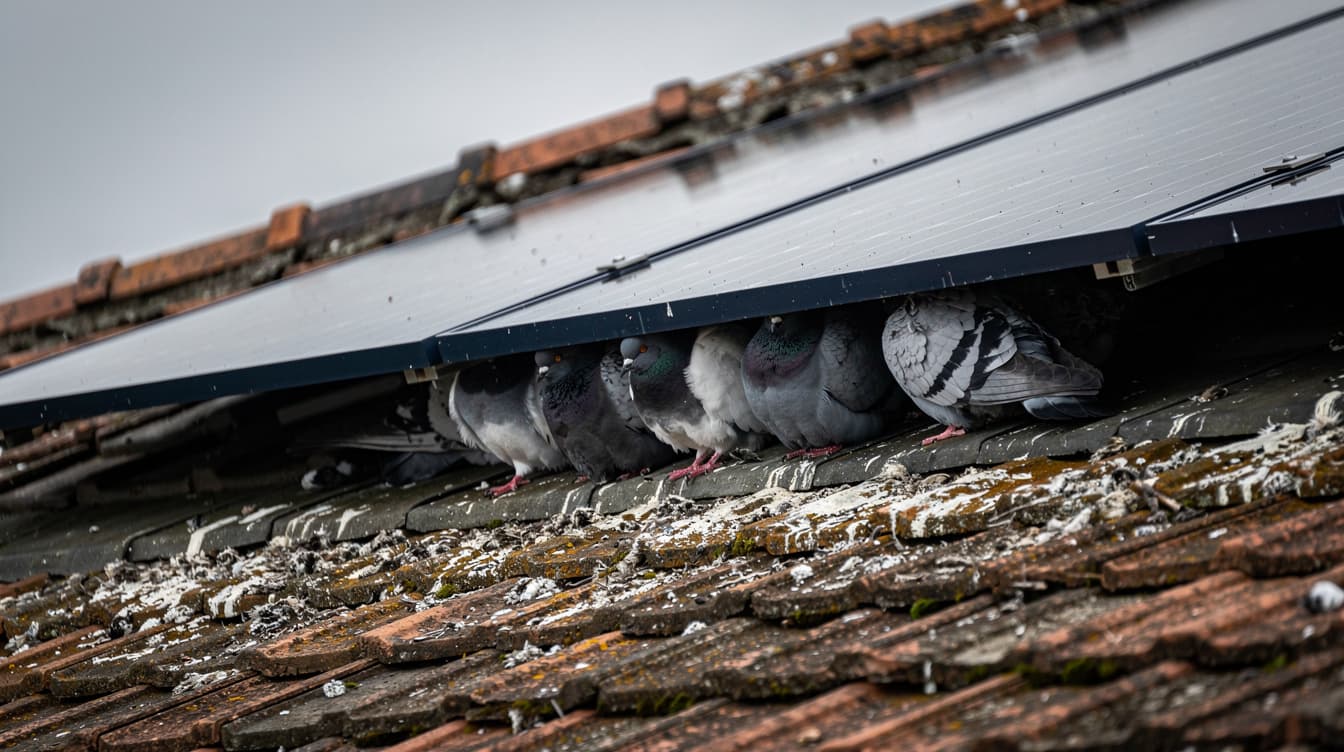
- Dried-on bird droppings — the most common soiling problem in Ireland, especially if pigeons or seagulls roost near your roof
- Lichen and moss — can grow on panel frames and edges in damp, shaded areas
- Tree sap and resin — sticky residue from overhanging branches that rain can't shift
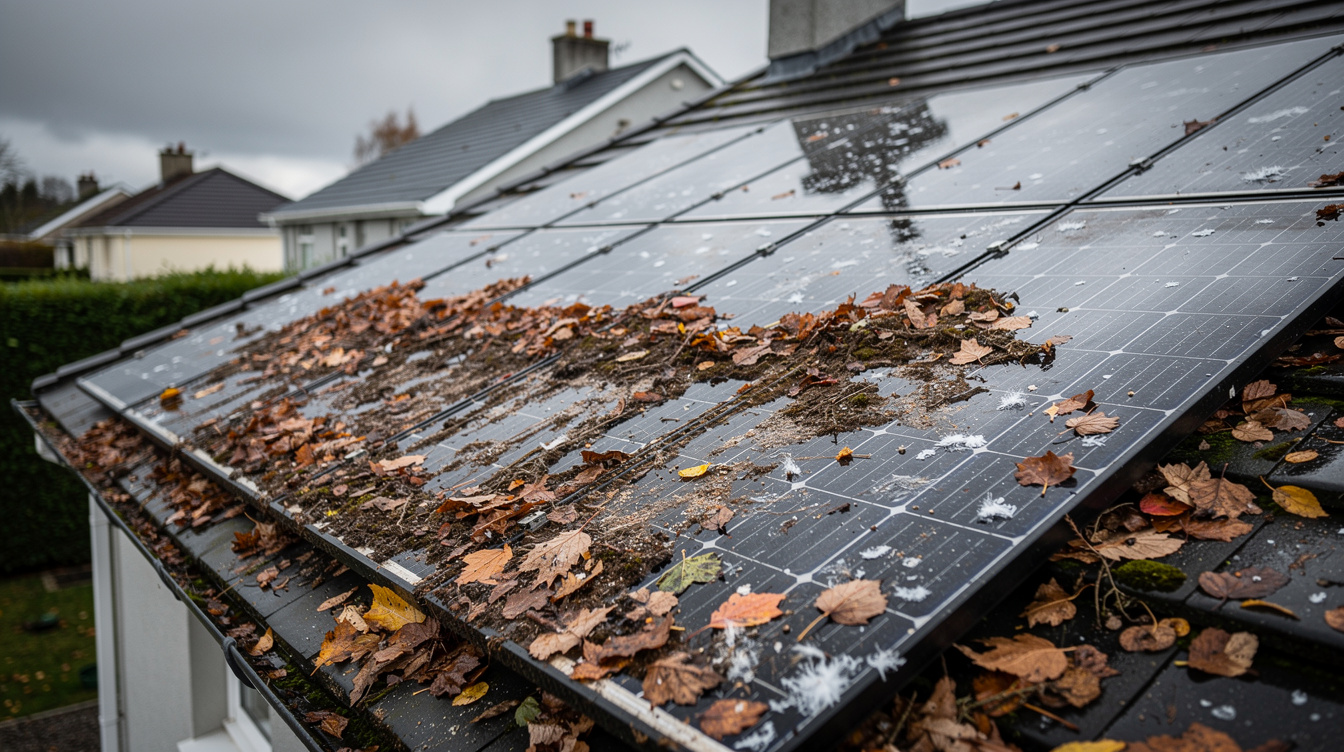
- Autumn leaf build-up — leaves can pile up at the bottom edge of panels, blocking drainage and causing hotspots
- Salt deposits — coastal properties within a few kilometres of the sea get salt spray that leaves a hazy film
For most Irish homes, one good clean per year is enough. Properties near the coast, under trees, or in areas with heavy bird activity may need two.
Your Annual Solar Panel Maintenance Schedule
Here's a complete year-round schedule tailored to Irish conditions. The best time for a thorough check is late February or early March — after winter storms and before the high-production months of April through September.
| When | What to Do | DIY or Pro? | Time |
|---|---|---|---|
| Monthly | Check monitoring app for output and alerts | DIY | 2 min |
| After major storms | Visual check from ground for damage or debris | DIY | 5 min |
| Late Feb/Early Mar | Annual clean (panels, gutters near panels) | DIY or Pro | 1–2 hours |
| Late Feb/Early Mar | Check inverter for error codes, dust, ventilation | DIY | 10 min |
| Autumn (Oct/Nov) | Clear leaves from panels and gutters | DIY | 30 min |
| Every 2–3 years | Professional inspection and service | Professional | 1–2 hours |
| Year 10–12 | Inverter health check (may need replacement soon) | Professional | 1 hour |
Need a Professional Service or New Installation?
Get quotes from SEAI-registered installers who also offer maintenance services.
How to Clean Solar Panels Safely (DIY Guide)
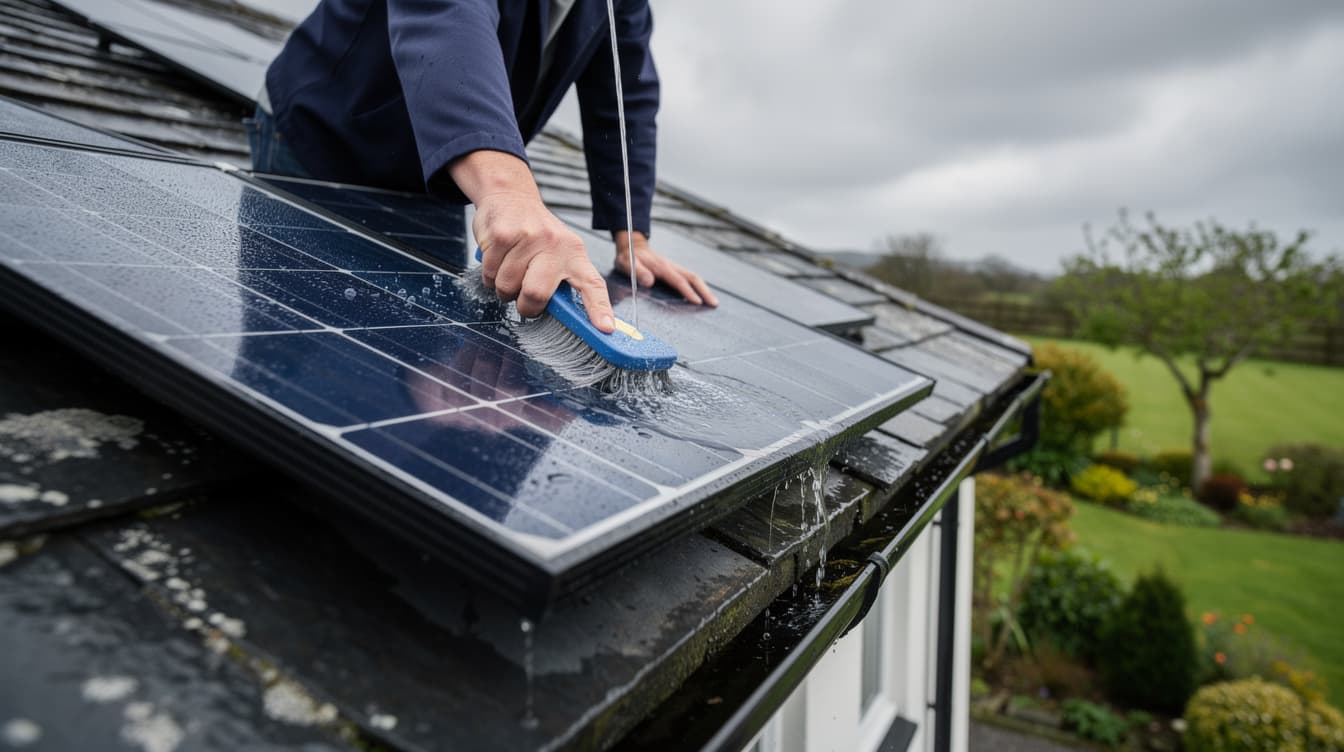
Cleaning solar panels is straightforward, but there are important safety rules. The biggest risk is not the panels — it's falling off the roof. Never climb onto your roof to clean solar panels. Use ground-level methods instead.
What You'll Need
- A garden hose with a standard spray nozzle (not a pressure washer)
- A soft-bristled brush or squeegee on a telescopic pole (available from hardware stores for €30–€60)
- Clean water — tap water is fine in most of Ireland (very soft water areas)
- A bucket of warm water with a tiny amount of washing-up liquid (for stubborn marks)
Step-by-Step Cleaning
- Check your monitoring app first. Note the current daily output. This gives you a "before" reading to compare against after cleaning.
- Hose the panels from the ground. Start at the top and work downward, letting gravity carry the water and loosened debris. This alone removes 80% of surface soiling.
- Use the telescopic brush for stubborn marks. Gently scrub dried-on bird droppings, tree sap, or salt residue. Use warm soapy water on the brush for tough spots. Never use abrasive pads, scouring sponges, or chemical cleaners — they scratch the anti-reflective coating.
- Rinse again with clean water. Remove all soap residue.
- Check your output the next day. Compare to the "before" reading on a similar weather day. A noticeable jump confirms the clean was worthwhile.
What NOT to Do
- Never use a pressure washer. The high pressure can crack panel glass, damage seals, and force water into electrical connections. This is the single most common DIY mistake.
- Never use abrasive cleaners or chemicals. No bleach, no window cleaner with ammonia, no scouring pads. These damage the anti-reflective coating that helps panels absorb more light.
- Never clean panels in full sun. Cold water on hot panels can cause thermal shock and micro-cracks. Clean early morning, late evening, or on a cloudy day (which is most days in Ireland, so this is easy).
- Never climb on the roof. Solar panels are slippery when wet. A fall from a two-storey house can be fatal. Always use a telescopic pole from the ground, or hire a professional with proper access equipment.
- Never touch the wiring or electrical connections. Solar panels generate DC voltage even in low light. Leave all electrical work to qualified professionals.
What Does a Professional Service Include?
A professional solar panel service goes far beyond cleaning. Here's what a reputable Irish solar maintenance company will check during a full service visit:
| Check | What They're Looking For | Why It Matters |
|---|---|---|
| Panel surface inspection | Micro-cracks, delamination, discolouration, snail trails | Cracked cells lose output; delamination lets moisture in |
| Mounting and fixings | Loose bolts, corroded brackets, rail alignment | Storm damage risk if fixings fail |
| Cabling and connectors | Wear, UV damage, rodent chewing, loose MC4 connectors | Loose connections cause arcing (fire risk) and power loss |
| Inverter check | Error logs, fan operation, dust build-up, ventilation | Inverters are the component most likely to fail |
| Earthing and isolation | Earth bond integrity, isolator switch function | Safety-critical — protects against electric shock |
| Performance analysis | Actual output vs expected, degradation rate | Catches underperformance before it costs you money |
| Bird proofing check | Mesh integrity, nesting activity underneath panels | Birds nesting under panels can damage wiring |
How Much Does a Professional Service Cost?
In Ireland in 2026, expect to pay:
- Panel cleaning only: €80–€150 (depending on system size and access difficulty)
- Full service (cleaning + inspection): €150–€250
- Full service + thermal imaging: €200–€350 (thermal imaging reveals hidden hotspots and cell damage)
Some installers offer annual service plans for €100–€150/year, which typically include one clean, one inspection, and priority callout if a fault occurs. These can be good value, especially for systems over 5 years old.
Monitoring: Your Best Maintenance Tool
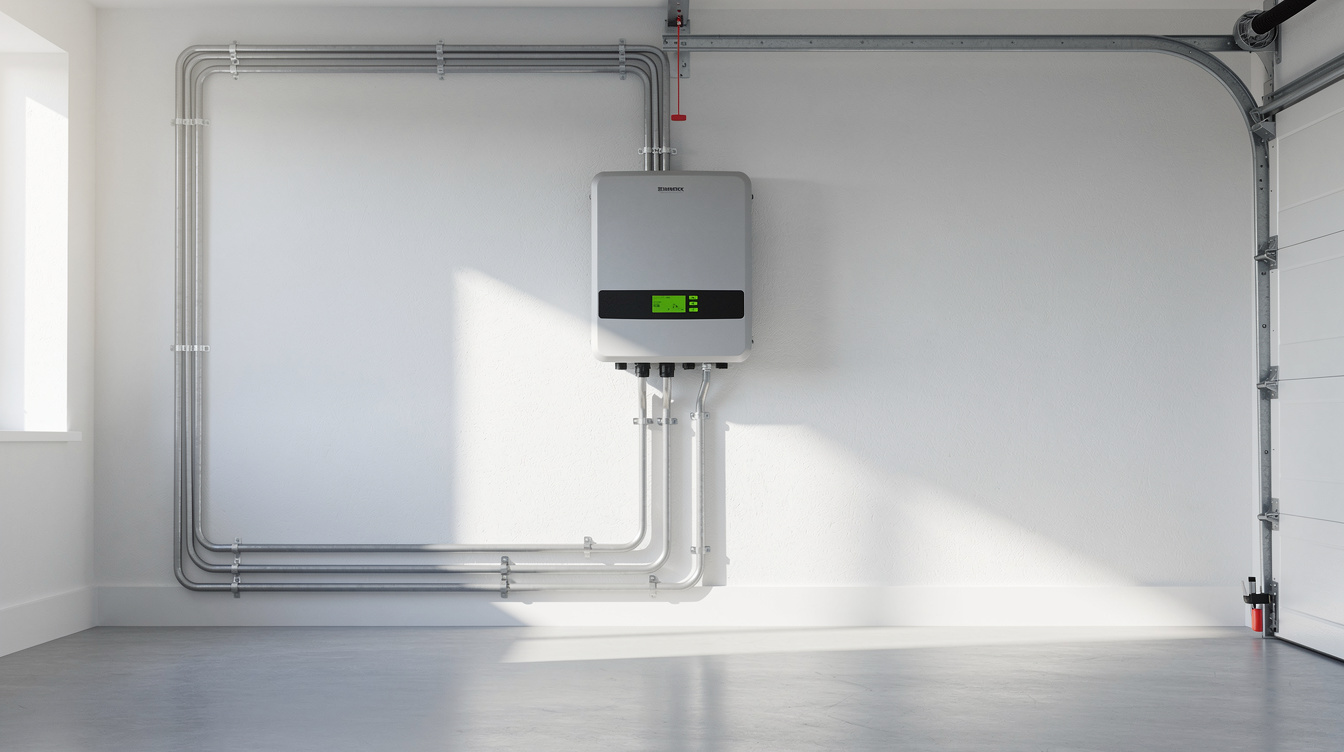
The single most important maintenance action is checking your monitoring app regularly. Modern inverters from Huawei, SolarEdge, GivEnergy, and Enphase all include free monitoring that shows real-time and historical output.
Here's what to look for each month:
- Compare to the same month last year. If output is down more than 10% on a similar-weather month, investigate.
- Check for error codes or alerts. Most apps send push notifications for faults — make sure these are turned on.
- Look for sudden drops. A healthy system's output curve is smooth. A sudden step-down mid-month suggests a fault (tripped breaker, failed string, inverter error).
- Compare individual panels (if you have panel-level monitoring). One panel producing significantly less than its neighbours needs investigating.
If your monitoring shows a problem you can't diagnose, take a screenshot and send it to your installer. Most issues can be triaged remotely before scheduling a site visit.
The 5 Most Common Solar Panel Problems in Ireland
1. Bird Nesting Under Panels
Pigeons love the sheltered gap between solar panels and the roof. They build nests, leave droppings on and around panels, and can damage wiring. The fix is bird-proofing mesh installed around the panel edges (€300–€600 for a typical system). Prevention is much cheaper than cure — if you're getting new panels installed, ask for bird proofing at the same time.
2. Inverter Failure
The inverter is the hardest-working component in your system, converting DC from the panels to AC for your home. Most inverters last 10–15 years and come with a 5–12 year warranty (extendable on some brands). Signs of inverter trouble: error codes on the display, unusual buzzing or clicking, red/orange warning lights, or a sudden drop to zero output.
Replacement cost: €1,200–€2,000 for a standard string inverter, €1,500–€2,500 for a hybrid inverter. This is the main mid-life cost of a solar installation.
3. Micro-Cracks in Panels
Micro-cracks are tiny fractures in the silicon cells, invisible to the naked eye. They can be caused by thermal cycling, hail, or poor handling during installation. They reduce output gradually and are detected via thermal imaging or electroluminescence testing during a professional inspection.
If a panel has significant micro-cracking, it's usually covered under the manufacturer's 25–30 year performance warranty. Your installer can submit a warranty claim on your behalf.
4. Shading From New Growth
Trees and hedges grow. A system that had no shading issues at installation can develop problems 3–5 years later when an ash tree or laurel hedge has grown another 2 metres. Trimming overhanging branches solves the problem. If you have panel-level monitoring, you'll see which specific panels are affected and can target your trimming accordingly.
5. Loose or Corroded Connections
MC4 connectors (the plug-in connectors between panels) can work loose over time, especially if they weren't properly crimped during installation. Corroded or loose connections cause resistance, which reduces output and generates heat — a potential fire risk. This is why professional inspections every 2–3 years are important, even if your panels look fine from the ground.
Ready to Go Solar?
Get your free personalised quote from SEAI-registered installers.
Maintenance Costs Over the Life of Your System
One of the best things about solar panels is how little they cost to maintain. Here's a realistic 25-year maintenance budget for a typical 5 kW system in Ireland:
| Item | Frequency | Cost Per Visit | 25-Year Total |
|---|---|---|---|
| DIY cleaning (hose + brush) | Annual | €0 (your time) | €0 |
| Professional service | Every 3 years | €150–€250 | €1,200–€2,000 |
| Inverter replacement | Once (year 12–15) | €1,200–€2,000 | €1,200–€2,000 |
| Bird proofing (if needed) | Once | €300–€600 | €300–€600 |
| Total estimated | €2,700–€4,600 |
Compare that to the €25,000–€35,000+ in electricity savings a 5 kW system generates over 25 years at current Irish electricity prices. Maintenance costs amount to roughly 10–15% of lifetime savings — making solar panels one of the lowest-maintenance home investments you can make.
When to Call Your Installer (Urgent vs Non-Urgent)
| Situation | Urgency | What to Do |
|---|---|---|
| Burning smell or crackling sound from inverter | Emergency | Turn off AC isolator immediately. Call installer. |
| Water ingress around panel mounting points | Urgent (within days) | Can damage roof structure. Contact installer ASAP. |
| Inverter showing error code and not producing | Soon (within a week) | Take photo of error. Check if MCB tripped in fuse board. Contact installer. |
| Panel visibly cracked or shattered | Soon | System still works but damaged panel needs replacing. Warranty claim likely. |
| Output gradually declining | Non-urgent | Schedule a professional inspection at next available slot. |
| Birds nesting under panels | Non-urgent | Schedule bird proofing. Don't disturb active nests (protected by law). |
Pro tip: Keep your installer's contact details saved in your phone. Most Irish solar installers offer maintenance services to their existing customers, and they know your system already. If your original installer has closed down, any SEAI-registered installer can service any brand of equipment.
Warranty and Insurance: What's Covered?
Understanding your warranties can save you thousands if something goes wrong:
- Panel performance warranty (25–30 years): Guarantees the panels will still produce at least 80–85% of their rated output after 25 years. If they don't, the manufacturer replaces them. Keep your proof of purchase.
- Panel product warranty (12–15 years): Covers manufacturing defects like delamination, junction box failure, or glass cracking. Separate from the performance warranty.
- Inverter warranty (5–12 years): Covers defects and failures. Many brands offer extended warranties (e.g., Huawei offers 10 years, SolarEdge offers 12 years standard). If your inverter warranty is short, ask about extensions at installation — they're much cheaper upfront than buying extended warranty later.
- Workmanship warranty (2–10 years): Provided by your installer, covering the quality of the installation itself. This covers things like roof leaks from mounting, poor wiring, or incorrectly configured inverter settings.
For home insurance, most Irish insurers cover solar panels under your standard policy, but you must notify your insurer when panels are installed. The rebuild cost of your property should be updated to include the panel replacement value.
Frequently Asked Questions
How often should I clean my solar panels in Ireland?
Once a year is sufficient for most homes. If you're under trees, near the coast, or have heavy bird activity, clean twice a year. Ireland's regular rainfall handles light soiling between cleans. See our DIY cleaning guide for detailed instructions.
Do I need to turn off my solar panels before cleaning?
No, as long as you're cleaning from the ground with a hose and brush. The panels are designed to be exposed to rain, so water on the surface is perfectly safe. However, never touch electrical connections, and never use a pressure washer.
Will dirty panels really affect my output?
Yes, but perhaps less than you'd think. In Ireland, typical soiling reduces output by 2–5%. Heavy bird droppings or leaf accumulation on specific panels can cause 10–20% loss on those panels. The biggest benefit of cleaning isn't the average loss — it's catching severe localised soiling that your monitoring might not clearly flag.
Can I use a pressure washer to clean solar panels?
Absolutely not. Pressure washers can crack panel glass, damage seals, and force water into electrical connections. Use only a garden hose with a normal spray nozzle. A soft brush on a telescopic pole handles stubborn marks.
How do I know if my solar panels need replacing?
Modern panels last 30–40 years and are very rarely replaced entirely. Signs of end-of-life include visible discolouration, significant output decline beyond normal degradation (0.4–0.5% per year is normal), or widespread micro-cracking. In practice, the inverter will need replacing long before the panels do. See our lifespan guide.
What happens if a panel is damaged in a storm?
Storm damage is typically covered by your home insurance. Contact your insurer first, then your installer. A single damaged panel can usually be replaced without affecting the rest of the system. Panels are designed to withstand wind speeds up to 130–160 km/h when properly installed.
Thinking About Going Solar?
Our SEAI-registered installers provide worry-free installation with ongoing maintenance support.
Related Articles
How Long Do Solar Panels Last in Ireland? Lifespan, Warranties & What Actually Wears Out
Solar panels last 25-35 years in Ireland. Learn about degradation rates, inverter replacement, battery lifespan, warranties, and 30-year cost of ownership.
Solar Panel Bird Proofing Ireland: How to Stop Pigeons Nesting Under Your Panels
How to bird proof solar panels in Ireland. Costs, methods, DIY vs professional, and legal rules. Wire mesh from €300 solves pigeon problems permanently.
Solar Panels for a 4-Bed House in Ireland 2026: Costs, System Sizes & Real Savings
How much do solar panels cost for a 4-bed house in Ireland? Real 2026 prices from €4,500 after SEAI grant. System sizing, savings breakdown and battery advice.