
Solar Panel Maintenance Cost Ireland 2026: 25-Year Ownership Budget
You’ve been quoted €12,000 for a solar panel system. The installer mentions it’ll save you €1,400 a year. But what nobody’s told you is what the system costs you after the installer’s van pulls away. Cleaning. Inverter replacement. Battery degradation. Insurance. Monitoring subscriptions. The boring stuff that turns a 7-year payback into an 8-year payback — or in worst cases, into something that never pays back at all.
This guide is the honest 25-year cost-of-ownership picture for solar panels in Ireland in 2026. No salesy “maintenance free” promises. Real prices for the work you’ll actually need, when you’ll need it, and what to budget for. By the end you should be able to look at any installer’s payback claim and ask the right questions.
Quick Answer: How much does solar panel maintenance cost in Ireland?
A typical 6 kW residential solar PV system in Ireland costs roughly €100–€180 per year in routine maintenance (cleaning, inspection, monitoring), plus one major mid-life inverter replacement around year 12–15 at €1,400–€2,200. Across 25 years, total ownership costs typically come to €3,500–€5,500 on top of the original install — or roughly €140–€220 per year averaged out.
The 25-year cost picture — what to budget for
Solar PV is one of the lowest-maintenance technologies in your home, but "low" isn’t "zero." Here’s the realistic 25-year cost breakdown for a standard 6 kW system with a 5 kWh battery in Ireland in 2026:
| Item | When | Cost (2026 €) | 25-yr total |
|---|---|---|---|
| Annual visual inspection | Yearly | €0 (DIY) or €80–€120 | €0–€3,000 |
| Panel cleaning | Every 2–3 yrs | €120–€220 per visit | €1,000–€2,750 |
| Inverter replacement | Year 12–15 | €1,400–€2,200 (string/hybrid) | €1,400–€2,200 |
| Battery replacement | Year 12–18 | €3,500–€5,500 (5 kWh) | €3,500–€5,500 |
| Bird-proofing mesh | Once, year 1–3 | €300–€550 | €300–€550 |
| Home insurance uplift | Yearly | €30–€90 extra/yr | €750–€2,250 |
| Monitoring subscription | Yearly (optional) | €0–€60 | €0–€1,500 |
| Unplanned repairs / parts | ~1–2 events | €200–€800 each | €200–€1,600 |
| TOTAL (PV-only) | 25 yrs | €3,500–€5,500 | |
| TOTAL (with battery) | 25 yrs | €7,000–€11,000 |
Averaged out, that’s €140–€220 per year for a PV-only system, or €280–€440 per year if you include battery replacement. Compare that to the €1,200–€1,800 your system saves annually and the ownership maths still works comfortably — but the “maintenance free” narrative some installers use is genuinely misleading.
1. Annual inspection — DIY or paid?
Most installers recommend a yearly visual check of the system: panels, mounting hardware, cabling, inverter, isolators and metering. You have three options:
- DIY visual check from the ground: Free. Walk around the house, look up at the panels for cracked glass, displaced clamps, lifted flashings, droopy cables, birds nesting under the array. Open the inverter cupboard, check the display for fault codes, log the kWh-to-date reading. Takes 15 minutes. Adequate for years 1–5 of a healthy system.
- Paid annual inspection by your installer: €80–€120. Includes thermal imaging of a few panels, DC/AC voltage checks at the isolator, software inverter health check, written report. Worth it from year 6 onwards.
- Full electrical inspection by a registered electrician: €180–€300. Recommended every 10 years for insurance and to satisfy property buyers if you ever sell the house with the system installed.
For a typical owner who does ground checks themselves and pays for a professional inspection every 3–5 years, budget about €500–€1,000 across 25 years.
2. Cleaning — how often, how much, who does it
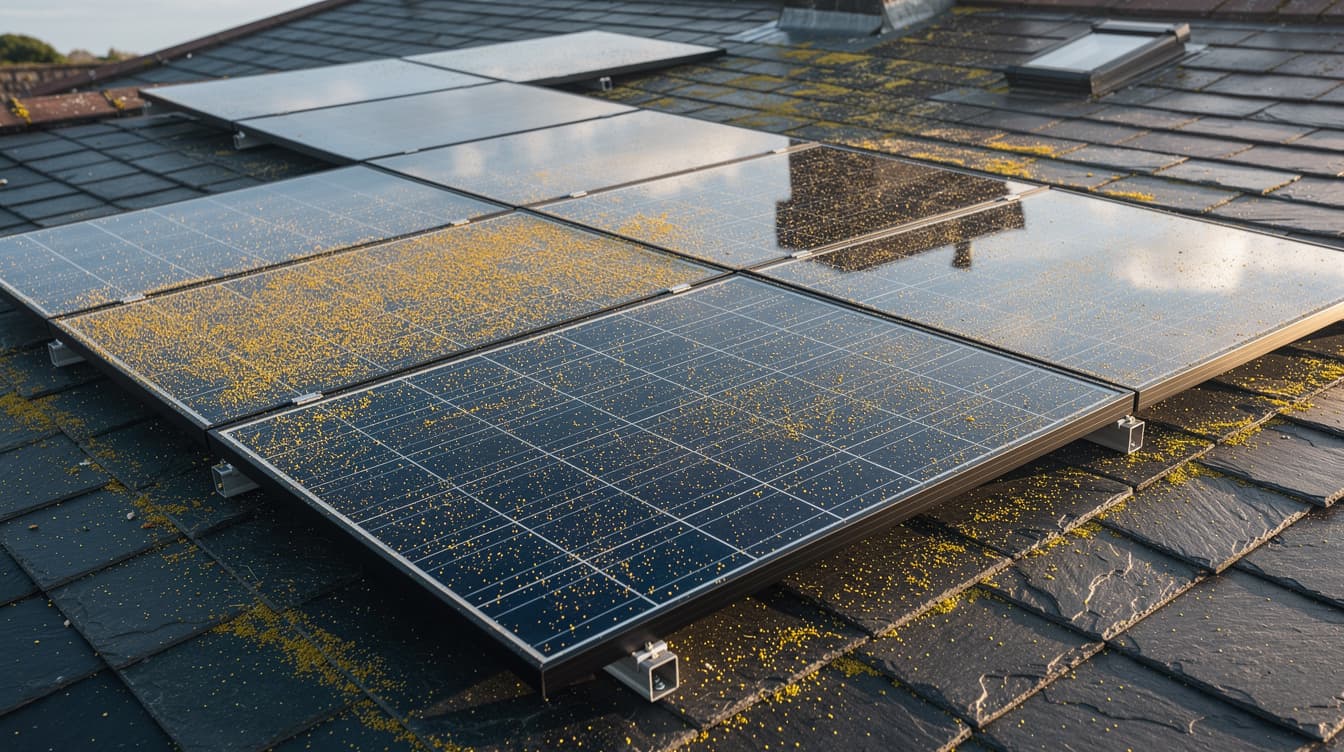
This is where most owners overspend. Ireland’s frequent rain does a surprisingly good job of cleaning panels passively — you don’t need to be on the roof every six months like you would in dusty Mediterranean climates. But not all dirt rinses off, and a year or two of build-up of pollen, lichen, bird droppings and sea salt (if you’re coastal) does measurably reduce output.
How dirty panels actually cost you
| Condition | Typical output loss | Annual cost (6 kW system) |
|---|---|---|
| Light pollen dust | 1–3% | €15–€40 |
| Bird droppings (scattered) | 3–6% | €40–€80 |
| Bird droppings (concentrated) | 8–15% | €100–€200 |
| Lichen / moss on edges | 5–12% | €70–€170 |
| Sea salt film (coastal) | 3–8% | €40–€110 |
Rule of thumb: clean every 2–3 years if you’re inland and rurally located, every 18–24 months if you’re coastal or under tree cover. The cost saving from cleaner panels typically covers the cleaning itself within 12–18 months.
Cleaning options and 2026 prices
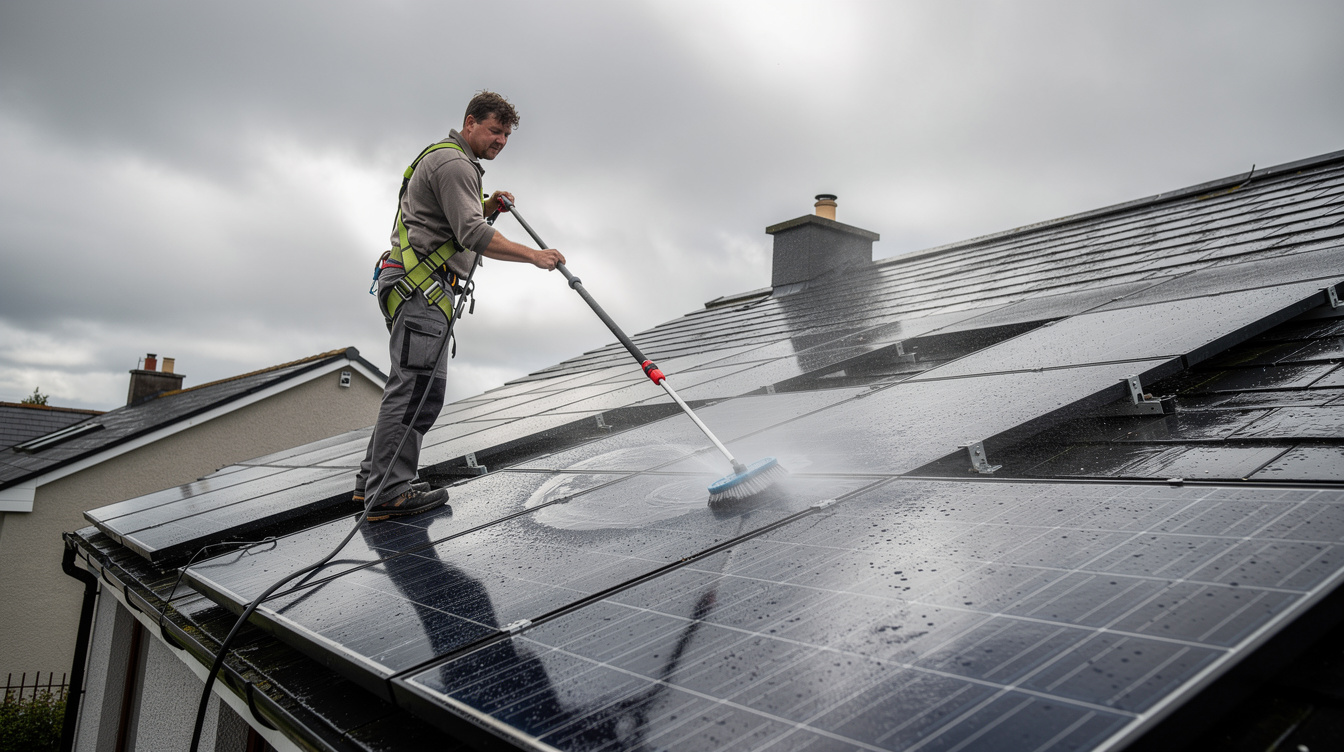
- DIY with a water-fed pole and soft brush: €120–€180 one-off for the kit (telescopic pole + soft brush head + connector). Then free thereafter. Only safe for ground-floor reach panels or low pitches.
- Window cleaner with solar add-on: €60–€120 per visit. Most modern window cleaners offer solar cleaning as an add-on. They’re already insured for working at height with extension poles.
- Dedicated solar cleaning company: €150–€280 per visit. Brings deionised water, soft brushes, full PPE, comes with public liability insurance specifically for solar work, often issues a before/after report.
- Installer service contract: €180–€320 per year for cleaning + inspection bundled. Convenient but typically more expensive than à-la-carte.
Never use: Pressure washers (will fracture EVA encapsulant), abrasive sponges (will micro-scratch the anti-reflective coating), tap water (mineral residue leaves a film), or harsh detergents (some void the manufacturer warranty). Deionised water + soft brush only.
3. Inverter replacement — the big one
This is the single largest mid-life cost in solar ownership and the one most installers gloss over. A solar inverter is a piece of high-power electronics constantly cycling DC into AC. It runs hot. Capacitors degrade. Cooling fans wear out. Most inverters carry a 10-year manufacturer warranty — not because they last exactly 10 years, but because that’s the realistic statistical mean-time-before-failure.
Inverter replacement cost by type (2026 Ireland)
| Inverter type | Typical lifespan | Replacement cost (parts) | Plus labour |
|---|---|---|---|
| String inverter (5–6 kW) | 10–15 years | €900–€1,400 | €300–€500 |
| Hybrid inverter (battery-ready) | 10–15 years | €1,400–€2,200 | €400–€700 |
| Microinverters (per unit) | 20–25 years | €180–€280 each | €120 per visit |
| Power optimisers (per unit) | 15–25 years | €80–€120 each | €120 per visit |
If the inverter is still under its 10-year manufacturer warranty when it fails, the replacement unit is free — but the installer’s labour usually isn’t. Budget €350–€500 for a warranty swap.
Microinverters (Enphase) and power optimisers (SolarEdge) cost more upfront than a single string inverter, but spread the failure risk across many smaller units. You’re unlikely to need to replace all of them at once.
For more on inverter types and which to choose at install, see our Solar Inverters Ireland 2026 guide.
4. Battery degradation and replacement
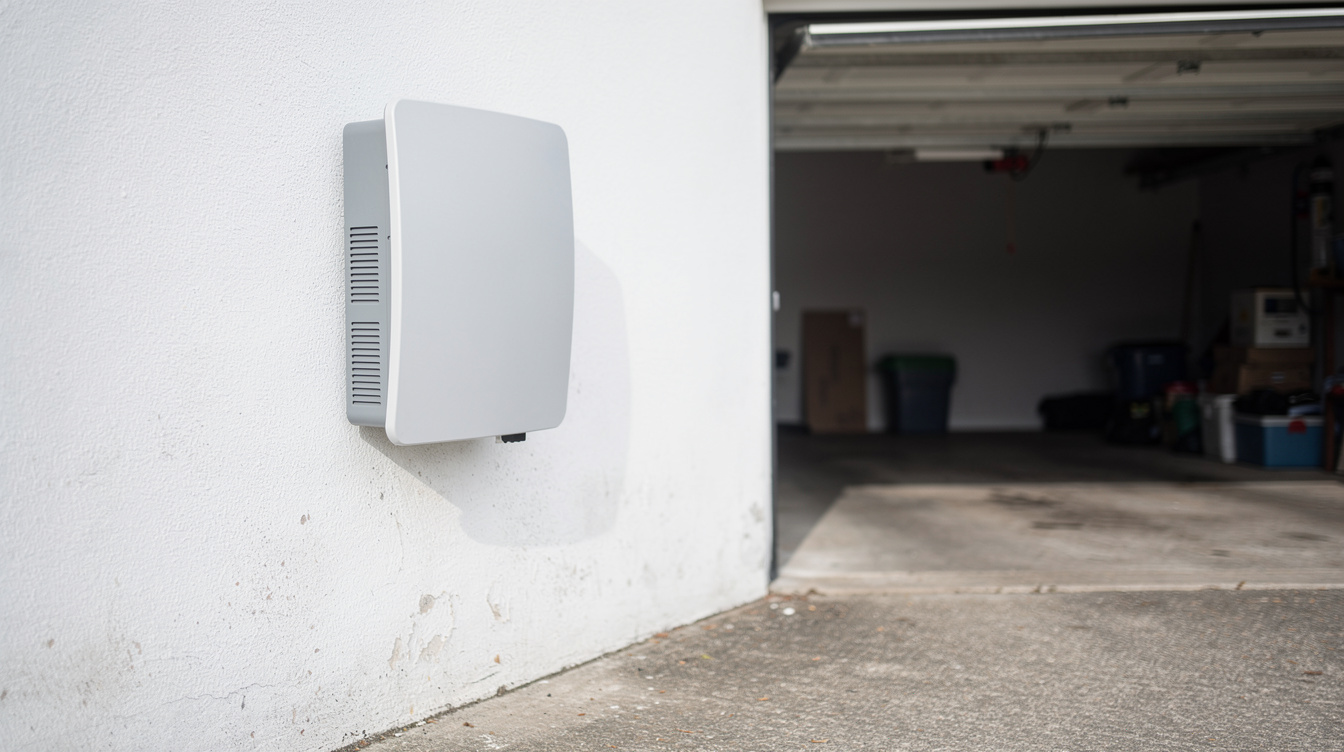
If you’ve got a home battery (Tesla Powerwall, Sigenergy, GivEnergy, BYD or similar), this is your second-biggest ownership cost. Lithium batteries lose capacity over time. A battery that started at 5 kWh usable will, by year 10, often deliver only 3.5–4 kWh — meaningfully less useful, especially if you sized it tightly to begin with.
| Battery | Warranty | EOL capacity (typical) | 2026 replacement cost |
|---|---|---|---|
| Tesla Powerwall 3 | 10 yrs / 70% | 70–75% | €7,500–€9,500 fitted |
| Sigenergy 5 kWh module | 10 yrs / 70% | 70–80% | €3,500–€4,800 fitted |
| GivEnergy 5.2 kWh | 12 yrs / 60% | 60–70% | €3,200–€4,400 fitted |
| BYD HVS 5.1 kWh | 10 yrs / 60% | 60–70% | €3,500–€5,000 fitted |
The good news: battery costs have fallen roughly 11–15% per year for the past five years. A €5,000 replacement in 2026 might be a €3,200 replacement in 2036 if the trend continues. The bad news: nobody can promise that trend continues. Budget conservatively.
Most owners won’t actually replace the battery at year 10 — they’ll just live with reduced capacity until something fails. A 75%-capacity 10-year-old battery still saves you money. Replacement is more often triggered by inverter-battery communication failure or visible swelling.
Comparing Solar Quotes?
Ask installers about 10-year and 25-year ownership cost, not just install price. We connect you with SEAI-registered installers who give honest answers.
5. Bird-proofing — the unexpected first-year expense
Pigeons and starlings love the warm, dry, sheltered space under solar panels. In Ireland, roughly 1 in 4 systems develops a bird-nesting problem within 24 months of install — especially in suburban estates and any home near old farmland buildings. Once they’re in, droppings on the panels above + acid damage to roof underlay + clogged gutters can compound to thousands of euros in damage.
The fix is cheap if you do it as part of the original install, expensive if you do it retrospectively:
- Mesh fitted at install: €200–€350 added to the install quote. Most installers don’t mention it — ask.
- Retrofit mesh (no birds yet): €350–€550. Scaffolding required.
- Retrofit after infestation: €500–€900 (mesh + cleaning + droppings removal).
If your installer doesn’t offer bird-proofing as a line item, factor €350–€550 into your year 1–3 budget.
6. Home insurance — what changes after install
Most Irish home insurance policies will cover solar PV as part of the standard buildings policy if you notify them at install. Some insurers won’t cover until you formally update the policy and pay a small uplift (typically €30–€90 per year). Failing to notify is grounds for refusing a claim in a fire, lightning or storm event.
- Standard residential PV ≤6 kW: Usually accepted with no premium uplift by Aviva, FBD, AXA. Small uplift (€30–€60/yr) from Zurich, Allianz.
- System >6 kW or with battery >5 kWh: Most insurers add €40–€90/yr.
- Ground-mount or non-standard install: Some insurers exclude entirely; you may need a specialist policy add-on.
Tell your insurer the install date, kWp rating, inverter brand and whether you have a battery. Keep your install certificate and ESB connection paperwork — you’ll need both for any claim.
7. Monitoring and software
Almost all modern inverters come with a free monitoring app: SolarEdge mySolarEdge, Enphase Enlighten, GivEnergy app, Tesla app, Sigen app. These are permanently free for the lifetime of the inverter and worth installing the day your system goes live.
Optional paid layers:
- SolarEdge Designer Plus: €40–€60/yr. Premium analytics, per-panel performance trends. Niche.
- Third-party monitoring (Solar.web, PVOutput Pro): €30–€50/yr. Useful if you have multiple inverter brands at one site.
- Energy management platforms (Octopus Go, Bright HEMS): €0–€100/yr. Combines smart meter, PV, battery and EV charging into one dashboard.
For 95% of homeowners, the free manufacturer app is enough. Don’t feel pressured to pay for monitoring.
8. Unplanned repairs — what actually breaks
Across 25 years, plan for 1–2 unplanned repair events on a typical 6 kW system. Here’s what we see most often in Ireland in 2026:
- DC isolator failure: €180–€320. The rooftop isolator switch corrodes after 8–12 years of Atlantic weather. Common on coastal installs.
- MC4 connector failure / arc: €150–€280. Water ingress in a connector causes a hot spot. Often shows up as a panel underproducing.
- Single panel replacement (cracked glass, hot spot): €280–€450 including labour and panel. Usually covered for 12 years under product warranty; you pay labour.
- Mounting hardware corrosion: €200–€400 for a small re-fit. Mostly cosmetic but should be checked at 15 years.
- Cable rodent damage (loft cables): €200–€500. Rats and squirrels chew DC and signal cables. Re-route + replace.
Maintenance cost by system size
| System size | Annual maint. | 25-yr total (PV only) | 25-yr total (with battery) |
|---|---|---|---|
| 3 kW | €90–€160 | €2,800–€4,200 | €5,500–€8,500 |
| 5 kW | €110–€180 | €3,200–€4,800 | €6,500–€10,000 |
| 6 kW | €130–€200 | €3,500–€5,500 | €7,000–€11,000 |
| 8 kW | €160–€240 | €4,200–€6,200 | €8,000–€12,500 |
| 10 kW | €180–€280 | €4,800–€7,000 | €9,000–€14,000 |
How maintenance affects your real payback
Let’s redo a payback calculation with realistic maintenance numbers included. Take a typical 6 kW system with a 5 kWh battery in 2026:
- Install cost (post-grant): €11,400
- Annual savings (electricity offset + CEG export): €1,420
- Headline payback (naïve): €11,400 ÷ €1,420 = 8.0 years
Now factor in maintenance:
- Year 1–10 annual maintenance: €160/yr = €1,600
- Year 1–3 bird mesh retrofit: €400
- Year 12 inverter replacement: €1,800
- Year 14 battery replacement: €3,500 (after 11–15% annual cost reduction)
- Year 11–25 annual maintenance: €180/yr = €2,700
- Total 25-year ownership cost: €11,400 + €10,000 = €21,400
- Total 25-year savings: €1,420 × 25 = €35,500 (without inflation)
- Net 25-year profit: €14,100
- True payback (accounting for maintenance): 9.3 years
So that 8-year payback you saw in the brochure becomes about 9.3 years once you include realistic maintenance. Still a solid investment — better than most index funds since 2000 — just not the “7 years and it’s pure profit” pitch.
Maintenance you can skip (and one you can’t)
You can safely skip:
- Annual paid inspections in years 1–5. DIY ground checks are fine while everything’s new and warrantied.
- Cleaning more than every 24 months if you’re inland and your panels are at >25° pitch. Irish rain genuinely does most of the work.
- Paid monitoring upgrades. The free app is fine.
- Extended warranty add-ons beyond what the manufacturer offers. They’re usually high margin and rarely pay out.
What you absolutely cannot skip:
- Updating your home insurance at install. A €30 phone call could be the difference between a covered fire claim and a denied one.
- Storm damage check after Atlantic storms with sustained 100 km/h+ winds. Cheap, fast, and the only way to spot a loosened clamp before it becomes a flying panel.
Frequently asked questions
Do solar panels need cleaning in Ireland?
Less often than in dry climates — Irish rain rinses most pollen and light dust off naturally. A typical inland Irish system needs professional cleaning every 24–36 months. Coastal homes and homes under tree cover should clean every 18 months. Skip cleaning entirely and you lose 5–10% output by year 3.
How long does a solar inverter last in Ireland?
10–15 years for a string or hybrid inverter, 20–25 years for microinverters and power optimisers. Most inverters in Ireland come with a 10-year manufacturer warranty (some up to 12 years), with optional paid extensions. Budget for one mid-life replacement at €1,400–€2,200 fitted.
Will my home insurance cover solar panels?
Most Irish home insurers cover PV systems as part of the buildings policy provided you notify them at install. Some add a small uplift (€30–€90/yr) for larger systems or batteries. Failing to notify can void a claim, so always update your policy on commissioning day.
What happens if a panel breaks?
Most panel manufacturers offer a 12–25 year product warranty. If a panel fails due to manufacturing defect (cracked cell, delamination, hot spot), the manufacturer covers the panel itself; you pay labour (€120–€250) to swap it in. Glass broken by storm damage is usually covered by your home insurance, not by the panel warranty.
Do batteries really only last 10 years?
They last longer than 10 years — most reach 25–30% capacity loss by year 10 (the warranted level) but continue functioning at reduced capacity for several more years. Real-world useful battery life in Ireland is closer to 12–18 years. Plan for replacement around year 14–16.
Can I do my own maintenance?
Some of it. Ground-level visual checks, app monitoring, gutter cleaning under panels and bird-droppings cleanup with a soft brush from a safe ladder are all DIY-able. Anything involving the DC side (rooftop isolator, MC4 connectors, panel removal) or the inverter electrical compartment must be done by a Safe Electric registered electrician or your system warranty is voided.
What is the total cost of solar panels over 25 years in Ireland?
For a typical 6 kW system with 5 kWh battery in 2026: install €11,400 + maintenance €10,000 = roughly €21,400 across 25 years. Against €35,500 in electricity savings (without inflation), that’s a net €14,100 profit — not bad for a piece of kit on your roof you barely think about.
Ready to Go Solar?
Get a free, honest quote from SEAI-registered installers in your county.
The bottom line
Solar PV is not "maintenance free" in 2026 — but it is low-cost to own. Budget roughly €140–€220 per year on average for a PV-only system, or €280–€440 per year if you have a battery. The single biggest mid-life cost is the inverter replacement at year 12–15; the second is battery replacement somewhere around year 14–18.
None of this kills the case for solar — even with realistic maintenance accounted for, a 6 kW system in Ireland delivers about €14,000 in net profit across 25 years. But it does mean the "7-year payback then pure profit" narrative is more like a 9-year payback then strong-but-not-pure profit. Plan accordingly, and demand any installer quoting you a system also gives you their estimate of 25-year ownership cost — not just install price.
Need quotes that account for ownership cost, not just install price? Get yours here.
Related Articles
Solar Thermal Panels Ireland 2026: Cost, Best Brands & Where to Buy
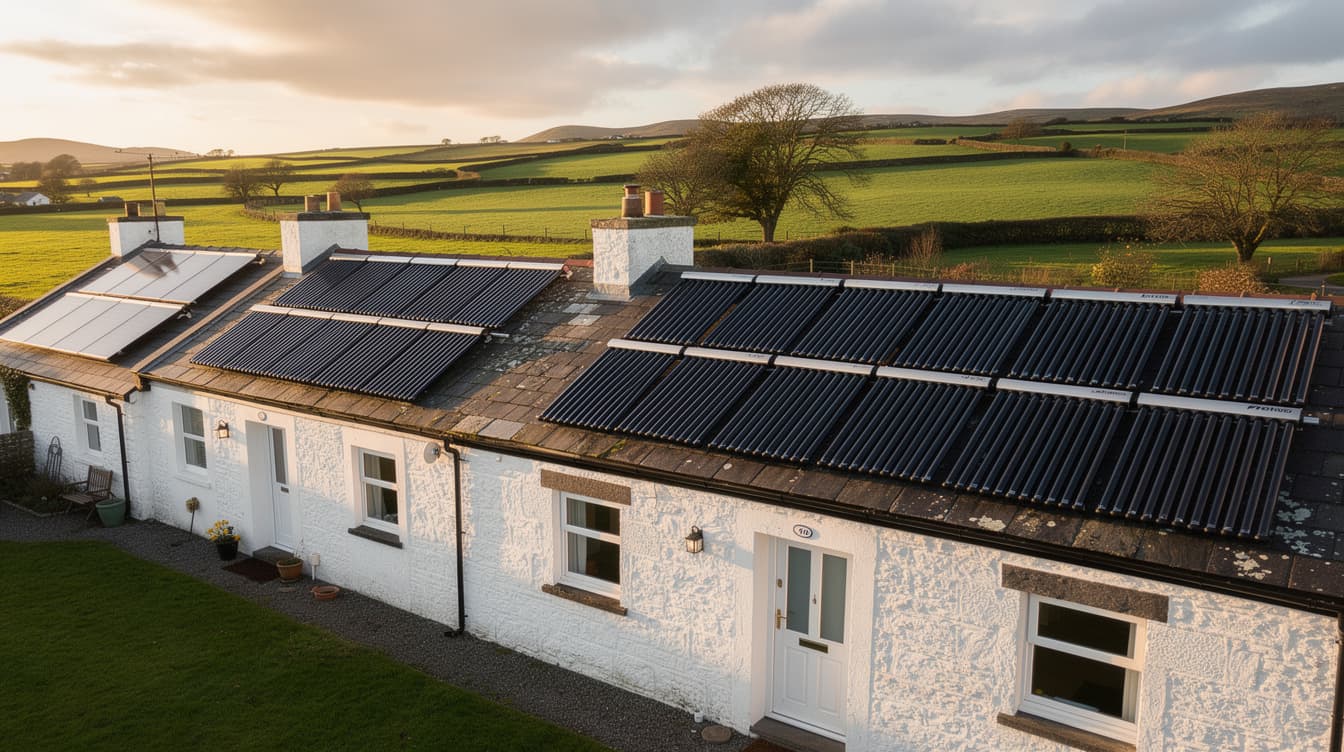
Solar thermal panel prices in Ireland 2026, plus where to buy, flat-plate vs evacuated tube, top brands and why SEAI dropped the thermal grant.
Storm & Lightning Damage to Solar Panels Ireland 2026: Insurance, Surge Protection, Repairs
How Irish solar systems survived Storm Éowyn's 183km/h gusts. Wind loading zones, surge protection costs, home insurance gotchas, before-storm checklist.
Bird Proofing Solar Panels Ireland 2026: Pigeon Guards, Costs & DIY vs Pro
Pigeons nest under solar panels — here's how to stop them. Costs, mesh vs skirting, install-day vs retrofit prices, DIY safety notes.