
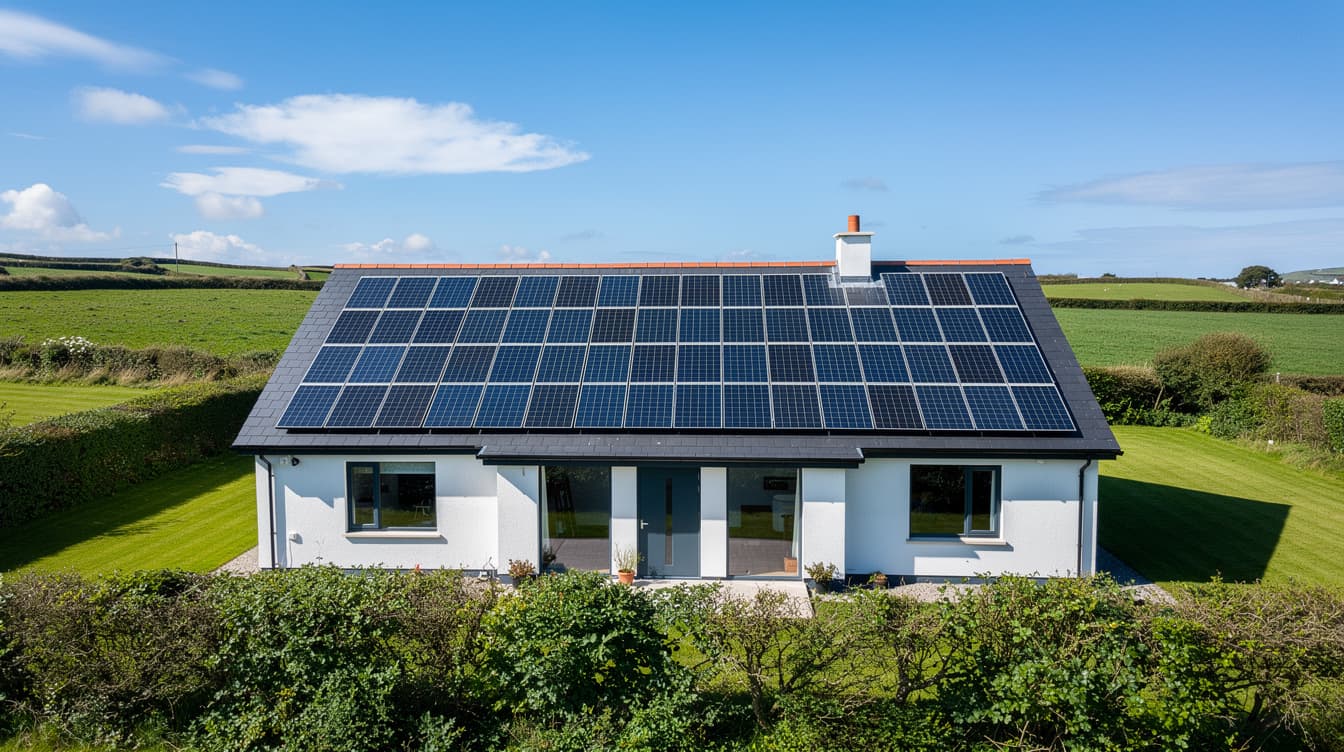
Solar Panel Temperature Coefficient Ireland 2026: How Heat Affects Output
Every solar panel spec sheet lists a “temperature coefficient” — a small negative number like −0.29 %/°C for the power output, tucked between the mechanical dimensions and the electrical specs. Most Irish homeowners scroll straight past it. Some installers quote it as the deciding factor between two panels. Both extremes miss what actually matters in a country where the average July rooftop panel rarely gets past 40 °C.
This guide walks through what the temperature coefficient actually measures, how much it costs you in output on a real Irish rooftop, which brands do best on the number in 2026 — and why for most Irish homes the temperature coefficient is a distant fourth-place concern behind low-light performance, PID resistance and simple Pmax at 25 °C.
What is a solar panel temperature coefficient?
All silicon PV panels lose output as they get hotter. The temperature coefficient of Pmax (labelled γPmax or Pmax T-coeff on datasheets) tells you how much power the panel loses for every degree above the standard test condition (STC) of 25 °C cell temperature.
A coefficient of −0.29 %/°C means the panel loses 0.29 % of its rated output for every 1 °C the cell rises above 25 °C. So a 440 W panel running at 55 °C cell temperature is producing:
440 W × (1 − 0.29 % × 30 °C) = 440 × 0.913 = 402 W
Panels also have separate coefficients for open-circuit voltage (Voc, typically −0.24 %/°C) and short-circuit current (Isc, typically +0.045 %/°C) — but for homeowner sizing decisions, the Pmax coefficient is the only one that matters day-to-day.
Modern residential monocrystalline panels in 2026 typically sit between −0.26 %/°C (best in class, N-type TOPCon or heterojunction) and −0.34 %/°C (older P-type PERC modules still in circulation).
Ready to Go Solar?
Get free quotes from SEAI-registered installers using tier-1 panels.
How hot do solar panels actually get in Ireland?
This is the question that reframes the whole conversation. Ireland is not Arizona. Even on our warmest days, the atmosphere works against extreme panel temperatures.
Rooftop cell temperature depends on ambient air temperature, direct sunlight intensity, wind speed and how the panel is mounted (roof-parallel is hotter than tilted ground mount because airflow underneath is restricted).
Real-world Irish cell temperatures across a typical year, measured from monitoring data on residential systems:
| Conditions | Ambient temp | Panel cell temp | Output vs rated |
|---|---|---|---|
| Overcast winter day | 5–8 °C | 6–12 °C | +3.5 to +5.5 % |
| Cool bright spring day | 10–13 °C | 22–28 °C | −0 to +0.9 % |
| Typical summer day | 17–20 °C | 32–40 °C | −2.0 to −4.4 % |
| Hot summer day (rare) | 24–27 °C | 45–52 °C | −5.8 to −7.9 % |
| Heatwave peak (very rare) | 30–33 °C | 55–62 °C | −8.7 to −10.7 % |
Two big takeaways: panels in Ireland spend most of the year running below STC (25 °C), which actually means they produce more than their rated wattage in cool bright conditions. And even in our worst summer heat, panel losses top out around 10 % — a fraction of what installations in Southern Spain or Portugal deal with (routinely 20–25 % summer temperature losses).
What does temperature loss actually cost me per year in Ireland?
Let’s put numbers on it. Take two 6 kWp systems on the same Irish rooftop — one with a best-in-class −0.26 %/°C panel, one with a mid-tier −0.34 %/°C panel. Same orientation, same inverter, same everything else.
Modelling the year using an average Irish weather profile (Met Éireann Dublin Airport reference, 2016–2024 hourly data):
| Season | Base output (kWh) | Loss −0.26 panel | Loss −0.34 panel | Difference (kWh) |
|---|---|---|---|---|
| Winter (Dec–Feb) | 610 | +18 | +23 | −5 |
| Spring (Mar–May) | 1,610 | −8 | −11 | 3 |
| Summer (Jun–Aug) | 2,050 | −62 | −82 | 20 |
| Autumn (Sep–Nov) | 1,100 | −12 | −16 | 4 |
| Annual net | 5,370 | −64 (−1.2 %) | −86 (−1.6 %) | 22 kWh/yr |
The difference between a top-tier and mid-tier temperature coefficient across a whole year of Irish weather works out to 22 kWh — worth roughly €7 per year at 34 c/kWh, or maybe €4 if it’s summer surplus being exported at CEG rates.
Over a 25-year system life: €100 to €175 in savings from a better temperature coefficient.
Meanwhile, the price premium between a top-tier N-type panel with a −0.26 %/°C coefficient and a mainstream P-type PERC at −0.34 %/°C is typically €350–€500 across a 12-panel array. Temperature coefficient alone will not repay that premium.
So why does everyone talk about temperature coefficient?
Because it’s an easy spec to compare on paper, and it does correlate with things that matter more. Panels with a low temperature coefficient are usually N-type TOPCon or heterojunction (HJT) cells — and N-type technology brings a package of real-world benefits far bigger than the temp coefficient itself:
- Lower degradation: N-type modules typically warrant 1 % first-year and 0.4 %/year linear degradation, vs 2 % + 0.55 %/year on P-type. Over 25 years that’s worth 4–6 % of total output — roughly €700–€1,000 in an Irish setup, far bigger than the temp coefficient difference.
- Better low-light performance: N-type cells start generating at lower irradiance thresholds (25–40 W/m² vs 50–80 W/m² for P-type). In Ireland, where roughly half our annual generation happens under overcast or partly cloudy skies, this matters far more than temperature.
- No PID (potential-induced degradation): P-type panels can lose 5–20 % output over time in humid conditions if the anti-PID measures aren’t robust. N-type is inherently PID-immune. Irish humidity makes this a real concern.
- Better shading tolerance with half-cell layouts: Most 2026 N-type modules are half-cell designs with 3 or 4 bypass diodes. Reduces the output hit from partial shading (chimneys, dormers, TV aerials).
So when a good installer recommends Longi Hi-MO X10, JA Solar DeepBlue 4.0 Pro, Jinko Tiger Neo N-Type or REC Alpha Pure-R over a cheaper P-type panel, they’re right — but for the low-light and degradation reasons, not primarily for temperature.
Temperature coefficient by 2026 residential panel brand
Current-generation residential modules commonly installed in Ireland in 2026, ranked by Pmax temperature coefficient:
| Panel | Cell tech | Pmax coeff (%/°C) | Notes |
|---|---|---|---|
| Maxeon 6 AC (Sunpower) | IBC (interdigitated back contact) | −0.24 | Best in class. Premium price (€450-540 per panel fitted). |
| REC Alpha Pure-R | HJT (heterojunction) | −0.24 | 25-year full warranty. €320-380 per panel fitted. |
| AIKO Comet 3S | ABC (all-back-contact) | −0.26 | New to Irish market Aug 2026. Excellent shade tolerance. |
| Longi Hi-MO X10 | HPBC (back-contact) | −0.26 | 24.8 % module efficiency. €295-340 per panel fitted. |
| JA Solar DeepBlue 4.0 Pro | N-type TOPCon (Bycium+) | −0.28 | Mainstream default. €265-295 per panel fitted. |
| Jinko Tiger Neo N-Type 480W | N-type TOPCon | −0.28 | Highest volume in Ireland. €265-295 per panel fitted. |
| Trina Vertex S+ N-type | N-type TOPCon | −0.29 | Common in mid-tier packages. |
| Canadian Solar HiKu6 | P-type PERC (legacy) | −0.34 | Older but still stocked as budget option. |
| Q Cells Q.PEAK DUO ML-G11 | P-type Q.ANTUM (PERC) | −0.34 | Popular through Q Cells partners. Now largely replaced by G12 N-type. |
Note that any Irish-installed panel in 2026 — even the “worst” on this list — is meaningfully better than the P-type panels from 2018–2021 that had coefficients of −0.36 to −0.40 %/°C. The industry has genuinely moved.
What actually matters more than temperature coefficient in Ireland?
If you’re comparing two shortlisted panels, rank these ahead of the temp coefficient:
- Low-light performance and NOCT rating. Look for panels quoting Pmax at 800 W/m² irradiance (typical Irish cloudy-day condition), not just STC 1000 W/m². Best-in-class panels retain 96–98 % of relative efficiency at 200 W/m² irradiance; weaker panels drop to 90–92 %.
- Long-term degradation warranty. N-type panels warrant ≥87 % output at year 30. P-type panels warrant ≥80–83 % at year 25. In an Irish install with 25+ year life, the year-25 output on P-type is often 5–7 % below the equivalent N-type — worth €800–€1,200.
- Product warranty duration. Product (not just performance) warranty covers manufacturing defects. 25-year full product warranty (LONGi Hi-MO X10, REC Alpha, Maxeon) is meaningfully better than the 12–15 year product warranty on cheaper modules — because year-18 hail damage or cell fracture from thermal cycling is a real risk.
- Micro-crack resistance and mechanical spec. Snow load and wind load ratings matter for exposed coastal or elevated sites. 5,400 Pa front load / 2,400 Pa rear load is a solid Irish spec.
- Bankability of the manufacturer. A 30-year warranty from a company that goes bust in year 8 is worth nothing. Tier-1 panels (BNEF Tier 1 list, updated quarterly) from LONGi, JA Solar, Jinko, Trina, REC, Maxeon, Canadian Solar, JinkoSolar, Q Cells are safe bets. Avoid off-brand or white-label panels regardless of temp coefficient.
- Temperature coefficient. Only after all of the above.
Compare Panels & Installers Side by Side
Get 3 quotes with panel brand, warranty and NOCT rating all comparable.
Practical steps to minimise temperature losses on an Irish install
Even in Ireland, you can lose 3–5 % of summer output to preventable temperature issues. The four things worth insisting on:
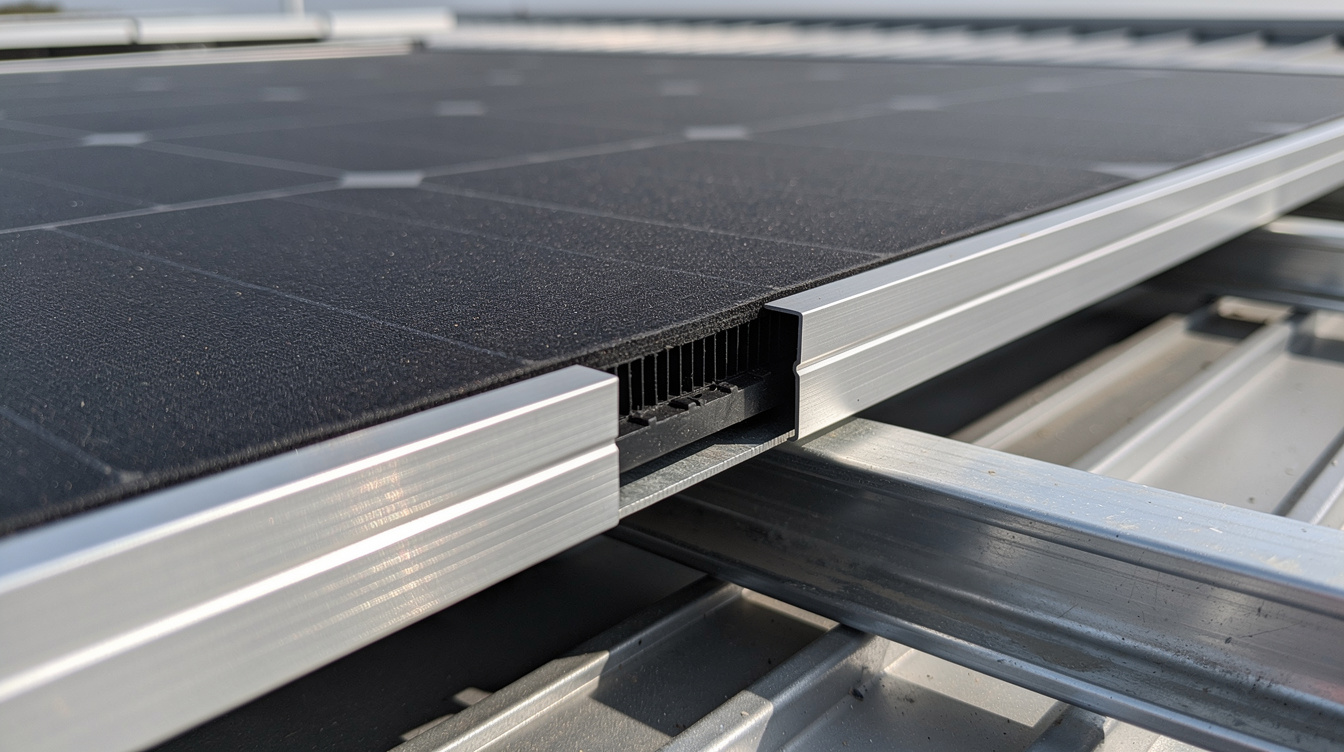
- Maintain at least 100 mm airflow gap under the panel. Standard on-roof rail mounting with GSE In-Roof or IronRidge XR100 gives 80–120 mm. Building-integrated PV (BIPV) or panels laid flat on flat roofs without racks run 8–12 °C hotter and lose an extra 2–3 % in summer.
- Avoid dark backing sheets in south-facing high-sun installs. Modern all-black panels (aesthetic favourite) run 1.5–2 °C hotter than white-backsheet panels. In Ireland the aesthetic gain usually outweighs the tiny loss, but worth knowing.
- Don’t under-oversize the inverter. An inverter that clips at Pmax means the array never gets to run at true peak — but it also means slightly less heat because clipped panels operate off maximum power point and dissipate a bit less. Not a huge factor, but 1.05:1 to 1.15:1 DC:AC oversizing is standard and good.
- Use a hybrid inverter with per-string MPPT. Multiple MPPTs let each roof face or string operate at its own optimum voltage as cell temps drift — useful if you have east/west split arrays that heat up on different schedules.
Special case: temperature and shed / garage installs
Panels installed on a metal shed roof or a barn roof heat up meaningfully more than on a tiled house roof — up to 8–15 °C hotter in summer because the metal roof retains heat and there’s often less ventilation gap. See our solar panels on a shed guide for the sizing implications.
For a shed install on metal roofing, a panel with a temperature coefficient of −0.28 %/°C or better is genuinely worth paying for — the summer loss on a −0.34 panel in that setup can hit 12–15 %. This is one of the few Irish scenarios where the temp coefficient earns its keep.
Frequently asked questions
Do solar panels work worse in hot weather? Yes, but far less than most homeowners think in Ireland. A hot summer day costs you 5–8 % of peak output. Compare this to Southern Spain where the same panel loses 20–25 %.
What is a good temperature coefficient for solar panels? −0.30 %/°C or better is good. −0.26 %/°C or better is excellent (typically N-type or HJT cells). Anything worse than −0.35 %/°C is old-generation P-type and should be avoided in 2026.
Which solar panels perform best at high temperatures? Maxeon 6 AC and REC Alpha Pure-R (both −0.24 %/°C) lead the residential market. Longi Hi-MO X10, JA Solar DeepBlue 4.0 Pro and Jinko Tiger Neo are close behind at −0.26 to −0.28 %/°C.
Do solar panels produce more electricity in cold weather? Yes, per unit of sunlight. But cold weather in Ireland usually also means grey skies and short days, so absolute output is still lower December–February. A cold bright March day is peak conditions — panels can briefly produce 108–112 % of their rated wattage.
Does the temperature coefficient matter more for a heat pump home? Not really. Heat pump load is highest in winter when panels are running cold and producing near-peak. Temperature coefficient affects summer when heat pump load is lowest.
Should I choose bifacial panels for better temperature performance? Bifacial modules do run 1–2 °C cooler than mono-facial because the transparent backsheet radiates heat better, but the difference is small. Bifacials are worth choosing for other reasons (rear-side pickup on light roofs, longer expected lifetime) — not primarily temperature.
The bottom line for Irish homeowners
Temperature coefficient is a real spec that reflects a real physics phenomenon — but in Ireland its practical impact on your annual generation is tiny. If you’re choosing between two shortlisted panels, don’t let a 0.05 %/°C difference in temp coefficient decide it. Focus instead on N-type vs P-type cell tech, product warranty length, low-light performance and manufacturer bankability.
The good news: virtually every panel that meets those higher-priority tests also happens to have a temperature coefficient in the −0.24 to −0.28 range. Get the fundamentals right and the temperature spec follows for free.
See also: our best solar panels Ireland 2026 ranking, detailed brand-by-brand comparison, and bifacial panels guide.
Ready to Get Solar Installed?
Free quotes from SEAI-registered installers using top-tier N-type panels.
Related Articles
Solar Panel Brands Ireland 2026: Longi, JA, Jinko, Trina, Canadian, REC & SunPower Compared
Honest 2026 comparison of Longi, JA, Jinko, Trina, Canadian, REC and SunPower for Irish homes — real installer prices, warranty gaps and when premium pays off.
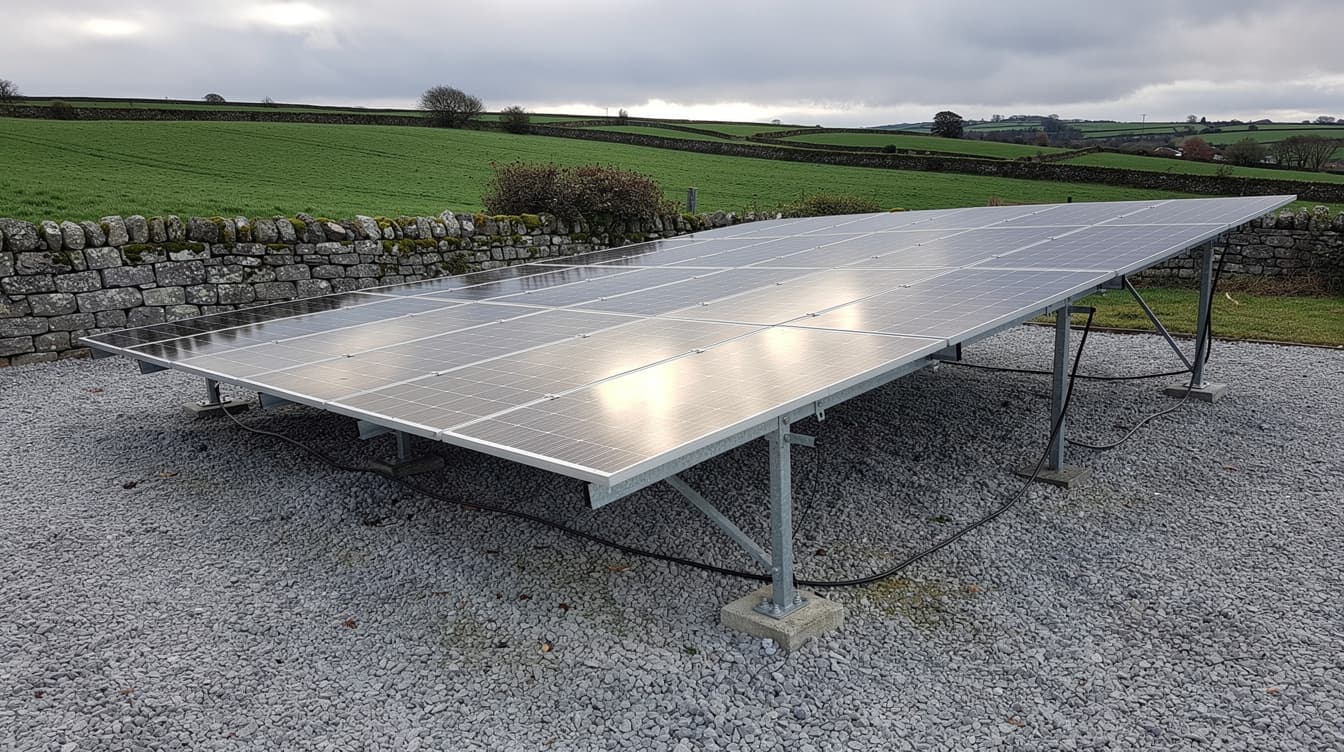
Bifacial Solar Panels Ireland 2026: Real Gains, Costs & Where They Actually Pay Off
Bifacial solar panels in Ireland — real-world gain by mount type, price premium, warranty differences and where the upgrade actually pays back in 2026.
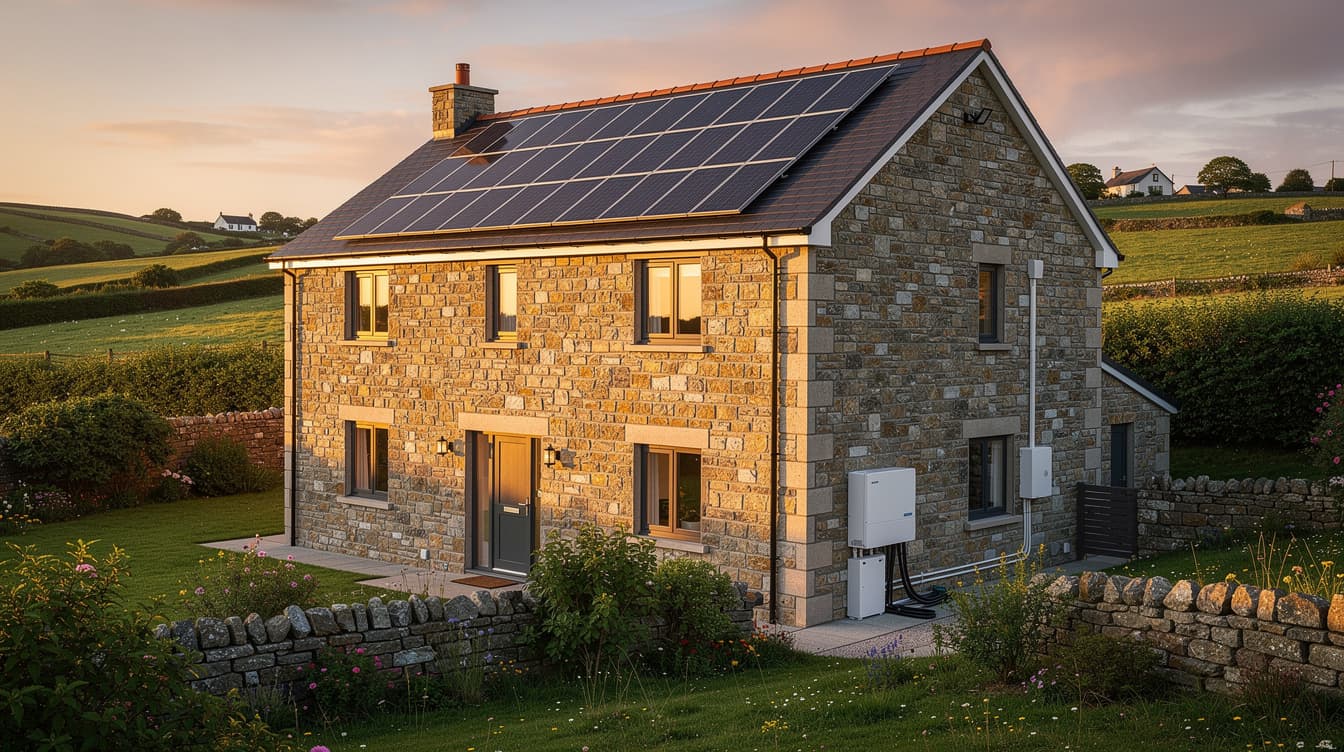
Best Solar Setup Ireland 2026: Complete System Design Guide
The best solar setup for Ireland 2026 — panels, inverter, battery, diverter and installer — with 4 real-world configurations, prices and paybacks.