
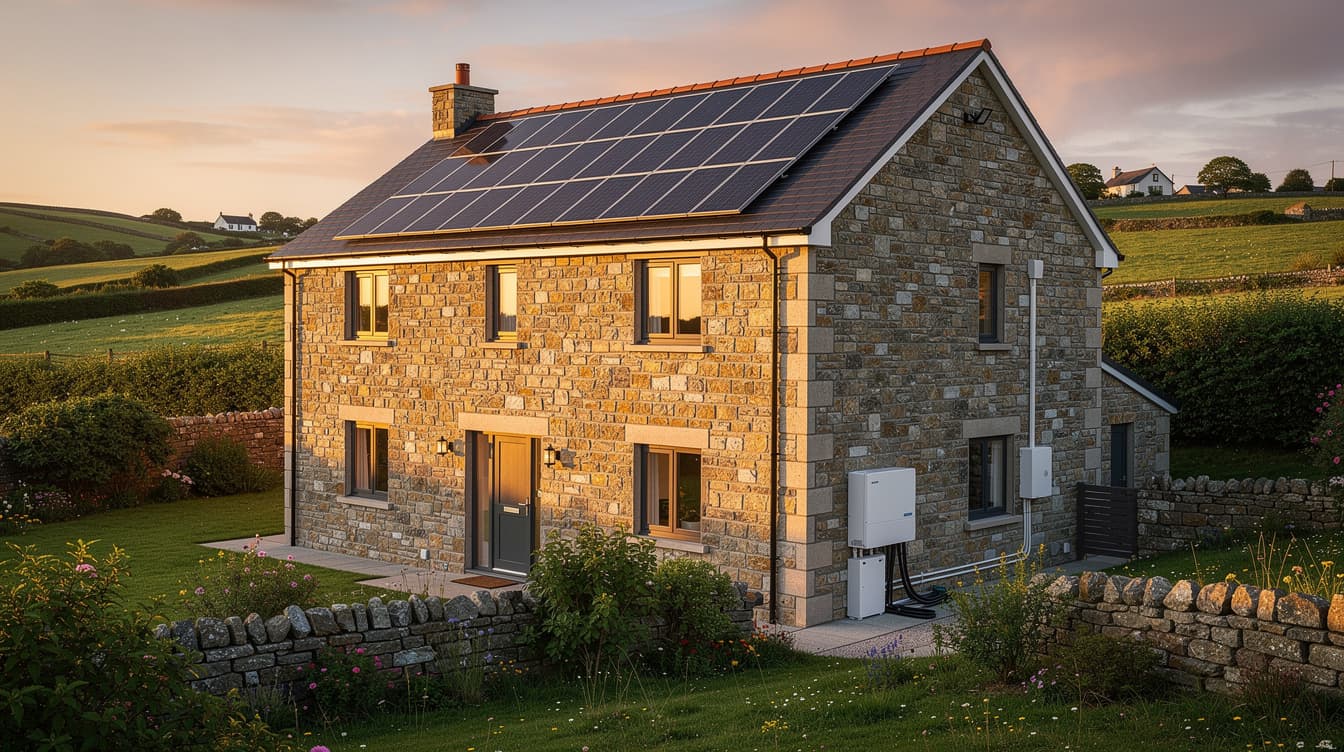
Best Solar Setup Ireland 2026: Complete System Design Guide
“What’s the best solar setup for Ireland?” is one of the most searched but worst‑answered questions in Irish solar. Most guides copy‑paste generic component lists that could apply anywhere from Andalusia to Aberdeen. But Ireland’s combination of low irradiance (roughly 950–1,150 kWh/kWp/year vs 1,600 in southern Spain), 34–38 c/kWh peak import tariffs, a flat €1,800 SEAI grant, an NC6 6 kW inverter ceiling on single‑phase, and a 20–24 c/kWh Clean Export Guarantee — changes the maths at almost every component decision.
This 2026 guide is a system‑design walkthrough, not a component catalogue. It works through the six decisions that actually determine whether your solar setup earns back in 6 years or 12: panel count and technology, inverter sizing and topology, battery capacity and chemistry, diverter integration, monitoring, and the paperwork that ties it all together. And it tells you what a “best” setup looks like for four common Irish household profiles at August 2026 pricing.
The six decisions that make or break a solar setup
Every Irish solar quote you get in 2026 will be a specific answer to these six questions. Understanding the trade‑offs behind each one is what separates a “good” setup from an average one.
- How many panels, and which cell technology? (10 vs 14 vs 20; TOPCon vs HJT vs ABC)
- Which inverter topology? (string hybrid vs microinverter vs power optimisers)
- What battery size and chemistry? (5 vs 10 vs 15 kWh; LiFePO₄ vs NMC)
- Do you need a hot‑water diverter? (Eddi vs iBoost vs none)
- How will you monitor and control it? (per‑panel visibility vs system‑level)
- Which SEAI installer, and what does the paperwork trail look like? (NC6, BER re‑assessment, grant, product warranties)
Take these one by one.
1. Panels — count and cell technology
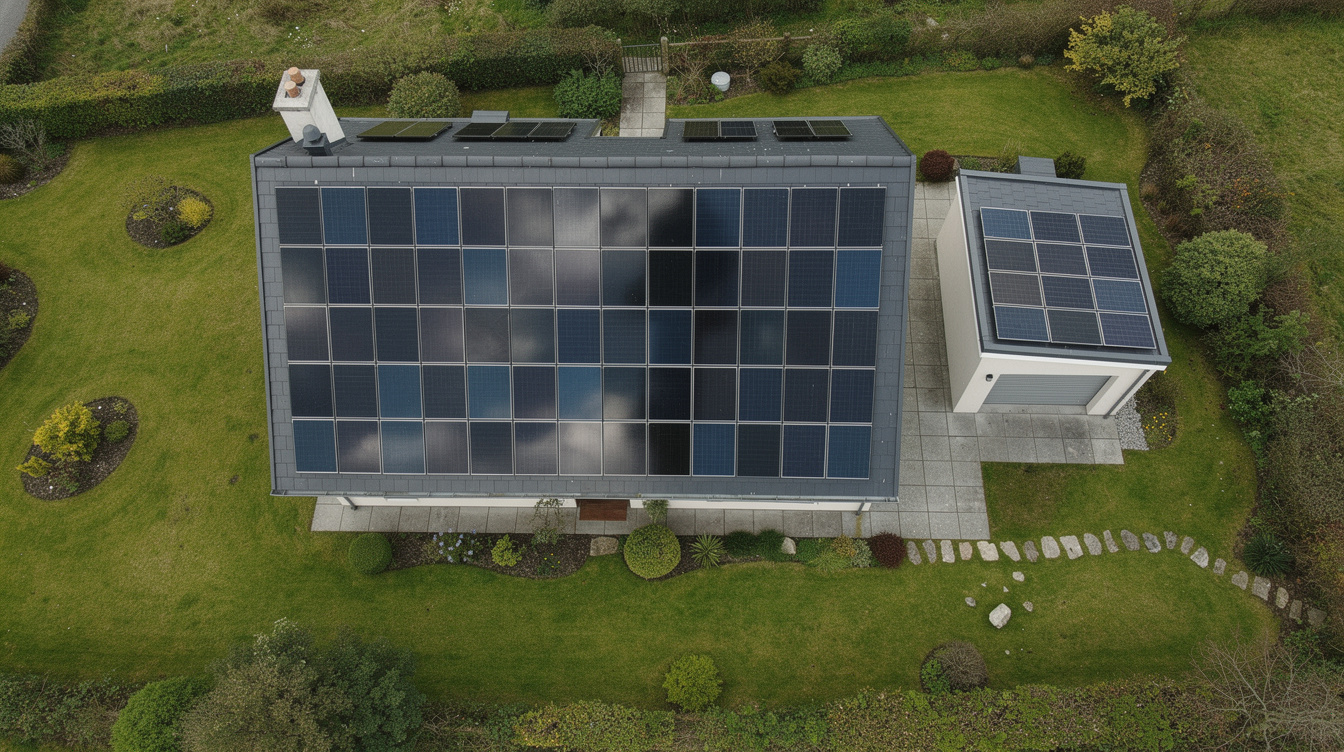
For 2026 residential in Ireland, the panel count sweet spot is 12 to 20 modules of 440–470 W each, giving 5.3–9.4 kWp. Below 12 you leave grant value on the table (the €1,800 SEAI grant is flat above 2 kWp); above 20 you cross into significant surplus territory and battery decisions dominate.
On cell technology, in 2026 you should be quoted N‑type TOPCon or HJT modules. Older P‑type PERC panels are on their way out of the residential channel — they still work but their low‑light performance and degradation curve are demonstrably worse than N‑type for the Irish climate. Rough spec comparison for the four most‑quoted 440–475 W residential panels in Ireland right now:
| Panel | Cell tech | Efficiency | 25-year output warranty | Typical fitted price |
|---|---|---|---|---|
| Jinko Tiger Neo 470 W | TOPCon N-type | 22.5% | 87.4% | €270–300 |
| JA DeepBlue 4.0 Pro 445 W | TOPCon N-type | 22.0% | 87.0% | €255–285 |
| LONGi Hi-MO X10 460 W | HPBC (n-type back-contact) | 24.8% | 88.9% | €295–325 |
| AIKO Comet 3S 475 W | ABC (all-back-contact) | 24.2% | 88.8% | €315–345 |
What actually matters in Ireland (in order of impact):
- Low‑light performance (NOCT rating — look for above 460 W at NOCT for a 475 W nameplate). Ireland has ~1,400–1,600 sun hours/year; on cloudy days panels operate at 15–30% of nameplate.
- Degradation warranty (aim for ≥87% at year 25).
- Product warranty duration (25 years is now standard, 30 is a differentiator).
- Bankability — will the manufacturer still be around to honour warranty in 2050? Tier‑1 (BloombergNEF) is the safe bet.
Temperature coefficient (−0.24 to −0.30 %/°C for these four) barely matters in the Irish climate — typical summer cell temperatures are 32–40°C, not the 55–65°C where temp coefficient earns its money. See our temperature coefficient guide for the maths.
Ready to Go Solar?
Get 3 free personalised quotes from SEAI-registered installers.
2. Inverter — the component installers underspec
The inverter is the single biggest determinant of how much of your generated energy actually reaches your house or the grid. Three topologies dominate the 2026 Irish market:
| Topology | Cost premium | Best when… |
|---|---|---|
| String hybrid (Sungrow, Sunsynk, GoodWe, Growatt) | Baseline | Single well-orientated roof pitch, no significant shading |
| Power optimisers (SolarEdge) | +€600–900 | Split roof pitches, partial shading, per-panel monitoring needed |
| Microinverters (Enphase) | +€900–1,400 | Complex roof shapes, heavy shading, safety-critical, hail-heavy areas |
Two Ireland‑specific rules:
- Stay at 6 kW inverter output on single-phase unless there’s a specific reason to exceed it. Above 6 kW single-phase or 11.05 kW three-phase you leave the NC6 “notification only” pathway and enter NC7 pre-approval (4–10 week ESB wait). Our NC6 guide covers this.
- Aim for DC:AC ratio 1.2–1.5. A 6 kW inverter on an 8.8 kWp (20-panel) array = 1.47 — healthy. On a 5.3 kWp (12-panel) array = 0.88 — wasteful, drop to a 4.6 kW inverter.
Full inverter breakdown: Solar inverters Ireland 2026 — hybrid, string, micro and the head-to-head SolarEdge vs Enphase Ireland 2026.
3. Battery — size to your evening usage, not your generation
The biggest battery‑sizing mistake we see in 2026 Irish installs is sizing for peak summer generation rather than evening consumption. Solar generation from May to July can exceed 30–40 kWh/day on a 6–9 kWp array, but the average Irish household only uses 8–15 kWh in the 17:00–08:00 window when the battery earns its money.
Practical sizing:
- 4–5 kWh — suits 2‑3 bed household, 3,500–5,000 kWh/year usage. Covers evening cooking, TV, dishwasher, lights.
- 6–10 kWh — the 2026 mainstream. Suits 3‑4 bed household with gas heating and one EV or a heat pump. Covers most nights on stored solar April–September.
- 10–15 kWh — overnight EV charging without touching the grid, heat pump peak-hour arbitrage, or Night Boost / time-of-use tariff schemes where you charge the battery at 8‑9 c/kWh overnight and discharge into a 45 c/kWh evening peak.
- 15 kWh+ — rarely earns its cost in a residential setting. Consider only if you’re planning to island the house or add a second EV.
Chemistry: in 2026, LiFePO₄ (LFP) is the only chemistry to consider for residential retrofit. NMC (used in the old Tesla Powerwall 2) has 15–25% lower thermal safety margins and a shorter cycle life at partial states of charge — both bad news for a battery cycled daily for 15 years in an Irish garage. Deep breakdown: Best solar batteries Ireland 2026 and the battery sizing guide.
4. Diverter — the €600 add-on with a 2.5-year payback
If your home has an immersion element in the hot water cylinder (about 80% of Irish homes do), a solar hot water diverter is the single highest ROI addition to a solar setup. Two models dominate:
- MyEnergi Eddi — €620–720 fitted, dual outputs (immersion + optional secondary load), works standalone or paired with a MyEnergi Zappi EV charger, best UK/Ireland service network.
- Marlec Solar iBoost+ — €560–640 fitted, single output, simpler UI, slightly cheaper. Less flexible if you want to add EV charging control later.
Both intercept surplus PV that would otherwise export to the grid at 20–24 c/kWh CEG, and use it to heat water instead — displacing gas/oil worth 25–40 c/kWh at 2026 unit costs. On a 14-panel array a diverter typically saves €180–260/year; on a 20-panel array €250–330/year. Both pay back in 2–3 years, faster than any other component in the entire setup. Full comparison: PV solar diverter Ireland 2026 — Eddi vs iBoost.
5. Monitoring — per-panel vs system-level
All modern hybrid inverters ship with a smartphone app (Sungrow iSolarCloud, Sunsynk Connect, SolarEdge myEnergy, Enphase Enlighten). What varies is whether you get system‑level visibility (one number for total generation, self‑consumption, grid import/export) or per‑panel visibility (each panel’s output shown individually).
Per‑panel monitoring — standard on SolarEdge and Enphase, absent on string hybrids — is genuinely useful for two things: catching a failing panel in year 6 or 12 before it starts dragging down its string neighbours, and diagnosing shading impact. But it’s a €600–1,200 premium on the inverter line and few homeowners actively use it. Rule of thumb: if your roof has clean orientation and no shading, string‑level monitoring is fine. If you have chimneys, trees or split pitches, pay for the per‑panel data. Our solar monitoring apps guide covers the 2026 app landscape.
6. The installer and the paperwork
The best components in the world will underperform in the hands of a rushed installer. Three non‑negotiables:
- SEAI‑registered (checkable at seai.ie). Only SEAI‑registered installers can claim the €1,800 grant on your behalf. See our SEAI verification guide.
- Files your NC6 notification with ESB Networks within 20 working days of commissioning. If they don’t, your CEG payments won’t start.
- Books your post‑works BER re‑assessment. Typically bumps a C1/C2 home to B2/B1 — worth €7,500–12,500 on resale (Property Price Register / MyHome.ie analysis, 2025–2026). Cost is €185. See our BER assessment cost guide.
Get three quotes before signing. Our quote comparison guide shows what actually varies (mostly labour, scaffolding and battery choice — not panels) and our solar contract red flags piece lists the twelve things to look for in the fine print.
Best solar setups for four common Irish household profiles
Bringing all six decisions together. Prices are August 2026, net of the €1,800 SEAI grant, VAT‑inclusive (0% VAT on residential solar to Dec 2030). Actual quotes will vary ±10% by installer and county.
Profile 1: 2-bed / 3-bed semi, gas heating, no EV, ~3,500 kWh/year
- Panels: 10 × Jinko Tiger Neo 470 W (4.7 kWp)
- Inverter: Sungrow SH5.0RT hybrid (5 kW single-MPPT)
- Battery: 5 kWh Pylontech Force L1 (LFP)
- Diverter: MyEnergi Eddi
- Monitoring: iSolarCloud (string-level)
- All-in fitted price after grant: €9,900–10,600
- Annual saving: €1,050–1,180 → ~8.9-year payback
Profile 2: 4-bed detached, gas heating, one EV, ~7,000 kWh/year
- Panels: 14 × JA DeepBlue 4.0 Pro 445 W (6.23 kWp)
- Inverter: Sunsynk 6 kW hybrid (dual-MPPT)
- Battery: 10.24 kWh Sunsynk LFP
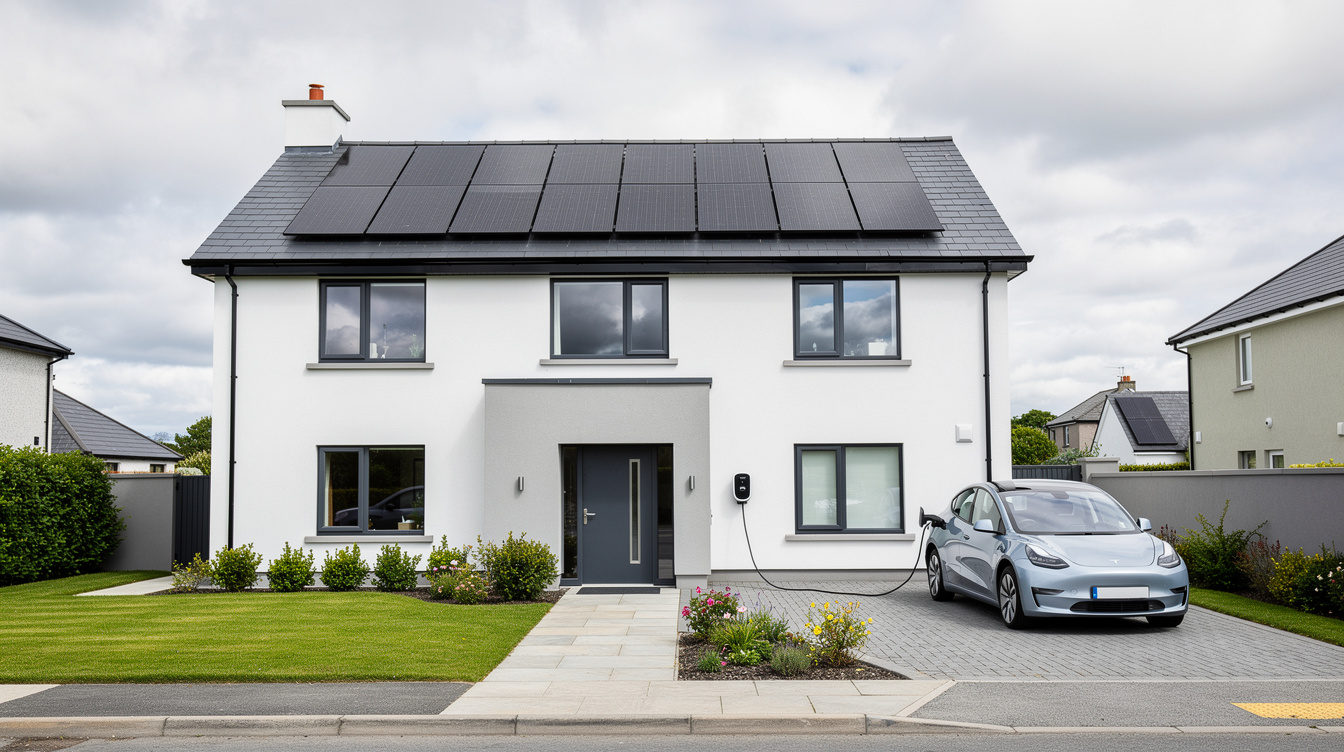
- Diverter: MyEnergi Eddi + Zappi EV charger (Zappi handles solar-priority EV charging)
- Monitoring: Sunsynk Connect (string-level)
- All-in fitted price after grant: €14,200–15,600
- Annual saving: €1,880–2,120 → ~7.4-year payback
Profile 3: 4-bed detached, heat pump + EV, ~10,500 kWh/year
- Panels: 20 × LONGi Hi-MO X10 460 W (9.2 kWp) — premium HPBC for best low-light output
- Inverter: SolarEdge SE6K + power optimisers on every panel (split pitch handled, per-panel monitoring)
- Battery: 10 kWh SolarEdge Home Battery
- Diverter: MyEnergi Eddi + Zappi
- Monitoring: SolarEdge myEnergy (per-panel)
- All-in fitted price after grant: €19,400–21,200
- Annual saving: €2,650–2,980 → ~7.2-year payback
Profile 4: Rural detached, complex roof (chimneys, trees, split pitches), ~5,000 kWh/year
- Panels: 16 × AIKO Comet 3S 475 W (7.6 kWp) — ABC cell tech shrugs off partial shading better than TOPCon
- Inverter: Enphase IQ8P microinverters (one per panel, no single point of failure, shading‑proof)
- Battery: 10 kWh Enphase IQ Battery 10T
- Diverter: MyEnergi Eddi (works cleanly with Enphase via CT clamp)
- Monitoring: Enphase Enlighten (per-panel, industry-best)
- All-in fitted price after grant: €17,800–19,400
- Annual saving: €1,780–1,970 → ~9.3-year payback
What "best" doesn’t mean
Three misconceptions worth naming:
- “Best” is not “most panels.” A 24‑panel array on a 3,500‑kWh/year household is a 25% underperformer against a 10‑panel array — you sell most of the surplus at CEG rates that are half your import rate. Match the array to your real usage.
- “Best” is not “biggest battery.” A 15‑kWh battery paired with a 4.4 kWp array will cycle only 4–6 kWh most days in Ireland outside high summer — you’ve paid for capacity you never use. Match battery to evening consumption, not to nameplate.
- “Best” is not “premium components only.” SolarEdge + AIKO + Sigenergy is a beautiful stack, but on a simple south‑facing pitch with no shading the extra €3,000–5,000 buys you monitoring and marginal efficiency, not payback. String hybrid + Jinko + Pylontech is 90% of the value at 70% of the price on the right roof.
Six pitfalls that spoil an otherwise good setup
- Buying panels first, deciding battery later. The battery must match the inverter’s battery‑port protocol (CAN bus / RS485). Retrofit batteries onto the wrong inverter and you’re into €600+ interface hardware.
- Skipping the site survey. A 20‑minute Google Earth estimate can miss chimneys, roof pitches under 20° and load-bearing issues that only an on-site engineer catches.
- Signing a 2‑year finance deal in year 1. Personal loans at 8.5–10.5% APR often outweigh the electricity savings. Use SEAI’s Home Energy Upgrade Loan at 3.55% instead.
- Not notifying home insurance. Most Irish home insurers require notification for solar; some (Allianz, RSA) charge no premium adjustment, others (Chubb, One Direct) add €20–60/year. Don’t discover this at claim time.
- Choosing the cheapest quote without checking warranty terms. Some 2026 installers offer 2‑year workmanship warranties; the reputable ones offer 10. That gap costs nothing until year 3 when a rail comes loose in a storm.
- Not testing shutdown procedure. Every installer should walk you through the AC and DC isolators on handover. If they don’t, you can’t safely make the system inert in an emergency — a fire risk and an insurance grey area. See our solar panel fire safety guide.
Frequently asked questions
What’s the single most important component to get right?
The inverter. Panels degrade slowly and are easy to overspec; batteries can be added/upgraded later; but the inverter determines MPPT topology, battery protocol, DC:AC clipping and monitoring capability all at once. A wrong-size or wrong-type inverter is the single most expensive component to swap out post‑install.
Is Enphase always worth the premium in Ireland?
No. Enphase is worth it on complex or shaded roofs where per‑panel MPPT genuinely matters. On a clean south‑facing pitch, a €1,500 Sunsynk or Sungrow hybrid does 95% of the job for half the money. Rule of thumb: if you can see at least one chimney, tree or dormer that will shade a panel for 90+ minutes on a June day, spec microinverters or optimisers. Otherwise don’t.
Should I go with a Tier-1 panel or a cheaper brand?
Always Tier-1 (BloombergNEF list) in 2026. The price gap between Tier-1 Jinko/JA/Longi/Canadian and unknown brands is now €15–30 per panel — roughly €300–600 across a 20-panel install. That’s tiny insurance against a manufacturer disappearing before year 25 of your warranty. See our 2026 panel brands guide.
Do I need a battery from day one?
Not necessarily. Adding a battery in year 2 or 3 costs about €250–400 more than including it from day one (extra installer visit, minor rewiring) — a small penalty for the cash-flow flexibility. But: your inverter must be a hybrid (battery-ready) from day one. Retrofitting a battery onto a solar-only inverter requires replacing the inverter entirely.
Can I get finance included in the setup price?
Yes. The SEAI Home Energy Upgrade Loan offers up to €75,000 at 3.55% APR fixed through participating credit unions and banks. It’s the cheapest solar finance available in Ireland in 2026 by a margin of 4–7 percentage points. Full guide: solar panel financing Ireland 2026.
What’s the fastest payback setup?
For gas‑heated 3‑4 bed households with an EV: 14 panels + 10 kWh battery + Eddi + Zappi, ~7.4-year payback. For all-electric heat-pump households: 20 panels + 10 kWh battery + Eddi, ~7.2 years. Payback under 6 years is possible only with above‑average electricity usage or aggressive time‑of‑use tariff arbitrage.
What’s the biggest 2026 upgrade over a 2023 setup?
Two things. First, N‑type TOPCon and HPBC panels have replaced P‑type PERC across the residential channel — roughly 8–12% more annual output for the same nameplate, and a shallower degradation curve. Second, LFP is now the only battery chemistry on the market — NMC (2019-era Powerwall 2) is gone. A 2026 setup outputs more, lasts longer, and is safer than a 2023 equivalent for roughly the same cash price after grant.
Bottom line
The “best” solar setup for Ireland in 2026 is not a component list — it’s a system designed backwards from your electricity usage, heating type, roof shape and future plans. For most Irish homes that means 12–20 N‑type TOPCon panels, a right‑sized string hybrid inverter (6 kW single‑phase ceiling), a 5–10 kWh LFP battery, a €600 diverter that pays back inside 3 years, and an SEAI-registered installer who books the post‑works BER assessment.
Get three quotes, check the six decisions above are answered explicitly on each one, and pick the installer who explains the trade‑offs — not the one who just quotes the biggest system.
Ready to Design Your Best Setup?
Get 3 free quotes from SEAI-registered installers — each tailored to your home, usage and roof.
Related guides: Best solar panels Ireland 2026 · Best solar batteries · Solar inverters · PV diverter comparison · How to compare solar quotes · Solar contract red flags
Related Articles
20 Solar Panels Ireland 2026: Cost, Output, Battery & Payback
What 20 solar panels cost in Ireland 2026 (€12.7-18.6k net after grant), 7,600-8,100 kWh output, roof space, battery choice and payback vs 10 or 14 panels.
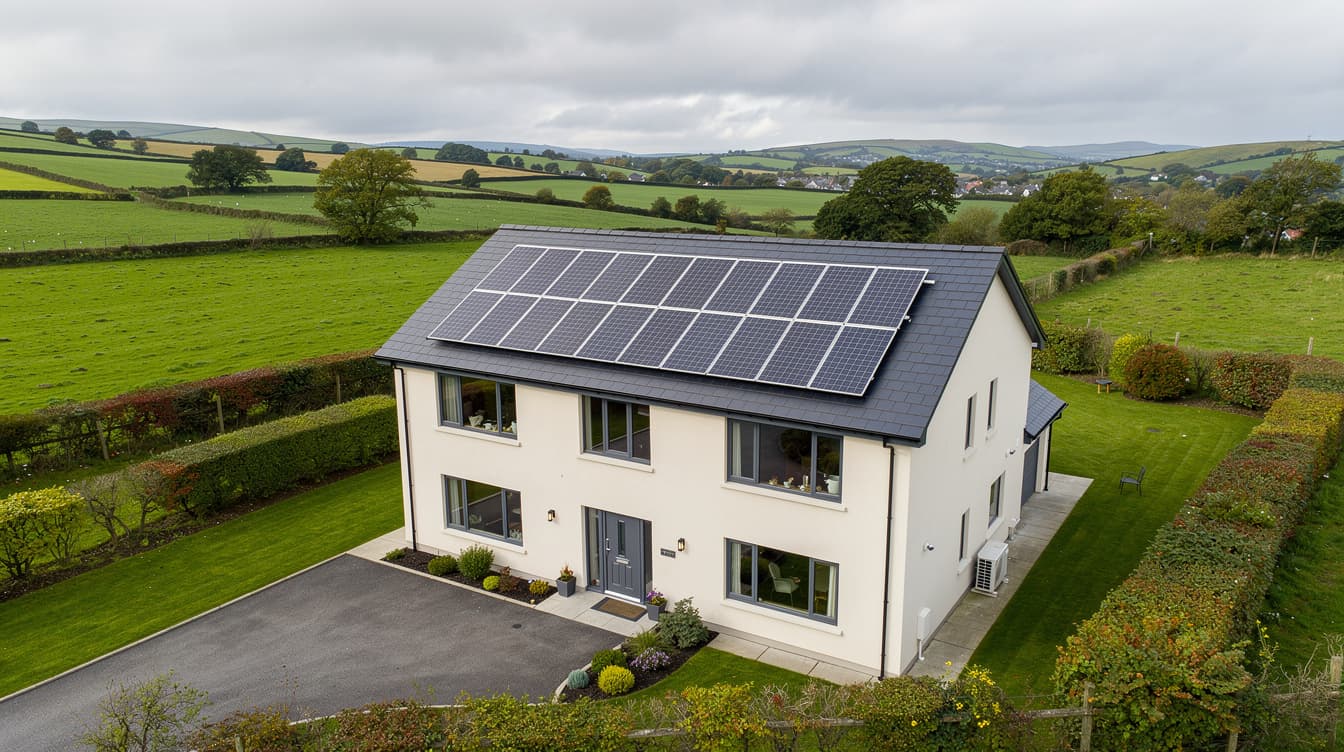
12 Solar Panels Ireland 2026: Cost, Output, Battery & Payback
What 12 solar panels cost in Ireland 2026 (€9.1-10.8k after grant), annual kWh output, battery sizing, roof space needed and how 12 stacks vs 10 or 14 panels.
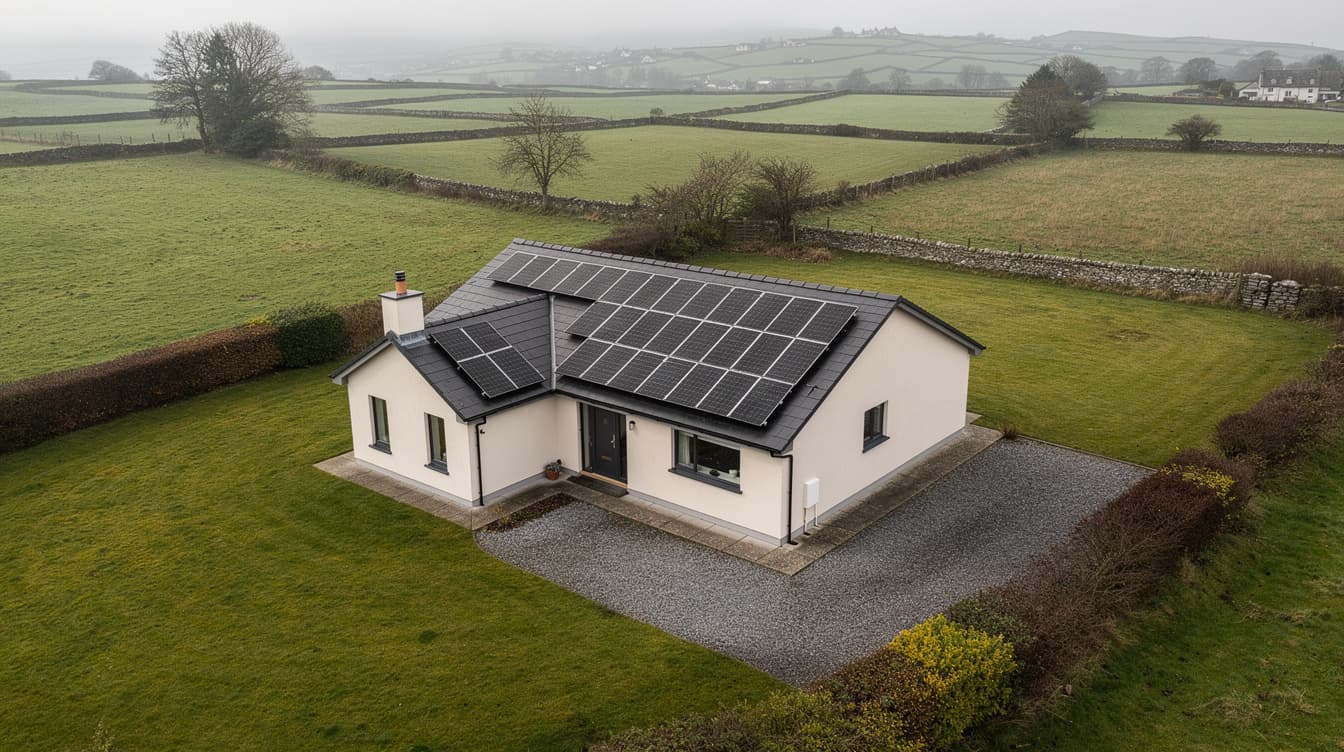
14 Solar Panels Ireland 2026: Cost, kWh Output, Battery & Payback
What 14 solar panels cost in Ireland 2026 (€10.4-12.1k after grant), annual kWh output, roof space, battery pairing and how 14 stacks vs 12 or 16 panels.